Albert Einstein College of Medicine Cost of Attendance: What They Don't Tell You About the Real Financial Picture
Oct 28, 2025

Oct 28, 2025
When I first got into Einstein, I thought the hardest part was over. Boy, was I wrong. Sure, the $1 billion donation means free tuition - which is incredible - but nobody prepared me for the reality of what it actually costs to survive as a med student in NYC. The average total cost of medical school is $238,420, but Einstein students now benefit from this groundbreaking donation through the David S. and Ruth L. Gottesman Scholarship Fund. However, understanding the complete financial picture extends far beyond tuition costs alone.
Here's the thing nobody tells you: tuition is just the tip of the iceberg. I thought I had it all figured out with my budget spreadsheet, but then reality hit. Those "miscellaneous expenses"? Yeah, they're not so miscellaneous when you're dropping $400 on scrubs you'll wear for one rotation.
The median medical school debt for the MD class of 2023 was a hefty $200,000, with nearly a quarter of the 15,253 graduates surveyed reporting a debt between $200,000 and $299,999, according to Shemmassian Consulting. This debt burden extends far beyond what most students anticipate when they first consider medical school costs.
Look, the real cost of medical school is like an iceberg - you see the tuition number floating on top, but there's this massive chunk of expenses hiding underneath that'll sink your budget if you're not careful. I learned the hard way that medical schools don't exactly advertise all the ways they'll separate you from your money.
Most students focus on tuition numbers and miss the bigger picture entirely. Your actual spending will include everything from parking permits to professional licensing fees, and these costs compound throughout your four years. When you're looking at the albert einstein college of medicine cost of attendance, you need to account for these variables if you want an accurate financial forecast.
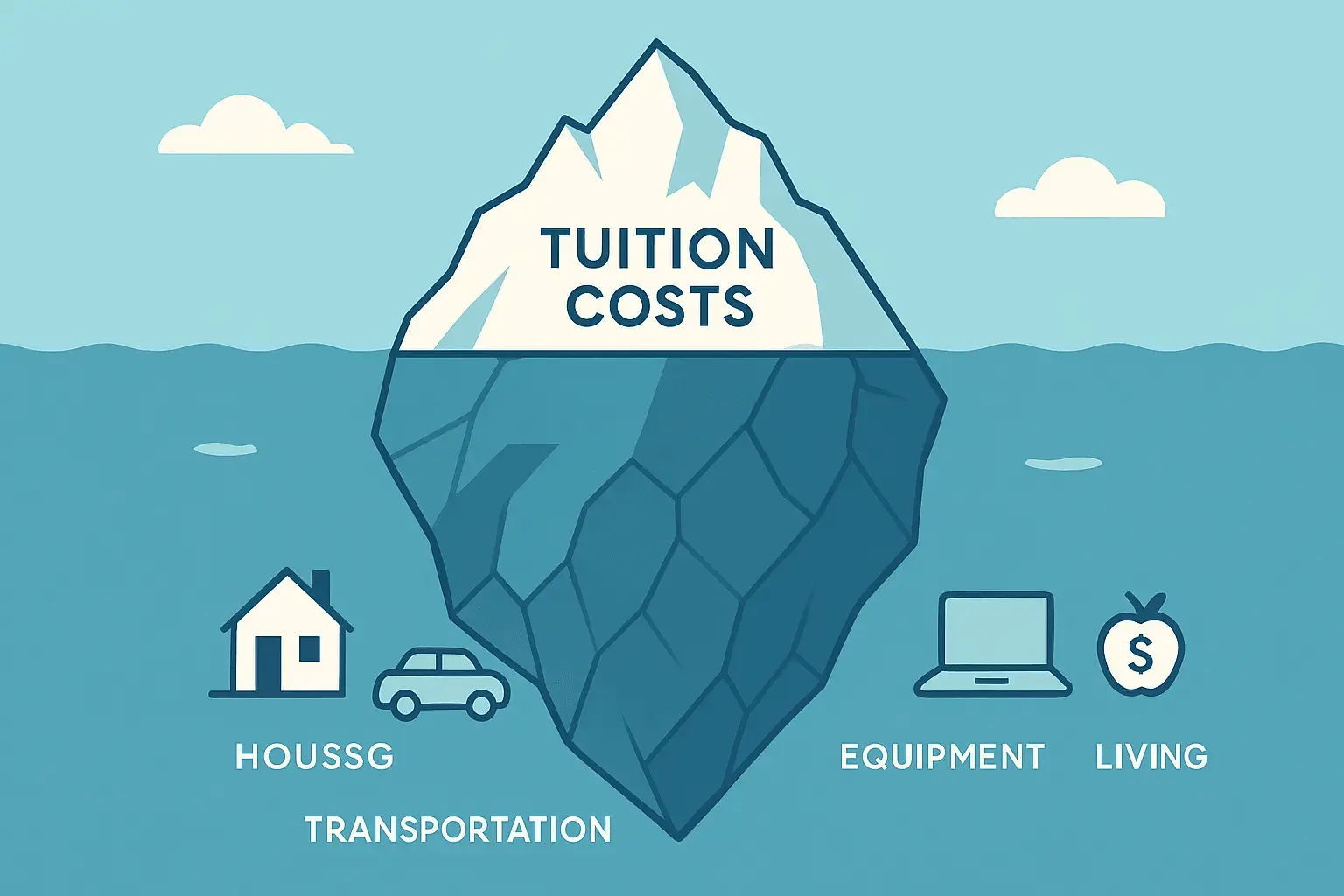
Your first two years feel predictable - you go to class, you study, you spend money on the usual stuff. But then clinical rotations hit, and suddenly you need professional clothes for every specialty, gas money to drive between three different hospitals, and equipment you didn't even know existed.
I remember my friend Marcus telling me about his surgery rotation. One day he needed specialized scrubs, non-slip shoes, and trauma shears - $400 gone, just like that. The next month in pediatrics? Different stethoscope attachments and a penlight for another $150. Nobody warned him that each rotation basically came with its own shopping list.
Check out what happened to my budget between first year and clinical rotations - and I'm not even including the emotional cost of eating hospital vending machine food at 2 AM:
|
Expense Category |
Pre-Clinical Years (Annual) |
Clinical Years (Annual) |
|
Transportation |
$1,200 (local commuting) |
$3,600 (multiple sites) |
|
Professional Attire |
$500 (basic wardrobe) |
$1,500 (scrubs, lab coats, shoes) |
|
Equipment/Supplies |
$800 (textbooks, basic tools) |
$2,200 (stethoscope, medical bag, specialty tools) |
|
Meals |
$2,400 (regular schedule) |
$3,600 (irregular hours, hospital cafeteria) |
|
Total Additional Costs |
$4,900 |
$10,900 |
That transportation jump? That's me taking Ubers when I'm running late (which happens more than I'd like to admit) and the subway decides to have "signal problems." And don't get me started on hospital parking - it's basically highway robbery.
Einstein's location in the Bronx means you're paying New York prices for literally everything. Your morning coffee costs $4 instead of $2. Your monthly MetroCard runs $132. Groceries cost 20-30% more than national averages, and this geographic markup affects every single purchase you make.
Pro tip: That $4 morning coffee habit? It's going to cost you about $1,500 a year. I switched to making coffee at home and using that money for something more important - like the $200 trauma shears I definitely needed for my surgery rotation (spoiler: I used them twice).
Housing costs can be double or triple what you'd pay in other regions. Even basic necessities carry premium pricing that adds hundreds to your monthly expenses. I've seen students underestimate this regional cost multiplier and struggle financially throughout their education.
Here's what really keeps me up at night sometimes: while I'm here accumulating debt and eating ramen, my college friends are out there building wealth and advancing their careers. They've got 4-8 years of salary increases, 401k contributions, and some are even buying houses while I'm still figuring out how to afford groceries.
Your peers who entered the workforce after college will have 4-8 years of salary increases, 401k contributions, and potential home equity building while you're still in training. The opportunity cost of medical education extends far beyond tuition and living expenses.
Medical students face an extended timeline where earning potential is pushed back nearly a decade compared to other career paths. You'll spend four years in medical school, then 3-7 years in residency earning $55,000-65,000 annually while managing six-figure debt loads.
In February 2024, "93-year-old Dr Ruth Gottesman of the Albert Einstein College of Medicine in the Bronx, New York, shocked students of the school and the world when she announced that she was donating $1 billion" according to BusinessDay. This historic donation eliminates tuition costs for current and future Einstein students, fundamentally changing the financial equation for medical education at this institution.
I'm not trying to scare you away from medicine - I love what I do. But I wish someone had given me the real talk about what we're actually investing here. The same $200,000 you might spend on living expenses could grow to $400,000-500,000 in index funds over 10 years. That's not small change.
A $200,000 investment in index funds over 10 years could grow to $400,000-500,000 with compound interest. That same amount invested in real estate or business ventures could generate passive income streams. These calculations help you understand the true cost of your medical education investment.

Apartment hunting as a med student in NYC is basically a nightmare. Landlords see "student" and "no income" and suddenly ghost you. Plus, you've got these crazy schedules during clinical years that make traditional apartment hunting almost impossible. You need a game plan that actually works for people like us.
Medical students face the dual challenge of managing educational debt while securing affordable housing in one of the world's most expensive real estate markets. Your student status, irregular income, and future relocation needs for residency complicate standard rental applications.
Here's what I learned the hard way: most landlords would rather rent to someone with a steady paycheck than a student living on loans, even if your loans cover way more than their rent. You need to present your financial situation strategically and probably find a guarantor.
Student housing options near Einstein fill up crazy fast, and waiting lists can stretch for months. I'm talking starting your search 6-8 months before you need to move, especially if you want something decent with a reasonable commute to campus.
Here's what actually worked for me: I found three other med students and we rented a 4-bedroom in the Bronx. We split everything - rent, utilities, even grocery runs to Costco. My housing costs dropped from $2,200/month to $900, and I had built-in study partners. Win-win.
Coliving spaces designed for graduate students often include utilities, internet, and furnished rooms in their monthly rates. You avoid the upfront costs of furniture, utility deposits, and internet installation that can easily run $3,000-5,000 when setting up a traditional apartment.
Housing Cost Reduction Checklist:
Let's be real - some of you are reading this thinking "I'll just live at home." If you can swing it, DO IT. Your pride isn't worth $50K in extra debt. I had friends who commuted 90 minutes each way and still came out ahead financially.
Clinical rotations are going to have you bouncing between hospitals all over the Bronx and Manhattan like a ping-pong ball. Your transportation choices during medical school will impact both your wallet and how much time you have left for studying. Trust me, poor planning here can cost you hundreds monthly and hours daily.
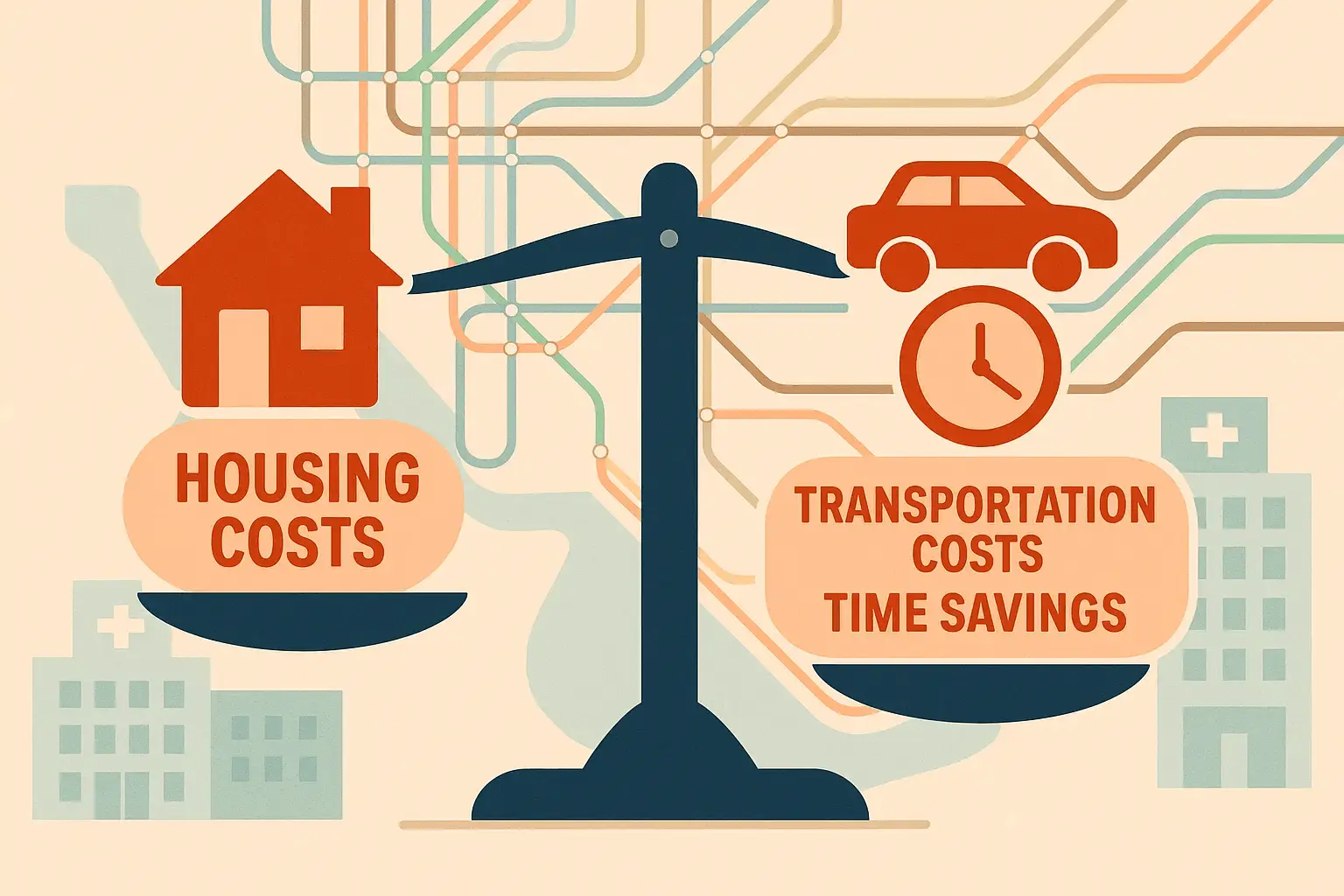
Einstein students rotate through various affiliated hospitals across the Bronx and Manhattan, making your housing location a strategic financial decision rather than just a lifestyle choice. Understanding the geographic spread of your clinical sites helps you optimize both transportation costs and commute times.
My roommate Jake thought he was being smart by finding a cheap place in Queens. Three months later, he was spending $400/month just on subway rides to different hospitals. Meanwhile, his 3-hour daily commute meant he was falling behind on studying. Sometimes paying more upfront actually saves you money - and your sanity.
Your clinical rotations will take you to hospitals throughout the Bronx and potentially Manhattan. Montefiore Medical Center, Jacobi Medical Center, and Einstein's own hospital system each have different transportation requirements and accessibility challenges.
Monthly MetroCard costs run $132, but car ownership in NYC can easily hit $500+ monthly when you factor in parking, insurance, and maintenance. But here's the thing - that MetroCard doesn't help you when you're stuck at the hospital until 11 PM and the subway is doing that thing where it just... stops working.
Per year, the average cost of a private medical school is $67,950, according to Education Data. With Einstein's tuition now covered, students can redirect these savings toward optimizing their transportation and housing strategies, making strategic location choices more financially feasible.
Parking near hospital sites can cost $15-25 daily, which adds up to $300-500 monthly for regular clinical rotations. However, car ownership provides flexibility for late-night calls and emergency situations that public transit can't accommodate.
I found that paying an extra $300-400 monthly for proximity saved me $200 in transportation costs and 10-15 hours weekly in commute time. That additional study time becomes invaluable during demanding rotations when every hour counts toward your performance and learning.
Bottom line: Living in NYC as a med student is expensive, but it's doable if you're strategic about it. Don't try to live like your friends with real jobs - embrace the broke student life for a few years. Your future self will thank you.
Okay, loan talk makes everyone's eyes glaze over, but this stuff matters. Think of it this way - every dollar you borrow today costs you about $2 by the time you pay it back. That $5 latte? That's actually a $10 latte from future-you's perspective.
Most students just take whatever loans they're offered without thinking strategically. This approach costs them big time in interest payments and limits their flexibility during residency and beyond.
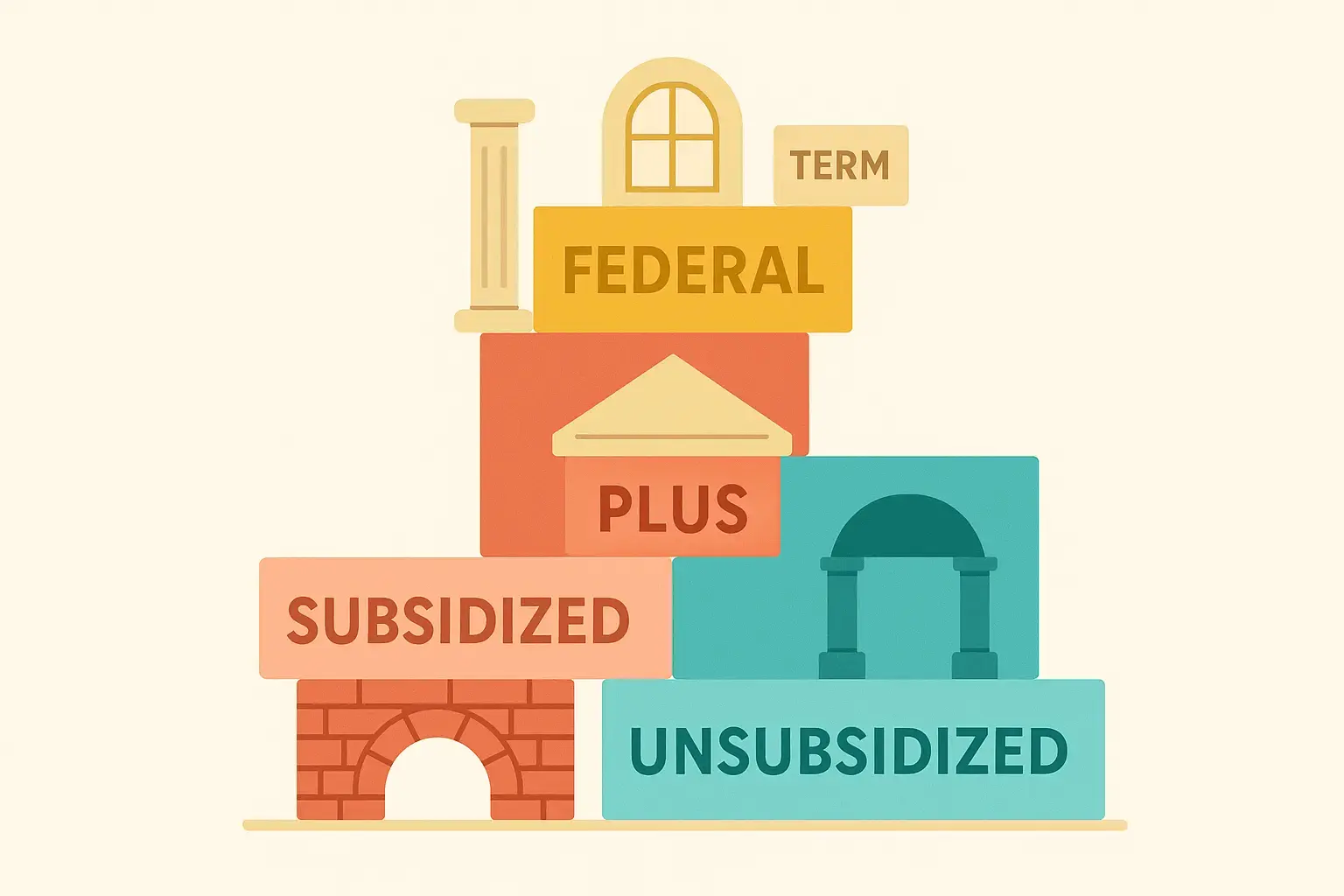
Here's the deal with federal loans - they're usually your best bet, but you need to understand the differences between graduate PLUS loans, subsidized and unsubsidized Stafford loans, and all the repayment options. It's like a game, and knowing the rules can save you thousands.
Current federal loan interest rates directly impact your total debt burden, with rate changes affecting lifetime repayment costs by tens of thousands of dollars. Understanding how interest compounds during school and resi
Current federal loan interest rates directly impact your total debt burden, with rate changes affecting lifetime repayment costs by tens of thousands of dollars. Understanding how interest compounds during school and residency helps you make informed decisions about borrowing amounts and repayment strategies.
Interest rates might look small on paper, but they're like that friend who eats all your food - they add up fast. A 1% difference in interest rates can cost you $20,000-30,000 over the life of your loans. Yeah, you read that right.
Federal loans offer fixed rates and flexible repayment options that private loans often don't match. However, private loans sometimes offer lower initial rates for borrowers with excellent credit, creating complex decisions about optimal borrowing strategies.
|
Loan Type |
Interest Rate (2024-25) |
Annual Borrowing Limit |
Total 4-Year Limit |
|
Direct Unsubsidized |
6.54% |
$20,500 |
$82,000 |
|
Graduate PLUS |
7.54% |
Cost of Attendance |
No aggregate limit |
|
Private Loans |
4.50% - 12.99% |
Varies by lender |
Varies by lender |
|
Total Federal Capacity |
Varies |
~$40,000+ |
$160,000+ |
Einstein's financial aid programs include need-based grants and merit scholarships that can seriously cut down your total costs. But here's the catch - these opportunities require you to actually apply on time and understand what the school is looking for.
The transformation at Einstein reflects a broader trend, as "despite a few highly publicized 'free tuition' schools, the vast majority of medical schools are expensive enough that if you pay for the entire thing (plus living expenses) with student loans, you will end up owing at least $200,000" according to White Coat Investor. Einstein's tuition elimination puts it among elite institutions offering debt-free medical education.
Need-based aid calculations consider your family's financial situation, but medical students often qualify for less aid than undergraduate students due to their graduate status and expected earning potential. Merit scholarships at Einstein focus on academic achievement, research experience, and community service.
Here's a secret that not enough people talk about: research can actually pay you while you're in school. Summer research programs typically offer stipends ranging from $3,000-8,000 for 10-12 weeks of work. It's not life-changing money, but hey, it beats watching your loan balance grow while you do nothing.
Summer research programs typically offer stipends ranging from $3,000-8,000 for 10-12 weeks of work. These programs provide valuable research experience while generating income that can reduce your borrowing needs.
Research Funding Application Strategy:
NIH training grants and fellowships can provide substantial funding for students interested in research careers. These competitive programs offer stipends, tuition support, and research funding that can significantly reduce your debt burden while building your academic credentials.

Residency pay feels brutal after four years of school, but here's the thing - you're finally earning money again! Sure, it's not much, but after years of watching your loan balance grow, getting any paycheck feels amazing. Plus, you're actually practicing medicine, which is why we're all here.
Residency salaries of $55,000-65,000 must cover your living expenses while managing medical school debt. This period tests your financial discipline and requires strategies that most residents learn through trial and error - often at significant financial cost.
Can we talk about the panic attacks? Because seeing your loan balance while making resident salary is genuinely terrifying. I remember calling my mom crying about money during my surgery rotation. She reminded me this is temporary - and she was right, but man, it doesn't feel temporary when you're living it.
The average cost of a medical school degree is $238,420, with costs rising by $1,224 every year according to Education Data. Even with Einstein's tuition covered, students still face substantial living expenses and opportunity costs that require careful financial planning during the residency transition.
My friend Dr. Jennifer Kim graduated from Einstein with $80,000 in living expense debt (way less than most people thanks to the tuition waiver). During her internal medicine residency making $58,000, she used income-driven repayment to keep monthly payments at $200 while focusing on building an emergency fund. Smart move - it let her avoid financial stress during those brutal residency years.
Income-driven repayment plans calculate your monthly payment based on your income and family size, often resulting in payments of $0-300 monthly during residency. However, interest continues accruing on your loans, potentially increasing your total debt balance even while making payments.
Public Service Loan Forgiveness and other programs can wipe out huge chunks of your debt if you qualify. The key is understanding these programs early so you can structure your career path to maximize forgiveness opportunities from day one of residency.
PSLF requires 120 qualifying payments while working full-time for qualifying employers. Most academic medical centers, public hospitals, and non-profit healthcare systems qualify, making this program accessible for many physicians.
PSLF Qualification Checklist:
Documentation becomes crucial for PSLF success. I recommend submitting employment certification forms annually and keeping detailed records of all payments and employment periods. The program has become more reliable in recent years, but proper documentation remains essential.
Choosing residency programs in cheaper cities can seriously improve your ability to manage debt while training. Your $58,000 salary goes way further in Cleveland or Atlanta than in New York or San Francisco - we're talking potentially thousands more in your pocket each year.
Residency programs in lower-cost areas often provide the same quality training while allowing you to stretch your resident salary further. A $58,000 salary goes much further in Cleveland or Atlanta than in New York or San Francisco.
However, there are trade-offs beyond just cost of living. You need to consider program quality, research opportunities, and networking potential when making location decisions. Sometimes paying higher living costs for superior training opportunities pays off long-term.
Here's where things get really interesting - your specialty choice is basically a million-dollar decision. Different specialties have wildly different earning potentials and training lengths, which directly impacts your debt-to-income ratio and how quickly you can get back on solid financial ground.
Primary care specialties typically offer faster entry into practice but lower lifetime earnings compared to surgical specialties or subspecialties. However, shorter training periods mean you start earning attending-level salaries sooner, which can offset lower per-year earnings through earlier wealth building.
Surgical specialties and competitive subspecialties often require longer training periods (5-8 years) but offer higher earning potential. The extended training period delays your financial recovery but can result in significantly higher lifetime earnings and wealth accumulation potential.
Fellowship training adds 1-3 additional years of lower earnings but often leads to substantial salary increases. Cardiology fellows might earn $65,000 during fellowship but command $400,000+ salaries as attendings, making the additional training financially worthwhile despite delayed gratification.
Your debt-to-income ratio at the start of attending practice varies dramatically by specialty. Family medicine physicians might start with a 4:1 debt-to-income ratio, while orthopedic surgeons might have a 1:1 ratio despite similar debt loads due to higher starting salaries.
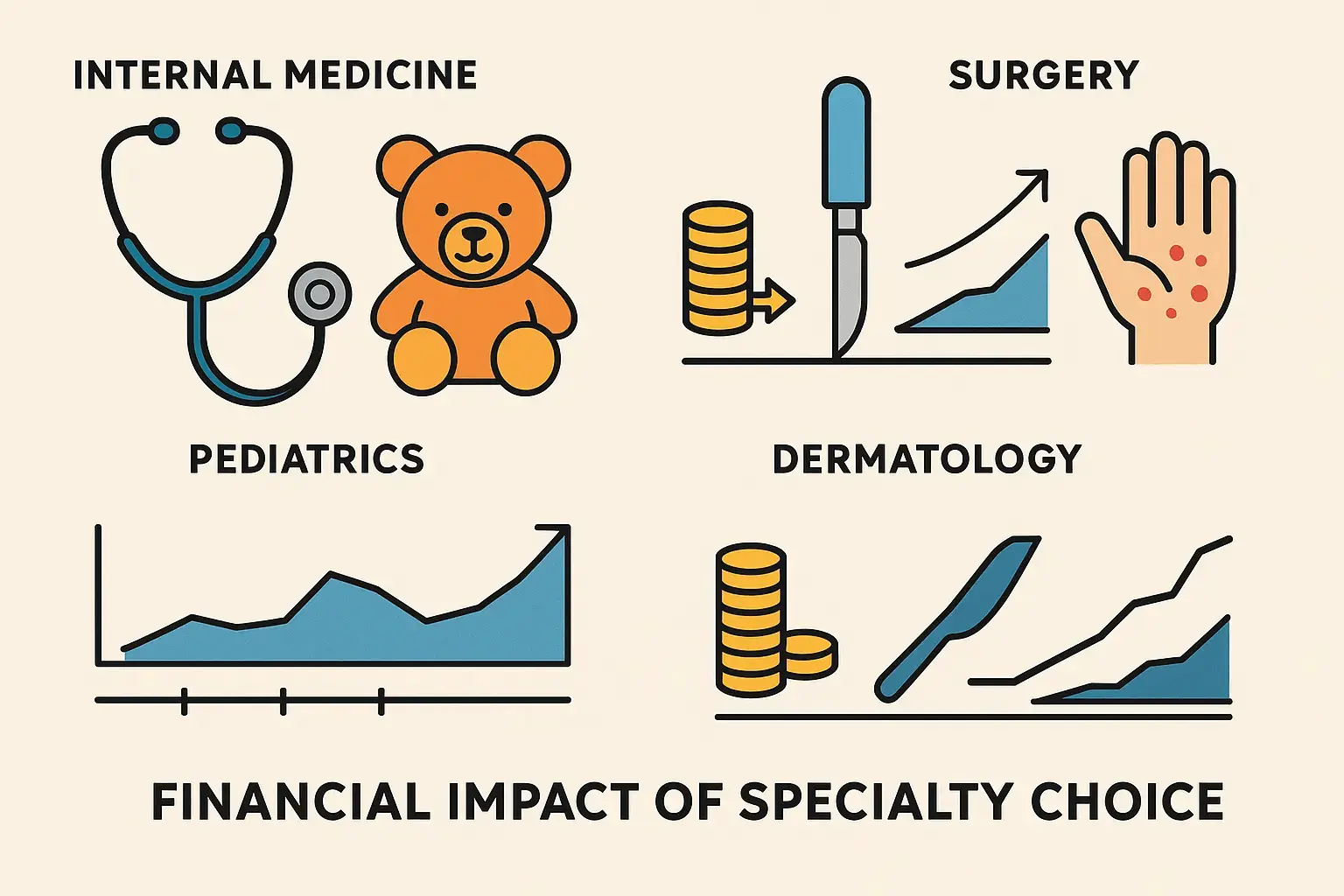
The financial implications of specialty choice extend beyond salary considerations. Some specialties offer better work-life balance, allowing for side income opportunities or earlier retirement. Others provide more predictable schedules that facilitate financial planning and investment strategies.
Consider your personal financial goals when choosing specialties. If you prioritize early financial independence, higher-earning specialties with longer training might align with your objectives. If you value work-life balance and earlier career start, primary care specialties might better serve your financial and personal goals.
Bottom line: Einstein's free tuition is a game-changer, but it doesn't solve everything. You'll still need to be smart about money, and you'll still eat ramen more than you'd like. But you know what? Every doctor has been there. We've all stressed about money, lived with too many roommates, and wondered if we made the right choice. Spoiler alert: we did.

Household supplies can be changed or decreaased at Outpost Club’s discretion, or based on supply availability. Outpost is not responsible for temporary losses of utility service. Outpost Club is not responsible for any damages due to absence of any supplies or utilities


If you have a sales related question please call
680-688-7678

 Hot Deals