Data Scientist Salary NYC: What You'll Actually Earn in America's Most Competitive Market
Dec 16, 2025
Dec 16, 2025
Look, I'm going to be straight with you about NYC's data science scene - it's absolutely wild out there. Picture this: Goldman Sachs and Google literally fighting over the same candidates. That's the NYC data science market for you, and honestly? It's driving compensation packages well beyond what you'd see anywhere else.
Levels.fyi reports average Data Scientist salary ranges from $133,000 to $237,000 as of November 2025. Now, that wide range isn't just random - it shows how dramatically your experience, company choice, and specialization can impact what you'll actually take home.
Financial institutions aren't messing around when they need data scientists for algorithmic trading, risk management, and regulatory compliance. These aren't just tech roles - they're positions that require both serious technical chops and deep business understanding. You're competing in a global talent market where companies know they have to pay premium rates to lock down top performers.
Tech companies? They play a completely different game. Sure, the base salaries might look slightly lower on paper, but that equity compensation can seriously multiply your wealth over time. Startups are basically asking you to place a bet - higher risk, but if they hit it big, you could be looking at life-changing money through stock options.
Here's something that caught me by surprise - healthcare and media companies are starting to throw serious money around. The whole biotech boom and streaming wars have created opportunities I never would've expected five years ago. Recent industry analysis shows that "Data scientists working in NY make an average annual salary of $156,800 with potential yearly cash bonuses of $29,800", and trust me, those bonus numbers can be absolute game-changers.
Let me hit you with some brutal honesty about those impressive salary figures everyone throws around. Housing alone is going to devour 30-50% of your gross income - we're talking $3,000-$5,000 monthly for a decent Manhattan apartment. And that's before you factor in transportation, food, and the fact that a decent lunch costs $18. Your $150,000 salary sounds incredible until you're doing the math on your actual take-home after taxes and living expenses. This stuff matters way more than most people realize when they're evaluating offers.
|
Experience Level |
Base Salary Range |
Total Compensation |
Typical Bonus % |
|
Entry (0-2 years) |
$95,000-$130,000 |
$110,000-$155,000 |
10-20% |
|
Mid-level (3-5 years) |
$130,000-$180,000 |
$160,000-$230,000 |
15-25% |
|
Senior (5+ years) |
$200,000-$300,000 |
$250,000-$400,000 |
20-35% |
|
Principal/Staff |
$300,000+ |
$400,000+ |
25-50% |
Here's the thing everyone gets wrong - that salary number? It's just the tip of the iceberg. I made this mistake early on: I only looked at base salary. Don't be like me. Smart professionals focus on total compensation value, and understanding your complete package means looking at bonuses, equity, benefits, and perks that can seriously impact your overall financial situation.
Starting out (0-2 years)? You're looking at $95,000-$130,000, and trust me, that $35K difference really matters when you're apartment hunting in this city. The higher end typically comes from financial services firms and established tech companies, while startups might lowball the base salary but dangle those equity carrots.
Hit the mid-level sweet spot (3-5 years) and you're in $130,000-$180,000 territory. This is where your track record and proven domain expertise become serious differentiators in salary negotiations. Senior positions (5+ years) can pull $200,000-$300,000+ in base salary alone. Principal and staff-level roles at top-tier companies? Sky's basically the limit.
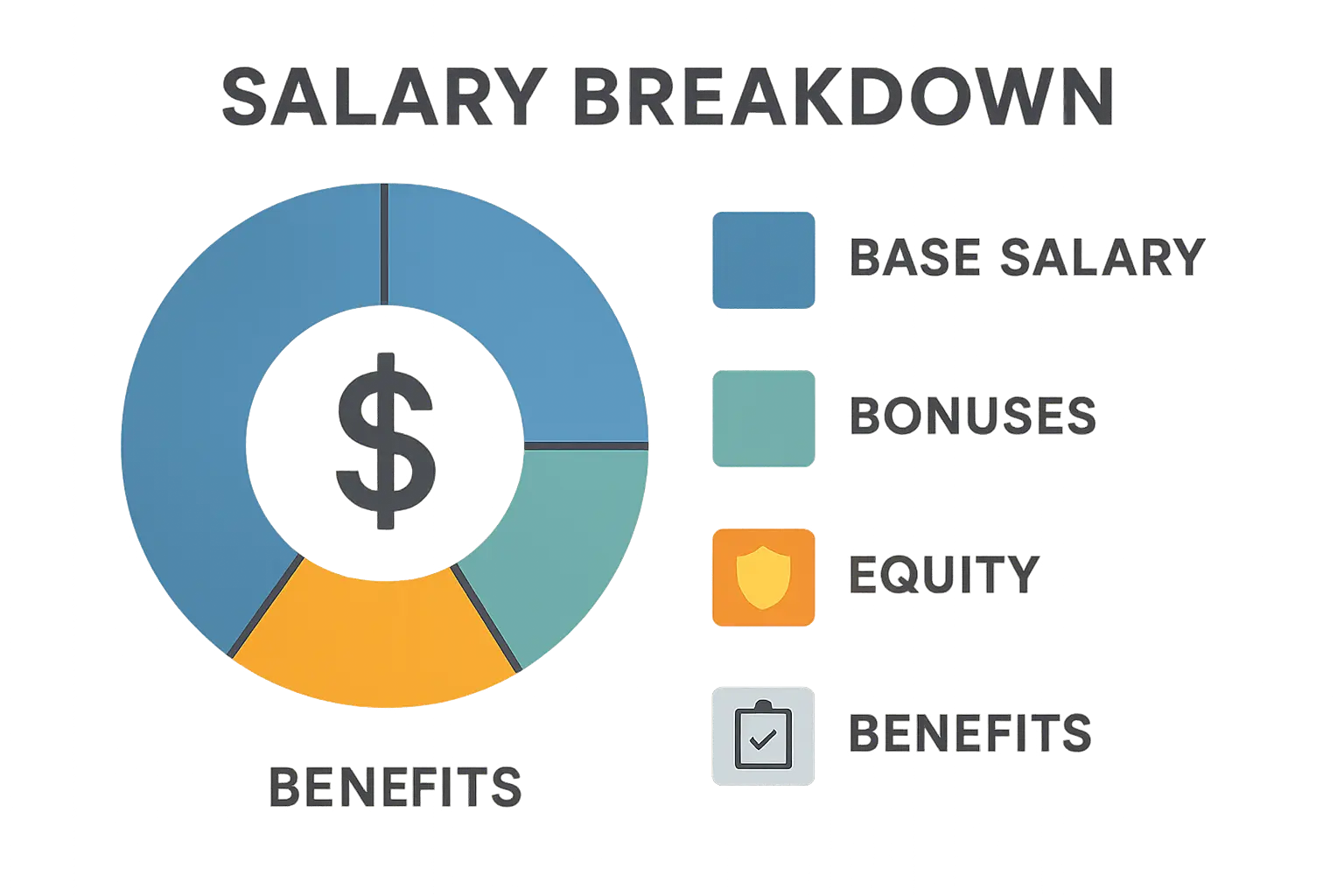
Annual bonuses in financial services can literally double your effective income if you're performing well. Investment banks routinely throw around 20-50% bonuses, and if you're an exceptional performer? Even higher percentages. Equity compensation varies dramatically depending on company stage and structure. Public company RSUs provide predictable value you can actually count on, while startup options are basically lottery tickets with better odds.
Signing bonuses have become pretty much standard for experienced professionals. Companies use these to make you whole for the unvested equity you're walking away from, and honestly, it makes job transitions way more financially attractive.
Health insurance premiums can cost you $500-$1,500 monthly in NYC if you're paying out of pocket. When a company covers this completely? That's real money back in your pocket that should factor into your total compensation calculations. 401(k) matching typically ranges from 3-6% of salary. Some companies offer immediate vesting, while others make you stick around for multi-year commitments.
Professional development budgets for conferences, courses, and certifications can reach $5,000-$10,000 annually at forward-thinking companies. Commuter benefits can save you $200+ monthly on subway and parking costs - every ride adds up fast in this city. Gym memberships, meal stipends, and flexible work arrangements all have quantifiable financial value that you should be factoring in.
Some companies offer sabbatical programs, unlimited PTO, or four-day work weeks. Depending on what you value in life, these lifestyle benefits might actually outweigh pure salary considerations.
Sarah's Real-World Total Compensation Breakdown: My friend Sarah got an offer with a $145,000 base salary and almost turned it down because it seemed low compared to other offers. Then she actually sat down and did the math: 15% annual bonus ($21,750), equity worth $25,000 annually, full health insurance coverage ($18,000 value), 401(k) matching ($8,700), and a professional development budget ($5,000). Her actual total compensation? $223,450 - that's 54% higher than her base salary alone. She took the job.
Strategic career advancement in NYC requires understanding both technical and management track opportunities. You'll need to develop specialized expertise while building those essential soft skills that enable effective stakeholder communication and real business impact.
The individual contributor path offers substantial growth without the headaches of managing people. You'll progress from Data Scientist I to Senior, Principal, and eventually Distinguished Engineer or Chief Data Scientist roles. Each level requires increasingly sophisticated technical skills that go way beyond just knowing Python and SQL.
Senior roles demand expertise in distributed systems, advanced machine learning, and architectural decision-making that won't break everything when you scale. Principal-level positions involve setting technical direction for entire organizations. You'll influence major technology choices, mentor junior staff, and solve the most complex analytical challenges the company faces.
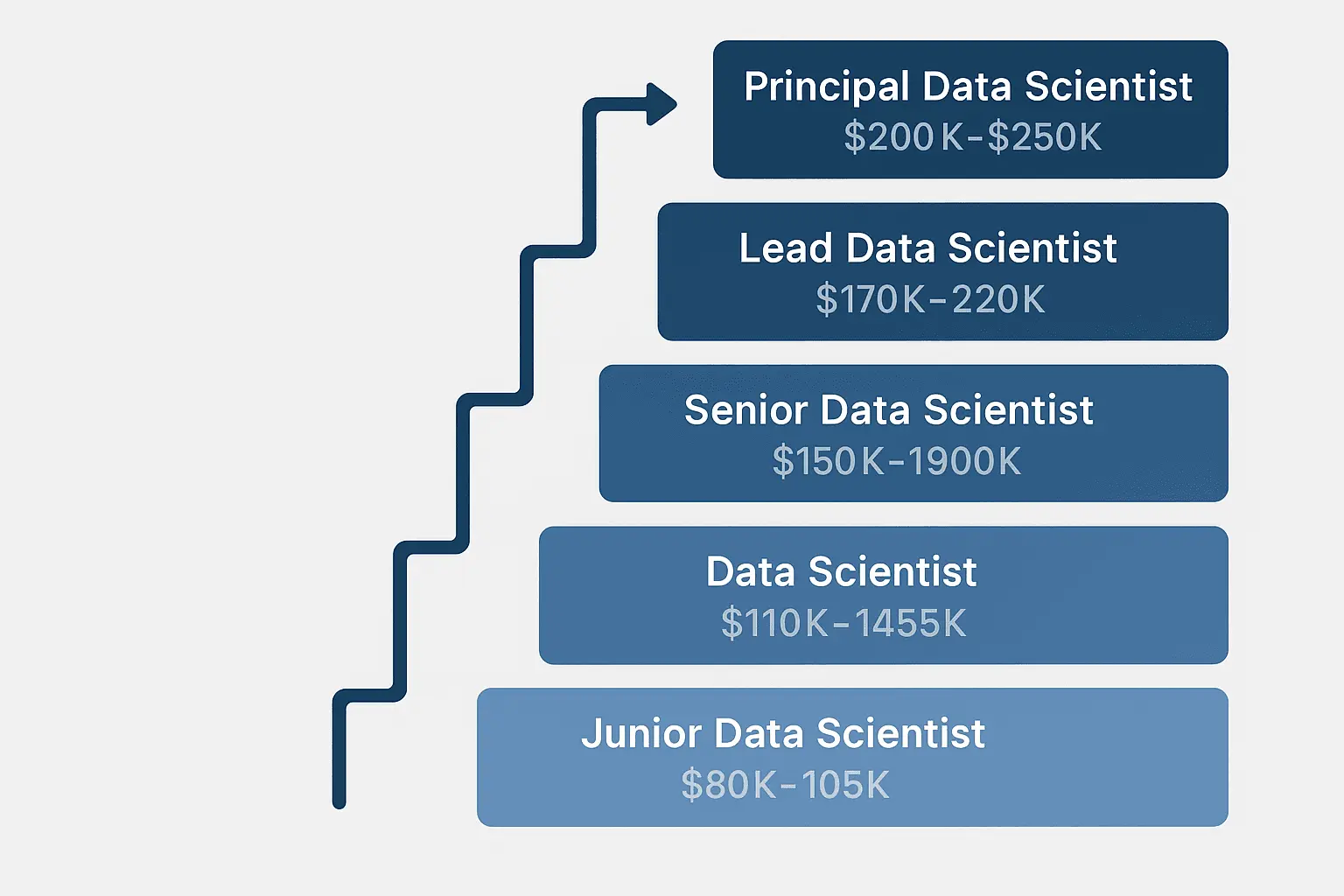
Team Lead positions typically emerge after 3-4 years of strong individual performance. You'll manage 2-4 direct reports while still maintaining some hands-on technical work - it's a nice balance if you like both coding and people. Data Science Manager roles shift your focus primarily to people management, strategic planning, and cross-functional collaboration. Technical skills remain important, but leadership capabilities become absolutely paramount.
Director-level positions mean you're overseeing multiple teams and substantial budgets. You'll work directly with C-suite executives and drive organization-wide data strategy - it's high-level stuff with compensation to match.
Financial services expertise commands serious premiums. Understanding derivatives pricing, risk models, or regulatory requirements can bump your salary 15-25% above generalist roles. The knowledge barrier to entry is high, but so are the rewards.
Healthcare and biotech specialization offers both financial rewards and meaningful impact. Drug discovery, clinical trial optimization, and personalized medicine represent high-growth areas where domain expertise really pays off. E-commerce and recommendation systems expertise never goes out of style - companies will always pay premium rates for proven experience in making them money.
Python and R proficiency remains fundamental, but SQL expertise? Absolutely non-negotiable. You'll spend way more time working with databases and data warehouses than most people expect. Cloud platform certifications (AWS, Azure, GCP) have gone from nice-to-have to essential. Distributed computing frameworks can significantly boost your earning potential as companies scale their data operations.
Machine learning frameworks including TensorFlow, PyTorch, and Scikit-learn are table stakes for most positions these days. But here's what they don't tell you in bootcamps - communication skills often determine career trajectory more than technical abilities. Your capacity to translate complex concepts for business stakeholders directly impacts how far you'll advance.
Career Advancement Checklist:
Different industries in NYC offer completely different compensation structures and career opportunities. Financial services typically provides the highest base salaries, technology companies offer significant equity upside, and emerging sectors are creating new premium opportunities you might not have considered.
Investment banks and hedge funds consistently offer the highest total compensation packages in the data science field, period. Base salaries start higher and bonuses can reach 50-100% of base pay for strong performers. Quantitative roles at top firms can easily hit $400,000+ in total compensation. Fair warning though - these positions require advanced mathematical skills and deep market understanding that goes way beyond typical data science work.
Risk management and regulatory compliance roles offer more predictable compensation with less performance variability. You'll find better work-life balance while still earning premium salaries compared to other industries.

Established tech giants offer competitive base salaries plus substantial equity packages where stock appreciation can seriously multiply your total compensation over time. Fintech startups combine financial services domain knowledge with technology innovation - these companies often offer compelling packages for experienced professionals who understand both worlds.
Enterprise software companies provide stable compensation with predictable growth trajectories. You'll find less volatility but potentially lower upside compared to consumer-facing companies that might explode in value.
Pharmaceutical companies need data scientists for drug discovery, clinical trial design, and regulatory submissions. These roles combine serious technical challenges with meaningful societal impact - you're literally helping develop treatments that save lives. Healthcare technology companies are experiencing rapid growth right now. Telemedicine, digital therapeutics, and health analytics represent emerging high-value opportunities.
Medical device companies require specialized expertise in regulatory compliance and clinical validation. Compensation reflects these specialized knowledge requirements and the critical nature of the work.
Streaming platforms invest heavily in recommendation systems and content optimization. These roles offer unique technical challenges with competitive compensation - plus you get to work on systems that millions of people interact with daily. Gaming companies need data scientists for player behavior analysis, monetization optimization, and fraud detection. The industry offers creative technical challenges with strong compensation packages.
Advertising technology companies provide opportunities to work on large-scale optimization problems. Programmatic advertising and attribution modeling require sophisticated analytical skills and pay accordingly.
Industry Compensation Real-World Comparison: My friend Michael compared offers from three different sectors last year: A hedge fund offered $280,000 base + 60% bonus ($448,000 total), a major tech company provided $220,000 base + $80,000 equity + 15% bonus ($333,000 total), and a healthcare startup proposed $190,000 base + significant equity upside + 20% bonus ($228,000 guaranteed total with potential for much higher returns if the company succeeds). Each offer had completely different risk/reward profiles.
Certain data science specializations are basically money printers because the skills are rare and the business impact is huge. The market continues expanding for specialized roles, with "Machine Learning Engineers pulling in $140,000-$200,000, and Data Scientists making $120,000-$185,000" according to recent NYC tech job market analysis. But specialized roles blow these numbers completely out of the water.
Hedge funds and proprietary trading firms offer the absolute highest compensation in the entire data science field. We're talking total packages that often exceed $400,000 for experienced professionals with proven track records. These roles require deep understanding of financial markets, advanced statistical modeling, and real-time system development. Your models directly impact how much money the firm makes - no pressure, right?
Risk management positions offer slightly lower compensation but provide way more stability and better work-life balance. You'll develop models for portfolio optimization, stress testing, and regulatory compliance without the intense pressure of trading floors.

MLOps expertise is pure gold right now as companies try to actually scale their AI initiatives beyond proof-of-concept demos. Senior ML engineers earn $250,000-$350,000+ in total compensation at top-tier companies. Production ML systems require specialized skills in distributed computing, model deployment, and system reliability. You're basically the bridge between research teams and actually making money from AI.
Platform engineering roles involve building infrastructure that enables other data scientists to be productive. These positions offer high visibility within organizations and substantial compensation growth potential.
Regulatory scrutiny around AI systems is creating serious demand for professionals who understand both technical implementation and policy implications. These roles blend technical expertise with legal and ethical considerations - it's fascinating work with great pay. Model governance positions involve ensuring AI systems meet regulatory requirements and ethical standards. You'll work closely with legal teams and executive leadership on high-stakes decisions.
Algorithmic fairness specialists focus on bias detection and mitigation in ML systems. This emerging field offers both financial rewards and meaningful societal impact - you're literally helping make AI systems more fair and equitable.
Computer vision expertise remains highly valued across industries from autonomous vehicles to medical imaging. Specialized knowledge in this area commands significant premiums over general ML work. Natural language processing specialists work on chatbots, document analysis, and content generation systems. The recent AI boom has increased demand substantially - everyone wants their own ChatGPT.
Time series forecasting experts are essential for financial services, supply chain optimization, and demand planning. Domain expertise in these areas significantly impacts compensation levels because the business value is so clear and measurable.
|
Specialization |
Base Salary Range |
Total Comp Range |
Key Skills Required |
|
Quantitative Finance |
$200,000-$350,000 |
$350,000-$600,000+ |
Financial modeling, derivatives, risk management |
|
ML Engineering |
$180,000-$280,000 |
$250,000-$450,000 |
MLOps, distributed systems, production deployment |
|
Computer Vision |
$160,000-$250,000 |
$220,000-$380,000 |
OpenCV, deep learning, image processing |
|
NLP Specialist |
$150,000-$240,000 |
$200,000-$350,000 |
Transformers, BERT, language models |
|
AI Ethics/Governance |
$140,000-$220,000 |
$180,000-$300,000 |
Policy, regulatory compliance, bias detection |
Effective salary negotiation requires comprehensive market research, understanding total compensation components, strategic timing, and having actual leverage to maximize your position. Most people just wing it and leave serious money on the table.
Glassdoor, Levels.fyi, and PayScale give you baseline salary data, but networking offers way more accurate insights. Attend NYC data science meetups and actually connect with professionals at companies you're targeting. LinkedIn conversations with current employees reveal compensation philosophies and recent changes that you won't find in public data. Most professionals will gladly share general salary ranges when you approach them respectfully.
Build relationships with recruiters even when you're not actively job searching. They'll provide ongoing market intelligence and insider knowledge about budget cycles, hiring freezes, and compensation trends.
Startup compensation varies dramatically based on funding stage and growth trajectory. Recent funding rounds often correlate with increased hiring budgets and higher salary ranges - timing matters. Public company compensation is more predictable but still varies significantly by division and recent performance. Research earnings calls and analyst reports for insights into budget constraints.
Financial services firms tie compensation closely to both firm performance and individual contributions. Understanding their bonus structures and performance evaluation criteria before negotiating gives you a huge advantage.
Annual review cycles provide natural negotiation opportunities, but you need to prepare documentation of your achievements and market research several months in advance. Company performance periods seriously influence budget availability - strong quarterly results often correlate with increased willingness to approve salary increases.
Personal achievement milestones create compelling negotiation leverage. Major project completions, new certifications, or skill acquisitions strengthen your position significantly when timed right.
Focus on total compensation rather than just base salary - this gives you way more room to negotiate. Signing bonuses, equity grants, and professional development budgets can add substantial value even if base salary is fixed. Multiple offers provide serious leverage even if you have a preferred company. Use competing offers to negotiate better terms at your top choice employer.
Performance-based increases demonstrate confidence while providing employers with risk mitigation. Propose specific, measurable outcomes tied to salary growth - it shows you're results-oriented.
Never accept the first offer without some negotiation - companies actually expect back-and-forth discussion during the hiring process. Don't focus solely on base salary and ignore potentially valuable compensation components like equity, bonuses, and benefits that can significantly impact your total package.
Never negotiate without solid market research - you'll look unprepared and potentially damage your credibility. And don't make it personal or emotional - keep everything focused on market rates and your value proposition.
Salary Negotiation Preparation Checklist:
Geographic location within NYC definitely affects salary levels, with Manhattan commanding premium rates, while the rise of remote work is completely reshaping traditional compensation structures and creating new opportunities for salary optimization.
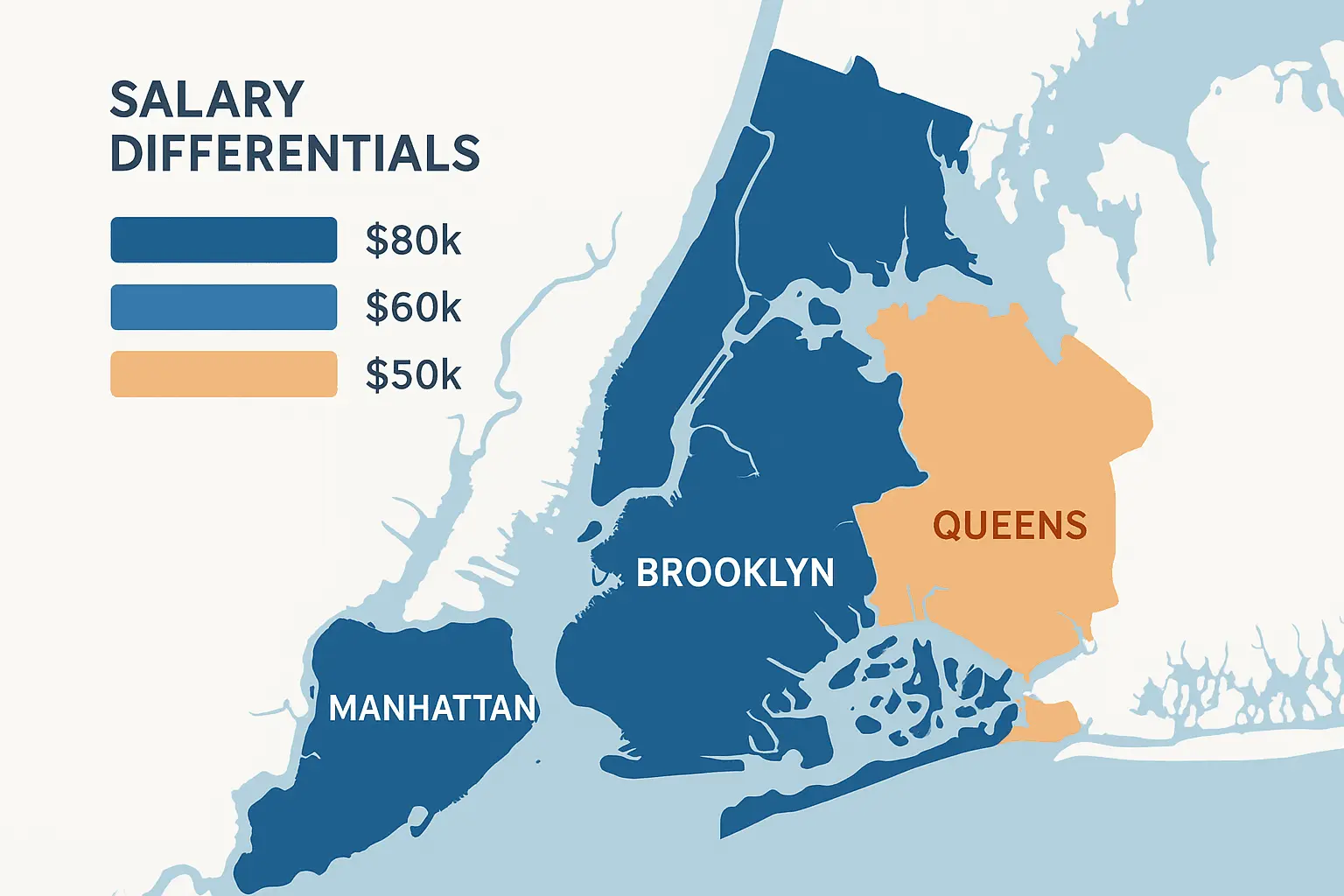
Manhattan-based positions typically offer 10-15% higher salaries compared to Brooklyn, Queens, or Bronx opportunities. The premium reflects both company prestige and commuting convenience for employees. Financial district and Midtown companies generally pay the highest rates because that's where major investment banks, hedge funds, and Fortune 500 headquarters are located.
Outer borough opportunities often provide better work-life balance with still-competitive compensation. Brooklyn's growing tech scene and Queens' emerging business districts offer attractive alternatives without the Manhattan premium and associated stress.
Many NYC companies now offer location-adjusted salaries for remote workers. You might receive 80-90% of NYC salary while living in way lower-cost areas - honestly, that's a pretty sweet arbitrage opportunity if you can swing it. Some companies maintain full NYC compensation regardless of employee location, which creates massive financial advantages for remote workers.
Hybrid work models are becoming the standard. You'll typically need to be in office 2-3 days per week, maintaining access to full NYC salary levels while getting more flexibility than traditional arrangements.
San Francisco typically offers 10-15% higher base salaries, but NYC's lower state income tax and diverse industry presence often result in comparable take-home pay when you do the full math. Seattle and Boston generally pay 15-25% less than NYC, though cost of living adjustments help narrow the real purchasing power gap. But here's the thing - NYC's unique financial services opportunities simply don't exist in those other markets.
Austin and Denver offer 20-30% lower salaries but significantly reduced living costs. Remote work policies are making these markets increasingly attractive for people with NYC-based roles.
Housing costs represent the largest expense differential between markets. Manhattan rent can easily be 2-3x higher than comparable space in other major cities - we're talking thousands of dollars monthly difference. Transportation costs vary significantly by neighborhood and commute requirements. Factor in subway passes, parking fees, or ride-sharing expenses when evaluating different opportunities.
State and local tax implications seriously affect take-home pay. NYC's combined tax rate can reach 12-13% for high earners, which really impacts your effective compensation compared to no-tax states.
Geographic Arbitrage Success Story: My friend Jennifer negotiated a fully remote position with a NYC-based fintech company. She maintained her $185,000 NYC salary while relocating to Austin, Texas. Her effective purchasing power increased by approximately 35% due to lower housing costs ($2,200 vs $4,500 monthly rent), no state income tax, and reduced living expenses across the board, while still maintaining access to NYC's premium job market and networking opportunities.
Strategic networking and relationship building are absolutely essential for accessing premium opportunities in NYC's competitive data science market. You need both professional development and meaningful connections that can provide career guidance, mentorship, and access to exclusive opportunities that never get posted publicly.
NYC offers numerous data science meetups, conferences, and professional organizations - take advantage of them. Regular attendance builds relationships and keeps you current with industry trends that matter. Speaking at conferences and meetups establishes thought leadership and attracts serious recruiter attention. Share your expertise through blog posts, podcasts, or technical presentations to build your professional brand.
Professional certifications demonstrate commitment to continuous learning and provide networking opportunities. AWS, Google Cloud, and specialized analytics certifications enhance your credibility and expand your professional network reach.

Quality relationships matter way more than quantity when it comes to career advancement. Focus on building genuine connections with professionals who share your interests and career aspirations rather than just collecting business cards. Mentorship relationships provide invaluable career guidance and industry insights that you simply can't get elsewhere. Seek mentors both within your company and across the broader NYC data science community.
Cross-functional relationships with product managers, engineers, and business stakeholders enhance your effectiveness and open up career opportunities you might not have considered.
High-achieving data scientists often work in intense, deadline-driven environments where building genuine professional relationships can be seriously challenging. The demanding nature of your career requires strategic approaches to networking that go beyond traditional professional settings and awkward conference small talk.
Exclusive communities focused on shared interests and values create opportunities for meaningful connections in more natural settings. When you're earning premium NYC salaries, investing in strategic networking becomes essential for long-term career success. Consider joining communities where accomplished professionals gather in relaxed, non-transactional environments through communal living spaces in NYC that foster authentic relationship building.
These settings often produce the most valuable professional relationships - connections with potential mentors, collaborators, and future employers who appreciate excellence and strategic thinking beyond just technical skills.
Professional Networking Action Plan:
NYC's data science market offers incredible financial opportunities for skilled professionals willing to navigate its competitive landscape strategically. Your success depends on understanding total compensation structures, developing specialized expertise, and building strategic relationships that open doors to premium opportunities most people never even hear about.
The financial rewards are genuinely substantial - from $95,000 entry-level positions to $400,000+ specialized roles in quantitative finance. But here's what I've learned after years in this market: your career trajectory depends on way more than just technical skills. Strategic positioning, continuous learning, and effective negotiation determine whether you actually capture the full value of NYC's premium market.

Remote work policies are completely reshaping traditional compensation models, creating new arbitrage opportunities while maintaining access to NYC's unique industry ecosystem. The key is understanding how these changes affect your specific situation and career goals rather than just following general advice.
Your investment in professional development and strategic networking pays serious dividends throughout your career. Whether you're considering student housing for continuing education or exploring coliving opportunities that facilitate professional connections, the relationships you build today become the foundation for tomorrow's breakthrough opportunities.
The data science field continues evolving rapidly, and staying ahead requires real commitment to continuous learning, market awareness, and strategic career planning. NYC rewards those who combine technical excellence with business acumen and relationship-building skills - it's not enough to just be good at Python anymore.
Whether you're exploring opportunities in emerging neighborhoods or considering premium Manhattan locations, understanding the intersection of geography, compensation, and career growth remains crucial for long-term success in this market.
Success in this market isn't just about maximizing your current salary - it's about positioning yourself for long-term career growth in one of the world's most dynamic and rewarding professional environments. The opportunities are there if you know how to access them.

Household supplies can be changed or decreaased at Outpost Club’s discretion, or based on supply availability. Outpost is not responsible for temporary losses of utility service. Outpost Club is not responsible for any damages due to absence of any supplies or utilities


If you have a sales related question please call
680-688-7678

 Hot Deals