Minimum Salary NYC: The Hidden Costs That Could Bankrupt Your Business (And How to Avoid Them)
Dec 14, 2025

Dec 14, 2025
Look, I'm going to be straight with you - New York City's minimum wage landscape is a complete mess. According to the NYC Comptroller's Office, "The minimum wage for New York City more than doubled between 2013 and 2020, as a result of State legislation, but its purchasing power has been eroded by the high rate of inflation in the wake of the COVID-19 pandemic."
Here's what this actually means for you: you're dealing with constantly changing rules while your costs keep going up and your purchasing power keeps going down. It's like trying to hit a moving target while someone keeps raising the stakes.
Look, I'm going to be straight with you - New York City's minimum wage system is a nightmare. I've been helping businesses navigate this mess for years, and even I sometimes feel like I need a PhD in labor law just to figure out who gets paid what.
Here's the thing that drives everyone crazy: you're not just dealing with one set of rules. You've got federal regulations, New York State requirements, and then NYC throws its own rules on top. And guess what? They don't always play nice together. It's like trying to follow three different GPS systems at once - they're all trying to get you to the same destination, but they keep giving you conflicting directions.
What makes this particularly brutal is how often these rules change. I swear, every time you think you've got it figured out, some politician decides we need new rates or different calculations. I've seen business owners who were compliant on Monday wake up to find they're violating the law by Friday because of some rule change they missed.
The worst part? Different types of employees, business sizes, and industries all have their own special requirements. It's like a compliance puzzle designed by someone who clearly never had to actually run a business. And when you're trying to figure out the minimum salary NYC requirements while also dealing with sky-high rent costs, it feels impossible.
I remember talking to Sarah, who owns a small marketing agency in Manhattan. She told me she spent more time researching wage laws than actually marketing her business. That's not right, but that's the reality we're dealing with. For professionals trying to navigate these challenges while managing their own expenses, understanding affordable neighborhoods in NYC becomes crucial for financial planning.
According to Honigman LLP, "With 2025 in full swing, many employers are using this time to review their employment practices and update their employee handbooks. New York employers in particular have a lot to keep track of this year." Translation: even the lawyers are overwhelmed.
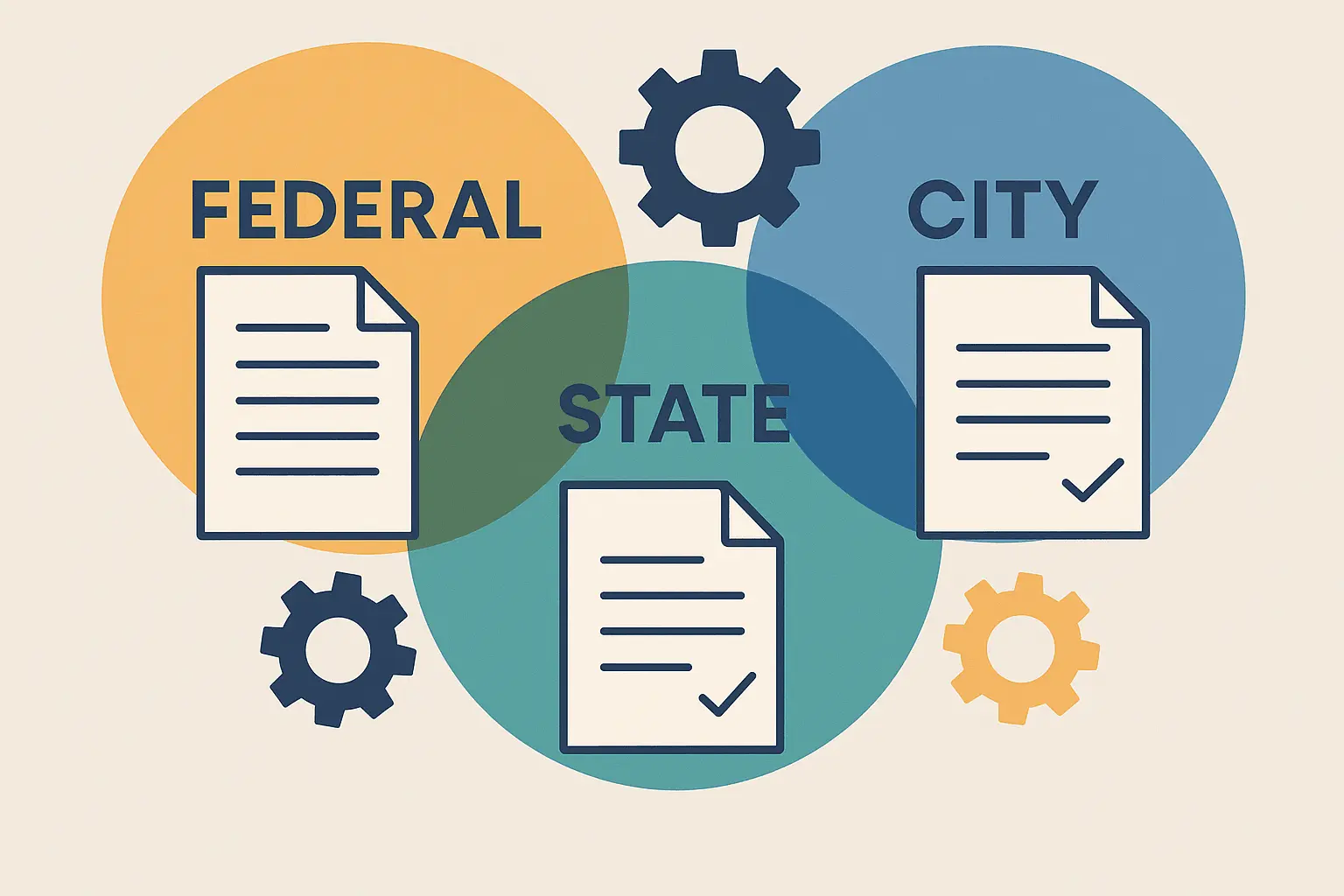
Alright, let's break down the actual numbers because this is where things get real. NYC doesn't just have "a minimum wage" - it's got this whole tiered system that changes based on who you are, how big your business is, and what industry you're in. Fun, right?
|
Who We're Talking About |
What You Pay in 2025 |
What You'll Probably Pay in 2026 |
Who This Covers |
|
NYC (All Employers) |
$16.50 |
$17.00 |
Everyone working in NYC |
|
NYS (Upstate) |
$15.00 |
$16.00 |
Lucky folks outside the city |
|
Federal Minimum |
$7.25 |
$7.25 |
The joke that is the national rate |
|
Fast Food (NYC) |
$17.00 |
$18.00 |
Chain restaurants with 30+ locations |
Here's something that trips up a lot of people: the size of your business used to determine what you had to pay. Small businesses with fewer than 11 employees could get away with paying less. But here's the kicker - they're phasing this out.
I've had so many conversations with small business owners who thought they were safe because they only had 8 employees, only to find out the rules changed while they weren't looking. It's like playing a game where someone keeps moving the goalposts.
The transition period is creating this weird situation where some businesses are getting hit with rate increases faster than others. I watched one coffee shop owner nearly have a panic attack when she realized her labor costs were about to jump 15% overnight. She wasn't prepared because she thought she had another year under the old rates.
And just so we're clear - when they count employees, they're counting ALL your employees across ALL locations. So if you've got a franchise or multiple shops, you're probably in the "big employer" category whether you feel big or not.
If you work in fast food, congratulations - you get the highest minimum wage in the city. But before you celebrate too hard, let me tell you what comes with that extra cash.
First off, "fast food" isn't just McDonald's and Burger King. We're talking about any chain with 30+ locations nationwide that serves food people eat right away. That fancy salad place in Midtown? If they've got locations across the country, they count.
But here's where it gets interesting (and by interesting, I mean complicated): these workers also get something called "predictive scheduling" protections. Basically, employers have to give you your schedule 14 days in advance and pay you extra if they change it last minute.
I know a McDonald's franchise owner in Manhattan who told me this rule completely changed how he runs his business. He can't just call someone in when it gets busy anymore - every schedule change costs him money. It's better for workers, but it's definitely changed the game for employers.
Oh boy, here we go. If you've got tipped employees, buckle up because this is where things get really fun (and by fun, I mean incredibly complicated).
Here's the deal: employers can pay tipped workers less per hour IF their tips bring them up to at least minimum wage. Sounds simple, right? Wrong. You're responsible for making up any shortfall, and you have to track this stuff obsessively.
I can't tell you how many restaurant owners I've met who thought they could just average tips over a month and call it good. Nope. Each pay period has to meet minimum wage on its own. Had a slow Tuesday where your server only made $50 in tips? You're making up the difference.
The paperwork alone is enough to make you want to cry. You need records of every tip, every hour worked, every supplement you paid. Miss any of this documentation, and you lose the right to use tip credits entirely. I've seen it happen, and it's not pretty.
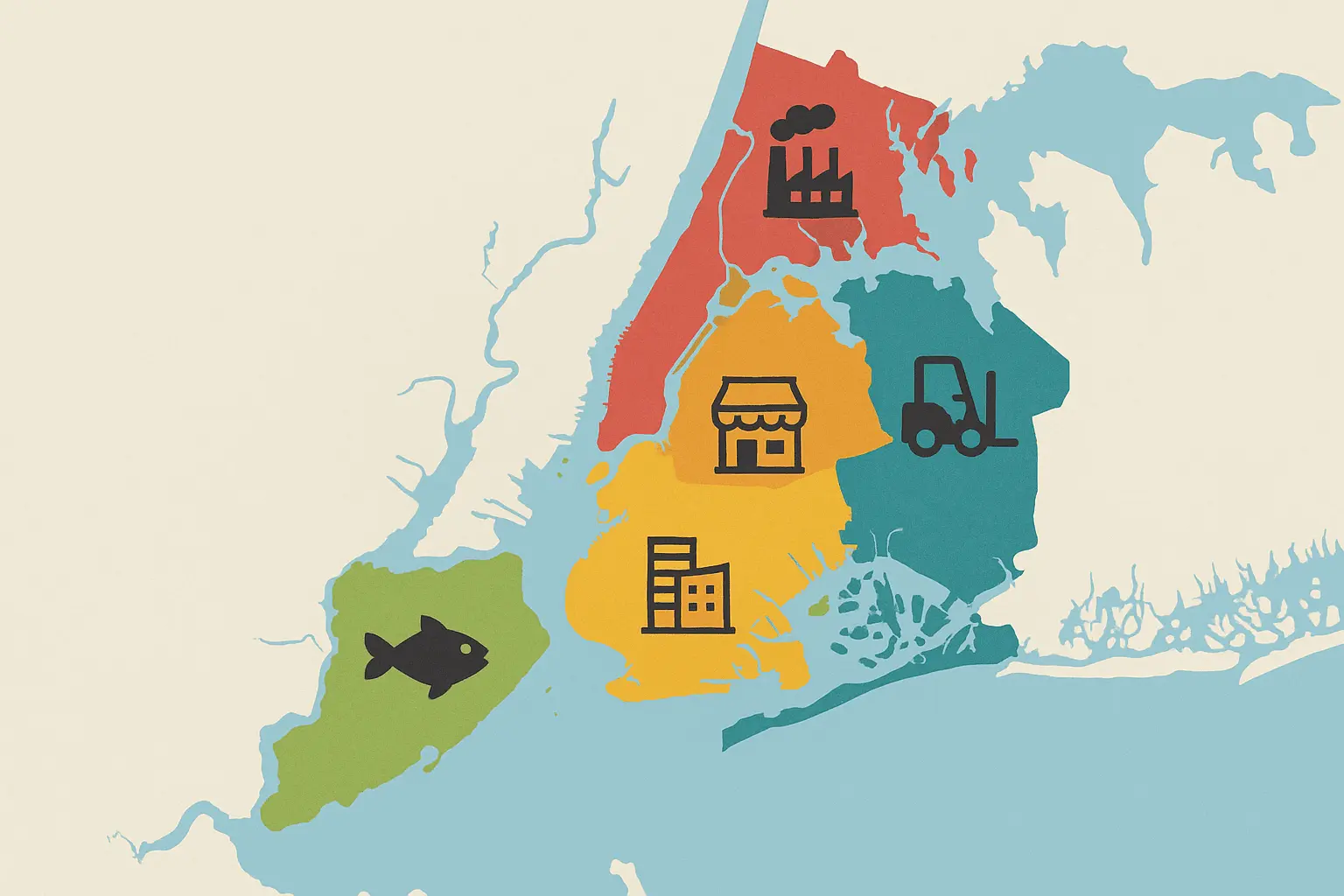
Here's something that confuses everyone: while all five boroughs follow the same NYC minimum wage rules, you're still dealing with this crazy layer cake of federal, state, and city regulations. It's like having three different bosses who all want different things.
The rule is simple: pay whichever rate is highest. In practice? It's a headache because you need to keep track of changes at all three levels.
The federal minimum wage is basically irrelevant in NYC - $7.25 is a joke when you're trying to survive in this city. New York State is higher but still below NYC rates. Most of the time, you'll be following city rules, but here's the thing that keeps me up at night: what happens when one of the other levels changes?
I remember when there was talk about raising the federal minimum wage to $15. Suddenly, every employer in the city was trying to figure out how that would affect their calculations. It didn't happen, but the confusion was real.
The Greater Rochester Chamber warns that things are changing again: "$17 per hour in NYC, Long Island, and Westchester County, and $16 per hour for employers in the rest of NY state" starting January 1, 2026. See what I mean about constant changes?
Just when you think you've got it figured out, certain industries get their own special rules. Hotels, home care, seasonal work - they all have their own little quirks that make compliance even more fun.
I worked with a hotel in Times Square that had to deal with different tip credit rules, seasonal adjustments, and live-in employee provisions all at the same time. The HR manager there told me she needed a flowchart just to figure out how to pay people correctly.
Home care is particularly tricky because you've got people working in private homes with weird schedules and overnight stays. The personal nature of the work creates situations that normal wage and hour laws just weren't designed for.
Agricultural work maintains completely different standards. While it's not common in NYC, urban farming and specialty food production can trigger these alternative requirements that nobody expects.
Okay, enough doom and gloom. Let me tell you what actually works when you're trying to deal with all this compliance stuff without losing your mind.
First things first: your payroll system needs to be bulletproof. And I don't mean "pretty good" - I mean it needs to handle all this complexity automatically because manual calculations are where mistakes happen.
Your system needs to know which employee falls under which rules, calculate different rates automatically, and handle overtime without you having to think about it. I've seen too many businesses try to save money with basic payroll software, only to get hit with violations because the system couldn't handle NYC's complexity.
Integration is key. Your time-tracking needs to talk to your payroll system, which needs to connect to your scheduling software. When these systems don't communicate, that's where errors creep in.
Let me give you a real example: I know a Brooklyn restaurant that invested in an integrated POS and payroll system. When a server's tips fall short during a slow shift, the system automatically calculates what the restaurant owes and flags it for payroll. No manual calculations, no missed payments, no violations.
Set up automated alerts for when rates change. Trust me, you don't want to find out about a minimum wage increase from a Department of Labor investigator.
I'm going to say this loud and clear: your documentation needs to be perfect. Not good, not pretty good - perfect. Because when the city comes knocking, your records are your only defense.
Electronic time tracking is non-negotiable. Those handwritten timesheets your employees fill out? They're not going to cut it when you're trying to prove compliance. You need systems that capture actual clock-in and clock-out times.
Pay stubs need to show everything - regular wages, overtime, tips, deductions, the works. Generic payroll summaries won't protect you. Employees have the right to understand exactly how their pay was calculated.
Keep everything for at least six years. I know it sounds excessive, but violations can surface years later, and you'll need those records to defend yourself.
Your Documentation Survival Kit:

Let me paint you a picture of what happens when things go wrong, because the penalties for wage violations in NYC are no joke. I've seen good businesses get destroyed by compliance failures that could have been avoided.
The NYC Department of Consumer and Worker Protection doesn't mess around. When they find violations, the penalties come fast and hard. We're talking about back pay that can go back years, plus interest, plus fines that can equal or exceed what you owe in back pay.
I know a small restaurant owner in Queens who got hit with a $45,000 penalty for tip credit violations affecting just six employees. The back pay was bad enough, but the fines nearly put him out of business. This wasn't some evil employer trying to cheat workers - this was a good guy who made honest mistakes with complex calculations.
Criminal charges are possible for willful violations. When prosecutors think you intentionally stole wages, business owners can face jail time. That's not a business risk - that's a personal freedom risk.
But here's what really kills businesses: the reputation damage. Once word gets out that you've been cited for wage violations, good luck recruiting quality employees or maintaining customer relationships. In the age of social media and online reviews, your reputation can be destroyed overnight.
Here's something that catches a lot of employers off guard: workers are heavily protected when they report violations, and retaliation claims can arise even when you think you're making legitimate business decisions.
Let's say an employee files a wage complaint, and two weeks later you have to lay people off due to slow business. Even if the layoff is completely legitimate, it can look like retaliation. Suddenly you're dealing with a retaliation claim on top of whatever wage violation triggered the original complaint.
Multiple complaint channels mean problems can surface anywhere. Employees can file with the city, the state, or federal agencies. Each one can trigger separate investigations with different procedures and penalties.
Class action potential is the real nightmare scenario. When systematic problems affect multiple employees, individual violations can turn into company-threatening lawsuits. I've seen businesses that survived the initial penalties get destroyed by the class action that followed.
|
What You Did Wrong |
How Much It'll Cost You |
What Else You Owe |
Additional Pain |
|
Underpaid minimum wage |
$500-$1,000 per violation |
Full difference + interest |
Double damages possible |
|
Screwed up tip credits |
$1,000-$2,500 per employee |
All the money you shouldn't have credited |
Possible criminal charges |
|
Lousy record-keeping |
$250-$500 per missing record |
N/A |
Triggers deeper investigations |
|
Retaliation |
$1,000-$5,000 per incident |
Reinstatement + lost wages |
Punitive damages |
Let's talk about the elephant in the room: what all this actually costs and how it affects real people trying to make a living in this expensive city.
Here's the thing nobody wants to admit: even with NYC's higher minimum wages, people are still struggling. I've talked to workers making $16.50 an hour who are spending 70% of their income on rent. That's not sustainable, and it's not healthy.
Housing costs are absolutely brutal. A worker earning minimum wage in NYC typically needs to spend way more than the recommended 30% of income on housing just to have a roof over their head. This creates constant pressure for wage increases, which creates pressure on businesses, which creates a cycle that's hard to break.
Transportation eats up another chunk. A monthly MetroCard, parking fees, or car expenses can easily consume 10-15% of a minimum wage worker's income. Then you've got food, healthcare, utilities - suddenly there's nothing left for savings or emergencies.
The Economic Policy Institute puts it bluntly: "NYC's $16.50 minimum wage is around half of the living wage in most of the city's boroughs. By comparison, the minimum wage is around three-quarters the estimated living wage in Seattle, Washington D.C., and Los Angeles."
Think about that for a second. Even with all these increases, minimum wage workers are still earning about half of what they need to actually live here comfortably. The gap between minimum wage and living wage keeps getting wider, no matter how many increases we see.
I've watched businesses try every strategy in the book to deal with rising labor costs. Some succeed, some adapt, and some... well, some don't make it.
Automation is accelerating fast. Those self-service kiosks at McDonald's? They're not going anywhere. Digital ordering, automated scheduling, self-checkout - businesses are investing in technology to reduce their dependence on labor.
I know a pizza place in Brooklyn that went from having three people working the counter to one person managing four self-service stations. Same service level, lower labor costs. It's not personal - it's survival.
Efficiency improvements become mandatory. Businesses are streamlining everything - cross-training employees, eliminating redundant processes, finding ways to do more with fewer people. The days of having extra staff "just in case" are over for many small businesses.
Pricing adjustments are inevitable. Customers end up paying for higher labor costs through increased prices. A $12 burger becomes a $14 burger. Some customers adjust, others go elsewhere. It's a delicate balance.
Some businesses completely change their models. I've seen restaurants go delivery-only, retail stores reduce hours, and service companies eliminate offerings that require too much labor. The market adapts, but not always in ways that benefit workers or customers.
Whether you're an employee trying to build a career or an employer trying to attract talent, understanding how to navigate NYC's economic realities goes way beyond just knowing the minimum wage.
Let me be blunt: if you're planning to stay at minimum wage in NYC, you're planning to struggle. The math just doesn't work. You need a strategy to move beyond entry-level positions, and you need to start working on it from day one.
Skills development isn't optional - it's survival. I've seen too many people get stuck in minimum wage jobs because they didn't invest in learning new skills. Industry certifications, online courses, professional development - these aren't nice-to-haves, they're necessities.
Networking matters more in NYC than almost anywhere else. The competition is fierce, and often it's not what you know but who you know that opens doors. Join professional associations, attend industry events, connect with people in your field. I know it sounds cheesy, but it works.
Side hustles aren't just trendy - they're often necessary. Most successful people I know in NYC have multiple income streams. Freelance work, consulting, part-time gigs - whatever it takes to build financial stability that one job can't provide.
Your Career Survival Checklist:
If you're an employer, here's the truth: just meeting minimum wage requirements isn't going to cut it if you want to attract and keep quality employees. The businesses that thrive are the ones that go beyond compliance.
Pay above minimum when you can. I know, easier said than done. But even an extra dollar an hour can make a huge difference in attracting better candidates. Performance bonuses, advancement opportunities, profit-sharing - get creative with compensation.
Invest in your people's growth. Training programs, tuition assistance, skill-building opportunities - these benefit everyone. Your employees become more valuable, and your business gets more capable workers. It's a win-win when done right.
Flexibility is huge. Predictable schedules, remote work options where possible, reasonable time-off policies - these things improve job satisfaction without necessarily increasing your direct wage costs.
Technology can be your friend here. Good systems reduce administrative headaches for everyone, provide transparency, and make work more efficient. When employees aren't fighting with broken systems all day, they're happier and more productive.
The NYC Comptroller notes that "annual indexation under the Raise Up NY rules averaged 4.6% per year (2.0% from productivity and 2.6% from CPI-W inflation), versus 1.5% under the rules set in the Governor's proposal." Translation: these increases aren't slowing down, so plan accordingly.

Different industries face their own special versions of minimum wage hell. Let me break down what I see in the sectors that struggle most with compliance.
If you're in the restaurant business, you have my sympathy. The combination of tip credits, fluctuating schedules, seasonal variations, and multiple employee types creates a compliance nightmare that would make a tax attorney weep.
Tip pooling is where I see the most mistakes. You can't include managers in tip pools, you can't force servers to share tips with kitchen staff in certain situations, and the distribution has to follow specific rules. I've seen restaurants get hammered for tip pooling violations they had no idea they were committing.
Fluctuating schedules make everything harder. Restaurant work involves split shifts, doubles, varying schedules, and seasonal adjustments. Calculating overtime when someone works a double on Tuesday but only four hours on Wednesday? Good luck with that math.
Different roles, different rules. Your servers might be on tip credit minimum wage, your kitchen staff on regular minimum wage, your bartenders in a tip pool, and your managers on salary. Each category has different compliance requirements.
Let me give you a real example: I know a trendy SoHo restaurant with 25 employees across different roles. Servers earn $10.65 base plus tips, kitchen staff get $17.00 minimum, bartenders are in a tip pool arrangement. The owner needs three different payroll calculations, separate tip credit tracking, and individual overtime computations. It's exhausting.
Retail has its own special challenges, especially with part-time scheduling and commission structures that have to guarantee minimum wage no matter what.
Commission structures trip up a lot of retailers. You can't pay someone purely on commission and hope they make minimum wage. If they have a slow sales week, you're making up the difference. I've seen electronics stores get burned by this when new employees don't hit their sales targets.
Part-time scheduling gets complex with predictive scheduling requirements. Retail businesses need systems that provide schedule stability while maintaining flexibility for customer demand. It's a balancing act that many struggle with.
Seasonal employment creates its own headaches. Holiday hiring, back-to-school rushes, summer sales - these patterns require payroll systems that can handle temporary workers, different calculation periods, and varying benefit accruals.
Customer service expectations can conflict with labor cost management. Customers want immediate help, knowledgeable staff, and personalized service. All of that costs money in labor hours that have to be carefully managed.
The NYC Comptroller estimates that "directly affected workers reaches 1.1 million in 2026, or about one quarter of the total working in NYC" under proposed wage increases. That's a lot of people whose paychecks are about to change.

Alright, enough theory. Let's talk about what you actually need to do right now to get your compliance house in order.
Stop everything and audit your current payroll practices. I'm serious - drop what you're doing and spend a day going through your wage calculations, employee classifications, and record-keeping. You need to know where you stand before you can fix anything.
Update your payroll systems immediately if they can't handle NYC's complexity automatically. Manual calculations are where mistakes happen, and mistakes cost money. Invest in technology that can manage different rates, overtime rules, and tip credits without you having to think about it.
Write down your policies. Document exactly how you calculate wages, handle schedule changes, and classify employees. This isn't just for compliance - it's so you can train your managers and ensure consistent application across your business.
Train your management team on proper procedures. Your supervisors need to understand their role in maintaining compliance. They should know how to recognize potential violations and what to do when questions arise.
Your 30-Day Action Plan:
If you're an employee, you need to be proactive about protecting your rights. Don't assume your employer is handling everything correctly - mistakes happen, and you're the one who suffers when they do.
Analyze your pay stubs carefully every single pay period. Look for accuracy in wage calculations, overtime payments, and deduction explanations. If something looks wrong, ask questions immediately. Don't wait until it becomes a bigger problem.
Keep your own records of hours worked. I know it's a pain, but having personal documentation of start times, end times, breaks, and overtime hours can save you if disputes arise. Your phone can track this stuff automatically if you set it up right.
Know where to file complaints if needed. The NYC Department of Consumer and Worker Protection handles most wage violations, but you can also file with state and federal agencies. Understanding your options gives you leverage.
Understand your retaliation protections before you need them. You're legally protected from adverse employment actions when reporting wage violations, but documenting the timeline helps prove any retaliatory behavior.
Employee Self-Protection Checklist:
The NYC Comptroller projects that "aggregate wage earnings gains increase by approximately $2b each year (in 2022 dollars) through 2026" under the Raise Up NY proposal. That's real money going into workers' pockets, but only if compliance is handled correctly.
Look, dealing with NYC's wage landscape while trying to build a career here is exhausting. I get it. The compliance stuff, the high costs, the constant pressure - it wears you down.
That's where community becomes crucial. At Outpost Club, we've built something for professionals who understand these challenges because they're living them every day. Our members include employers trying to navigate compliance costs and employees working to advance beyond minimum wage positions.
The networking opportunities alone are worth it. You'll connect with people across industries who've successfully dealt with NYC's economic pressures. Whether you need advice on negotiating better compensation or strategies for managing compliance costs, our community shares real insights from people who've been there.
Many of our members have found success by understanding exactly how much you need to make to live in NYC and using that knowledge to plan their career moves strategically. It's not just about surviving - it's about thriving.
The financial stress of NYC living affects everyone differently, but having people who understand makes the journey more manageable. Our events and partnerships give members access to experiences and connections that help balance the intensity of urban professional life.
Ready to connect with professionals who get what you're dealing with? Apply for membership and discover how community support can make your NYC professional journey more sustainable and successful.

Here's the bottom line: NYC's minimum wage requirements are just one piece of a much bigger puzzle. Whether you're trying to stay compliant as an employer or advance your career as an employee, success requires understanding both the regulatory requirements and the economic forces that shape everything else.
The complexity isn't going away. If anything, it's getting worse as the city continues trying to balance worker protection with business sustainability. These regulations will keep evolving as economic conditions change and political priorities shift.
For employers, proactive compliance isn't just about avoiding penalties - it's about building business practices that can adapt to whatever changes come next. The businesses that survive and thrive are the ones that view wage compliance as part of their broader talent management strategy, not just another regulatory burden to deal with.
For employees, understanding these requirements is just the starting point. The real challenge is developing the skills, networks, and strategic thinking needed to advance beyond minimum wage positions in one of the most expensive cities in the world.
Success in NYC requires creative approaches to managing expenses, such as learning how to budget for an apartment while building the skills needed to advance beyond minimum wage positions. It's about combining regulatory awareness with strategic career planning and meaningful professional connections.
The intersection of regulatory compliance, economic pressures, and professional growth creates challenges that require both technical knowledge and community support. Nobody succeeds in NYC's environment purely on their own - it takes combining regulatory awareness with strategic planning and meaningful professional connections.

Household supplies can be changed or decreaased at Outpost Club’s discretion, or based on supply availability. Outpost is not responsible for temporary losses of utility service. Outpost Club is not responsible for any damages due to absence of any supplies or utilities


If you have a sales related question please call
680-688-7678

 Hot Deals