NYC Salary Calculator: The Hidden Costs That Could Be Draining Your Paycheck
Dec 10, 2025

Dec 10, 2025
I still remember the shock of my first NYC paycheck. I thought I was making decent money until I saw how much was left after taxes. If you're working in New York City, you've probably felt that same gut punch. Honestly, NYC is a nightmare when it comes to salary calculations because you're not just dealing with federal and state taxes—the city wants a piece too.
According to SmartAsset's paycheck calculator data, New York state has a progressive income tax system with rates ranging from 4% to 10.9% depending on income level and filing status, while NYC adds its own local income tax ranging from 3.078% to 3.876% on top of federal and state obligations.
Look, working in NYC means you're basically getting hit with taxes from every direction. It's not just the feds and the state taking their cut—the city wants a piece too. And honestly? It can be pretty overwhelming when you're trying to figure out how much you'll actually take home.
I've been helping people navigate this mess for years, and here's what I've learned: those three tax layers don't just add up—they interact in ways that can either save you money or cost you big time if you're not paying attention.
Here's the thing that catches most people off guard: your health insurance, 401k contributions, and even your MetroCard money can actually reduce how much you owe across ALL three tax levels. It's like getting a discount that multiplies itself.
For professionals trying to figure out if they can even afford to live here while dealing with all these taxes, understanding the real cost of living in NYC becomes essential for accurate budgeting and financial planning.
Take my friend Sarah—she's making $85K as a marketing manager in Manhattan. When she first started, she was freaking out because she calculated about $2,200 going to taxes every month. That's over 30% of what she makes! But once we sat down and maxed out her 401k and factored in her health insurance, she dropped into lower tax brackets and started saving around $600 a month. Not too shabby, right?
Okay, let's start with the foundation—federal taxes. These are the same no matter where you live, but understanding how they work is crucial before we pile on the state and local stuff.
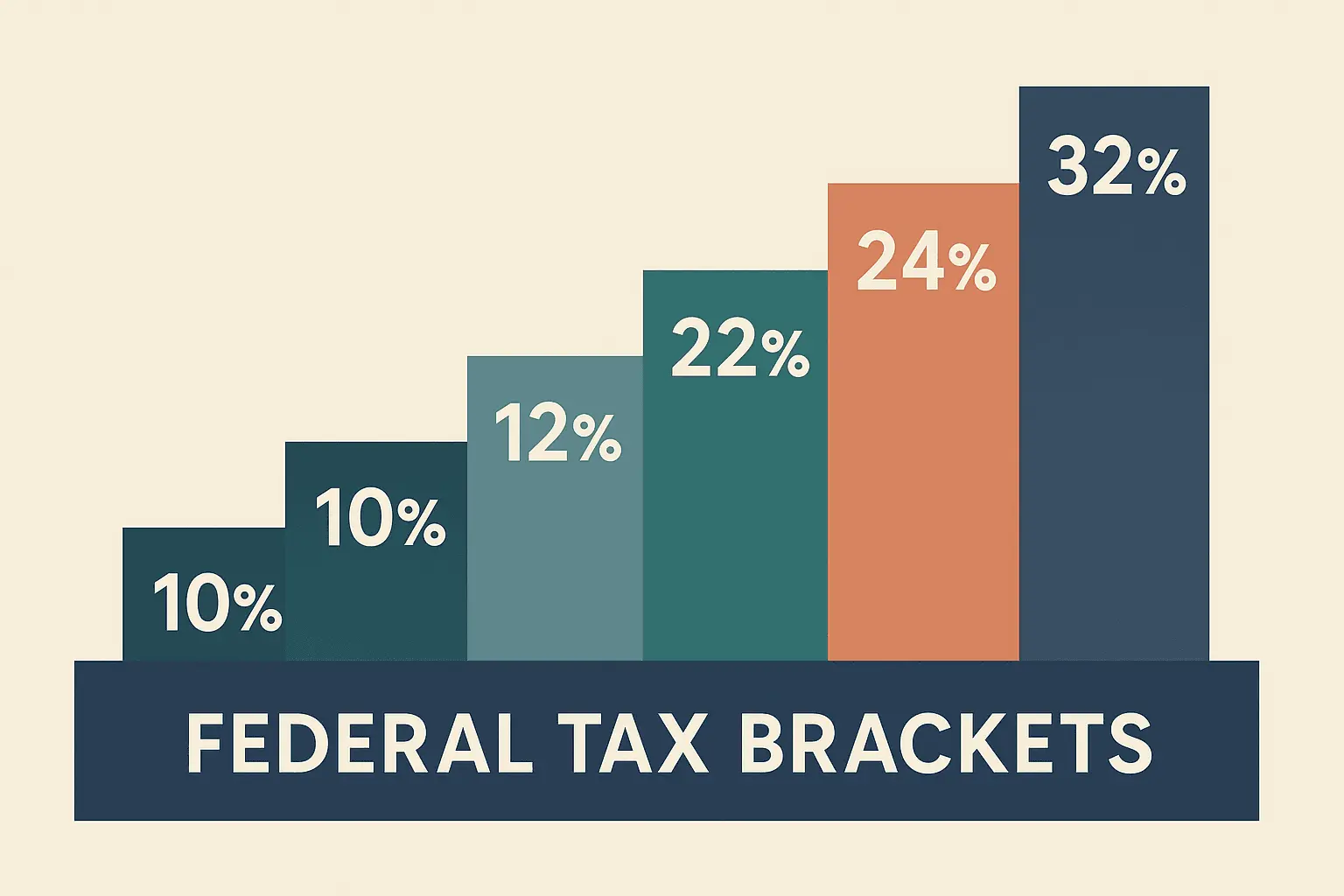
Here's something that trips up almost everyone: when people say they're "in the 24% tax bracket," they think their whole paycheck gets taxed at 24%. Nope! It's more like a staircase—your first chunk of money gets taxed at the lowest rate, then the next chunk at a slightly higher rate, and so on.
This is actually good news. It means when you get that raise or bonus, you're never going to take home less money because you moved up a bracket. Only the extra amount gets hit with the higher rate.
For us NYC folks, this matters a lot when you're thinking about bonuses or negotiating salary. Sometimes that extra $5K might push part of your income up a bracket, but you're still coming out ahead.
This is where things get interesting for New Yorkers. The standard deduction is simple—just take the fixed amount ($14,600 for single people in 2024) and call it a day. But here in NYC, we often have expenses that blow past that number.
The tricky part? There's this thing called the SALT cap that limits how much state and local tax you can deduct to $10,000. For a lot of us here, we hit that limit just with our state and city income taxes alone. It's honestly pretty frustrating, but it is what it is.
State and local tax payments, mortgage interest on crazy expensive NYC real estate, and charitable contributions can add up fast. But that SALT cap has really changed the game for high-income New Yorkers.
New York State doesn't mess around when it comes to taxes. They want their cut, and they're not shy about it.
The state starts at 4% for lower incomes, but it climbs pretty quickly. Most of us working in the city end up somewhere in the middle ranges, which isn't too bad, but it's not great either.
What's kind of interesting (or annoying, depending on how you look at it) is that New York treats different types of income differently. So if you're in finance and have some investment income on top of your salary, those might get taxed differently.
|
Income Range (Single Filer) |
NY State Tax Rate |
Effective Rate on Range |
|
$0 - $8,500 |
4.00% |
4.00% |
|
$8,501 - $11,700 |
4.50% |
4.11% |
|
$11,701 - $13,900 |
5.25% |
4.35% |
|
$13,901 - $80,650 |
5.50% |
5.35% |
|
$80,651 - $215,400 |
6.00% |
5.58% |
|
$215,401 - $1,077,550 |
6.85% |
6.25% |
|
$1,077,551+ |
10.90% |
Variable |
Here's where New York actually tries to help you out a bit. They have some deductions that the feds don't offer. If you're paying college tuition to a New York school, you can deduct that. There's also a break for contributing to New York's 529 college savings plan.
The Empire State Child Credit is another nice touch if you have kids. These aren't huge money-savers, but every bit helps when you're dealing with NYC costs.
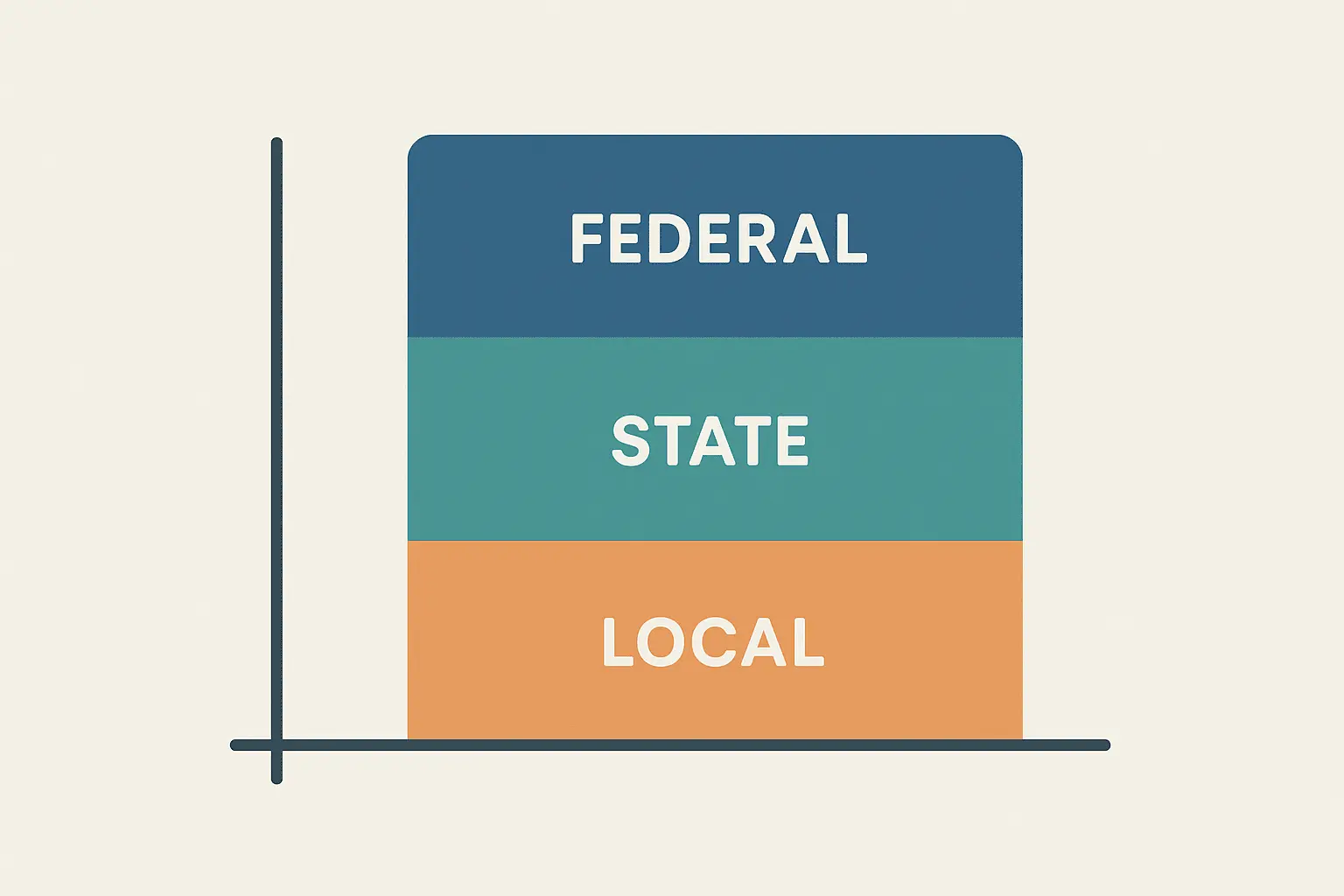
And here's where NYC really sets itself apart from most other cities—they want their own piece of your paycheck too.
The city tax might look small compared to federal and state, but trust me, it adds up. Single folks start at about 3.078% on the first $12K, then it bumps up to 3.876% once you're making over $50K.
When you add up all three levels—federal, state, and city—you're looking at potentially 40% or more of your gross income going to taxes if you're doing well. It's honestly pretty brutal.
This is where things get really interesting. If you live in the city, you pay NYC tax on everything you make. But if you live in Westchester or Long Island and commute in? You still owe NYC tax on what you earn here, but you might also owe your home county.
My buddy from Jersey was shocked to learn he owed NYC tax even though he goes home to Hoboken every night. The city doesn't care where you sleep—if you earn it here, they want their cut.
Non-residents from other states face NYC tax only on what they earn within city limits, but they might also owe taxes back home, which can create some really messy double taxation situations.
Okay, now we're getting into the stuff that really matters for day-to-day life in the city.
Let's be real about housing costs. Financial experts love to say "don't spend more than 30% on rent," but good luck with that in NYC. Most of us are spending 40-50% of our take-home just on rent, and that's if we're being reasonable about it.
According to recent data from SmartAsset's NYC salary analysis, the average household income in New York City was $127,894, yet the median household income is significantly lower at $79,713, highlighting the income disparity that affects housing affordability across different salary levels.
For young professionals trying to figure out the real numbers, understanding how much you need to make to live in NYC provides crucial insight for career planning and housing decisions.
Then there's transportation. A monthly MetroCard is around $132, but let's be honest—you're probably spending more than that between occasional Ubers, parking when friends visit, and all the other little transportation costs that add up. If you're thinking about a car in Manhattan, you're looking at $300-500 monthly just for parking, plus insurance rates that'll make your eyes water.
Recent findings from SmartAsset's 2025 comfortable living study reveal that a single adult needs at least $136,656 annually to live comfortably in New York City, while a family of four requires $306,093 in combined household salary, demonstrating how NYC's cost of living significantly exceeds the national median household income of $80,610.
Here's where you can actually fight back against all those taxes. Pre-tax benefits are like getting a discount at all three tax levels—federal, state, and city.
When you put $500 into your 401k, you're not just saving on federal taxes. You're also reducing what New York State and NYC can tax. It's like a triple win.
Health insurance premiums are huge here, so paying them with pre-tax dollars makes them way more manageable. Same thing with FSAs for healthcare costs—just don't overestimate because you typically lose what you don't use.
The commuter benefits are clutch for NYC workers. You can set aside up to $315 a month for transit and another $315 for parking, all pre-tax. If you're in a 35% combined tax bracket, that's saving you over $2,600 a year just on commuting costs.

I know a software engineer making $120K who's gotten really smart about this. Michael contributes $23K to his 401k, pays $4,800 for health insurance, puts $3K in an FSA, and uses the full commuter benefit. All told, he's reducing his taxable income by over $34K, which saves him about $12,100 in taxes. That's a 35% return on money he was going to spend anyway!
Before you can run any calculations, you need to get your paperwork together. I know, I know—paperwork is boring. But trust me, having the right info makes all the difference.
Your tax return from last year is like a roadmap. It shows you what actually happened with your taxes, not what you thought would happen. Look at your effective tax rates and what deductions you claimed—that's your starting point for this year.
Your recent pay stubs are gold mines of information. They show you what your employer is actually withholding and how you're tracking toward annual limits on things like Social Security taxes.
Here's what you need to gather:
If you have a straightforward salary with normal benefits, calculating your take-home is pretty simple. But if you're in finance with big bonuses, tech with stock options, or freelancing, things get complicated fast.
Bonuses often get taxed at higher rates during payroll processing, which means you might get over-withheld and get money back when you file. Understanding this timing helps you plan your cash flow better and avoid freaking out when you see that big tax bite on your bonus check.
Look, I'm all for using technology to make life easier, but you should also understand how this stuff actually works.
Not all salary calculators are created equal, especially for NYC's crazy tax situation. The good ones handle federal, state, and city taxes all at once and let you input all your pre-tax deductions and benefits.
Look for calculators that get updated regularly for tax law changes and give you detailed breakdowns. Some are great for basic scenarios but fall apart when you have complex compensation like stock options or irregular bonuses.
I know doing math by hand sounds old-school, but hear me out. When you calculate everything yourself, you really understand how it all works. Plus, you can catch errors in online tools or even your payroll department.
According to NYC's official pay rate calculator, the formula for calculating bi-weekly gross pay is: Bi-Weekly Gross = Annual Salary ÷ 365 days × 14 days, which gives you the foundation for understanding how your annual salary translates to actual paycheck amounts.
|
Calculation Step |
Manual Formula |
Example ($80,000 salary) |
|
Bi-weekly Gross |
Annual ÷ 365 × 14 |
$80,000 ÷ 365 × 14 = $3,068 |
|
Federal Tax (22%) |
Gross × 0.22 |
$3,068 × 0.22 = $675 |
|
NY State Tax (6.33%) |
Gross × 0.0633 |
$3,068 × 0.0633 = $194 |
|
NYC Tax (3.648%) |
Gross × 0.03648 |
$3,068 × 0.03648 = $112 |
|
FICA (7.65%) |
Gross × 0.0765 |
$3,068 × 0.0765 = $235 |
|
Net Bi-weekly |
Gross - All Taxes |
$3,068 - $1,216 = $1,852 |
Don't wait until tax season to think about this stuff. There are things you can do all year long to keep more of your money.
Getting your W-4 right is an art form. You want to withhold enough to avoid penalties but not so much that you're giving the government an interest-free loan all year.
This gets tricky if you have side income from consulting, rental properties, or investment gains. You might need to make quarterly estimated payments to stay out of trouble with the IRS, and trust me, you don't want to mess around with penalties.
Think about where your career is heading. As you make more money, you'll hit higher tax brackets, which makes tax-advantaged savings even more valuable. It's like compound interest, but for tax savings.
For professionals considering budget-friendly housing options while maximizing their savings potential, exploring how to stay on budget in NYC provides practical strategies that complement effective tax planning.
When you're negotiating salary, remember that a $10K raise might only put $6K-7K in your pocket after taxes. Sometimes benefits or pre-tax perks are worth more than straight cash. I've seen people turn down higher salaries for better 401k matches or health insurance, and they came out ahead.
Different industries in NYC have their own quirks when it comes to compensation, and trust me, these quirks can really mess with your tax planning.
If you're on Wall Street, your year-end bonus might double your regular salary. These bonuses get hit with flat 22% federal withholding plus full state and city taxes. You'll probably get over-withheld and get money back, but it affects your cash flow in a big way.
Stock options are a whole other beast, especially ISOs that might trigger Alternative Minimum Tax. That's basically a parallel tax calculation where you pay whichever is higher—regular tax or AMT. It's designed to make sure high earners can't escape taxes entirely, but it can catch people off guard.
RSUs create taxable income the moment they vest, even if you don't sell the stock. If your company's stock has gone up a lot since you got the grant, you could get hit with a big tax bill on gains that only exist on paper.
Startup equity is even trickier. Early options might not cost much tax-wise when you exercise them, but if the company goes public or gets acquired, you could face huge tax bills that you weren't prepared for.
Freelancers get hit with self-employment tax—basically paying both the employee and employer portions of Social Security and Medicare. That's 15.3% on top of regular income taxes. It's brutal, but there are ways to fight back.
The good news? You get to deduct business expenses. Home office, equipment, software, networking events—it all adds up. The Section 199A deduction might let you deduct 20% of your business income, though there are income limits and restrictions.
My friend Jennifer freelances as a graphic designer making $90K. She pays $13,770 in self-employment tax, but she deducts $15K in business expenses and gets another $15K qualified business income deduction. She ends up saving about $8,500 compared to a regular employee making the same amount.
I've seen people make the same mistakes over and over. Don't be one of them.
If you have two jobs, each employer calculates withholding like their job is your only income. So if you have two $60K jobs, each employer withholds like you're making $60K total, not $120K. Come tax time, you're going to owe money—and probably penalties too.
Married couples have the same problem if both spouses work. Their combined income might push them into higher brackets than either employer realizes. The W-4 has worksheets for this, but most people don't fill them out correctly.
Some employer benefits create taxable income even though you don't get cash. Life insurance over $50K, company cars, gym memberships—they all might show up as taxable income on your W-2, and it can catch you off guard.
Common benefits that create taxable income:
After all this work to figure out your take-home pay and optimize your taxes, you deserve housing that doesn't eat up all your hard-earned money.
Just as professionals benefit from understanding how much money you should save before renting an apartment, strategic housing decisions require the same kind of financial planning and budgeting discipline.
That's where Outpost comes in. We get that NYC professionals need housing solutions that make financial sense. Our coliving spaces give you fully furnished rooms in great neighborhoods with transparent pricing that fits into your carefully planned budget.
No hidden fees, no surprise costs—just predictable monthly payments that let you budget accurately. When every dollar of take-home pay matters in this expensive city, that predictability is huge. Plus, we handle utilities, internet, and maintenance, so you can focus on your demanding career.
The networking opportunities with other professionals who understand the unique challenges of thriving in America's financial capital often prove just as valuable as the housing itself. Many members find that connections made through Outpost lead to career opportunities, business partnerships, or simply valuable friendships with others who appreciate both professional success and quality living.

Ready to reward yourself for mastering NYC's complex financial landscape? Explore our available houses and discover how strategic housing can enhance both your personal satisfaction and professional network.
Look, mastering NYC salary calculations isn't fun, but it's absolutely necessary if you want to thrive here. Once you understand how federal, state, and city taxes work together, plus how to optimize your pre-tax benefits, you'll be way ahead of most people stumbling through the city's financial maze.
The key is staying on top of it throughout the year, not just scrambling during tax season. Adjust your W-4 when your situation changes, maximize those pre-tax contributions, and keep learning about industry-specific considerations that affect your particular employment situation.
For young professionals just starting their NYC careers, understanding both salary calculations and ways to save money on rent creates a solid foundation for long-term financial success in the city.
Whether you're just starting out in NYC or you've been here for years, understanding your true take-home pay helps you make better decisions about everything from job offers to apartment hunting to long-term financial planning. It's the foundation for all your other financial decisions in one of the world's most expensive cities.
Remember, these salary calculations aren't just academic exercises—they're the foundation for your entire financial life here. Whether you're negotiating a new position, planning a major purchase, or simply trying to optimize your monthly budget, accurate understanding of your true take-home pay enables confident financial decisions.
It's complicated, sure, but you've got this. And hey, once you figure it out, you can help the next person who's staring at their first NYC paycheck in shock, wondering where all their money went. We've all been there.

Household supplies can be changed or decreaased at Outpost Club’s discretion, or based on supply availability. Outpost is not responsible for temporary losses of utility service. Outpost Club is not responsible for any damages due to absence of any supplies or utilities


If you have a sales related question please call
680-688-7678

 Hot Deals