Software Engineer Salary NYC: What Top Tech Companies Actually Pay in 2024
Dec 12, 2025

Dec 12, 2025
Look, I've been watching the NYC tech scene for years, and honestly? The money being thrown around right now is kind of insane. When I tell people back home that the average software engineer here makes around $190,000, they think I'm making it up. But here's the thing - that's just the average. I know plenty of folks pulling in way more than that.
According to recent market data, the average total compensation for software engineers in NYC reaches $190,000, with salary ranges spanning from $132,000 to $270,000 across different experience levels and companies (Levels.fyi).
The wild part is how much your paycheck depends on stuff that has nothing to do with how good you are at coding. Sure, you need to know your stuff, but where you work and how well you negotiate? That's what really moves the needle. Take Citadel - they're paying their engineers an average of $500,000. Half a million dollars. For writing code. The highest paying company for software engineers in New York City Area is Citadel with an average total compensation of $500,000 (Levels.fyi).
When people ask me "how much can I actually make," I always tell them it's not just about the base salary. You've got signing bonuses, stock options, annual bonuses - the whole package. I've seen new grads walk away with $220k their first year when you add everything up.
The range is pretty crazy though. You could start at $85k at some smaller company, or you could land at Google and make $180k right out of college. It's the same job, but completely different financial reality.
If you're trying to figure out housing while maximizing your paycheck, I'd seriously look into coliving in Manhattan. I know it sounds weird, but splitting a nice place can save you thousands compared to getting your own shoebox apartment.
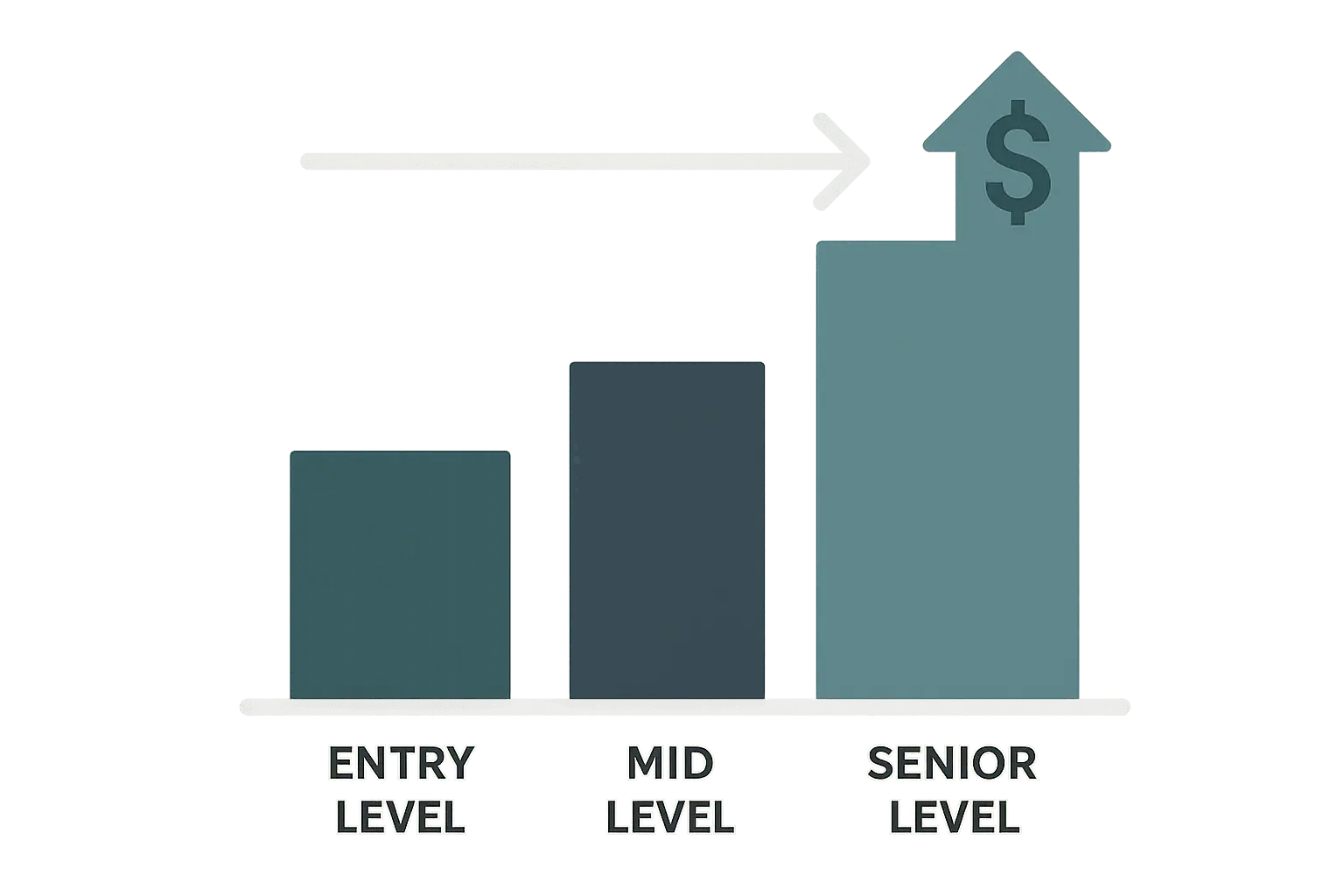
Remember when $50k felt like good money? Those days are long gone in NYC tech. I regularly see new bootcamp grads getting offers that would make their parents' heads spin.
Most companies will lowball you at first - they'll throw out something like $85k and see if you bite. Don't. The good companies are paying $120k-$180k base, plus all the extras. When you add up the signing bonus, equity, and everything else, you're looking at $150k-$220k your first year.
Here's something crazy - tech jobs in NYC are growing seven times faster than everything else. The NYC tech sector has seen explosive growth, with tech jobs growing seven times faster than overall job growth, making up 7% of total jobs in the city with the sector valued at over $189 billion (Nucamp). What does that mean for you? Companies are desperate for talent, and they're willing to pay for it.
Most places will offer you somewhere between $90k-$120k to start. But if you're talking to Google, Facebook, or any of the big names, they're starting at $130k-$160k.
I know a guy who just graduated from Columbia - Google offered him $145k base, $50k signing bonus, and $80k in stock. His first year? $275k total. A recent computer science graduate from Columbia University landed an entry-level software engineer role at Google NYC with a $145,000 base salary, $50,000 signing bonus, and $80,000 in annual equity grants, bringing their total first-year compensation to $275,000.
Pro tip: if you're just starting out, check out furnished rooms for rent. You'll save a ton of money while you figure out the city and build up your savings.
Here's what nobody tells you about tech salaries - the base is just the beginning. That signing bonus might be $10k at a startup or $50k at a big tech company. Then there's equity, which could be worth nothing or could buy you a house in five years.
|
Company Type |
Base Salary Range |
Signing Bonus |
Annual Equity |
Total First Year |
|
That scrappy startup |
$85,000-$110,000 |
$5,000-$15,000 |
$10,000-$25,000 |
$100,000-$150,000 |
|
Solid mid-size company |
$95,000-$125,000 |
$10,000-$25,000 |
$15,000-$35,000 |
$120,000-$185,000 |
|
Big tech (you know them) |
$130,000-$160,000 |
$25,000-$50,000 |
$40,000-$80,000 |
$195,000-$290,000 |
|
Wall Street tech |
$110,000-$140,000 |
$15,000-$30,000 |
$20,000-$40,000 |
$145,000-$210,000 |
Once you hit that 3-7 year sweet spot, everything changes. You're not the newbie anymore - you're actually shipping features, fixing bugs that matter, and companies start paying you like it.
Your base jumps to $130k-$200k, but honestly, that's when the real money starts showing up in your equity and bonuses. I know engineers at this level pulling in $250k+ total comp pretty regularly.
The Built In data shows engineers with 7+ years making around $195k on average, while the rookies are at $120k. The average salary for a Software Engineer with 7+ years of experience is $195,688, while those with less than 1 year of experience earn $120,750 (Built In). That's a $75k jump just for sticking around and getting good at what you do.
This is where your choice of what to learn really starts paying off. If you went deep on machine learning or got really good with distributed systems, you can basically add 15-25% to whatever salary someone offers you. The demand is crazy right now.
I have a friend who specialized in fintech stuff - same years of experience as me, but she's making $40k more just because she knows the financial systems inside and out.
For folks at this level, shared apartments New York can be a smart move. You're making good money, but why blow it all on rent when you could be investing or saving for a house?

NYC engineers typically earn 20-30% more than the national average, but this premium varies like crazy. A fintech company might pay 40% above national rates, while some traditional enterprise company might only offer 15% more. It all depends on how badly they need talent and how much money they're making.
Mid-level engineers at growth companies are getting equity packages worth $20k-$100k annually. And here's the thing - this isn't monopoly money. I've watched people build serious wealth when their company goes public or gets acquired.
One guy I know joined a Series B startup as a mid-level engineer. Three years later, they got bought by Microsoft. His equity package? Let's just say he bought a really nice house in Westchester.
This is where software engineering gets stupid lucrative. We're talking about packages that rival what investment bankers and lawyers make, except you get to work in jeans and actually solve interesting problems.
Senior engineers with 8+ years are looking at $180k-$280k base salary. But when you add everything else? We're talking $350k-$500k total packages at the top companies. I know staff engineers pulling down $600k-$800k.

When you hit senior level, you're not just writing code anymore. You're architecting systems, mentoring other engineers, making decisions that affect the whole product. Companies pay for that responsibility.
I know a Principal Engineer at Stripe making $320k base, getting $180k in stock refreshers every year, plus a $75k bonus last year. Total comp? $575k. For one person. Writing code. A Senior Staff Engineer at Stripe NYC with 12 years of experience earns a $320,000 base salary, receives $180,000 in annual equity refreshers, and earned a $75,000 performance bonus last year, totaling $575,000 in annual compensation.
Principal engineers represent the absolute top of the individual contributor ladder. We're talking $250k-$400k base salaries, with total compensation potentially hitting $600k-$800k. But you better believe you're earning every penny - you're basically architecting systems that millions of people use or that handle billions in revenue.
The crazy part is, this isn't even the ceiling. I've heard of principal engineers at some hedge funds making over a million dollars a year.
If you go the management route, the money can get even more ridiculous. Engineering managers and directors are looking at $300k to over $1 million total comp. But fair warning - you're trading deep technical work for meetings, performance reviews, and dealing with company politics.
Some people love it, others hate it. Just know that once you go down the management path, it's hard to go back to being an individual contributor at the same level.
Not all tech jobs are created equal. Where you work makes a massive difference in your paycheck, and I'm not just talking about a few thousand dollars here and there.
Pure tech companies - the Googles, Facebooks, Netflixes of the world - these guys pay the most. They've got the business models that can support crazy compensation, and they use equity as both a retention tool and a way to share the wealth when the stock goes up.
Facebook, Apple, Amazon, Netflix, Google - these companies pay 30-50% above market rate, and there's a reason. They're not just competing on salary; they're competing on total wealth creation. When you get $200k in Google stock and it goes up 20% that year, you just made an extra $40k for doing nothing.
The equity component is huge. I know people who joined Facebook five years ago and their equity grants are now worth more than most people's entire salaries.
Startups are a different game entirely. They might pay you $80k-$120k base, but they'll give you equity that could be worth millions if things go well. Or it could be worth nothing.
I've seen both sides. One friend joined a startup that got acquired by Uber - he made enough to retire at 30. Another joined a company that burned through $50 million and shut down. His equity was worth exactly zero dollars.
Wall Street figured out they were losing all their best engineers to Google and Facebook, so they started throwing serious money around. Goldman Sachs, JPMorgan, Morgan Stanley - they're all paying tech salaries now.

These guys offer $150k-$250k base plus bonuses that can double your salary in a good year. The bonus culture is real - I know engineers who made $400k total comp because the bank had a great year.
This is where the really crazy money lives. Quantitative hedge funds like Two Sigma, Renaissance, Citadel - they'll pay $500k-$1 million+ for engineers who can directly impact their trading performance.
But here's the catch - you need to understand both technology and financial markets. It's not just about being a good programmer.
Companies like Stripe, Plaid, Robinhood are creating a new category. They pay like tech companies but they're solving financial problems. It's the best of both worlds - startup equity upside with more established salary structures.
Healthcare tech pays about 10-20% less than pure tech, but a lot of engineers find the work more meaningful. If you want to build stuff that actually saves lives, the slight pay cut might be worth it.
Your choice of what to learn can literally add $50k-$100k to your salary. Some skills are just worth more money, and the market rewards scarcity.
Right now, if you know machine learning and AI really well, companies will throw money at you. We're talking 20-40% salary premiums just for having the right skills.
This is the hottest area right now. Companies like OpenAI, Anthropic, Google DeepMind are paying absolutely ridiculous amounts for people who can build AI systems. The demand for AI talent continues to surge, with AI specialists, cloud architects, and cybersecurity analysts among the hottest roles with AI architects earning between $170,000 to $234,900 according to Nucamp's 2025 tech job guide.
I know an AI engineer who left Google to join a startup working on large language models. His salary went from $200k to $350k overnight, plus equity that could be worth millions if they succeed.
If you're working on the cutting-edge stuff - large language models, computer vision, autonomous systems - you're in the highest-paid segment of the entire market. There just aren't enough people who can do this work, so companies are bidding up the talent.
Every company is moving to the cloud, and they need people who know AWS, Azure, GCP inside and out. DevOps engineers are making $20k-$50k more than regular developers because they keep the lights on.
SRE is where you make sure the website doesn't crash when a million people try to use it at the same time. Companies pay premiums for this because downtime costs them serious money.
Some programming languages and tech stacks just pay better because there aren't enough people who know them well, or because they're critical for making the business money.
|
Skill Category |
How Much Extra You'll Make |
What's Hot Right Now |
How Fast It's Growing |
|
Machine Learning |
20-40% more |
TensorFlow, PyTorch, MLflow |
71% growth |
|
Cloud Architecture |
15-30% more |
AWS, Azure, GCP, Kubernetes |
34% growth |
|
Cybersecurity |
25-35% more |
Zero Trust, SIEM, Penetration Testing |
33% growth |
|
Blockchain |
30-50% more |
Solidity, Web3, DeFi |
160% growth |
|
DevOps/SRE |
20-25% more |
Docker, Terraform, Monitoring |
25% growth |
The engineers who got into blockchain early, or cloud computing before everyone else, or AI before it was cool - they made bank. The key is spotting the next big thing before it becomes obvious to everyone else.

Okay, let's talk about the elephant in the room. Yes, you can make $200k as a software engineer in NYC. But you're also going to spend $60k of that just on rent and living expenses.
The median salary for a Software Engineer in New York, NY is $149,500, with 80% of salaries falling between $83,700 and $200,000, though salaries for Software Engineers in New York are typically above what other jobs pay in the area (Gusto).
A one-bedroom in Manhattan will cost you $3,500-$5,500 a month. That's $42k-$66k a year just for housing. Brooklyn and Queens are cheaper at $2,500-$4,000, but you're trading convenience for cost savings.
I know a Google engineer making $200k who spends $5,000 a month just on basic living expenses - $3,000 for rent, $500 for transportation, $800 for food, and $700 for everything else. That's $60k a year before he even thinks about saving or investing. A Google software engineer earning $200,000 annually spends approximately $5,000 monthly ($60,000 yearly) on living expenses in NYC, including $3,000 rent, $500 transportation, $800 food, and $700 miscellaneous costs, similar to the experience shared by an Indian Google engineer whose monthly expenses reached ₹4.28 lakh ($5,000).
A lot of engineers are finding that rooms for rent in Brooklyn give you the best bang for your buck - close enough to Manhattan but way more affordable.
MetroCard is $127 a month now. If you drive, parking in Manhattan can cost $300-$500 a month. And don't get me started on the time cost - that 90-minute commute each way adds up fast.
Here's the fun part - New York loves to tax high earners. Combined state and city taxes can hit 13.25% if you're making good money. So that $200k salary? You're taking home maybe $130k after federal, state, and city taxes.
Compare that to Austin or Miami where there's no state income tax, and suddenly that $200k doesn't look quite as impressive.

COVID changed everything. Companies that used to require you to be in the office five days a week are now okay with hybrid or fully remote work.
A lot of NYC companies are doing hybrid now - 2-3 days in the office, rest from home. You keep your full NYC salary but save money on commuting and lunch. It's basically a stealth raise.
Some companies will cut your pay by 5-15% if you move to a cheaper area while working remotely. Others don't care where you live as long as you do good work. It varies a lot by company.
Most engineers are terrible at negotiating. They're so happy to get an offer that they just say yes to whatever the company proposes. Don't be that person.
Companies expect you to negotiate, especially if you have experience. They're not going to be offended if you ask for more money - they might even respect you more for it.
Here's what actually works:
If you have multiple offers, you can often get 10-20% more just by letting companies know they're competing. Just don't be a jerk about it - present it professionally.
I know someone who got offers from both Google and Facebook. Used them to negotiate with a startup and ended up with 20% more equity plus a bigger signing bonus.
Understanding your company's promotion cycle is huge. If you know reviews happen in March and promotions get decided in April, you better believe I'm shipping my best work in February.
You've got two main paths - stay technical and become a principal engineer, or go into management. Both can make serious money, but they're completely different jobs.
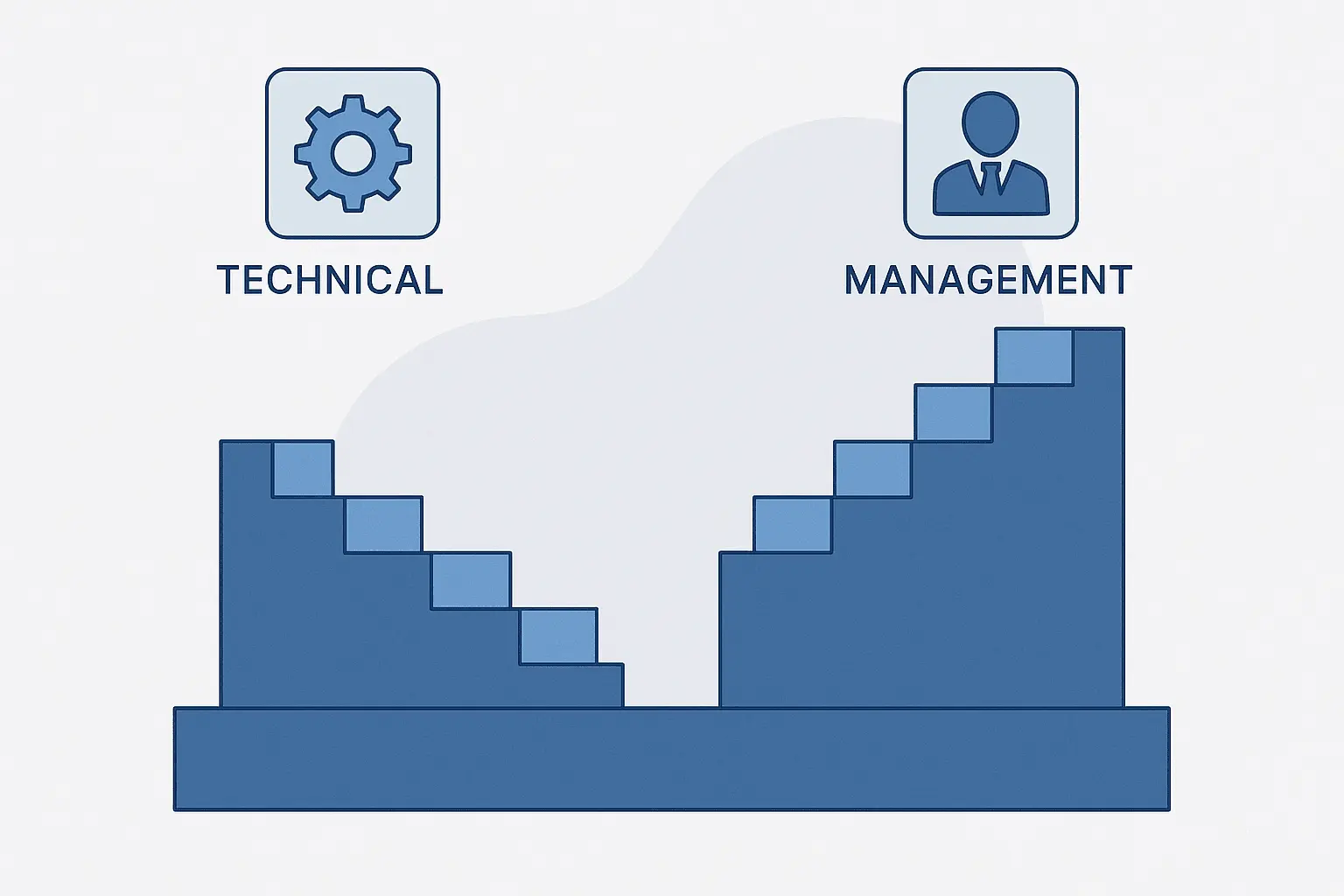
Technical track can get you to $600k+ as a principal engineer. Management track can get you over $1 million but you're dealing with people problems instead of technical problems.
I've seen great engineers become terrible managers because they thought it was the only way to make more money. Do management because you want to lead people, not just for the paycheck.
The tech industry goes through cycles. Right now we're in a bit of a correction after the crazy growth during COVID, but demand for good engineers is still strong.
Interest rates going up, less VC money floating around, companies being more careful with hiring - it's all connected. But here's the thing: if you're actually good at what you do, companies will still pay up to get you.
Yeah, there have been layoffs. Meta, Google, Amazon - they all cut people. But they mostly cut the dead weight and people who got hired during the crazy expansion. The top performers? They're still getting paid well and have plenty of options.
I know engineers who got laid off from one company and had three offers within a month. Good talent is still in demand, even when the headlines are scary.
New stuff is always popping up. AI safety, quantum computing, Web3 - these are creating whole new job categories with crazy compensation for people willing to bet on the future.
If you want to stay ahead of the curve:
The half-life of technical skills keeps getting shorter. What you learned in college is probably already outdated. The engineers who make the most money are the ones who never stop learning.
I spend at least 5 hours a week learning new stuff. Reading papers, trying new frameworks, building toy projects. It's not optional anymore - it's part of the job.

For high-earning tech folks who are too busy to plan elaborate social lives, finding quality experiences without the hassle becomes important. The demanding nature of these jobs, plus the city's pace, means you need efficient ways to unwind and network.
A lot of successful engineers are also checking out communal living spaces in NYC as a way to build professional networks while keeping housing costs reasonable in this expensive city.
Look, software engineering in NYC can set you up financially in ways that most careers just can't. From $85k starting salaries to $800k+ principal engineer packages, the money is real and it's substantial.
But here's what I wish someone had told me when I was starting out: the salary is just one piece of the puzzle. Understanding how different industries work, what skills actually matter, and how to negotiate - that stuff can literally add hundreds of thousands to your career earnings.
The cost of living in NYC is brutal, no sugar-coating it. That $200k salary doesn't buy you the same lifestyle it would in Austin or Denver. But if you're smart about housing, understand the tax implications, and actually negotiate your offers, you can still build serious wealth here.
The industry is always changing. Remote work shifted everything. AI is shifting everything again. Economic cycles will keep happening. The engineers who thrive are the ones who stay adaptable, keep learning, and think strategically about their careers instead of just taking whatever job pays the most right now.
Bottom line: if you're good at what you do, willing to keep learning, and not terrible at advocating for yourself, NYC tech can set you up for life. Just don't get so caught up in the big salary numbers that you forget to actually enjoy the journey.

Household supplies can be changed or decreaased at Outpost Club’s discretion, or based on supply availability. Outpost is not responsible for temporary losses of utility service. Outpost Club is not responsible for any damages due to absence of any supplies or utilities


If you have a sales related question please call
680-688-7678

 Hot Deals