Average Salary in NYC: What You Actually Need to Know Before Making the Move
Dec 10, 2025

Dec 10, 2025
So you're thinking about moving to NYC for work? I get it. The salary numbers look amazing on paper, but let me tell you what nobody warns you about...
Look, let's cut through the BS here. Everyone throws around that $90K average salary number for NYC, but honestly? It's about as useful as a weather forecast from last week. That figure includes everyone from the guy making your morning coffee to Wall Street executives pulling in millions, so it tells you exactly nothing about what YOU can expect to make.
According to the U.S. Census Bureau's 2023 American Community Survey, the average household income in New York City was $127,894, which sounds impressive until you realize that's household income - meaning multiple people contributing to that number.
Here's what actually matters: if you're moving here thinking that average means you'll automatically land something in that range, you're setting yourself up for disappointment. I've watched too many friends come here with unrealistic expectations, only to spend months waiting tables while "looking for something better."
The real kicker? Post-pandemic everything got weird. Some companies will pay you Manhattan rates even if you work from a coffee shop in Queens. Others will dock your pay if you're not physically in their Midtown office. It's a total mess, and nobody really knows what the rules are anymore.
The Bureau of Labor Statistics reports that workers in the New York-Newark-Jersey City Metropolitan Statistical Area had an average hourly wage of $40.65 in May 2024, compared to the nationwide average of $32.66. What they won't tell you is that $40.65 average hourly wage sounds great until you realize your rent is due every month whether you worked overtime or not.
The truth is, understanding the average salary in NYC becomes even more crucial when you consider that housing costs in NYC can consume a significantly larger portion of your income than in other major cities. Because when your studio apartment costs more than most people's mortgages, every dollar matters more than you think it will.

Okay, let's talk about where people actually make money in this city. And I mean real money, not "I can afford both rent AND groceries" money.
|
Industry |
Entry Level |
Mid-Level |
Senior Level |
Top Earners |
|
Finance |
$150,000-$175,000 |
$200,000-$350,000 |
$400,000-$800,000 |
$1M+ |
|
Technology |
$120,000-$150,000 |
$180,000-$250,000 |
$300,000-$500,000 |
$600,000+ |
|
Legal |
$215,000+ |
$300,000-$500,000 |
$600,000-$1M |
$2M+ |
|
Healthcare |
$80,000-$120,000 |
$150,000-$250,000 |
$300,000-$500,000 |
$750,000+ |
|
Media |
$45,000-$65,000 |
$80,000-$120,000 |
$150,000-$250,000 |
$400,000+ |
Finance bros aren't lying when they brag about their paychecks. Those $150K starting salaries for investment banking analysts? They're real. But here's what they don't mention in those LinkedIn humble-brags: you'll work 80-100 hour weeks and your social life will die a slow, painful death.
I know a guy who made VP at a major bank. $400K base, $600K bonus last year. Sounds amazing, right? Except he hasn't taken a real vacation in three years and his girlfriend left him because he missed her birthday for the fourth time. The money's there, but you pay for it in ways that don't show up on your W-2.
The numbers get interesting when you break down total compensation. Base salaries might seem reasonable, but bonuses can double or triple your annual take-home. Managing directors routinely earn well into seven figures, and private equity professionals often see even higher packages.
Tech salaries have gone absolutely insane. Senior engineers at Google or Meta? We're talking $300K+ total comp. But here's the catch everyone ignores - half of that is in stock that could be worth nothing if the market tanks.
My neighbor works for a startup in Flatiron. $180K base plus equity that's "totally going to make us all millionaires." Two years later, the company's still burning through investor cash and those stock options are looking pretty worthless. Don't get me wrong, the base salary is solid, but don't count your equity chickens before they hatch.
The tech boom isn't limited to household names. Startups and mid-size companies are competing aggressively for talent, often offering equity packages that can significantly boost total compensation if the company performs well. But that's a big if.
BigLaw first-years make $215K right out of school. That's more than most people with 10 years of experience in other fields. But talk to any associate at a white-shoe firm - they'll tell you about billing 2,500 hours a year while pretending to love it.
Corporate counsel jobs pay less but won't destroy your soul. It's the classic trade-off: make bank and hate your life, or take a pay cut and actually see your family occasionally. The gap between firm and in-house work has been narrowing, but it's still significant.
Doctors make good money, but medical school debt is no joke. Nurses can do well, especially with overtime, but hospital politics will make you question humanity. Pharma executives? They're doing just fine, thank you very much.
The real money in healthcare is in administration and pharma. Less direct patient care, more spreadsheets, better pay. Make of that what you will. NYC's pharmaceutical industry deserves special mention - with major companies maintaining significant operations here, research roles and executive positions offer competitive packages that rival finance and tech.
Let me be real with you - if you're getting into media for the money, you're doing it wrong. Entry-level jobs pay rent money, maybe. Senior positions at major networks can hit six figures, but getting there requires equal parts talent, luck, and willingness to work for peanuts for years.
That said, if you make it to the top, the money and influence can be incredible. Just don't expect to get there quickly or easily. NYC remains the media capital, but compensation varies wildly across different sectors.
When considering the average salary in NYC across different industries, it's worth exploring how much you need to make to live in NYC to understand whether these industry salaries align with your lifestyle goals and financial needs.
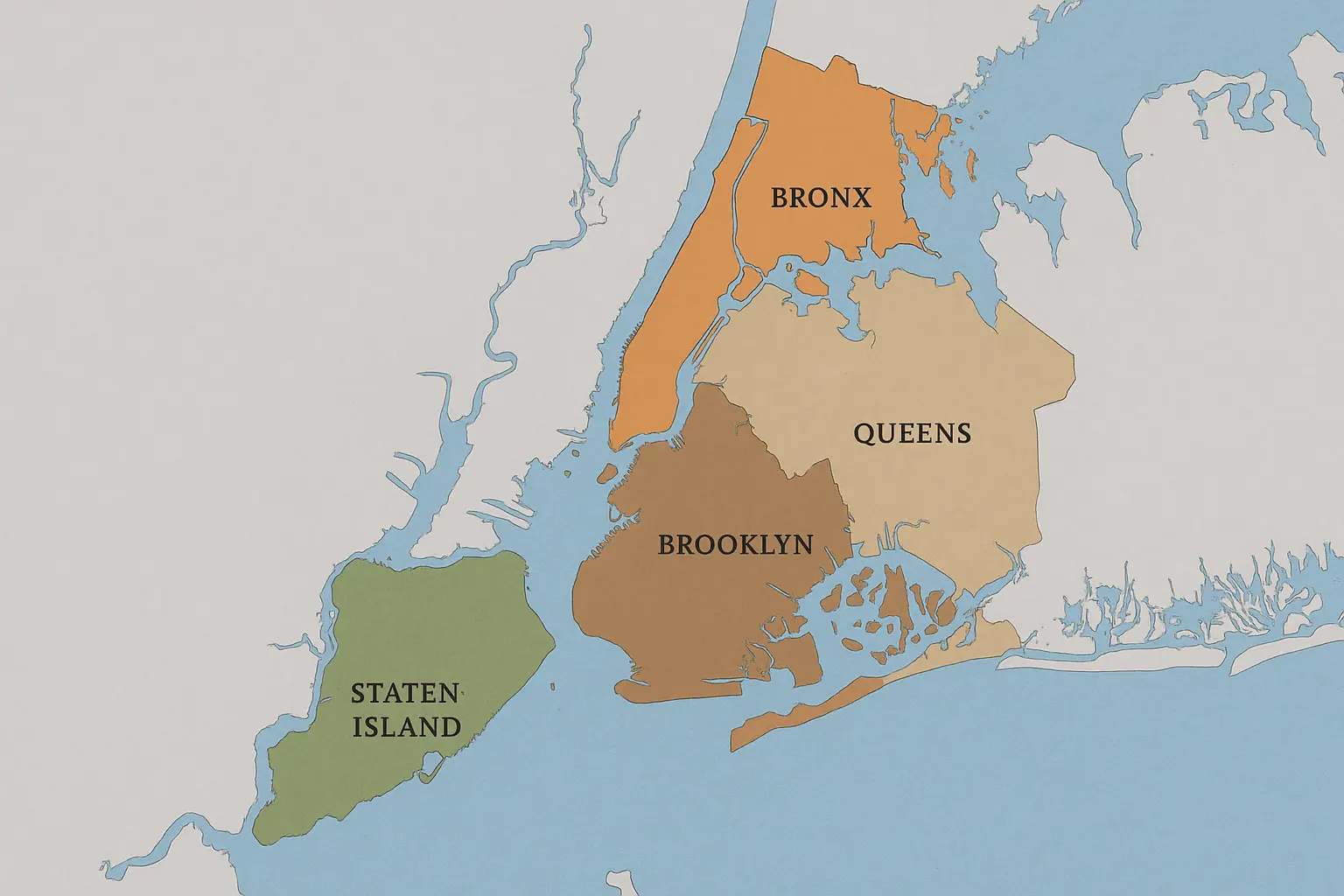
Here's something that'll blow your mind: where your office is located can literally change your paycheck by 20%. No joke.
Manhattan companies generally pay more because they know you're dealing with higher costs just to exist near their office. But that premium doesn't always make up for what you'll spend on lunch, drinks, and the general expense of working in the center of the universe.
|
Borough |
Average Salary |
Housing Cost Premium |
Commute Time to Midtown |
Overall Value Score |
|
Manhattan |
$105,000 |
+100% |
0-15 min |
7/10 |
|
Brooklyn |
$88,000 |
+60% |
25-45 min |
8/10 |
|
Queens |
$82,000 |
+40% |
35-55 min |
8.5/10 |
|
Bronx |
$75,000 |
+20% |
40-60 min |
7.5/10 |
|
Staten Island |
$85,000 |
+25% |
60-90 min |
6/10 |
Brooklyn's become interesting lately. Tons of companies have opened offices there, and the pay isn't that much lower than Manhattan. Plus, your commute might actually be bearable, and you can afford an apartment where you don't have to choose between a bed and a kitchen table.
Queens is the sleeper hit nobody talks about. Lower salaries, sure, but way lower living costs. I know people who work remotely for Manhattan companies while living in Astoria, and they're saving more money than their friends making 30% more in the city.
The Bronx and Staten Island? Fewer opportunities, but if you find something good, your money goes way further. Just factor in commute time and costs - that ferry ride adds up.
Remote work isn't going away, and its impact on salaries continues evolving. Some companies maintain location-neutral pay, while others adjust based on where you actually work. Understanding your employer's policy is crucial for making informed decisions about where to live.
Geographic arbitrage opportunities exist for those willing to work remotely while living in lower-cost areas. However, some companies are catching on and adjusting their policies accordingly.
Understanding geographic salary differences becomes particularly relevant when considering coliving in Brooklyn or other outer boroughs, where you can maintain access to high-paying Manhattan jobs while enjoying more affordable living arrangements and stronger community connections.

Alright, time for some tough love about money in NYC. That $100K salary that made you feel like a rockstar? After taxes and basic living expenses, you're going to feel broke. And not just "I can't buy designer jeans" broke - more like "should I get groceries or pay for the subway this week" broke.
Recent data from "SmartAsset's 2025 study shows that a $100,000 salary in Manhattan has only $30,362 in actual spending power" Fox5NY. Let that sink in for a minute.
Everyone says spend 30% of your income on housing. In NYC? Good luck with that. Most people I know spend 40-50% and just accept that's how it is here.
A decent studio in Manhattan will run you $3,500-4,000. In Brooklyn, maybe $2,500-3,000 if you're lucky and don't mind a 45-minute commute. And that's before broker fees, which are basically legalized theft - we're talking 12-15% of your annual rent just to have someone show you apartments.
Here's what nobody tells you: you'll need first month's rent, last month's rent, security deposit, AND broker fee upfront. For a $3,000 apartment, you're looking at $12,000-15,000 just to move in. Hope you've been saving!
According to SmartAsset's analysis, a $100,000 salary in New York City is effectively worth only $35,791 when adjusted for taxes and cost of living factors, demonstrating the brutal reality of NYC's expensive lifestyle.
Calculate 30-40% of your gross monthly salary as your maximum housing budget, but be prepared to go higher. Factor in broker fees and security deposits when budgeting for your move. Utilities can add $150-$300 monthly, depending on your setup.
Explore neighborhoods in Brooklyn, Queens, and the Bronx for better value. Research commute costs and time to your workplace. Up-and-coming areas often offer better rent-to-space ratios, though you'll want to visit neighborhoods at different times to get a real feel for them.
NYC Housing Budget Reality Check:
Groceries will shock you. I spent $45 on basic ingredients for pasta dinner last week. Pasta! The markup on everything is insane because landlords charge grocery stores crazy rent, and guess who pays for that?
Eating out becomes a necessity because your kitchen is the size of a closet and cooking for one person somehow costs more than just ordering seamless. But then you're dropping $20 on lunch and $40 on dinner without even trying.
Transportation seems cheap with the $130 monthly MetroCard until you realize you'll still end up taking Ubers when the subway inevitably breaks down or you're running late. Budget another $200-300 monthly for rides you didn't plan on taking.
The hidden costs are what really get you. Laundry ($20-30 per load if you don't have a machine), gym membership ($100+ for anything decent), drinks with coworkers (because networking is mandatory), and replacing things that break because everything in your apartment is old and cheap. Take Marcus, a financial analyst earning $120,000 who moved from Charlotte to NYC. His Charlotte expenses totaled $3,200 monthly, but in NYC, his budget jumped to $6,800 monthly: $3,800 for a studio in Brooklyn, $180 for groceries, $130 for transit, $400 for dining out, $250 for utilities, and $300 for entertainment. Despite earning 60% more, his savings rate dropped from 25% to 8%.
When evaluating the average salary in NYC against living costs, many professionals find that exploring shared apartments in New York can significantly reduce housing expenses while maintaining access to prime locations and professional networking opportunities.
Negotiating salary in NYC is different because everyone's desperate and everyone's also kind of an expert at it. You need to bring your A-game.
Don't just look at Glassdoor and call it research. Those numbers are often outdated or inflated. Talk to actual people doing the job you want. LinkedIn message alumni from your school. Buy someone coffee and ask what they really make.
Start with comprehensive market research using platforms like Glassdoor, PayScale, and Levels.fyi for tech roles. Don't rely on a single source—salary data can vary significantly between platforms. Network with professionals in similar roles to gather informal insights that online platforms might miss.
The salary transparency laws help, but companies got creative fast. They'll post ranges like "$75K-$150K" which tells you nothing useful. Try to figure out where in that range someone with your experience should land, then aim higher.
New York's salary transparency laws require employers to include salary ranges in job postings. This has fundamentally shifted negotiation dynamics, but interpret posted ranges carefully. They often represent the full spectrum from entry to experienced levels.
Sometimes companies can't budge on base salary but have flexibility elsewhere. Ask about signing bonuses, earlier performance reviews, additional vacation days, professional development budgets, or work-from-home flexibility.
NYC employers often offer benefits packages worth 20-40% of your total compensation. Health insurance, retirement contributions, stock options, flexible spending accounts, and commuter benefits all add real value to your package.
Stock options sound exciting but ask hard questions. When do they vest? What happens if you leave? What's the company's plan for going public or getting acquired? Don't let equity dreams blind you to cash realities.
End of quarter, end of year, after someone quits - these are when companies feel pressure to close deals. If you can time your negotiation with their urgency, you have more leverage.
But don't play games if you need the job. The NYC market is competitive enough without you getting cute with negotiation tactics.

Career growth in NYC isn't just about doing good work - it's about being strategic in a city where everyone's trying to get ahead.
NYC networking events are everywhere, but most are terrible. Skip the generic "young professionals" mixers and go to industry-specific events where you can actually meet people who might hire you or refer you for jobs.
The best networking happens in weird places. I've gotten job leads at the gym, in line for coffee, and at random happy hours. Always be ready with a 30-second explanation of what you do and what you're looking for.
LinkedIn is crucial here in ways it isn't in other cities. People actually use it to find candidates and make connections. Keep your profile updated and actually engage with posts from people in your industry.
Focus on providing value to others rather than just seeking opportunities. Follow up consistently with new connections through LinkedIn and email. Join professional associations relevant to your field - many offer mentorship programs, continuing education, and exclusive networking events.
NYC Professional Networking Reality Check:
Data analysis pays well across every industry. Learn SQL, Python, or Tableau and you instantly become more valuable. Project management certification (PMP) opens doors everywhere. Digital marketing skills are gold if you can prove ROI.
But here's the thing about skills development - don't just collect certificates. Actually use what you learn and be able to talk about specific results you've driven. Employers can smell BS from a mile away.
The Bureau of Labor Statistics data shows that higher paying major occupational groups in NYC include management ($92.78 hourly), legal ($86.28), and computer and mathematical ($64.31), highlighting which skill areas command the highest premiums in the market.
Management and leadership roles pay the most, but you need to prove you can handle responsibility before anyone will give it to you. Volunteer to lead projects, mentor junior colleagues, or organize team events. Show don't tell.
Industry-specific certifications like PMP (Project Management), CFA (Financial Analysis), or cloud computing certifications can increase salary potential by 15-25%. Many employers offer tuition reimbursement or professional development budgets to support these investments.
Jennifer, a marketing coordinator earning $65,000, invested $3,000 in a digital marketing certification program and project management training. Within 18 months, she leveraged these credentials to move to a senior marketing manager role at a fintech company, increasing her salary to $95,000 plus equity. Her investment in skills development generated a 46% salary increase and opened doors to higher-growth industries.

Nobody warns you about NYC taxes until it's too late. You'll get your first paycheck and wonder where half your salary went.
Federal taxes, New York State taxes, NYC taxes, plus Social Security and Medicare - you're looking at 35-45% of your paycheck disappearing before you see it. That $100K salary? You're taking home maybe $65K if you're lucky.
NYC residents face federal, state, and city income taxes. The effective tax rate typically ranges from 35-45% on higher incomes. This includes federal income tax, New York State tax (up to 8.82%), and NYC tax (up to 3.876%).
Maximize your 401k contributions not just for retirement but to reduce your taxable income now. Same with HSAs if your company offers them. Every pre-tax dollar you can shelter helps.
The SALT deduction cap hurts NYC residents especially hard. You can only deduct $10K in state and local taxes, which many people hit just from property taxes or state income tax alone. It's one more way high earners in expensive cities get squeezed.
Bonuses get hit with higher withholding rates initially, though you might get some back when you file. Don't spend your bonus assuming you'll keep all of it.
Many NYC positions include substantial bonus and equity components. Understanding how these are taxed and when they vest is crucial for financial planning. RSUs are taxed as ordinary income when they vest, not when you sell the stock.
Stock options create tax events when you exercise them, not when they're granted. Consider timing when exercising options or selling vested stock based on your expected tax bracket and rate changes.
The salary landscape keeps changing, and honestly, nobody knows what's coming next.
Some companies went full remote and don't care where you live. Others are demanding everyone back in the office. Most are somewhere in the middle with hybrid arrangements that nobody's quite figured out yet.
Geographic pay adjustments are becoming more common. Some companies will pay you less if you move to a cheaper area, others maintain consistent pay regardless of location. Ask about this upfront because it affects major life decisions.
Hybrid work arrangements are becoming the norm rather than the exception. This creates opportunities to live in more affordable areas while maintaining access to NYC's job market and networking opportunities.

Fintech companies are paying finance-level salaries with tech company culture. Climate tech is attracting serious investment. Healthcare technology is booming with aging demographics.
These emerging sectors often pay well because they're competing for talent against established industries. If you can get in early at a company that succeeds, the equity upside can be life-changing.
Clean technology, fintech, and healthcare technology represent NYC's fastest-growing high-salary sectors. These industries are attracting massive investment and competing aggressively for talent from traditional sectors.
Companies can't lowball initial offers as easily anymore, which is good for candidates. But they're also getting more strategic about how they structure compensation to work within posted ranges.
Use transparency data not just for new jobs but for raises and promotions at your current job. If similar companies are posting higher ranges, that's ammunition for internal negotiations.
Recent market analysis shows that "the average income in NYC is well above the national average of $110,491, with New York City's average household income almost 16% higher than the national average" SmartAsset, indicating continued strength in the city's earning potential despite economic pressures.
The transparency trend is expanding beyond legal requirements. More companies are voluntarily sharing salary bands internally, creating clearer career progression paths and compensation expectations.
As remote work reshapes salary expectations, professionals are increasingly exploring affordable student housing in NYC alternatives and flexible living arrangements that can help maximize their earning potential while managing costs effectively.

Living in NYC on any salary requires creativity and compromise. The old rules about housing and lifestyle don't work when everything costs twice what it should.
Managing NYC's high costs while maximizing your career potential requires creative solutions. Traditional approaches to housing, dining, and entertainment can quickly consume your entire salary, leaving little room for savings or investment.
Co-living spaces aren't just for recent college grads anymore. I know people in their 30s who choose them because they want community and can't afford a one-bedroom that doesn't require roommates anyway.
Membership-based models are emerging as smart alternatives for cost-conscious professionals. Rather than bearing the full cost of premium amenities individually, these approaches provide access to high-quality experiences through shared membership structures.
Membership-based approaches to dining, entertainment, and even transportation can provide access to experiences you couldn't otherwise afford. The key is finding solutions that enhance rather than limit your professional opportunities.
Think strategically about what you actually need versus what you think you're supposed to have. A smaller apartment in a better location might serve your career better than a bigger place with a brutal commute.
Smart living solutions like communal living spaces in NYC can help professionals maximize their earning potential by reducing housing costs while providing valuable networking opportunities and community connections that can accelerate career growth.
Ready to optimize your NYC salary and lifestyle strategy? Explore how membership-based solutions can help you maximize your earning potential while managing costs effectively.

Here's the truth nobody wants to tell you: NYC is financially brutal, even when you're making good money. The costs are real, the competition is intense, and there's no guarantee your career will progress as quickly as you hope.
But if you can make it work - and plenty of people do - the opportunities are unmatched. The network you build, the skills you develop, and the experiences you gain can set up your entire career.
Just go in with realistic expectations. That $120K job offer might sound amazing, but after taxes, rent, and basic living expenses, you'll be living more modestly than you expect. Plan accordingly, be strategic about your choices, and remember that everyone else is figuring it out as they go too.
Your salary is just one piece of the puzzle. Benefits, equity compensation, career advancement opportunities, and quality of life all factor into your long-term financial success. The professionals who thrive in NYC are those who think strategically about all these elements rather than focusing solely on base salary numbers.
The landscape continues evolving with remote work, salary transparency laws, and emerging industries creating new opportunities and challenges. Staying informed about these trends and adapting your strategy accordingly will be crucial for long-term success.
The city rewards hustle, creativity, and persistence. But it doesn't care about your feelings or your budget. Respect that reality, and you might just thrive here. Most importantly, remember that NYC's high costs don't have to derail your financial goals - creative solutions, strategic planning, and smart lifestyle choices can help you build wealth while enjoying everything the city has to offer.

Household supplies can be changed or decreaased at Outpost Club’s discretion, or based on supply availability. Outpost is not responsible for temporary losses of utility service. Outpost Club is not responsible for any damages due to absence of any supplies or utilities


If you have a sales related question please call
680-688-7678

 Hot Deals