Car Insurance NYC Cost: What I Learned After Moving to the City (And Wish I'd Known Sooner)
Oct 28, 2025
Oct 28, 2025
I'll never forget the day I got my first NYC car insurance quote. I was sitting in my tiny studio apartment, laptop balanced on my knees, and I literally said "WHAT?!" out loud when I saw the number. $3,400 a year. For the same beat-up Honda Civic that cost me $800 to insure back in Columbus.
According to Bankrate data, the average car insurance NYC cost in New York is $4,031 per year for full coverage - that's 50 percent more than the national average. For minimum coverage alone, New Yorkers pay $1,729 annually, making it one of the most expensive states in the country for basic protection. These numbers shocked me, but they were just the beginning of what I'd learn about new york car insurance pricing.
The city operates in a completely different world than suburban coverage. Your specific block matters more than your driving history, and the city's compressed geography creates pricing pressures that suburban insurance models simply can't handle. It's honestly like they threw out the rulebook I thought I understood and started from scratch.
Here's the crazy thing - insurance companies now know more about your block than you do. They've got algorithms tracking everything from how many cars got broken into on your specific street corner to whether that bodega on the corner attracts trouble.
I found this out the hard way when I moved literally three blocks away in Brooklyn. Same neighborhood, same everything - hell, I could see my old building from my new one. But somehow those three blocks saved me $480 a year. I called my insurance company thinking they made a mistake. Nope, apparently those three blocks made all the difference between "sketchy car break-in zone" and "reasonably safe parking area" in their computer.
It's honestly kind of creepy how detailed they get. They know which corner has more fender-benders, which side of the street gets more break-ins, even which buildings have doormen who keep an eye on the cars parked outside. Understanding the true cost of car insurance in NYC requires recognizing that new york car insurance operates on these hyperlocal risk assessment models that can vary dramatically within single neighborhoods.
Consider two apartments I looked at in Astoria, Queens. One was on 30th Avenue near the subway station, the other was three blocks away on 33rd Street. The 30th Avenue apartment quoted at $3,400 annually for the same coverage that cost $2,950 on 33rd Street. The insurance company's data showed higher vandalism rates near the transit hub, despite 30th Avenue being considered the "better" location by most residents.
This granular analysis goes far beyond ZIP codes. Insurance companies create premium clusters within single neighborhoods based on hyperlocal crime patterns, accident rates, and infrastructure factors. Your insurance rate might have more to do with your exact address than your actual driving ability.
I learned about the parking thing when I was apartment hunting and mentioned to an agent that one place had a parking garage. She literally said, "Oh good, that'll save you money." Save me money? I thought parking garages were just convenient. Turns out my insurance company cares more about where my car sleeps than I do.
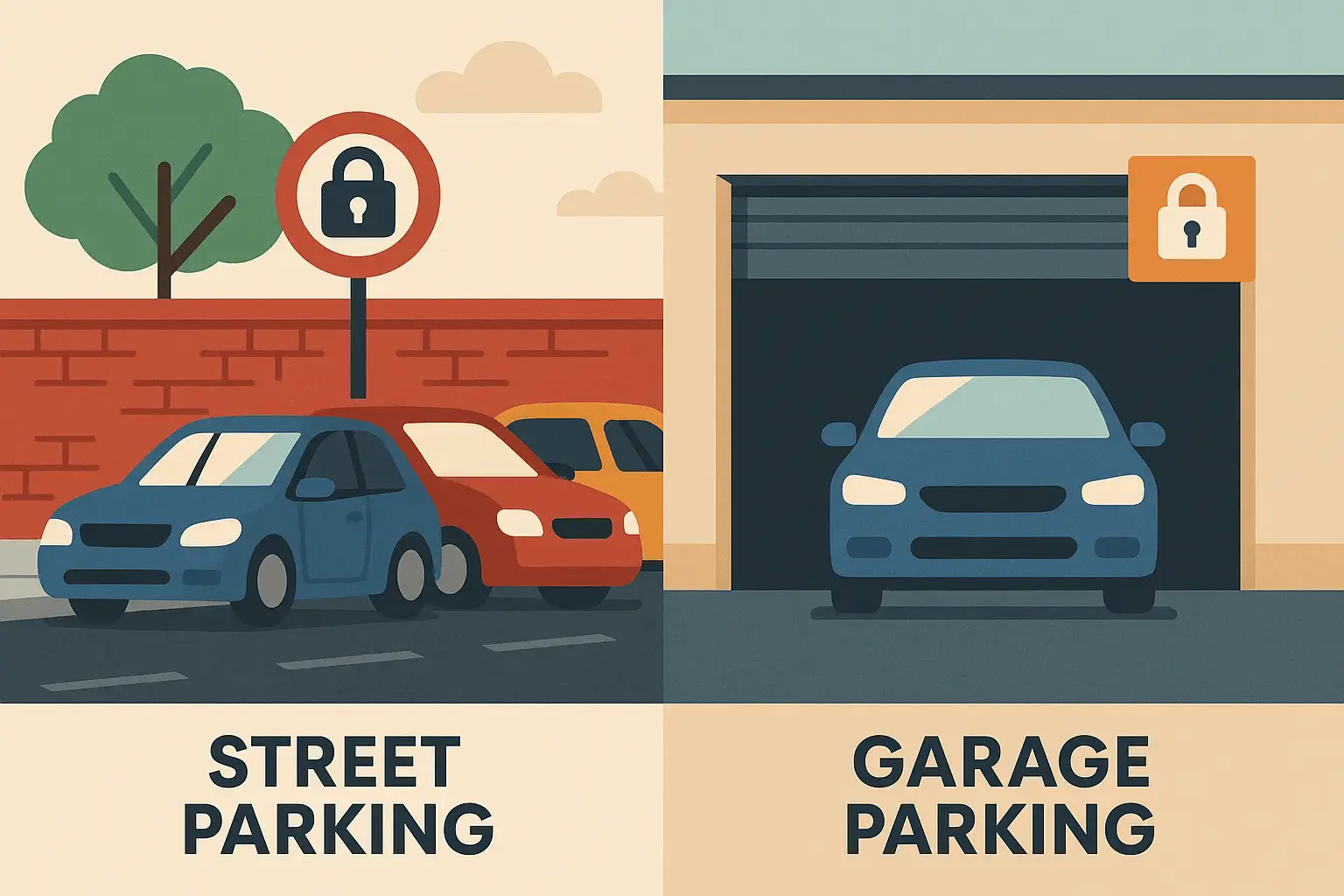
Street parking in certain areas can add 15-20% to your premium compared to garage parking, but it's not just about security. Insurance companies factor in everything from street cleaning schedules (which force frequent car movement) to the width of parking spaces (which affects door ding frequency).
I learned this when comparing quotes for two apartments I was considering. The place with street parking quoted $200 more annually than the one with a parking garage, even though the garage apartment was in what I considered a "worse" neighborhood. The insurance company's data showed that cars parked in that specific garage had significantly lower claim rates.
Here's something interesting I noticed: insurance rates don't immediately adjust when neighborhoods improve. I've seen this happen in real time in my neighborhood in Astoria. New coffee shops, fancy restaurants, even a Whole Foods - but my insurance rates were still based on what the area was like three years ago when it was all bodegas and check-cashing places. It's like the insurance companies are always living in the past.
This lag happens because insurance companies need substantial data over time to adjust their models. If you can identify neighborhoods in transition, you might lock in lower rates before the insurance companies catch up to the reality on the ground.
This was probably the most frustrating thing when I first moved here. I was driving maybe 3,000 miles a year compared to 15,000 in the suburbs, but my insurance went up. The agent explained that NYC drivers might drive less, but when they do drive, they're navigating higher-risk situations - dense traffic, aggressive drivers, pedestrians everywhere.
The insurance companies see it as compressed risk. You're not spreading your accident potential across highway miles and suburban streets. Instead, you're concentrating it in high-stress urban environments during peak times, which directly impacts the overall cost of car insurance calculations.
Despite driving fewer total miles, NYC residents often face higher premiums because their limited driving periods concentrate risk exposure. Insurance models struggle to account for the different risk patterns of urban versus suburban driving.
Here's something nobody tells you: parking near subway stops can actually hurt your insurance rates. I thought living near the train was smart - less driving, right? But insurance companies see it differently. They figure if you're parked near a subway, your car's sitting there all day while you're at work, basically advertising "hey, break into me, my owner's not coming back for 8 hours."
The "new market" thing really got me. I'd been driving for eight years without so much as a parking ticket, but because I was new to NYC, they treated me like I just learned how to drive. It's like all my good driving karma got reset at the city limits. Super frustrating when you're already dealing with the sticker shock of NYC prices.
When I transferred my license from Ohio, I lost my "good driver" discount and got hit with what the insurance company called a "new market" surcharge. Even though I'd been driving for eight years without an accident, they treated me like a new risk because I was new to NYC driving.
This penalty can last 6-12 months while you establish a local driving record. Some companies are worse about this than others, so shopping around becomes crucial during this transition period for new york car insurance coverage.
My suburban policy was designed for commuting to an office, running errands, and weekend trips. But my NYC usage pattern was completely different - occasional weekend trips, late-night drives, parking in different neighborhoods depending on what I was doing.
The coverage gaps became apparent when I realized my policy didn't adequately cover me for some of the ways I was actually using my car in the city. Things like parking in different boroughs, or the fact that my "occasional" city driving was actually higher-risk than my previous daily suburban commuting.
|
Age Group |
Average Annual Premium (NYC) |
National Average |
Difference |
|
18-20 years |
$6,240 |
$3,892 |
+60% |
|
21-25 years |
$4,680 |
$2,456 |
+91% |
|
26-35 years |
$3,840 |
$2,234 |
+72% |
|
36-50 years |
$3,240 |
$2,156 |
+50% |
|
51-65 years |
$2,880 |
$1,987 |
+45% |
Source: Compiled from Bankrate and Experian data
Those online insurance calculators are basically useless for NYC. It's like asking a tourist from Iowa to explain the subway system - they might have the basic idea, but they're missing about a thousand crucial details that only matter if you actually live here.
The problem is these insurance websites were built for normal places where you park in your driveway and drive to Target. They have no clue how to handle "I park wherever I can find a legal spot within six blocks of my apartment, and sometimes that's in Queens even though I live in Manhattan."
Most car insurance calculator tools simply can't account for the hyperlocal factors that drive NYC pricing, which is why initial quotes and final premiums can differ by hundreds or even thousands of dollars.
Here's the thing nobody tells you: when you put down your home address as your "garaging location," the insurance company assumes that's where your car sleeps every night. But in NYC, that's often not true.
I live on the Upper West Side, but I frequently park my car in different neighborhoods depending on where I'm going and what parking I can find. Sometimes I leave it in Queens for a week because I found a good spot and I'm not driving anywhere. The insurance company's algorithm can't account for this reality, which is why most car insurance calculator tools fail to provide accurate estimates for NYC residents.
When I had a claim, they asked detailed questions about where the incident happened versus where I said I garage the car. The adjuster explained that they see this all the time in NYC - people's actual parking patterns don't match what they put on their application.
If you regularly drive between boroughs, your risk profile is completely different from someone who stays in one area. But online calculators can't capture this. They're designed for suburban drivers who have predictable routes and parking patterns.
I drive from Manhattan to Brooklyn regularly for work, and each borough has different traffic patterns, different types of accidents, different theft rates. My actual risk exposure is much more complex than what any auto insurance calculator can capture.
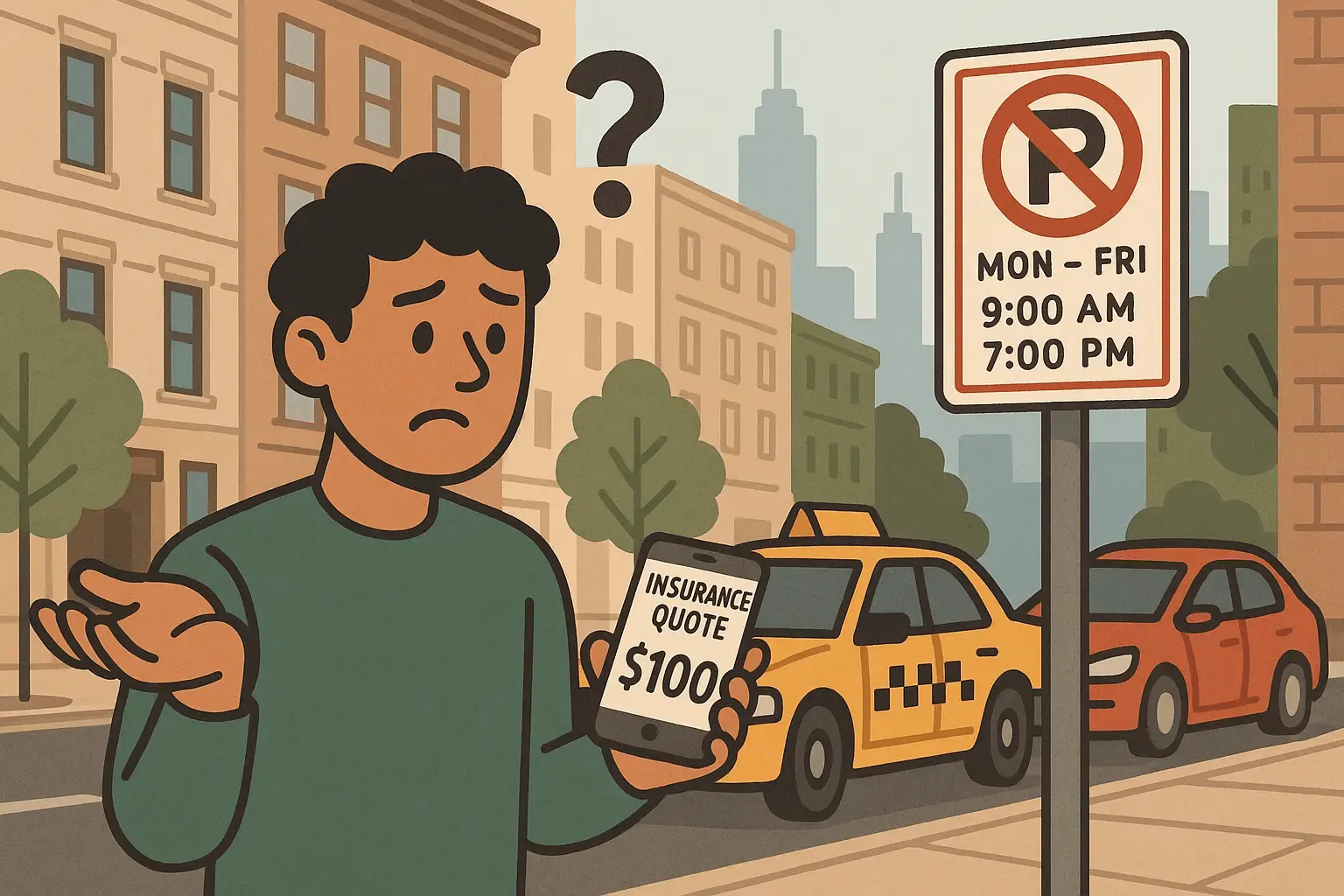
So I'm thinking I'm all set with my $1,200 quote, already mentally budgeting for it, and then BAM - the final bill is $1,380. Where did that extra $180 come from? "Oh, that's just NYC fees," they said, like it's no big deal. That's a week's worth of groceries! Why wasn't that in the original quote?
These fees aren't hidden exactly, but they're not prominently displayed in the quote process. You only see them when you're finalizing the policy, at which point you've already invested time in the application process. This is why the question "how much is car insurance" becomes so difficult to answer accurately for NYC residents using standard online tools.
Some companies now run additional risk assessments between the time you get a quote and when you finalize the policy. For NYC addresses, this can result in rate adjustments based on the most recent crime statistics or accident data for your specific area.
I had a quote that was valid for 30 days, but when I went to purchase the policy three weeks later, the rate had increased by $150 annually. The company explained that there had been a spike in auto thefts in my ZIP code during those three weeks, which triggered an automatic rate adjustment that no standard car insurance calculator could have predicted.
NYC Insurance Quote Reality Check Checklist:
The insurance rate landscape is becoming even more challenging for New York residents. According to "Car insurance rates are going up everywhere, but NY is one of the worst in US" Syracuse.com, New Yorkers can expect an average increase in car insurance rates of 13.5% in 2025, making it the fourth-highest rate increase in the nation.
Digital transformation in insurance has created new opportunities for NYC residents to optimize their coverage costs through usage-based programs and app-based monitoring. These programs actually work better for urban driving patterns than traditional suburban-focused policies, which directly impacts how much car insurance you'll pay.
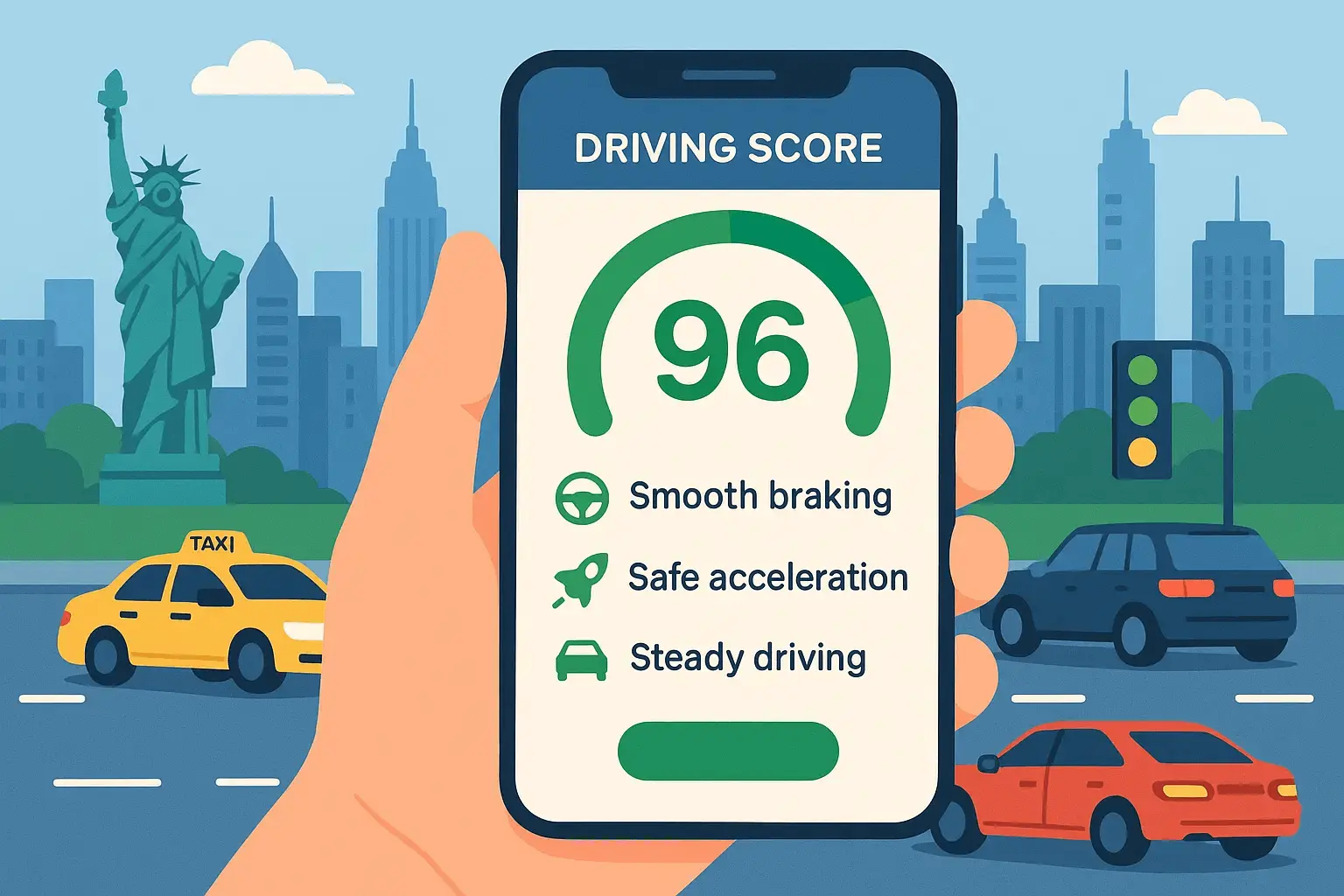
This was actually hilarious - my driving app kept giving me good scores because NYC traffic is so bad that I literally can't speed or brake hard. I'm crawling along at 15 mph most of the time. Meanwhile, my friend in Phoenix is getting dinged for "aggressive driving" because she actually gets to use highways. Sometimes being stuck in traffic pays off.
I thought NYC traffic would hurt my usage-based insurance score, but it actually helped. The constant stop-and-go means you're rarely speeding, you're br aking gradually most of the time, and you're generally driving more cautiously than highway drivers. This directly impacts how much car insurance you'll pay through these technology-based programs.
NYC's notorious traffic patterns, while frustrating to drive in, can actually benefit drivers in usage-based insurance programs that reward cautious driving behaviors. The constant traffic means gradual acceleration and controlled braking become natural parts of city driving.
Some of the newer programs track not just how you drive, but where and how you park. If you consistently choose well-lit areas, avoid parking on certain high-theft blocks, or use parking garages instead of street parking, it can positively impact your rate.
My app started giving me "safe parking" bonuses when it noticed I was consistently parking in the same garage instead of hunting for street spots in different areas each time.
If you're like me and mainly use your car on weekends, time-based usage programs can save you serious money. Weekend driving in NYC is generally lower-risk - less traffic, fewer pedestrians, more relaxed pace.
I switched to a program that charges different rates based on when I drive. My weekend trips to visit friends or get out of the city are charged at a much lower rate than weekday driving during rush hours. This approach to new york auto insurance has revolutionized how city drivers can optimize their coverage costs.
I used Zipcar for two years before getting my own car, and I assumed I didn't need to worry about insurance. But when I got my own policy, I discovered that my Zipcar usage history actually affected my rates - some companies saw it as driving experience, others saw it as increased risk exposure.
The bigger issue is what happens if you use both. If you have your own car but occasionally use Zipcar, there can be coverage overlaps or gaps depending on how your personal policy is structured.
I thought I was being clever by not mentioning my occasional Uber driving. It was just weekends, maybe 10 hours a month - how would they even know? Well, they found out when I filed a claim and they asked a bunch of detailed questions about what I was doing when the accident happened. Turns out "driving between Uber rides" is not the same as "personal use" in insurance land. Who knew?
Even occasional gig driving can completely change your insurance needs. I drove for a food delivery service maybe 10 hours a month, but when my insurance company found out, they wanted to reclassify my entire policy as commercial use.
The problem is that most personal policies exclude coverage when you're using your car for commercial purposes, even occasionally. But commercial policies are expensive and designed for full-time drivers. There's not a good middle ground for occasional gig work, which significantly affects how much car insurance you'll need to budget for.
My friend Sarah learned this lesson the hard way when she started driving for Uber on weekends to make extra money. Her personal insurance company discovered her gig work after she filed a claim for a fender-bender that happened while she was between rides. They denied the claim and threatened to cancel her policy, forcing her to find commercial coverage that cost an additional $2,400 annually for what amounted to maybe $300 in monthly Uber income.
New York's specific insurance regulations and legal environment create both opportunities and challenges that don't exist in other major cities. From no-fault insurance complexities to municipal policies, these factors directly impact premium calculations for new york auto insurance policies.
The no-fault thing is so confusing. I thought it meant "nobody's at fault so nobody pays extra." Nope. It means everybody pays extra because the system assumes everybody's going to get hurt in every accident. My agent tried to explain it to me three times before I gave up and just accepted that NYC insurance logic doesn't have to make sense.
New York's no-fault system is one of the key reasons why the cost of car insurance is so high here. According to Experian data, drivers with poor credit in New York pay an average of 88 percent more for full coverage than drivers with good credit-based insurance scores, making the state's complex insurance requirements even more expensive for those who can least afford it.
New York requires Personal Injury Protection (PIP) coverage, but most people don't realize you can adjust the amount based on your health insurance situation. If you have good health insurance through work, you might be able to reduce your PIP coverage and save money.
I was paying for $50,000 in PIP coverage when my health insurance would cover most of what PIP covers anyway. By reducing it to the minimum required amount and understanding how the coordination of benefits works, I saved about $300 annually on my new york auto insurance policy.
The statistics on uninsured drivers in NYC are higher than I expected. Even though insurance is required, enforcement isn't perfect, and the density of the city means you're more likely to encounter someone driving without proper coverage.
Uninsured motorist coverage costs extra, but given the likelihood of encountering uninsured drivers, it's probably worth it. I learned this from a friend who got hit by someone with no insurance and had to pay for repairs out of pocket because he'd skipped this coverage to save money. This additional protection becomes a crucial factor in the overall cost of car insurance calculations for NYC residents.
Vision Zero has actually started affecting insurance rates in some neighborhoods. Areas where the city has implemented significant safety improvements - better lighting, redesigned intersections, speed cameras - are seeing lower accident rates, which insurance companies are starting to factor into their pricing.
I noticed this when comparing rates for apartments in different areas. Neighborhoods that had been part of Vision Zero improvements had slightly better new york auto insurance rates than similar areas that hadn't received those infrastructure investments yet.
Congestion pricing is about to make everything even weirder. Some insurance companies are already asking if I plan to drive in Manhattan during peak hours. How am I supposed to know? Sometimes I need to drive through Manhattan to get to Queens. It's not like I'm planning my accidents around toll schedules.
The congestion pricing rollout is going to change everything about driving patterns in Manhattan, and insurance companies are already starting to factor this into their long-term rate projections. If you primarily drive in the congestion zone, your usage patterns are about to change dramatically.
I've started asking insurance agents about how congestion pricing might affect my rates. Some companies are already offering discounts for drivers who commit to avoiding the congestion zone during peak hours, essentially betting that reduced Manhattan traffic will lower overall risk.
The rate increases aren't slowing down either. "Average cost of car insurance in NY" FinanceBuzz reports that young drivers in New York now pay an average of $454 per month, while state minimum coverage still costs $213 per month - demonstrating how even basic protection remains expensive in the state.
Practical strategies for optimizing NYC car insurance costs require understanding the city's unique factors and taking specific actions that address urban driving realities rather than following generic insurance advice designed for suburban drivers.
Do yourself a favor and actually track where you drive for a couple weeks. I used one of those apps thinking I barely used my car in the city. Turns out I was driving way more than I thought - mostly just circling around looking for parking, but apparently that counts as "city driving" to insurance companies. Good to know before you're filling out applications.
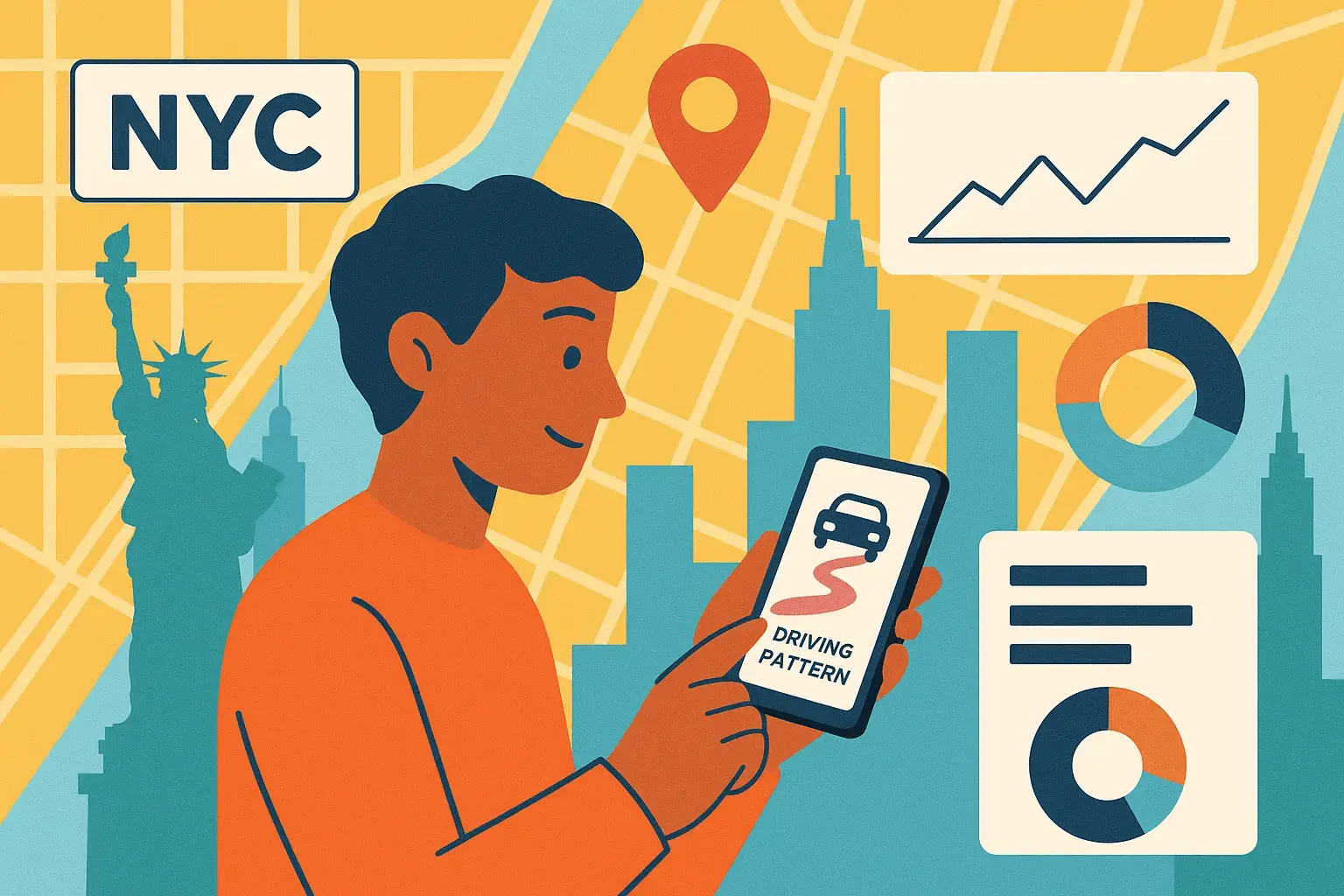
Document your real driving patterns using a smartphone app for at least two weeks. This data became incredibly valuable when shopping for usage-based insurance programs and finding the cheapest car insurance in new york for my specific situation.
This sounds super nerdy, but look up the crime stats for your exact block. The NYPD website has all this data, and insurance companies definitely use it. I found out my block had way fewer car break-ins than I thought, which helped when I was arguing with my agent about my rates.
Take inventory of all your transportation alternatives. Map out subway accessibility, bike-share stations, and walking distances to places you go regularly. This helps you understand whether you actually need a car year-round or if you could potentially switch to a seasonal policy, which can significantly reduce your average car insurance cost.
30-Day Insurance Optimization Action Plan:
Experiment with usage-based insurance programs from at least two different carriers. The algorithms and scoring methods vary significantly between companies. What one company penalizes, another might reward.
I tried programs from three different companies over six months. One penalized me for driving late at night (which I do frequently), another gave me bonuses for it because late-night traffic is less dense. The difference in my final rates was substantial, and this testing helped me find truly cheap car insurance in new york city options.
Optimize your parking strategy by identifying the safest, most cost-effective options within your budget. This might mean paying for garage parking in certain situations if it saves you more in insurance costs than it costs in parking fees.
Review and adjust your coverage levels based on your actual NYC lifestyle. The coverage that made sense when you were commuting daily in the suburbs might not be optimal for occasional weekend driving in the city. Understanding how car insurance prices vary based on coverage levels can help you optimize your policy.
|
Insurance Company |
Average Annual Premium (NYC) |
Best Discount Programs |
Usage-Based Options |
|
Progressive |
$3,200 |
Multi-policy, Safe Driver |
Snapshot |
|
GEICO |
$3,850 |
Military, Federal Employee |
DriveEasy |
|
State Farm |
$3,600 |
Good Student, Drive Safe |
Drive Safe & Save |
|
Allstate |
$4,200 |
Multi-policy, Safe Driver |
Drivewise |
|
NYCM |
$3,100 |
Local discounts, Multi-car |
TelemaCare |
Source: Compiled from ValuePenguin and company websites
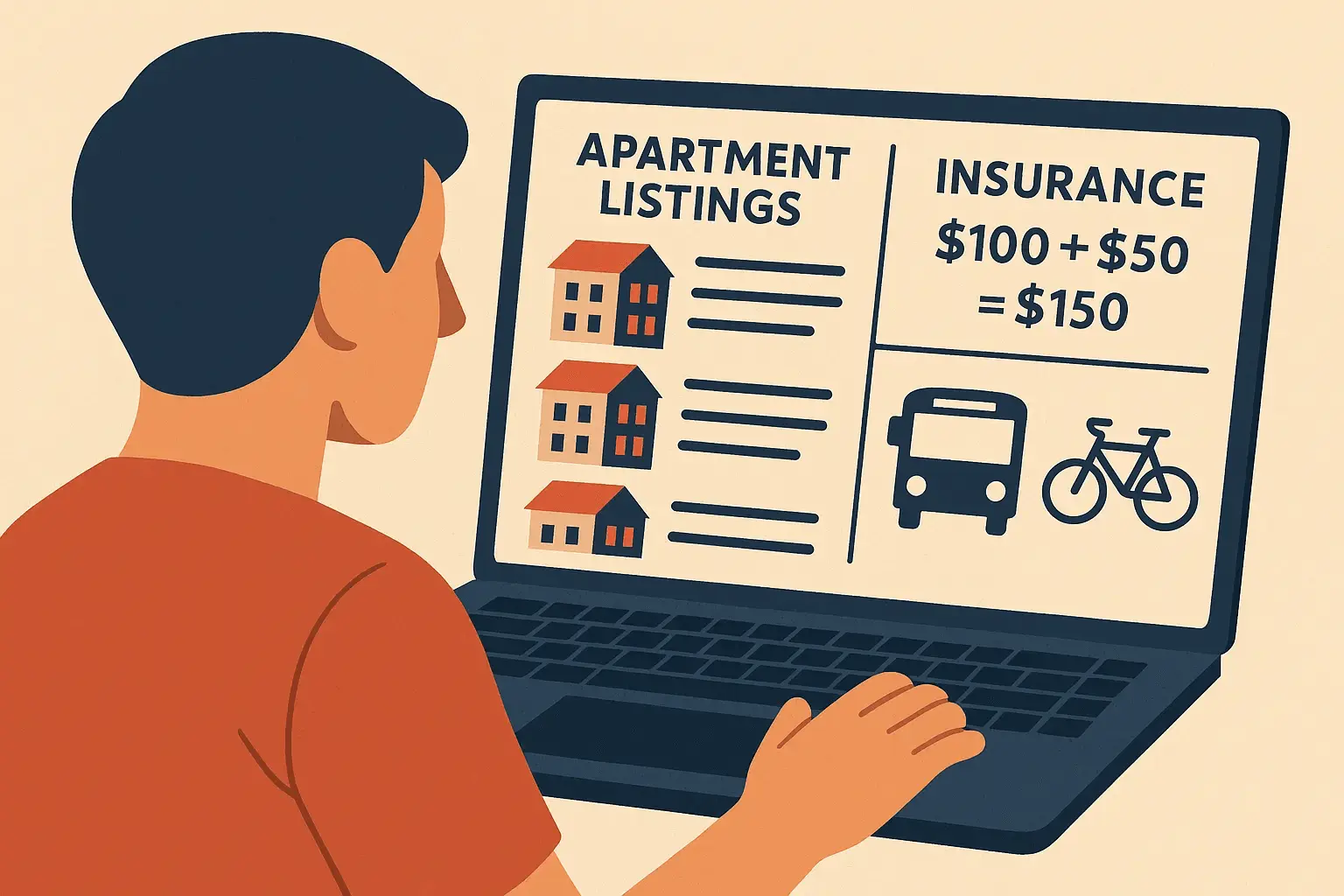
Consider relocating within NYC to neighborhoods with better insurance rate profiles if you're flexible about where you live. The difference in annual insurance costs between neighborhoods can be significant enough to factor into housing decisions when searching for the cheapest car insurance in new york state options.
Build a relationship with an independent insurance agent who specializes in NYC's unique market. These agents understand the local factors that affect rates and can help you navigate the complexities that online tools miss.
Regularly reassess your transportation needs as your NYC lifestyle evolves. Your car usage patterns will probably change as you get more comfortable with the city and discover new transportation options, which can help you find cheap car insurance in new york city alternatives or adjust your coverage accordingly.
After living in NYC for two years, I realized my car usage had evolved dramatically. What started as daily driving for work became mostly weekend trips upstate and occasional grocery runs. I switched from a traditional policy to a pay-per-mile program and combined it with a monthly MetroCard. My total transportation costs dropped from $650/month (insurance + parking + gas) to $380/month (reduced insurance + transit + occasional parking), saving me over $3,200 annually and bringing my average car insurance cost well below the city average.
Strategic housing decisions can significantly impact insurance costs through location-based risk factors, parking infrastructure, and neighborhood safety profiles. Understanding these connections helps optimize both housing and insurance expenses simultaneously.
The coliving model works especially well for people new to NYC who are trying to figure out the insurance landscape. Instead of being locked into a long-term lease in an area with high insurance premiums, flexible rental terms let you test different neighborhoods and understand your real transportation needs before making major insurance commitments.
What I found valuable about sharing knowledge with other residents was learning about local parking strategies, insurance experiences, and transportation alternatives. Other people had already figured out which blocks had better parking, which insurance companies worked best for different lifestyles, and how to find the cheapest car insurance in new york city for their specific situations.
For people questioning whether they even need a car in NYC, strategic locations near public transportation provide the perfect testing ground. You can determine if car ownership is truly necessary for your lifestyle before committing to the thousands of dollars annually in ny car insurance and related costs.
When evaluating neighborhoods, understanding how much is car insurance will vary based on your exact location becomes crucial for budgeting your overall living expenses in the city.
Neighborhood Insurance Rate Research Checklist:
Look, I'm not going to lie to you - NYC car insurance is expensive, confusing, and sometimes makes absolutely no sense. I've been here two years and I still don't fully understand why moving three blocks saved me $500 or why my friend pays twice what I do for the same car and similar coverage.
But here's what I've learned: stop trying to make it make sense, and start working with the weirdness. Track your actual driving, be honest about where you park, shop around like your rent depends on it (because honestly, it kind of does), and don't be afraid to ask stupid questions.
The agents have heard it all before, and most of them are pretty cool about explaining the NYC-specific stuff if you just admit you're confused. Because trust me, everyone's confused about NYC car insurance. Even the people selling it.
The key insight is that your specific location within the city matters more than almost any other factor. Your exact block, your parking situation, your actual driving patterns - these hyperlocal factors determine your costs more than your driving record or the type of car you drive.
Technology has created new opportunities for NYC drivers that didn't exist even five years ago. Usage-based insurance, real-time risk assessment, and app-based monitoring can work in your favor if you understand how to use them.
Don't rely on online calculators or generic advice. The new york car insurance market is too complex and too specific for one-size-fits-all solutions. Take the time to understand your actual needs, document your real usage patterns, and work with professionals who understand the local market.
Most importantly, remember that your insurance needs will evolve as your NYC lifestyle evolves. What works when you first move here might not be optimal six months later. Stay flexible, keep reassessing, and don't be afraid to make changes when your situation changes.
The cost of car insurance in NYC will always be higher than most other places, but understanding the city's unique factors gives you the power to optimize within that reality. Focus on what you can control - your location choices, your driving patterns, and your coverage decisions - rather than accepting the first quote you receive.
Whether you're seeking the most comprehensive new york car insurance coverage or trying to minimize the cost of car insurance while maintaining adequate protection, success comes from understanding that NYC operates by its own rules. Learn those rules, work within them, and you'll find opportunities to save that most people never discover.


Household supplies can be changed or decreaased at Outpost Club’s discretion, or based on supply availability. Outpost is not responsible for temporary losses of utility service. Outpost Club is not responsible for any damages due to absence of any supplies or utilities


If you have a sales related question please call
680-688-7678

 Hot Deals