Celebrities Who Live in Manhattan
Nov 13, 2025
Manhattan has always been more than an island — it’s an ecosystem of ambition. Every block vibrates with history, art, and reinvention. For celebrities, it’s the one place where they can both stand out and disappear. Unlike Los Angeles, where fame isolates, New York normalizes success. You might pass a movie star walking her dog or see a chart-topping musician waiting for coffee — and no one looks twice.
This balance of anonymity and access is what makes Manhattan irresistible. It’s a city that celebrates the extraordinary but allows everyone — famous or not — to live as equals in its rhythm. Here, even the biggest names find freedom.
And while penthouses and prewar co-ops might grab headlines, the real secret is that Manhattan’s energy is accessible. Through smart housing models like Outpost Coliving, anyone can live close to that pulse — surrounded by culture, creativity, and connection.
The reasons go beyond luxury. For many stars, living here isn’t just about owning real estate — it’s about identity, purpose, and presence.
|
Reason |
What It Means |
|
Privacy |
Many Manhattan buildings have private elevators, gated courtyards, and underground access. Fame can blend into daily life. |
|
Culture |
Proximity to art galleries, Broadway, and global media gives celebrities creative fuel. |
|
Legacy |
Owning property in Manhattan symbolizes permanence — a place in cultural history. |
|
Energy |
New York offers constant inspiration and creative cross-pollination. |
|
Education & Family |
World-class schools and safety attract family-oriented celebrities. |
|
Aspect |
Manhattan |
Los Angeles |
|
Lifestyle |
Fast-paced, cultural |
Laid-back, residential |
|
Privacy |
Discreet in density |
Isolated in space |
|
Real Estate |
Vertical luxury |
Horizontal sprawl |
|
Fame Culture |
Subtle, intellectual |
Visual, performative |
In short: Manhattan fame feels lived-in, not staged.
Tribeca — short for Triangle Below Canal Street — has transformed from a landscape of industrial warehouses and cobblestone alleys into the crown jewel of celebrity real estate. Once filled with textile factories and coffee importers, its cast-iron buildings have been reborn as sprawling lofts, private penthouses, and sleek art studios that blend the neighborhood’s gritty roots with its modern prestige.
What sets Tribeca apart isn’t just its price tag or exclusivity — it’s the feeling. The streets still carry the echo of New York’s working-class past, but the rhythm has slowed. Morning light filters through tall warehouse windows; cafes open their doors to stroller-pushing parents and low-profile directors grabbing oat lattes before heading to editing suites nearby. Here, privacy feels organic — no walls, no gates, just the kind of unspoken respect that New Yorkers understand instinctively.
|
Property Type |
Average Price |
Monthly Rent |
|
2-Bedroom Condo |
$4.7 million |
$13,500 |
|
Loft Apartment |
$6.2 million |
$18,000 |
|
Townhouse |
$10+ million |
N/A |
Taylor Swift, Jennifer Lawrence, Ryan Reynolds & Blake Lively, and Justin Timberlake all call Tribeca home. The ultra-private 443 Greenwich Street — known as the celebrity fortress — features paparazzi-proof architecture, a central courtyard, and private underground parking.
Robert De Niro, one of Tribeca’s earliest celebrity residents, helped transform the area’s reputation by co-founding the Tribeca Film Festival, cementing its artistic credibility.
Outpost Coliving houses in Williamsburg, Bushwick, and Downtown Brooklyn offer access to Tribeca’s atmosphere — artistic, walkable, and cultured — without the seven-figure rent. You get privacy, creative energy, and community in one all-inclusive space.
Few places capture the soul of New York reinvention like SoHo.
With its cast-iron facades, soaring loft ceilings, and cobblestone streets lined with boutique storefronts, SoHo feels like a living art installation — one that changes with every decade but never loses its edge.
Once a forgotten manufacturing zone, SoHo was rediscovered by artists in the 1960s who saw possibility in its abandoned warehouses. Painters hung canvases where machines once roared; sculptors carved light into their living spaces. What followed was an urban rebirth — the rise of the SoHo loft, a uniquely New York invention that turned necessity into aesthetic.
Rihanna, Daniel Craig, Jon Bon Jovi, and Dakota Johnson have all owned SoHo lofts. The appeal is simple: old-world charm meets downtown chic.
|
Property Type |
Average Price |
Monthly Rent |
|
Artist Loft |
$6.1 million |
$16,000 |
|
Condo |
$5.3 million |
$13,000 |
|
Penthouse |
$10+ million |
$25,000+ |
The streets hum with creative tension — photographers shooting editorials, artists prepping exhibitions, locals grabbing espresso at Balthazar. For many celebrities, living here isn’t about isolation — it’s about immersion.
SoHo fame is participatory. You might see a designer collaborating with a chef, or an actor co-hosting a gallery show. It’s visibility without intrusion.
For those drawn to SoHo’s energy, Outpost’s Williamsburg House mirrors the vibe perfectly: bright interiors, open kitchens, shared studios, and creative events that turn residents into collaborators.
The West Village is Manhattan’s most cinematic neighborhood. Cobblestone streets curve unexpectedly, ivy climbs brownstones, and the air smells faintly of espresso and history.
Sarah Jessica Parker, Hugh Jackman, Anna Wintour, and Mark Ruffalo all own homes here. Fame here is subtle — the kind that wears linen instead of sequins.
|
Property Type |
Average Price |
Monthly Rent |
|
Brownstone |
$7.5 million |
$18,000 |
|
Condo |
$3.9 million |
$12,000 |
|
Loft Apartment |
$4.8 million |
$13,000 |
The Village feels human-sized. Its small cafés, neighborhood bookstores, and hidden courtyards foster intimacy. You’ll find A-listers chatting with shop owners or sitting on park benches — no entourage, no spectacle.
Privacy here isn’t enforced — it’s respected.
Live close to the Village’s charm with Outpost’s Clark House or Heritage House. Both provide quick subway access to downtown and the same blend of calm and creativity — ideal for anyone building their own version of a New York dream.
|
Neighborhood |
Energy |
Average Condo Price |
Vibe |
Celebrity Residents |
|
Tribeca |
Private, powerful |
$4.7M |
Luxe minimalism |
Taylor Swift, Jennifer Lawrence |
|
SoHo |
Artistic, visible |
$5.3M |
Chic industrial |
Rihanna, Daniel Craig |
|
West Village |
Intimate, literary |
$3.9M |
Bohemian classic |
Sarah Jessica Parker, Hugh Jackman |
Each of these neighborhoods reflects a different expression of fame — power, creativity, and authenticity — all within walking distance. Together, they form the cultural heart of downtown Manhattan.
Step inside the Upper West Side, Upper East Side, and Gramercy — Manhattan’s most refined celebrity enclaves. Explore historic co-ops, legacy addresses, and luxury real estate trends. Learn how Outpost Coliving offers proximity to these iconic neighborhoods with affordability, safety, and community.
As Manhattan’s skyline rises, so does its prestige. Uptown — from Lincoln Square to the Museum Mile — remains the city’s gold standard for culture, comfort, and class. It’s where fame takes a quieter form: less red carpet, more refinement.
Celebrities who move uptown tend to stay for decades. Their addresses become part of New York’s mythology: think The Dakota’s storied arches or The San Remo’s twin towers overlooking Central Park. Here, fame isn’t loud — it’s lived in.
For artists, producers, and public figures seeking balance, uptown offers what downtown can’t: space, greenery, and discretion. Central Park acts as a literal and emotional barrier between the chaos of the city and the serenity of home.
The Upper West Side (UWS) blends old New York charm with modern sophistication. It’s literary, musical, and intellectual — home to actors, directors, and journalists who value culture over spectacle.
The UWS’s signature buildings — The Dakota, The San Remo, The Beresford — represent an era when craftsmanship defined luxury. These residences feature grand foyers, high ceilings, and doormen who know discretion better than any security system.
|
Property Type |
Average Price |
Monthly Rent |
|
Co-op Apartment |
$3.2 million |
$9,500 |
|
Condo |
$4.6 million |
$12,000 |
|
Townhouse |
$8.7 million |
$20,000 |
The Upper West Side appeals to celebrities who’ve outgrown the spotlight but not the stage — people who want to create, teach, or simply walk in peace.
Central Park Manhattan House offers a comparable lifestyle — tree-lined views, safety, and access to the 1, B, and C trains that run through the heart of the UWS. It’s luxury without isolation.
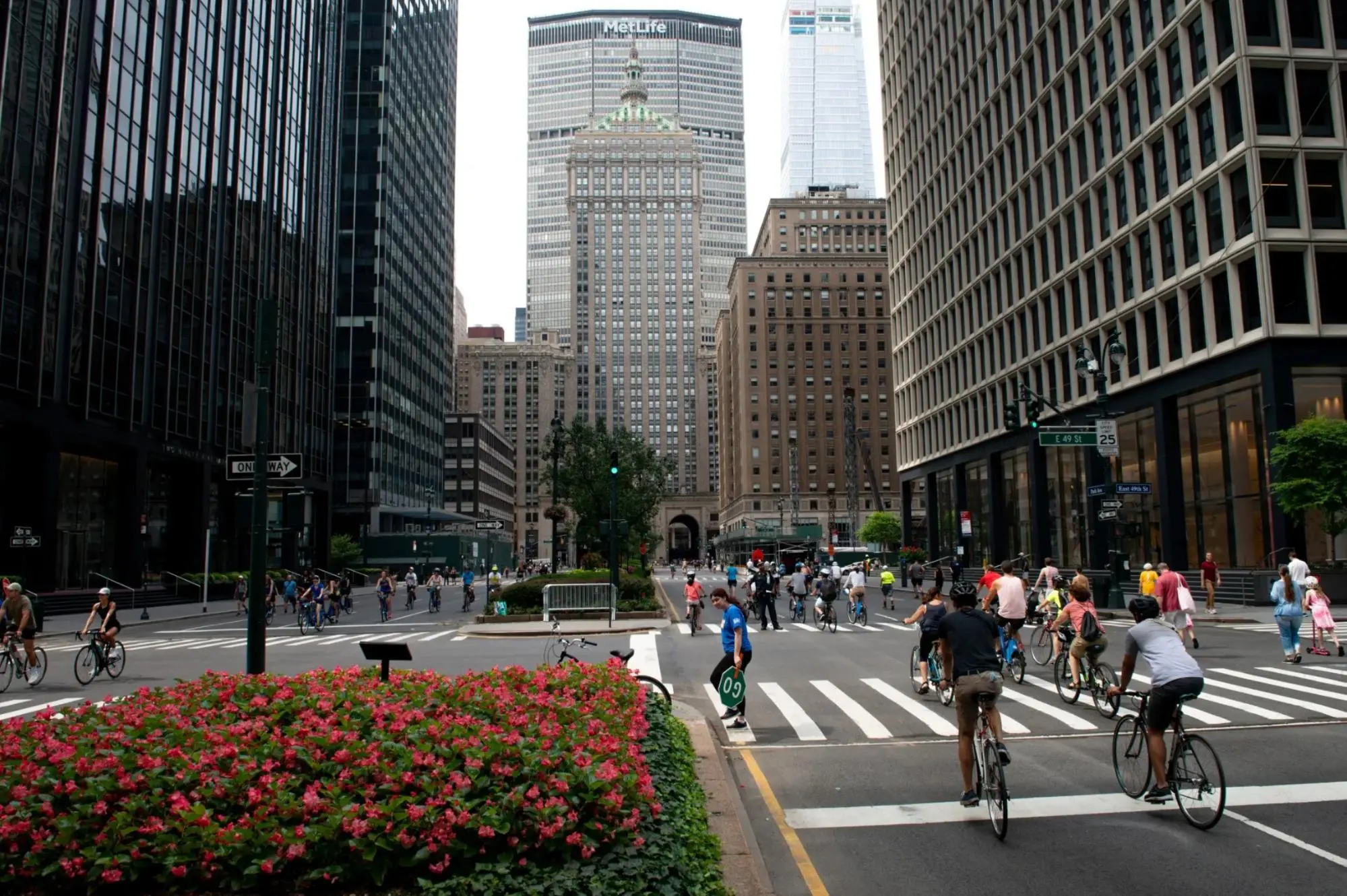
The Upper East Side (UES) is synonymous with prestige. From Fifth Avenue’s prewar co-ops to Park Avenue’s limestone mansions, the area exudes control, heritage, and quiet influence.
Where the UWS celebrates artistry, the UES values authority. Its appeal lies in privacy — co-op boards that protect residents’ peace, and buildings designed to shield lives from the city’s chaos.
|
Property Type |
Average Price |
Monthly Rent |
|
Co-op |
$2.8 million |
$8,200 |
|
Condo |
$4.1 million |
$10,000 |
|
Townhouse |
$9.5 million |
N/A |
While Park Avenue penthouses remain exclusive, Outpost Coliving’s Central Park and Heritage Houses bring you steps from that same environment — clean, bright, safe spaces where community replaces exclusivity.
Few Manhattan neighborhoods carry as much mystique as Gramercy Park.
This leafy, picture-perfect enclave sits quietly between 20th and 21st Streets, built around the city’s only private park — a serene patch of green accessible only to those who hold one of roughly 400 rare iron keys.
That exclusivity defines Gramercy’s character. Where SoHo buzzes and Tribeca gleams, Gramercy whispers. The air feels different here — softer, slower, as if time itself bends around the park’s wrought-iron fence. In a city famous for constant movement, Gramercy offers the illusion of pause.
The neighborhood’s origins trace back to the 1830s, when developer Samuel Ruggles envisioned an urban oasis modeled after the private garden squares of London. The plan worked. Over time, the park became a coveted symbol of status — not flashy, but deeply New York. Ownership of a key is not merely practical; it’s social currency, connecting residents across generations.
Gramercy balances intimacy with exclusivity. The architecture — 19th-century brownstones and neo-Gothic apartment houses — evokes a sense of permanence that few modern developments can match.
|
Property Type |
Average Price |
Monthly Rent |
|
Co-op |
$2.6 million |
$7,500 |
|
Condo |
$3.8 million |
$9,000 |
|
Townhouse |
$7.9 million |
N/A |
Living near Gramercy means living among writers, diplomats, and artists — people who shape culture quietly.
From Williamsburg House or Maison on Linden, you’re only a short subway ride from Gramercy’s elegance. Outpost’s community model offers a similar peace of mind — secure, connected, and beautifully designed.
|
Building |
Location |
Residents |
Distinctive Feature |
|
The Dakota |
UWS |
John Lennon, Yoko Ono |
Gothic design, historical landmark |
|
The San Remo |
Central Park West |
Steven Spielberg, Demi Moore |
Twin towers, art deco luxury |
|
443 Greenwich |
Tribeca |
Blake Lively, Ryan Reynolds |
Underground valet, paparazzi-proof |
|
The Beresford |
UWS |
Meryl Streep, Glenn Close |
Iconic towers, sweeping park views |
|
The Apthorp |
UWS |
Cyndi Lauper |
Renaissance Revival design |
|
One57 |
Midtown |
Global entrepreneurs |
Glass tower, hotel services |
These buildings act as both status symbols and sanctuaries — expressions of Manhattan’s architectural power.
|
Metric |
Value |
|
Average Luxury Condo Price |
$4.8 million |
|
Average Monthly Rent |
$14,200 |
|
Celebrity-Owned Property Share |
8% |
|
Average Appreciation (5 years) |
+12% |
The Manhattan luxury market continues to outperform the national average due to its global appeal and limited inventory.
Living near Manhattan’s most iconic neighborhoods doesn’t require millions. Outpost Coliving bridges affordability with access — giving tenants the same sense of security, sophistication, and connection.
|
Feature |
Outpost Coliving |
Luxury Apartment |
|
Rent |
From $1,400/month |
$10,000+ |
|
Lease Terms |
3–12 months |
12+ months |
|
Utilities & Wi-Fi |
Included |
Extra |
|
Furniture |
Fully furnished |
Must purchase |
|
Community |
Built-in, diverse |
Private, isolated |
Outpost locations like Clark House, Central Park House, and Williamsburg House give you the freedom to live near celebrity neighborhoods — safely, stylishly, and affordably.
Explore how celebrity living shapes the culture, architecture, and identity of Manhattan. Discover the psychology behind fame, the evolution of luxury design, and how Outpost Coliving offers a human, affordable version of New York’s most sought-after lifestyle.
To live in Manhattan is to live at full volume. For celebrities, that intensity becomes both a muse and a challenge. The island’s energy feeds their creativity — but its density demands protection. Homes, therefore, become more than residences; they’re psychological sanctuaries.
Where Los Angeles builds walls, Manhattan builds boundaries through design: tall windows instead of fences, private lobbies instead of gates. Here, privacy is architectural — achieved through elevation, layout, and community codes of respect.
Fame in New York thrives because it’s integrated. A film director can walk to a bookstore. A Broadway star can grocery shop at Whole Foods without security detail. The anonymity of proximity keeps life real.
|
Need |
Celebrity Solution |
Manhattan Design Answer |
|
Privacy |
Avoid paparazzi |
Underground parking, direct elevators |
|
Inspiration |
Stay creative |
Art-filled interiors, open loft spaces |
|
Safety |
Maintain comfort |
Staffed doormen, secure key systems |
|
Belonging |
Avoid isolation |
Co-ops with curated neighbors |
For stars, Manhattan becomes both stage and refuge — a place to perform and a place to retreat, often within the same block.
Every famous New Yorker’s home reflects a design philosophy: visibility versus seclusion.
Prewar buildings like The Dakota, The San Remo, and The Beresford embody timeless glamour — carved stone façades, wood-paneled libraries, and gilded lobbies. They symbolize a version of fame rooted in legacy.
New developments such as 432 Park Avenue, One57, and 220 Central Park South appeal to a newer generation of global icons. Glass towers and minimalist interiors project control, transparency, and ambition.
Neighborhoods like Tribeca and SoHo exemplify creative luxury: industrial lofts converted into open-plan sanctuaries. Exposed beams, reclaimed wood, and oversized art walls mirror the evolution of celebrity itself — unpolished on the outside, meticulously curated within.
|
Building Type |
Example |
Design Theme |
Celebrity Residents |
|
Historic Co-op |
The Dakota |
Gothic Revival |
John Lennon, Lauren Bacall |
|
Luxury Tower |
432 Park Ave |
Modern Minimalism |
Jennifer Lopez (reported) |
|
Loft Conversion |
443 Greenwich |
Industrial Chic |
Ryan Reynolds, Taylor Swift |
|
Boutique Condo |
One Madison |
Panoramic Design |
Tom Brady, Gisele Bündchen |
Each residence functions as a personal manifesto — proof that architecture and identity are inseparable in Manhattan.
Celebrity presence does more than raise property values; it transforms local economies and even social norms.
When actors, designers, and musicians settle in an area, it signals safety and creativity. Independent businesses follow: coffee roasters, artisan bakeries, boutique gyms. Soon, the neighborhood becomes both a brand and a lifestyle.
Tribeca’s loft conversions led to rising real estate values, which then expanded into SoHo and the Lower East Side. Likewise, the celebrity migration to Brooklyn Heights and Williamsburg mirrored the city’s creative decentralization.
Residents often cite celebrity neighbors as points of pride — but New Yorkers rarely intrude. That balance of respect is what makes the city’s social ecosystem sustainable.
|
Neighborhood |
Cultural Identity |
Celebrity Influence |
|
Tribeca |
Film & Design |
Tribeca Film Festival, De Niro’s legacy |
|
SoHo |
Fashion & Art |
Rihanna, high-end retail boom |
|
West Village |
Creative Freedom |
Actors, editors, designers |
|
Brooklyn Heights |
Literary Cool |
Matt Damon, Emily Blunt |
Owning property in Manhattan’s celebrity enclaves costs millions. But what do you actually get — and how does it compare to community living like Outpost Coliving?
|
Feature |
Celebrity Apartment |
Outpost Coliving |
|
Average Monthly Cost |
$15,000+ |
From $1,400 |
|
Privacy |
Maximum, but isolating |
Balanced with connection |
|
Amenities |
Custom design, private gyms |
Shared gyms, coworking spaces |
|
Flexibility |
Long-term ownership |
Short, flexible leases |
|
Social Life |
Limited to circles |
Built-in community events |
|
Maintenance |
Managed by staff |
Included in rent |
|
Neighborhood Access |
Prime addresses |
Near top-rated areas |
For many New Yorkers, coliving isn’t a compromise — it’s a recalibration. The essentials of luxury living (design, safety, comfort) can exist without the financial burden.
Outpost Coliving captures the essence of Manhattan life — ambition, connection, and comfort — while keeping it accessible. Every property is designed with both independence and community in mind.
Outpost spaces emphasize safety through community. Digital access systems, professional cleaning, and friendly, vetted tenants make every house feel secure and welcoming.
Living with Outpost isn’t just about saving money — it’s about reclaiming the New York experience. You’re part of a story that values connection over exclusivity.
Every corner of Manhattan tells a story — of artists who dared, of dreamers who stayed, and of icons who reshaped culture simply by choosing to live here. The island breathes ambition; it hums with the footsteps of those who came to build something bigger than themselves.
You can trace it in the neighborhoods — in the ghostlight of old theaters off Broadway, in the echo of jazz from Harlem windows, in the flicker of studio lamps across SoHo lofts. This is a city where the walls remember. Every brownstone and skyline reflection carries the weight of creativity, persistence, and reinvention.
Whether it’s Taylor Swift writing lyrics in her Tribeca penthouse or Steven Spielberg editing storyboards overlooking Central Park, fame in Manhattan never feels handed down — it feels earned. It’s the kind of success built on subway rides, sleepless nights, and the stubborn belief that the city might one day notice your light.
But the magic of Manhattan is that it isn’t only for celebrities. It’s for anyone brave enough to imagine themselves here. The same air that fuels stars also fills morning commutes, park benches, late-night diners, and rooftops where friends gather under string lights to talk about what’s next. That blend — of fame and familiarity, struggle and splendor — is what makes the city feel alive.
And that’s where Outpost Coliving fits into the narrative. In a city of closed doors and private penthouses, Outpost creates open spaces — places where people connect over morning coffee, share dinners in communal kitchens, and build lives side by side. It’s not just affordable housing; it’s a modern take on the Manhattan dream. You might not own a key to Gramercy Park or a penthouse view of the Hudson, but you’ll still wake up surrounded by possibility — and that’s the real privilege of living here.
Because, in the end, Manhattan doesn’t belong to the famous. It belongs to everyone who wakes up ready to try. Every artist sketching on the subway, every student walking to class, every Outpost resident unlocking their door to a life they’re shaping one day at a time — they all share the same city heartbeat.
Manhattan is the dream, but it’s also the daily work of becoming. And whether your stage is a SoHo loft, a Tribeca office, or a bright apartment you share with others chasing their next chapter — you’re part of the story too.
And that’s the beauty: the same city that shelters the world’s biggest names also opens its doors to anyone ready to belong.
The real privilege of Manhattan isn’t money — it’s access. Access to creativity, diversity, and community. And that’s where Outpost bridges the gap — making the Manhattan rhythm livable for everyone.
Yes. Many maintain dual homes but spend significant time in Manhattan due to work, family, or creative projects.
Tribeca remains the top, followed by SoHo, West Village, and the Upper West Side.
Yes. High-profile neighborhoods feature 24/7 security, concierge systems, and community awareness.
Most Outpost locations — in Williamsburg, Downtown Brooklyn, and near Central Park — are within 20–30 minutes of celebrity areas.
Absolutely. Outpost Coliving offers flexible, all-inclusive living designed for students, professionals, and creatives who want comfort, community, and connection.
Luxury in New York isn’t only marble floors or skyline views — it’s about freedom. Freedom to explore, to connect, to dream without limits. For celebrities, that freedom takes the form of penthouses and privacy. For Outpost residents, it’s affordability and autonomy.
Both stories share one truth: Manhattan is where ambition meets home.
So whether you’re walking past the brownstones of the West Village or watching the skyline from an Outpost rooftop in Brooklyn — remember, you’re sharing the same air, the same streets, and the same city that has inspired legends for generations.
Explore more on our blog:
Discover neighborhood guides, NYC housing hacks, and lifestyle tips to make your New York story extraordinary — whether you’re here for a semester, a career, or a lifetime.
Previous post
Cost of Living in Staten Island, New York
Household supplies can be changed or decreaased at Outpost Club’s discretion, or based on supply availability. Outpost is not responsible for temporary losses of utility service. Outpost Club is not responsible for any damages due to absence of any supplies or utilities


If you have a sales related question please call
680-688-7678

 Hot Deals