Central Washington University Tuition: The Complete Financial Breakdown Every Student Needs
Dec 6, 2025

Dec 6, 2025
Look, I get it - college costs are scary. When I was helping my younger sister figure out CWU's tuition, I wished someone had just laid it all out in plain English. So here's the deal: CWU's pricing system is built around making education accessible, but there are definitely some moving parts you need to understand.
Your residency status creates the biggest difference in what you'll pay. Washington state residents get a massive break through state funding - we're talking about savings that can exceed $15,000 annually for undergraduate programs. That's the kind of difference that can make or break whether college is doable for your family.
What you're studying also affects your costs. Most undergraduate degrees follow standard tuition rates, but certain programs that need expensive equipment or specialized resources will cost extra. These aren't just random fees - they help maintain cutting-edge facilities and equipment that actually make your education better.
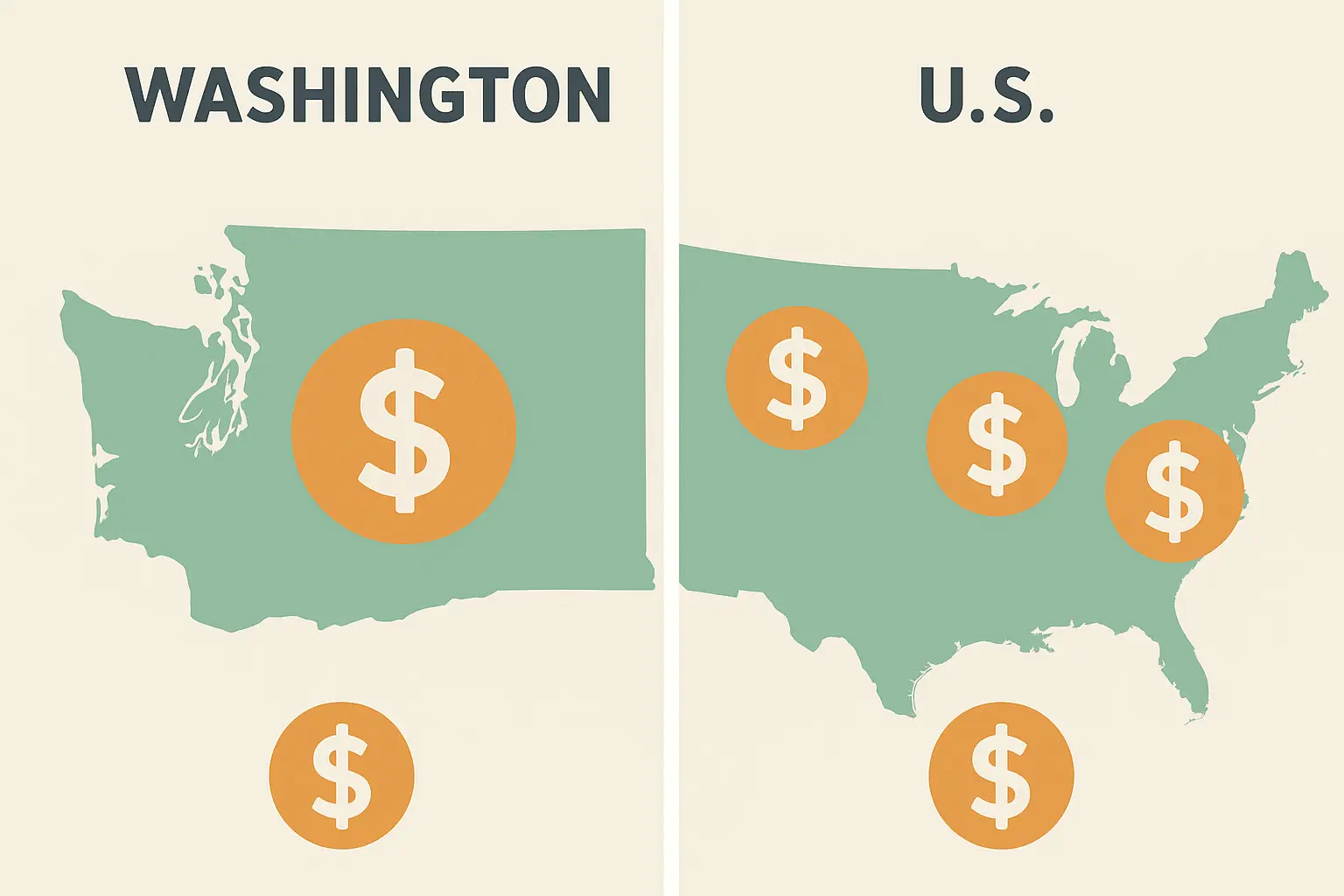
According to CWU's official cost information, CWU's in-state and out-of-state tuition rates are below average at $7,231 and $25,340, respectively, making it significantly more affordable than the national averages of $9,750 for in-state and $28,386 for out-of-state tuition.

Here's the deal with grad school at CWU - it's more complicated than undergrad, but not in a scary way. While undergrad has those nice, predictable semester fees, graduate programs often charge per credit hour. This actually gives you more control over your budget, but it also means you can't just set it and forget it.
I remember when my roommate was looking into CWU's MBA program - she was shocked to learn that professional programs cost more regardless of whether you're in-state or not. Makes sense when you think about it, though. These programs need specialized resources, industry connections, and professors who actually know what they're talking about in the real world.
The per-credit thing can actually work in your favor if you're working full-time. You can take fewer classes and spread out the cost, though you'll be in school longer. It's a trade-off that works for some people.
|
Student Type |
In-State Annual Tuition |
Out-of-State Annual Tuition |
Additional Program Fees |
|
Undergraduate |
$7,231 |
$25,340 |
$0-2,000 |
|
Graduate |
$8,500-10,000 |
$26,500-28,000 |
$500-3,000 |
|
Professional Programs |
$10,000-12,000 |
$28,000-32,000 |
$1,000-5,000 |
|
Online Programs |
$7,000-9,000 |
$24,000-26,000 |
$200-800 |
Okay, let's talk about the elephant in the room - that massive difference between in-state and out-of-state tuition. If you're from Washington, you're golden. If not, well... it stings a bit.
Washington residents are looking at around $12-13k total for tuition and fees. Out-of-state students? You're facing $26-28k. That's not a typo - it really is more than double. The reason is pretty straightforward: Washington taxpayers have been funding the university for years, so their kids get the discount.
But here's something that might help - CWU is still cheaper than a lot of other schools, even with out-of-state pricing. I had a friend from Oregon who was looking at schools, and CWU was actually her cheapest option, even compared to some Oregon schools.
The residency thing can be tricky, especially if your family moves around a lot or you're in the military. Some students can switch to in-state rates after their first year, which can save you a fortune. It's worth looking into if you think you might qualify.
This is where things get a bit bureaucratic, but stick with me because it could save you serious money. You basically need to prove you're not just here for school - you're here to stay.
The magic number is 12 months. You need to live in Washington for a full year before you can qualify for in-state tuition. But it's not just about physically being here - you need to show you're putting down roots. Get a Washington driver's license, register to vote, maybe get a job. The more ties you have to the state, the better.
Military families have it easier. If you're active duty stationed in Washington, or a veteran using GI Bill benefits, you might qualify right away. Same goes for your spouse and kids in some cases.
I know a girl named Sarah who moved here from California specifically to establish residency. She got a job at a coffee shop, changed her voter registration, opened a local bank account - the whole nine yards. It was a pain for that first year, but she saved over $18,000 annually once she qualified for in-state tuition. That's a pretty good return on investment for dealing with some paperwork.
Let me tell you about the fees nobody warns you about. You think you've got your budget figured out, then boom - technology fee, recreation center fee, lab fee, parking permit. These little charges add up fast, sometimes tacking on another $2-3k to your annual bill.
The technology fee is probably the most annoying because it sounds made-up, but you're actually paying for campus-wide WiFi, computer labs, and software that would cost you hundreds if you bought it yourself. The recreation center fee gets you access to the gym and fitness classes, which is actually a pretty good deal if you use it.
Then there are the program-specific fees that really catch people off guard. Science majors, I'm talking to you - those lab fees can be brutal.
If you're going into science or engineering, brace yourself. Lab fees can run anywhere from $200-800 per semester, and that's on top of everything else. I had a friend in chemistry who was constantly complaining about the cost of lab materials, but honestly, when you see what goes into those experiments, it makes sense.
Chemistry and biology students probably get hit the hardest because they're literally burning through chemicals and breaking glassware every semester. Plus there's all the safety equipment and waste disposal costs.
Engineering students pay for software licenses that would cost thousands if you had to buy them yourself. We're talking about industry-standard programs that you'll actually use in your career, so it's not just throwing money away.
Computer science majors benefit from regular hardware upgrades and specialized software. Trust me, you don't want to be learning on computers from 2010 when you're trying to get a job in tech.

Here's where things get expensive fast. On-campus housing runs $8-12k per year, and meal plans add another $4-5k. For in-state students, your room and board might actually cost more than your tuition. Let that sink in.
The housing options range from basic dorm rooms (think tiny and shared) to apartment-style living with your own bedroom and kitchen. Obviously, the nicer places cost more, but sometimes the convenience and social aspects are worth it, especially your freshman year.
Meal plans are tricky because it's hard to know how much you'll actually eat on campus. A lot of students end up with leftover meal credits at the end of the semester, which is basically throwing money away. Start with a smaller plan and add more if you need it.
|
Housing Option |
Annual Cost |
Meal Plan |
Annual Cost |
Total Room & Board |
|
Traditional Double |
$8,200 |
Basic Plan |
$4,200 |
$12,400 |
|
Suite Style |
$9,800 |
Standard Plan |
$4,800 |
$14,600 |
|
Apartment Style |
$11,500 |
Premium Plan |
$5,400 |
$16,900 |
|
Off-Campus Average |
$7,200 |
Grocery Budget |
$3,600 |
$10,800 |
Living off-campus can save you money, but don't forget about utilities, internet, and the fact that you'll probably eat out more than you think you will.
Okay, this is the part where things get hopeful. Financial aid can seriously change the game, but you've got to know how to work the system. The key is applying early and applying for everything you might qualify for.
Federal aid is your foundation - Pell Grants are free money that you never have to pay back, and Work-Study gives you a campus job that works around your class schedule. Federal student loans aren't ideal, but they have better terms than most private loans if you do need to borrow.
The Washington State Grant is huge for residents. If your family doesn't make much money, this can literally cover your entire tuition. I know students who go to CWU essentially for free because of state aid.
Here's what most people don't realize - according to the National Center for Education Statistics, college graduates (ages 25 to 34) with a bachelor's degree earned, on average, 59 percent more than those with only a high school diploma. So even if you have to take out some loans, you're investing in your future earning power.
Merit scholarships are where academic overachievers can really cash in. CWU gives out awards ranging from $1,000 to full tuition, but you've got to put in the work to get them.
Presidential Scholarships are the holy grail - these are for students with great grades, leadership experience, and community involvement. They're competitive, but if you get one, it can cover a huge chunk of your costs.
Don't sleep on departmental scholarships either. These are often easier to get because fewer people know about them. If you're majoring in engineering or business or whatever, check with that department about their specific scholarships.
I knew a guy named Marcus who was smart about this. He applied for everything - university-wide scholarships, departmental awards, community service scholarships. He ended up with $8,500 in combined scholarships, which made his education super affordable.
Work-Study is actually pretty sweet if you qualify. You get priority for campus jobs, and they're usually flexible with your class schedule. Plus, having a campus job helps you meet people and feel more connected to the university.
Popular jobs include working in the library, giving campus tours, or helping out in academic departments. The pay is decent, and you're building your resume while earning money for school.
Even if you don't qualify for Work-Study, there are regular campus jobs available. Dining services is always hiring, and facilities maintenance pays well if you don't mind physical work.
Financial Aid Application Checklist:
Let's be real - you're probably looking at other schools too. CWU holds its own pretty well in terms of cost and value. We're competitive with other Washington state schools, and often cheaper than going out of state.
Western Washington University costs about the same for tuition, but Bellingham is more expensive to live in. Eastern Washington is probably our closest competitor in terms of both cost and student vibe.
When you look at private schools in Washington, they might cost $40-60k per year, but sometimes their financial aid is so good that your actual out-of-pocket cost ends up being similar to a state school. It's weird, but it happens.
The real kicker is what happens after graduation. CWU graduates demonstrate exceptional career outcomes with an impressive average full-time starting salary of $60,000, with nearly 80 percent securing employment within six months of graduation. That's pretty solid return on investment.

Private schools can be sneaky expensive, but sometimes they're more generous with aid. If your family makes too much for maximum state aid but not enough to comfortably pay full price, private schools might actually be cheaper after scholarships.
The class sizes are usually smaller, and you might get more personal attention from professors. Whether that's worth the extra cost depends on what you're looking for in your college experience.
Private institutions often have larger endowments that support more generous aid packages. Students who wouldn't qualify for significant aid at public universities might receive substantial scholarships at private colleges, potentially making the net cost comparable or even lower than public options.
Here's where the rubber meets the road - actually figuring out how you're actually going to pay for this. Start planning early, like junior year of high school early. The earlier you start thinking about this stuff, the more options you'll have.
Fill out the FAFSA as soon as it opens in October. A lot of aid is first-come, first-served, so don't procrastinate on this one. I cannot stress this enough.
Make a realistic budget that includes everything - not just tuition, but books, food, gas money, the occasional pizza with friends. Track your spending so you know where your money is actually going.

Budgeting in college is like a whole different animal. Your income might be inconsistent, and there are always unexpected expenses popping up.
Textbooks are a huge scam if you buy them new from the bookstore. Rent them, buy used, or see if you can find PDF versions. Sometimes you can get by with an older edition that costs way less.
Transportation costs add up fast. If you live on campus, you might not need a car at all. If you live off campus, factor in gas and parking permits when you're comparing housing costs.
College Cost Management Checklist:
Summer is your chance to make some serious money for school. Paid internships are ideal because you're earning money and building your resume, but they're competitive.
Don't overlook traditional summer jobs either. Working at a summer camp, retail, or restaurants can bring in good money. The key is finding something that pays well and maybe offers some flexibility.
I knew a girl named Jennifer who worked as a camp counselor and tutored kids on the side. She made about $5,400 over the summer, which covered her books and personal expenses for the whole year.
Tuition goes up almost every year - usually 2-4%, but sometimes more if the state cuts funding. Plan for increases, but don't panic about them either.
The most important thing is graduating on time. Every extra semester or year you spend in school costs money in tuition and lost earnings. Work with your advisor to make sure you're on track.
Four-year graduation planning becomes crucial for cost management. Extending your education beyond four years significantly increases total costs through additional tuition, fees, and living expenses, plus you're missing out on earning money in your career.

This is boring but important - when the state has budget problems, universities get less money, which means students pay more. It's just how it works.
Keep an eye on state politics if you want to predict tuition increases. Bad economic times usually mean higher tuition. Good times might mean smaller increases.
Washington state's budget allocations directly affect CWU tuition rates. Reduced state support typically results in higher student costs, while increased state investment can help keep tuition increases moderate. Legislative sessions occur annually in Washington, with budget decisions affecting the following academic year.
Recent developments in CWU athletics demonstrate the university's commitment to student success across all areas. "CWU Football announces the 2025 Wildcat recruiting class" from Wildcat Sports, highlighting the university's continued investment in comprehensive student experiences that add value to your education.
Some programs cost extra - business, engineering, and health sciences usually have additional fees of $500-2,000 per year. It sounds like a money grab, but these programs often have better job placement and higher starting salaries.
Business programs invest in technology and software that you'll actually use in your career. Engineering programs need expensive equipment and software licenses. The extra cost usually pays for itself through better career opportunities.
These premium charges reflect the enhanced resources and career preparation these programs provide. The investments in program quality often result in higher starting salaries and better job placement rates that justify the additional costs.

Online programs can save you money on housing and campus fees, but they might have their own technology fees. It's usually still cheaper overall, especially if you can live at home.
Hybrid programs that mix online and on-campus classes can be a good middle ground. You save some money but still get the full college experience.
Distance learning eliminates many traditional campus costs including parking, recreation center access, and some student services fees. However, online programs may include technology fees that support learning management systems and technical support services.
While CWU continues to focus on academic excellence, local news coverage includes various community developments. "Central Washington University trustees to vote on tuition increase" from KIMA TV demonstrates the ongoing transparency in CWU's financial decision-making processes.
If you're coming from another country, I'm not going to sugarcoat this - it's expensive and complicated. You'll pay out-of-state tuition, you don't qualify for most financial aid, and you have visa costs on top of everything else.
Currency exchange rates can mess with your budget too. If your family is paying in a different currency, exchange rate changes can suddenly make everything more expensive.
Visa and immigration costs represent significant upfront expenses that domestic students don't face. F-1 student visas require SEVIS fees, application costs, and potential attorney fees for complex cases. You'll also need to demonstrate sufficient financial resources to cover your entire education before receiving visa approval.

Most federal and state aid isn't available to international students, so you're mainly looking at merit scholarships from CWU and private organizations.
Some countries have programs that help fund students studying abroad. Research what's available from your home country before you come to the US.
I knew a student named Ahmed who combined scholarships from CWU, his home country, and a private foundation to put together $6,500 in aid. It took a lot of applications, but it made his education much more affordable.
Institutional scholarships represent the primary aid source for international students. These merit-based awards consider academic achievement, leadership potential, and contributions to campus diversity. Competition is intense, making strong academic credentials and compelling personal statements essential.
International Student Financial Planning Checklist:
Look, college is expensive. There's no getting around that. But CWU offers pretty good value for what you get - solid academics, decent campus life, and graduates who actually find jobs.
The key is being smart about it. Apply for aid early, look for scholarships, make a realistic budget, and have a plan for paying it back if you need loans. Don't let the sticker price scare you off before you see what kind of aid you can get.
Your education at CWU represents more than just tuition payments - it's an investment in career preparation, personal growth, and professional networking that will benefit you throughout your life. While costs can seem overwhelming initially, the combination of competitive tuition rates, generous aid programs, and strong post-graduation outcomes creates genuine value for students who plan strategically.
For families navigating the complex world of college financing, remember that professional guidance can make a significant difference in your outcomes. Understanding key financial aspects of student living can help students make informed decisions about their educational investments.
At Outpost, we understand the importance of strategic financial planning and long-term investment thinking. Our wealth management services help families develop comprehensive education funding strategies that align with their broader financial goals. Whether you're trying to pay for college now or save for future generations, our team can help you navigate these important financial decisions with confidence and clarity.
Ready to take control of your family's education financing strategy? Contact Outpost today to discuss how our comprehensive financial planning services can help you achieve your educational and financial goals.

Household supplies can be changed or decreaased at Outpost Club’s discretion, or based on supply availability. Outpost is not responsible for temporary losses of utility service. Outpost Club is not responsible for any damages due to absence of any supplies or utilities


If you have a sales related question please call
680-688-7678

 Hot Deals