Cheapest College in Washington State: Your Complete Guide to Affordable Higher Education
Dec 5, 2025

Dec 5, 2025
Let's be real - college is expensive, and if you're looking at Washington schools, you're probably wondering how to get a great education without drowning in debt. I've been there, and so have thousands of other students who've figured out how to make it work.
Here's some good news: Washington actually has some incredible deals if you know where to look. Community colleges here charge around about $4,935 per year for 45 credits according to University of the People, making them some of the most affordable options in the Pacific Northwest. Whether you're planning to knock out your first two years or go straight for a four-year degree, understanding your options can save you serious money.
Finding the cheapest college in Washington state isn't just about comparing sticker prices (trust me, I learned this the hard way). We're going to dig into the tricks that actually work to save you thousands while still getting an education that'll help your career.
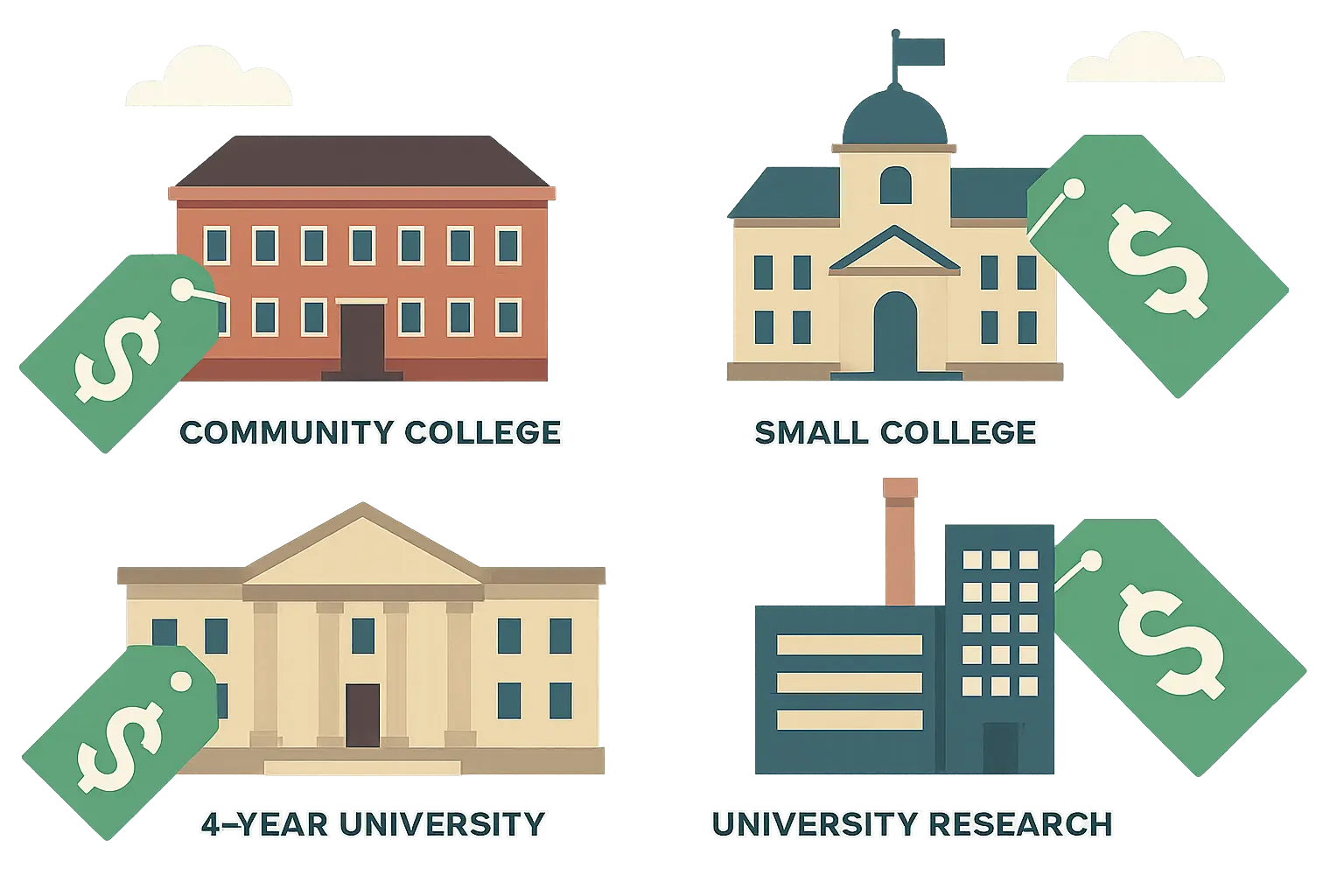
Washington's college scene has something for every budget, but here's what nobody tells you upfront: the sticker price is just the beginning. Community colleges run $3,000-$4,500 per year while public universities hit you with $11,000-$12,000 just for tuition. But the real challenge? All those sneaky extra costs that add up fast.
You'll find options for every wallet in Washington, but don't just look at the tuition number and call it good. Those "fees" they mention casually? They can tack on another $500-$1,500 every year. Plus living expenses often cost more than tuition at four-year schools (yeah, that hurt to learn).
Here's something interesting: rural schools are usually way cheaper because they're not paying Seattle rent prices for everything. City colleges might cost more upfront, but they often have better connections to internships and jobs that can boost your starting salary after graduation.
The hidden costs are what really get you. Technology fees, lab charges, parking permits (seriously, you have to pay to park at school), and mandatory student activity fees add up fast. Some schools let you opt out of certain things, but you have to ask - they won't volunteer this information.
Good news though: Washington is actually looking out for students more than before. Washington Gov. Bob Ferguson signed legislation April 21 extending the state's student consumer protection laws to Washington residents enrolled in online, out-of-state colleges and universities according to BestColleges. This means you get the same protections whether you're taking classes in person or online from some school in another state.
Community colleges are hands down the smartest way to start your college journey without going broke. Places like Spokane Community College, Yakima Valley College, and Centralia College aren't just cheap - they're actually really good at what they do. Flexible schedules, solid transfer programs, and support services that actually help? Yeah, they've got all that.
Spokane Community College consistently ranks as one of the cheapest options in the state - we're talking around $3,200 per year for in-state students. You'll find similar deals at Yakima Valley College and Centralia College, where you get solid programs without the crazy price tags.
But here's a pro tip: don't just look at the published tuition rate. Call the financial aid office directly (seriously, they're more helpful than you'd think) to understand what you'll actually pay. A lot of community colleges have payment plans that let you spread costs throughout the year, making even these affordable options easier on your wallet.
|
College Name |
Annual Tuition & Fees |
Location |
Notable Programs |
|
Highline College |
~$3,500 |
Des Moines |
Aviation Technology, Healthcare |
|
Bellevue College |
~$3,600 |
Bellevue |
Computer Science, IT, Business |
|
Olympic College |
~$3,700 |
Bremerton |
Engineering Technology, Nursing |
|
Pierce College |
~$3,800 |
Lakewood |
Veterinary Technology, Dental Hygiene |
|
Skagit Valley College |
~$3,900 |
Mount Vernon |
Marine Technology, Culinary Arts |
Beyond the obvious savings, community colleges offer some pretty sweet deals through dual enrollment programs, transfer agreements with four-year schools, and career training that actually leads to jobs. Don't just pick the cheapest option though - look at program quality, support services, and transfer deals, because these can save you way more money down the road.
Program fit matters more than you might think. A slightly pricier community college with better industry connections or solid transfer agreements could save you thousands later. Do your homework on which four-year universities have guaranteed transfer deals with your community college.
Here's something most people don't know about: dual enrollment programs. If you're still in high school, you can start earning college credits that count toward your degree. This can literally cut an entire semester off your college time.
Sarah, a high school senior from Tacoma, took dual enrollment courses at Pierce College during her junior and senior years. By earning 24 college credits while still in high school, she saved about $7,200 in tuition and graduated from Western Washington University a full semester early. She was working six months before her classmates even graduated.
Rural community colleges often have the best deals because their costs are lower - no crazy Seattle rent to worry about. But city schools might have resources that make their higher costs worth it, like better labs, more course options, and stronger connections to employers.
Fee structures are all over the place between schools. Some bundle everything into one big fee, others nickel and dime you for parking, student activities, and everything else. Understanding these differences helps you budget for real and avoid those awful surprise bills.
Washington's public four-year universities can actually be pretty reasonable if you're smart about it. Regional WSU campuses and schools like Central Washington, Eastern Washington, and Western Washington offer solid education with in-state tuition around $11,000-$12,000 per year. Just remember - room and board can double your total costs, so plan accordingly.
WSU Spokane, WSU Tri-Cities, and WSU Vancouver give you the exact same degree as the main Pullman campus, but often for way less total money. You get smaller classes and more personal attention while earning a degree that carries the full WSU reputation.
The real savings come from living costs in these smaller cities. Housing in Spokane or the Tri-Cities typically costs way less than what you'd pay in Seattle or other big cities.
Central Washington University, Eastern Washington University, and Western Washington University offer competitive tuition with solid reputations in their regions. These schools provide great value in specific areas while keeping costs reasonable - perfect if you want quality education without the premium price tag.
Central Washington University is known for education and business programs while keeping tuition rates low. Eastern Washington University has particularly strong value in health sciences and tech fields. Western Washington University gives you excellent liberal arts education for way less than private schools.
Each of these schools has developed specialties that can really help your career. Research which programs have the best industry connections and job placement rates in whatever field you're interested in.
Marcus chose Eastern Washington University's computer science program over pricier options, paying $11,400 per year in tuition compared to $13,400 at UW Seattle. His four-year savings of $8,000, plus EWU's solid tech connections in Spokane, landed him a software development job starting at $75,000 right after graduation.
Living off-campus after freshman year can cut housing costs by 30-40% in most areas. Resident advisor positions give you free room and board in exchange for some leadership responsibilities - it's a win-win that builds your resume while eliminating major expenses.
Work-study programs and campus jobs provide steady income while keeping you connected to school life. Most positions work around your class schedule and study time.
Don't write off private colleges just because of their scary sticker prices. Some have huge endowments that fund generous financial aid packages. Alternative programs like trade schools and certificate programs can get you working in high-demand fields for way less money than traditional four-year degrees.
Those high published tuition rates shouldn't automatically scare you away. Many private schools have serious money to throw at financial aid. Apply and see what your actual out-of-pocket costs would be before you decide based on sticker prices alone.
Private colleges often give you more personal attention and smaller classes that can speed up your learning and career prep. For some students, the extra support and networking opportunities make the higher costs worth it.
Trade schools, certificate programs, and professional training can get you career-ready for way less than traditional college. These alternatives often lead straight to jobs in high-demand fields, making them smart financial choices if you have clear career goals and want to minimize debt.
Trade schools and certificate programs can launch careers in growing areas like healthcare, technology, and skilled trades. Many cost less than one year at a four-year university while providing direct paths to good-paying jobs.
Professional certifications in IT, project management, and digital marketing can boost your earning potential without requiring traditional degree programs. Research what employers in your target field actually want before you commit to any path.
Innovation is creating new opportunities too. Scientists at Washington State University have found a new way to produce sugar from corn stalks and other crop waste, potentially opening a new pathway to sustainable biofuels according to WSU News. This shows how universities are developing cutting-edge programs in renewable energy and biotechnology - fields that could offer great career prospects.

Washington has some pretty amazing financial aid programs, including the Washington College Grant (which can cover full tuition at public schools) and the College Bound Scholarship for low-income students who sign up in middle school. Getting the most state aid means filing your FAFSA early and understanding programs like WASFA for students who don't qualify for federal aid due to citizenship status.
This is Washington's biggest financial aid program, and it can potentially cover your entire tuition at public schools if you qualify. The income requirements are more generous than many federal programs, so middle-class families who might not qualify for other help can often get this aid.
Timing is everything here. Submit your FAFSA as early as possible each year because some programs work on a first-come, first-served basis. Apply late and you could miss out on thousands of dollars in available help.
The College Bound Scholarship guarantees tuition help for students from low-income families who sign up in middle school and meet the requirements. You need to keep a 2.0 GPA and graduate high school to get benefits that cover full tuition at public colleges - totally doable goals that can eliminate tuition costs completely.
Students who sign up for College Bound in middle school and meet the requirements get guaranteed tuition coverage at Washington public schools. The program requires maintaining a 2.0 GPA and staying out of serious legal trouble - achievable requirements that can make college completely free.
Lots of Washington employers offer tuition help that can dramatically cut college costs. Check whether your employer or your parents' employers provide educational benefits before you take on student loans.
Military families get extra benefits including reduced tuition rates and priority registration at public schools. Veterans should look into both federal GI Bill benefits and Washington-specific veteran education programs that can stack for maximum savings.
Financial Aid ProgramEligibilityMaximum AwardApplication Deadline Washington College GrantIncome-based, WA residentsFull tuition at public collegesJune 30 (FAFSA) College Bound ScholarshipLow-income, sign up in middle schoolFull tuition at public collegesAutomatic if eligible State Need GrantIncome-based, enrolled studentsVaries by needJune 30 Opportunity GrantWorking Opportunity GrantWorking adults, specific programsUp to $1,000Varies by institution Passport to College PromiseFoster care alumni Full tuition + support servicesContact institution
Smart academic moves like accelerated programs, strategic credit transfers, and alternative credit options (CLEP tests, AP credits) can cut your total time in college and save money. Managing living costs through housing choices, transportation benefits, and textbook strategies can significantly impact your overall college expenses beyond just tuition and fees.
Accelerated degree programs and summer courses can cut your total college time, reducing both tuition costs and the money you lose by not working full-time. Plan your courses strategically to graduate early without sacrificing the quality of your education.
Maximizing credit transfers requires careful planning but can save thousands. Many students start at community college and transfer to universities, but make sure all your credits actually transfer so you don't end up paying for the same classes twice. Meet with academic advisors at both schools to plan your path.
CLEP tests, Advanced Placement credits, and Prior Learning Assessment programs give you college credit for knowledge and experience you already have. These options can significantly reduce required coursework and costs, making them valuable tools if you can demonstrate competency in various subjects.
CLEP exams cost around $90 each but can replace entire courses worth hundreds or thousands of dollars. If you're strong in subjects like math, history, or foreign languages, these tests offer incredible return on investment.
Prior Learning Assessment programs recognize work experience, military training, and self- directed learning as college credit. Many adult learners can earn significant credits through these programs, dramatically reducing time and cost to degree completion.
Jennifer, a working mother returning to school, used Prior Learning Assessment to earn 18 credits based on her 10 years of marketing experience and professional certifications. This recognition saved her $5,400 in tuition costs and allowed her to complete her business degree in just two years instead of four.
Housing is your biggest expense after tuition at most four-year schools. Living at home and commuting, sharing apartments with multiple roommates, or getting resident advisor positions can cut housing costs big time.
Transportation savings add up fast. Many Washington colleges give students free public transit passes. Take advantage of student discounts for textbooks, software, and educational materials. Consider renting textbooks, buying used copies, or using digital versions when available.
Students can learn valuable money management skills by exploring how to budget for an apartment, which provides essential financial planning skills applicable to college expenses.
College Cost-Cutting Checklist:

Look, college is stressful enough without feeling completely isolated. Outpost Club's community-focused approach and member benefits can provide valuable networking opportunities and much-needed stress relief during your college years. The emphasis on building real connections and providing access to premium experiences offers a supportive environment that complements your educational goals while helping you maintain work-life balance during those demanding academic periods.
College planning requires the same strategic thinking and attention to detail that Outpost Club brings to curating exceptional experiences for members. We get that pursuing affordable education shouldn't mean sacrificing quality or missing out on valuable connections.
Our member community includes professionals from diverse educational backgrounds who've successfully navigated Washington's higher education system. Through Outpost Club events and networking opportunities, you can connect with mentors who've walked similar paths and can provide insights into making smart educational investments.
Academic pressure and financial concerns can overwhelm even the most prepared students. Outpost Club's premium golf experiences and community events provide the perfect outlet for clearing your mind and maintaining perspective during challenging decision-making periods.
Ready to connect with a community that values both smart financial decisions and quality experiences? Join Outpost Club today and discover how our network can support your educational and professional journey.

Students transitioning to independent living can benefit from understanding managing your off-campus living the right way for practical guidance on balancing academic and personal responsibilities.

Finding the cheapest college in Washington state isn't just about comparing tuition numbers - you need to look at the complete financial picture (trust me on this one). Community colleges offer unbeatable value if you're willing to start your higher education journey at a two-year school, while regional public universities provide quality four-year degrees at reasonable costs.
Your success in keeping college costs down depends on planning ahead, applying for financial aid early, and getting creative with credit accumulation and living arrangements. Washington's generous state aid programs can dramatically reduce costs for eligible students, making quality higher education accessible regardless of family income.
Here's the thing though - the cheapest option isn't always the best value. Consider program quality, career outcomes, and long-term earning potential when making your decision. The right educational investment will pay dividends throughout your career, making careful research and planning essential for both your immediate budget and future financial success.
Bottom line: you can absolutely get a great education in Washington without going broke. It takes some planning and maybe swallowing your pride about where you start, but it's totally doable. Thousands of students have figured this out - you can too.
For students planning their post-graduation transition, exploring ultimate guide to off-campus student housing can provide valuable insights for managing the next phase of independent living.

Household supplies can be changed or decreaased at Outpost Club’s discretion, or based on supply availability. Outpost is not responsible for temporary losses of utility service. Outpost Club is not responsible for any damages due to absence of any supplies or utilities


If you have a sales related question please call
680-688-7678

 Hot Deals