Cooper Union for the Advancement of Science and Art Acceptance Rate: What Nobody Tells You About Getting Into NYC's Most Exclusive "Free" School
Oct 26, 2025
Oct 26, 2025
With an overall acceptance rate of just 13% based on completed Common Applications for fall 2024, Cooper Union stands as one of the most selective institutions in the country. The breakdown reveals even starker competition: 4% for the School of Architecture, 9% for the School of Art, and 23% for the School of Engineering. These numbers from Cooper Union's official admissions data tell only part of the story behind what makes this Manhattan institution so brutally competitive.
When my friend Sarah was applying to Cooper Union, I had no idea what we were getting into. The reality is way messier than these statistics suggest. The promise of affordable education creates a perfect storm of competition that makes traditional acceptance rate analysis basically meaningless.
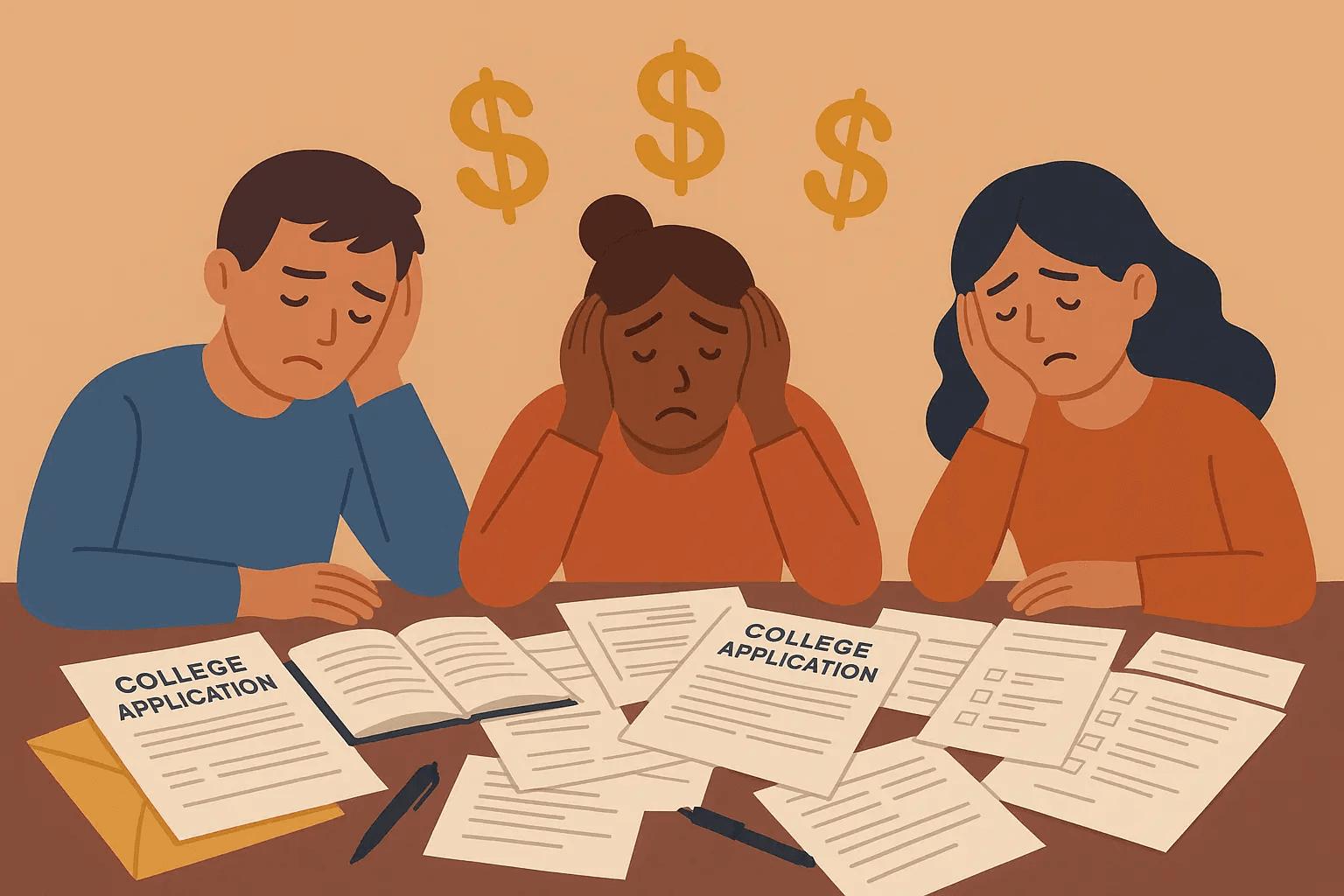
Here's the thing nobody tells you about Cooper Union's "free" tuition - it actually makes getting in way harder. I know that sounds backwards, but hear me out.
When something's free (or mostly free), everyone and their cousin applies. It's like when Costco gives out free samples - suddenly there's a line around the block, even if half those people weren't planning to buy anything.
The school gets flooded with applications from people who figure "what's the worst that could happen?" My high school guidance counselor literally said those exact words to me. That mentality, multiplied by thousands of students, is why the acceptance rate hovers around 13-18% and feels so brutal.
I watched this happen with my friend group senior year. Half of us applied to Cooper Union not because we were dying to go there, but because it was free and in New York. We treated it like a lottery ticket - might as well try, right?
Here's what really gets me: so many people apply to Cooper Union as their "financial safety school" without actually caring about the programs. They're just hedging their bets against student loans.
My friend Sarah did this exact thing. She was obsessed with going to RISD but applied to Cooper Union "just in case" because her parents were freaking out about art school costs. She spent maybe two hours researching Cooper Union versus weeks planning her RISD application. Guess what? She got into Cooper Union and rejected it to go to a completely different school. Meanwhile, kids who actually wanted to be there got rejected.
It's frustrating because these applications aren't coming from people who researched Cooper Union's weird interdisciplinary approach or who are excited about being in the East Village. They're coming from families panicking about college debt.
When the economy tanks, Cooper Union applications go through the roof. During 2008, everyone suddenly remembered this free school existed. If you happened to be applying during a recession, tough luck - you're competing against desperate families who just discovered Cooper Union exists.
It's brutal timing if you've been planning on Cooper Union for years but happen to graduate high school during an economic crisis.
Cooper Union doesn't make you write a million essays like other elite schools. The application feels manageable, so people apply without doing their homework about what makes each program special.
I've met people who applied without even knowing Cooper Union has three separate schools. They just knew it was free, prestigious, and in Manhattan. That's not exactly the research level you want from your competition.
Unlike schools that just look at your SAT scores and call it a day, Cooper Union wants to see your actual work. This sounds fair in theory, but in practice it's kind of a mess.

Your portfolio might be amazing, but if the review committee that year prefers abstract work and you're all about photorealism, you're screwed. I know someone who got rejected one year and accepted the next with basically the same portfolio - different reviewers, different outcome.
It's not like the SATs where 1400 means 1400 everywhere. Your art is either someone's cup of tea or it isn't, and you have no control over who's drinking tea that day.
|
School |
What They Want |
How Subjective |
Can You Predict It? |
|
Architecture |
Design projects, creative stuff |
Very |
Nope |
|
Art |
15-20 pieces, mixed media |
Extremely |
Good luck |
|
Engineering |
Technical projects |
Somewhat |
Maybe? |
The engineering portfolio is probably the most predictable, but even then they want to see that you can actually build things, not just solve math problems.
The engineering program doesn't care about your perfect grades if you can't prove you've actually made something work. They want hands-on experience that a lot of high school students just haven't had the chance to get.
This eliminates kids who look great on paper but have never touched a soldering iron or built anything more complex than an IKEA bookshelf. Cooper Union engineering digs deeper than most programs, which is cool in theory but stressful if you're coming from a high school without a good maker space.
Here's something weird: people switch between Cooper Union's schools after they get in. So the acceptance rate for the art school might not actually reflect your chances of studying art there if you're willing to start in engineering and transfer later.
You might apply to the art school but really want architecture. Internal transfers happen, but they're not counted in those scary acceptance rate statistics you see online. Cooper Union's whole thing is interdisciplinary work, so these switches are more common than you'd think.
The problem is nobody talks about this strategy, so you might be competing for art school spots when you could have applied to engineering with better odds and transferred later.
Stuff You Actually Need to Know:
Living in New York doesn't help you get into Cooper Union, but everyone thinks it does. This creates some weird dynamics that make the whole process even more confusing.
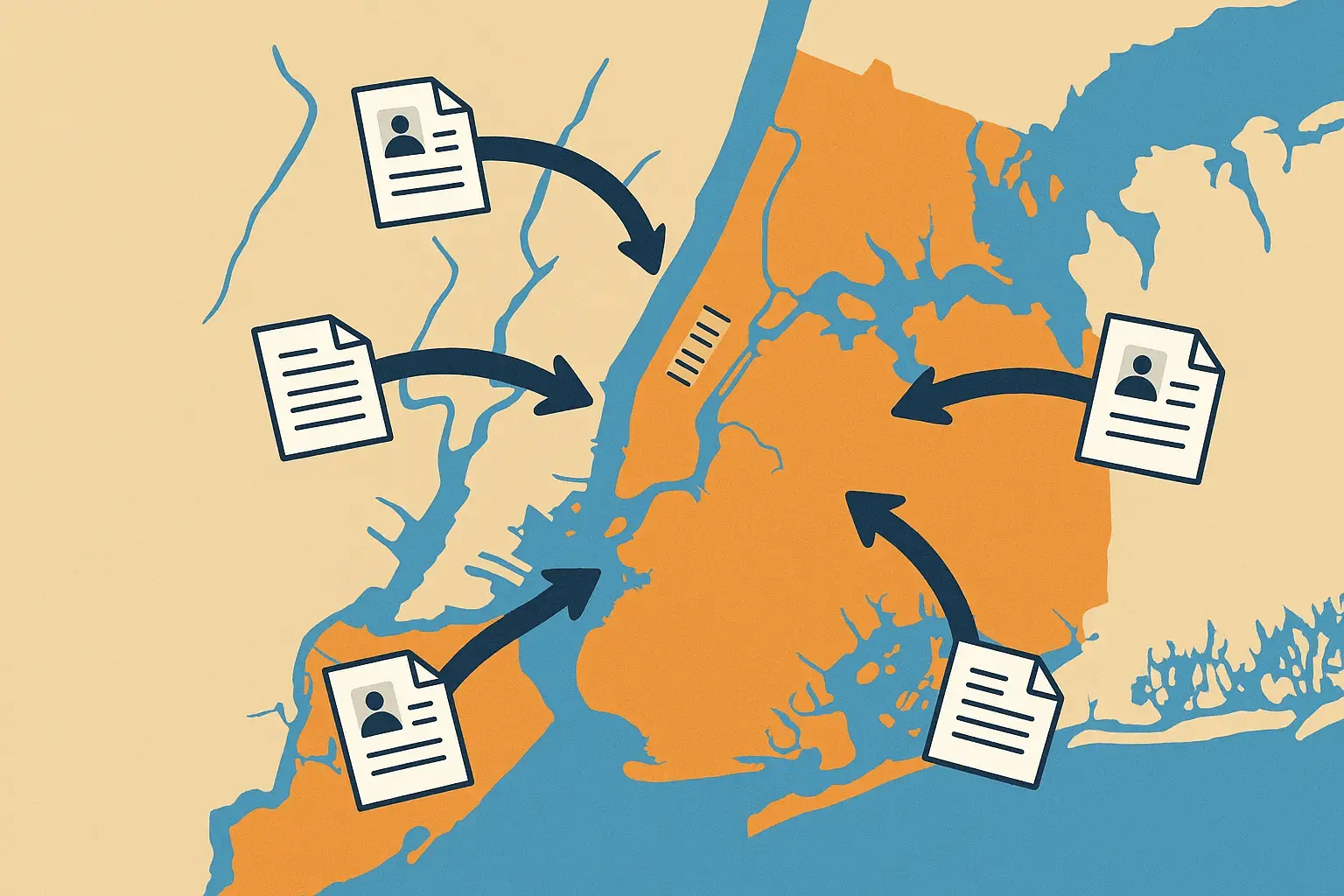
I grew up thinking that living in the city would give me some kind of edge at Cooper Union. Turns out, that's completely wrong. Being able to take the subway to campus doesn't impress admissions committees at all.
If anything, you're competing against more people who know Cooper Union's reputation. Every art kid in the five boroughs has heard of this place, so you're not exactly flying under the radar.
New York State actually ranks pretty high nationally for education, which sounds good until you realize that means you're competing against a lot of other well-prepared students. Recent data shows that New York State ranks 15th nationally in education metrics, with particularly strong performance in higher education categories. "New York does very well when it comes to University Quality, ranking #5, is 6th highest with Graduate or Professional-Degree holders" according to a WallethHub survey. Great for the state, not so great for your admission chances.
A lot of local kids think Cooper Union wants commuter students because it saves money on housing. This is totally wrong, but it leads to application essays about how "I can take the L train to class!"
My friend Mike from Brooklyn wrote his whole application around being local and cost-effective. Meanwhile, his competition included kids from across the country talking about actual engineering projects and innovations. Geography doesn't matter - what you can do matters.
Cooper Union isn't trying to save money on your housing. They want the best students, period. Where you sleep at night is irrelevant.
Cooper Union gets portfolios from students all over the world, and sometimes incredible work gets overlooked because the admissions committee doesn't understand the cultural context.

I've seen amazing work from international students that just didn't translate to American admissions committees. It's not about talent - it's about whether the reviewers understand what they're looking at.
Students trained in completely different artistic traditions submit portfolios that are brilliant within their context but might seem weird or unfamiliar to reviewers who grew up with American art education. It's not fair, but it's reality.
Engineering students from different countries come in with wildly different technical backgrounds. Some have way more advanced math and science training, others have more hands-on experience. It makes comparing applications across regions pretty meaningless.
|
Region |
Portfolio Style |
Technical Background |
Challenges |
|
East Asia |
Super detailed, technical |
Advanced math/science |
Explaining concepts in English |
|
Europe |
Conceptual, theory-heavy |
Solid foundation |
American context missing |
|
Latin America |
Expressive, story-based |
Varies a lot |
Language barriers |
|
US |
All over the place |
Standardized prep |
None really |
The admissions committee has to evaluate talent across completely different educational systems. Sometimes amazing students get overlooked because their preparation doesn't fit American expectations.
In 2014, Cooper Union started charging tuition for the first time in over 150 years. This completely broke everyone's brain and changed who applies and why.
When Cooper Union announced tuition, it was like finding out your favorite free pizza place started charging. The entire value proposition changed overnight, and nobody knew what to think.
I remember the shock in art communities when the news broke. Cooper Union had always been the dream school that wouldn't destroy your family financially. Suddenly, that wasn't true anymore.

The school went from being in a category of its own (free elite education) to competing with every other expensive private school. That's a completely different conversation.
The first year of tuition, way fewer people applied. Why fight for Cooper Union when you could pay similar money elsewhere? Acceptance rates temporarily went up before settling at new levels.
Cooper Union still ranks really well - Cooper Union's current rankings reflect its continued prestige despite financial changes. The school maintains #8 of 703 Best Colleges for Art in America and #9 of 171 Best Colleges for Architecture in America, according to Niche's 2026 rankings. So even with tuition, it's still considered worth the fight. But the calculation is totally different now.
Now families have to ask: is Cooper Union worth $22,000 a year compared to other options? That's a completely different question than "should we apply to the amazing free school?"
My friend Jessica's family had planned on Cooper Union being their debt-free option. When tuition was announced, they had to completely recalculate their college strategy. They ended up choosing a state school with better financial aid instead. Cooper Union lost exactly the type of student it was supposed to help.
Cooper Union's current financial aid situation is confusing as hell. They give everyone a half-tuition scholarship, but then you still have to figure out the rest of the costs, plus living in Manhattan.

Try figuring out what Cooper Union will actually cost your family. Between the half-tuition scholarship, additional aid, Manhattan rent, and living expenses, it's impossible to predict your final bill.
The acceptance rate becomes meaningless if you can't afford to attend anyway. You're not just competing for admission - you're hoping the financial aid works out too.
What Cooper Union Might Actually Cost You:
The financial aid office helps families figure this out, but you won't know your real costs until after you're accepted. It's stressful to apply without knowing if you can afford to attend.
Here's what nobody tells you: you're not really applying to Cooper Union for the education. You're applying for access to one of the most connected alumni networks in New York's creative and technical industries.
Cooper Union graduates don't just get degrees - they get keys to New York's creative scene. The alumni network is small but incredibly well-placed, with graduates in key positions throughout the city.

The school's impressive alumni achievements demonstrate this network's power: 40 Fulbright scholars since 2001, 26 Guggenheim Fellowships, 3 MacArthur Fellowships, and 1 Pritzker Architecture Prize winner. These accolades from Cooper Union's official records represent the caliber of professionals students gain access to through the alumni network. These aren't just successful people - they're the people who hire other people in competitive industries.
Walk into any major architecture firm in Manhattan and you'll find Cooper Union graduates. Same with engineering companies and art galleries. It's not just social networking - it's professional machinery that can make or break careers.
When a Cooper Union alum is hiring, they know exactly what kind of training their fellow graduates have. It's an instant credibility that other schools can't provide, especially in New York.
Cooper Union for the advancement of science and art creates pathways into industries that are notoriously hard to break into. In creative fields where who you know matters more than what you know, this network is incredibly valuable.
Your professors don't just teach you and disappear. Small class sizes mean you build real relationships that continue long after graduation. These aren't casual academic connections - they become career-defining partnerships.
The Cooper Union library becomes like a second home, and those relationships with faculty turn into lifelong mentorship. In industries where relationships matter, this is huge.
Art students don't just study art - they get introduced to gallery owners, curators, and collectors through institutional connections. It's access to New York's art world that money can't buy and other schools can't provide.
This is probably why acceptance rates stay competitive even with tuition. You're not just paying for classes - you're buying access to opportunities that can define your entire career.
Recent analysis of college quality in New York reveals why choosing the right institution matters so much. "Three schools in New York were named some of the worst in the country based on the return on investment" according to Avocadoposts.com, highlighting how crucial it is to choose institutions with strong career outcomes like Cooper Union.

Cooper Union admissions committees know they're not just selecting students - they're controlling access to professional opportunities. That's why the competition stays fierce regardless of financial changes.
One thing nobody warns you about: finding housing in Manhattan as a Cooper Union student is brutal. The school has limited dorms, so most students face NYC's insane rental market while trying to focus on intensive coursework and tight budgets.
For Cooper Union students, all-inclusive pricing eliminates the complexity of utilities, internet, and furnishing costs, allowing you to focus on rigorous coursework and portfolio development rather than housing logistics.
Cooper Union's location in the East Village puts students at the center of New York's creative energy, but that proximity comes with Manhattan rent prices that can shock families unprepared for the reality of NYC living costs.
Look, Cooper Union's acceptance rate is scary, but now you know why. It's not just about being an amazing school (though it is). It's about economic incentives, geographic myths, financial confusion, and professional network access all mixing together into one complicated mess.
Understanding this stuff won't guarantee you get in, but at least you'll know what you're really up against. The competition is fierce because people understand that some opportunities are worth fighting for, even when the odds suck.
Whether Cooper Union is worth the stress depends on what you want and what you can afford. But if you're serious about art, architecture, or engineering, and the idea of studying in NYC without crushing debt appeals to you, it might be worth a shot.
Just don't put all your hopes on this one school, because the odds aren't in your favor - and that's not your fault. It's just the reality of what happens when everyone wants the same thing.
The Cooper Union for the advancement of science and art acceptance rate represents more than educational selectivity - it's a measure of how many people understand the true value of what this institution offers. Cooper Union continues to attract applicants who recognize that some opportunities are worth fighting for, regardless of the odds.

Household supplies can be changed or decreaased at Outpost Club’s discretion, or based on supply availability. Outpost is not responsible for temporary losses of utility service. Outpost Club is not responsible for any damages due to absence of any supplies or utilities


If you have a sales related question please call
680-688-7678

 Hot Deals