CPA Salary NYC: The Real Numbers Behind Six-Figure Accounting Careers
Dec 15, 2025

Dec 15, 2025
Look, I'm not going to sugarcoat this - New York City is hands down America's most lucrative accounting destination. The average CPA salary here hits $113,310 per year according to Becker CPA Review - way above the national average of $79,284. You've got Fortune 500 headquarters, major financial institutions, and Big Four accounting firms all creating this ecosystem where skilled CPAs can make serious money.
Right now, there's absolutely insane demand for CPA talent in New York City. You've got Goldman Sachs, JPMorgan Chase, and literally hundreds of other financial giants all fighting over the same pool of talent. When that happens, salaries go through the roof.
Here's what's really driving these numbers: New York isn't just any city - it's THE financial hub. You're dealing with regulatory complexity that would make your head spin, international accounting standards, and audits where a single mistake could cost millions. Companies know this, and they're willing to pay for it.
According to the Bureau of Labor Statistics, the average annual salary for accountants in New York ($110,320) was well above the national average annual wage of $86,740 in 2022, as reported by Accounting.com. But honestly, those government numbers don't tell the whole story. I know CPAs pulling in way more than that average, especially once you factor in bonuses and benefits.
You're not just competing locally anymore - you're in a global financial center where your accounting expertise directly impacts billion-dollar decisions. That's why cpa salary nyc numbers look so crazy compared to what you'd see in, say, Cleveland.

Fresh out of college with your CPA? You've got what I call a "good problem" - too many high-paying opportunities to choose from. Starting salaries range from $65,000 to $85,000, but here's the thing: the path you pick right now shapes your entire career.
|
Firm Type |
Starting Salary Range |
Key Benefits |
|
Big Four (Deloitte, PwC, EY, KPMG) |
$75,000 - $85,000 |
Brand recognition, structured advancement, comprehensive training |
|
Mid-Tier (Grant Thornton, BDO) |
$65,000 - $75,000 |
Broader exposure, faster advancement, more client interaction |
|
Corporate Roles |
$70,000 - $80,000 |
Better work-life balance, standard hours, comprehensive benefits |
|
Public Accounting |
$65,000 - $80,000 |
Overtime pay, performance bonuses, skill building |
Big Four firms (Deloitte, PwC, EY, KPMG) typically offer $75,000-$85,000 starting packages. Look, these firms invest heavily in your future earning potential, and that Big Four brand on your resume is like gold throughout your career.
Mid-tier firms offer $65,000-$75,000 ranges. Don't dismiss these opportunities though. You'll often get broader exposure, faster advancement, and more client interaction than you'd see at larger firms.
Here's a real example: My friend Sarah got offers from both KPMG ($82,000) and a mid-tier firm ($68,000). The mid-tier firm promised senior associate promotion in 18 months versus KPMG's typical 2-3 years. She went with KPMG anyway, betting on the long-term brand value. Smart move - that KPMG experience opened doors that are still paying off five years later.
Corporate accounting roles start at $70,000-$80,000 with way better work-life balance. You'll work standard hours, get comprehensive benefits, and avoid the notorious busy season grind.
Public accounting positions might offer lower base salaries but include overtime pay and performance bonuses. The real value? You're building skills and networks that pay dividends throughout your career. Entry-level auditing positions provide comprehensive exposure to various industries and accounting standards.
Manhattan positions command the highest starting salaries, period. You're paying for proximity to Wall Street, Midtown corporate headquarters, and the prestige that comes with a Manhattan business address.
Outer borough opportunities offer slightly lower compensation but often provide better work-life balance and shorter commutes. Brooklyn's growing tech scene and Queens' diverse business landscape create unique opportunities for career growth.
For new professionals trying to make their money stretch while building their careers, exploring Manhattan rooms for rent can provide convenient access to major financial firms while managing living costs effectively.
This is where things get interesting. Once you hit that 3-7 year experience mark, you're not the newbie anymore - you're the person companies actually fight to keep. Salaries jump to $85,000-$130,000, and if you've specialized in something valuable, you're looking at the higher end of that range.

Public accounting senior associates are making $90,000-$110,000. You're managing client relationships, leading auditing teams, and making decisions that actually matter to the firm's bottom line. The responsibility increase totally justifies that pay bump.
Industry senior accountants typically pull $95,000-$120,000. Corporate roles often pay more at this level because you're focused on one company's complex needs instead of juggling multiple clients.
Here's what nobody tells you: specialized skills can bump your salary by 15-25%. Forensic accounting, tax planning, financial systems - these aren't just nice-to-haves anymore, they're money makers.
Data analytics has become huge. CPAs who can actually interpret large datasets, build financial models, and provide strategic insights? They're earning way more than traditional number-crunchers. Same goes for advanced auditing skills in tech-heavy environments.
My buddy Michael was a senior associate at EY making $95,000. He got his forensic accounting certification and jumped to a Manhattan consulting firm for $125,000 plus a 20% annual bonus tied to case outcomes. The specialized skills premium is real, and it's substantial.
Manhattan-based positions consistently offer the highest mid-level salaries. The cost of doing business in Manhattan is higher, but so is the caliber of clients and complexity of work. You're building more valuable experience while earning more money.
Eight-plus years in? Now we're talking real money. Senior CPAs are earning $130,000 to $250,000+, and the variation depends on industry, how complex your role is, and whether you're managing people.
Here's something crazy: there's a massive talent shortage right now. "Nationwide last year, there were 1.8 million accountants and auditors, which was 186,000, or 9.5%, fewer than the number five years earlier" according to Newsday. That shortage is driving up compensation for experienced professionals like crazy.
Audit managers are pulling $120,000-$160,000, while directors command $180,000-$250,000 plus profit-sharing. You're managing people, client relationships, and firm profitability - basically, you're running a business within the business.
The controller track in corporate settings pays similarly but with different headaches. You're the financial backbone of the organization, reporting straight to the CFO and influencing major strategic decisions. A lot of senior auditing professionals transition into these high-impact controller roles.
Public accounting partnerships are where the real money is - we're talking $300,000-$1,000,000+ annually. But let's be honest: it takes 12-15 years of dedication, serious business development skills, and you need to be technically excellent.
The possibility of partnership drives compensation throughout your entire career. Firms invest heavily in potential partners, which creates those lucrative senior manager and director positions. Auditing experience gives you the comprehensive foundation most partners build on.

Not all industries are created equal when it comes to CPA compensation. Here's the real breakdown of where you want to be, and understanding these differences helps you make strategic career decisions.
According to the U.S. Bureau of Labor Statistics, employment of accountants and auditors is projected to grow 5 percent from 2024 to 2034, faster than the average for all occupations, with about 124,200 openings projected each year as reported by BLS.
Investment banks, hedge funds, private equity - these guys pay the most, hands down. Experienced professionals often clear $150,000 base salary, and the bonuses can literally double that.
Investment banking roles hit $120,000-$200,000 base plus bonuses that can double your total comp. The catch? You're working 70-80 hour weeks in high-pressure environments where mistakes cost millions.
Private equity and hedge funds pay similarly but with slightly better work-life balance. You're analyzing potential investments, managing portfolio company finances, and supporting deal execution. Advanced auditing skills are gold in due diligence processes.
Tech companies are throwing money at CPAs for financial planning, compliance, and strategic analysis roles. The packages include equity that can seriously boost your total compensation.
Established tech firms offer $110,000-$160,000 for senior CPA roles. These companies compete aggressively for financial talent with comprehensive benefits and stock options.
Startups are different - lower base salaries ($90,000-$120,000) but significant equity upside. If the company hits, that early-stage equity can be life-changing.
The complex regulatory environment creates strong demand for CPAs. Accounting salaries range from $95,000 to $180,000 for experienced professionals who understand healthcare finance, compliance, and reimbursement models.
Pharmaceutical companies pay particularly well for CPAs who get FDA regulations, clinical trial accounting, and international transfer pricing. Healthcare auditing specialists are especially sought after for their expertise in regulatory compliance.
|
Industry Sector |
Salary Range |
Key Advantages |
Typical Roles |
|
Financial Services |
$150,000 - $250,000+ |
Highest compensation, bonus potential |
Investment Banking, Private Equity |
|
Technology |
$110,000 - $160,000 |
Equity upside, innovation culture |
Financial Planning, Strategic Analysis |
|
Healthcare/Pharma |
$95,000 - $180,000 |
Regulatory expertise premium |
Compliance, Clinical Trial Accounting |
|
Manufacturing |
$85,000 - $140,000 |
Stable environment, process improvement |
Cost Accounting, Operations Finance |
|
Real Estate |
$90,000 - $150,000 |
Deal-based bonuses, market cycles |
Asset Management, Development Finance |
Want to optimize your earning potential? It's not going to happen by accident. Here's your strategic playbook for maximizing CPA success:
Complete your 150 credit hours and pass all four CPA exam sections. This isn't optional - it's your ticket to the game. New York State requires 1-2 years of supervised experience under a licensed CPA.
Additional certifications set you apart from the competition. CFA, CIA, or CISA credentials open new career paths and salary opportunities that most people miss.
Your CPA Career Advancement Checklist:
Focus on high-demand areas where there aren't enough people. Forensic accounting, international tax, financial analysis - these consistently pay premiums because companies desperately need these skills.
Technology skills aren't optional anymore. CPAs who understand data analytics, automation tools, and financial software earn significantly more than those who don't adapt to technological change.
Target prestigious firms or high-growth companies. Those brand names on your resume matter way more than you think. A Big Four background opens doors throughout your entire career.
Look for roles with increasing responsibility and client interaction. You're developing business skills and leadership abilities that drive executive compensation. Auditing experience provides particularly strong foundations for senior roles.
Join NYSSCPA and AICPA memberships. The relationships you build at industry events often matter more than the technical knowledge you gain.
Stay in touch with former colleagues and clients. Your network literally becomes your net worth, especially in a relationship-driven city like New York.
Research market rates using salary surveys and your network intelligence. Knowledge is power in compensation negotiations, and you need to know what you're worth.
Look at total compensation packages, not just base salary. Health benefits, retirement contributions, bonus potential, and equity can add 20-40% to your total compensation value.
Here's a real example: Jennifer, a tax manager at a mid-tier firm, got her CFA certification and specialized in international tax. When negotiating with a multinational corporation, she leveraged her unique skill set to secure $145,000 base plus 15% bonus potential - a 35% increase from her previous role. Her transfer pricing expertise made her indispensable to the organization.
Auditing is still one of the most reliable paths for CPA career advancement. The structured progression and clear advancement timelines make it attractive if you want predictable career growth.
Entry-level auditors start at $65,000-$75,000 with clear advancement expectations. You're looking at annual increases of 10-15% through senior associate levels if you perform well.
The progression is totally predictable: Staff Auditor → Senior Associate → Manager → Senior Manager → Director → Partner. Each level brings more responsibility, client interaction, and compensation.
Auditing experience gives you comprehensive exposure to diverse industries and accounting standards, making you versatile and marketable across sectors.
Corporate internal audit roles provide better work-life balance while maintaining competitive compensation. You're working for one organization, understanding their business deeply, and providing strategic value beyond just compliance.
Internal audit managers earn $110,000-$150,000, while directors command $160,000-$220,000. The compensation is competitive with public accounting, but the lifestyle is often way more sustainable.
Internal auditing roles often serve as stepping stones to senior finance positions, including controller and CFO tracks within the same organization.

Here's what a lot of people miss: total compensation packages for NYC CPAs extend way beyond base salary. We're talking health benefits, retirement contributions, bonus structures, and additional perks that can increase your total compensation value by 20-40%.
Premium health insurance, dental, vision, wellness programs - these are standard at reputable firms. Some offer on-site fitness facilities, mental health support, and comprehensive wellness programs.
The value of these benefits in NYC can exceed $15,000-$20,000 annually. Don't underestimate their impact on your total compensation and quality of life.
401(k) matching, profit-sharing, stock options - these significantly impact long-term wealth building. Many firms offer 6% matching or higher, effectively adding thousands to your annual compensation.
Some firms provide financial planning services, tax prep assistance, and investment advisory services. These benefits have real monetary value and help you optimize your growing income.
Performance bonuses typically range from 10-25% of base salary for most CPA roles. Senior positions and specialized roles can offer substantially higher bonus potential.
Investment banking and private equity roles often provide bonuses equal to or exceeding base salary. These aren't guaranteed, but they represent significant earning potential for high performers.

The CPA profession is changing fast due to technological advancement, changing work arrangements, and emerging specializations. This creates new opportunities for forward-thinking professionals while requiring adaptation to stay competitive.
The accounting industry faces significant challenges with the 150-hour education requirement, as "the stringent requirement for accounting students to complete 150 semester hours, or the equivalent of five years of college education, to become a certified public accountant makes it challenging for those seeking a degree in the field" according to industry professionals quoted by Newsday.
Automation is changing traditional accounting tasks, but it's actually creating opportunities for CPAs with analytical and advisory skills. Routine compliance work is being automated, while strategic analysis and business advisory services are in higher demand than ever.
CPAs who embrace technology and develop data analytics skills are commanding premium salaries. The profession is shifting from compliance-focused to advisory-focused, and compensation totally reflects this change.
Post-pandemic flexibility has affected salary negotiations. Some firms offer geographic pay adjustments for remote work, while others maintain NYC salary levels for remote employees.
Hybrid work arrangements are becoming standard, affecting both compensation and career advancement opportunities. The key is understanding how your firm values in-person collaboration versus remote productivity.
As remote and hybrid work becomes more common, professionals are exploring housing options in outer boroughs like coliving in Brooklyn, which offers lower costs while maintaining easy access to Manhattan offices.
ESG reporting, cryptocurrency accounting, data analytics - these are creating premium salary opportunities. These emerging areas often lack experienced professionals, creating huge opportunities for early adopters.
Regulatory compliance in new areas requires specialized knowledge that commands premium compensation. Digital assets and environmental reporting represent particularly lucrative niches right now.
figure>
Yeah, NYC offers the highest CPA salaries in the country, but let's talk about the elephant in the room - the cost of living here is brutal. You need strategic financial planning to optimize your net income and long-term wealth building.
CPAs in New York earn an average of $113,310 per year, but they need to consider that the average cost of living for a family of four is $93,600, leaving a disposable income of around $19,710, compared to CPAs in Kansas who earn $75,885 but have roughly $33,285 of disposable income due to lower living costs, as reported by Becker CPA Review.
Housing typically eats up 25-40% of gross income for NYC CPAs. Your location decisions significantly impact your net income and quality of life.
Manhattan apartments command premium rents, but shorter commutes and proximity to major employers can justify the cost. Outer borough options offer more space and lower costs but require longer commutes.
Many young professionals find that shared apartments in New York provide an excellent balance between cost management and networking opportunities with other ambitious professionals in finance and accounting.
Monthly transit costs and commuting time factor into job decisions. Some outer borough positions may offer better net compensation despite lower gross salaries when you factor in reduced housing and transportation costs.
Consider the total cost of your career decisions, not just the gross salary numbers.
figure>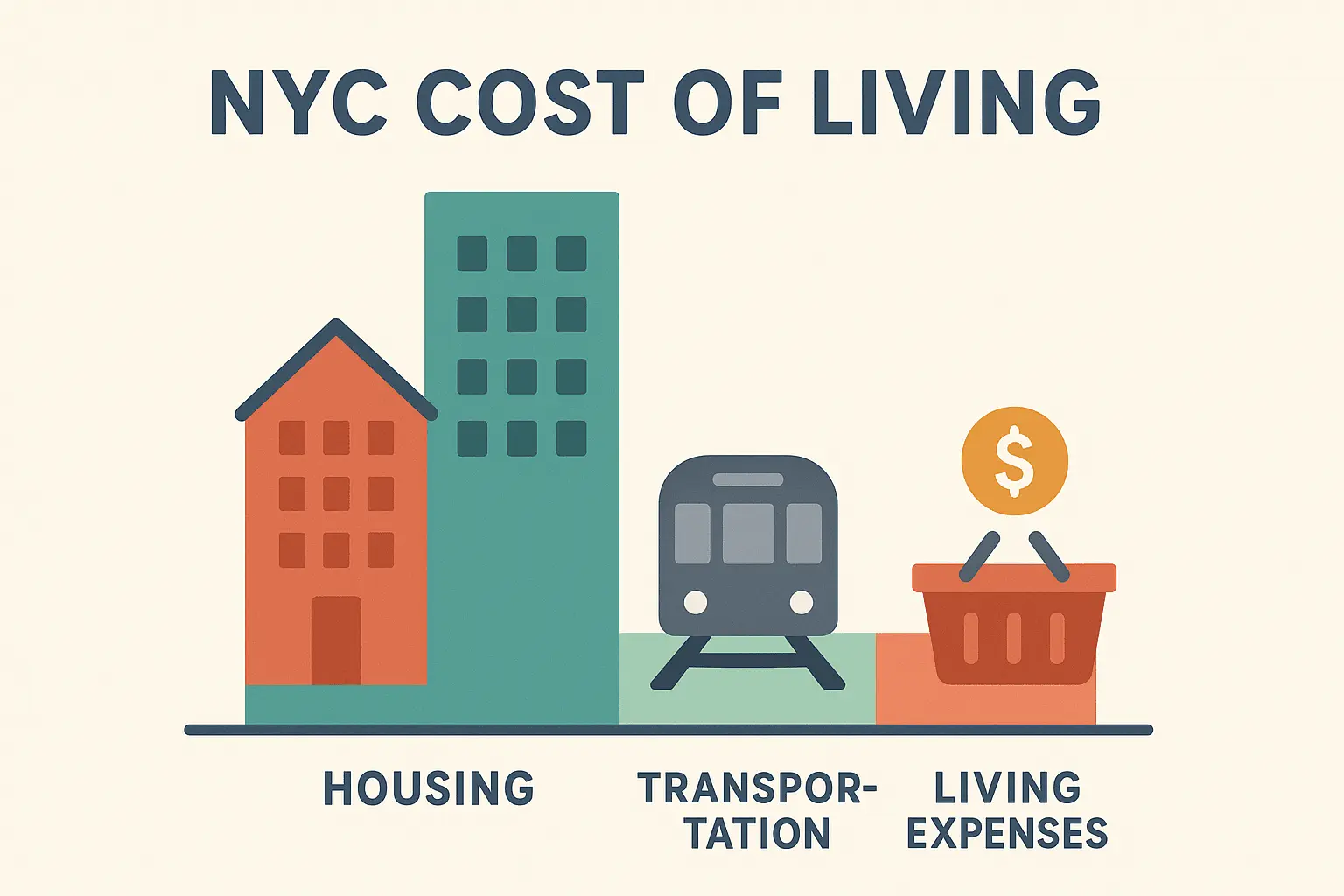
Building a successful CPA career in NYC requires the same attention to detail and strategic thinking that drives success in any professional endeavor. Your growing expertise and compensation position you to pursue interests and associations that reflect your commitment to excellence.
Whether you're interested in joining exclusive professional organizations, pursuing advanced education, or connecting with other accomplished professionals, your CPA success creates opportunities beyond just financial rewards. At Outpost, we understand the value of connecting with like-minded professionals who appreciate quality experiences and meaningful relationships. Our community of successful professionals, including many from the financial and accounting sectors, provides the kind of networking and relationship-building opportunities that can enhance both your career and personal fulfillment.
Ready to take your networking to the next level? Explore Outpost membership and connect with other high-achieving professionals who share your commitment to excellence.
Look, your CPA career in NYC isn't just a job - it's your entry into one of the world's most dynamic and lucrative professional markets. Those salary ranges we've talked about, from $65,000 entry-level to $250,000+ senior roles, represent real earning potential for dedicated professionals.
But here's the thing: success requires more than just being good with numbers. You need strategic thinking, relationship building, and the ability to adapt when markets change. The CPAs earning top salaries aren't just technically good - they're business advisors, strategic thinkers, and trusted partners to their clients and employers.
The investment in your CPA career pays dividends throughout your professional life. Whether you choose the partnership track in public accounting, the executive path in corporate finance, or the entrepreneurial route in consulting, your CPA foundation provides the credibility and expertise needed for long-term success in America's financial capital.

Household supplies can be changed or decreaased at Outpost Club’s discretion, or based on supply availability. Outpost is not responsible for temporary losses of utility service. Outpost Club is not responsible for any damages due to absence of any supplies or utilities


If you have a sales related question please call
680-688-7678

 Hot Deals