Dentist Salary NYC: What You'll Actually Earn in the Big Apple (And Why It Matters More Than You Think)
Dec 13, 2025
Dec 13, 2025
Look, NYC's dental market is honestly its own beast. You've got this crazy mix of tons of demand, zero space, and patients who expect you to roll out the red carpet every single time they walk in. Yeah, this means you can make serious money - but your overhead costs? They'll make dentists from literally anywhere else think you're making it up.
I've been digging into the latest salary data from SalaryDr's verified physician salary data, and here's what I found: general dentist salary in New York ranges from $240,000 to $291,000, with top performers in the 90th percentile earning up to $665,000 annually. That huge range basically shows you how much your earnings can swing based on whether you actually know how to run a business or not.
The competition here is absolutely insane. I swear every block has like five dental practices, and patients have endless options. This means everyone expects premium care while you're still getting squeezed on pricing. You can't just be decent at dentistry anymore - you need to be a business genius too.
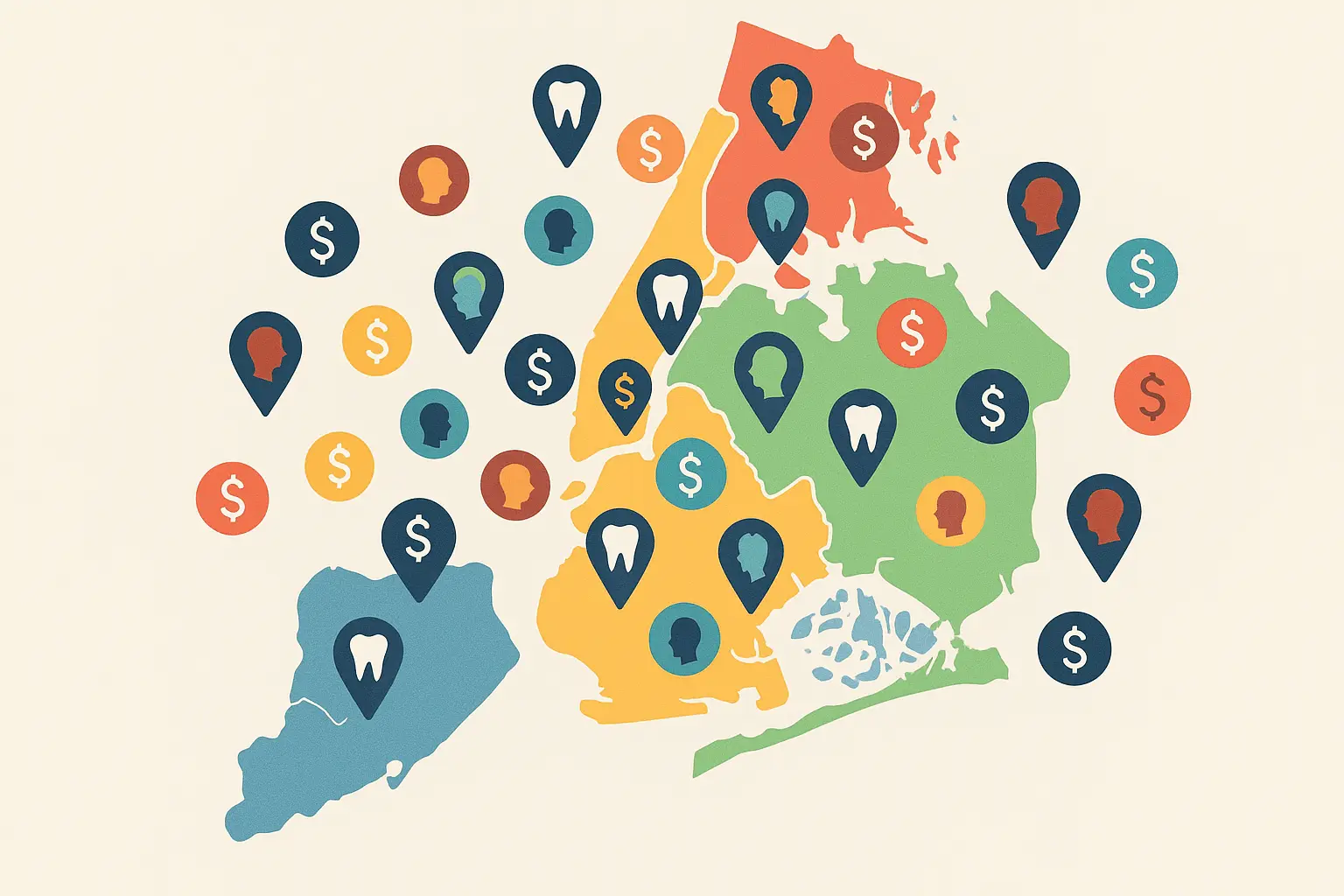
Here's what really gets me about NYC - your pay can change dramatically just by hopping on a different subway line. A practice on the Upper East Side might as well be on a different planet compared to one in Queens, even though they're technically the same market. The dentist salary in New York can swing wildly based on these micro-markets within the city.
For new grads just trying to figure out if they can actually afford to live here, understanding the broader real cost of living in NYC helps you figure out if these dental salaries actually translate to any real purchasing power and lifestyle choices.
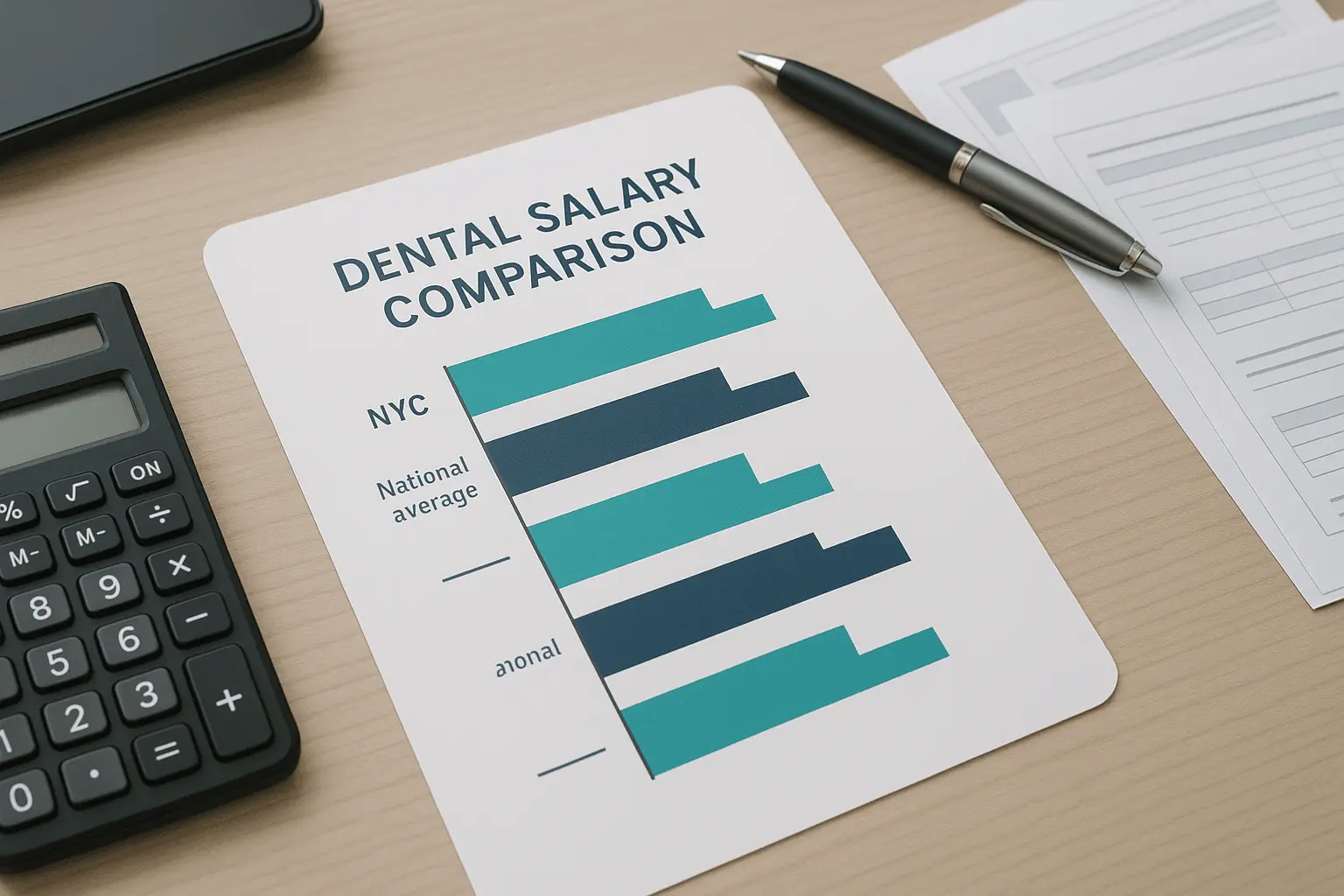
The data from SalaryDr shows entry-level general dentist positions in New York start at $227,250, while those with more than 10 years of experience earn a typical salary of $400,633 - that's a 76% jump over your career. Not bad, right? But here's the thing - those numbers only matter if you can master both the clinical stuff and the business side.
Different practice types in NYC offer completely different compensation setups, and honestly, each one has its own headaches and benefits that can make or break your earning potential.
Working as an associate in private practices is still how most NYC dentists get started. You're looking at $150,000-$250,000 to start, but here's where it gets interesting - those production bonuses can push you way beyond your base. I know associates in busy Manhattan practices clearing $300,000+ once they hit their groove.
What I love about private practice is the mentorship. You're learning from people who've already figured out how to make it work in this crazy market. They'll teach you the clinical stuff, sure, but also how to deal with NYC patients who've done their homework and expect perfection.
Most places do a base salary plus a percentage of what you produce above a certain number. So basically, the better you get at dentistry, the more money you make. Pretty straightforward. The dentist salary NYC structure in private practice rewards you for getting better at your job.
Take this dentist I know - let's call her Sarah. Started at a Manhattan practice in 2019 making $160,000 base with 25% of production over $400,000. By year three, she was generating $800,000 in production, which meant her total pay hit $260,000 ($160,000 base + $100,000 bonus). That's a 62% bump just from getting better at her job and keeping patients happy.
Corporate chains have totally changed the game for new grads. They're offering $180,000-$220,000 starting packages, which honestly beats what a lot of private practices can offer someone fresh out of school.
The trade-off? You're working within their system. But here's what I actually like about corporate gigs - they handle all the business stuff. Marketing, scheduling, billing, all of it. You can just focus on teeth while you figure out how this whole NYC thing works.
Their productivity systems can actually work in your favor too. They've spent millions optimizing everything, so if you can master their protocols, you'll often blow past those targets and earn solid bonuses on top of your base.
|
Corporate Chain Benefits |
Private Practice Benefits |
|
$180K-$220K starting salary |
$150K-$250K+ earning potential |
|
Structured training programs |
Personalized mentorship |
|
Marketing/admin handled |
Direct patient relationships |
|
Clear advancement paths |
Flexible treatment approaches |
|
Standardized protocols |
Practice autonomy |
|
Comprehensive benefits |
Potential partnership opportunities |
Practice owners can potentially make $300,000-$500,000+ annually, but you need to know what you're signing up for. NYC overhead is absolutely brutal - we're talking $15,000-$30,000+ monthly just for decent office space in most areas.
Staff, equipment, insurance, all the other business expenses - they add up fast. I know successful practice owners grossing $800,000 who net less than associates making $250,000 because they didn't account for all the hidden costs. Understanding the true dentist salary in New York means factoring in these massive overhead expenses.
But the upside is control and unlimited earning potential. You set your fees, pick your patients, keep all the profits after expenses. Successful owners often expand to multiple locations, building businesses that generate $750,000-$1,500,000+ annually across their network.
Dental specialists make the big bucks because they put in extra training years and there just aren't that many of them around. The pay difference between general dentistry and specializing can be huge, especially in NYC where people have money to spend.
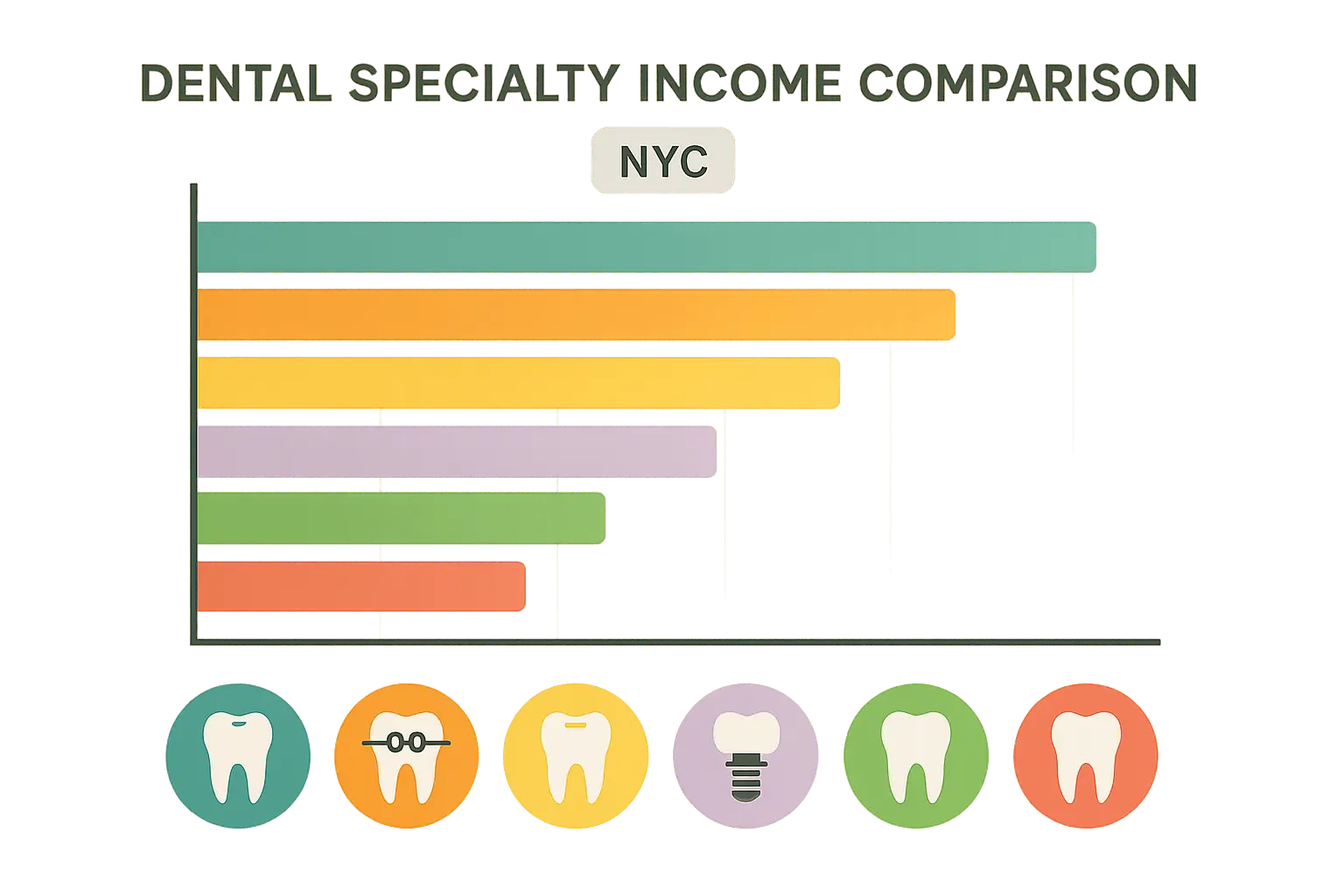
Orthodontists and oral surgeons are at the top of the food chain. We're talking $400,000-$700,000+ annually for experienced practitioners. Those extra training years and limited supply create a premium market for these services.
Orthodontics kills it in NYC because of all the wealthy patients willing to pay for premium treatments. Invisalign, fancy braces, high-end stuff that general dentists just can't touch price-wise. When people ask how much does a dentist make in New York, these specialists represent the upper tier of earning potential.
Oral surgeons get the best of both worlds - insurance pays for necessary procedures, and cash-paying patients want cosmetic work. Multiple revenue streams in the right locations can be incredibly lucrative.
According to recent data from Nexford University's analysis of highest-paying jobs in New York, there are currently 6,530 dentist positions in New York, making it the 4th state with the highest level of employment in this position, with demand for dentists expected to increase by 4% through 2032.
Endodontists and periodontists sit in the middle at $250,000-$450,000 annually. What I love about these specialties is the referral model - general dentists send you their tough cases, creating steady patient flow.
Root canals and gum surgery aren't glamorous, but they're necessary. Patients don't really have a choice when they need these services, which creates more predictable demand than elective procedures that rely heavily on people wanting to spend money.
The key is building solid referral relationships with general dentists in your area. Once you're the go-to specialist, your schedule fills up and stays full.
Pediatric dentists earn $200,000-$350,000 annually, with some unique perks other specialties don't have. Hospital affiliations provide extra income streams, and special needs care often gets premium reimbursement rates.
Families are incredibly loyal once you earn their trust. Parents will drive across boroughs for a pediatric dentist they believe in, giving you more geographic flexibility than other specialties.
Insurance coverage for kids' dental care is generally better than adult coverage, making financial planning easier and reducing the collection headaches that some practices face.
Where you practice in NYC's five boroughs makes a huge difference in what you can earn, thanks to different demographics, competition levels, and overhead costs. The financial dynamics change dramatically as you move between neighborhoods.
Manhattan practices can charge 20-30% higher fees than outer boroughs, but your overhead will be proportionally higher too. We're talking $20,000-$40,000+ monthly just for decent office space in prime areas like the Upper East Side or Midtown.
Patient expectations in Manhattan are unlike anywhere else. These are sophisticated consumers who've done their research and expect premium service every single time. Your office needs to look perfect, your staff needs to be polished, and your work needs to be flawless.
Competition is absolutely brutal. You're competing with some of the world's best dentists who've been building practices for decades. Breaking into established Manhattan markets takes exceptional skills and serious patience. The dentist salary in New York reaches its peak in Manhattan, but so do the challenges.
I know a dentist - let's call him Michael - who runs a practice on the Upper East Side. He charges $350 for cleanings versus $250 in Queens. But his monthly overhead is $35,000 compared to $18,000 for a similar Queens practice. Despite the premium fees, his net profit margin is only slightly higher because of increased costs and slower patient turnover in the luxury market.
Brooklyn, Queens, the Bronx, and Staten Island offer a completely different deal. Your per-procedure fees might be lower, but overhead costs drop dramatically, and patient volume can be much higher.
I know dentists in Queens seeing 30-40 patients per day in efficient, high-volume practices. Their fees are 20-30% lower than Manhattan, but their net income often exceeds Manhattan practitioners because expenses are so much lower. The dentist salary in New York can actually be higher in outer boroughs when you look at net income rather than gross revenue.
The outer boroughs also let you serve diverse communities with different needs and payment preferences. You can build practices around specific ethnic communities, insurance-based care, or cash-pay models that wouldn't fly in Manhattan's premium market.
Patient loyalty is stronger in outer borough communities too. Once you're the neighborhood dentist, families stick with you for generations and refer everyone they know.
Many dental professionals find that living in coolest neighborhoods in Brooklyn offers the perfect balance of reasonable housing costs while maintaining easy access to Manhattan practices.
|
Borough Comparison |
Manhattan |
Outer Boroughs |
|
Average Cleaning Fee |
$300-$400 |
$200-$280 |
|
Monthly Office Rent |
$20K-$40K |
$8K-$18K |
|
Patient Volume/Day |
15-20 |
25-40 |
|
Competition Level |
Extremely High |
Moderate |
|
Insurance Acceptance |
40-60% |
70-90% |
|
Net Profit Margin |
25-35% |
30-45% |
Career advancement in NYC follows pretty predictable patterns, with big earning jumps tied to experience, reputation, and business skills.
New grads typically start around $120,000-$ 160,000 as associates. I know that sounds low compared to what you might have heard about NYC salaries, but remember - you're paying for education and mentorship during these early years.
Too many new dentists chase the highest starting salary without thinking about learning opportunities. A lower-paying job with great mentorship and diverse cases can be worth way more long-term than a higher-paying position where you're just doing cleanings and fillings.
Focus on becoming the associate that practice owners fight to keep during these early years. NYC's dental community is surprisingly small, and word travels fast about both great and problematic practitioners. The dentist salary in New York City grows substantially as you prove your value.
Your first few years are also about figuring out what type of practice fits your personality. Some dentists thrive in high-volume, efficiency-focused practices, while others prefer slower-paced, relationship-based care.
For new dental graduates, understanding affordable neighborhoods in NYC becomes crucial for maximizing your take-home pay during those early career years.
New Graduate Success Checklist:
Dentists with 5-15 years of experience start seeing substantial salary increases. You've developed clinical skills, built a patient following, and understand how practices actually work. This is when earning potential really accelerates.
Partnership opportunities become available during this phase. Most partnerships require $100,000-$300,000 investment, but offer long-term earning potential of $250,000-$400,000+ annually. The key is finding the right practice with compatible partners and growth potential.
This is also when many consider specialty training. Going back to school for 2-3 years is a big sacrifice, but the long-term earning potential of specialization can make it worthwhile, especially in NYC's premium market.
Your reputation becomes your most valuable asset during these years. Patients start requesting you specifically, other dentists refer complex cases to you, and you establish yourself as an expert in particular areas of dentistry.
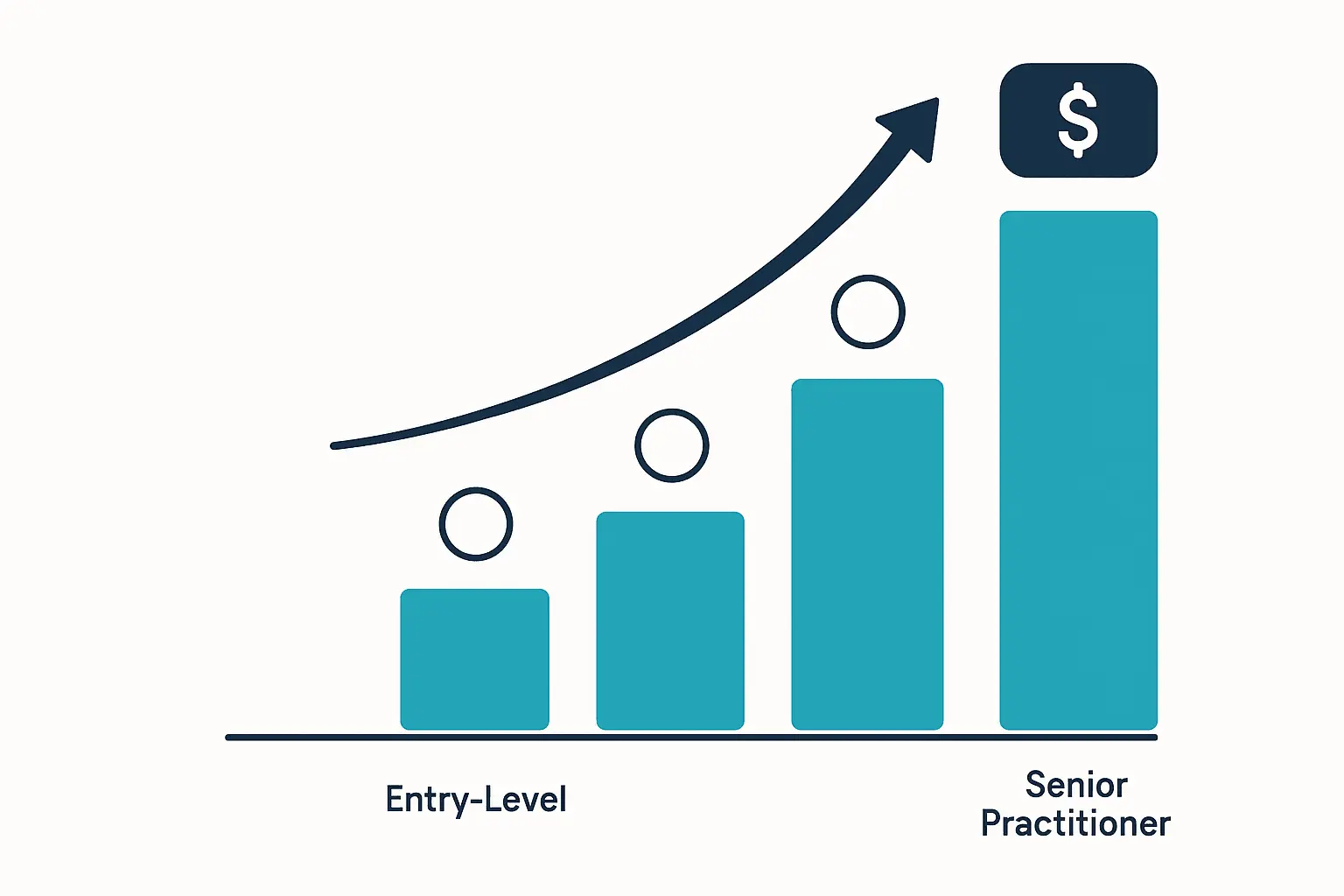
Senior practitioners with established reputations are the highest earners in NYC's dental market. Through efficient scheduling, premium services, and strategic location choices, many achieve $350,000-$500,000+ annual income.
Practice optimization becomes crucial at this level. You're running a sophisticated business. Every aspect, from scheduling efficiency to treatment planning protocols, directly impacts your bottom line.
Multiple practice ownership becomes realistic for successful senior practitioners. I know dentists who've built mini-empires with 3-5 locations throughout NYC, generating $750,000-$1,500,000+ annually across their network.
The transition from practitioner to business owner requires different skills. You need to understand marketing, HR, financial management, and strategic planning. Many successful senior dentists work with business consultants or take MBA-level courses to develop these skills.
According to recent data from physician compensation surveys, the gender pay gap in healthcare has increased slightly to 26%, with male doctors earning about $121,000 more than their female colleagues per year. This disparity affects career trajectory planning and highlights the importance of strategic negotiation throughout one's dental career.
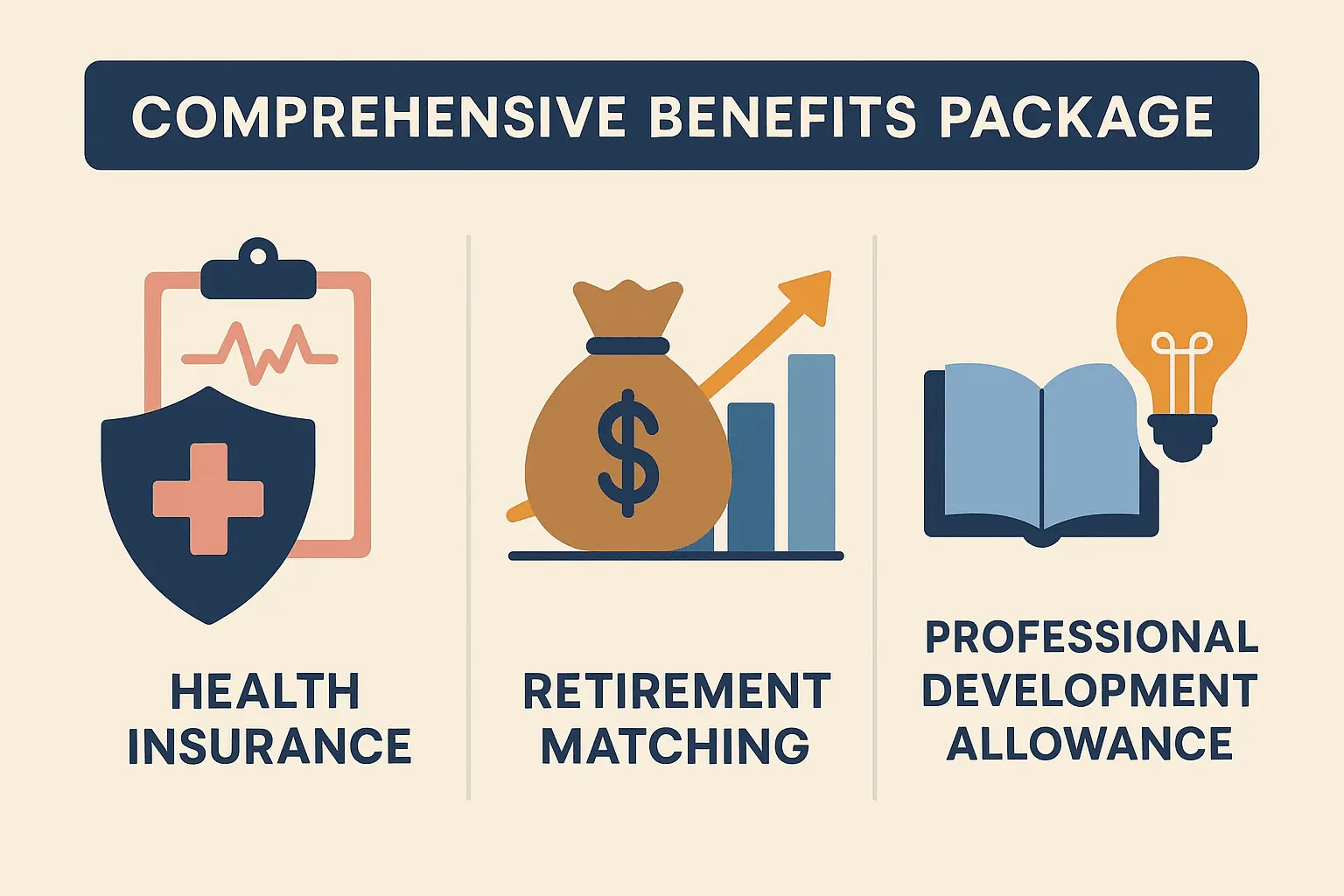
Beyond base salary, NYC dental positions offer benefit packages that can add $25K-$50K+ in annual value to your total compensation. These benefits can significantly impact your overall financial picture.
Health insurance in NYC is expensive - we're talking $15,000-$25,000 annually for comprehensive family coverage. When an employer covers this, it's basically a significant salary increase that doesn't show up in your gross pay calculations.
Professional liability insurance is another major expense many employers cover. Individual malpractice policies can cost $5,000-$15,000 annually depending on your specialty and coverage limits. Having this covered represents substantial savings.
Dental benefits for your family might seem minor, but quality dental care in NYC is expensive. Comprehensive coverage can save thousands annually, especially if you have kids needing orthodontic work.
Disability insurance is often overlooked but critically important for dentists. Your hands are your livelihood, and a career-ending injury could be financially devastating. Group policies through employers typically offer better rates and coverage than individual policies.
401(k) matching might not seem exciting, but 3-6% matching on a $200,000+ salary adds up quickly. That's $6,000-$12,000+ in free money annually, plus the tax advantages of retirement contributions.
Profit-sharing bonuses can be substantial in successful practices. I've seen associates receive $10,000-$50,000+ annual distributions in particularly profitable years. These bonuses often correlate with practice growth and your individual contribution to that success.
Continuing education allowances of $2,000-$8,000 annually might not cover all your CE needs in NYC's expensive education market, but every dollar helps. Quality continuing education courses in Manhattan can cost $500-$2,000+ per day.
Some practices offer additional perks like gym memberships, parking allowances, or professional association dues. These might seem minor, but in NYC's expensive environment, every covered expense helps your bottom line.
While NYC dentists earn higher salaries, the city's extreme cost of living significantly affects purchasing power and lifestyle choices.
Housing will likely eat up 25-40% of your gross income in NYC. Manhattan apartments suitable for dental professionals typically run $4,000-$8,000+ monthly, while outer borough options can reduce this to $2,500-$4,500 monthly.
The commute factor adds another layer of complexity. Living in Manhattan and walking to work saves transportation costs but maximizes housing expenses. Living in outer boroughs reduces housing costs but adds $300-$800 monthly in parking or transportation expenses.
Many dentists choose to live in New Jersey or Westchester County to reduce housing costs, but this adds commuting time and expenses that need to be factored into your lifestyle calculations. The time cost of commuting can be as significant as the financial cost.
Property taxes, maintenance fees, and utilities in NYC are all premium-priced. What might cost $200 monthly elsewhere could easily be $400-$600 monthly here. These seemingly small differences add up to thousands annually.
Understanding how much you need to make to live in NYC helps dental professionals set realistic salary expectations based on their desired lifestyle and housing preferences.
NYC's tax structure is punishing for high earners. You're paying federal taxes, New York State taxes, and NYC taxes. Dentists earning $200,000-$500,000 face combined effective tax rates of 35-45%, significantly higher than most other metropolitan areas.
This means a $300,000 salary in NYC might net you $165,000-$195,000 after taxes, before considering other deductions. Compare this to a $250,000 salary in a no-tax state like Texas or Florida, where you might net $175,000-$185,000.
Tax planning becomes crucial at higher income levels. Maximizing retirement contributions, considering municipal bonds, and timing income recognition can significantly impact your after-tax income. Many successful dentists work with tax professionals who specialize in high-income healthcare providers.
The tax implications of practice ownership are even more complex. Business expenses, equipment depreciation, and various deductions can help, but you'll need sophisticated accounting help to optimize your tax situation.
Recent analysis shows that "living in New York gives you access to endless entertainment and tourist spots, world-class dining options, plenty of job opportunities, and salaries higher than the national average. But, of course, all these benefits come with one significant downside—a high cost of living, which is 78% above the US average." This reality significantly impacts the purchasing power of even high-earning dental professionals in the city.
Here's a real example: A dentist I know - let's call her Jennifer - earns $280,000 annually as an associate in Brooklyn. After NYC's combined tax burden of approximately 40%, she nets $168,000. Her monthly expenses include $3,200 for housing, $800 for transportation, $1,200 for food, and $2,000 for other living expenses, totaling $86,400 annually. This leaves her with $81,600 in discretionary income - significantly less than a colleague earning $220,000 in a no-tax state who might have $95,000+ in discretionary income.
Understanding market dynamics and negotiation tactics specific to NYC's dental employment landscape helps practitioners maximize earning potential.
Successful negotiations start with solid market research. You need to understand what similar practices are paying, what the local market rates are for your experience level, and what the practice's financial situation appears to be.
Practice revenues, patient demographics, and local competition all factor into what a practice can reasonably afford to pay. A busy Manhattan practice serving affluent patients can afford higher salaries than a struggling outer borough practice competing primarily on price.
Timing matters enormously in negotiations. Annual reviews, after completing major cases successfully, or when the practice is experiencing growth are optimal times to discuss compensation increases. Avoid salary discussions during slow periods or when the practice is facing challenges.
Documentation of your contributions helps tremendously. Track your production numbers, patient satisfaction scores, and any additional responsibilities you've taken on. Concrete data makes your case much stronger than general requests for more money.
Come prepared with specific proposals rather than vague requests. "I'd like to discuss increasing my base salary to $X and adjusting my production bonus to Y%" is much more effective than "I think I deserve a raise."
Salary Negotiation Preparation Checklist:
NYC's competitive market can work in your favor if you're a strong performer. Practices know that good associates are hard to find and expensive to replace. Use this knowledge strategically in negotiations.
Building relationships with other practices gives you options and market intelligence. Even if you're happy in your current position, maintaining professional relationships throughout the dental community keeps you informed about opportunities and market rates.
However, be careful about using competing offers as negotiation tactics. NYC's dental community is smaller than you might think, and burning bridges can hurt your long-term career prospects. Handle these situations professionally and diplomatically.
Consider non-salary benefits in negotiations. Sometimes practices can't increase base salaries but can offer additional vacation time, continuing education allowances, or flexible scheduling that has real value to your lifestyle.

The NYC dental market keeps evolving with technological advances, changing patient demographics, and new practice models affecting salary trends and career opportunities.
Digital dentistry skills are becoming essential for maximizing earning potential. Dentists proficient in CAD/CAM technology, digital impressions, and same-day restorations can charge premium fees and see 15-25% higher productivity.
AI diagnostics and treatment planning tools are changing how we practice dentistry. Early adopters who master these technologies will have significant competitive advantages in efficiency and treatment outcomes. Patients are increasingly drawn to practices that offer cutting-edge technology.
Minimally invasive procedures and biomimetic dentistry are becoming patient expectations rather than premium options. Staying current with these techniques isn't just about providing better care - it's about remaining competitive in NYC's sophisticated market.
The investment in technology can be substantial, but the ROI is typically strong for practices that implement it effectively. Digital workflows can dramatically improve efficiency while providing better patient experiences and outcomes.
Corporate consolidation is reshaping the dental landscape. DSOs are acquiring independent practices throughout NYC, changing employment options and compensation structures. Understanding these trends helps you make strategic career decisions.
While corporate practices offer stability and structured benefits, independent practitioners typically maintain higher long-term earning potential. The trade-off is increased business management responsibilities and financial risk.
Patient expectations continue evolving toward more comprehensive, wellness-focused care. Practices that adapt to these changing expectations will thrive, while those stuck in traditional models may struggle to maintain premium pricing.
Teledentistry and remote consultation capabilities became important during the pandemic and are likely to remain part of the practice landscape. Dentists who can effectively integrate these tools will have advantages in patient convenience and practice efficiency.
Recent trends in physician compensation show that "US physicians' total compensation rose an average of 3.6% in 2024, a much better number than the 2.4% drop that occurred in 2023" according to the 2025 Medscape Physician Compensation Report. This modest growth pattern reflects broader healthcare market pressures that dental professionals should consider when planning long-term career strategies.
The latest compensation data reveals significant intra-specialty pay variation, with some specialties showing differences of $297,000+ between the 10th and 90th percentiles within the same field - demonstrating that individual performance and practice optimization can have greater impact on earnings than specialty choice alone.
Look, NYC's dental market offers incredible earning potential, but success requires understanding the complex relationship between compensation, costs, and career strategy. Whether you're making $150,000 as a new associate or $500,000+ as an established practice owner, your actual take-home and quality of life depend on making smart decisions about practice type, location, and long-term planning.
The city's high costs and competitive environment can be intimidating, but they also create opportunities for dentists who approach their careers strategically. Focus on building clinical excellence, understanding the business side, and positioning yourself for long-term success rather than just chasing the highest immediate salary.
Remember that your earning potential here extends way beyond your base salary. Benefits, tax planning, practice equity, and lifestyle factors all contribute to your overall financial success. Take time to evaluate opportunities holistically rather than focusing solely on gross compensation numbers.
The dental profession in NYC will keep evolving with technology, changing patient expectations, and market consolidation. Staying adaptable, investing in your skills, and maintaining strong professional relationships will serve you well regardless of how the market changes. Your success here isn't just about what you earn - it's about building a sustainable, fulfilling career in one of the world's most dynamic cities.

Household supplies can be changed or decreaased at Outpost Club’s discretion, or based on supply availability. Outpost is not responsible for temporary losses of utility service. Outpost Club is not responsible for any damages due to absence of any supplies or utilities


If you have a sales related question please call
680-688-7678

 Hot Deals