Executive Assistant Salary NYC: What You're Really Worth in the Big Apple
Dec 15, 2025

Dec 15, 2025
When I first moved to NYC to work as an executive assistant, I had no clue what I was actually worth. I accepted the first offer that came my way - $52,000 - thinking I'd hit the jackpot. Six months later, I discovered I was earning $15,000 less than I should have been. Don't make the same mistake I did.
The executive assistant world in New York City is where you can make really good money, but pay ranges are all over the place depending on your experience and what industry you land in. According to PayScale's comprehensive salary data, entry-level executive assistants with less than one year of experience can expect to earn an average total compensation of $60,223, while the highest-paid executive assistants in New York earn up to $104,000 annually.
Look, the NYC executive assistant job market in 2024 is honestly pretty wild. Executive assistant salary nyc ranges are all over the map, and it really depends on who you're working for and what industry you land in. I've seen friends making $45K supporting startup founders, while others are pulling in $120K+ working for Wall Street execs. It's the same city, sometimes the same neighborhood - but completely different worlds.
Here's what I've learned from being in this game for a while: According to PayScale research, if you've got 1-4 years under your belt, you're looking at around $70,004 on average. That's based on real salaries from 236 people, so it's not just made-up numbers.

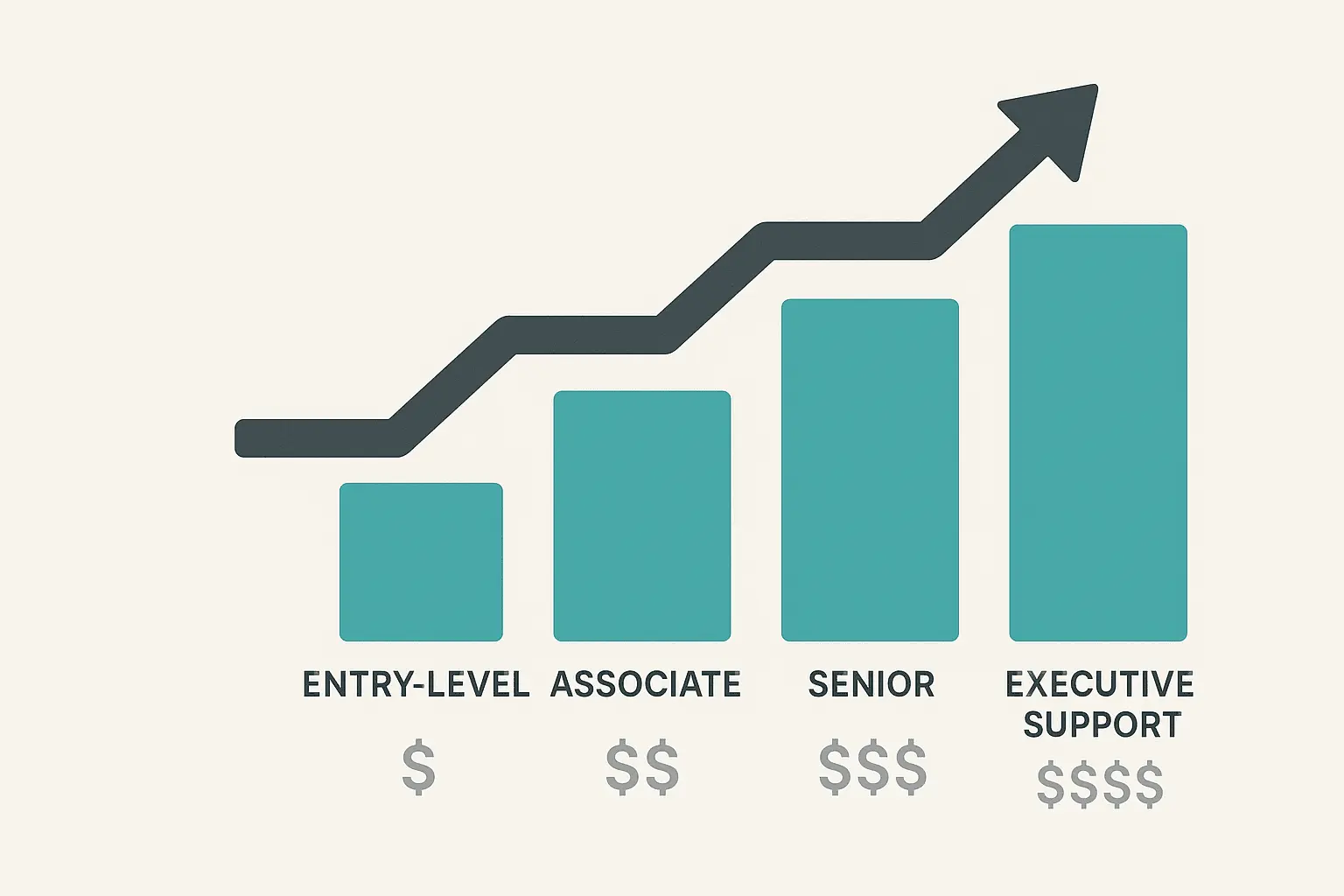
The salary for an executive assistant in NYC isn't just one number - it's more like a ladder you climb. And honestly, the climb can be pretty steep if you know what you're doing.
Before we dive into the numbers, let me tell you something nobody talks about: your salary is just part of the equation. When you're looking at job offers, you need to think about the total cost of living. I learned this the hard way when I took a "great" salary but ended up spending half of it on rent because I didn't research cost-effective living arrangements in NYC.
|
Experience Level |
What You'll Actually Make |
What You'll Be Doing |
|
Just Starting Out (0-2 years) |
$45,000-$65,000 |
Basic stuff - calendars, travel, keeping your exec organized |
|
Getting Good (3-7 years) |
$65,000-$95,000 |
Project work, dealing with important people, handling confidential stuff |
|
You're a Pro (8+ years) |
$95,000-$150,000+ |
Strategic planning, coaching your exec, basically running things |
|
C-Suite Support |
$120,000-$180,000+ |
You're their right hand for everything - board meetings, major decisions, the works |
So you want to break into the EA world in NYC? You're looking at $45,000-$65,000 to start. I know, I know - that might not sound like a ton when you're thinking about NYC rent, but hear me out.
The range is huge because it really depends on where you land. Startups might lowball you at $45K, but they often make up for it with equity, flexible schedules, or rapid promotion opportunities. Big corporations? They'll start you closer to $60K but expect you to follow more rigid structures.
Entry level executive assistant salary nyc positions really do start in that $45,000-$65,000 range, but the key is showing you can grow beyond the basic job description.
My friend Sarah is a perfect example. She started at a Brooklyn tech startup for $48,000 right out of college. Honestly, she was just thrilled to have a job. But here's the thing - within her first year, she proved she could handle way more than basic admin work. She started coordinating product launches, managing vendor relationships, even sitting in on strategy meetings. By month 12, they bumped her to $55,000 because they realized they'd be crazy to lose her.
Once you've got 3-7 years of experience, things get interesting. You're looking at $65,000-$95,000, and this is where your career really starts taking off. You're not just managing calendars anymore - you're coordinating high-stakes meetings, managing projects that actually matter, and becoming the person everyone goes to when they need to reach your executive.
At this level, performance bonuses become more common. I've seen people get $5,000-$10,000 year-end bonuses just for keeping their exec's life running smoothly. The companies start to realize that losing a good mid-level EA is expensive - they'd rather pay you more than train someone new.
When you hit senior level, supporting C-suite executives, you're talking $95,000-$150,000+. But let me be clear about something - you earn every penny of this money. You're not just an assistant at this point; you're a strategic partner.
I know an EA who makes $135,000 supporting a CEO at a major financial services company. Her day includes coordinating board meetings, managing confidential merger discussions, and basically being the CEO's strategic thinking partner. She told me once, "I don't just manage his calendar - I manage his priorities, and that impacts the entire company."

Here's something they don't tell you in career guides: where you work matters just as much as what you do. Executive assistant salary new york varies wildly by industry, and some sectors just pay better than others.
Financial services firms consistently pay 15-25% more than everyone else. I'm talking base salaries over $100,000 for experienced EAs, and that's before bonuses. But here's the catch - you earn it. Supporting a hedge fund manager during earnings season? That's not a 9-to-5 job.
The financial services premium isn't just because they have money to throw around. It's because mistakes in this industry cost millions, and they need EAs who can handle that pressure without breaking.
According to PayScale, the highest-paid EAs in New York can make up to $104,000 per year, with the lowest at $58,000. That gap? A lot of it comes down to industry choice.
Tech companies in NYC are finally waking up to what Silicon Valley figured out years ago - good EAs are worth their weight in gold. They're not just offering higher base salaries; they're throwing in stock options, unlimited PTO, and benefits packages that make your head spin.
What I love about tech compensation is that it's not just about the money. Sure, the base salary is competitive, but then you get equity that could actually be worth something, flexible work arrangements, and companies that actually invest in your professional development.
Even creative industries are stepping up their game. Primary Wave Music is looking for a Senior Executive Assistant at $65,000-$85,000 for their CEO and COO roles. Not bad for the music industry, which historically hasn't been known for competitive admin salaries.
Law firms and consulting companies stick to traditional compensation structures, but they do it well. You'll get solid base pay, structured advancement paths, and benefits like continuing education allowances that other industries skip.
The legal world values expertise and longevity. If you can handle the demanding hours and high-pressure environment, they'll reward you with steady salary growth and clear career progression.
When you're supporting CEOs and other C-suite executives, you're playing in the major leagues. Executive assistant to ceo salary often starts at $120,000+ because you're not just supporting an executive - you're enabling the success of someone who impacts the entire organization.
CEO support roles require skills that go way beyond traditional admin work. You need advanced project management abilities, absolute discretion with confidential information, and the ability to think strategically about business priorities. That's why salaries often exceed $120,000 - you're essentially functioning as a strategic partner.
Let me give you a real example. Michael supports the CEO of a major financial services firm and makes $135,000 annually. His responsibilities include coordinating board meetings, managing confidential merger discussions, and serving as the primary liaison between the CEO and key stakeholders. But here's the kicker - his strategic input on executive scheduling and priority management resulted in a 20% increase in CEO productivity metrics. When you can show that kind of impact, the salary follows.
If you've got specialized skills like international business coordination, event planning expertise, or you're multilingual, you can command an extra 10-20% in salary. These skills are increasingly valuable in NYC's global business environment.
Being multilingual in NYC is like having a superpower. I know an EA who speaks Mandarin and English fluently - she makes $15,000 more than her peers because she can coordinate directly with the company's Asian partners without needing translators or cultural intermediaries.

Here's what nobody tells you when you're looking at job offers: the base salary is just the starting point. Executive assistant salary ranges don't tell the whole story because benefits, bonuses, and perks can add 25-40% to your total compensation.
The base salary is what gets advertised, but smart EAs look at the complete picture. Geographic cost adjustments, experience-based scaling, and industry premiums create a complex but predictable framework for figuring out what you should actually be making.
NYC salaries typically include a 20-30% bump over national averages just to account for the cost of living. But here's the thing - not every company handles this the same way. Some are generous with the adjustment, others try to lowball you.
The geographic premium isn't just about rent (though that's a big part of it). It's about everything costing more in NYC - transportation, food, even your morning coffee. When you're evaluating offers, make sure you understand the true cost of living in Manhattan so you know if that salary actually works for your lifestyle.
Salary progression usually follows a pretty predictable pattern - 5-10% increases for each year of relevant experience, plus bigger jumps when you take on significantly more responsibility. The key is recognizing when you've hit a plateau and need to make strategic moves to keep growing.
According to PayScale research, you can increase your EA pay through different strategies: changing employers for better compensation, getting advanced degrees, or managing junior EAs. The data backs up what I've seen in real life - sometimes you have to move to grow.
Many NYC EA positions include performance bonuses, holiday bonuses, and other incentive payments that can add 10-25% to your annual take-home. Some positions even tie bonuses to your executive's success, which creates a nice alignment of interests.
Annual performance bonuses typically range from 5-15% of your base salary, tied to both how well you do your job and how well the company performs overall. The best part? These bonuses recognize that great EAs directly impact business success.
Performance metrics usually include things like executive satisfaction scores, project completion rates, and your contributions to organizational efficiency. When your executive succeeds, you succeed - and your bonus reflects that.
Some positions offer bonuses tied directly to the success of the executive you support. This approach recognizes that senior EA roles are true partnerships, and when your executive hits their goals, you played a part in making that happen.
I love this model because it aligns incentives perfectly. You're not just trying to keep your exec happy - you're actively thinking about how to help them succeed, which usually means better strategic thinking and more valuable contributions on your part.
Comprehensive benefits packages in NYC can be worth $15,000-$25,000 annually when you actually calculate their value. That's why you need to look beyond the base salary when comparing offers.
|
What You Get |
What It's Worth |
Why It Matters |
|
Premium Health Insurance |
$8,000-$12,000 |
Medical, dental, vision - this stuff is expensive in NYC |
|
Retirement Matching |
$3,000-$6,000 |
401(k) matching, sometimes pension contributions |
|
Professional Development |
$2,000-$5,000 |
Conferences, training, certifications - invest in yourself |
|
Work-Life Perks |
$2,000-$4,000 |
Gym memberships, commuter benefits, flexible PTO |
|
Total Value |
$15,000-$27,000 |
This is real money on top of your salary |
Premium health insurance, dental, vision, and wellness programs can add $15,000-$25,000 in value to your total compensation. In NYC, where healthcare costs are through the roof, comprehensive coverage is worth its weight in gold.
Many companies also throw in wellness stipends, gym memberships, and mental health support. These benefits become more valuable every year as healthcare costs keep climbing.
Here's a pro tip most people don't know: many employers provide $2,000-$5,000 annually for professional development, and a lot of employees never use it. That's free money for making yourself more valuable!
Professional development budgets often cover industry conferences, software training, and even degree programs. Smart EAs use these benefits to continuously upgrade their skills and market value.
Flexible work arrangements, generous PTO policies, and unique perks like gym memberships or commuter benefits can make a huge difference in your quality of life. For experienced professionals, these benefits often matter more than a few extra thousand in salary.
The best companies understand that work-life balance isn't just nice to have - it's essential for maintaining the high performance levels required in executive support roles.

The EA career path in NYC offers multiple ways to advance and increase your earning potential. Executive assistant salary ny progression follows some predictable patterns, but there are also strategic moves you can make to accelerate your growth.
Career progression usually follows established patterns - you start supporting mid-level managers and work your way up to C-suite executives. Vertical advancement can mean 30-50% salary increases when you make that jump from mid-level to C-suite support.
Moving from supporting mid-level managers to C-suite executives can bump your salary by 30-50%. This isn't just about getting paid more - it's about fundamentally changing your role from administrative support to strategic partnership.
The jump to C-suite support changes everything. You're not just managing calendars and booking travel anymore. You're coordinating board meetings, handling confidential strategic initiatives, and often serving as a sounding board for major business decisions.
NYC's civil service sector also offers structured advancement opportunities. Recent NYC civil service exams show positions ranging from $34,974 for entry-level clerical work to $68,957 for investigators. While these aren't traditional EA roles, they show how government positions offer clear salary progression paths.
Sometimes the fastest way up is sideways. Changing industries or companies often provides 10-20% salary increases because you can leverage your experience to negotiate better compensation packages.
The key to successful lateral movement is timing. You want to move when you have proven success in your current role but before you've plateaued. It's about positioning yourself as someone who brings value, not someone who's running away from problems.
For professionals considering career moves, understanding affordable neighborhoods in NYC can help you maximize the impact of salary increases by keeping your living expenses reasonable.
Developing specific high-value skills can significantly impact your earning potential. Technology proficiency can add $5,000-$15,000 to your annual compensation, and strategic business skills often enable transitions to higher-paying roles or command premium salaries within EA positions. Understanding how skills development affects ea salary potential helps you invest in the most valuable capabilities.
Advanced proficiency in executive-level software, project management tools, and emerging technologies can add $5,000-$15,000 to your annual compensation. Technology skills aren't just nice to have anymore - they're essential for standing out.
AI tools, advanced Excel capabilities, and project management software proficiency set you apart from other candidates. These skills directly impact your ability to make your executive more productive, and productive executives are willing to pay for that value.
Let me give you a real example. My colleague Jennifer was a mid-level EA at a consulting firm making decent money but feeling stuck. She used her professional development budget to get training in AI productivity tools and advanced Excel certification. Within six months, she had streamlined her executive's reporting process so much that it saved 10 hours per week. That efficiency gain led to a $12,000 salary increase and expanded responsibilities managing two additional executives.
EAs who develop strategic thinking, business analysis, and project management capabilities often transition to higher-paying roles or command premium salaries within EA positions. These skills transform you from support staff to strategic partner.
Business acumen becomes particularly valuable when you're supporting executives in strategic planning, market analysis, and organizational development initiatives. You become an extension of their thinking rather than just someone who handles their administrative tasks.
Successfully negotiating EA salaries in NYC requires homework, timing, and knowing how to present your value. Most people wing it and leave money on the table. Don't be most people.
Effective salary negotiations start with thorough research. You need reliable data, and you need to understand NYC's geographic premium and industry-specific benchmarks before you ever sit down to negotiate.
Reliable salary data comes from sources like Glassdoor, PayScale, and Robert Half salary guides, but here's the thing - you need to validate this information through networking and industry connections. Online data provides starting points, but real-world validation is crucial.
Don't rely solely on online salary tools. They often lag behind current market conditions and miss the nuances of specific roles or industries. Talk to other EAs, reach out to recruiters, join professional groups. Get the real scoop.
NYC salaries typically command 25-35% premiums over national averages, but this varies by neighborhood. Manhattan positions often pay 10-15% more than outer borough roles. Understanding these geographic nuances helps you target the right opportunities.
The premium isn't uniform across all companies. Some organizations have standardized NYC rates, while others adjust based on specific office locations and local market conditions.
When you're evaluating offers, understanding neighborhood differences becomes crucial. Living in Manhattan vs Brooklyn can significantly impact your net income despite salary variations.
Financial services EAs in NYC average $85,000-$130,000, while tech industry roles range $75,000-$120,000, and legal sector positions span $80,000-$125,000 annually. These benchmarks give you negotiation anchors for different industries.
Industry benchmarks shift over time based on market conditions, talent availability, and sector performance. Stay current with these trends to maintain your negotiating power.
Strategic timing and preparation significantly impact negotiation success. End-of-fiscal-year reviews, after successful project completions, and during executive transitions present the strongest opportunities for salary negotiations.
End-of-fiscal-year reviews, after you've successfully completed major projects, and during executive transitions present the best opportunities for salary negotiations. Timing can make or break your success.
Executive transitions create unique opportunities because new leaders often reassess support needs and compensation structures. Position yourself as indispensable during these periods, and you're more likely to see meaningful salary increases.
Successful negotiations focus on quantifiable contributions, cost savings you've generated, and unique skills that directly impact executive productivity and business outcomes. Numbers speak louder than general performance claims.
Document your achievements throughout the year. Track meeting efficiency improvements, cost savings from vendor negotiations, and time saved through process improvements. These metrics become your negotiation ammunition.
Here's Your Salary Negotiation Checklist:

The EA role in NYC is evolving rapidly. Technology integration, remote work arrangements, and expanded strategic responsibilities are changing what we do and how much we get paid for it. AI proficiency is commanding 15-20% salary premiums, and business operations integration is leading to 20-30% salary increases as roles transform beyond traditional administrative support.
Artificial intelligence and automation are transforming EA responsibilities, creating new skill requirements and potentially impacting salary structures. EAs who master AI tools and lead digital transformation initiatives are positioning themselves for significant salary premiums and expanded career opportunities.
EAs who master AI tools for scheduling, communication, and data analysis are positioning themselves for 15-20% salary premiums as these skills become increasingly valuable. Early adopters gain competitive advantages in the job market.
Here's the reality: AI isn't replacing executive assistants - it's making us more powerful. Smart EAs learn to leverage these tools to provide higher-value support and strategic insights.
EAs leading digital transformation initiatives within their organizations often see role expansions that justify salary increases of $10,000-$20,000 annually. Technology leadership becomes a valuable differentiator.
Organizations increasingly rely on tech-savvy EAs to drive efficiency improvements and digital adoption across executive teams. This leadership role commands premium compensation.
Hybrid and remote work arrangements are reshaping salary expectations. Some companies adjust compensation based on location while others maintain NYC-level salaries for remote EAs, creating new opportunities for geographic flexibility and virtual collaboration expertise.
EAs who can effectively support executives across multiple time zones and locations often command 5-10% salary premiums for their flexibility and expanded availability. Global business demands flexible support.
The ability to coordinate international meetings, manage global travel, and provide seamless support across time zones becomes increasingly valuable as businesses operate globally.
Proficiency in virtual meeting management, digital event coordination, and remote team support has become a valuable skill set worth $5,000-$10,000 in additional annual compensation. Remote work skills are here to stay.
Virtual event planning, digital collaboration facilitation, and remote team coordination require specialized skills that many EAs developed during the pandemic and continue to refine.
As remote work reshapes the industry, understanding how to budget for an apartment becomes crucial when salary negotiations include location flexibility that might impact your housing costs.

Many EA positions are evolving into strategic business partner roles with corresponding salary increases and expanded career advancement opportunities. Business operations integration and executive coaching capabilities can command premium salaries of $120,000-$160,000+ in specialized positions.
EAs taking on project management, business analysis, and strategic planning responsibilities often see salary increases of 20-30% as their roles expand beyond traditional administrative support. Strategic thinking becomes increasingly valuable.
This evolution reflects organizations' recognition that experienced EAs possess unique insights into executive decision-making and organizational dynamics that can enhance business operations.
Senior EAs who develop coaching and development capabilities to support executive growth can command premium salaries of $120,000-$160,000+ in specialized roles. Leadership development becomes a natural extension of senior EA responsibilities.
The transition from administrative support to executive development represents the highest evolution of the EA role, combining deep organizational knowledge with leadership development expertise.
Future-Ready EA Skills You Need:

The EA profession in NYC offers real earning potential and career growth opportunities for professionals who understand how the game works, develop valuable skills, and position themselves strategically. Success requires continuous learning, strategic career planning, and understanding that your compensation extends far beyond base salary.
The EA landscape in NYC rewards professionals who think strategically about their careers and continuously develop their skills. Whether you're just starting out or looking to advance to senior levels, understanding market dynamics and positioning yourself for growth makes all the difference.
For those just starting their careers, exploring affordable student housing options can help you manage living expenses while building toward higher earning potential in EA roles.
Your earning potential as an EA in NYC isn't just about your current salary - it's about building a career that evolves with changing business needs while maintaining the core value of exceptional executive support. The professionals who thrive are those who embrace technology, develop strategic thinking skills, and understand their role as business partners rather than just administrative support.
The future belongs to executive assistants who can adapt, grow, and provide increasingly sophisticated support to executives navigating complex business environments. Your compensation will reflect the value you bring to these critical partnerships.

Household supplies can be changed or decreaased at Outpost Club’s discretion, or based on supply availability. Outpost is not responsible for temporary losses of utility service. Outpost Club is not responsible for any damages due to absence of any supplies or utilities


If you have a sales related question please call
680-688-7678

 Hot Deals