Fashion Institute of Technology Acceptance Rate: The Hidden Housing Crisis That's Really Blocking Your Fashion Dreams
Oct 23, 2025

Oct 23, 2025
Look, I'm going to be straight with you about something that nobody wants to admit: getting into FIT is actually the easy part. The hard part? Finding a place to live that won't bankrupt you.
Everyone gets obsessed with that 53% acceptance rate, but here's what I've learned after helping tons of students navigate this mess: the real barrier isn't getting accepted academically. Recent data shows that 58% of 4,326 applicants were admitted to FIT. Sounds pretty good, right? Wrong.
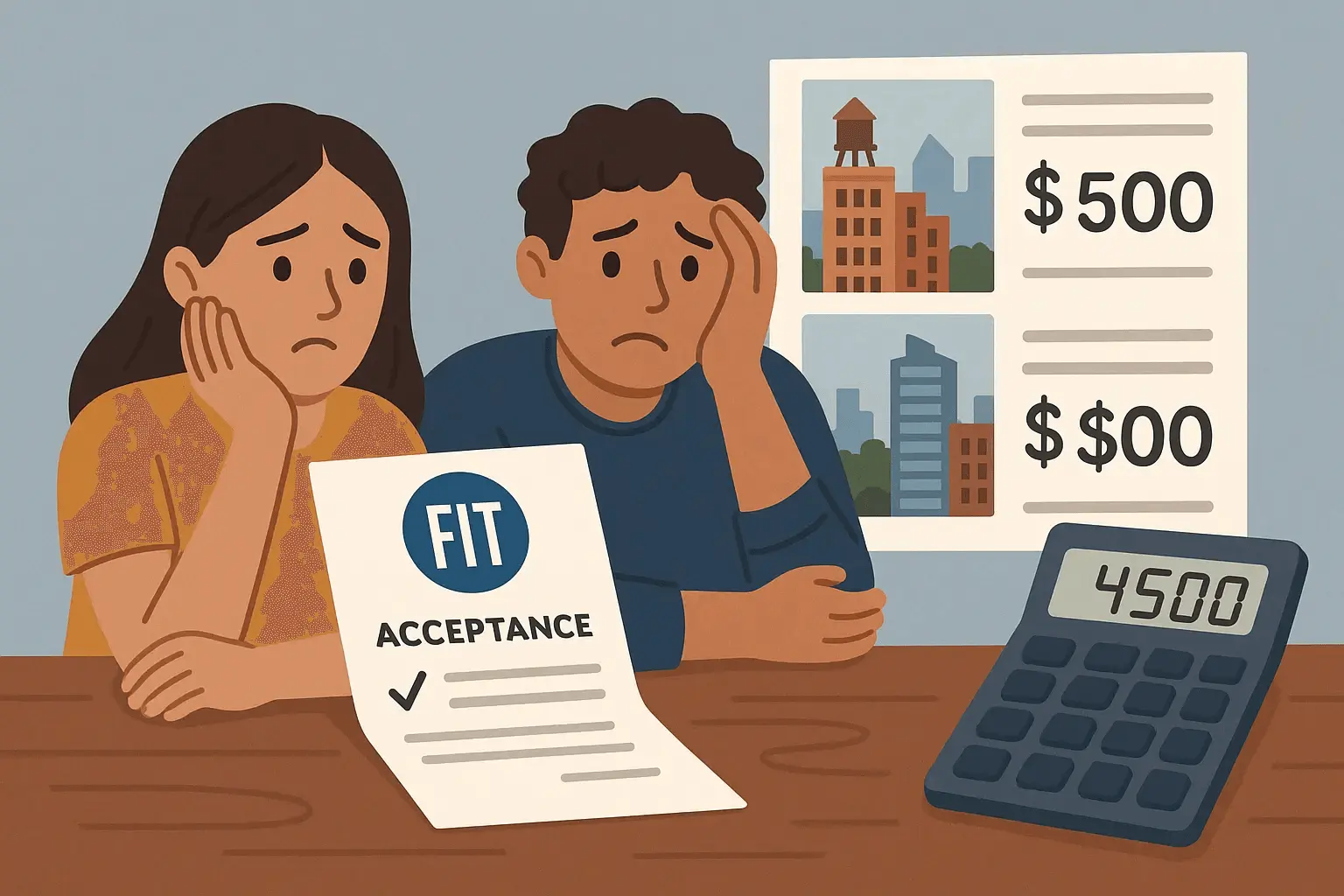
This statistic completely ignores the economic reality that hits you like a truck after your acceptance letter arrives. You're going to open that acceptance letter feeling like you're on top of the world. Then you're going to Google "apartments near FIT" and wonder if you accidentally clicked on listings for luxury yachts.
The acceptance rate for AAS applicants stands at 60%, but this figure becomes meaningless when you realize that housing costs can hit $48,000 annually on top of tuition. We're talking about a whole second application process that's often more brutal than the academic requirements themselves.
Here's what makes this even more frustrating: Fashion Institute of Technology (FIT) ranked No. 1 on the list of the Best Fashion Schools In The World For 2025 according to CEOWORLD magazine. So we have the world's top fashion school, but housing costs are preventing the most talented students from attending. It's like winning a contest to eat at the world's best restaurant, then finding out you can't afford to park there.

My friend Sarah thought she had it all figured out. Got into FIT, parents were proud, Instagram post ready to go. Then she looked up rent prices in Manhattan and literally had a panic attack in the Target parking lot.
She'd just received her FIT acceptance letter along with $8,000 in financial aid. She was on cloud nine until she started researching NYC housing. After discovering that shared apartments near campus cost $2,400 monthly ($28,800 annually), her aid covered barely one-quarter of housing costs alone. Despite her killer portfolio and 3.8 GPA, she had to defer admission for a year to save money.
The FIT acceptance rate becomes a cruel joke when you realize what happens after that acceptance letter arrives. Here's the thing everyone forgets to mention: even if FIT wants you, you still need to figure out how to afford living in one of the most expensive cities in the world.
Let me break this down in terms that'll make your wallet cry: a decent shared apartment near FIT costs about the same as a new car payment. Every month. For years. Traditional student housing near FIT demands $2,000-4,000 monthly, creating an economic acceptance rate way below the published 53%.
FIT Acceptance Reality Check
If you're from Jersey or Queens, congrats - you basically won the lottery. You can crash at home, know which neighborhoods are actually safe, and your mom probably knows a guy who knows a guy with an apartment. Everyone else? Welcome to playing life on expert mode.
Out-of-state and international students get hit with a double whammy that nobody warns them about. They have to secure NYC housing without seeing it while competing against local applicants who have all the advantages. This geographic inequality affects both application success and whether you can actually afford to attend.
International students have it even worse. They're dealing with visa timing constraints, zero familiarity with NYC rental markets, and limited credit history that makes landlords run away screaming. I've worked with international students who had to wire deposits sight unseen, only to arrive and find their housing situation was completely different from what they expected.
Here's where it gets really messed up: financial aid packages are designed for traditional college towns, not Manhattan. Fashion students find their aid laughably inadequate to cover both education and living expenses, creating barriers that have nothing to do with talent or academic merit.
When your financial aid officer calculates living expenses based on national averages, you're already screwed before you even start looking for a place to live. The system assumes housing costs that simply don't exist in Manhattan.
Okay, let's talk numbers without making your head spin. Traditional dorms? Think $3,000+ a month - that's more than most people's mortgage payments. Shared apartments? Still looking at $2,000+ unless you want to live in someone's converted closet. But here's where it gets interesting...
Alternative housing models are completely changing the game by addressing the cost barriers that make FIT acceptance meaningless for tons of qualified students. The FIT university acceptance rate becomes way more meaningful when you understand these new housing options.
|
Housing Option |
Monthly Cost |
Annual Cost |
Pros |
Cons |
|
Traditional Dorm |
$3,200-4,000 |
$38,400-48,000 |
Campus proximity, meal plans |
Extremely expensive, limited availability |
|
Shared Apartment |
$2,000-3,200 |
$24,000-38,400 |
More space, independence |
High deposits, lease complications |
|
Coliving Spaces |
$1,400-2,200 |
$16,800-26,400 |
Community, flexibility, lower costs |
Newer concept, varying quality |
|
Commuter Living |
$800-1,500 |
$9,600-18,000 |
Significant savings |
Long commutes, transportation costs |
The coolest part about these new housing solutions designed for creative students is that they don't just cut costs - they actually make your education better. I've seen these communities transform from simple money-saving measures into educational investments that support both affordability and success.

Fashion-focused living environments create these amazing informal learning networks where students naturally share industry connections, collaborate on projects, and extend their education way beyond campus walls. These communities become like incubators for creativity and professional development that traditional dorms just can't match.
I've watched students in these environments land internships through roommate connections, collaborate on portfolio pieces, and build professional networks that last throughout their careers. The housing becomes part of your education rather than just a place to crash.
Successful FIT applicants are getting smarter about treating housing availability as just as important as academic preparation. They coordinate their admission timeline with rental market cycles, and this strategic approach can save thousands annually while improving both acceptance and enrollment chances.
Here's what I wish someone had told me: start looking for roommates on Facebook groups and Discord servers way before you even apply. The best housing situations get snatched up by people who plan ahead.
Housing Research Timeline That Actually Works:
FIT's rolling admission process creates opportunities to secure housing during off-peak rental periods. Understanding these timing advantages can result in serious cost savings and way better housing options.
September leases are the most expensive because everyone wants them. But if you can swing a January start or find flexible housing that works with FIT's schedule, you'll save money and have more options to choose from.
The makeup of FIT's student body tells you way more about housing accessibility than academic selectivity. I've looked at these patterns extensively, and they reveal how economic barriers systematically exclude certain groups from fashion education, regardless of how talented or academically qualified they are.
Understanding FIT in New York means grasping how the rental market shapes who gets to pursue fashion dreams. The diversity statistics reveal the impact of these barriers, with Black or African American students representing only 8% of the student body. This suggests that economic accessibility issues may disproportionately affect certain demographic groups who face additional financial challenges in accessing NYC housing markets.
Students from middle-income families get hit with this particularly cruel situation that I see all the time. They earn too much for significant financial aid but don't have the resources to comfortably afford NYC housing. It's like being stuck in the worst possible position.
These families often make just enough to disqualify their kids from need-based aid, but not enough to casually drop $40,000+ annually on housing. It's a particularly brutal spot that affects way more students than most people realize.
International students accepted to FIT encounter additional housing barriers that make everything even more complicated. Visa timing constraints mean they can't start their housing search until relatively late in the process. They're completely unfamiliar with NYC rental markets, and their limited credit history makes landlords hesitant.
The stress of navigating both a new educational system and a complex housing market simultaneously is completely overwhelming. It's like trying to solve two impossible puzzles at the same time.
Geographic analysis reveals how housing accessibility creates enrollment patterns that have absolutely nothing to do with academic merit. Certain regions and demographics are systematically underrepresented due to housing barriers rather than lack of talent or interest in fashion education.
A student from Westchester can live at home and commute. A student from Queens has family connections to help navigate the rental market. Meanwhile, someone equally talented from Colorado is starting from scratch with no local knowledge or support system.
This geographic privilege creates an uneven playing field that acceptance rates completely ignore.
Despite strong fashion programs on the West Coast, students choosing FIT must navigate a complex relocation where housing costs can consume 60-70% of their total education budget. This creates selection bias toward wealthier families rather than the most talented students.
Maria from Los Angeles received FIT acceptance with a stellar portfolio but faced a $3,000 monthly housing budget requirement that would consume 75% of her family's contribution to her education. Meanwhile, Jessica from Queens could live at home and commute, making her practical acceptance rate effectively 100% once academically admitted. This geographic lottery system has nothing to do with fashion talent but everything to do with zip code luck.
Don't panic - there are ways to make this work. Plenty of students figure it out, and you can too. You just need to be smarter about it than the average person. Innovation in housing solutions is creating new pathways to fashion education that bypass traditional barriers.
Purpose-built coliving spaces designed for creative students are emerging as total game-changers in fashion education access. I've toured dozens of these spaces, and the best ones don't just reduce costs - they create environments that enhance both affordability and educational outcomes through industry connections and collaborative learning.

Coliving spaces catering to fashion students often develop relationships with industry professionals, creating mentorship opportunities and internship pipelines that traditional dormitories just can't provide. This transforms housing from a money drain into an educational investment.
I know of coliving spaces where residents regularly host industry professionals for informal talks, where alumni return to mentor current students, and where roommates become business partners after graduation. The housing becomes part of your professional network instead of just a place to sleep.
Digital platforms and innovative rental models are addressing the housing barriers that make FIT's acceptance rate misleading for many qualified applicants. These solutions actually understand the unique timing and financial constraints that fashion students face.
Housing solutions that align with academic schedules and internship periods allow students to optimize living costs around their education timeline. This flexibility makes fashion school financially viable for students who couldn't commit to traditional year-long leases.
The competitive landscape among fashion schools makes housing accessibility even more critical. Recent analysis notes that FIT is known for its direct links with the fashion industry since students are involved with firms like Michael Kors and Macy's during internships. Students need housing solutions that accommodate both academic schedules and intensive internship periods throughout the year.
Here's something nobody tells you: FIT's overall acceptance rate hides dramatic variations between individual programs. I've researched these differences extensively, and the competitive landscape can range from 25% for highly sought-after majors to over 70% for certain business-focused programs.
The FIT university acceptance rate becomes way more meaningful when you break it down by program. Each major has its own competitive landscape, portfolio requirements, and housing impact level.

|
FIT Program |
Estimated Acceptance Rate |
Portfolio Required |
Housing Impact Level |
|
Fashion Design (AAS) |
35-45% |
Yes |
Very High |
|
Fashion Merchandising |
55-65% |
No |
High |
|
Fashion Business Management |
60-70% |
No |
High |
|
Advertising & Marketing Communications |
50-60% |
Yes |
High |
|
Interior Design |
30-40% |
Yes |
Very High |
|
Photography |
25-35% |
Yes |
Very High |
|
Textile/Surface Design |
40-50% |
Yes |
High |
Here's something nobody tells you: Fashion Design is basically American Idol - super competitive and they're looking for that special something. Fashion Business? More like getting into a good state school. Still competitive, but they care more about your grades than whether you can sketch the perfect heel.
Creative programs requiring portfolio submissions typically have lower acceptance rates due to subjective evaluation criteria, while business and merchandising programs rely more on traditional academic metrics. This creates entirely different competitive landscapes within the same institution.
Photography and Interior Design represent the most competitive programs, with acceptance rates hovering around 25-40%. Meanwhile, Fashion Business Management accepts 60-70% of applicants because they're evaluating completely different criteria.
FIT's transfer acceptance rates often exceed first-year admission rates, particularly for students with relevant coursework from other fashion programs or community colleges. This represents a totally viable alternative pathway for initially rejected applicants who understand how the system works.
My buddy David got rejected twice and was ready to give up. But instead of wallowing, he got strategic. Went to community college, built an insane portfolio, and found this coliving situation through TikTok (I'm not kidding). Third time was the charm, and now he's killing it.
Spring semester applications typically face 10-15% higher acceptance rates than fall admissions due to reduced competition. However, housing availability during these periods can be more limited, making strategic planning even more critical.
Most students apply for fall admission because that's what feels "normal." But spring admission can be your secret weapon if you're willing to think differently about timing.
Successful FIT applicants use sophisticated strategies that position them strategically within the specific context of fashion education in New York City. These approaches go way beyond meeting basic requirements and understanding the competitive landscape.

FIT's early decision option can increase acceptance probability by 15-20% but requires you to commit without comparing financial aid packages. This makes housing cost planning absolutely critical since you're locked into attendance regardless of final costs.
Early decision works best for students who have already solved their housing equation. If you're still figuring out how to afford NYC living, early decision can trap you into an impossible financial situation.
Competitive applicants begin portfolio development 18-24 months before application deadlines, allowing time for professional feedback and revision cycles that significantly impact acceptance probability. This extended timeline separates serious applicants from last-minute hopefuls.
The intimate learning environment at FIT supports student success, with 100% of typical undergraduate classes having under 30 students, ensuring personalized attention that makes the housing investment worthwhile for students who can access affordable living solutions.
Portfolio Development Timeline That Actually Works:

Look, I get it. Reading all this can make FIT seem impossible if you're not already rich or from New York. But here's the thing - every semester, kids from small towns and regular families figure this out. They're not smarter than you, they just knew what they were getting into and planned accordingly.
The Fashion Institute of Technology's 53% acceptance rate tells only half the story of who actually gets to pursue their fashion dreams in New York City. The real barrier isn't academic - it's economic, and it's systematically excluding talented students who have everything it takes except the financial resources to navigate NYC's brutal housing market.
Can we be honest for a second? The fashion industry has always been about who you know and what you can afford. FIT is just your first taste of that reality. But instead of letting it defeat you, use it as motivation to get creative with your solutions.
Understanding this reality changes how you should approach FIT entirely. Success isn't just about crafting the perfect portfolio or acing your interviews (though those definitely matter). It's about treating housing as an equally critical component of your education strategy, researching options early, and finding solutions that make your acceptance letter actually meaningful.
The students who thrive at FIT aren't necessarily the most talented - they're the ones who figured out how to make the economics work. Whether that's through strategic timing, alternative housing solutions, or understanding the hidden advantages of different application cycles, the key is recognizing that fashion education access is about more than just getting accepted.
Bottom line: if you want this badly enough, you'll figure it out. Yeah, it's harder than it should be, and yeah, the system is kind of messed up. But every year, hundreds of students make it work. The ones who succeed aren't necessarily the most talented - they're just the most determined to find a way.
Your fashion dreams shouldn't be limited by your zip code or your family's bank account. With the right housing strategy and understanding of FIT's real acceptance landscape, that 53% acceptance rate can work in your favor rather than against it.

Household supplies can be changed or decreaased at Outpost Club’s discretion, or based on supply availability. Outpost is not responsible for temporary losses of utility service. Outpost Club is not responsible for any damages due to absence of any supplies or utilities


If you have a sales related question please call
680-688-7678

 Hot Deals