John Jay College of Criminal Justice Acceptance Rate: What They Don't Tell You About Getting In (And Actually Staying)
Oct 25, 2025
Oct 25, 2025
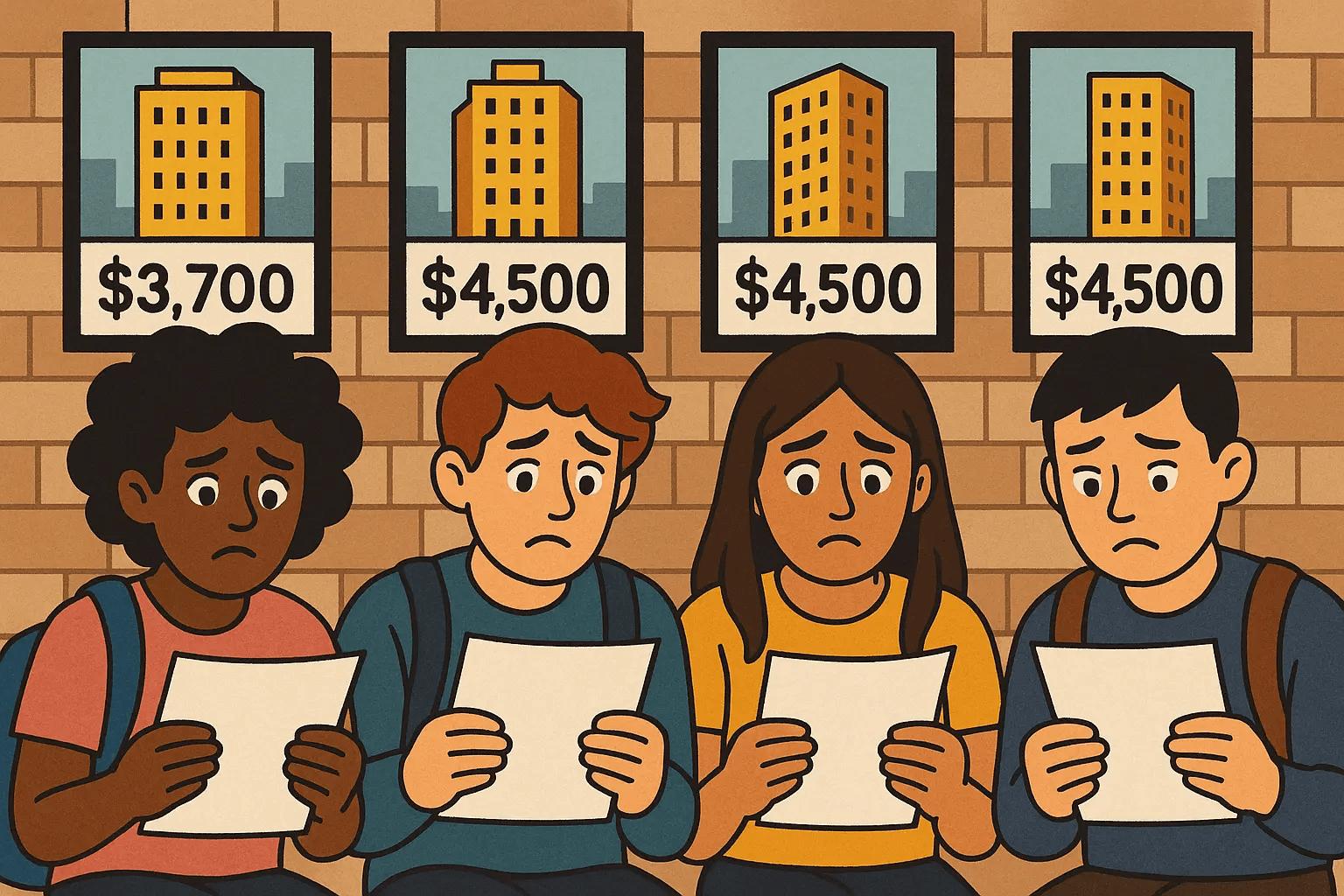
When I got my John Jay acceptance letter, I literally jumped around my bedroom for five minutes. Then I opened my laptop to look for apartments in NYC and wanted to cry. According to PrepScholar data, John Jay College of Criminal Justice has an acceptance rate of 55.2%, meaning that of 100 students who apply, 55 are admitted. That 55% acceptance rate suddenly felt meaningless when I realized I'd need to pay $2,800/month just to have a place to sleep.
Getting accepted to John Jay is honestly just the beginning of your journey. I've watched countless students celebrate their acceptance letters only to realize they're facing a whole other set of hoops to jump through that makes tuition look like pocket change.
The real story isn't about who gets in - it's about who can actually afford to stay in New York City long enough to graduate. Housing costs, transportation expenses, and what you're giving up by living in one of the world's most expensive cities create this brutal secondary screening process that happens after you've already been accepted.
When I first looked at John Jay's costs, I made the same mistake most people make - I focused on tuition. But here's what nobody tells you: your rent will literally cost more than three years of classes combined. Let that sink in. We're talking about $1,500-$3,000 per month for housing versus maybe $6,000 per year for in-state tuition. The housing math is so broken it makes your calculus homework look easy. At least calculus has actual solutions.
Okay, let's break down the brutal reality of what you're actually looking at cost-wise. Grab some tissues - these numbers hurt:
|
Housing Option |
Monthly Cost |
Annual Cost |
Distance to Campus |
|
Manhattan Studio |
$2,800-$3,500 |
$33,600-$42,000 |
0-20 minutes |
|
Brooklyn 1BR |
$2,200-$2,800 |
$26,400-$33,600 |
30-45 minutes |
|
Queens Shared Apt |
$1,200-$1,800 |
$14,400-$21,600 |
45-60 minutes |
|
Bronx Studio |
$1,500-$2,000 |
$18,000-$24,000 |
30-50 minutes |
|
NJ Commuter |
$1,000-$1,500 |
$12,000-$18,000 |
60-90 minutes |
I've watched students get super creative with housing solutions that would blow your mind. My friend Jake sleeps on an air mattress in someone's living room for $800/month. Lisa brings a week's worth of sandwiches because buying lunch near campus would cost her grocery money. Some crash on couches for months, others commute three hours each way from family homes in distant suburbs. The lucky ones find illegal basement apartments in Queens for "only" $1,200 a month.
And here's the kicker that nobody mentions in those glossy brochures - even if you find that miracle $1,200 apartment, you're probably looking at a 2-hour commute each way. That's 4 hours of your life, every single day, just getting to and from school.
Take Maria, a John Jay sophomore from the Bronx. She spends $180 monthly on MetroCards and wakes up at 5:30 AM to make her 8 AM criminology class. While her Manhattan classmates grab coffee with professors after lectures, Maria rushes to catch the 6 train home. Last semester, she missed three career networking events because they ran past 9 PM - too late for her to safely travel home to her family's apartment in Soundview.
Living far from campus isn't just inconvenient - it's academically damaging in ways you don't realize until you're living it. Evening seminars with guest speakers from the NYPD? You'll miss them because of train schedules. Last-minute study sessions before major exams? Not happening when you're facing a two-hour commute home.
Picture this: It's 9 PM, you just finished an amazing networking event with actual FBI agents, and your classmates are heading to grab drinks to continue the conversation. But you? You're sprinting to catch the last express train to Queens because the local stops running at 10:30.
The worst part isn't even the money - it's the constant FOMO. Watching your classmates bond over late-night study sessions you can't attend, missing out on spontaneous coffee chats with professors, always being the one who has to leave early. It gets lonely.

Here's something wild I discovered - tons of students are actually using this trick now. They use John Jay's acceptance as leverage to get better housing deals at other CUNY schools. They'll accept admission to John Jay, then immediately start looking for transfer opportunities to schools in areas with cheaper rent.
Brooklyn College suddenly looks attractive not just because of its programs but because you can find a decent apartment in nearby neighborhoods for $800 less per month. It's academic arbitrage based on housing costs, which honestly affects educational quality.
This strategy has become even more common since BMCC offers guaranteed admission to John Jay through the Community Justice Academy program, allowing students to complete their first 60 credits at a more affordable location before transferring.
John Jay isn't just another college - it's a pipeline into law enforcement, federal agencies, and the court system. But this career focus creates unique pressures that don't show up in acceptance rate statistics. You're not just competing for grades; you're positioning yourself for careers that require specific connections, internships, and networking opportunities that only exist in New York City.
A huge chunk of John Jay criminal justice students are there for one reason: they want to become cops. The NYPD actively recruits from John Jay, and many students see their degree as a stepping stone to the police academy.
This creates a different kind of student body than you'd find at a typical liberal arts college. These students often have clearer career goals, which influences everything from their housing decisions to their course selections. They're building a resume for a specific career path, and that changes the whole game.
Real talk - here's your John Jay Student Housing Decision Checklist:
The FBI, DEA, ATF, and other federal agencies treat John Jay criminal justice programs as their personal recruiting ground. Career fairs aren't about finding any job - they're about landing positions that require security clearances and extensive background checks.
This means you need to maintain good grades and clean records and stable housing situations. The pressure is different when you know federal recruiters are evaluating your entire lifestyle. With John Jay's average GPA requirement of 3.17 according to PrepScholar, you need to balance academic performance with the practical demands of NYC living.
When FBI recruiters show up to career fairs, they're not just looking at your transcript. They want to know you can handle the lifestyle - which includes being available when duty calls. Hard to prove that reliability when you're juggling three subway transfers just to get to campus.
Location isn't just about convenience at John Jay - it's about access to opportunities that can literally determine your entire career trajectory. I've seen students with identical GPAs have completely different outcomes based solely on where they could afford to live.
Manhattan students network at legal events after class, while students from distant suburbs head straight to the train station. Your address becomes your advantage or your limitation in ways that acceptance rates never capture.
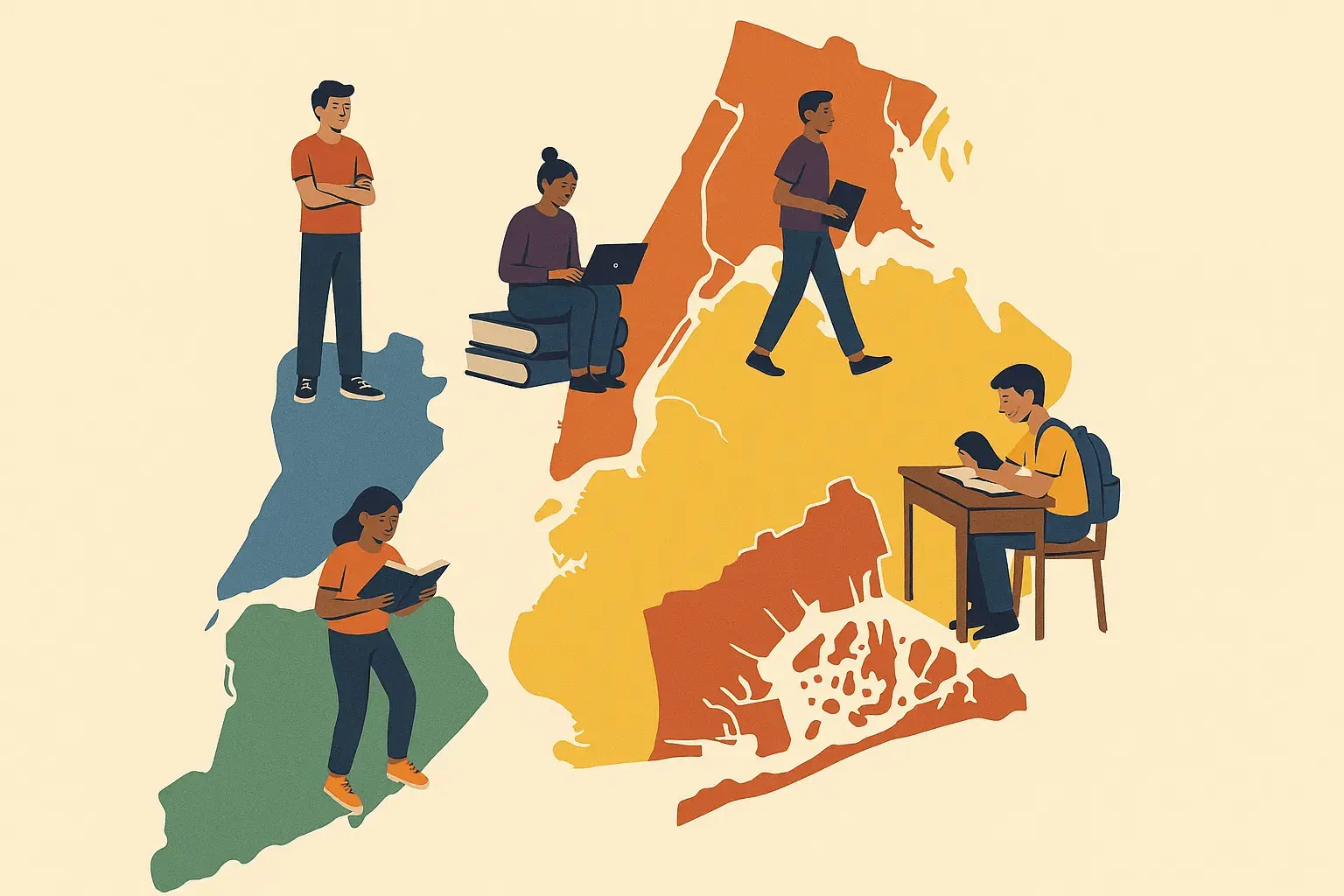
Each NYC borough creates different challenges and opportunities for CUNY John Jay students. Manhattan students pay premium rent but get premium access. Brooklyn and Queens students find middle-ground solutions with moderate commutes.
Bronx students often have the longest journeys but the strongest community networks. Understanding these geographic dynamics is crucial for making smart decisions about where to live and how to maximize your John Jay experience.
Students who can afford Manhattan housing don't just get shorter commutes - they get access to a completely different college experience. They can attend evening lectures, participate in late-night study groups, and show up to networking events without worrying about missing the last train home.
When a federal judge offers to meet with students after a court observation, Manhattan students can say yes. Everyone else has to politely decline and catch their train back to Queens.
Consider James, who pays $3,200 for a studio in Hell's Kitchen. While expensive, he's attended 12 evening seminars this semester, including a private Q&A with an FBI recruiter that led to a summer internship offer. His Brooklyn classmate Sarah, paying $1,800 for a shared apartment in Bed-Stuy, missed the same event because it ended at 10 PM - too late for her to safely travel home via multiple train transfers.
Students from Brooklyn, Queens, and the Bronx become masters of urban logistics. They know which subway lines run late, which coffee shops near campus offer free WiFi for studying between classes, and how to pack meals that won't spoil during long commute days.
Pro tip: Download three different subway apps because the MTA's official one lies about delays. Ramen becomes a food group when you're paying Manhattan rent on a student budget. That "affordable" room in Queens? Add 2 hours of commuting to your daily schedule.
These students often form tight-knit communities based on shared transportation routes and housing challenges. They're resourceful as hell, but they're also missing opportunities that their Manhattan classmates take for granted.

A surprising number of John Jay students actually live in New Jersey and commute into the city daily. These students face unique challenges - they're dealing with PATH train schedules, higher transportation costs, and the complexity of maintaining a social life across state lines.
But they also benefit from lower housing costs and often stronger family support systems. The trade-off is real: save money on rent, but spend more on transportation and miss out on campus life. Three of us from my criminology class split Uber rides home after evening events because the subway gets sketchy.
International students at John Jay don't just need academic acceptance - they need to prove they can survive in New York City before they even get their visa approved. The housing requirements for F-1 visas create an additional barrier that domestic students never face.
These students must navigate both the admissions process and the NYC housing market simultaneously, often from thousands of miles away. It's honestly heartbreaking watching some of these students struggle with challenges that have nothing to do with their academic ability.
|
Student Type |
Housing Challenge |
Average Monthly Cost |
Additional Barriers |
|
Local NYC Resident |
Limited by family location |
$200-$500 (family contribution) |
Long commutes from outer boroughs |
|
Out-of-State Domestic |
No local connections |
$1,500-$2,500 |
Learning NYC housing market |
|
International F-1 |
Visa requirements + housing |
$2,000-$3,000 |
Must secure housing before visa approval |
|
Transfer Student |
Limited time to find housing |
$1,800-$2,800 |
Competing with established students |
International students must prove they have housing arrangements before they can get their student visas approved. This means they're signing leases for apartments they've never seen, in a city they've never visited, based on Craigslist photos and virtual tours.
The potential for disaster is enormous, and many students end up in overpriced, substandard housing because they had no choice but to secure something quickly to meet visa deadlines. Nobody warned me that "walking distance" in Manhattan real estate speak means "if you're an Olympic speed walker with no heavy bags." That 10-minute walk becomes 25 minutes when you're carrying textbooks and it's raining.

International students often cluster in specific neighborhoods and housing arrangements, creating informal support networks that can make or break their academic success. Students from similar cultural backgrounds share apartments, cooking responsibilities, and study strategies.
These housing clusters become crucial for academic survival, but they can also limit exposure to the broader John Jay community and American criminal justice culture that's essential for career success. It's a delicate balance that requires intentional effort to navigate.
John Jay's value isn't just in its classes - it's in the professional connections you make while you're there. But accessing these networks requires more than just being enrolled; you need to be physically present for the informal conversations, networking events, and spontaneous opportunities that happen around campus.
Your housing situation directly impacts your ability to build the relationships that will define your career in criminal justice. John Jay's reputation continues to grow, with BestAccreditedColleges.org ranking John Jay #2 nationwide for criminal justice and law enforcement programs, making these networking opportunities even more valuable.
Landing a good internship at CUNY John Jay is challenging enough, but coordinating internship schedules with housing logistics in NYC creates this complex puzzle that many students just can't solve. Internships often require flexible schedules, late hours, and the ability to stay in the city for networking events.
Students living far from campus or in unstable housing situations find themselves at a huge disadvantage when competing for the best opportunities. It's frustrating because it has nothing to do with their qualifications.

The best criminal justice internships - with the NYPD, district attorney's offices, and federal agencies - expect interns to be available on short notice and willing to work irregular hours. When a detective calls at 6 PM asking if you can observe a late-night operation, you need to be able to say yes.
Students commuting from distant suburbs or dealing with housing instability often have to turn down these career-defining opportunities, limiting their professional development and networking potential.
Last spring, the Manhattan DA's office offered a last-minute opportunity for interns to observe a high-profile arraignment. Students living in Manhattan could arrive within 30 minutes, while those in outer boroughs faced 90-minute commutes during evening rush hour. The three students who attended ended up with job offers, while those who couldn't make it missed a crucial networking opportunity.
Here's your Pre-Internship Housing Planning Template:
Students who live near Manhattan courthouses gain invaluable exposure to the legal system in action. They can observe high-profile trials, attend sentencing hearings, and network with attorneys during court breaks.
This real-world experience is impossible to replicate in textbooks, but it's only accessible to students who can afford to live close to the action. The career advantages compound over time, as these students build relationships with legal professionals who become mentors and job references.

John Jay's alumni network is incredibly powerful, but it's concentrated in NYC-area criminal justice agencies. This creates this geographic lock-in effect where maintaining local connections becomes essential for career advancement.
Students who can't afford to stay in the NYC area after graduation often lose access to the professional networks that make John Jay valuable in the first place. Students need to maintain competitive academic performance, with John Jay requiring an average SAT score of 990 according to PrepScholar data, while simultaneously managing the networking demands of NYC's criminal justice community.
Criminal justice agencies recruit heavily from John Jay, but they expect candidates to be locally available for interviews, training programs, and immediate employment. When the NYPD announces a new hiring cycle, they want candidates who can start the application process immediately and be available for multiple rounds of testing and interviews.
Students who've moved away to find affordable housing often miss these opportunities entirely. It's honestly heartbreaking watching classmates choose between textbooks and MetroCard refills. Or seeing someone drop out not because they can't handle the coursework, but because their landlord raised the rent $400.

The pandemic forced John Jay to experiment with remote and hybrid learning models, and the results are reshaping how students think about the relationship between education and location. For the first time, you can access John Jay's criminal justice programs without committing to NYC's brutal housing market.
But this liberation comes with trade-offs that aren't immediately obvious. Don't get me wrong - plenty of students make it work beautifully. My friend Carmen found three roommates through the John Jay Facebook group, they rent a house in Astoria, and they've created this amazing study group that's helped all of them land internships. It's possible - you just need a game plan.
Online and hybrid programs are allowing students to live in more affordable areas while still accessing John Jay's education and professional networks. You can now live with family in upstate New York or New Jersey while taking classes remotely, dramatically reducing your educational costs.
This is democratizing access to John Jay's programs in ways that traditional acceptance rates never captured. Some students I know have gotten super creative - like the group that rents a crash pad together just for nights when they have early classes or late events. They split a tiny studio four ways and take turns using it. Not glamorous, but it works.

Even hybrid programs require some in-person attendance for labs, seminars, and networking events. This creates new housing strategy needs for students who must occasionally access Manhattan facilities but don't want to commit to full-time NYC living.
Some students are developing creative solutions - short-term rentals for intensive weeks or sharing temporary housing with classmates during required on-campus periods.
Your Hybrid Learning Housing Strategy Checklist:
Remote internship opportunities are expanding access to John Jay's criminal justice network without requiring full-time NYC residency. Federal agencies, in particular, are offering virtual internship programs that allow students to gain experience and build professional relationships from anywhere.
This is changing the value proposition of John Jay acceptance, making it accessible to students who previously couldn't afford the NYC lifestyle. Let's be honest - some of you reading this are probably thinking "I'll just tough it out, live cheap, and make it work." I respect that hustle, but make sure you're not setting yourself up to burn out by sophomore year.
Look, I'm not trying to scare you away from John Jay. It's an incredible school that can launch your criminal justice career. But go in with your eyes wide open about what it really takes to succeed here.
John Jay's acceptance rate is just the beginning of your story. The real challenge isn't getting accepted - it's building a sustainable life in New York City that allows you to take full advantage of everything the college offers.
Housing costs, where you can afford to live, and professional networking opportunities create invisible barriers that shape who succeeds, regardless of academic qualifications. Understanding these dynamics before you apply can help you make smarter decisions about housing, financing, and career planning.
The students who thrive at John Jay aren't necessarily the ones with the highest GPAs - they're the ones who figure out how to navigate NYC's complex ecosystem of education, housing, and professional opportunities. Plan smart, get creative with housing, and don't be too proud to ask for help. You've got this - you just need to know what you're really signing up for.
Your acceptance letter is an invitation to join one of the country's premier criminal justice programs. Whether you can accept that invitation depends on much more than your academic credentials - it depends on your ability to solve the practical challenges of living and learning in one of the world's most expensive and dynamic cities.
Bottom line: Factor housing into your acceptance decision just as much as you factor in the academics. This isn't just about getting in - it's about setting yourself up to actually graduate and launch your career.

Household supplies can be changed or decreaased at Outpost Club’s discretion, or based on supply availability. Outpost is not responsible for temporary losses of utility service. Outpost Club is not responsible for any damages due to absence of any supplies or utilities


If you have a sales related question please call
680-688-7678

 Hot Deals