Medical Billing and Coding Salary NYC: What You'll Actually Earn in the Big Apple
Jan 7, 2026

Jan 7, 2026
Look, let's cut through the fluff and talk real numbers. New York City's medical billing and coding professionals make some serious money - we're talking about roughly 7,860 people working in this field across the state, according to the U.S. Bureau of Labor Statistics. That makes New York the fifth-biggest employer of medical billers and coders in the country, which means one thing: everyone's fighting to hire good people.
Here's the thing - medical billing and coding salary NYC numbers consistently blow away what you'd make pretty much anywhere else. And yeah, I know what you're thinking: "But what about rent?" Stick with me here.
Alright, let's talk money. NYC's medical billing and coding salary market doesn't mess around - you're going to make more here than pretty much anywhere else. It's not just about adjusting for the crazy cost of living (though that's part of it). It's because there's a ton of healthcare here and not enough people who actually know what they're doing.

Here's what's actually happening: while most places in the country start people around $35,000-$40,000, NYC consistently starts you between $45,000-$55,000. The median wage per hour here is $29 versus $24 everywhere else, according to the U.S. Bureau of Labor Statistics. That extra five bucks an hour adds up fast.
The city's got over 60 hospitals, thousands of private practices, and specialty clinics everywhere. They're all competing for the same pool of qualified people, which means they have to pay up. From the massive hospital networks in Manhattan to the growing practices in Queens and Brooklyn, everybody's trying to outbid each other for talent.
Here's the breakdown of what different types of places actually pay:
|
NYC Healthcare Employer Type |
Average Annual Salary Range |
Benefits Rating |
|
Major Hospital Systems |
$55,000-$75,000 |
Excellent |
|
Specialty Hospitals |
$60,000-$80,000 |
Excellent |
|
Large Group Practices |
$50,000-$65,000 |
Good |
|
Private Practices |
$45,000-$60,000 |
Variable |
|
Ambulatory Surgery Centers |
$52,000-$70,000 |
Good |
Let me be honest with you - breaking into healthcare without experience can be scary. But here's the good news: NYC employers know they need to pay decent money from day one or nobody's going to show up. You're looking at $45,000-$55,000 to start, and some places will go up to $60,000 if you've got your act together education-wise.
Your first medical coder salary depends on a few things that actually matter. If you went through a solid training program, you can negotiate higher. Bigger places usually have more structured pay scales (and higher starting salaries). Don't sleep on internships either - a lot of NYC healthcare places use these as extended job interviews and will offer you a position if you don't screw it up.
Here's something nobody talks about: the demand for medical billing and coding professionals is actually growing. The BLS is predicting this field will grow by 9% between 2023 and 2033, which is way faster than most other jobs. For students trying to figure out how to afford living here while starting their career, understanding affordable student housing options in NYC is crucial because rent will eat your salary if you're not careful.
Yeah, Manhattan medical billing and coding salary positions typically pay 10-15% more than the same job in Brooklyn, Queens, or the Bronx. But before you get excited, let me break down why that might not matter as much as you think.
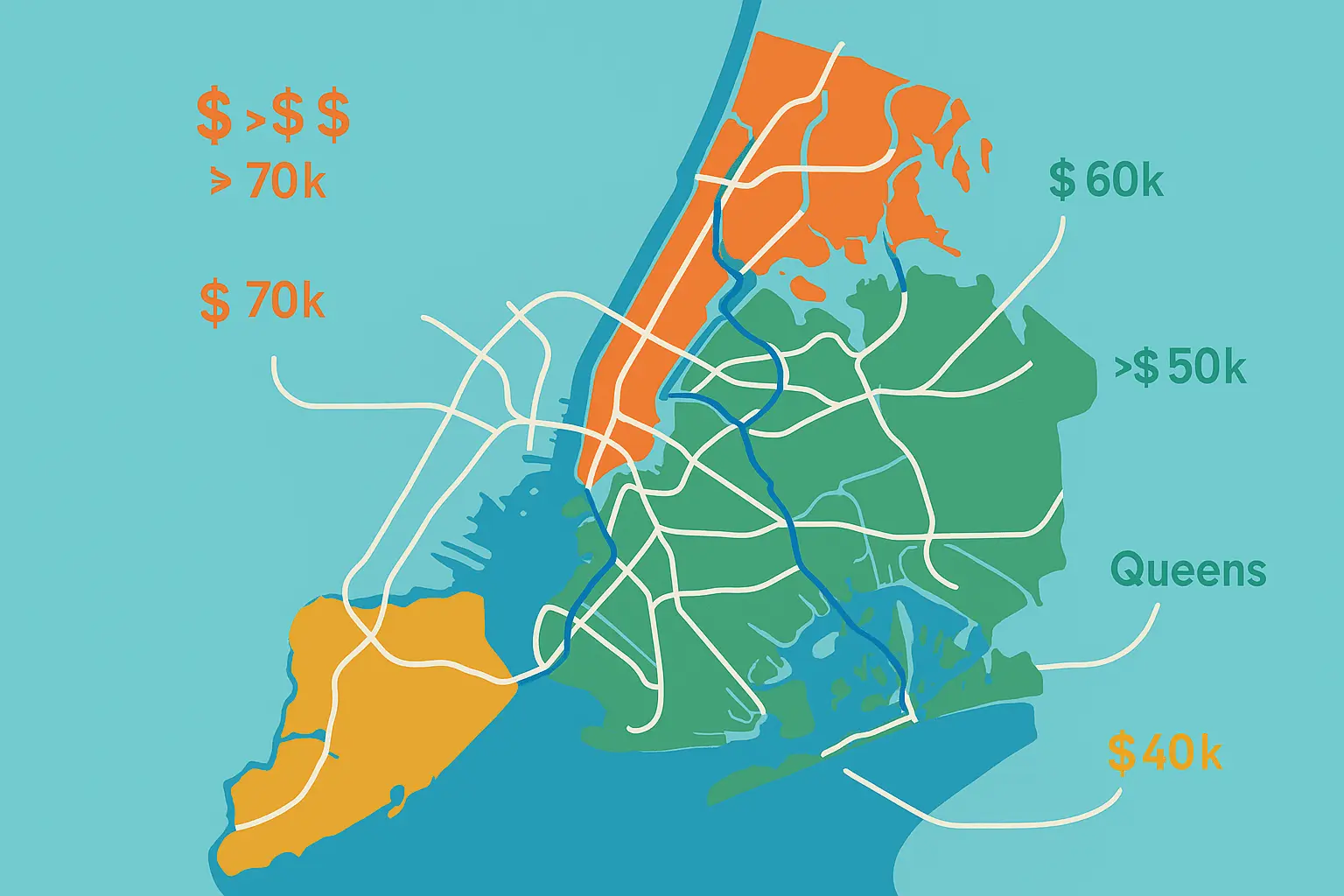
A $50,000 job in Queens might actually put more money in your pocket than a $55,000 Manhattan gig once you factor in MetroCard costs, overpriced lunch, and just the general expense of working in Midtown. I'm not saying don't consider Manhattan - just do the actual math.
Brooklyn's healthcare scene has exploded recently. Major hospital systems there are offering packages that compete with Manhattan while your commute doesn't make you want to quit life. A lot of people are finding that living in Brooklyn gives them the best of both worlds.
Queens has some solid opportunities too, especially around the big hospital areas. Jamaica Hospital, St. Francis, NewYork-Presbyterian Queens - they're all hiring regularly and the pay balances out when you consider you're not spending $15 on a sandwich every day.
Don't ignore the Bronx either. Montefiore and BronxCare offer great entry-level opportunities with benefits packages that can make your total compensation pretty attractive.
Real Example: My friend Sarah finished her program in 2023 and got three offers: $48,000 at a Manhattan specialty practice, $52,000 at NYU Langone Brooklyn, and $46,000 at a Queens medical center. After actually calculating commuting costs and thinking about work-life balance, she took Brooklyn. Turns out she's making the most money and has way less stress.
Here's the deal - big hospital systems almost always pay more and have better benefits than small private practices. Specialty hospitals? That's where the real money is.
Hospital systems like NYU Langone, Mount Sinai, and NewYork-Presbyterian consistently offer the highest starting salaries. They've got structured pay scales, regular reviews, and clear paths to move up. You know what you're getting into.
Private practices are hit or miss. Some specialty practices (think cardiology, orthopedics, dermatology) can match hospital pay, but a lot of smaller places offer less money in exchange for potentially more flexibility or faster advancement. The medical coding salary difference can be pretty significant.
Specialty hospitals are the sweet spot for a lot of people. Places that focus on cardiac care, cancer treatment, or orthopedics often pay premium rates because they need people who can handle complex coding and expensive procedures. Ambulatory surgery centers have become really attractive too - hospital-level pay with more predictable schedules and way less bureaucracy.
Once you've got some experience under your belt, this is where things get interesting. With 3-5 years of solid experience, you're looking at $60,000-$75,000. With 7-10 years? $75,000-$95,000 or more. The key is making smart moves that build both your skills and your reputation.

Senior coding specialists in NYC's big hospital systems often make $80,000-$100,000+, especially if they specialize in complex stuff like surgical coding, emergency department coding, or inpatient DRG assignment. These jobs require you to actually know what you're doing, but the pay reflects that.
Revenue cycle management is another solid path. If you understand the whole process from when a patient walks in to when the bill gets paid, you become really valuable. These roles start around $70,000 and can hit $120,000+ for senior positions.
Compliance and audit roles have gotten huge lately. Healthcare places need people who can make sure coding is accurate and they're not going to get in trouble with regulators. These specialized positions often pay $75,000-$110,000, depending on how much responsibility you're taking on.
Let's be real about certifications - they're not just resume fluff. They directly translate to more money in your paycheck. The Certified Professional Coder (CPC) typically adds $8,000-$12,000 to your annual medical coding and billing salary. The Certified Coding Specialist (CCS) can get you even more, especially in hospital settings. According to the AAPC, certified coders earn 8.5% more than non-certified coders.
Specialized certifications open doors to the really good-paying jobs. The CCS-P credential is gold in large medical practices. People with this certification often make $10,000-$15,000 more than those without it.
Compliance certifications like CCO or CHC can seriously boost your earning potential. These often lead to roles paying $85,000-$130,000+ because healthcare organizations are terrified of compliance issues.
Don't overlook specialty certifications either. If you get certified in rheumatology, cardiology, or orthopedic coding, you can command significant medical billing and coding salary premiums when working with practices that specialize in those areas.
Getting Certified - What You Actually Need to Do:
Management roles are the fastest way to serious pay increases. Billing and coding supervisors typically make 25-40% more than regular staff, with salaries ranging from $65,000-$85,000 depending on how big your team is and how complicated your operation is.
Department managers see even bigger jumps. Managing a billing department or coding team at a major NYC hospital can get you $90,000-$130,000+. These jobs combine technical knowledge with leadership skills, which makes you really valuable. The medical biller coder salary potential peaks in these management positions.
Revenue cycle directors are at the top of the food chain. These executive-level positions, running entire revenue cycle operations, can command $120,000-$180,000+ in NYC's major health systems.
Here's the thing about getting into management - it's not just about being there the longest. You need to develop leadership skills, understand how healthcare works beyond just coding, and often get additional education in healthcare management or business.
Real Career Path: Michael started as an entry-level coder at Mount Sinai in 2018 making $48,000. By 2021, he had his CCS and got promoted to senior coder at $68,000. In 2024, after finishing a healthcare management certificate, he became a coding supervisor earning $85,000. That's a 77% salary increase over six years.
Remote work has changed everything. A lot of NYC healthcare organizations now offer remote positions that pay city-level salaries no matter where you live. This creates some pretty amazing opportunities if you can get high NYC pay while living somewhere cheaper.
Hybrid setups have become really common. Many jobs offer 2-3 days remote while keeping full NYC salaries. This often gives you the best of both worlds - good pay with lower commuting costs and better work-life balance.
Some employers are adjusting pay based on where you actually live now. If you get hired for a NYC position but live somewhere with lower costs, some places might adjust your salary. But many healthcare employers are keeping consistent pay scales to attract the best people regardless of location.
Remote work often comes with different perks. While base salaries stay competitive, some remote positions offer tech stipends, home office allowances, or flexible PTO instead of things like on-site parking or cafeteria subsidies.
If you want to make serious money in this field, you need to specialize. Certain areas of healthcare pay premium rates for billing and coding expertise, especially when you're dealing with complex procedures, new technology, or compliance requirements that make most people's heads spin.

Surgical coding is one of the highest-paying specializations out there
Surgical coding is one of the highest-paying specializations out there. If you can master complex surgical procedures, understand anatomy inside and out, and accurately code multi-procedure cases, you're looking at $75,000-$95,000+ in NYC. The learning curve is steep, but the financial rewards are worth it.
Emergency department coding requires unique skills and pays really well. ED coders have to work fast while staying accurate across everything from broken bones to heart attacks. This specialization typically gets you $70,000-$90,000, with experienced people earning even more. The medical billing and coding salary premium for ED specialists reflects how challenging this work actually is.
Interventional cardiology and radiology coding have become seriously lucrative. These specialties involve complex procedures with high dollar values, so accuracy is crucial. Specialists in these areas often earn $80,000-$100,000+ because of the technical expertise required.
Oncology coding presents both challenges and opportunities. Cancer treatment involves complex medication coding, radiation therapy procedures, and intricate treatment protocols. People specializing in oncology coding often get premium medical billing and coding salary packages because of the specialized knowledge required.
|
Specialty Area |
Salary Premium |
What You Need to Know |
How Much Demand |
|
Surgical Coding |
20-30% |
Advanced anatomy, procedure knowledge |
High |
|
Emergency Department |
15-25% |
Speed, accuracy, diverse conditions |
High |
|
Interventional Cardiology |
25-35% |
Complex procedure coding, high-value cases |
Very High |
|
Oncology |
20-30% |
Treatment protocols, medication coding |
High |
If you know your way around electronic health records systems, healthcare technology, and data analytics, you can get 15-20% salary premiums in NYC's tech-forward healthcare market. Organizations are increasingly valuing technical skills alongside coding knowledge.
EHR expertise has become essential for the better-paying positions. If you understand multiple EHR systems (Epic, Cerner, Allscripts) and can optimize workflows, you're looking at $65,000-$85,000+. This technical knowledge makes you invaluable during system changes and upgrades.
Healthcare analytics is a growing field with excellent pay potential. If you can analyze coding data, identify trends, and provide insights that help healthcare organizations, you often transition into roles paying $80,000-$120,000+.
Revenue cycle technology specialists combine coding knowledge with technical skills to optimize billing systems and processes. These hybrid roles often command salaries in the $75,000-$100,000+ range as healthcare organizations try to improve efficiency and cut costs.
Telehealth billing expertise exploded in value after 2020. People who understand remote care coding, virtual visit documentation requirements, and telehealth reimbursement rules often earn 10-20% more than traditional coding roles.
If you want to maximize your salary in NYC's competitive market, you need to be strategic about your career choices. This isn't just about having technical skills - you need to understand industry trends, network strategically, and continuously adapt to changing healthcare requirements.
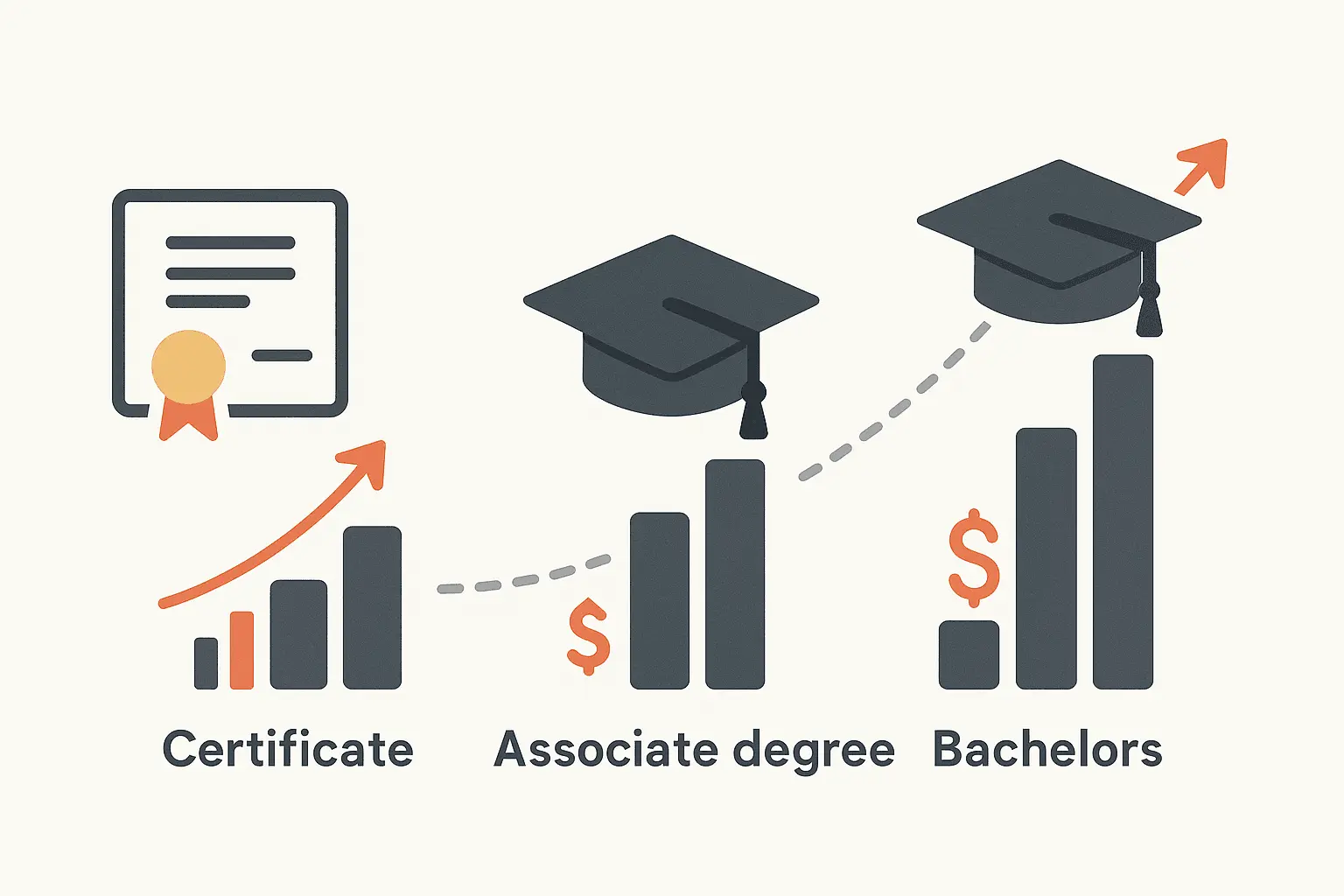
Here's the thing about education - it matters, and the numbers prove it. People with associate degrees consistently out-earn certificate program graduates by 10-15%. This isn't just theory - NYC employers prefer comprehensive educational backgrounds when they're filling the better positions.
Bachelor's degrees open doors that certificate holders rarely see. While you don't always need a bachelor's for coding positions, it becomes essential for revenue cycle management, compliance roles, and department leadership positions.
Continuing education pays measurable returns. People who pursue additional certifications, attend conferences, and complete specialized training see average salary increases of 5-8% annually, compared to 2-3% for those who don't invest in ongoing education.
Online vs. traditional education? Honestly, it matters less than program quality and accreditation. Plenty of successful NYC professionals completed online programs, but employers consistently value programs accredited by CAHIIM.
Real Investment Story: Jennifer started with a certificate program and earned $47,000 in her first NYC coding position. After completing an associate degree while working, she got promoted with a 15% salary increase to $54,000. Three years later, she finished a bachelor's in health information management and moved to a revenue cycle analyst role earning $72,000 - a 53% increase from where she started.
Look, I know networking sounds like corporate BS, but in NYC's healthcare community, it's how you actually get the good jobs. Personal relationships and professional reputation often determine who gets access to the highest-paying positions.
AHIMA and AAPC local chapters regularly host events where hiring managers and senior professionals share job openings and career advice. Active members often learn about opportunities before they're posted anywhere public.
Healthcare conferences and seminars give you two things - continuing education credits and networking opportunities. The relationships you build at these events often lead to job referrals, salary negotiation advice, and insider knowledge about which employers offer the best packages.
LinkedIn has become essential. A well-maintained profile showcasing your certifications, experience, and professional activities attracts recruiters and hiring managers. Many high-paying positions get filled through professional networks rather than job boards.
Mentorship relationships provide invaluable career guidance. Experienced professionals can offer salary negotiation advice, career path recommendations, and introductions to key decision-makers in NYC's healthcare community.
Networking Action Plan:
The healthcare industry is evolving fast, and those changes are creating new opportunities and challenges for medical billing and coding professionals. If you adapt to emerging trends, you'll be positioned for higher salaries and more secure career prospects.

Here's the real talk on automation and AI - yes, some basic coding tasks might get automated, but these technologies are also creating new opportunities for professionals who can work with advanced systems and provide higher-level analytical support, often at premium pay levels.
The automation fears are overblown if you're actually skilled. While basic coding might become automated, complex cases, audit functions, and system oversight require human expertise. People who embrace technology and develop complementary skills often see salary increases rather than job losses.
AI-assisted coding is creating new roles instead of eliminating existing ones. Healthcare organizations need people who can train AI systems, review automated coding for accuracy, and handle exceptions that require human judgment. These hybrid roles often command premium salaries in the $80,000-$110,000+ range.
Data analytics skills have become increasingly valuable. If you can interpret coding data, identify patterns, and provide insights to improve revenue cycle performance, you often transition into analyst roles paying $75,000-$100,000+.
Machine learning and predictive analytics are creating entirely new career paths. Healthcare organizations need people who understand both coding and data science to optimize their revenue cycles and predict reimbursement trends.
The healthcare industry's shift toward value-based care models is creating demand for people who understand quality metrics, outcome-based billing, and risk adjustment coding. This leads to new specialized positions with premium pay packages.
Value-based care requires different skills than traditional fee-for-service billing. People who understand risk adjustment, quality measures, and outcome tracking often earn $70,000-$95,000+ as healthcare organizations transition to these new payment models.
Population health management creates new coding requirements. People who can handle chronic care management billing, care coordination documentation, and preventive care coding are increasingly valuable to healthcare organizations.
Quality reporting has become a specialized field. Healthcare organizations need people who understand HEDIS measures, CMS quality programs, and value-based payment methodologies. These roles often command salaries in the $75,000-$105,000 range.
Risk adjustment coding for Medicare Advantage plans represents a high-growth, high-pay specialty. People with expertise in HCC coding and risk score optimization often earn $80,000-$110,000+ because of the direct financial impact of their work.
COVID-19 permanently changed healthcare delivery and billing practices, creating both challenges and opportunities for billing and coding professionals in NYC. New service lines and billing requirements are generating demand for specialized expertise.
Telehealth billing expertise commands premium rates. The explosion in virtual care created demand for people who understand telehealth coding, documentation requirements, and reimbursement rules. These specialists often earn 10-20% more than traditional coding roles.
Remote patient monitoring represents a growing specialty. As healthcare organizations expand RPM programs, they need people who understand the unique billing and coding requirements for these services.
Mental health billing has expanded dramatically. The increased focus on behavioral health services created demand for people who understand mental health coding, particularly for telehealth-delivered services.
Effective salary negotiation in NYC's healthcare market requires understanding the competitive environment where employers often expect candidates to negotiate and have budgeted accordingly. You need to do your homework and develop strategies that work.

AHIMA and AAPC salary surveys provide region-specific data that's invaluable for negotiations. These annual reports consistently show NYC compensation 20-30% above national averages, giving you concrete data to support your salary requests.
Glassdoor and PayScale offer employer-specific insights, but use them carefully. NYC healthcare salaries can vary significantly even within the same organization based on department, shift, and specific responsibilities.
Professional networking provides the most accurate salary intelligence. Colleagues in similar roles can offer real-world insights into what specific employers actually pay, not just what they advertise.
Industry recruiters often have the most current salary information. Even if you're not actively job searching, maintaining relationships with healthcare recruiters can provide valuable market intelligence.
NYC healthcare employers often provide substantial benefits packages that can add 25-35% to total compensation value. You need to evaluate health insurance, retirement contributions, professional development funds, and other benefits when assessing job offers.
Benefits packages in NYC healthcare can be substantial. Major hospital systems often provide health insurance worth $15,000-$20,000 annually, retirement contributions of 3-6% of salary, and professional development funds of $2,000-$5,000 per year.
Paid time off varies significantly between employers. Some organizations offer generous PTO packages that effectively increase your hourly rate, while others provide minimal time off that should factor into your salary negotiations.
Tuition reimbursement and continuing education benefits can be worth thousands annually. Many NYC healthcare employers offer $3,000-$8,000 in annual education benefits that support career advancement.
Flexible scheduling and remote work options have real monetary value. The ability to work from home 2-3 days per week can save $2,000-$4,000 annually in commuting costs alone.
Healthcare employers in NYC often expect salary negotiations and have structured approaches to compensation discussions. You need to understand timing, presentation methods, and alternative compensation strategies that resonate with healthcare decision-makers.
Timing matters in healthcare negotiations. Budget cycles, fiscal year planning, and department staffing needs all influence an employer's flexibility on salary offers.
Document your value proposition clearly. Healthcare organizations respond well to data-driven arguments about productivity, accuracy rates, and process improvements you can bring to their operations.
Consider non-salary negotiations when base pay is fixed. Many healthcare employers have more flexibility with start dates, vacation time, professional development funds, or flexible scheduling than with base salary.
Performance review preparation is crucial for ongoing salary growth. Document your achievements, error rates, productivity metrics, and any process improvements throughout the year to support annual raise requests.
Salary Negotiation Prep List:

For medical billing and coding professionals in NYC, finding the right living arrangement that supports career growth and financial goals is crucial. Housing stability, community connections, and professional support can significantly impact career advancement and salary optimization strategies.
Your living situation affects your career in ways you might not think about. Commute times impact your energy levels and ability to pursue continuing education. Housing costs influence how aggressively you need to negotiate salaries. Community connections can provide networking opportunities and professional support.
Flexible living arrangements become particularly valuable when you're advancing your career. Whether you're pursuing additional certifications, attending evening classes, or networking at professional events, having a living situation that supports these activities can accelerate your career growth.
Understanding the real cost of living in NYC becomes essential when planning your medical billing and coding career, especially when considering how much you need to make to live comfortably in the city while building your professional credentials.
The Outpost Club understands the unique needs of healthcare professionals in NYC. Our community-focused approach provides the stability and support that medical billing and coding professionals need while building their careers. With flexible lease terms, all-inclusive pricing, and a network of professionals, we create an environment where you can focus on advancing your career rather than worrying about housing logistics.
Professional growth requires both financial stability and community
Professional growth requires both financial stability and community support. When you're not stressed about housing costs or isolated in your living situation, you can dedicate more energy to skill development, networking, and career advancement. This focus often translates directly into faster salary growth and better job opportunities.
For those considering their housing options while starting their healthcare career, understanding when to start looking for apartments can make the difference between career success and financial stress.
Ready to optimize your living situation to support your healthcare career goals? Explore how Outpost Club's community-driven approach can provide the foundation you need to maximize your earning potential in NYC's competitive medical billing and coding market.
NYC's medical billing and coding salary nyc market offers exceptional opportunities for people willing to invest in their careers strategically. The combination of high base salaries, solid benefits, and multiple ways to advance creates a compelling environment for long-term career growth.
Success in this market requires more than just technical skills - you need to understand industry trends, network strategically, and continuously adapt to changing healthcare requirements. People who embrace technology, pursue specialized certifications, and develop leadership capabilities consistently achieve the highest pay levels.
Your career trajectory in NYC's healthcare market depends on the choices you make today. Whether you're just starting out or looking to advance to senior positions, the strategies outlined here provide a roadmap for maximizing your earning potential in one of the nation's most competitive and rewarding healthcare markets.

Household supplies can be changed or decreaased at Outpost Club’s discretion, or based on supply availability. Outpost is not responsible for temporary losses of utility service. Outpost Club is not responsible for any damages due to absence of any supplies or utilities


If you have a sales related question please call
680-688-7678

 Hot Deals