Moving from Florida to New York: The Complete Insider's Guide to Making Your Interstate Leap
Dec 2, 2025
Dec 2, 2025
You're actually going against the grain here - recent data shows that the New York metro lost nearly 500,000 residents between 2020 and 2022, with tons of them heading to Florida. But hey, the reverse trend is happening too, and there's something to be said for zigging when everyone else is zagging.
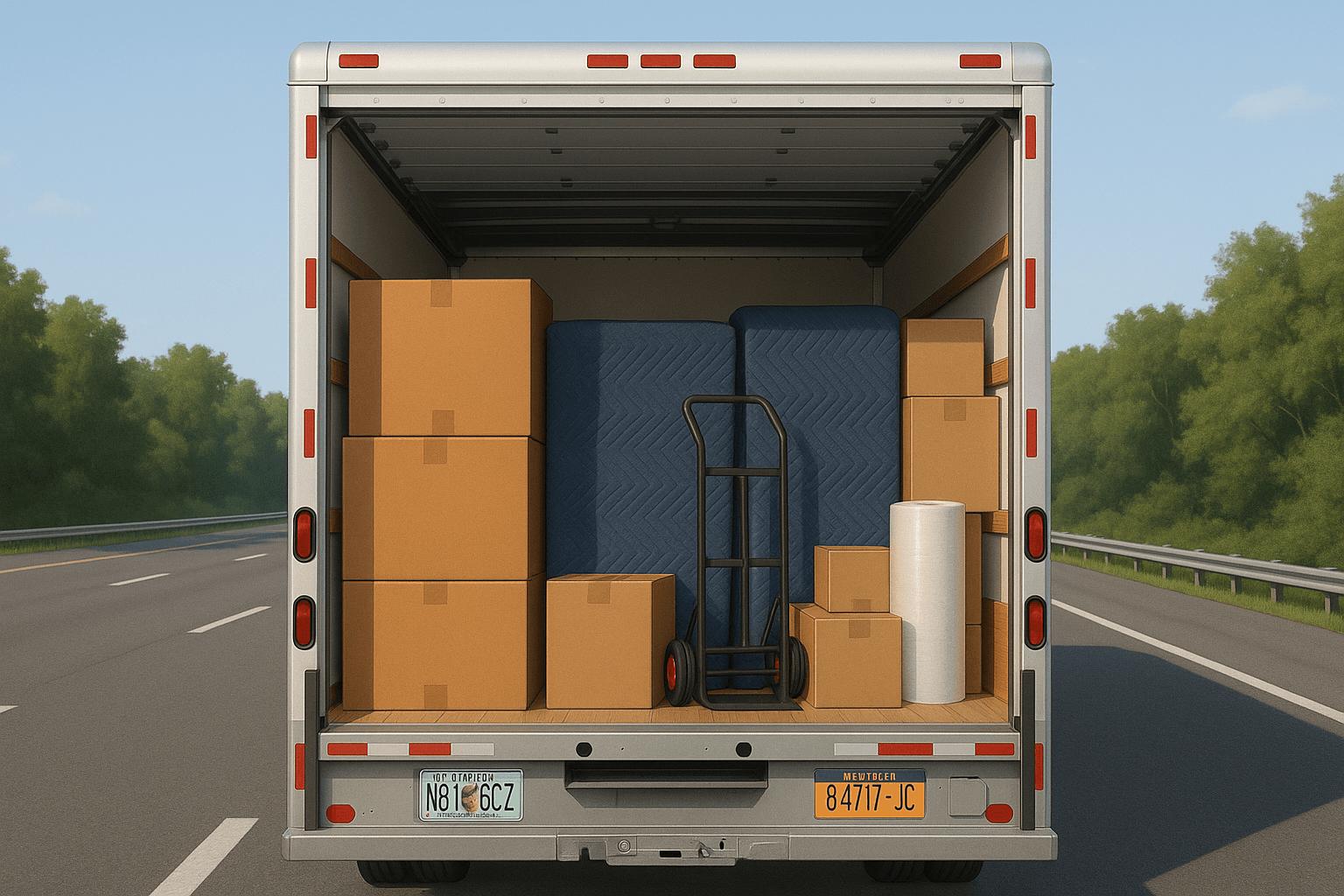
I've helped dozens of people make this move, and here's what I've learned - timing can make or break everything. That 8-12 week planning window isn't just some random suggestion I pulled out of thin air. It's the difference between getting the moving company you want at a reasonable price versus settling for whoever's available at highway robbery rates.
Peak moving season (May through September) is absolutely brutal. Everyone and their mother is trying to move, which means you're competing for trucks, crews, and reasonable prices. If you can swing it, moving during the off-peak months will save your sanity and your wallet. Though I'll warn you - winter moves come with their own special brand of misery that Florida folks aren't prepared for.
Here's your survival timeline:
Here's the thing nobody tells you - "New York" isn't just one place. It's like saying you're moving to "Florida" when you could end up in Miami Beach or some random town in the Panhandle. Manhattan will drain your bank account faster than you can say "bodega," while Buffalo might actually be cheaper than where you're coming from in Florida.
I always tell people to visit first, and I mean really visit - not just a long weekend where you hit all the tourist spots. Stay in different neighborhoods, ride the subway during rush hour, grocery shop, do laundry. What looks amazing on Instagram might feel completely wrong when you're actually living there.
Understanding different neighborhoods becomes crucial when making this transition, as coolest neighborhoods in Brooklyn offer unique character and community vibes that can ease the culture shock of leaving Florida's more spread-out lifestyle.
|
New York Region |
Average Rent (1BR) |
Winter Temperature |
Lifestyle Focus |
Commute to NYC |
|
Manhattan |
$3,500-$5,000 |
32-45°F |
Urban/Cultural |
N/A |
|
Brooklyn |
$2,800-$3,800 |
32-45°F |
Creative/Diverse |
20-45 min |
|
Albany |
$1,200-$1,800 |
20-35°F |
Government/Historic |
2.5 hours |
|
Buffalo |
$900-$1,400 |
15-30°F |
Industrial/Affordable |
5+ hours |
|
Rochester |
$1,000-$1,500 |
18-32°F |
Tech/Education |
4+ hours |
Okay, let's talk about the elephant in the room - money. Specifically, how much more of it you're going to need. Professional movers alone will run you $3,000-$8,000, and that's before you factor in all the other costs that nobody warns you about.
But here's what really gets people - the ongoing monthly expenses. Your cute $1,500 Florida apartment? Good luck finding anything comparable under $3,000 in most of New York. And that's just rent.
Take Sarah - she moved from Tampa to Brooklyn thinking she was prepared. Her Tampa rent was $1,800 for a decent two-bedroom. In Brooklyn? $3,200 for something smaller, plus a $500 broker fee (because apparently paying someone to unlock doors is a thing here), plus $6,400 upfront because New York landlords want their money yesterday, today, and tomorrow. Her total moving bill hit $12,000, and she thought she was being conservative with her estimates.
New York doesn't mess around when it comes to proving you actually live here. They want paper trails, documentation, and basically your entire life history before they'll accept that you're a real resident. This becomes especially important when you're dealing with the massive tax implications of leaving Florida's tax paradise.
Start hoarding those utility bills the second you get them. Some places won't even look at you unless you've got 30+ days of bills in your name. It's like they think people are just pretending to live in New York for fun or something.

Your bureaucratic survival kit:
Here's the part that's going to sting - going from Florida's zero state income tax to New York's 8.82% rate feels like getting punched in the gut every April. I remember staring at my first New York tax bill thinking there had to be some mistake. Spoiler alert: there wasn't.
The timing of your move actually matters for taxes. Move in January versus December, and you could be looking at completely different tax situations. Get yourself a tax professional who knows interstate moves - their fee will seem like pocket change compared to what you could lose by doing this wrong.
The financial reality is harsh, especially considering that in 2023 alone, 1,800+ millionaires officially changed their residency to another state from New York. If people with that kind of money are running from New York taxes, you know they're serious.
I learned this the hard way - there are SO many scam moving companies targeting this exact route. Some guy quoted me half the price of everyone else, and alarm bells should have been going off. Always, ALWAYS check their DOT numbers. It takes two minutes and could save you from watching your stuff disappear into the void.
Get at least three quotes, and I mean detailed quotes with everything spelled out. Companies that know the Florida-to-New York route understand things like which bridges your truck can actually fit under and where traffic turns into a parking lot for hours.
Your moving company reality check:
Look, I'm going to be real with you - half the stuff in your Florida home is going to be useless in New York. That lightweight patio furniture? Forget about it. Your collection of flip-flops? You'll need maybe two pairs. All those sundresses? They'll spend 8 months of the year in storage.
Think of this as your chance to start fresh. Sell or donate the stuff that doesn't make sense, and use that money to buy things you'll actually need - like a coat that costs more than your car payment but will keep you from freezing to death.

New York's housing market moves at warp speed and shows zero mercy to the unprepared. Have all your financial documents ready to go - pay stubs, bank statements, references, your firstborn child's social security number. In competitive markets, hesitation means watching your dream apartment get snatched up while you're still thinking about it.
The upfront costs will make you question everything. First month, last month, security deposit, broker fee - you're looking at 3-4 months' rent just to get the keys. That $3,000 apartment suddenly needs $12,000 upfront, and yes, they want it all right now.
The housing landscape is shifting though. Current political changes are creating movement, as "New Yorkers are moving to Florida" KTRH reports. This might actually work in your favor - more inventory means better options for people moving in.
Do yourself a massive favor and get temporary housing for your first month. Extended stay hotels, short-term rentals, corporate housing - whatever it takes. I know it seems like you're throwing money away, but trust me on this one.
This gives you time to actually explore neighborhoods instead of making desperate decisions from 1,200 miles away. You'll get a feel for commute times, noise levels, and whether you can actually handle living next to that 24-hour construction project.
Mark moved from Orlando and spent his first month in a furnished corporate apartment in Midtown for $4,500. Yeah, it hurt his wallet, but it let him explore Brooklyn, Queens, and Manhattan before settling on Astoria. He ended up saving $800 a month on rent and found a neighborhood that actually fit his personality instead of just his initial Google searches.
Brace yourself - this move is going to hurt your bank account in ways you haven't imagined. Your $2,000 Florida apartment might cost $6,000 in Manhattan, $3,500 in Brooklyn, or maybe $2,500 in Albany if you're lucky. And that's just the beginning.
The broker fees in NYC are legalized robbery. You'll pay someone $3,000 to show you three apartments, two of which smell like old cheese and one that's clearly a converted closet. But somehow, when you finally find "the one," you'll hand over that money with a smile because the alternative is living in your car.
|
Expense Category |
Florida Average |
New York City |
Upstate NY |
Reality Check |
|
|
1BR Apartment |
$1,800 |
$3,500 |
$1,400 |
Prepare for sticker shock |
|
|
Utilities |
$150 |
$200 |
$180 |
Not terrible, but higher |
|
|
Groceries |
$400 |
$550 |
$450 |
$8 sandwiches are real |
|
|
Transportation |
$200 |
$127 (MetroCard) |
$300 |
Car |
Car vs. subway trade-off |
|
Dining Out |
$300 |
$450 |
$320 |
Everything's more expensive |
Car ownership in NYC is like having an expensive pet that you never get to play with. Parking runs $300-$600 monthly, and street parking means playing musical chairs with alternate side regulations that make absolutely no sense.
A monthly MetroCard costs $127, which actually replaces your gas, reduces your insurance, and eliminates the stress of finding parking. The math works out better than you'd think, but the lifestyle change takes some serious adjustment.
Everything costs more. Groceries, dining, entertainment - expect 25-40% increases across the board. That $4 sandwich from Florida? It's $8 here, and somehow you'll convince yourself it's worth it because "the bread is artisanal" or whatever.
But here's the silver lining - New York gives you incredible free stuff. Museums, concerts, festivals, parks that are better than anything you paid for in Florida. Your entertainment budget might actually balance out if you take advantage of what the city offers instead of trying to recreate your Florida lifestyle exactly.
That $500-1,500 for winter gear isn't a suggestion - it's survival money. I watched a guy from Tampa try to tough out December in sneakers and a hoodie. Spoiler alert: he lasted exactly one week before he was at Uniqlo buying everything they had in his size.
Look, I'm not going to sugarcoat this - your first New York winter might nearly break you. I showed up from Miami with a light jacket thinking "how cold could it really be?" Big mistake. HUGE mistake. You need real gear, not Florida "winter" clothes.

Your winter survival shopping list:
New York homes work completely differently than Florida homes. You'll encounter heating systems you've never seen before - oil heat, radiators, steam heat - and your utility bills will make you weep for Florida's predictable electric costs.
Figure out your heating system before winter hits. Some require seasonal maintenance or fuel deliveries that Florida people never think about. The last thing you want is to be without heat during a blizzard because you didn't know you needed to schedule an oil delivery.
Your first fall in New York will ruin you for Florida autumns forever. I'm talking about actual seasons, people. Leaves that change colors! It's like living in a postcard, except the postcard costs $4,000 a month in rent.
You'll need to find new hobbies and activities. Winter sports, indoor activities, seasonal festivals - your year-round beach lifestyle needs some serious alternatives. Consider a gym membership or indoor activities, because cabin fever is real when you can't just walk outside in shorts and flip-flops for four months of the year.

New York networking is intense. People actually show up to 7 AM breakfast meetings and act like it's normal. Coming from Florida's laid-back vibe, it felt like everyone was on espresso IVs. But once you adjust to the pace, the opportunities are insane.
Start working your LinkedIn connections and scheduling informational interviews before you even pack your first box. New Yorkers are surprisingly willing to help newcomers, but you've got to be proactive. Nobody's going to come find you and offer you opportunities - you have to go get them.
The professional landscape is actually shifting in your favor. NY lost 4,251 wealthy millennial households (ages 26–45 earning $200K+), which means there are gaps in high-earning positions that incoming professionals can fill. Sometimes being the person moving against the tide works out.
Different industries have their own little kingdoms in New York. Tech clusters in certain Manhattan neighborhoods and Brooklyn areas, finance dominates other districts, media has its spots - you need to figure out where your people are.
The business culture moves faster and more directly than Florida's more relaxed approach. What feels rude at first is just efficiency. New Yorkers don't have time for small talk when there's work to be done, but that doesn't mean they're not friendly - they're just focused.

The building requirements in Manhattan are like a bad joke. You need insurance for your movers, permits for parking, fees for existing, and the approval of three different people who all seem personally offended that you're moving. It's bureaucratic insanity at its finest.
Your building management will want advance notice, elevator reservations, specific time windows, and probably your blood type. Many buildings charge moving fees ranging from $200-$500, because apparently they need to be compensated for the inconvenience of you living there.
Jennifer's move to a Manhattan high-rise was a masterclass in NYC bureaucracy. Three weeks advance notice, a $400 building fee, proof of insurance from her movers, weekdays only between 9 AM-5 PM, plastic floor coverings, elevator wall padding - the whole nine yards. By the time she was done, the building fees added $150 to her moving costs, and that's not even unusual. That's just Tuesday in NYC.
Getting a moving truck parked in NYC requires the patience of a saint and the planning skills of a military operation. Professional movers usually handle permits, but if you're doing it yourself, you need to request temporary parking restrictions days in advance through the NYC Department of Transportation.
Factor these logistics into your timeline and budget. Nothing happens quickly or cheaply when it comes to NYC moving logistics, and the stress of trying to figure it out last-minute isn't worth the savings.
Making friends in New York as an adult is weird. In Florida, you bond over complaining about tourists and hurricanes. Here, you bond over complaining about the subway and your landlord. But the friends you make here? They're ride-or-die. There's something about surviving this city together that creates real connections.
You've got to be intentional about it though. Join clubs, volunteer, take classes, join recreational leagues - whatever matches your interests. The city won't come to you, but once you put yourself out there, the opportunities are endless.
The political landscape is shifting too, which affects community dynamics. "Florida migration helped get the left elected in New York" Florida Politics reports, so you're entering communities with diverse political perspectives that you'll need to navigate respectfully.
Despite all the outward migration trends, Florida's population grew by 365,205 in 2023 alone—second only to Texas, which means the reverse migration to New York represents a selective group seeking specific urban opportunities and cultural experiences. You're part of a smaller but determined wave of people who know what they want.
New York's cultural diversity and pace are going to hit you like a freight train after Florida's more homogeneous, laid-back vibe. Don't try to recreate your Florida lifestyle exactly - embrace the differences instead of fighting them.
Everyone told me I'd hate the crowds, but honestly? Sometimes it's nice being anonymous in a sea of people. In Florida, I couldn't go to Target without running into three people from work. Here, I can have a complete mental breakdown on the subway and nobody even looks up from their phone.
Social integration takes time, and the first few months can be lonely. But the connections you eventually build are often deeper and more meaningful than the casual acquaintanceships you might have had back home. Quality over quantity becomes the New York way.


Look, I'm not going to lie to you - this move is going to kick your ass for the first few months. You'll question every life choice that led you here, especially when you're paying $8 for a sandwich that would cost $4 in Florida, or when you're trudging through slush in February wondering why you left paradise.
But then something clicks. Maybe it's your first perfect fall day in Central Park, or finally finding your neighborhood spot where they know your order, or realizing you haven't driven a car in three months and don't miss it. Maybe it's the night you're walking home from dinner and you look up at all the lights and think, "Holy shit, I actually live here."
The financial challenges are real, the cultural adjustments are substantial, and the logistical nightmares are legendary. But the opportunities for personal and professional growth often exceed every expectation you had when you started planning this crazy adventure.
Here's what I've learned from helping people make this transition: preparation time directly correlates with how much you'll love (or hate) your first year. Those who start planning 8-12 weeks in advance, budget realistically for the increased costs, and approach the move as an adventure rather than a punishment consistently report better experiences and faster integration.
Give yourself at least six months to feel settled and a full year to truly understand what you've gotten yourself into. The initial shock of higher costs, brutal winters, and cultural whiplash will fade as you discover the unique opportunities that made you consider this insane move in the first place.
Will it be expensive? Absolutely. Will you question your sanity at least once during your first winter? Probably. But will you have stories that make your Florida friends simultaneously jealous and grateful they stayed put? Definitely. And honestly, isn't that worth the price of admission?

Household supplies can be changed or decreaased at Outpost Club’s discretion, or based on supply availability. Outpost is not responsible for temporary losses of utility service. Outpost Club is not responsible for any damages due to absence of any supplies or utilities


If you have a sales related question please call
680-688-7678

 Hot Deals