Moving to New York: The Real Deal on Costs, Housing, and Making It Work
Dec 2, 2025

Dec 2, 2025
So you're thinking about moving to New York? Join the club. Despite everything you've heard about how expensive and crazy it is, people keep flooding in – and for good reason. New York City's population reached approximately 8.48 million in 2025, with an increase of 87,000 residents between July 2023 and July 2024, according to "2025 New York Moving Statistics" from Harlem World Magazine. This recent growth, led by a 1.7% uptick in Manhattan, shows the city's pulling power is stronger than ever, even after the pandemic exodus.
Look, I'm gonna be straight with you – moving to NYC isn't something you can just figure out as you go. I've watched friends show up with $2,000 and a dream, thinking they'd crash on couches until something worked out. Spoiler alert: it didn't.
The thing that hits you first is how fast everything moves here. That cute apartment you saw on Instagram? Gone by the time you finish reading the caption. Your friend's cousin who lived in the Village five years ago? That neighborhood's completely different now, and what she paid is laughably outdated.
Here's what I wish someone had told me: start planning at least 3-6 months out. Not because you're being overly cautious, but because you need time to save up the insane amount of cash you'll need upfront, and to actually understand what you're getting into. The people who struggle the most are the ones who show up desperate and make bad decisions because they're out of options.
Trust me, you want to be the person with choices, not the one taking whatever overpriced shoebox is available because your Airbnb money runs out next week.
|
Timeline |
What You Should Actually Be Doing |
Why It Matters |
|
6 months out |
Research neighborhoods for real, start hoarding money |
You need time to understand the market, not just look at pretty Instagram posts |
|
4-5 months out |
Job hunt like your life depends on it |
Most landlords want proof you can afford rent before they'll even talk to you |
|
3 months out |
Plan apartment hunting trips, get your paperwork together |
Good apartments move fast – you need to be ready to apply same-day |
|
2 months out |
Actually secure housing, book movers |
This is crunch time – no more "I'll figure it out" |
|
1 month out |
Handle all the boring admin stuff |
Utilities, address changes, temporary housing if needed |
|
2 weeks out |
Triple-check everything |
Because Murphy's Law is especially cruel in NYC |
Okay, so you know there are five boroughs. But here's what nobody tells you: where you live will completely shape your NYC experience. I'm talking about everything from how much money you have left after rent to whether you'll actually enjoy living here.
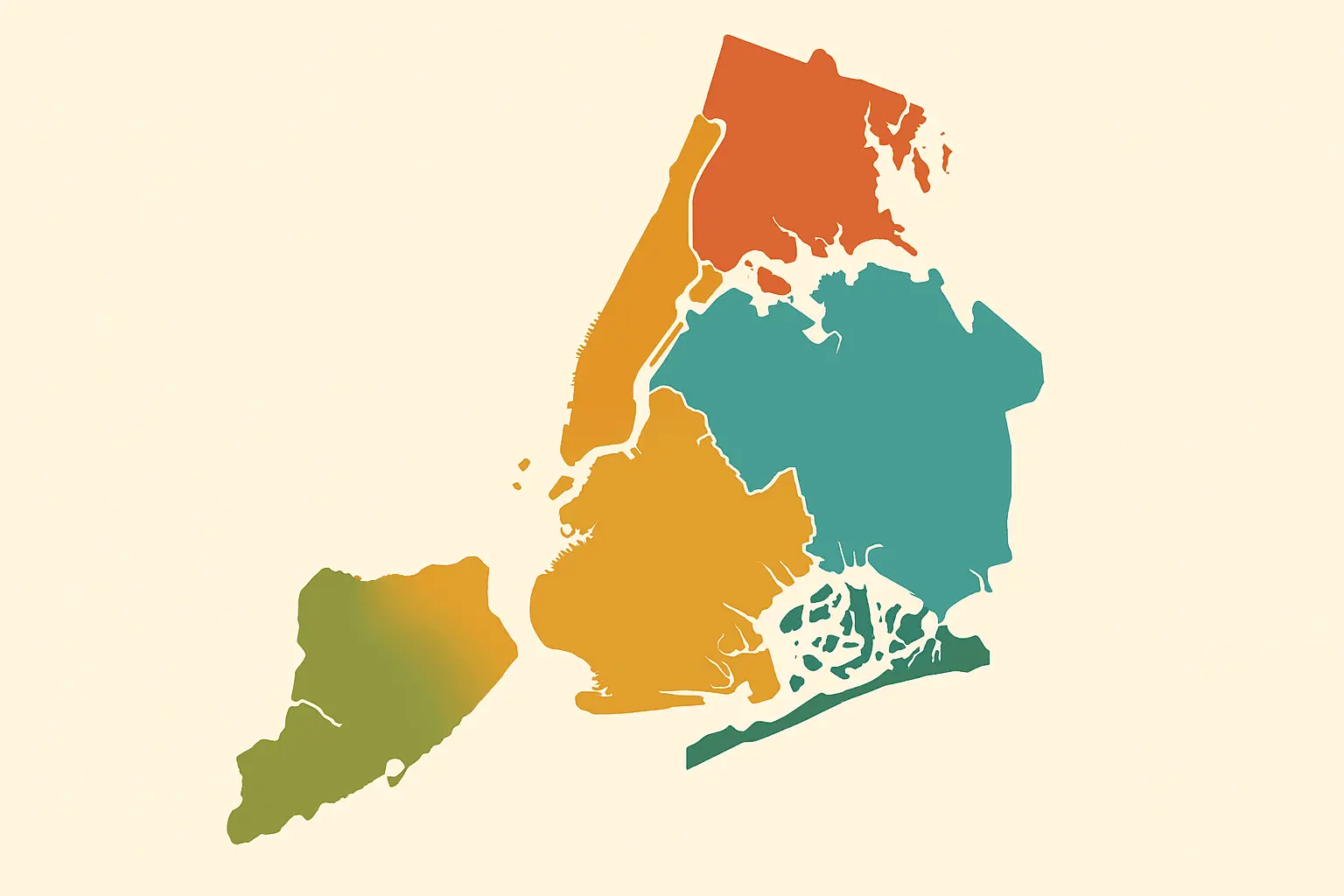
Manhattan is what you picture when you think "New York." It's got that energy, the convenience, the whole "holy crap, I actually live here" feeling. But you're gonna pay through the nose for it. We're talking 50-70% of your income just for rent, and that's if you're lucky enough to find something decent.
I have friends spending $4,500 for a studio in the West Village, and honestly? They love it. They can walk everywhere, there's always something happening, and they get to live out their NYC fantasy. But they also eat ramen more nights than they'd like to admit.
Brooklyn used to be the "cheap" option, but those days are long gone. Now it's more like "slightly less expensive but still gonna hurt." The upside? Some neighborhoods have more personality than anything you'll find in Manhattan. Plus, you might actually get a bedroom with a window.
If you're curious about specific Brooklyn spots, I wrote a whole thing about the coolest neighborhoods in Brooklyn – it'll give you the real scoop on what's actually happening in each area.
Queens is where the smart money goes if you want space and don't mind a longer commute. I know people in Astoria paying $2,200 for a one-bedroom that would cost $4,000 in Manhattan. Yeah, it's a 35-minute subway ride, but they've got money left over for actual fun.
The Bronx and Staten Island offer the best deals, but do your homework on neighborhoods. Some areas are amazing, others... well, let's just say there's a reason the rent's cheap.
Take my friend Sarah – she was dead set on Manhattan until she actually saw what $3,200 got her in the East Village (hint: not much). Then she checked out Astoria and found a place with actual closets, a kitchen you could cook in, and neighbors who weren't college kids. That extra $1,000 a month she saves? Game changer.
Your commute will make or break your quality of life here. I cannot stress this enough. That extra 20 minutes each way adds up to hours of your life every week, and that's assuming the trains are actually running on time (spoiler: they're not).
The subway becomes your lifeline, so you better understand it before you sign a lease. Express trains are your friend – they can cut your commute in half. Living near multiple train lines is like having insurance for when one inevitably breaks down.
And please, for the love of all that's holy, test your commute during actual rush hour. What takes 25 minutes at 10 AM might take 45 minutes when you're crammed into a car with 200 of your closest strangers at 8:30 AM.
Pro tip: factor in walking time to the subway, especially in winter when it's freezing and you're questioning all your life choices. Monthly MetroCards run $132, but many employers offer pre-tax transit benefits that can save you money.

Let me just rip the band-aid off: everything costs more here. And I mean everything. That $4 coffee you used to complain about? Now it's $6, and somehow you'll convince yourself it's worth it because the barista knows your order.
But here's the thing – 42% of people who leave NYC say it's because of housing costs, according to "2025 New York Moving Statistics" from Harlem World Magazine. When median rent is over $3,000 a month, you can see why people tap out.
Brace yourself for the upfront costs. That $3,000/month apartment? You'll need about $11,000 just to get the keys. First month's rent, security deposit, and the dreaded broker fee (which is basically paying someone thousands of dollars to unlock doors for you).
Broker fees are the worst. It's money you'll never see again, for a service that takes maybe two hours. But unless you want to limit yourself to the few "no fee" apartments (which are usually overpriced anyway), you're stuck with it. We're talking 12-15% of annual rent, so that $3,000 apartment costs you an extra $4,500-5,400 just for the privilege of seeing it.
Some buildings will negotiate on security deposits if you've got stellar credit and can prove you're not going to trash the place. It's worth asking, especially if you're offering to pay several months upfront.
Groceries will shock you at first. A basic shopping trip that used to cost $75 will easily hit $120 in Manhattan. You'll learn to love Trader Joe's and hunt down those random ethnic markets where you can get vegetables that don't cost more than your subway card.
Utilities are a wildcard. Some buildings include heat (thank god), others make you pay for everything separately. I've seen electric bills range from $50 to $300 depending on how old your building is and whether your radiator has an "off" setting. Budget around $100-200 monthly for a typical apartment.
If you want the full breakdown of all these sneaky costs, check out the real cost of living in nyc – it covers all the stuff nobody warns you about.
Eating out is where things get interesting. You can grab a $2 slice of pizza or drop $200 on dinner, sometimes on the same block. The trick is finding that middle ground – those neighborhood spots where you can get a decent meal for $25-30. Happy hours and lunch specials are your friends here.
Most landlords want you to make 40-50 times the monthly rent annually. So that $3,000 apartment requires a $120,000-150,000 salary. If you don't hit those numbers, you'll need a guarantor – usually a parent or relative who makes even more money and is willing to be legally responsible for your rent.
The guarantor thing is awkward but common. Your parents basically have to prove they can afford to pay your rent if you can't, typically earning 80-100x the monthly rent. It's a big ask, so have that conversation early.
Between 2010 and 2022, New York lost more millionaires than any other state – they all fled to Florida and Texas where their money goes further, according to "Competitive NYC: Value Proposition Tracker" from Citizens Budget Commission. Just saying.
Alternative documentation can sometimes work if you don't meet income requirements – bank statements showing serious savings, employment contracts for future positions, or prepaid rent can convince some landlords to be flexible.
|
Monthly Rent |
40x Income Requirement |
50x Income Requirement |
Guarantor Income (80x) |
|
$2,500 |
$100,000 |
$125,000 |
$200,000 |
|
$3,000 |
$120,000 |
$150,000 |
$240,000 |
|
$3,500 |
$140,000 |
$175,000 |
$280,000 |
|
$4,000 |
$160,000 |
$200,000 |
$320,000 |
|
$5,000 |
$200,000 |
$250,000 |
$400,000 |
The NYC rental market is absolutely brutal. Good apartments get snatched up within hours – not days, hours. I've seen people lose their dream apartment because they went home to "think about it" overnight.

Apartment hunting here is basically a full-time job. You need to be ready to drop everything and see a place the moment it hits the market. And you better come prepared to apply on the spot, because someone else will.
The application process is intense. You need pay stubs, bank statements, tax returns, references, your firstborn child – okay, maybe not that last one, but it feels like it sometimes. Have everything organized and ready to go on your phone because you won't get a second chance.
In competitive markets, you might need to offer above asking rent or extra security deposit to stand out. It sucks, but that's the reality when 10 people want the same apartment.
Here's your survival kit that you need to have ready at all times:
NYC Rental Application
NYC Rental Application Checklist:
My friend Michael learned this the hard way. Found his perfect place in Brooklyn Heights on a Tuesday morning, but didn't have his documents organized. Spent the day scrambling for pay stubs and bank statements. By Wednesday when he returned with his application, someone else was already signing the lease. Don't be Michael.
If traditional rentals aren't working out, co-living and short-term options can buy you time to find the right place. They're more expensive per square foot, but sometimes you need that flexibility.
Co-living spaces are basically fancy dorms for adults. You get a furnished room, shared common areas, and built-in roommates. It's not for everyone, but it can be a good way to meet people and avoid the furniture hassle.
The lease flexibility is clutch – month-to-month arrangements while you search for something permanent. Yeah, you'll pay extra for that flexibility, but it beats making desperate decisions because your Airbnb budget is running out.
If you're curious about whether this lifestyle fits you, I've got a deep dive on what is communal living that breaks down the pros and cons.
Extended stay hotels, monthly Airbnb rentals, and corporate housing provide temporary solutions while you search. These options cost way more but give you the breathing room to make smart decisions instead of desperate ones.
Extended stays cater to longer-term guests with kitchenettes and weekly rates. They're expensive but provide stability while you apartment hunt and handle other moving logistics.
Monthly Airbnb rentals can offer better value than hotels if you find hosts offering discounts for longer stays. You get more space and a real neighborhood experience, though quality varies wildly.
Moving to NYC isn't like moving anywhere else. The streets are narrow, buildings have weird rules, and your regular suburban moving company might have no clue what they're walking into.

You need movers who understand NYC. That means knowing about building requirements, elevator reservations, street parking permits, and all the other bureaucratic nightmares that can derail your move.
Good NYC movers handle the paperwork automatically. They know which buildings require certificates of insurance, which neighborhoods need permits, and how to navigate five-story walk-ups without destroying your stuff or their backs.
Don't go with the cheapest option unless you enjoy surprises on moving day. The extra money for experienced movers is worth it when they're not discovering your building's restrictions for the first time.
Before you commit to anyone, definitely read up on what nyc movers really cost so you don't get taken for a ride.
Your NYC apartment will be smaller than what you're used to. Period. Start downsizing before you move, because storage units here cost more than some people's rent in other cities.
Climate-controlled storage is worth the extra cost if you're keeping anything valuable. NYC humidity and temperature swings can destroy electronics, documents, and clothes faster than you'd think.
Storage units in Manhattan are ridiculously expensive, but Brooklyn and Queens offer better deals if you don't mind the trek when you need to access your stuff.
Do you really need a car? Seriously, think about it. Parking costs $200-600+ per month, insurance rates will probably double, and you'll spend more time looking for parking than actually driving.
Street parking means moving your car twice a week for street cleaning (and the tickets are expensive if you forget). Garage parking is convenient but costs more than some people's entire transportation budget used to be.
Many longtime New Yorkers find cars more stressful than helpful. The subway goes everywhere, and ride-sharing covers the gaps. That $500+ monthly car cost could go toward a lot of other things – like actually enjoying the city.
Take my buddy James who moved from Atlanta and insisted on keeping his car. After six months of $400 garage fees, higher insurance, and using it maybe twice, he sold it. Now he uses that money for weekend trips and actually has fun instead of stressing about alternate side parking.
Once you've got a place, you need to actually make it livable. This means dealing with utilities, internet, and all the other boring adult stuff that somehow takes forever in NYC.
Internet installation can take weeks because technicians are booked solid and buildings have access requirements. Schedule this the day you sign your lease, not after you move in.
Some buildings restrict which internet providers you can use, regardless of what's available in the neighborhood. Check with building management before assuming you can get your preferred service.
Utility setup varies wildly depending on your building. Some include heat and hot water (praise be), others charge separately for everything. Make sure you understand what's included before budgeting your monthly expenses.
Banking becomes important for future rental applications. Choose something with convenient branch locations and good ATM networks – you'll need in-person services more than you think.
Building management often has the final say on internet providers, which can be frustrating when you're stuck with slow service because they have an exclusive deal with some random company.
Utility deposits hit new customers hard – sometimes $100-300+ until you establish payment history. It's annoying but temporary.
Installation appointments require building access and coordination with management companies. Doorman buildings have procedures, walk-ups might require you to be there to let people in.
The hardest part about moving to NYC isn't finding an apartment or dealing with the subway – it's building a social life from scratch. The city can feel incredibly lonely when you don't know anyone.
The business networking here is unreal. Whatever industry you're in, there are meetups, conferences, and events happening constantly. The trick is showing up consistently, not just when you need something.
Industry associations host regular events that are perfect for newcomers. They often have mentorship programs and newcomer orientations specifically for people trying to break into the scene.
Coworking spaces aren't just for freelancers – they're networking goldmines. Even if you work for a company, having access to a coworking space can connect you with people across industries.

Finance folks have it easy – everything's concentrated in Midtown. CFA Institute, Financial Planning Association, and tons of industry groups host events in convenient locations.
Media and advertising people benefit from NYC being the center of everything. Ad Week events, media meetups, and industry conferences happen all the time.
Tech workers can tap into the growing startup scene. NY Tech Meetup, Women in Tech groups, and startup accelerator events provide both networking and learning opportunities.
Creative professionals – fashion, theater, visual arts – this is your playground. Gallery openings, fashion week events, and creative industry meetups offer networking and inspiration.
Building real friendships takes time and effort. Join things based on your actual interests – running clubs, book clubs, volunteer organizations. The people you meet through shared activities tend to become actual friends, not just networking contacts.
Your neighborhood becomes important for daily social interaction. Get to know your bodega guy, become a regular at a coffee shop, chat with people at the dog park. These small interactions add up to feeling like you belong somewhere.
Speaking of community, there's something interesting happening with how New Yorkers connect over shared experiences. Recent coverage like "Stephen & Evelyn Colbert at WNYC Fundraiser" from Deadline shows how public radio and cultural institutions remain central to New Yorkers' daily routines, with couples scheduling their days around WNYC programming and finding community through shared media experiences.
NYC has volunteer opportunities for every cause imaginable. It's a great way to meet people who share your values while actually contributing to something meaningful.
Museums offer more than weekend visits – many host evening events, lectures, and member programs that create social opportunities around shared interests. The Met, MoMA, and smaller institutions regularly host networking and social events.
Parks become your backyard. Central Park, Prospect Park, and neighborhood green spaces host outdoor movie screenings, fitness classes, and seasonal festivals that bring communities together.
Sports leagues exist for every sport and skill level. Whether you're into beginner softball or competitive volleyball, there's a league for you.
Cultural events happen non-stop – gallery openings, theater premieres, music venues, street festivals. There's always something happening if you're willing to get out there.
There's a bunch of administrative stuff you need to handle when you move here. It's boring but important, and there are deadlines you can't miss.
You've got 30 days to get a New York driver's license once you establish residency. The clock starts ticking from when you move, not when you feel like dealing with the DMV.
Voter registration matters here because local politics actually affect your daily life – rent regulations, transportation funding, tax policies. Register within 25 days of elections if you want to have a say.
The 30-day rule is real and they enforce it. You need proof of residency (utility bills, lease agreement, bank statements), current insurance, and you'll have to pass a vision test.
Vehicle registration happens at DMV offices and requires current registration, insurance proof, and lien information if you have a car loan. The process can take hours, so bring snacks and entertainment.
Local elections matter enormously because city and state policies directly impact rent regulations, transportation funding, and tax rates. Your vote carries more weight in local elections where turnout is often lower.
Primary elections often determine outcomes in heavily Democratic NYC, making primary participation crucial for having a real voice in local leadership.
Brace yourself for the tax hit. You'll pay both New York State income tax (4-10.9%) and NYC income tax (3.078-3.876%). Plus sales tax of 8.25% on everything you buy.
State income tax ranges from 4% to 10.9% depending on your income. NYC adds another 3.078% to 3.876% just for living in the five boroughs.
New York collects more taxes per person than any other state – 23% more than California and 79% more than the national average, according to "Competitive NYC: Value Proposition Tracker" from Citizens Budget Commission. Just so you know what you're getting into.
Property taxes vary by borough, and even renters pay them indirectly through rent prices. Sales tax hits everything at 8.25%, which adds up fast.
Many professions need New York-specific licensing. Lawyers need to be admitted to the NY State Bar, medical professionals need state licensing, real estate agents need NY licenses with state-specific education requirements.
Trade professionals – electricians, plumbers, contractors – often need city-specific licenses beyond state requirements, especially for NYC building work.
Healthcare here is world-class but navigating it can be a nightmare. Insurance networks vary dramatically – some give you access to the best hospitals, others limit you to providers with months-long wait times.
Insurance networks are everything in NYC. Some plans get you into Mount Sinai or NYU Langone, others limit you to smaller networks with longer waits.
Find a primary care doctor as soon as you move, even if you feel fine. When you actually need care, you don't want to be stuck with whoever's available. New patient appointments can take months.
Specialist referrals take forever in this competitive market. Having an established primary care relationship speeds things up when you need specialized treatment.
Know which hospitals near you have the best emergency care reputations and which your insurance covers. Emergency rooms vary wildly in quality and wait times.
Urgent care centers handle non-emergency stuff faster and cheaper than ERs. Find convenient locations for minor injuries and routine care needs.
Mental health services often have long waiting lists. If you think you'll need therapy or psychiatric care, start researching providers early and get on waiting lists.

Moving to NYC means starting over socially, and that's honestly the hardest part. Outpost's coliving spaces are designed for people in exactly your situation – newcomers who want to build real connections while figuring out the city.
Instead of stressing about furniture shopping and utility setup, you can focus on the important stuff: building your career and actually enjoying your new city. Our community managers help facilitate introductions and organize events, so you're not
Instead of stressing about furniture shopping and utility setup, you can focus on the important stuff: building your career and actually enjoying your new city. Our community managers help facilitate introductions and organize events, so you're not just hoping to randomly meet people in your building's laundry room.
We've got coliving spaces in vibrant neighborhoods throughout Brooklyn, Manhattan, and Queens – all in areas where stuff is actually happening. Whether you're a student, young professional, or just someone who wants to be part of a community instead of isolated in a tiny apartment, we get it.
For students and young professionals, our student housing options near major universities provide academic-focused communities. We understand the unique challenges of relocating for education or early career opportunities.
Ready to skip the lonely apartment hunt and jump straight into community? Check out our NYC locations and see how we can help you hit the ground running.
Look, moving to NYC is going to challenge you in ways you can't prepare for. The city's expensive, competitive, and sometimes downright hostile. But here's the thing – if you can make it work here, you can probably make it work anywhere.
Your first year will be a constant learning curve. Neighborhoods you initially wrote off might become your favorites. Systems that seem impossibly complicated will eventually make sense. The key is staying flexible while keeping your eye on why you wanted to be here in the first place.
If you're still weighing timing, check out the best time for moving to new york to help you plan your move for maximum success and minimal stress.
The investment you make in planning and building connections pays off big time. Whether that's through work networks, community involvement, or choosing a place like Outpost where community is built in, the relationships you build become everything in a city this big and anonymous.
NYC rewards the prepared and punishes the unprepared. But if you do your homework, save your money, and stay open to the experience, you might just find that all the hassle was worth it for the chance to be part of something bigger than yourself.

Household supplies can be changed or decreaased at Outpost Club’s discretion, or based on supply availability. Outpost is not responsible for temporary losses of utility service. Outpost Club is not responsible for any damages due to absence of any supplies or utilities


If you have a sales related question please call
680-688-7678

 Hot Deals