Northwest University Washington Tuition: What You'll Actually Pay and How to Afford It
Dec 10, 2025

Dec 10, 2025
Here's the thing nobody tells you about college costs - that tuition number you see online? That's just the beginning. I've watched too many families get blindsided by all the extra stuff that piles up once you're actually enrolled.
With the median undergraduate tuition at Northwest University sitting at $35,535, which is $10,960 more than the national average for Masters Colleges and Universities, looking at these numbers can make your stomach drop - mine did too. But before you panic and close this tab, let me break down what you're actually looking at and how to make it work.
The university doesn't just slap a random price tag on education. They're covering campus upkeep, professors who actually know your name (with that 6:1 student ratio), and all those resources you'll probably take for granted until you need them at 2 AM during finals week.
Your tuition gets you into classes, access to professors who'll remember you exist, library privileges (including those overpriced textbooks you can't find anywhere else), and basic academic support. Graduate students pay more because, let's be honest, they need more hand-holding and specialized attention.
Right now, undergrads are looking at $35,000-$38,000 per year. Graduate programs? That's a whole different beast - anywhere from $15,000 to $25,000 depending on what you're studying. MBA programs cost more because... well, because they can charge more.
For students considering alternative housing arrangements while attending Northwest University, exploring student housing options can help reduce overall educational costs by finding more affordable living situations than traditional campus dormitories.
Those four years are going to be your biggest annual hit, financially speaking. But that $35,000-$38,000 covers everything from your basic freshman seminar to advanced research opportunities that might actually land you a job after graduation.
Here's something they don't advertise: if you're only taking a few classes, the per-credit rate will absolutely murder your wallet. Once you hit 12 credits, you're basically getting a bulk discount. So if you're planning to go part-time, do the math first.
The good news? Most students don't actually pay that full sticker price. According to recent data, NU's average financial aid award of $24,440 makes the real northwest university tuition investment way more manageable than those scary numbers suggest.
|
Program Type |
Annual Tuition |
Credit Hour Rate |
Full-Time Status |
|
Undergraduate |
$35,000-$38,000 |
$1,200-$1,300 |
12+ credits |
|
Graduate Education |
$15,000-$18,000 |
$650-$750 |
9+ credits |
|
Graduate Business |
$20,000-$25,000 |
$850-$1,000 |
9+ credits |
|
Summer Programs |
$440/credit |
$440 |
Varies |
Graduate school pricing is all over the map. Education programs are on the cheaper side ($15,000-$18,000), while business programs can hit $25,000. It's not arbitrary - business programs know their graduates will make more money, so they charge accordingly.
The cost difference makes sense when you think about it. Smaller classes, professors with industry experience, and career services that actually understand your field. Plus, a lot of graduate programs hook you up with networking opportunities that can pay for themselves pretty quickly.
Take my friend who's getting her Master's in Education while teaching full-time. She pays about $16,500 a year, her school district kicks in $3,000, and she got a merit scholarship for another $5,000. Her actual out-of-pocket? Just $8,500. Not bad for a degree that'll bump her salary permanently.
Okay, "hidden" is probably the wrong word because they're right there in the fine print. But nobody really talks about technology fees, activity fees, and all the other little charges that add up to a few thousand extra per year.
These aren't optional, and they go up every year just like tuition does. Budget an extra $2,000-$3,000 annually for this stuff, because it's happening whether you use the gym or not.

Housing costs depend on how fancy you want to get. Basic dorms with shared bathrooms are cheaper than apartment-style setups with your own kitchen. Meal plans range from "this will keep you alive" to "unlimited everything" - and trust me, you'll get sick of cafeteria food way before unlimited starts feeling worth it.
Here's what they don't tell you: you're going to spend money on food outside your meal plan no matter what. Late-night pizza, coffee during study sessions, actual decent food on weekends when you can't face another dining hall meal. Budget for it.
Official university data shows room & board costs $11,740 for double occupancy in residence halls, but that can easily hit $15,000 if you want your own space and better food options.
Students looking to reduce housing expenses might consider affordable student housing alternatives that can significantly lower their overall educational investment while maintaining access to quality living arrangements.
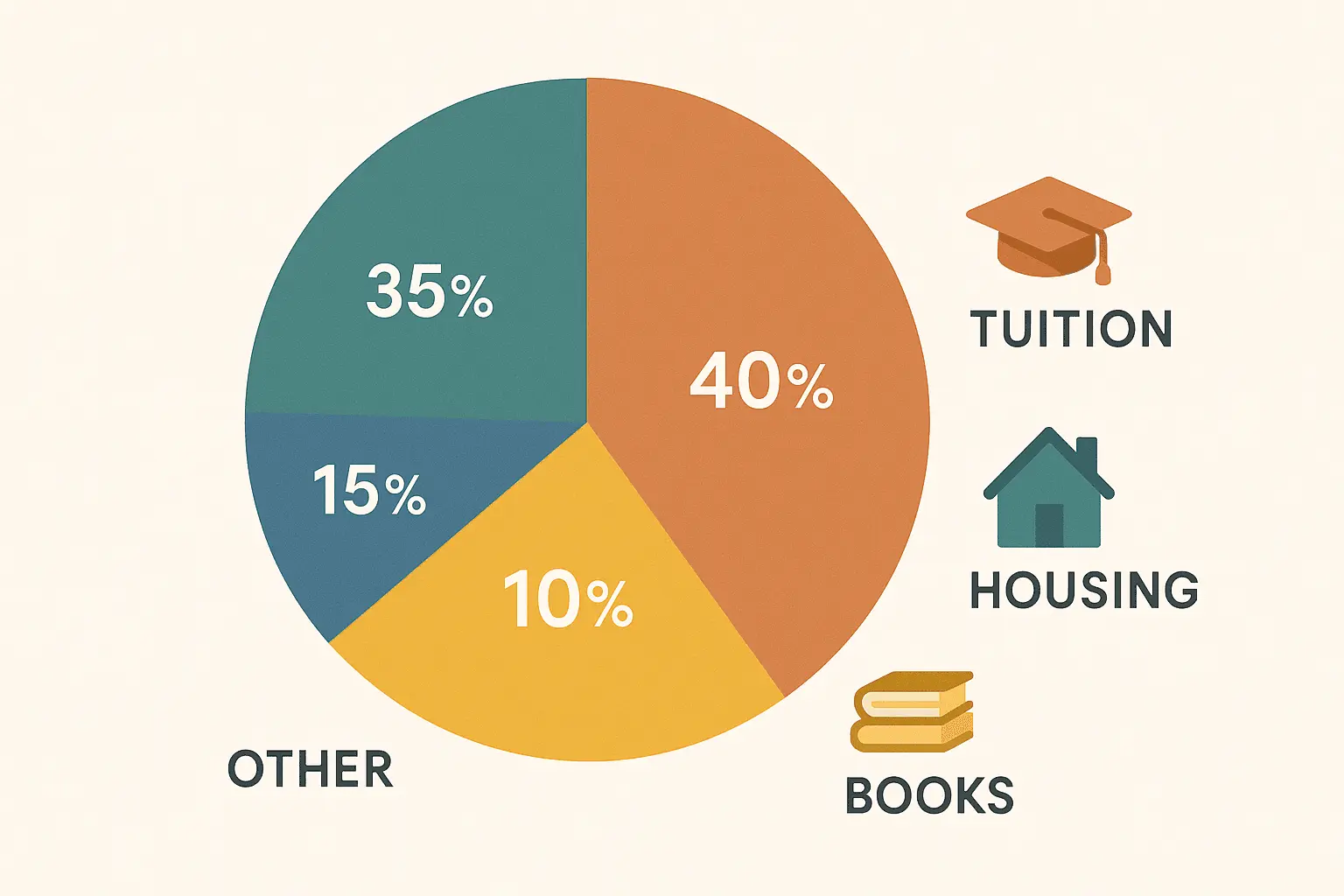
Let's talk real numbers. When you add up everything - tuition, housing, food, books, and just existing as a human being - you're looking at somewhere between $52,000 and $63,500 per year. Yeah, I know. Take a deep breath.
But here's the thing: some of this you can control. Tuition and fees? That's fixed. But you can definitely make smarter choices about housing, food, and how much you spend on textbooks (hint: don't buy them new from the bookstore).
|
Expense Category |
Annual Cost Range |
Payment Timing |
Flexibility Level |
|
Tuition & Fees |
$37,000-$41,000 |
Semester |
Fixed |
|
Room & Board |
$11,740-$15,000 |
Semester |
Moderate |
|
Books & Supplies |
$942-$1,500 |
Per Course |
High |
|
Personal Expenses |
$2,000-$4,000 |
Monthly |
High |
|
Transportation |
$500-$2,000 |
Varies |
High |
|
Total Estimated |
$52,182-$63,500 |
Annual |
Mixed |
The good news is that Northwest University is actually pretty competitive compared to other private schools in Washington. According to "Best Private Colleges in Washington" rankings, with that 6:1 student-to-faculty ratio and 88% acceptance rate, you're getting quality education without the impossible admission standards of some other places.
Financial aid can save you serious money, but the system is designed by people who apparently hate simplicity. I've seen students lose out on thousands just because they missed a deadline or filled out forms wrong. Don't be that person.
Here's a stat that should make you feel better: 92% of undergraduate students at Northwest University received financial aid through grants in 2023. That means almost everyone gets help - you're not alone in needing it.
The FAFSA is your golden ticket to federal aid, and Northwest University uses it to decide their own aid too. One application, multiple funding sources. Not bad, right?
But here's the catch: you need to submit it by March 1st for priority consideration. Miss that deadline, and you're fighting for scraps. The application opens October 1st, so there's literally no excuse for waiting until the last minute.
Get ready for paperwork hell. You'll need tax returns, W-2s, bank statements, and basically every financial document your family has ever generated. The IRS can auto-populate some info, but about 30% of applicants get selected for verification, which means even more paperwork.
My advice? Keep digital copies of everything in a folder labeled "College Stuff I'll Need Again." Trust me on this one.
FAFSA Documentation Checklist:
If you're a Washington resident, you've got some decent state aid options. The Washington College Grant can cover up to your full tuition if your family doesn't make much money. Even middle-income families can get partial grants.
Don't assume you won't qualify just because your parents have decent jobs. The income limits are higher than you'd think, and partial grants still help a lot.
I know a family making $75,000 who got $8,000 from the state, plus $3,500 federal Pell Grant, plus $12,000 merit scholarship from Northwest University. That brought their costs down from $37,000 to $13,500 - totally manageable.
Northwest University hands out merit scholarships ranging from $5,000 to $20,000 per year for good grades, leadership stuff, and special talents. The best part? They renew automatically as long as you don't completely tank your GPA.
Apply by February 15th - way before the regular admission deadline. Some scholarships need separate applications or essays, so start early. Like, really early.

Look, most families can't just write a $35,000 check twice a year. Northwest University gets this, so they offer payment plans that spread costs across monthly payments. You'll pay a small fee for the privilege, but it beats selling a kidney.
These plans usually split your semester costs into 4-5 payments starting before classes begin. It helps with cash flow, but you've got to stay on top of it - miss a payment and you're looking at late fees plus enrollment holds.
Your tuition is due 30 days before classes start. Miss this, and you're hit with $100-$200 late fees plus they might block your registration. Not fun when you're trying to get into required classes.
If you're having money problems, talk to financial aid BEFORE you miss the deadline, not after. They're way more helpful when you're being proactive instead of scrambling.
Payment Timeline Checklist:
Work-study jobs pay $12-$15 per hour and usually work aroun d your class schedule. They're not going to make you rich, but they help with day-to-day expenses and look decent on your resume.
Don't sleep on external scholarships from community groups, professional organizations, and random foundations. Individual awards might only be $500-$2,000, but they add up and you don't have to pay them back.
My friend Mike combined a $15,000 merit scholarship, $8,000 from his part-time job's tuition assistance, and $2,500 from three small community scholarships. That covered 68% of his costs, leaving him with manageable payments.
Students seeking comprehensive financial planning for their education might benefit from resources on saving strategies for apartment living, which can help them budget effectively for both tuition and housing expenses throughout their college years.

Northwest University sits in the middle of the pack for private schools in the Pacific Northwest. You'll pay more than at public universities but less than some of the really prestigious (and pretentious) private colleges.
When you're comparing schools, don't just look at tuition. Some places with lower sticker prices nail you with higher fees or more expensive housing that makes them cost more overall.
According to "Best Private Colleges in Washington" rankings, Northwest University's 88% acceptance rate and strong student-to-faculty ratio of 6:1 show it's committed to accessible quality education without the impossible admission standards.
Most Northwest University grads find jobs within six months of graduation, though starting salaries vary a lot by major. Business and healthcare majors generally make more right out of college than education or social work majors. That's just reality.
The career services office tracks this stuff and can give you specific numbers for your intended major. Use that info to figure out if the investment makes sense for what you want to do.

The alumni network can actually help you find jobs after graduation. Northwest University grads are scattered throughout the Pacific Northwest and beyond, and many of them are willing to help recent grads get their foot in the door.
Do your research on employment rates and starting salaries for your specific program, not just university-wide averages that might not reflect your field's reality.
For students planning their post-graduation transition, understanding apartment hunting strategies can help them secure affordable housing in their chosen career markets after completing their Northwest University education.
Your Northwest University investment isn't just one year - it's four years with tuition going up 3-5% annually. What costs $35,000 freshman year might cost $40,000 by senior year. Plan accordingly.
Start thinking about this during sophomore or junior year of high school. That gives you time to boost your grades for merit scholarships and lets your family adjust their savings strategy.
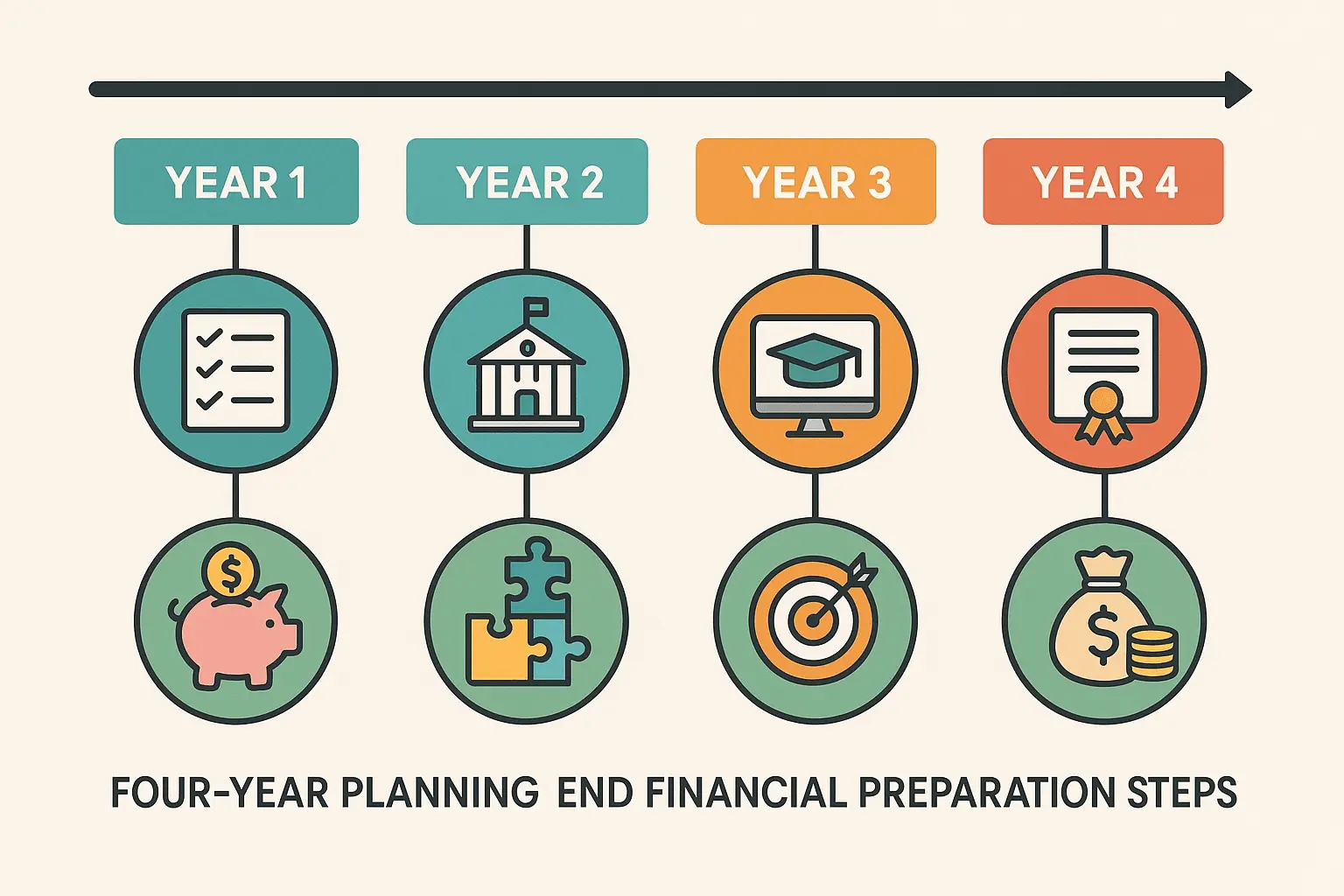
Calculate your total four-year costs before you apply, including those annual increases. Too many families only think about freshman year costs and get shocked by how much everything grows.
Use online calculators to estimate what you'll probably pay after aid. They're not perfect , but they'll give you realistic expectations instead of sticker shock later.
Four-Year Cost Planning Checklist:
Your $300 enrollment deposit holds your spot and shows you're serious about attending. The good news is this usually gets applied to your first semester's bill, so it's not extra money on top of everything else.
Go to the financial aid counseling during orientation - it's required for most aid recipients and actually has useful info about keeping your aid throughout college.
Students transitioning to college life might find value in exploring communal living options that can provide supportive environments while managing educational expenses effectively.
Your tuition covers more than just classes. You're paying for research opportunities, internship programs, career services, and access to professors who might become valuable mentors. Students who actually use this stuff typically get better jobs and higher starting salaries.
Don't just go to class and hide in your dorm. Use the career center, network with alumni, and build relationships with faculty. This stuff is included in your tuition - you might as well get your money's worth.
For students seeking to build professional networks while managing living expenses, understanding roommate strategies can help create supportive living situations that enhance both academic and career development opportunities.

Look, Northwest University Washington tuition is expensive. There's no sugarcoating that. But understanding how the costs break down and what aid is available can make it way more affordable than those scary sticker prices suggest. Your actual costs will depend heavily on your family's financial situation, academic performance, and how strategic you are about funding your education.
The key is planning early, hitting all the financial aid deadlines, and being smart about every available funding source. Don't let the initial numbers scare you off - most students pay substantially less than the published rates through grants, scholarships, and strategic payment planning.
Remember that you're not just paying for classes. You're investing in relationships, knowledge, and career opportunities that can pay dividends for decades. Make informed decisions, plan carefully, and don't hesitate to bug the financial aid office with questions throughout the process. That's what they're there for.

Household supplies can be changed or decreaased at Outpost Club’s discretion, or based on supply availability. Outpost is not responsible for temporary losses of utility service. Outpost Club is not responsible for any damages due to absence of any supplies or utilities


If you have a sales related question please call
680-688-7678

 Hot Deals