Physical Therapist Salary NYC: What You'll Actually Earn in America's Most Expensive Healthcare Market
Dec 12, 2025

Dec 12, 2025
So you're thinking about working as a PT in New York? Let me be honest with you – it's like jumping into the deep end of a pool while someone's throwing money at you, but also setting that money on fire with rent prices. It's exhilarating and terrifying at the same time.
Here's the thing nobody tells you upfront: Yeah, you'll make decent money as a physical therapist salary NYC professional, but this city has a way of humbling even the most confident new grads. I've watched brilliant therapists arrive here thinking their $85k starting salary made them rich, only to spend their first weekend apartment hunting and realize they're about to become very familiar with roommate apps.
New York State employs 15,560 physical therapists according to the U.S. Bureau of Labor Statistics, making it the fourth largest employer of PTs in the country with a median wage of $48 per hour and forecasted job growth of 10.9% for the coming decade. This substantial workforce reflects both the state's healthcare demands and the opportunities available for qualified practitioners.
But here's why people stick around – the cases you'll see, the techniques you'll learn, the connections you'll make? They're career gold. Where else are you going to treat a Broadway dancer's torn ACL on Tuesday and help a stroke patient walk again on Wednesday? The diversity of cases alone is worth the financial juggling act.
What really gets me is how quickly your perspective shifts. Six months in, you'll catch yourself casually mentioning your "$2,800 studio" like it's normal human behavior. Spoiler alert: it's not, but somehow we all adapt.
According to the U.S. Bureau of Labor Statistics, the median annual salary for physical therapists in New York is around $99,430, with variations depending on location, experience and specialization, while the national median is $101,020 annually. Natural Healers
The median salary hovers around $99k, which sounds amazing until you factor in that your friend back in Ohio is buying a house with their $75k salary while you're splitting a two-bedroom in Queens. But then again, your friend isn't learning cutting-edge techniques at Mount Sinai or networking with sports medicine legends at Yankees games.
For healthcare professionals considering their housing options while maximizing their salary potential, exploring affordable neighborhoods in NYC can significantly impact your take-home purchasing power, especially when factoring in commute costs and quality of life considerations.
Your years of practice directly translate into earning power in NYC's healthcare landscape, though the progression doesn't always follow a straight line. The city's medical institutions reward proven competence and specialized expertise, creating distinct salary brackets that reflect your clinical value and the intense competition for top talent.
|
Experience Level |
Salary Range |
Key Characteristics |
|
Entry-Level (0-2 years) |
$75,000-$85,000 |
New graduate positions, comprehensive training programs |
|
Mid-Career (3-7 years) |
$85,000-$100,000 |
Specialized skills development, increased autonomy |
|
Senior-Level (8+ years) |
$95,000-$120,000+ |
Leadership roles, specialized practice areas |
Fresh out of school? Buckle up, buttercup. That first year is going to test everything you thought you knew about money, adulting, and whether instant ramen can actually be considered a food group.
Starting salaries between $75-85k sound pretty sweet when you're still living in your college mindset. Then reality hits like a subway door closing on your backpack. Suddenly you're doing mental math on whether you can afford both groceries AND laundry this week.

But here's what kept me sane during those early months – every single day, you're learning something that would take years to encounter anywhere else. I remember my third week at NYU Langone when they assigned me a patient recovering from a rare spinal surgery. Back home, I might have seen one case like that in my entire career.
The benefits package becomes your lifeline. That health insurance you barely thought about in school? It's now worth its weight in gold when you realize a basic checkup in Manhattan costs more than your car payment used to.
Sarah, a new DPT graduate, started at Mount Sinai Hospital with a $78,000 base salary plus benefits valued at $18,000 annually. While her rent consumed $2,400 monthly in Queens, the comprehensive health insurance and $3,000 continuing education allowance significantly improved her total compensation picture compared to similar positions in smaller markets. She put it perfectly: "I was broke but rich in experience." She was eating PB&J for lunch most days, but she was also working alongside some of the best neurological rehabilitation specialists in the country.
Pro tip from someone who learned the hard way: Take advantage of every single continuing education opportunity they offer. That $3,000 education allowance isn't just a nice perk – it's your ticket to faster advancement and better pay down the road.
Three to seven years in, and suddenly you're not the wide-eyed newbie anymore. You know which subway car to get on for the fastest exit, you've figured out the bodega with the best coffee-to-price ratio, and most importantly, you've developed the confidence to negotiate like you mean it.
This is when the city starts paying you back for those ramen-fueled early years. You're not just another new grad anymore – you're the PT who can handle the difficult cases, who doesn't need three attempts to explain a treatment plan, who actually knows what they're doing.
The salary bump to $85-100k isn't just about the money (though let's be honest, finally affording avocado toast feels pretty good). It's about respect. Facilities start competing for your skills instead of you begging for opportunities.
I watched my colleague Marcus transition from barely scraping by to actually having a savings account during this phase. The difference? He specialized in sports medicine right when the city's fitness scene exploded. Suddenly every CrossFit gym and boutique studio wanted him on speed dial.
The New York City Department of Education recently announced openings for physical therapists at $82,807 annually, reflecting the competitive salaries available in public sector healthcare roles. These positions offer comprehensive benefits and job security that many private sector roles cannot match. "NYC Civil Service Exam Opens" Staten Island Live
The Department of Education jobs at $82k might not sound glamorous, but here's what they don't advertise – job security in a city where everything else feels temporary, benefits that actually cover your needs, and summers off if you play your cards right. Not exactly the fast track to wealth, but sometimes stability beats the hustle.
Eight-plus years in, and you've officially survived NYC as a PT. You're not just working here anymore – you're thriving. The $95-120k+ range isn't just a number on a paycheck; it's validation that you've mastered one of the toughest healthcare markets in the country.
At this level, you get to be picky. You're not taking the first job offer that comes along; you're evaluating which opportunity aligns with your long-term goals. Want to focus on cutting-edge research? Mount Sinai's calling. Prefer the entrepreneurial route? Time to explore those private practice partnerships.
The private practice option becomes real tempting at this stage. I know PTs pulling in $150k+ as partners in successful clinics, but they're also working 50-60 hour weeks and dealing with insurance headaches that would make a saint curse. It's not for everyone, but for those who can handle the business side, the financial rewards are substantial.
Leadership roles start opening up too. Clinical director positions, department heads, program coordinators – suddenly you're not just treating patients, you're shaping how therapy gets delivered. The administrative work isn't everyone's cup of tea, but the pay bump and professional influence can be worth the trade-off.
Compensation varies significantly across NYC's five boroughs, with Manhattan generally offering the highest salaries alongside the highest living costs. Understanding these geographic variations helps you make informed decisions about where to work and live while maximizing your financial position in the city.
Manhattan is like dating someone way out of your league – exciting, expensive, and you're never quite sure if you can afford to keep up. The salaries are definitely higher, but so is literally everything else.
Working in Manhattan means you're in the big leagues. NYU Langone, Mount Sinai, NewYork-Presbyterian – these aren't just hospitals, they're institutions that define modern medicine. The $90-110k salaries reflect that prestige, but they also reflect the reality that you need every penny to survive here.
I had a friend who took a position at a fancy Upper East Side clinic making $105k. Sounded amazing until she realized her commute from Brooklyn was eating two hours of her day and $200 a month in subway costs. Meanwhile, her Manhattan studio apartment was costing her $3,500 monthly. The math got ugly fast.
But here's the thing about Manhattan – the networking opportunities are insane. You'll bump into department heads at Starbucks, attend lectures by world-renowned researchers, and somehow end up at the same happy hour as the PT for the Knicks. These connections aren't just nice to have; they're career rocket fuel.
The New York City metropolitan area specifically shows a median salary of $104,010 for physical therapists, demonstrating the premium that urban healthcare markets command compared to the state average of $99,430. Natural Healers
The pace is relentless though. Manhattan patients expect concierge-level service, and the facilities expect you to deliver it flawlessly every single time. It's not unusual to treat a Broadway star in the morning and a Fortune 500 CEO in the afternoon. The pressure is real, but so is the professional growth.
Brooklyn, Queens, and the Bronx are where smart PTs go to actually build wealth instead of just surviving paycheck to paycheck. The salaries might be $5-10k lower, but your quality of life could be significantly higher.
Brooklyn's healthcare scene has exploded in the past few years. NewYork-Presbyterian Brooklyn Methodist, BronxCare, Mount Sinai Queens – these aren't afterthoughts anymore. They're legitimate medical centers offering competitive salaries and, here's the kicker, you might actually be able to afford a one-bedroom apartment.
My colleague Jessica made the jump from a Manhattan clinic to a Queens hospital and took a $7k salary cut. Sounds like a step backward, right? Wrong. Her rent dropped by $1,200 a month, her commute went from 45 minutes to 20, and she actually started enjoying her job again instead of constantly stressing about money.
The patient population in the outer boroughs tends to be more diverse and, honestly, more appreciative. You're not just another service provider; you're often a crucial part of their recovery journey. It's the difference between feeling like a luxury and feeling like a lifeline.
Plus, the career advancement can actually be faster. Less competition for senior positions means you might find yourself in leadership roles years earlier than you would in Manhattan. That experience becomes invaluable when you're ready to make your next move.
Let's talk about the stuff that actually matters when you're trying to figure out if a job offer is worth taking. Spoiler alert: it's not just about the salary number on the offer letter.

Your compensation package extends far beyond your base salary, especially in NYC's complex healthcare market. Understanding these variables helps you make strategic career decisions that maximize both immediate income and long-term earning potential.
Health insurance in NYC isn't just a benefit – it's a necessity that can make or break your budget. A plan that covers 90% of your costs versus 70% can mean the difference between affording that root canal or eating rice for a month. I learned this the hard way when I needed an MRI and discovered my "great" insurance had a $3,000 deductible.
Retirement matching might seem like a future problem when you're worried about this month's rent, but here's some math that'll wake you up: A 6% match on an $85k salary is $5,100 in free money annually. That's literally a month's rent handed to you for doing nothing except not being financially stupid.
The continuing education allowance is where smart PTs separate themselves from the pack. That $3,000 might cover one certification course that bumps your salary by $8,000. It's not just professional development – it's an investment with guaranteed returns.
Location matters more than you think. A clinic near multiple subway lines versus one that requires a bus transfer can save you 30 minutes daily. That's 2.5 hours weekly you get back for your life. Time is money, especially in NYC.
The Real Talk Compensation Checklist:
Advanced degrees, specialized certifications, and continuing education directly correlate with higher earning potential and career advancement opportunities in NYC's competitive healthcare market. The investment in additional credentials pays dividends throughout your career while opening doors to specialized practice areas and leadership roles.
Here's the brutal truth about the DPT versus master's degree debate: In NYC's market, your DPT isn't just preferred – it's practically required if you want to be taken seriously for the good positions.
The 10-15% salary bump for DPT holders isn't just a nice bonus; it's recognition that you've invested in the advanced training that modern PT practice demands. When you're competing against dozens of other candidates for every position, that doctoral credential becomes your foot in the door.
But let's be real about the financial reality. If you're carrying $100k+ in student loans from your DPT program, that extra $8k annually doesn't feel like much when loan payments are eating $1,200 of your monthly budget. The long-term career benefits are real, but the short-term financial pressure is also very real.
The clinical reasoning skills you develop in DPT programs become crucial when you're treating complex cases in NYC's fast-paced environment. Employers know this, which is why they're willing to pay more for doctoral-prepared practitioners who can think critically under pressure.
Certifications aren't just letters after your name – they're your ticket to the specialized roles that actually pay well in this expensive city. But choose wisely, because not all certifications are created equal in NYC's market.

Orthopedic certification (OCS) is like having a golden ticket in this market. With all the runners, cyclists, and gym enthusiasts in the city, plus the aging population dealing with joint issues, orthopedic specialists stay busy and well-compensated. That $8-12k salary boost often pays for the certification costs within the first year.
Sports medicine certifications open doors to some of the coolest opportunities in the city. Think Yankees spring training, working with professional dancers, or treating weekend warriors who've discovered they're not 22 anymore. The $10-15k bump reflects both the specialized skills and the premium clients willing to pay for expertise.
Neurological certification might not sound as glamorous, but here's what nobody tells you – the aging population in NYC means steady demand for neuro specialists, and the complexity of cases means less competition from newer grads. It's a smart long-term play even if the immediate salary boost is more modest.
The time investment is real though. Studying for board certifications while working full-time in NYC's demanding environment isn't a joke. You'll be cramming on subway rides and reviewing case studies instead of having a social life for months. But the payoff – both financial and professional – makes it worthwhile.
|
Certification Type |
Average Salary Boost |
Time Investment |
Market Demand |
|
Orthopedic (OCS) |
$8,000-$12,000 |
6-12 months |
High |
|
Neurologic (NCS) |
$6,000-$10,000 |
6-12 months |
Moderate-High |
|
Sports Medicine |
$10,000-$15,000 |
12-18 months |
High |
|
Geriatric (GCS) |
$5,000-$8,000 |
4-8 months |
Moderate |
Hospital systems, private practices, outpatient clinics, and home health agencies offer varying compensation structures, each with unique benefits and growth potential. Understanding these differences helps you choose work environments that align with your financial goals and career aspirations while maximizing your professional satisfaction.
Hospital jobs are like the reliable relationship of NYC PT careers – maybe not the most exciting option, but they'll be there for you when everything else falls apart. And in a city where rent can increase by $500 overnight, stability isn't boring; it's smart.
The $80-110k base salaries at major hospitals might not make you Instagram-rich, but here's what they do provide: health insurance that actually works, retirement plans that compound over time, and paid time off that you can actually use without worrying about lost income.

Michael transitioned from a private clinic to NYU Langone Hospital, accepting a base salary of $95,000 compared to his previous $105,000. However, the hospital's benefits package included full health insurance ($8,400 value), 403(b) matching ($4,750), and continuing education support ($4,000), making his total compensation $112,150 – significantly higher than his previous position. His story illustrates something important – sometimes taking a lower base salary leads to higher total compensation.
But let's talk about the real benefits nobody mentions in the job description. Hospital employment means you're not chasing insurance reimbursements, you're not worried about patient no-shows affecting your paycheck, and you get actual lunch breaks. In private practice, lunch is whatever you can eat standing up between patients.
The career advancement opportunities in hospital systems are legitimate. Clinical ladder programs, leadership development, and specialized program coordinator roles provide clear pathways to increased responsibility and compensation. It's not just about doing the same job for 30 years.
Private practice is like freelancing – when it's good, it's really good, but when it's bad, you're eating cereal for dinner and hoping your landlord accepts late payments.
Those $45-65 hourly rates sound amazing until you realize you're responsible for your own health insurance ($600+ monthly), retirement savings (no employer match), and you don't get paid for sick days, vacation time, or the hours you spend on documentation.
The math gets tricky fast. Working 30 billable hours weekly at $55/hour gives you $85,800 annually – but that's gross income. Subtract taxes, health insurance, retirement savings, and continuing education costs, and you might end up with less take-home than a hospital employee making $80k with benefits.
But here's why people still choose it – flexibility and earning potential. Good private practice PTs can build referral networks that keep them consistently busy, and they can often charge premium rates for specialized services. Plus, there's something satisfying about building your own practice instead of making someone else wealthy.
The partnership track in established practices offers the best of both worlds – higher earning potential with some stability. But partnerships require significant financial investment and business acumen that most PT programs don't teach.
Home health is the wild west of PT compensation – potentially lucrative, definitely unpredictable, and requiring skills they definitely didn't teach in school.
The $50-75 hourly rates reflect the premium nature of in-home care, but here's what the recruiters don't emphasize – travel time between patients can eat into your effective hourly rate significantly. Spending 30 minutes traveling between patients for a 45-minute session changes your $60/hour rate to something much less impressive.
NYC's traffic and parking situation makes home health particularly challenging. You'll become an expert at subway routes, walking distances, and which neighborhoods actually have available parking. Your GPS app becomes your best friend and worst enemy simultaneously.
The flexibility appeals to many PTs, especially those with families or other commitments. But the lack of colleague interaction and professional support can be isolating. You're often the only healthcare provider in the room, making clinical decisions without the safety net of immediate consultation.
New York City FC recently partnered with JAG Physical Therapy, which operates over 145 locations throughout NYC, Westchester, Long Island, and surrounding areas, demonstrating the expansion of private practice opportunities in the metropolitan area. This partnership highlights the growing integration of sports medicine and community health initiatives. "JAG Physical Therapy Partners with NYCFC" New York City FC
Some home health PTs love the variety – treating patients in penthouses one day and walk-up apartments the next, seeing how different populations live and adapt to their environments. Others find the unpredictability stressful and prefer the controlled environment of clinic-based practice.
Successfully navigating NYC's job market requires strategic research, networking, and negotiation skills to secure optimal compensation packages in this competitive healthcare landscape. Understanding market rates, timing negotiations effectively, and leveraging your unique value proposition are essential skills for maximizing your earning potential.

Glassdoor and PayScale are fine starting points, but if you want real intel on NYC PT salaries, you need to get into the trenches with actual practitioners. Those online databases often miss the nuances of total compensation packages and market variations that can significantly impact your earning potential.
The best salary research happens over coffee with PTs who work where you want to work. They'll tell you about the hidden costs (like mandatory parking fees), the real workload expectations, and whether that "competitive salary" actually lets you afford lunch that isn't from a food truck.
Professional association meetups are goldmines for real salary information. People are surprisingly honest about compensation when you're not competing for the same position. I've learned more about actual take-home pay from casual conversations at APTA events than from hours of online research.
Alumni networks from your PT program often provide the most honest feedback. Your former classmates have no reason to inflate or deflate salary numbers, and they understand the financial pressures you're facing because they're dealing with the same student loans and cost-of-living reality.
California leads the nation with the highest mean annual physical therapist salary at $114,270, followed by Nevada at $111,460 and Alaska at $110,830, providing context for NYC's competitive but not top-tier national positioning in PT compensation. USA University
Industry publications track broader trends, but local Facebook groups and Reddit threads often have the most current information about which facilities are hiring, what they're really paying, and which places to avoid. The PT community in NYC is surprisingly tight-knit despite the city's size.
Salary negotiation in NYC requires understanding that everything is negotiable – except maybe your rent, which will increase regardless of your wishes. But seriously, don't just accept the first offer because you're excited someone wants to hire you.
The key is understanding your total compensation package before you even start negotiating. That $85k base salary might come with health insurance worth $8k annually, but if the deductible is $5k, you're not getting the value you think you are.
Timing matters enormously. Budget cycles, performance review periods, and staffing needs all influence how much flexibility employers have. Multiple offers give you real negotiating power, but use them strategically. The goal isn't to create a bidding war; it's to demonstrate your value while finding the best overall package for your situation.
Jennifer leveraged two competing offers from Brooklyn Methodist Hospital ($88,000) and a Manhattan private practice ($95,000 hourly equivalent) to negotiate with her preferred employer, NewYork-Presbyterian. By presenting the total compensation comparison and expressing her genuine interest in staying, she secured a $92,000 base salary plus enhanced benefits, creating a package worth $108,000 total value. Her success worked because she timed it right and presented it professionally, not as an ultimatum.
Don't just negotiate salary – negotiate everything. Flexible scheduling might be worth more than a $2k raise if it saves you commute time and stress. Extra vacation days, continuing education allowances, and parking benefits all have real financial value.
Here's the conversation nobody wants to have but everyone needs to hear – that $85k salary in NYC provides roughly the same purchasing power as $55k in most other cities. The math is depressing but necessary for making informed career decisions.
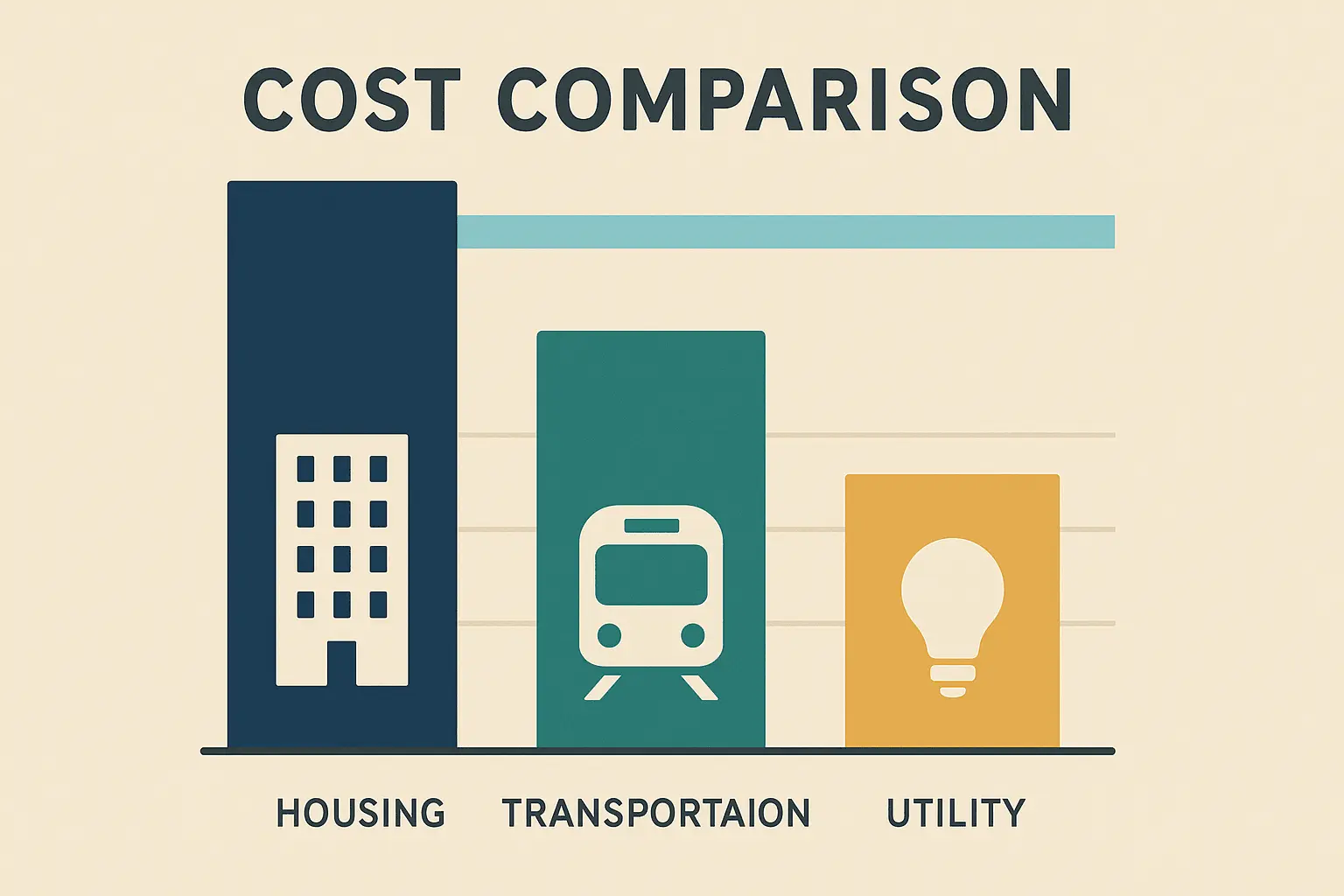
Housing will likely consume 35-50% of your take-home pay, which is way above the recommended 30% but unfortunately normal for NYC. This means your housing decision becomes your most important financial choice, often trumping salary considerations.
Transportation costs add up fast. MetroCard monthly passes, occasional Ubers when you're running late, and parking fees for continuing education events can easily hit $200+ monthly. Factor this into your budget calculations, not your wishful thinking.
The hidden costs of NYC living include everything from higher grocery prices to laundry expenses (if you don't have in-unit machines) to the occasional $15 salad because you forgot to pack lunch. These seemingly small expenses compound quickly.
But here's what makes it worthwhile for many PTs – the professional opportunities and career acceleration often justify the financial sacrifice. Skills you develop in NYC's demanding environment become valuable currency for future career moves, whether you stay or relocate.
Professional networking in NYC's healthcare market extends beyond casual connections to strategic relationship building that can significantly impact career advancement, referral opportunities, and long-term earning potential through access to hidden job markets and collaborative partnerships.
NYC's healthcare networking isn't just about collecting business cards at boring conference receptions. It's about building genuine relationships that help you navigate this complex market and advance your career in ways you probably haven't even considered yet.
The most valuable networking often happens in unexpected places. I've gotten job referrals from conversations at the gym, learned about salary benchmarks while waiting for the subway, and discovered new opportunities through friends of friends who work in completely different healthcare fields.

Hospital social events might seem optional, but they're actually career investments. These informal settings let you interact with department heads, administrators, and senior clinicians outside the pressure of work environments. The relationships you build here often influence future opportunities more than your resume does.
Cross-disciplinary networking with physicians, nurses, and other healthcare professionals creates referral opportunities that boost your professional reputation an d can lead to collaborative projects or consulting opportunities that supplement your income.
Mentorship relationships prove invaluable for navigating NYC's complex healthcare landscape. Senior practitioners who've successfully built careers here can provide insights about market trends, salary negotiations, and career moves that save you years of trial and error.
Telehealth capabilities became essential during the pandemic and remain valuable for expanding your practice reach and income potential. PTs who developed strong virtual consultation skills often command higher rates and have more flexible scheduling options.
Emerging treatment modalities like dry needling, blood flow restriction therapy, and movement analysis technology create niche expertise that differentiates you in NYC's competitive market. These specializations often justify premium rates and attract patients willing to pay for cutting-edge care.
Social media presence isn't just for influencers – it's become a legitimate business development tool for healthcare professionals. PTs who effectively use Instagram or TikTok to share educational content often develop following that translates into private practice opportunities or consulting work.
Data analytics and outcome measurement skills become increasingly valuable as healthcare moves toward value-based care models. PTs who understand these systems and can demonstrate measurable patient outcomes position themselves for leadership roles and performance-based compensation.
The integration of fitness and wellness services with traditional PT creates entrepreneurial opportunities for practitioners willing to expand their scope. These hybrid models often generate higher revenue streams and allow for more creative practice structures.
Your NYC PT career should be viewed as a wealth-building strategy, not just a series of jobs. The high earning potential here creates opportunities for significant financial growth when managed strategically, but it requires intentional planning.
Retirement planning becomes crucial given NYC's high living costs and the physical demands of PT practice. Maximizing employer 401(k) matches, contributing to IRAs, and considering additional investment strategies helps ensure your high earning years translate into long-term financial security.
Continuing education investments pay compound returns throughout your career. The certifications and advanced training you pursue early on continue generating higher compensation for decades, making these among the most profitable investments you can make.
Many healthcare professionals find that exploring communal living spaces in NYC provides both cost savings and professional networking opportunities that can accelerate career growth while managing living expenses more effectively.
Entrepreneurial opportunities abound for practitioners willing to think beyond traditional employment. From specialized clinics to wellness centers to consulting practices, NYC's diverse population and high healthcare spending create multiple paths to business ownership.
Business partnerships with other healthcare providers, fitness professionals, or wellness practitioners can create revenue streams that supplement traditional PT income. These collaborations often evolve into significant business opportunities for those willing to invest time and energy.
Professional networking plays a crucial role in career advancement and salary growth for NYC physical therapists. Building meaningful relationships with colleagues across different healthcare settings creates opportunities that extend far beyond immediate job prospects. These connections often lead to referrals, collaborative opportunities, and insights into emerging market trends that can significantly impact your earning potential.
Look, I'm not going to lie to you – being a PT in NYC is like playing career mode on expert level. The financial pressures are real, the competition is fierce, and some days you'll question whether the stress is worth it when your college friends are buying houses while you're splitting a two-bedroom in Astoria.
But here's what keeps most of us here: nowhere else offers the combination of professional growth, diverse patient populations, and career opportunities that NYC provides. The cases you'll see, the techniques you'll learn, and the connections you'll make create a foundation for success that extends far beyond your time in the city.
The earning potential is legitimate if you're strategic about it. That $75k starting salary might feel tight initially, but with smart career moves, continued education, and some patience, six-figure incomes become achievable within 5-7 years. More importantly, the experience you gain here becomes valuable currency wherever your career takes you next.
Success requires understanding that this isn't just about surviving financially – it's about building a career that provides both professional satisfaction and long-term financial stability. The PTs who thrive here are those who view the challenges as investments in their future rather than just obstacles to endure.
The networking opportunities alone justify the financial sacrifice for many practitioners. The relationships you build, the mentors you find, and the collaborative opportunities you discover often lead to career paths you never imagined when you first moved here.
Is it worth it? That depends on what you value most. If you want predictable living costs and immediate financial comfort, NYC probably isn't your best choice. But if you want to push yourself professionally, work with world-class practitioners, and build a career that opens doors everywhere, this city offers opportunities that simply don't exist anywhere else.
The key is going in with realistic expectations, a solid financial plan, and the understanding that your first few years are an investment in your future rather than just a job. The PTs who succeed here are those who embrace the challenge while staying focused on their long-term goals.
Ready to take the plunge? Just remember – it's not about surviving NYC as a PT, it's about using NYC to become the PT you want to be. The city will test you, but it will also transform you if you let it.
The networking opportunities available through various professional organizations often lead to unexpected career opportunities, referral partnerships, and business relationships that can accelerate long-term financial growth. For physical therapists navigating NYC's competitive market, these connections represent more than recreation – they're investments in career advancement and professional development.
Ready to take your physical therapy career to the next level? Consider how strategic networking and professional relationship building can accelerate your success in NYC's competitive healthcare market. Join Outpost Club to connect with successful professionals across industries while enjoying exclusive golf experiences that provide the perfect balance to your demanding healthcare career.

Household supplies can be changed or decreaased at Outpost Club’s discretion, or based on supply availability. Outpost is not responsible for temporary losses of utility service. Outpost Club is not responsible for any damages due to absence of any supplies or utilities


If you have a sales related question please call
680-688-7678

 Hot Deals