Respiratory Therapist Salary NYC: What You'll Actually Earn in America's Most Expensive City
Dec 15, 2025

Dec 15, 2025
If you're thinking about becoming a respiratory therapist in NYC, you've picked a pretty good time to get into the field. The respiratory therapy profession is experiencing unprecedented growth, with employment projected to grow 12 percent from 2024 to 2034, much faster than the average for all occupations according to the Bureau of Labor Statistics. In New York City, this growth translates into exceptional earning opportunities for skilled professionals willing to navigate one of the nation's most competitive healthcare markets, where the respiratory therapist salary NYC professionals can earn significantly exceeds national averages.
Look, I've been watching New York's respiratory therapy scene for years, and let me tell you - it's nothing like anywhere else I've worked. The first thing that hits you is just how intense everything is. You're not just dealing with higher rent (though trust me, that's brutal too). You're walking into hospitals where the stakes feel higher, the pace is relentless, and honestly? The patients are sicker and more complex than what you'll see in most other cities.
Here's what nobody tells you about working RT in NYC: it's like getting thrown into the deep end, but if you can swim here, you can work anywhere. I remember my first week at NewYork-Presbyterian - I felt completely overwhelmed. The attending physicians expect you to know your stuff inside and out, the nurses don't have time to hold your hand, and you're managing ventilators that cost more than most people's cars.
But here's the thing - that intensity? It pays off. Literally. Hospitals here know they're asking a lot, so they compensate accordingly. When I moved from a community hospital upstate, my salary jumped $15K just for dealing with the NYC environment. And that's before you factor in all the premium pay opportunities. Understanding the respiratory therapist salary in new york market dynamics is crucial for positioning yourself competitively.
The patient population here is insane - in the best possible way for your career development. One day you're working with a premature baby on high-frequency ventilation, the next you're managing ECMO for a COVID patient, then you're doing sleep studies on Wall Street executives. This variety makes you incredibly valuable, not just in NYC but anywhere you might want to work later.
For healthcare professionals considering NYC, understanding the real cost of living in NYC is essential when evaluating salary offers against living expenses.
I've got friends who did their time in Manhattan hospitals and then moved to other states. They're basically treated like respiratory therapy royalty because NYC experience carries serious weight in this field.

Alright, let's talk real numbers - not the sanitized stuff you see on job boards, but what people are actually making. I've been comparing paystubs with colleagues for years (yeah, we do that), and here's the honest breakdown.
According to the New York State Department of Labor, there are currently 5,980 respiratory therapists employed in the State of New York, demonstrating the substantial workforce supporting the state's healthcare infrastructure.
If you're fresh out of school, expect offers around $65K-$75K. I know, I know - that sounds like decent money until you start apartment hunting. My buddy Jake got offered $68K at a Brooklyn hospital and thought he was set until he realized a one-bedroom in a decent neighborhood was going to eat up half his take-home pay. Reality check: you'll probably need roommates or a long commute for the first few years.
But here's where it gets interesting - once you've got 3-5 years under your belt and some solid ICU experience, you're looking at $75K-$90K. That's when things start feeling more manageable. I hit $82K in my fourth year, and suddenly I could afford my own place in Queens without eating ramen every night. When compared to the average salary for respiratory therapist positions nationally, NYC offers a substantial premium that reflects both the cost of living and the demanding nature of the work environment.
The senior-level folks pulling $85K-$110K? They've earned every penny. These are the people who can run a code blue with their eyes closed, manage the most complex ventilator settings, and train new grads without breaking a sweat. If you can get there - and you will if you stick with it - that's when NYC starts feeling less like financial survival and more like actually building wealth.
Now, management roles? That's where the real money is. Department supervisors are pulling $100K+, and directors can hit $140K or more. But let me be honest - those jobs come with stress that'll age you. You're dealing with staffing shortages, budget pressures, and hospital politics on top of clinical responsibilities.
When evaluating these salary ranges, it's important to consider how much you need to make to live in NYC comfortably while building your career.
|
Experience Level |
Salary Range |
Hourly Rate |
Key Qualifications |
|
Entry-Level (0-2 years) |
$65,000-$75,000 |
$31-$36 |
Associates degree, RRT license |
|
Mid-Career (3-5 years) |
$75,000-$90,000 |
$36-$43 |
Specialty experience, certifications |
|
Senior Level (5-10 years) |
$85,000-$110,000 |
$41-$53 |
Advanced certifications, ICU experience |
|
Management/Director |
$100,000-$140,000+ |
$48-$67+ |
Leadership experience, advanced degree |
The contract and per-diem work is where some people really cash in. I know an RT who left her staff position and now makes $55/hour doing per-diem work. She's pulling in more than some managers, but she gave up benefits and job security. It's a trade-off that works for some people, especially if you've got a spouse with good insurance.
One thing that really adds up is the premium pay. Night differentials of $5-8/hour might not sound like much, but over a year? That's an extra $10K-16K. Weekend premiums can be even better. My friend Maria works every other weekend and makes an extra $12K annually just from weekend differentials.
Critical care positions often include specialty pay differentials of $2-5 per hour. When you combine these premiums with overtime opportunities (and trust me, they're abundant during staffing shortages), your actual take-home can exceed your base salary expectations significantly.
I know a respiratory therapist named Sarah who was making $78K at a Brooklyn hospital. She was tired of barely scraping by, so she made a bold move - took a night shift position in Manhattan. Yeah, the hours sucked at first, but between the night differential and weekend premiums, she's now pulling in $95K. She told me the extra $17K was life-changing - suddenly she could actually save money and didn't have to stress about every expense.

The biggest factor in your paycheck? Where you work. And I'm not just talking about which hospital - I mean which department, which shift, and even which floor you're assigned to.
ICU work pays the most, hands down. You're dealing with the sickest patients, the most complex equipment, and the highest stress situations. But that $3-5/hour ICU differential adds up to serious money over time. The NICU is another goldmine if you can handle working with tiny patients - those neonatal specialists are in high demand, significantly impacting the overall respiratory therapist salary in new york calculations.
Hospital systems consistently offer the highest compensation packages. Major players like NewYork-Presbyterian, Mount Sinai Health System, and NYU Langone Health typically provide base salaries ranging from $70,000-$110,000 for experienced practitioners. These organizations also offer comprehensive benefits packages that can be worth an additional $15,000-$25,000 annually.
Academic medical centers sweeten the deal with tuition reimbursement programs and research opportunities. If you're considering advancing your education, these benefits can save you thousands while providing career development opportunities that boost long-term earning potential. I worked at a Queens hospital for three years before moving to a Manhattan facility. The salary bump was nice, but I spent an extra hour daily commuting and probably $300 more per month on work-related expenses. The experience was incredible for my career, but financially? It was almost a wash the first year.
For healthcare professionals, understanding the best neighborhoods to live in Manhattan can help optimize your commute to these premium facilities while managing living costs.
Specialty hospitals are where you can really cash in if you have the right certifications. Children's hospitals pay premium rates for RTs with pediatric experience. I know someone who moved from adult ICU to pediatric ICU and got a $12K raise plus a $5K signing bonus. The work is challenging, but if you can handle it emotionally, it's financially rewarding.
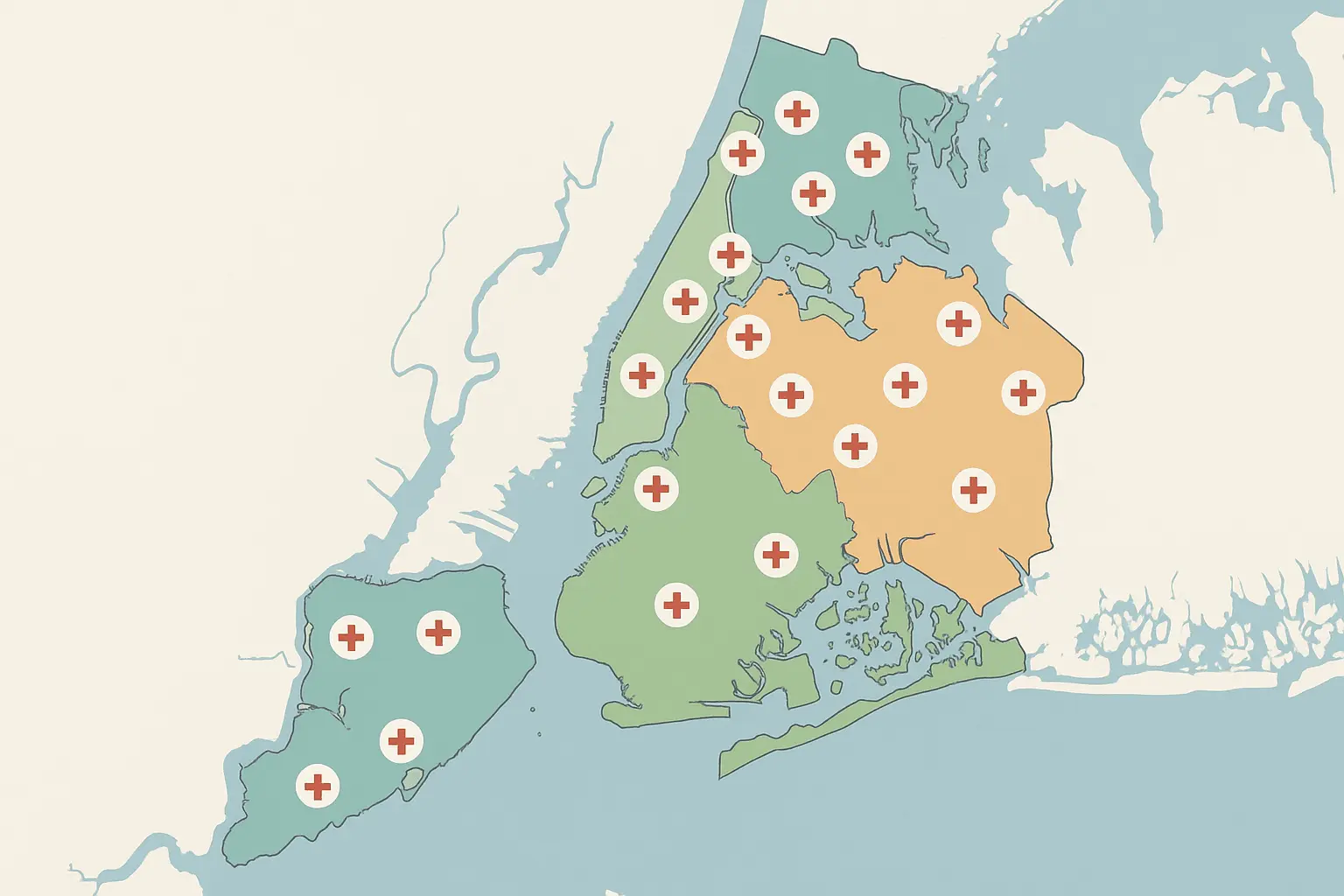
Manhattan hospitals definitely pay more, but let me give you the real scoop on what that means for your wallet. Yeah, you might make $10K more working in Manhattan, but you'll spend $200/month on parking, your commute will cost more, and lunch near the hospital will run you $15-20 instead of $8-12 in the outer boroughs. Sometimes that "premium" pay doesn't feel so premium after you factor in all the extra costs.
Brooklyn and Queens facilities may offer slightly lower base salaries but often provide better parking situations, shorter commutes for outer-borough residents, and more manageable patient loads. The Bronx and Staten Island facilities sometimes offer recruitment incentives and signing bonuses to attract qualified professionals.
Here's something most people don't consider: the shift you work can make or break your budget. Night shift differential is usually $5-8/hour, but night shift also means you're sleeping while everyone else is awake. Your social life takes a hit, but your bank account gets healthier. I did nights for two years - it was rough on my relationships, but I saved enough for a down payment on a condo.
|
NYC Borough |
Average Salary Range |
Benefits |
Considerations |
|
Manhattan |
$80,000-$120,000 |
Premium benefits, tuition reimbursement |
Higher costs, longer commutes |
|
Brooklyn |
$75,000-$105,000 |
Competitive benefits, parking |
Moderate costs, varied facilities |
|
Queens |
$70,000-$100,000 |
Standard benefits, some parking |
Lower costs, shorter commutes |
|
Bronx |
$68,000-$95,000 |
Recruitment bonuses, parking |
Lowest costs, community focus |
|
Staten Island |
$65,000-$90,000 |
Signing bonuses, parking |
Island commute, smaller facilities |
Want to know the fastest way to boost your earning potential? Get your bachelor's degree. I don't care if you think it's just a piece of paper - in NYC's competitive market, it opens doors that stay closed otherwise. Management positions almost always require a bachelor's degree, and those jobs pay $20K-30K more than staff positions.
I went back to school part-time while working full-time. Yeah, it was exhausting, but my hospital's tuition reimbursement program covered most of the cost. Three years later, I moved into a supervisor role with a $25K salary increase. The math is pretty simple - even if you pay for school yourself, you'll make that money back within two years of getting promoted.
Master's degrees in respiratory therapy, healthcare management, or clinical education can lead to director-level positions with compensation exceeding $130,000. Many NYC hospitals offer tuition reimbursement programs, making advanced education more financially feasible than you might expect.
For healthcare professionals pursuing advanced education, exploring affordable student housing NYC options can help manage costs while continuing your career.
Educational institutions like Brookdale Community College emphasize the importance of being adept with state-of-the-art technology in addition to providing bedside patient care, highlighting how technological proficiency directly impacts earning potential in today's healthcare environment.
Specialty certifications are your secret weapon for salary negotiations. The NPS (Neonatal/Pediatric Specialist) credential is gold in NYC because of all the children's hospitals. I've seen RTs get immediate $5K raises just for completing this certification. The SDS (Sleep Disorders Specialist) credential is another winner - sleep medicine is booming, and specialists are hard to find.
The National Board for Respiratory Care (NBRC) offers several specialty credentials that significantly boost earning potential. The Neonatal/Pediatric Respiratory Care Specialist (NPS) credential is particularly valuable in NYC's numerous children's hospitals, often adding $3,000-$8,000 to annual salaries.
But here's what really matters: you've got to be strategic about which certifications you pursue. Don't just collect credentials randomly. Look at the job postings for positions you want and see what they're asking for. If every ECMO job requires specific training, go get that training. If all the management positions want healthcare administration experience, start taking those courses.
Certification Checklist for Maximum Earning Potential:
The fastest salary bump I ever got was when I volunteered to be the night shift charge respiratory therapist. Nobody else wanted the responsibility, but it came with a $4/hour leadership differential plus the night shift premium. An extra $8/hour for doing work I was basically already doing anyway? That was an easy $16K raise.
Management positions represent the most direct path to higher compensation. Shift supervisor roles typically add $5,000-$10,000 to base salaries, while department manager positions can reach $100,000-$140,000 annually.
Here's my biggest piece of advice: don't wait for opportunities to come to you. I know RTs who've been doing the same job for 10 years and complaining about their salary. Meanwhile, they've never applied for a promotion, never asked for additional responsibilities, and never invested in their professional development. You want more money? You've got to actively pursue it.
My step-by-step plan for maximizing your income:
Michael transitioned from staff respiratory therapist to department supervisor at a Manhattan hospital by completing his bachelor's degree and obtaining NPS certification. His salary increased from $82,000 to $108,000, and he now oversees a team of 15 therapists while maintaining clinical responsibilities in the NICU.

Getting hired in NYC is different from anywhere else. The competition is fierce, but there are also way more opportunities if you know how to navigate the system.
The Bureau of Labor Statistics projects that about 8,800 openings for respiratory therapists are projected each year, on average, over the decade, indicating strong job availability nationwide with NYC representing a significant portion of these opportunities.
First thing you need to understand: it's all about relationships. I got my first NYC job because I knew someone who knew someone. That's not nepotism - that's just how this market works. The best positions get filled through internal referrals before they ever hit job boards.
Large hospital systems like NewYork-Presbyterian, Mount Sinai Health System, and NYU Langone Health maintain structured recruitment pipelines. These organizations often prefer hiring new graduates through their residency or fellowship programs, providing clear career development paths and mentorship opportunities.
The big hospital systems have their own quirks. NewYork-Presbyterian loves to promote from within, but they're notorious for long hiring processes. Mount Sinai moves faster but expects you to hit the ground running with minimal orientation. NYU Langone has great benefits but can be political. Learn these personalities before you interview.
For healthcare professionals new to the city, understanding how to meet people when you're new to New York can help build the professional networks essential for career advancement.
Here's something nobody tells you: timing matters huge in NYC hiring. Most hospitals do their major hiring pushes in spring and fall. Budget cycles, graduation schedules, and seasonal patient volumes all affect when positions open up. If you're job hunting in January or August, you might be waiting a while for the right opportunity.
Contract and travel positions can be a great way to get your foot in the door. I know several RTs who started as contract workers and got offered permanent positions after proving themselves. The hourly rate is usually higher, and you get to test out different hospitals before committing long-term.
Per-diem positions offer flexibility and the opportunity to work at multiple facilities, building diverse experience while maximizing earning potential. This approach works particularly well for experienced therapists who want variety and higher hourly compensation.
When you're interviewing, they're going to ask about your experience with specific equipment and protocols. Don't BS your way through these questions - they'll figure it out quickly once you're on the floor. But do emphasize your willingness to learn and adapt. NYC hospitals want people who can handle whatever gets thrown at them.
Salary negotiation in NYC is expected, but you've got to do it right. Come armed with specific salary data for your experience level and the position you're seeking. Don't just ask for more money - explain why you're worth it. That NPS certification, your ICU experience, your willingness to work nights - these are all negotiating points.
Consider the complete compensation package when evaluating offers. Health insurance premiums in NYC can be substantial, so comprehensive coverage represents significant value. Professional development benefits, including tuition reimbursement and conference attendance, can be worth thousands annually.
Job Search Strategy Checklist:

Here's the truth about building a career in NYC healthcare: it's a marathon, not a sprint. The people who burn out are usually the ones who try to do everything at once or who don't pace themselves for the long haul.
Continuing education isn't just about meeting state requirements - it's about staying competitive. I budget about $2,000 annually for conferences, online courses, and certification maintenance. Sounds like a lot, but it's paid for itself many times over in salary increases and job opportunities.
New York State requires 30 hours of continuing education every three years for license renewal, including mandatory courses in infection control and child abuse recognition. Many employers offer tuition reimbursement for continuing education, making it cost-effective to exceed minimum requirements.
Advanced coursework in emerging areas like ECMO, high-frequency ventilation, or COVID-19 protocols positions you for specialty roles with higher compensation. These skills are particularly valuable in NYC's major medical centers, which often serve as referral centers for complex cases.
Professional networking isn't just about finding jobs - it's about staying current with industry trends and best practices. I've learned about new treatment protocols, equipment updates, and career opportunities just from casual conversations at professional meetings.
The American Association for Respiratory Care (AARC) provides salary surveys, job placement services, and professional development resources. Their annual salary survey offers detailed compensation data by geographic region, showing NYC respiratory therapists earning 25-35% above national averages.
Start networking before you need a job. Join the New York State Society for Respiratory Care, go to their meetings, and actually talk to people. I know it's awkward if you're not naturally social, but push through it. The person sitting next to you at a boring continuing education seminar might be the one who tells you about a perfect job opening six months later.
For healthcare professionals building their careers, understanding the best neighborhoods with affordable rentals in Manhattan can help optimize both career growth and financial stability.
Here's something that took me years to figure out: you need mentors at different career stages. Find someone who's doing the job you want in five years, and learn from them. But also mentor newer RTs yourself - it keeps you sharp and builds your reputation as a leader.
Jennifer leveraged her membership in the New York State Society for Respiratory Care to transition from a community hospital in Queens to a prestigious Manhattan medical center. Through networking at society events, she learned about an unadvertised ECMO specialist position that increased her salary by $18,000 annually.
Work-life balance is crucial for long-term success. NYC healthcare can be all-consuming if you let it. Set boundaries early and stick to them. I've seen too many good RTs burn out because they couldn't say no to extra shifts or because they brought work stress home every day.

The future looks pretty bright for respiratory therapists, especially in NYC. The aging population means more respiratory conditions, and advances in technology are creating new specialties that didn't exist when I started my career.
Data shows that respiratory therapists earn 7% more than similar careers in New York, demonstrating the competitive advantage of choosing this profession in the state's healthcare market.
The Bureau of Labor Statistics projects 13% growth in respiratory therapy employment through 2031—significantly faster than average occupations. In NYC, the aging population and high rates of respiratory conditions create sustained employment opportunities and upward pressure on salaries.
COVID-19 changed everything for our profession. Suddenly, everyone understood how critical respiratory therapists are to patient care. That recognition translated into better working conditions, higher salaries, and more respect from other healthcare professionals. It's about time, honestly.
Emerging treatments for sleep disorders, pulmonary rehabilitation, and home mechanical ventilation expand practice opportunities beyond traditional hospital settings. These new practice areas often offer competitive compensation and better work-life balance than traditional hospital positions.
ECMO is huge right now in major medical centers. If you can get trained on extracorporeal membrane oxygenation, you're looking at premium pay and job security. The training is intense, but ECMO specialists are making $10K-20K more than regular ICU RTs.
Sleep medicine is another growing field. With more people being diagnosed with sleep disorders, there's increasing demand for respiratory therapists who specialize in sleep studies and CPAP management. The work is usually daytime hours with better work-life balance, which appeals to a lot of people as they get older.
Remote patient monitoring and telehealth initiatives create new roles combining clinical expertise with technology management. These positions often offer flexible schedules and may command premium compensation due to the specialized skill set required.
Home care and telehealth are creating new opportunities outside traditional hospital settings. Some RTs are building successful practices providing home ventilator management, and others are working for companies that monitor patients remotely. These roles often offer flexibility and can pay surprisingly well.
The technology side of respiratory care is exploding. Artificial intelligence, remote monitoring, and advanced ventilator systems are creating opportunities for tech-savvy RTs to work in product development, training, and implementation. These jobs often pay more than traditional clinical roles and offer different career paths.

Look, working as a respiratory therapist in NYC isn't easy. The cost of living is brutal, the work is demanding, and the competition is intense. But if you're willing to put in the work - both clinically and professionally - you can build a really solid career here.
The money is definitely better than most other places, but more importantly, the experience you'll gain is invaluable. I've worked in other states since my NYC years, and that experience opened doors everywhere I went. Employers know that if you can handle NYC healthcare, you can handle anything.
Your earning potential extends far beyond base salary when you factor in premium pay differentials, overtime opportunities, and comprehensive benefits packages. The key is positioning yourself strategically—whether through advanced education, specialty certifications, or leadership development—to take advantage of the highest-paying opportunities.
My advice? Come here early in your career if you can swing it financially. Do your time in the trenches, learn everything you can, build your network, and then decide if you want to stay long-term or take those skills somewhere with a lower cost of living.
The field's strong growth projections and technological advancement create exciting opportunities for career diversification and increased compensation. By staying current with industry trends and investing in your professional development, you can build a rewarding career that provides both financial security and professional satisfaction in one of the world's most dynamic healthcare markets.
Just remember - it's not just about the paycheck. Build relationships, invest in your education, and always be thinking about your next career move. The RTs who are most successful here are the ones who approach their careers strategically and never stop learning.

Household supplies can be changed or decreaased at Outpost Club’s discretion, or based on supply availability. Outpost is not responsible for temporary losses of utility service. Outpost Club is not responsible for any damages due to absence of any supplies or utilities


If you have a sales related question please call
680-688-7678

 Hot Deals