The Real Cost of Living in Washington State: What Nobody Tells You About America's Most Expensive Housing Market
Dec 10, 2025

Dec 10, 2025
Look, I'm not going to sugarcoat this - Washington State has some seriously expensive living costs. We're talking an average of $2,468 per month just on household bills, making us the 8th most expensive state according to DoxoINSIGHTS analysis. That's $5,000 more per year than the national average. Most households here? They're dropping 37% of their income just on the basics.
I've watched Washington's housing market turn into an absolute nightmare over the past few years. Here's the deal: where you choose to live can literally make or break your financial future. Seattle's driving our expensive reputation with home prices hitting $850K-$950K, and most people are spending 40-50% of their income just on rent. Head east though, and you might catch a break with prices around $400K-$500K. But here's the kicker - we're short about 250,000 housing units statewide, so even the "cheaper" areas are getting competitive.
The numbers from Spokane Realtors analysis are pretty sobering. Washington's average mortgage payment hits $1,854 per month compared to $1,321 nationally. Rent? We're looking at $1,476 versus $1,191 nationally. These aren't just numbers - they're why so many people I know are struggling to make it work here.
For some perspective on how we stack up against other expensive places, checking out the cost of living in Brooklyn is eye-opening. We're basically competing with New York City prices, but without nearly as many high-paying jobs to go around.
We're talking serious money here. King County's median home prices sit between $850,000 and $950,000 right now. Even condos will run you $600,000 to $700,000. Yeah, the market cooled down a bit from those insane pandemic peaks, but don't expect any bargains.
First-time buyers? You're looking at needing $100,000+ in cash just to compete. Multiple offers are still the norm, not the exception.
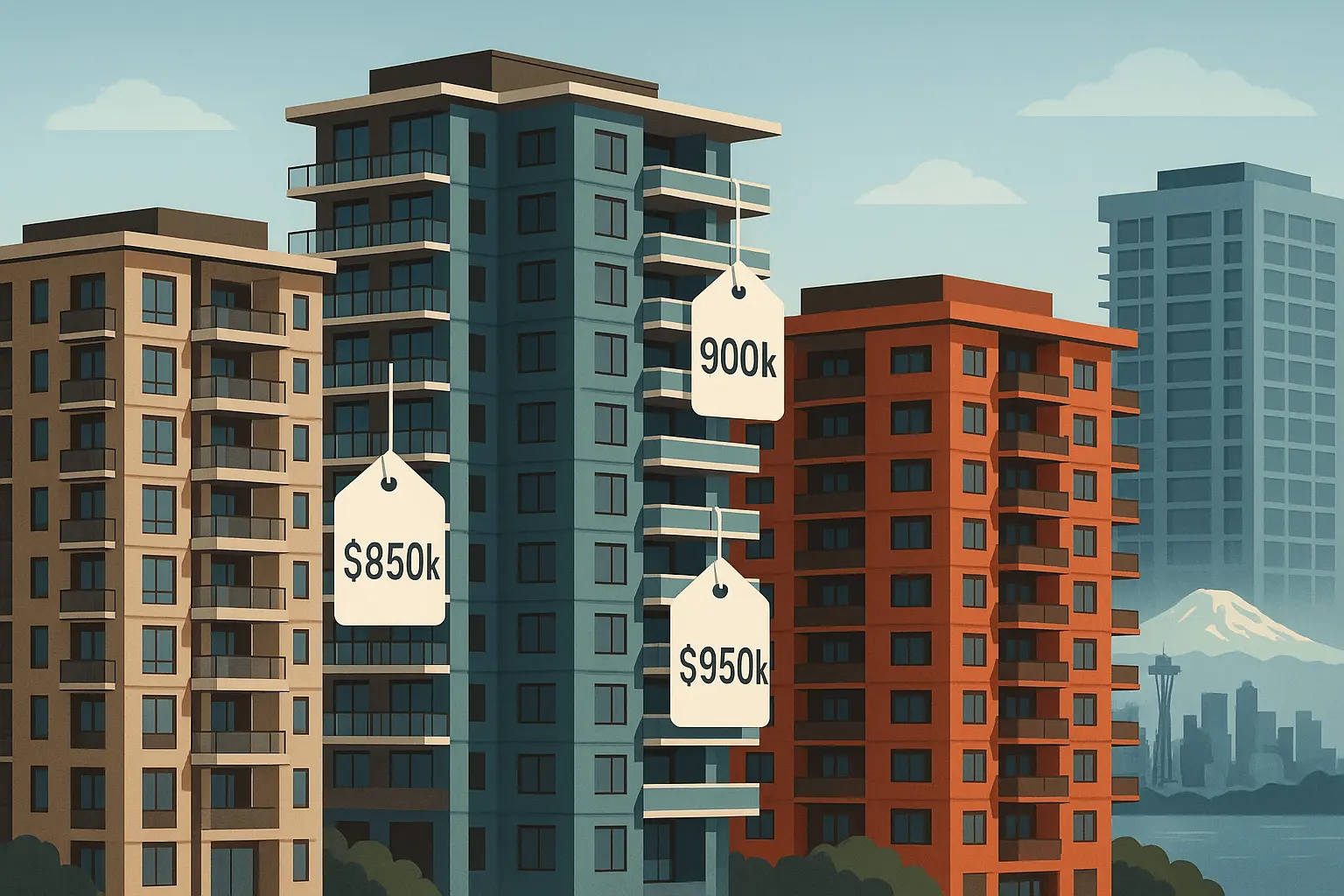
My neighbors, the Johnsons, make decent money - $120K between them. Should be enough, right? Wrong. After getting pre-approved for only $480K, they got outbid on twelve different houses. TWELVE. They finally gave up and moved to Spokane, where they actually found something they could afford for $425,000. Their story? I hear it constantly from people trying to make homeownership work in this market.
Seattle proper demands $1,800 to $2,200 for a one-bedroom apartment. Two bedrooms? Get ready to shell out $2,500 to $3,200 monthly. And if you're looking at tech hubs like Bellevue and Redmond, expect to pay even more because everyone wants to live close to work.
Here's where the math gets ugly. Most people here are spending 40-50% of their income on housing - way above that recommended 30%. Middle-income earners get hit the hardest because they make too much for assistance programs but can't afford market-rate housing.
|
Housing Type |
Seattle |
Bellevue |
Spokane |
Yakima |
|
1-Bedroom Apt |
$1,800-$2,200 |
$2,000-$2,400 |
$900-$1,200 |
$700-$950 |
|
2-Bedroom Apt |
$2,500-$3,200 |
$2,800-$3,500 |
$1,200-$1,600 |
$900-$1,300 |
|
Median Home Price |
$850K-$950K |
$900K-$1.1M |
$400K-$500K |
$350K-$450K |
Eastern Washington cities like Spokane offer real relief with median home prices around $400,000 to $500,000. Coastal areas like Bellingham split the difference between Seattle madness and eastern sanity.
I looked into this recently and found that "Eastern Washington for affordability" shows cities like Wenatchee, Spokane, Yakima, Walla Walla, Cheney, Grandview, and Sunnyside as the most affordable places in Washington for 2025. These places give you breathing room if you've been priced out of western Washington.
But here's the catch nobody talks about: job opportunities and wages often tank as housing costs drop. You've got to weigh career prospects against housing affordability, and that math doesn't always work out.
Housing Reality Checklist:
Transportation here is weird. If you live in Seattle, you can take Sound Transit for about $150-200 a month - not terrible if it actually goes where you need to go. But coverage is pretty limited, so most people end up needing a car anyway. And our gas prices? Always $0.20-$0.40 higher than the national average. Always.
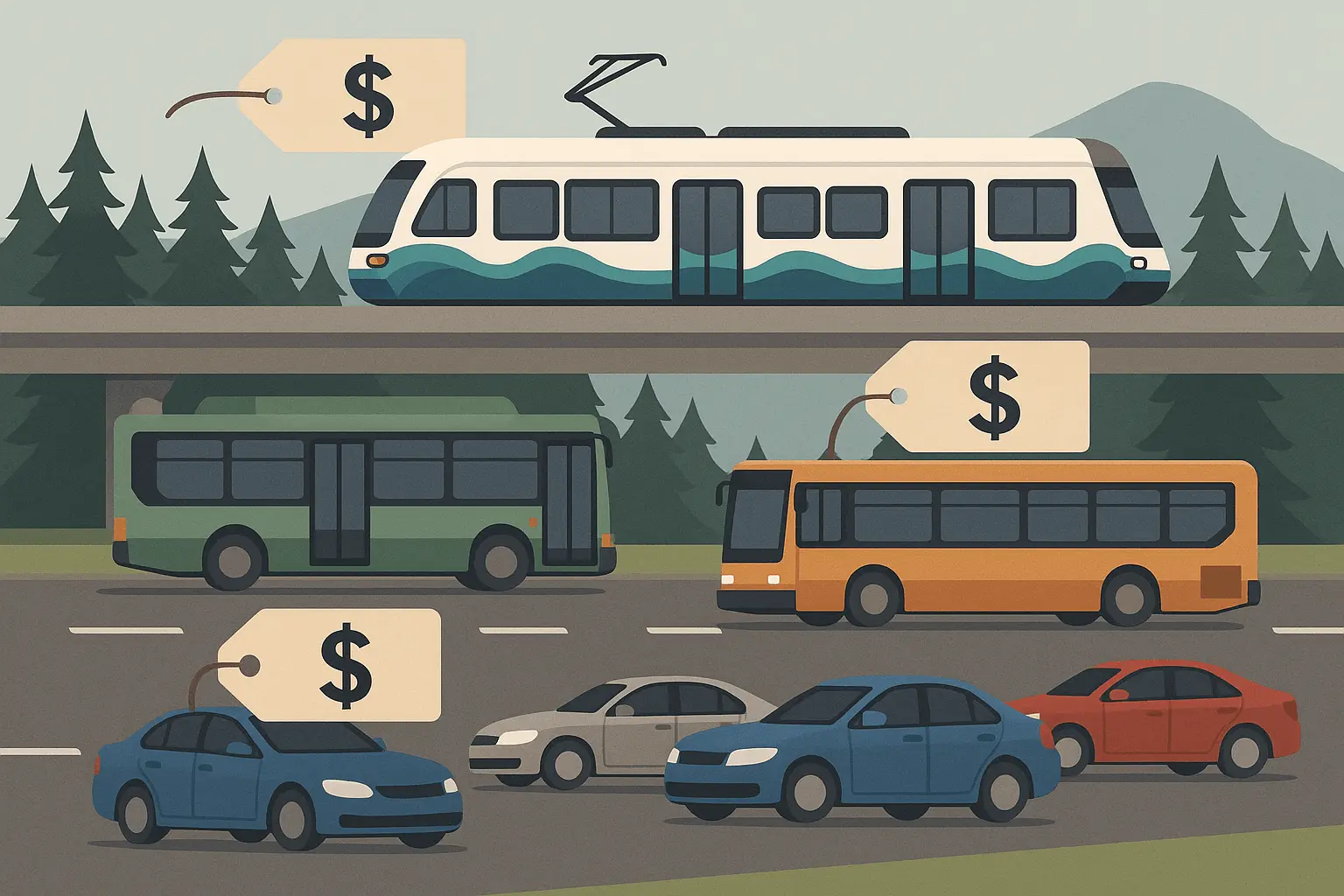
Sound Transit's light rail system is actually pretty solid if you live and work along the routes. Monthly passes cost $150 to $200, which beats owning a car if you can make it work for your daily routine.
The problem? Coverage is still pretty limited. It works great for central Puget Sound, but if you live anywhere else, you're basically stuck with a car.
My friend Maria lives in Capitol Hill and works in Bellevue. She ditched her car and saves about $400 a month by using Sound Transit. Her $180 monthly pass covers her commute, and she uses car-sharing for weekend trips - total transportation costs under $250 monthly versus $650+ for car ownership. But she had to pick her apartment specifically based on transit access.
Our gas prices consistently run $0.20 to $0.40 above national averages. Vehicle registration and insurance costs reflect everything else here - they're just more expensive.
And don't even get me started on the commutes. I know people driving 60-90 minutes each way just to find housing they can afford. At that point, transportation becomes a major budget line item.
|
Transportation Option |
Monthly Cost |
Annual Cost |
Best For |
|
Sound Transit Pass |
$150-$200 |
$1,800-$2,400 |
Urban commuters |
|
Vehicle Ownership |
$550-$750 |
$6,600-$9,000 |
Suburban/rural folks |
|
Bike + Transit Combo |
$100-$150 |
$1,200-$1,800 |
Short-distance commuters |
|
Car-sharing + Transit |
$200-$300 |
$2,400-$3,600 |
Occasional drivers |
Here's the thing about utilities in Washington - we've got some advantages, but they don't always translate to cheaper bills. Our hydroelectric power keeps electricity rates competitive, but when you add up internet, waste management, and everything else, you're still looking at $150-$300 monthly. Health insurance? Individual plans average $400-$600 monthly.
Even with lower electricity rates, we still pay more overall for utilities - $389 per month compared to the national average of $351, according to DoxoINSIGHTS data. Those little differences add up fast when you're already stretched thin.
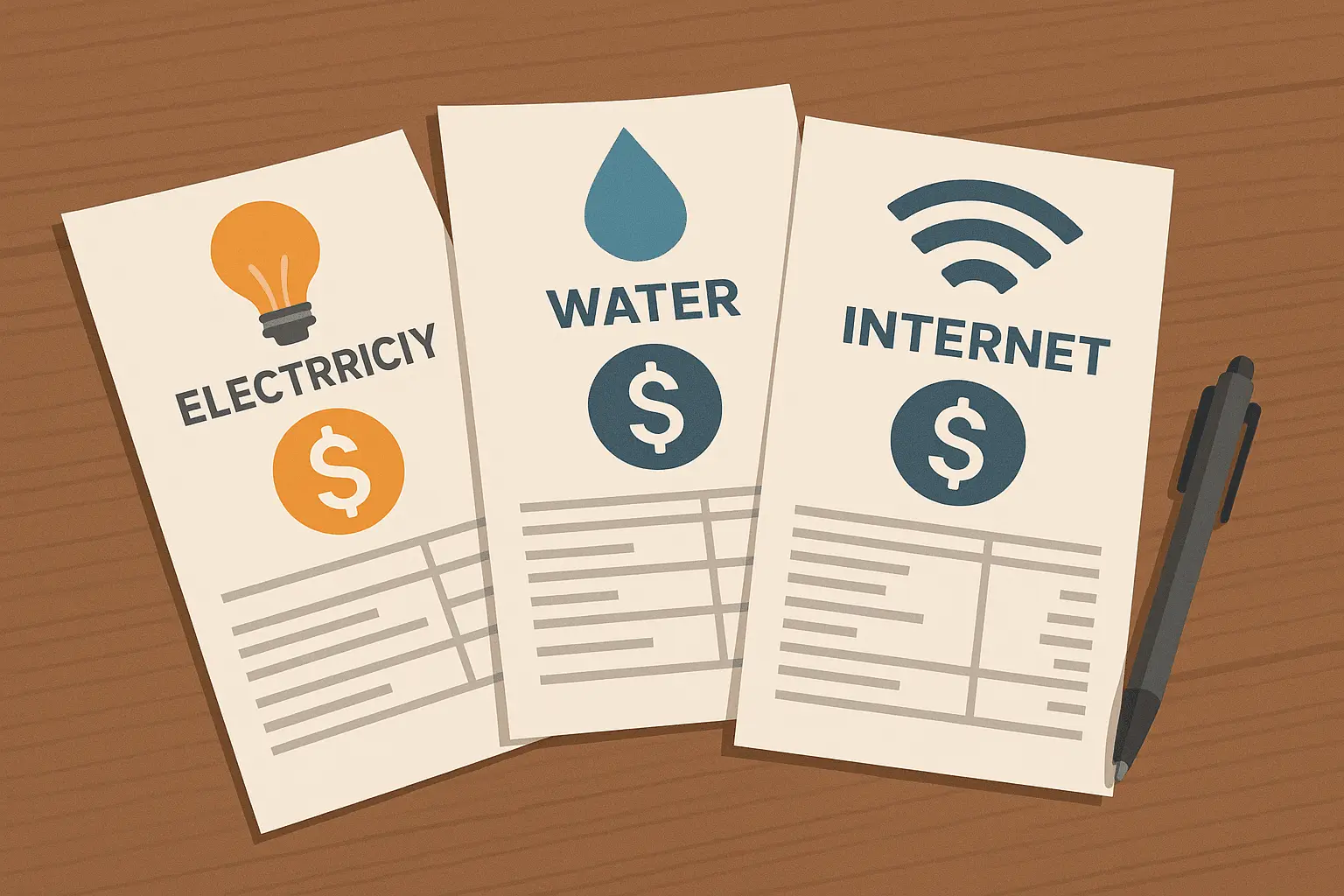
Washington's hydroelectric advantage keeps electricity rates at $0.10 to $0.12 per kWh, which is actually below national averages. Natural gas and heating costs vary a lot depending on where you live and what kind of place you've got.
Your total monthly utility bill will probably run $150 to $300, depending on your situation. Apartment dwellers usually pay less because of shared systems, while single-family homeowners get hit with the full cost.
Urban areas have decent high-speed internet options for about $60 to $100 monthly. But if you're in a rural area? Good luck. Limited choices, higher costs, and it's frustrating as hell if you're trying to work remotely from somewhere more affordable.
What You'll Actually Pay for Utilities:
Individual health insurance market premiums average $400 to $600 monthly for decent coverage. If you've got employer-sponsored family coverage, you're probably still paying $200 to $400 out of your paycheck.
Routine medical visits, dental care, specialty treatments - everything costs more in the major metro areas. I know people who drive to smaller cities for more affordable healthcare.
Your grocery bill here? Yeah, it's about 10-15% higher than wherever you came from. Labor costs, transportation, market dynamics - it all adds up. Eating out casually runs $15-$25 per person, and if you want to hit up a nice restaurant, you're looking at $50-$100+ per person. The good news? Our state parks are only $35 annually, so at least outdoor fun won't break the bank.
Washington State's grocery index hits 109.70 compared to the national baseline of 100, according to World Population Review Cost of Living Index data. That $100 grocery run back home? That's $110 here, every single time.
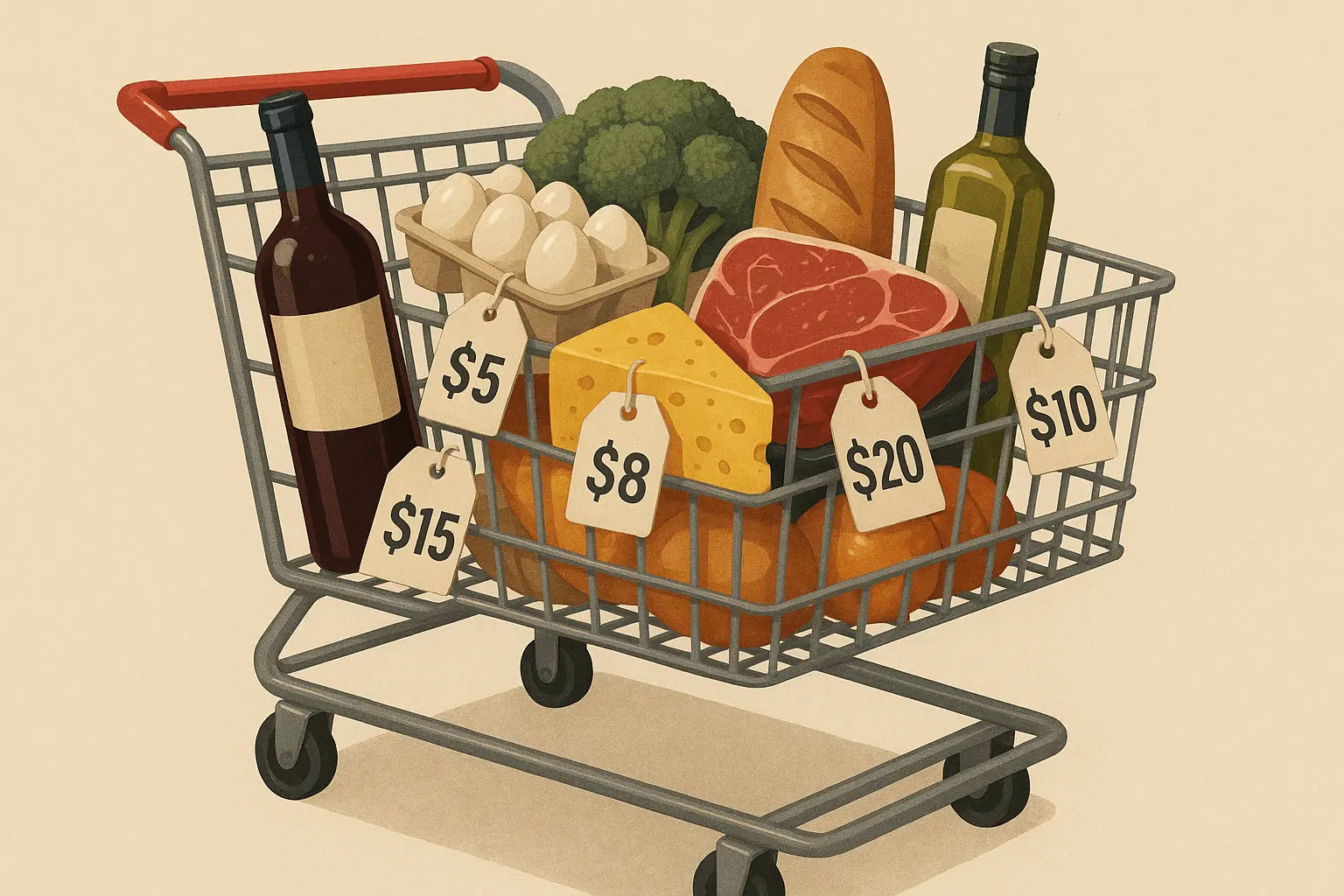
Washington's grocery prices consistently run 10-15% above national averages. Higher labor costs, transportation expenses, and regional market dynamics all contribute to this.
Casual dining averages $15 to $25 per person, while fine dining experiences range from $50 to $100+ per person. Seattle's restaurant scene commands premium pricing that rivals other major cities.
The Chen family of four spends $1,200 monthly on groceries in Bellevue - $300 more than they paid in Phoenix. They've gotten smart about shopping at Costco and ethnic markets, bringing it down to $950 monthly, but they're still paying way more for the same stuff they used to buy. It's one of those hidden costs that really adds up.
Here's some good news - Washington's outdoor recreation is actually a great value. State park passes cost around $35 annually, giving you access to incredible hiking, camping, and water activities.

Skiing, hiking, water sports - these offer relatively affordable fun compared to indoor entertainment. Taking advantage of what's naturally here can help offset some of those brutal living costs.
What You'll Spend on Fun Each Month:
Here's where things get really interesting. Washington's got this massive income inequality between tech workers pulling in $150K-$400K+ and service sector folks making $15-$20 hourly. Stock compensation makes tech incomes super volatile, while public sector workers earning $50K-$80K are getting squeezed hard by housing costs. Eastern Washington's got different math with agricultural and manufacturing jobs - lower wages but also lower living costs.
A recent study highlighted by Fox 13 Seattle found that "Washington residents face some of the highest income requirements in the nation to maintain a comfortable lifestyle in 2025," with singles needing over $100,000 annually. That's not luxury living - that's just comfortable.
Technology professionals here enjoy some of the nation's highest compensation packages. Total compensation often reaches $150,000 to $400,000+ for experienced folks at companies like Amazon, Microsoft, and Meta.
But here's the thing about stock compensation - it creates crazy income swings. I know people whose "salary" looks great on paper, but their actual take-home varies wildly based on how the market's doing.
Healthcare workers, teachers, government employees, service industry folks - they're all feeling the pressure. Teachers and firefighters might earn $50,000 to $80,000 annually, but good luck affording to live where you actually work.
Service industry workers earning $15 to $20 per hour? Many need multiple jobs or brutal commutes from more affordable areas just to survive. Watching friends leave because they can't afford to stay here anymore hits different. These aren't people making minimum wage - these are folks with decent jobs who just can't make the math work.

Eastern Washington's agricultural and manufacturing economy offers different trade-offs. Farm workers and ag professionals earn $35,000 to $60,000 annually but benefit from way lower housing costs.
Boeing and other manufacturing employers provide middle-class wages around $60,000 to $90,000, with union benefits helping offset cost pressures. Recent layoffs have created uncertainty though.
Given Washington's crushing housing and transportation costs, getting smart about recreation becomes crucial if you want any quality of life left after paying your bills.
Traditional country club memberships here are absolutely insane - we're talking initiation fees of $50,000 to $100,000+ plus monthly dues over $500 to $800. When you're already spending half your income on housing, those ongoing costs are just ridiculous.
I stumbled across this thing called Outpost Club recently. Instead of dropping $100K to join some stuffy local country club (who has that kind of cash lying around?), you get access to golf courses all over the country. This actually makes sense for Washington residents dealing with limited free time due to long commutes and high living costs.
Their concierge services help you make the most of whatever free time you've got while giving you access to incredible courses when you travel. Your recreation budget works way more efficiently when you're not tied down to expensive local facility overhead.
Want to see how strategic recreation choices can actually fit your Washington budget? Discover Outpost Club membership options and check out how they're helping people in expensive markets enjoy world-class golf without the traditional financial burden.
Washington State's cost of living is no joke, and it requires some serious strategic thinking. Housing will probably eat 40-50% of your income no matter where you land in the state, but there are significant differences depending on your choices. Seattle's premium pricing hits every aspect of daily life, while Eastern Washington offers real relief if you can make the career trade-offs work.
Living here forces you into complex calculations that previous generations never had to deal with. Transportation decisions become huge - Sound Transit access can save you thousands annually compared to owning a car, but coverage limitations mean most people still need vehicles. Smart recreation choices, strategic housing decisions, and realistic income expectations will determine whether you can actually make it work in one of America's most expensive states.
The income gap between tech workers and everyone else keeps getting wider, creating displacement that affects entire communities. Understanding these dynamics helps you make informed decisions about where to live, work, and spend whatever discretionary income you have left in Washington's challenging but incredible market.
Look, I'm not trying to scare you away from Washington. This place is amazing - the mountains, the coffee, the fact that you can ski and surf in the same day if you're crazy enough. But go in with your eyes wide open. This isn't a place where you accidentally stumble into financial comfort. You need a plan, you need to be smart about where you live, and you might want to learn to love hiking because it's one of the few things that won't cost you extra.

Household supplies can be changed or decreaased at Outpost Club’s discretion, or based on supply availability. Outpost is not responsible for temporary losses of utility service. Outpost Club is not responsible for any damages due to absence of any supplies or utilities


If you have a sales related question please call
680-688-7678

 Hot Deals