Train Operator Salary NYC: What You'll Actually Earn Working for the MTA
Jan 8, 2026

Jan 8, 2026
Look, if you're considering becoming an MTA train operator, you probably want to know one thing: what will you actually make? Not the corporate HR speak - the real numbers.
The Metropolitan Transportation Authority runs one of the world's biggest transit systems, and they pay accordingly. With all the recent labor drama affecting transit systems around the region, understanding what MTA actually offers becomes even more important.
Here's what you can expect to earn, from day one through your entire career. And honestly? The numbers might surprise you - especially once you factor in overtime and the benefits package.
The MTA uses a pretty straightforward pay system based on experience and time on the job. No guesswork, no surprises - you know exactly where you stand and what you need to do to move up.
This transparency is actually refreshing compared to most private sector jobs where you're constantly wondering if you're getting screwed on salary.
|
Experience Level |
Base Salary Range |
Overtime Potential |
Total Compensation |
|
Entry-Level (0-2 years) |
$71,000-$75,000 |
$15,000-$25,000 |
$86,000-$100,000 |
|
Mid-Career (3-7 years) |
$78,000-$85,000 |
$20,000-$35,000 |
$98,000-$120,000 |
|
Experienced (8-15 years) |
$85,000-$95,000 |
$25,000-$40,000 |
$110,000-$135,000 |
|
Senior/Specialized (15+ years) |
$95,000-$105,000 |
$30,000-$45,000 |
$125,000-$150,000 |
New operators typically start around $71,000-$75,000 annually. The exact number depends on which division you join and whatever union contract is in effect when you get hired.
Starting at $71K-$75K puts you solidly in middle-class territory right off the bat. When people ask how much do MTA train operators make at the entry level, that range reflects the fact that this isn't some minimum-wage gig - it's skilled work that requires serious training.
Your exact starting pay depends on where you end up. Subway operators often start higher because, let's be honest, operating underground with millions of passengers is more complex than bus routes. Bus operators might start a bit lower, while railroad folks (LIRR and Metro-North) fall somewhere in between.
Union contracts matter too. TWU Local 100 negotiates increases regularly, so timing your application around contract renewals could bump up your starting pay.
Take Maria - she started as a subway operator in 2023 at $73,500. After her probationary period and working some strategic weekend overtime, her first year total hit $95,000. By year two, with regular OT and night differential, she pulled in $108,000 while building toward her pension.
Once you've got 5+ years under your belt, you're looking at $85,000-$95,000 base salary. Top operators can hit $100,000+ before any overtime.
Experience really pays off in this system. After five years, you see a significant jump that reflects your proven track record and expertise. But it's not automatic - performance reviews, safety record, and attendance all factor in.
Operators who consistently nail customer service, maintain perfect safety records, and show leadership potential hit the higher end faster. Those $100K+ base salaries typically come after 10-15 years and often involve specialized training or mentoring newer operators.

The base salary is just the starting point. The real money comes from overtime, benefits, and all the extras that most people don't think about.
Here's where things get interesting. Operators regularly have access to overtime, holiday pay, and night differential that can add $20,000-$40,000 annually if you're willing to work the extra hours.
The overtime game is where many operators really boost their earnings. MTA runs 24/7, which means constant demand for coverage - especially during holidays, service disruptions, and peak travel times.
Holiday pay is particularly sweet. Working major holidays typically means double-time, so you're earning two days' pay for eight hours of work. Smart operators volunteer for these shifts knowing they can make a week's pay in a single day.
Night differential adds extra cash for overnight shifts. Usually $1-3 per hour extra for working between 11 PM and 7 AM. Over a full year, that adds up to several thousand dollars.
Weekend premium pay is another opportunity. Saturday and Sunday work often carries additional compensation, especially if you're called in last minute or working outside your regular schedule.
Understanding how much do MTA train operators make with these premium opportunities is key to maximizing your earnings potential.
The benefits package is where MTA employment really shines - comprehensive health insurance, dental, vision, pension contributions, and paid time off add an estimated $25,000-$35,000 in annual value.
Health insurance alone would cost you $15,000-$20,000 annually if you bought it yourself, and MTA covers most of it. Dental and vision extend to your whole family, which is huge if you have kids who need regular care or family members with glasses.
Paid time off starts generous and gets better with time. New operators get 2-3 weeks vacation plus sick and personal days. After several years, you're looking at 4-5 weeks paid vacation annually.
The pension contribution might be the most valuable long-term benefit. MTA contributes significantly to your retirement fund - essentially free money that compounds over your entire career. This alone can be worth $5,000-$10,000 annually in present value.
Safety bonuses, attendance incentives, and longevity increases can add $2,000-$5,000 annually for operators who go above and beyond basic requirements.
Safety bonuses reflect MTA's commitment to accident-free operations. Perfect attendance bonuses reward operators who don't use sick days during a calendar year - recognizing that reliable attendance is crucial for maintaining schedules.
The dedication required was recently highlighted when Leon George, a 47-year NYCT veteran with first seniority among Train Operators, was remembered for never taking a sick day in over 30 years according to Transport Workers Union Local 100. That's the level of commitment that gets recognized.
Longevity increases kick in at service milestones - 5, 10, 15, and 20 years. Customer service recognition programs provide monetary rewards for operators who receive positive passenger feedback or handle challenging situations exceptionally well.
The MTA provides clear paths for moving up, allowing ambitious operators to advance into supervisory or specialized roles with corresponding salary bumps.
Train operators can move up to conductor supervisor, train dispatcher, or operations supervisor roles, typically earning $95,000-$120,000 annually with management responsibilities.
Supervisory positions are the most common advancement path. These roles combine your operational knowledge with management duties, overseeing other operators and ensuring smooth daily operations.
Conductor supervisors earn $95,000-$105,000 annually managing teams across specific routes or shifts. You handle scheduling, performance evaluations, and operational issues that come up during service.
Train dispatchers control train movements from command centers, earning $100,000-$115,000 annually. This requires extensive system knowledge and the ability to make quick decisions affecting thousands of passengers.
Operations supervisors oversee larger system sections, earning $110,000-$120,000 annually. These positions often require additional training in budget management, personnel administration, and strategic planning.

There are opportunities in training instruction, safety compliance, and technical maintenance coordination, offering $90,000-$110,000 with specialized requirements and unique job satisfaction.
Training instructor positions let experienced operators teach new hires. These roles typically pay $90,000-$100,000 annually and offer the satisfaction of shaping the next generation of transit professionals.
Safety compliance specialists earn $95,000-$110,000 annually ensuring all operations meet federal and state regulations. This combines operational experience with regulatory knowledge and often involves investigating incidents and developing safety protocols.
Technical maintenance coordination bridges operations and maintenance departments. Earning $90,000-$105,000 annually, these roles require understanding both train operation and mechanical systems.
Quality assurance positions involve monitoring service delivery and identifying improvements. These typically pay $85,000-$100,000 annually and appeal to operators who enjoy analytical work.
Getting hired as an MTA train operator isn't just about filling out an application. There's a specific process designed to ensure only qualified candidates operate New York's critical transit infrastructure safely.

The MTA maintains strict standards focusing on safety, reliability, and the ability to handle high-stress situations while serving millions of daily passengers.
You need a high school diploma or equivalent, clean driving record, and demonstrated mechanical aptitude through written and practical assessments.
The educational requirements are straightforward but non-negotiable. Your diploma or GED shows basic competency, while your driving record reflects your ability to operate vehicles safely and responsibly.
Mechanical aptitude testing evaluates your understanding of basic principles, spatial reasoning, and problem-solving. You don't need formal training, but you should be comfortable with concepts involving gears, levers, and electrical circuits.
Customer service experience helps, though it's not always required. Previous work in retail, hospitality, or public-facing roles shows you can stay calm and professional with difficult passengers.
Military experience often provides an advantage, demonstrating discipline, procedure-following ability, and experience in high-stress environments. Veterans may qualify for hiring preferences.
Pre-Application Checklist:
You must pass comprehensive medical exams including vision, hearing, and cardiovascular tests, plus demonstrate physical capability to handle emergencies and extended work periods.
Vision requirements are strict since you'll read signals, gauges, and track conditions. You need 20/20 vision (corrected or uncorrected) and normal color vision to distinguish signal colors.
Hearing tests ensure you can detect audio warnings, radio communications, and unusual sounds indicating mechanical problems. The standards are specific since hearing is crucial for safe operation.
Cardiovascular fitness requirements reflect job demands. You need to handle emergency stress, work long shifts, and potentially walk significant distances along tracks if needed.
Medical exams also screen for conditions causing sudden incapacitation - epilepsy, insulin-dependent diabetes, or certain heart conditions. These restrictions protect both you and passengers depending on safe service.
James, a former retail manager, initially worried about physical requirements but discovered his weekend hiking hobby and clean medical history made him ideal. His customer service background gave him an interview advantage, showing his ability to handle difficult situations professionally.
The MTA hiring process is thorough and competitive, designed to identify candidates who can safely operate trains while providing excellent customer service.
Candidates must pass written exams covering mechanical reasoning, reading comprehension, and situational judgment, followed by psychological evaluations and background checks.
The written exam tests multiple competency areas. Mechanical reasoning questions evaluate your understanding of how machines work, while reading comprehension ensures you can understand complex procedures and safety protocols.
Situational judgment questions present job scenarios and ask you to choose the best response. These test decision-making abilities, customer service skills, and understanding of safety priorities.
Psychological evaluations assess mental fitness for a high-stress, high-responsibility position. The evaluation looks for conditions that could impair judgment or create safety risks during operations.
Background checks are extensive, including criminal history, employment verification, and reference checks. MTA needs to ensure operators are trustworthy and reliable, given their public safety responsibility.

Selected candidates complete 6-8 months of intensive training covering safety protocols, equipment operation, emergency procedures, and customer service, with ongoing evaluation throughout.
The training program is comprehensive and demanding. You'll spend months learning every aspect of train operation, from basic controls to complex emergency procedures. It combines classroom instruction with hands-on practice under supervision.
Safety protocols receive heavy emphasis. You'll learn federal regulations, MTA-specific procedures, and emergency response protocols. Safety isn't just a priority - it's the foundation of everything you'll do.
Equipment operation training covers multiple train types and systems. You'll learn specific controls, gauges, and procedures for different equipment, ensuring safe operation regardless of assignment.
Customer service training prepares you for passenger interactions. You'll learn to make clear announcements, handle complaints, and maintain professionalism in challenging situations.
Ongoing evaluation ensures you're mastering the material. Instructors monitor progress closely, providing additional support and ensuring you meet all competency standards before graduation.
Training Program Timeline:
Successful operators continuously develop skills through ongoing training, safety updates, and professional development opportunities that enhance performance and earning potential.
Operators must complete annual safety recertification, emergency response training, and equipment updates to maintain operating credentials and ensure current safety standards.
Annual recertification isn't just paperwork - it's essential for maintaining credentials. These sessions update you on new procedures, equipment changes, and lessons learned from system incidents.
Emergency response training evolves constantly as MTA learns from real situations and incorporates new best practices. You'll regularly practice scenarios involving medical emergencies, evacuations, and equipment failures.
Equipment updates become necessary as MTA modernizes its fleet. New train cars have different controls and features, requiring additional training to maintain certification across all equipment types.
Federal regulations change periodically, requiring updated training for compliance. These updates often reflect lessons from incidents across the national transit industry, not just MTA.
Ongoing training benefits career development. Each certification and training completion adds to your qualifications and can open doors to specialized roles or advancement opportunities.

The job market for train operators in NYC remains solid due to the essential nature of public transportation, ongoing system expansion, and regular workforce turnover creating consistent opportunities.
Train operators enjoy exceptional job security due to transit's critical nature, strong union protection, and MTA's status as a stable government employer with consistent funding.
Regular retirements and career transitions create approximately 200-400 new train operator positions annually, providing steady entry opportunities while maintaining staffing levels.
The steady stream of retirement openings creates consistent hiring opportunities. Many current operators hired in the 1980s and 1990s are reaching retirement age, opening positions regularly.
Career transitions within MTA also create openings. Experienced operators often move into supervisory roles, training positions, or other departments, creating vacancies that need filling by new hires.
System expansion projects occasionally create additional positions. New routes, extended service hours, or increased frequency all require additional operators to maintain service levels.
The essential nature of transit service means these positions can't be eliminated or outsourced. Unlike many industries facing automation or overseas competition, train operation requires local, trained professionals who understand the specific system.
Union protection provides additional job security. Transport Workers Union Local 100 has a strong track record of protecting member jobs and negotiating favorable working conditions that make termination difficult except for serious safety violations.
The critical importance of transit workers was recently demonstrated when New Jersey Transit's train engineers reached a tentative deal to end their three-day strike that had halted service for some 100,000 daily riders according to Fortune, highlighting how essential these workers are to regional transportation networks.
Let's be real about this part - the work-life balance thing is complicated. I've talked to operators who love the flexibility, and others who hate missing every weekend barbecue for three years straight.
For many transit workers, finding affordable neighborhoods in NYC becomes crucial when you're trying to figure out housing on shift work pay and crazy hours.
The schedule stuff is honestly make-or-break for a lot of people. You're not working 9-to-5, and your friends will definitely notice.
Here's the deal with shifts - you'll work all over the place. Early morning might mean 4 AM starts (yeah, that means getting up at 2:30 AM), but you're done by early afternoon. Some people love this. Others... not so much.
Evening shifts run from mid-afternoon until late night. Forget about dinner dates for a while. Overnight shifts pay better but your social life basically disappears. I know guys who've been doing nights for years and they're like vampires - they never see their families awake.
The seniority thing is rough when you're new. You get whatever shifts nobody else wants. Could be split shifts, could be the routes everyone hates. But stick it out - after a few years you can bid for better stuff.
One operator I know, Mike, started on the worst overnight route in Queens. Took him four years to get a decent day shift in Manhattan. Now he says it was worth it, but those first few years were brutal on his marriage.
|
Shift Type |
Start Time |
End Time |
Premium Pay |
Real Talk |
|
Early Morning |
4:00 AM |
12:00 PM |
Standard |
Great if you're a morning person, terrible if you're not |
|
Day Shift |
8:00 AM |
4:00 PM |
Standard |
Closest to normal life |
|
Evening Shift |
2:00 PM |
10:00 PM |
Standard |
Say goodbye to evening plans |
|
Night Shift |
10:00 PM |
6:00 AM |
+$2-3/hour |
More money, but your friends forget you exist |
|
Weekend Shifts |
Varies |
Varies |
+10-15% |
Premium pay, but no more Saturday nights out |
The union thing is actually pretty solid. TWU Local 100 has your back, which is more than you can say for most jobs these days. They'll fight for you if management tries to screw you over, and they negotiate decent raises every few years.
Job protection is real - it's actually hard to get fired unless you do something really stupid or dangerous. I've seen people survive stuff that would get them canned anywhere else. But don't take that as license to slack off.
The grievance process works, but it's slow. If you have a problem with your supervisor, expect it to take months to resolve. Better than having no recourse at all, but don't expect quick fixes.

Alright, so how does MTA pay stack up? Pretty well, actually, but there's always a catch.
We generally make more than operators in other cities, but then again, we're dealing with way more chaos than they are.
Boston MBTA operators make $65,000-$80,000. Philly SEPTA guys get $55,000-$70,000. So yeah, we're doing better, but have you seen Boston rent lately? And Philly might pay less, but at least you can afford to live there.
Washington DC Metro falls somewhere in between at $60,000-$85,000, but DC is almost as expensive as here. Plus, their system is way newer and cleaner - less of a headache to operate.
The complexity of NYC's system justifies higher compensation. Operating in Manhattan's dense underground network, handling millions of daily passengers, and navigating the most complex transit system in North America requires premium skills that command premium pay.
BART operators in San Francisco make $75,000-$95,000, which sounds good until you realize a studio apartment there costs $3,000. LA Metro pays $60,000-$75,000, but honestly, their system is a joke compared to ours.
Seattle's Sound Transit and Portland's TriMet systems pay even less, typically $50,000-$70,000. These newer, smaller systems don't offer the same career advancement opportunities or job security that comes with MTA employment.
The nationwide comparison shows MTA operators among the highest-paid transit workers in the country, reflecting both the system's complexity and New York's economic reality. Understanding how much do MTA train operators make in this context helps appreciate the competitive nature of these positions.
Take Robert, a former SEPTA operator from Philadelphia who transferred to MTA in 2022. Despite moving from a $62,000 salary in Philadelphia to a $74,000 starting salary in NYC, his purchasing power increased due to MTA's superior benefits package, overtime opportunities, and faster salary progression. After two years with MTA, his total compensation of $115,000 far exceeds what he could have earned staying in Philadelphia.
Many new operators discover that understanding the real cost of living in NYC helps them budget effectively for their first year while building their career foundation.
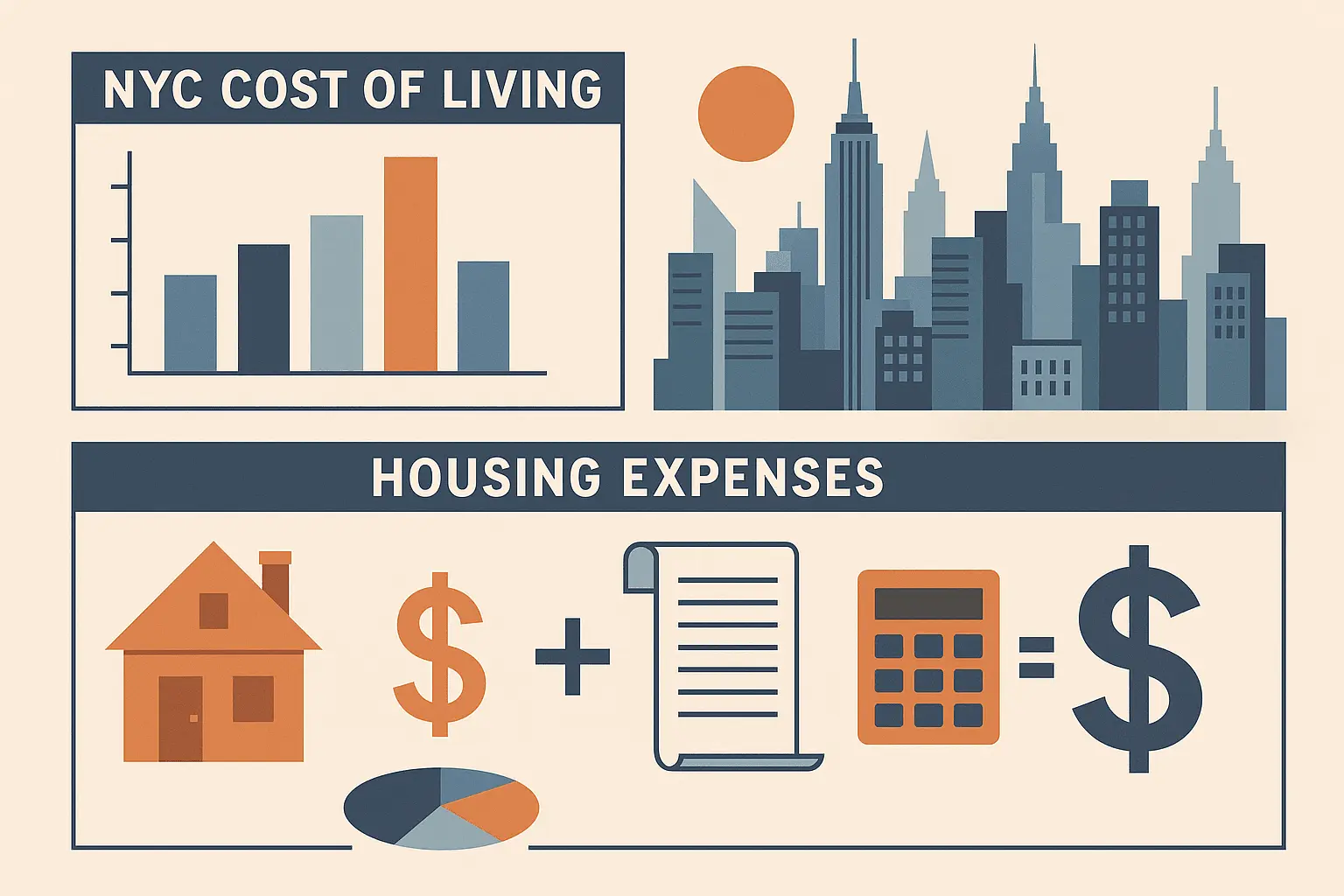
The high cost of living in NYC significantly affects the real purchasing power of train operator salaries, requiring careful analysis of housing, transportation, and living expenses.
With median NYC rent at $3,000-$4,000 monthly, train operators often live in outer boroughs or suburbs, using 25-35% of gross income for housing while still maintaining reasonable living standards.
Housing costs represent the biggest challenge. Manhattan rents are largely out of reach, but the outer boroughs offer more affordable options that still provide reasonable commutes. Queens, Brooklyn, and the Bronx offer apartments in the $2,000-$3,000 range that work within a train operator's budget.
Many operators also choose to live in nearby suburbs in New Jersey, Westchester, or Long Island. The 25-35% housing cost ratio is higher than the traditional 30% recommendation, but it's manageable given the job security and benefit package.
Homeownership becomes possible after several years of employment, especially for operators who maximize overtime opportunities. The stable income and excellent credit profile that comes with MTA employment helps with mortgage qualification.
MTA employees receive free transit benefits worth $1,500+ annually, plus reduced parking rates at some facilities, providing significant cost savings that enhance effective compensation.
Free transit benefits represent substantial savings that many overlook when calculating total compensation. The annual value of unlimited MetroCard access saves operators $1,500+ per year compared to regular commuters.
Reduced parking rates at MTA facilities benefit operators who drive to work. While not free, the discounted rates save hundreds annually compared to commercial parking in NYC.
The ability to live anywhere along the transit system provides housing flexibility that many NYC workers don't have. You can choose neighborhoods based on affordability rather than proximity to specific subway lines.
For comparison, professionals can reference our analysis of NYC teacher salaries to understand how train operator compensation stacks up against other public service careers requiring similar education levels.
NYC electricians earn $70,000-$90,000, plumbers make $65,000-$85,000, and construction operators earn $60,000-$80,000, with train operators offering superior benefits and job security compared to these private sector alternatives.
Electricians can earn excellent money, especially on commercial projects. However, the work is physically demanding, often requires working in uncomfortable conditions, and lacks MTA employment's job security.
Plumbing offers similar earning potential but involves significant physical demands and exposure to unpleasant working conditions. The feast-or-famine nature of construction work also creates income instability that transit workers never experience.
Construction equipment operators earn decent wages but face seasonal employment challenges and economic volatility. When construction slows, operators face layoffs that transit workers never experience.
The benefit packages in skilled trades rarely match what MTA offers. Private sector employers typically provide basic health insurance and minimal retirement contributions, making the total compensation comparison favor MTA employment significantly.
Police officers start at $42,000 (rising to $85,000+ after 5.5 years), firefighters earn $45,000-$95,000, and sanitation workers make $47,000-$89,000, with varying benefit packages and risk levels.
NYPD officers start much lower but can eventually earn comparable money. However, the physical risks, shift work demands, and stress levels in police work exceed those of train operation significantly.
FDNY firefighters face similar salary progression but deal with life-threatening situations regularly. The physical demands and health risks associated with firefighting make train operation look quite appealing by comparison.
Sanitation workers earn solid wages with good benefits, but the physical demands and public perception issues make it less attractive than train operation for many people.
If you're smart about it, this job can actually set you up really well financially. But you have to be strategic.
This is where operators either make it or break it, money-wise.
The overtime game is where you can really boost your income. I know operators pulling in an extra $30,000-$50,000 a year just from OT. But you have to be smart about it.
Holiday overtime is golden - double-time on Christmas Day means you make two days' pay for eight hours of work. Thanksgiving, New Year's, all the major holidays pay premium rates.
Emergency coverage is where you build your reputation. Volunteer for storm duty, equipment failures, service disruptions. Management remembers who shows up when things go wrong, and you get first crack at future OT opportunities.
But here's the thing - don't burn yourself out. I've seen operators work so much overtime they're falling asleep on the job. That's dangerous and stupid. Know your limits.
Smart Overtime Strategy:
The steady paycheck and good credit that comes with MTA employment opens doors. Lots of operators get into real estate - rental properties, house flipping, whatever. The stable income helps you qualify for investment loans.
Some guys start small businesses that work around their schedules. Online stuff, weekend services, consulting. Just make sure it doesn't conflict with MTA policies about outside work.
Professional development can pay off too. Take management courses, safety training, anything that positions you for advancement within the system.
This is honestly one of the best parts of the job.
The pension is legit. Twenty-five years and you can retire with 50-60% of your final average salary. Do the math - if you start at 25, you could retire at 50 with a pension for life.
The calculation uses your highest-earning years, so maximizing salary and overtime in your final years really pays off. That's why some operators go crazy with overtime right before retirement.
It's a real pension too, not a 401k that disappears if the market crashes. Guaranteed income for life, plus survivor benefits for your family.
Continued health coverage in retirement is huge. Healthcare for retirees can cost $20,000+ per year. The fact that MTA covers this is worth hundreds of thousands over your retirement.
Medicare coordination means your MTA benefits work with federal programs to minimize costs. Family coverage continues too, protecting your spouse and kids.
Taxes are complicated, but there are ways to save money.
FSA accounts, transit benefits, retirement contributions - use all of them. You can reduce taxable income by $10,000-$15,000 annually, which saves you $2,500-$4,500 in taxes.
Max out your 401k or 457 contributions. Reduces current taxes while building retirement savings. Professional tax prep becomes worth it when you're juggling all these strategies.
Understanding overtime tax implications helps too. Sometimes it makes sense to spread OT across tax years to minimize the hit.
Look, the irregular schedules and demanding nature of transit work create some unique challenges when it comes to housing and social life.
Many transit workers find that coliving in Brooklyn works well for people with crazy schedules who still want some community connection.
Traditional apartments can be tough when you're working nights, weekends, and holidays. Roommates get annoyed when you're coming and going at all hours. Outpost's coliving setups are designed for professionals with demanding careers.
For operators looking for flexibility, shared apartments in New York can provide cost-effective solutions that work with irregular transit schedules.
The furnished aspect is clutch too. When you're going through intensive training and adjusting to shift work, the last thing you want to worry about is furniture shopping. Furnished rooms for rent take that stress off your plate.
Ready to make your housing situation work better with your transit career? Check out Outpost's options and see how a community-focused approach can actually complement this demanding but rewarding career path.
Bottom line? Being an MTA train operator is one of the better career options available if you don't have a college degree. The money's solid, the benefits are excellent, and the job security is basically bulletproof.
But let's be honest about what you're signing up for. The schedules are tough, especially when you're new. You'll miss family events, social gatherings, and probably some sleep. The work can be stressful - equipment failures, difficult passengers, emergency situations. It's not for everyone.
That said, if you can handle the demands, this job can set you up really well. The combination of decent starting pay, overtime opportunities, and an actual pension is pretty rare these days. Most private sector jobs can't touch the total compensation package, especially when you factor in job security and retirement benefits.
The key is being strategic about it. Don't just show up and collect a paycheck. Learn the overtime system, maximize your benefits, plan for advancement. The operators who treat this as a real career and think long-term are the ones who end up with six-figure incomes and comfortable retirements.
With smart financial planning, you can even help family members with college costs or explore continuing education yourself.
Is it perfect? No. Will it pay your bills and set you up for a secure retirement? Absolutely, if you do it right. In today's economy, that's not nothing.
For anyone considering this path - the numbers don't lie. This is solid middle-class work with better benefits than most jobs requiring a college degree. Just make sure you understand what you're getting into, because the lifestyle isn't for everyone.

Household supplies can be changed or decreaased at Outpost Club’s discretion, or based on supply availability. Outpost is not responsible for temporary losses of utility service. Outpost Club is not responsible for any damages due to absence of any supplies or utilities


If you have a sales related question please call
680-688-7678

 Hot Deals