University of Mary Washington Tuition: The Complete Cost Breakdown Every Student Needs Before Applying
Dec 10, 2025

Dec 10, 2025
Look, I'm not going to sugarcoat this - UMW's tuition structure is confusing as hell when you first look at it. The costs change depending on where you're from, how many classes you're taking, and a bunch of fees they tack on that you don't even know exist until you get the bill.
Here's the reality check: if you're a Virginia kid living on campus in 2025-26, you're looking at $29,595 total. Out-of-state? Ouch - $43,101. Yeah, I know. I had the same reaction when I first saw those numbers.
The thing is, that base university of mary washington tuition you see advertised? That's just the appetizer. There's technology fees (because apparently WiFi costs extra), student activity fees (for clubs you might never join), and campus facility fees (for that gym you swear you'll use). I wish someone had warned me about this upfront instead of me finding out when I was already committed.
The good news is once you understand what you're paying for, it makes more sense. Bad news is it's still expensive. But at least you won't get blindsided like I did.
Oh, and here's something that caught me off guard - according to UMW's affordability page, they now budget for 21 meals a week at about $198 per week. Yeah, they expect you to eat three times a day every single day. Clearly they've never met a college student who survives on energy drinks and whatever's in the vending machine.
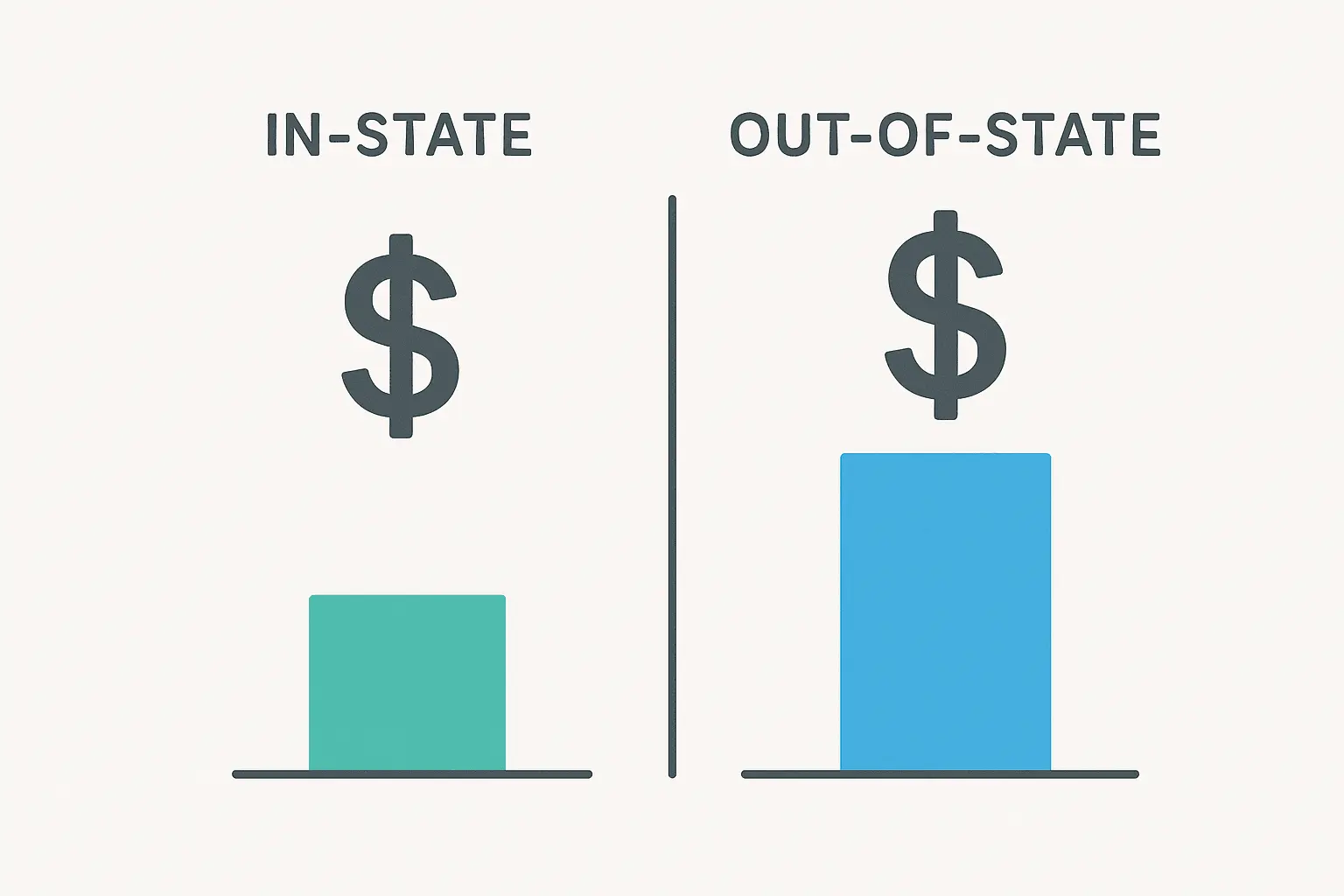
This is where Virginia kids hit the lottery. Seriously, if you're from Virginia, you're saving over $13,000 a year compared to your out-of-state roommate. That's not pocket change - that's a decent car.
Being a Virginia resident doesn't just save you money on tuition - you get first dibs on certain scholarships too. It's like having VIP status at a concert, except the concert is college and the VIP perks are thousands of dollars.
My friend from New Jersey was pretty bitter about this until I reminded her that her parents haven't been paying Virginia taxes for the past 18 years. Fair is fair, even if it hurts your wallet.
The savings compound over four years too. Virginia taxpayers basically subsidize your education, which means residents get way more bang for their buck. These aren't just small discounts - we're talking about massive cost differences that can determine whether college is affordable or not.
Here's where it gets tricky. You can't just crash at your cousin's place in Richmond for a year and call yourself a Virginia resident. They want proof - voter registration, driver's license, tax returns, the whole nine yards.
I knew a girl whose family moved from Maryland during her junior year of high school. She had to get a Virginia driver's license, register to vote, and her parents had to prove they weren't just temporarily relocated for work. It was like applying for citizenship, but for cheaper tuition.
The financial independence thing is brutal for most college kids. Unless you're somehow supporting yourself entirely (good luck with that), you need Virginia residents to be your primary financial support. Translation: if your out-of-state parents are paying your bills, you're probably out of luck.
If you're not from Virginia, yeah, it's going to hurt. You're paying the actual cost of education without Virginia taxpayers helping foot the bill. Think of it as paying full price for a concert ticket while Virginia kids got the early bird discount.
The four-year difference is brutal - we're talking $54,024 more over four years. That's a house down payment in some places. But if UMW is your dream school and you can swing it, sometimes you gotta do what you gotta do.
Out-of-state families need to think long-term here. This isn't just about freshman year costs - it's about committing to four years of significantly higher expenses. Early planning becomes crucial when you're looking at this kind of investment.
|
Residency Status |
Annual Tuition & Fees |
Housing & Dining |
Total Annual Cost |
Four-Year Total |
|
Virginia Resident |
$15,494 |
$14,101 |
$29,595 |
$118,380 |
|
Out-of-State |
$28,900 |
$14,101 |
$43,101 |
$172,404 |
|
Difference |
$13,406 |
$0 |
$13,506 |
$54,024 |
This is where they get you. You think you've budgeted for tuition, then BAM - mandatory fees everywhere. It's like buying a car and then finding out the wheels cost extra.
The technology fee is basically paying for campus WiFi that'll probably still be slow during finals week. But hey, at least you get access to all those computer labs you'll never use because you brought your own laptop.
Student activity fees fund all the campus stuff - clubs, events, that recreation center you promised yourself you'd use to work off the freshman 15. At least with this one, you might actually get your money's worth if you participate in campus life.
These fees aren't optional, and they're not small. They can add hundreds or even thousands to your annual costs, so factor them into your budget from day one. Don't let them catch you off guard when the first bill arrives.
Dorm life is expensive, but it's also part of the experience. You've got options from basic "four walls and a bed" to "basically an apartment." Your wallet will feel the difference, but so will your comfort level.
The meal plan thing is non-negotiable if you live on campus. They make everyone buy into it, which I get - they need to keep the dining halls running. Just don't expect gourmet meals every day. Some days you'll be grateful for the salad bar.
If you're thinking about living off-campus to save money, do your homework first. Sometimes the savings aren't as big as you think once you factor in utilities, internet, and actually having to buy your own toilet paper. Students exploring alternatives should consider comprehensive student housing options that might offer more flexibility while still providing community.
According to "UMW Board of Visitors sets tuition and fees for 2025-26" UMW News, the Board recently approved a 2.5% tuition bump and 4% increase in fees for 2025-26. Housing went up 2%, but at least dining stayed the same. Small victories, right?

Thank God they have payment plans, because dropping $30,000+ twice a year would give most families a heart attack.
The semester plan is like ripping off a Band-Aid - painful, but over quickly. Twice a year, you write a massive check and then try not to think about money for a few months.
The monthly plan is more like a car payment - $2,960 every month from July to April. It hurts less each time, but it never really stops hurting. Pick your poison.
Both approaches have their merits depending on your family's cash flow. Some families prefer the "get it over with" approach, while others need the predictable monthly payments to manage their budget effectively.
Here's the best part - they don't charge interest on payment plans. Just a small admin fee, which is way better than putting it on a credit card and paying 20% interest. Trust me, I learned this the expensive way.
Some families get early payment discounts if they can pay the whole year upfront. If your family has that kind of cash sitting around, congrats and also I'm jealous.
The interest-free aspect is huge. When you compare it to other financing options, UMW's payment plans are actually pretty generous. They're not trying to make money off your payment schedule - they just want to make education accessible.
My friend's family chose the 10-month plan and it saved their sanity. Instead of scrambling for $14,797.50 twice a year, they budgeted approximately $2,960 monthly. Still hurt, but it was manageable hurt instead of panic-inducing hurt.

Bad news: tuition goes up every year. Good news: it's usually predictable, so you can plan for it.
UMW typically raises tuition 3-5% each year. It's not fun, but at least it's not random. You can actually budget for this stuff if you plan ahead.
When Virginia has money, tuition increases are smaller. When the state's broke, guess who makes up the difference? Yep, your tuition bill. State funding fluctuations directly impact what students pay, so economic conditions in Virginia matter for your wallet.
Here's some math that'll make you cry: if you're a freshman paying $29,595 this year, you'll probably pay over $33,000 by senior year. That's assuming 4% increases, which is pretty standard.
Start saving early, apply for everything, and don't assume costs will stay the same. They won't. Early financial planning becomes crucial when you consider these compound increases over multiple years.
According to UMW's affordability information, UMW has kept tuition increases low or flat in recent years, with fee increases only for inflationary costs. That's actually pretty decent compared to other schools that jack up prices way more aggressively.
For families trying to understand the bigger picture of educational costs, checking out resources about the real cost of living in NYC can provide valuable perspective on budgeting for comprehensive educational and living expenses.

Tuition is just the beginning. There's so much other stuff that adds up, it's ridiculous.
Lab fees are the worst surprise. Taking chemistry? That'll be an extra $200. Need special software for your major? Another $150. It's like academic death by a thousand cuts.
If you're commuting, parking passes cost more than some people's rent. If you're living on campus, you'll still need money for gas to get home or to your internship. Transportation costs vary dramatically based on your living situation and where home is.
Textbook costs can be brutal too. Some professors require brand new editions that cost $300+ each. Others are cool with older editions or rentals. You won't know until you're already enrolled, so budget conservatively.
Rent your textbooks. Seriously, don't buy them new unless you absolutely have to. I saved probably $2,000 over four years just by renting or buying used. Textbook rental programs and digital alternatives can cut course material costs by 50-70%.
Get a campus job if you can. Work-study positions are usually pretty chill, and they work around your class schedule. Plus, having spending money makes everything less stressful.
Take summer classes if it means graduating early. Yeah, summer tuition sucks, but paying for three summers instead of four years? That's math that works in your favor. Strategic course planning can reduce your time to graduation and overall costs.
Students looking for more cost-effective living arrangements should explore affordable student housing NYC strategies that might apply to other college towns too.
Real Talk Budget Checklist:

Financial aid can be a lifesaver, but you have to actually apply for it. I know, paperwork sucks, but free money is worth it.
Pell Grants are basically free money from the government. If you qualify, take it. There's no such thing as too much free money when you're paying for college. These grants provide foundational support for students with significant financial need and don't require repayment.
Virginia has its own aid programs too. They're not as generous as some states, but hey, every little bit helps. Apply for everything, even if you think you won't qualify. State aid programs complement federal aid and can bridge gaps between educational costs and family resources.
The school has its own pot of money for students who need help. Sometimes this covers weird situations that federal aid doesn't handle. UMW's institutional financial aid programs provide need-based assistance tailored to specific student circumstances.
Work-study is clutch if you can get it. You get paid to work on campus, usually doing something related to your major. It's like getting paid to network. These positions are designed to complement academic schedules and often relate to students' interests or career goals.
Students should also explore scholarships for college students NYC and similar resources that might extend beyond traditional institutional offerings.

If you were smart in high school, this is where it pays off. Literally.
The top scholarships go to kids with crazy good grades and test scores. If that's you, congratulations on being a genius and also on getting paid for it. These awards are renewable for four years, provided you maintain specified academic standards.
But they also look at leadership stuff and community service. So if you were student body president or volunteered at the animal shelter, mention that. They eat that stuff up. Leadership experience and community involvement often factor into scholarship decisions beyond pure academic metrics.
STEM kids, education majors, and nursing students often get special scholarships. Probably because we need more teachers and nurses, and STEM majors make the school look good. Students entering high-demand fields may qualify for targeted scholarships that recognize their commitment to these areas.
Some scholarships only kick in after freshman year, once you prove you're actually good at your major. Keep your grades up and keep applying. Departmental scholarships become available as students progress through their programs and demonstrate excellence in their chosen fields.
The new Piscopo Rodgers Science Fellows Program is huge - over $36 million to support science students. According to "UMW application opens Aug. 1 for Fall 2026" UMW News, students applying by early decision or early action dates will be the first considered for this program, with UMW expecting to support 15 students in their first year. That's life-changing money if you can get it.
|
Scholarship Type |
Award Amount |
What You Need |
How to Keep It |
|
Washington Scholars |
Full tuition + fees |
Virginia resident, stellar grades |
Keep a 3.5 GPA |
|
Alvey Scholars |
Everything covered |
Out-of-state, basically perfect |
Keep a 3.5 GPA |
|
Piscopo Rodgers Science Fellows |
Varies |
STEM major, apply early |
Follow program rules |
|
Merit Scholarships |
$2,000-$8,000 |
Good grades/test scores |
Don't screw up |

Timing is everything with college applications. Mess this up and it costs you real money.
Early decision is binding, which means you can't compare financial aid offers. That's scary if money's tight. Early action is better - you get priority consideration but can still shop around.
Merit scholarship deadlines are usually earlier than regular admission. Miss those dates and kiss thousands goodbye. I'm not kidding - friends of mine lost out on serious money because they procrastinated.
Submit your FAFSA on October 1st. Not October 2nd, not November 1st - October 1st. Some aid is first-come, first-served, and you don't want to be the kid who missed out because you waited.
State aid deadlines are different from federal ones. Virginia has its own timeline, so pay attention or you'll miss out on state money too. Many aid programs operate on first-come, first-served bases after eligibility determination, making early submission crucial.
I know a guy who applied early and got his FAFSA in on time - he got $6,000 in merit money plus maximum state grants. His friend who waited until January? Same stats, $8,000 more per year because he missed the deadlines. Don't be that guy.
Don't Screw This Up Timeline:

According to UMW News, most smart kids apply early - like 69% of UMW's incoming class applied by November 15th. There's a reason for that.
Here's how to game the system legally: understand how they charge for credit hours.
Once you hit 12 credit hours, you're paying full-time rates. But here's the thing - taking 15 or 18 hours costs the same as 12. So if you can handle the workload, load up on classes. It's like a college course buffet.
Part-time students pay per credit, which gets expensive fast on a per-credit basis. Only go part-time if you absolutely have to. This structure encourages full-time enrollment and can make additional courses within the full-time range essentially free.
Summer classes are pricey and financial aid usually doesn't cover them. But if taking summer classes means graduating a semester early, the math might work out. One expensive summer vs. a whole extra semester? You do the math.
Summer enrollment can accelerate degree completion, potentially reducing total educational costs despite higher per-credit summer rates. Strategic summer course selection can help you graduate early or maintain lighter course loads during regular semesters.
Taking more than the standard credit load usually costs extra, but not much. If overload fees let you graduate early, it's probably worth it. Just don't kill yourself trying to take 21 credits - your GPA will thank you for being reasonable.
Plan your courses with your advisor. They know which classes you need and when they're offered. Nothing's worse than finding out the class you need to graduate is only offered in spring and you missed it. Course sequencing and prerequisite planning can help you maximize credit hours per semester without compromising academic performance.
Students balancing academic loads with career preparation should consider internships for high school students NYC strategies that can inform college-level planning and career development.

Look, figuring out college costs is stressful, and sometimes it helps to talk to people who've been there. Outpost Club connects you with professionals who've navigated these same decisions and came out the other side.
These aren't just random people - they're folks who understand what it's like to make big financial decisions about education and career moves. Sometimes you need perspective from someone who's not your parents or your guidance counselor.
The people in this community get that college is more than just classes - it's about the connections you make and the experiences that shape your career. When you're trying to figure out if UMW's university of mary washington tuition and fees are worth it, talking to professionals who've made similar investments can be incredibly helpful.
Plus, if you're thinking about post-graduation life and things like finding your first apartment, having a network of people who've figured out adulting is pretty valuable. Young professionals transitioning from college to career often benefit from understanding how to get an apartment at 18 and building financial independence skills that complement their educational investments.
Want to connect with people who understand the real cost of educational investments? [Learn more about Outpost Club membership and how our community can support your family's educational planning decisions.]

Here's the bottom line: UMW tuition is complicated, but it's not impossible to figure out. Yeah, the sticker price is scary, but once you understand all the moving pieces - financial aid, payment plans, scholarship opportunities - it becomes manageable.
The key is starting early. I can't stress this enough. The students who have their financial stuff figured out are the ones who started planning junior year of high school, not senior year. They applied for everything, met every deadline, and compared all their options.
Is UMW worth the investment? That depends on what you want out of college and what you can afford. But if you do your homework on the financial side, at least you'll be making an informed decision instead of just hoping it all works out.
Your educational investment at UMW represents more than tuition payments; it's an investment in academic excellence, campus community, and professional preparation that will impact your entire career. The financial planning process might seem overwhelming initially, but understanding each component allows you to make informed decisions and maximize available resources.
The financial aid office is actually pretty helpful once you get past the intimidating paperwork. They want you to succeed, and they know more tricks for finding money than you'd expect. Don't be afraid to ask questions - even the ones that seem obvious.
College is expensive, but it doesn't have to be a financial disaster. Plan ahead, apply for everything, and don't be too proud to ask for help when you need it. Your future self will thank you for doing the work upfront instead of figuring it out as you go.
Early planning remains the most effective strategy for managing educational costs and securing financial aid opportunities. Students and families who begin planning during high school years consistently achieve better financial outcomes than those who wait until senior year to address college costs. UMW is committed to supporting students throughout their educational journey, from initial cost planning through graduation and beyond.
а
Previous post
Ultimate Guide to Off-Campus Student Housing in NYC
Household supplies can be changed or decreaased at Outpost Club’s discretion, or based on supply availability. Outpost is not responsible for temporary losses of utility service. Outpost Club is not responsible for any damages due to absence of any supplies or utilities


If you have a sales related question please call
680-688-7678

 Hot Deals