Why Your NYC Paycheck is Smaller Than You Think (And How to Actually Fix It)
Dec 13, 2025
Dec 13, 2025
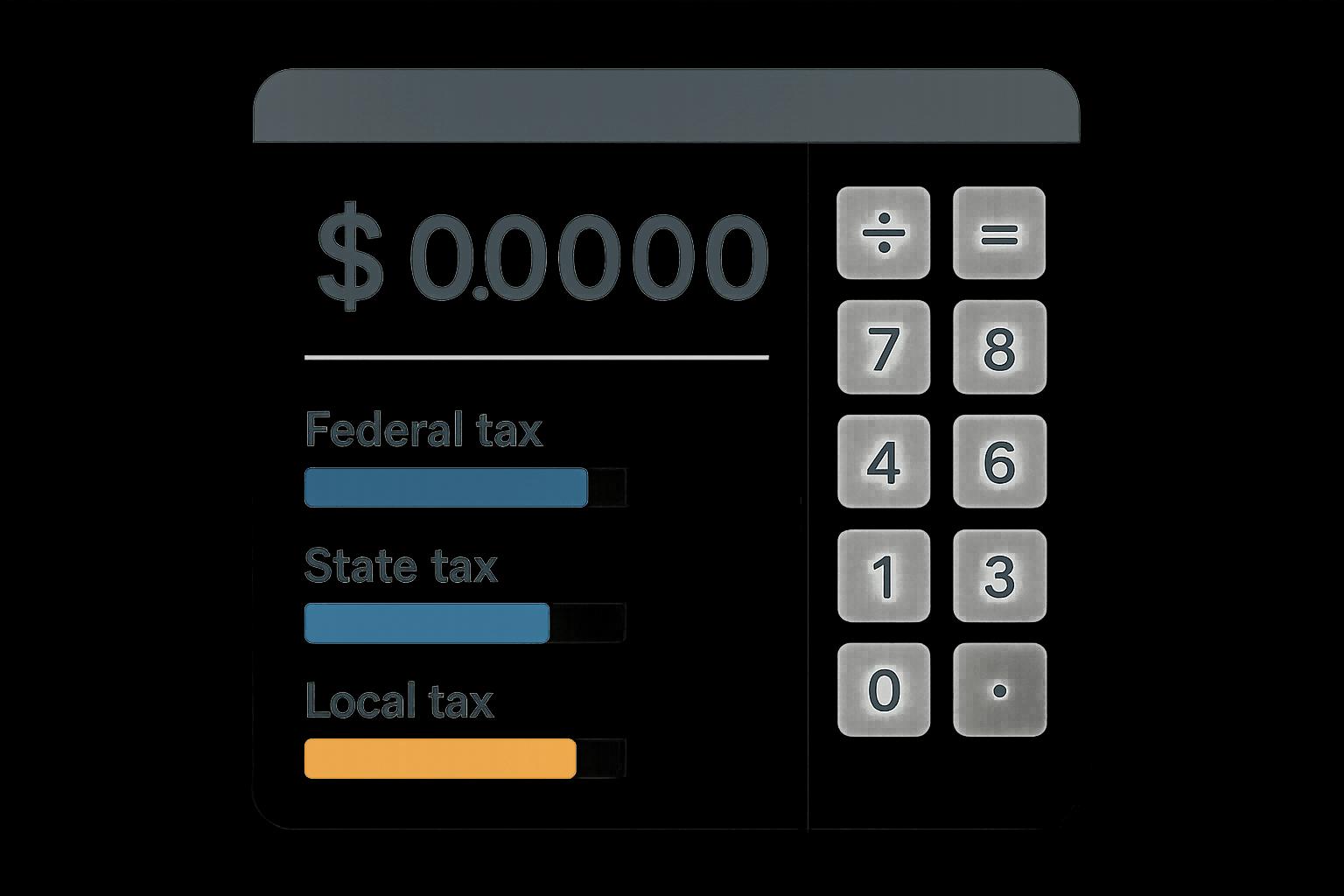
Let's be honest - figuring out your paycheck in NYC is a complete nightmare. Between federal, state, and city taxes, you're getting hit from every angle. I learned this the hard way when I moved here thinking my salary would stretch a lot further than it actually did.
Here's the thing nobody tells you upfront: NYC doesn't just take state and federal taxes. The city wants its cut too. Then there's this Metropolitan Transportation Authority tax that sneaks up on you, plus New York State Disability Insurance. These "little" deductions add up fast.
Ever get excited about a salary offer, only to realize your take-home is way less than expected? Yeah, we've all been there. NYC's triple tax situation is brutal, and most people have no idea what they're actually going to pocket until that first paycheck hits.
To put this in perspective: if you're making $75,000, you're probably taking home around $53,000 after all the taxes and deductions. That's nearly 30% gone before you even see it. For higher earners, it gets worse - you could be losing 40% or more.
According to ADP's salary paycheck calculator, calculating annual salary is straightforward - multiply gross pay by pay periods per year. But knowing your gross is just the beginning. The real question is what actually lands in your bank account.
So why use ADP over those free calculators you find on Google? Simple - they actually know what they're doing.
ADP processes millions of real paychecks. Their calculators aren't just doing basic math - they're using the same systems that cut actual checks for companies across the country. Those free online tools? They're basically making educated guesses.
I used to rely on some random calculator that told me my year-end bonus would net me about $3,200. Reality check: I got $2,400. That $800 difference mattered when I was trying to decide if I could finally upgrade my apartment.
The problem with generic calculators is they miss all the NYC-specific weirdness. They don't account for the MTA tax, they screw up the local income tax calculations, and they definitely don't understand how New York handles things like disability insurance.
Understanding your true take-home becomes crucial when you're looking at housing options, especially if you're exploring affordable neighborhoods in NYC where every dollar of your paycheck actually matters.
Let's break down what's really happening to your money. Social Security takes 6.2%, Medicare grabs 1.45%. That's the same everywhere. But then NYC gets creative.
Federal taxes hit you based on the standard brackets - that's expected. New York State wants anywhere from 4% to 10.9% depending on how much you make. Then NYC adds its own local tax that can reach nearly 4% for higher earners.
Here's what this looks like for someone making $75K in Manhattan:
|
What's Getting Taken |
How Much |
Your Annual Hit |
|
Federal Income Tax |
~13% |
$9,750 |
|
NY State Tax |
~6% |
$4,500 |
|
NYC Local Tax |
~3% |
$2,250 |
|
Social Security |
6.2% |
$4,650 |
|
Medicare |
1.45% |
$1,088 |
|
NY Disability |
0.5% |
$375 |
That's over $22,000 gone before you factor in health insurance, 401k contributions, or any other deductions. Suddenly that $75K looks more like $53K.
Generic calculators fail because NYC's tax situation is genuinely complicated. We're not just talking about different rates - the rules are different too. New York state might allow deductions that the city doesn't recognize. The federal government has its own set of rules that sometimes conflict.
Professional tools handle this automatically. They know about reciprocity agreements with neighboring states, they understand how supplemental wages (like bonuses) get taxed differently, and they stay updated when tax laws change.
According to "Managing Out-of-State Employees: The Payroll Tax Conundrum", 45% of employees plan to work remotely part- or full-time. This makes accurate tax calculations even more critical for NYC professionals who might work across state lines.
Take Sarah, a marketing manager earning $85,000 in Manhattan. She used a basic online calculator that told her she'd take home about $63,000. Seemed reasonable for budgeting.
Reality? After federal taxes ($11,500), NY state taxes ($4,930), NYC taxes ($2,615), Social Security/Medicare ($6,503), and NY disability ($425), she actually netted $59,027. That's $4,000 less than she planned for.
In a city where a decent one-bedroom runs $3,000+, that $4,000 difference isn't just inconvenient - it's the difference between financial comfort and constantly worrying about money.
Here's something that'll really mess up your planning: tax laws change constantly. The IRS updates withholding tables, New York adjusts rates, NYC modifies calculations. If your calculator isn't staying current, your numbers are wrong.
Professional calculators update automatically. Free tools? They might be using last year's rates, or the year before that. I've seen calculators that were off by thousands because they hadn't been updated in ages.
This real-time accuracy matters when you're making actual financial decisions. Outdated calculations can completely throw off your budget, your savings goals, even your rent calculations.
Modern salary calculators have evolved way beyond just spitting out a take-home number. The good ones let you model different scenarios, optimize your benefits, and actually plan your financial future instead of just reacting to whatever shows up in your bank account.
This is where things get interesting for anyone serious about their finances in NYC.
Most people punch in their salary, see their take-home, and call it a day. That's like buying a smartphone and only using it to make calls.
Advanced calculators let you play with different scenarios before you commit to anything. Want to see how maxing out your 401k affects your paycheck? Done. Curious about taking the high-deductible health plan with an HSA? You can model that too.
The really useful stuff happens when you start comparing options side by side. Should you take more vacation days or higher salary? What's the real cost of that premium health plan? These tools show you the actual dollar impact of your choices.

For professionals considering housing options, understanding your true take-home becomes essential when evaluating choices like coliving in Manhattan where shared arrangements can help stretch your housing budget further.
Here's where most calculators completely screw up: bonuses aren't taxed like regular salary. The IRS has specific rules for "supplemental wages," and if your calculator doesn't know this, you're getting bad information.
Professional calculators apply the right withholding rates - typically 22% federal for bonuses under $1 million, plus your state and local taxes on top. They also account for how bonuses might push you into higher tax brackets for the year.
I had a colleague who planned a vacation around his expected bonus payout. His calculator said he'd net $4,500. He actually got $3,200. Guess who had to put that trip on a credit card?
According to ADP's payroll calculator resources, both employees and employers pay 1.45% for Medicare and 6.2% for Social Security, with Social Security capping at $160,200 in earnings. After that threshold, you stop paying Social Security tax for the rest of the year.
Open enrollment season is when these tools really shine. You can model different health insurance options, HSA contributions, 401k changes - all before you have to commit.
Want to see if that high-deductible plan with the HSA makes financial sense? Plug in the numbers. Thinking about bumping up your 401k contribution? See exactly how it affects your take-home.
This is especially valuable in NYC where benefits can make or break your budget. That "free" health insurance might actually cost you $300 a month in premiums. Better to know that upfront.
Tax rates change. Benefit costs adjust. Your personal situation evolves. Professional calculators stay current with all of this automatically.
I can't tell you how many times I've seen people using calculators with old tax tables, sometimes by months or even years. In January, you might be using rates that changed in July. That's not just inaccurate - it's useless for planning.
Modern tools pull updated information constantly. When NYC tweaks its local tax rates mid-year (and they do), your calculations adjust immediately. No more surprises when your actual paycheck doesn't match your planning.
Mike, a software engineer, used a free calculator in January that showed his $95,000 salary netting $68,500. He budgeted accordingly, started apartment hunting, made financial commitments.
Mid-year, NYC updated its tax rates. His actual take-home dropped to $67,200. That $1,300 difference might not sound huge, but when you're already stretching every dollar in an expensive city, it matters.
A professional calculator would have updated automatically. Mike would have known about the change immediately and could have adjusted his planning accordingly.
Here's where salary calculators become your secret weapon: making smart career decisions in NYC's competitive job market. Whether you're evaluating offers, planning your next move, or just trying to optimize your current situation, accurate numbers change everything.
The key is thinking beyond just "what's my take-home pay" to "how do different choices affect my financial future."
Comparing job offers is way more complicated than just looking at base salaries. You need to factor in the complete package - benefits, commute costs, growth potential, even company culture and work-life balance.
But let's start with the money, because that's what pays rent in this expensive city.
When evaluating opportunities, consider how your calculated take-home aligns with NYC housing costs, especially if you're exploring options like shared apartments in New York where rent splitting can significantly impact your budget planning.
I helped a friend compare two offers last year. On paper, Job A offered $90K with solid benefits, Job B offered $95K with "competitive" benefits. Guess which one was actually better?
After plugging everything into a proper calculator, Job A came out ahead by almost $3,000 annually. Job B's health insurance cost $200 more per month, they had no 401k match, and the commute would cost an extra $150 monthly in MetroCard expenses.
Here's how to actually evaluate offers:
Start with the basics:
Then dig deeper:
NYC's cost of living demands precision in financial planning. Housing alone can eat 40-50% of your income if you're not careful. Accurate salary calculations help you figure out what you can actually afford, not what you wish you could afford.
Model different scenarios before making big decisions. What happens if you get that promotion? How would a side hustle affect your taxes? What if you moved to a cheaper neighborhood but had higher commute costs?
According to Kiplinger's analysis of tax-friendly states, middle-class families in Connecticut spend more than 14
According to Kiplinger's analysis of tax-friendly states, middle-class families in Connecticut spend more than 14% of their income on state taxes, making it the least tax-friendly state for middle-class families. New York ranks fourth, with families spending nearly 13% of their annual income on state taxes.
Professional calculators let you plan for changes before they happen, instead of just reacting after the fact.
If you're on the hiring side, understanding total employment costs becomes crucial for building competitive packages and managing budgets effectively.
Hiring someone in NYC costs way more than their salary. Beyond the base pay, you're looking at employer taxes, benefits contributions, and administrative costs that can add 25-35% to the total employment expense.
Here's what it actually costs to hire someone at $80,000 in NYC:
|
Cost Component |
Percentage |
Annual Cost |
|
Base Salary |
100% |
$80,000 |
|
Employer FICA |
7.65% |
$6,120 |
|
Unemployment Insurance |
0.5-3% |
$400-$2,400 |
|
Workers' Compensation |
1-5% |
$800-$4,000 |
|
Health Insurance |
10-15% |
$8,000-$12,000 |
|
401k Match |
3-6% |
$2,400-$4,800 |
|
Total Employment Cost |
122-136% |
$97,720-$109,320 |
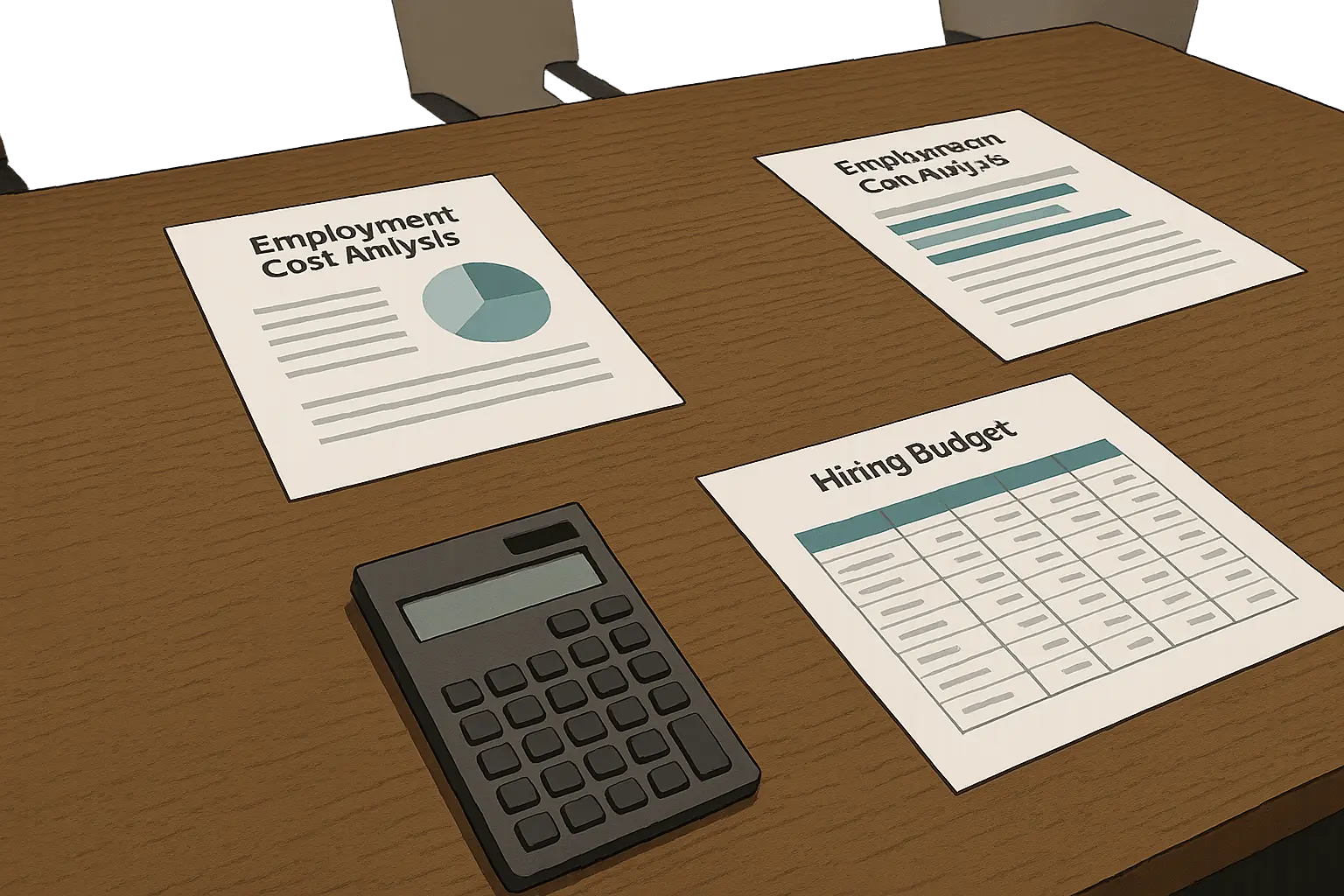
Understanding these numbers helps employers make smarter hiring decisions and design packages that actually attract talent without breaking the budget.
According to ADP's analysis of paid sick leave policies, more than 25 local jurisdictions in states including New York have enacted laws requiring employers to provide sick leave, adding another layer of complexity and cost to employment calculations.
The most sophisticated calculator in the world is useless if you're feeding it garbage data. Your results are only as good as your inputs, and most people get this wrong from the start.
Here's how to actually use these tools correctly.
Your tax filing status, withholding allowances, benefit elections - all of this affects your final numbers. Get any of it wrong, and your calculations are worthless.
Keep your information current. Got married? Update your filing status. Had a kid? Adjust your dependents. Moved within NYC? Your local tax situation might have changed.
For students and young professionals managing tight budgets, understanding accurate calculations becomes crucial when considering housing options like student housing in Manhattan where every dollar needs to be accounted for.
Your tax situation isn't static. Life changes constantly, and your calculator inputs need to keep up. I update mine quarterly, usually when I'm procrastinating on other work. Takes five minutes and saves me from nasty surprises later.
Monthly:
Quarterly:
Annually:

Don't just trust your calculator blindly. Compare results with your actual paystubs regularly. Big discrepancies usually mean something's wrong with your inputs or your employer screwed up their payroll.
Both happen more often than you'd think.
If you spot major differences, dig into it immediately. It could be as simple as forgetting to update your health insurance premium, or as serious as your employer miscalculating your withholdings all year.
Calculators are great for standard situations. They start struggling when things get complicated - multiple income sources, stock options, freelance work on the side, or working remotely for an out-of-state company.
If your situation involves complexity beyond basic employment, use calculators for ballpark estimates but consult with tax professionals for final decisions. The cost of professional advice usually pays for itself through better tax strategies.
Stock options are a perfect example. Most calculators can't properly model Alternative Minimum Tax implications or help you time option exercises for optimal tax treatment.
Multi-state income gets tricky fast. Working in NYC but living in New Jersey? There are reciprocity agreements and tax allocation rules that basic calculators miss entirely.
Significant investment income, rental properties, business ownership - all of these add layers of complexity that require specialized knowledge.
Jennifer, a tech executive with a $120,000 base plus stock options worth $40,000, discovered that basic calculators couldn't handle her situation. After consulting with a tax professional using advanced modeling tools, she saved $3,200 annually by timing her option exercises strategically and adjusting her withholdings.
Most people barely scratch the surface of what good salary calculators can do. The advanced features are where you find real value - especially if you're dealing with anything beyond a straightforward W-2 job.
Different platforms offer wildly different capabilities, and knowing what to look for can save you serious money and hassle.
Not all salary calculators are created equal. The difference between a free online tool and a professional platform can literally mean thousands of dollars in planning accuracy.
Free calculators use simplified formulas that approximate tax calculations. These approximations can be way off, especially for higher earners or anyone with a remotely complex situation.
Professional calculators like ADP's are built on actual payroll processing systems. They use the same tax tables and calculation methods that process real paychecks for millions of employees.
Understanding accurate calculations becomes particularly important when budgeting for NYC's brutal cost of living, especially when considering the real cost of living in NYC beyond just housing expenses.
Mobile apps are great for quick calculations when you're on the go. Got a job offer while you're out? Pull up the app and get a rough idea of what it means for your wallet.
But for serious financial planning, desktop platforms usually offer way more functionality. More detailed analysis, better scenario modeling, comprehensive reporting features.
Use mobile for quick estimates, rely on desktop tools for important decisions.
ADP's calculators are built on decades of actual payroll experience. They incorporate the same systems used to cut real paychecks, not just theoretical tax calculations.
Generic calculators often miss NYC-specific details - the MTA tax, proper local income tax calculations, how New York handles various deductions. ADP gets this stuff right because they've been doing it professionally for years.
Advanced calculators excel at handling situations that break basic tools. Contractor work, multi-state income, seasonal employment - all require specialized calculation methods that most free tools can't handle.
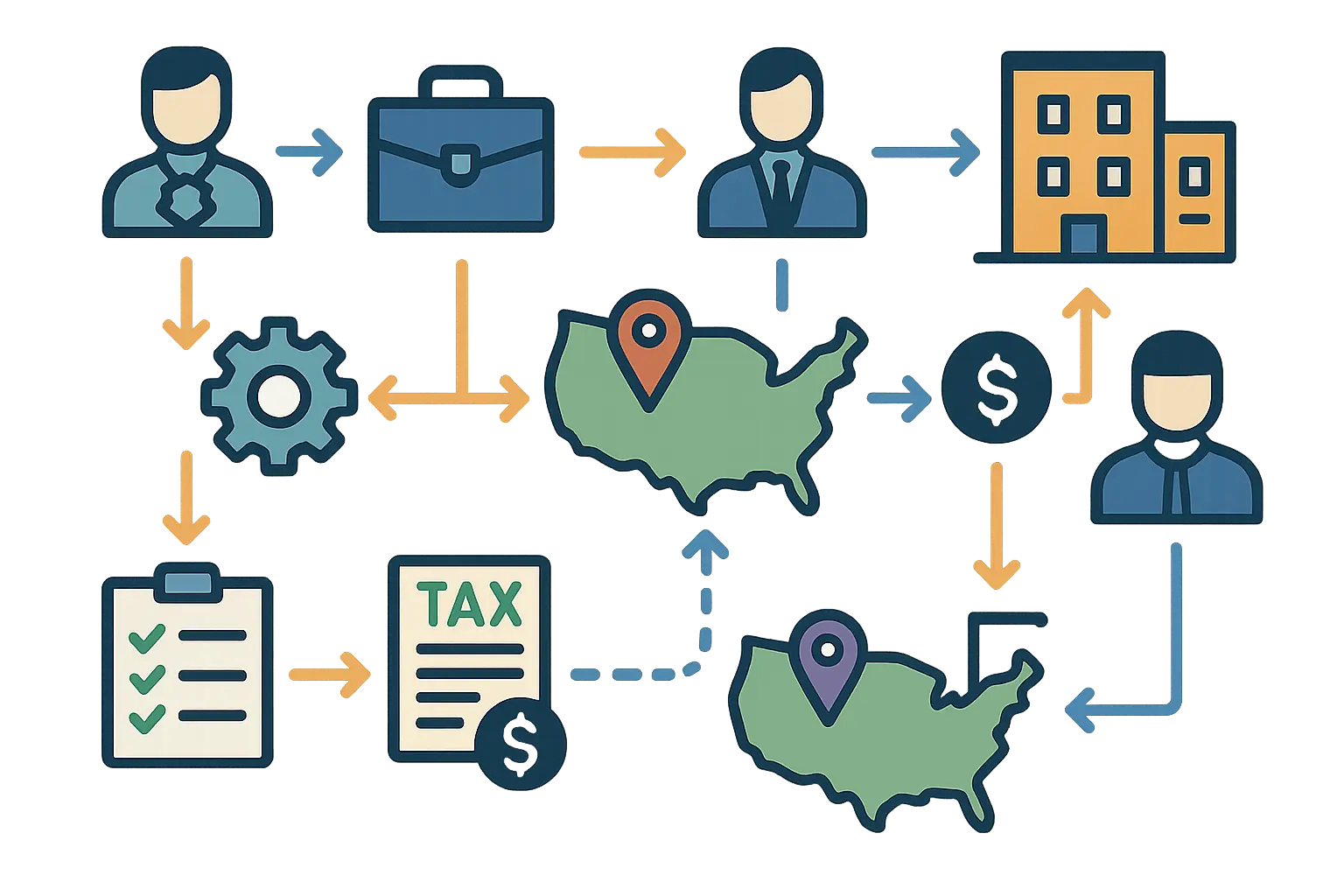
Thinking about going freelance or contractor? The tax implications are completely different from regular employment, and most calculators can't handle this properly.
Contractors pay self-employment tax (15.3% on top of regular income taxes) but can deduct business expenses. You lose employer benefits but gain flexibility and potentially higher rates.
The Real Contractor Calculation:
Advanced calculators can model these trade-offs accurately, showing you whether contractor rates actually make financial sense.
NYC's location creates complex tax situations for anyone working across state lines. New Jersey, Connecticut, Pennsylvania - each has different rules, reciprocity agreements, and tax rates.
Live in New Jersey but work in NYC? You'll pay NYC taxes but might get credits on your New Jersey return. Work remotely for a Connecticut company while living in Manhattan? Different rules entirely.
Professional calculators handle these multi-jurisdictional scenarios automatically. Free tools usually ignore them completely, leaving you with wildly inaccurate projections.

For professionals navigating these complex scenarios, understanding true take-home becomes essential when considering housing strategies, particularly when exploring communal living spaces in NYC that can help optimize housing budgets regardless of work location.
Understanding your actual take-home pay becomes even more critical when you're planning for both career success and lifestyle choices. At Outpost Club, we work with professionals who understand that accurate financial planning enables both career growth and access to premium experiences.
Whether you're evaluating a new position in NYC's competitive market or optimizing your current compensation package, precise salary calculations ensure you can make informed decisions about housing, lifestyle, and long-term financial goals.
Ready to take control of your financial planning? Contact our team to learn how Outpost Club's network of successful professionals approaches strategic career and compensation decisions.
ADP salary calculators aren't just about knowing what hits your bank account - they're about making smart financial decisions in a city that punishes mistakes. NYC is expensive enough without guessing at your numbers.
The difference between using professional tools versus free calculators can literally be thousands of dollars in planning accuracy. When you're dealing with NYC's triple tax hit and sky-high living costs, that accuracy matters.
Whether you're evaluating job offers, planning your budget, optimizing benefits, or just trying to figure out what you can actually afford, having reliable numbers changes everything. The investment in professional-grade tools pays for itself through better decision-making and fewer financial surprises.
Don't wing it with your finances in NYC. The city's expensive enough already.

Household supplies can be changed or decreaased at Outpost Club’s discretion, or based on supply availability. Outpost is not responsible for temporary losses of utility service. Outpost Club is not responsible for any damages due to absence of any supplies or utilities


If you have a sales related question please call
680-688-7678

 Hot Deals