Civil Engineer Salary NYC: What You'll Actually Earn in America's Most Expensive City
Jan 5, 2026

Jan 5, 2026
There are nearly half a million civil engineers working across the US, and NYC represents one of the most competitive and lucrative markets for these professionals. According to DataUSA, civil engineers earned an average of $112,178 nationally, which is way above the typical American salary of $67,727. But in NYC? Those numbers jump even more, because let's face it - building in this city is incredibly complex and companies need to pay premium rates to attract talent to America's most expensive metropolitan area.
Look, let's cut through the corporate BS and talk real numbers. NYC civil engineering salaries are genuinely high, but there's a reason for that - everything here costs more, and I mean everything. When firms are throwing around $70K starting salaries, they're not being generous - they're being realistic about what it takes to live here.
I've been watching this market for years, and here's what's actually happening: civil engineer salary NYC numbers that would make your college buddies jealous, but when you factor in rent that's higher than some people's entire salaries, the math gets interesting fast.
Those entry-level positions at $65K-$75K? That's your foot in the door. Mid-level engineers pulling $80K-$120K are where things get comfortable (relatively speaking). And if you make it to senior level at $120K-$180K+, you're finally living well in this city.
But here's what the salary websites don't tell you - the big firms like AECOM, WSP, and STV Group aren't just competing on base salary anymore. They're throwing in signing bonuses, covering your professional development, and some are even helping with those brutal student loans. Sarah from Columbia told me her total package was worth about $15K more than her base salary when she actually added everything up.
|
Experience Level |
Base Salary Range |
Total Compensation |
Typical Benefits Value |
|
Entry-Level (0-2 years) |
$65,000 - $75,000 |
$75,000 - $85,000 |
$8,000 - $12,000 |
|
Mid-Level (3-7 years) |
$80,000 - $120,000 |
$90,000 - $135,000 |
$12,000 - $18,000 |
|
Senior Level (8-15 years) |
$120,000 - $180,000 |
$140,000 - $210,000 |
$18,000 - $25,000 |
|
Principal/Partner (15+ years) |
$180,000 - $250,000+ |
$220,000 - $300,000+ |
$25,000 - $35,000+ |

Here's something I wish someone had told me earlier - those performance bonuses aren't just corporate fluff. When you're busting your ass on the Second Avenue Subway project and pulling 60-hour weeks, that overtime at time-and-a-half adds up quickly. I've seen engineers boost their annual take-home by $10K-$15K just from project bonuses.
The professional development money? Use it. Seriously. That $3K education allowance can pay for certifications that bump your salary by way more than $3K. It's one of the few times corporate America actually gives you free money to make more money.
And that wage equality thing the data shows? It's real. The civil engineering workforce demonstrates strong income equality with a wage GINI coefficient of 0.305, which is lower than the national average of 0.476, according to DataUSA. Engineering is one of the few fields where your salary is pretty predictable based on experience and skills, not politics or who you know (though networking still helps with advancement).
Fresh out of school and ready to conquer NYC? Cool. But let's talk about what that actually looks like financially, because your professors probably didn't cover "How to Survive on $70K in Manhattan."
The good news is that civil engineer pay for new grads has gotten more competitive. Firms finally realized they can't just throw a salary at you and expect you to figure out NYC living costs on your own. Signing bonuses are becoming standard - not huge, but enough to cover your security deposit and first month's rent without maxing out credit cards.
Understanding the true value of entry-level compensation becomes even more critical when considering housing costs in NYC, where smart financial planning from day one can make the difference between thriving and merely surviving in the city.
Sarah's story is pretty typical. Columbia grad, landed at AECOM in Manhattan with a $72,000 base salary plus a $5,000 signing bonus. Sounds great until you realize her studio apartment in Queens costs $2,800/month. But here's what made it work - her total first-year compensation hit $85,000 when she factored in overtime from the subway project, health benefits that would cost $400/month if she bought them herself, and that professional development money.
The housing situation is where most new engineers get reality-checked hard. That housing cost breakdown isn't exaggerating - you really will spend 60-70% of your take-home on rent if you want to live alone in a decent neighborhood.
Let me be blunt about the benefits package - it's not just nice-to-have stuff. That health insurance is worth about $8K-$12K annually if you had to buy it yourself. The dental and vision coverage? Another $1K-$2K. And if your firm offers student loan assistance, that could be worth thousands more.
Some of the newer engineers I know are getting creative with the benefits. One guy negotiated extra vacation days instead of a higher salary because he realized the time off was more valuable to him than the extra $2K after taxes.
The student loan repayment assistance is becoming a real differentiator. When you're looking at $1,200/month in loan payments on top of NYC rent, that $3K annual assistance from your employer isn't just helpful - it's survival.

Once you've survived your first few years and figured out how to live in NYC without going broke, the real career building begins. This is where civil engineer pay starts getting interesting, because you're not just another new grad anymore - you're developing actual expertise that companies will pay premium rates for.
The specialization game is crucial here. Generic civil engineers are a dime a dozen (okay, maybe a dollar a dozen in NYC), but engineers who really understand subway tunnel waterproofing? Or seismic retrofit for pre-war buildings? Those people write their own checks.
I know a guy, Michael, who went all-in on historic infrastructure preservation. Sounds niche, right? Well, when the city needed someone for the Brooklyn Bridge approach renovation, guess who became indispensable? His salary jumped from $105K to $130K basically overnight, and now he's the go-to guy for any historic infrastructure project in the five boroughs.
Mid-career professionals often find that strategic neighborhood choices can maximize their salary's purchasing power, allowing them to invest more in career development and long-term financial goals.
The recent "NYC civil service exam openings" from Staten Island Live highlight the city's ongoing need for mechanical engineers at $78,740 starting salary, demonstrating the competitive public sector compensation that complements private market opportunities.
Here's where things get real - that jump to project management isn't just about more money (though the $15K-$25K bump is nice). You're suddenly responsible for budgets, client relationships, and managing people who might be older and more experienced than you. It's terrifying and exciting at the same time.
The timing matters more than most people realize. Jump too early, and you're managing projects you don't fully understand technically. Wait too long, and you're competing with people who've been developing leadership skills while you were perfecting your AutoCAD techniques.
But when you nail the timing? That's when your career really accelerates. Project managers who understand both the technical side and the business side become incredibly valuable, especially on complex NYC projects where everything is more complicated than it should be.
Okay, the eternal question - public or private? Everyone's got an opinion, but let me break down what the numbers actually look like when you're trying to pay NYC rent.
The public sector gets a bad rap for lower salaries, but that's not the whole story. Sure, that assistant mechanical engineer position starting at $66,330 according to "Staten Island Live" looks low compared to private sector offers. But add in the health benefits, pension, job security, and the fact that you'll never work an 80-hour week, and suddenly it's not so simple.
I have friends in both sectors, and honestly? The public sector people seem less stressed. They go home at 5 PM, take actual vacations, and aren't constantly worried about layoffs when the economy hiccups. Meanwhile, my private sector friends make more money but burn out faster.

The pension thing is real. While your private sector friends are stressing about 401K contributions and market volatility, city employees are building guaranteed retirement income. When you run the math over a 30-year career, that pension can be worth hundreds of thousands more than a typical 401K.
Plus, the health insurance is genuinely good. No $5,000 deductibles or fighting with insurance companies about coverage. And the vacation time? Most city positions start with more PTO than private sector jobs offer after five years.
Federal positions with agencies including the Army Corps of Engineers or EPA in the NYC region offer GS-scale compensation with regular step increases and excellent job security. The predictability of advancement and compensation can be particularly appealing for engineers planning long-term financial goals.
The private sector range is wild. You've got everything from 10-person boutique firms where you'll wear every hat imaginable, to global corporations with formal training programs and clear advancement paths.
The big firms pay well and offer structure, but you're also more likely to get staffed on a project in New Jersey that requires a brutal commute. The small firms might pay less but offer equity or faster advancement to senior roles.
Major engineering consultancies provide structured career paths, extensive training programs, and the opportunity to work on landmark projects. Smaller specialized firms often offer more direct client interaction, diverse project exposure, and potentially faster promotion to senior roles.
|
Sector |
Entry-Level Salary |
Mid-Career Salary |
Senior-Level Salary |
Key Benefits |
|
NYC Public Agencies |
$60,000 - $70,000 |
$75,000 - $110,000 |
$110,000 - $150,000 |
Pension, job security, comprehensive health |
|
Federal Agencies |
$65,000 - $75,000 |
$85,000 - $120,000 |
$120,000 - $165,000 |
GS scale progression, federal benefits |
|
Large Private Firms |
$70,000 - $80,000 |
$90,000 - $130,000 |
$130,000 - $200, 000+ |
Performance bonuses, stock options |
|
Boutique Consultancies |
$65,000 - $75,000 |
$85,000 - $125,000 |
$125,000 - $180,000 |
Equity participation, rapid advancement |
Here's something most people don't think about - not all NYC engineering jobs are created equal, location-wise. That Manhattan office address looks impressive on your LinkedIn, but it comes with a salary premium for good reason.
Manhattan-based positions typically pay 5-10% more, and it's not just because companies want to sound fancy. When you're working on projects in Midtown, you're dealing with constraints that don't exist anywhere else. Try coordinating a construction project when you can't block streets during rush hour and every utility line is a century old and poorly documented.
But here's the thing - that extra $5K-$8K in Manhattan salary might get eaten up by commuting costs and lunch prices. I know engineers who work in Queens or Brooklyn and actually have more money left over at the end of the month, even with the slightly lower base salary.
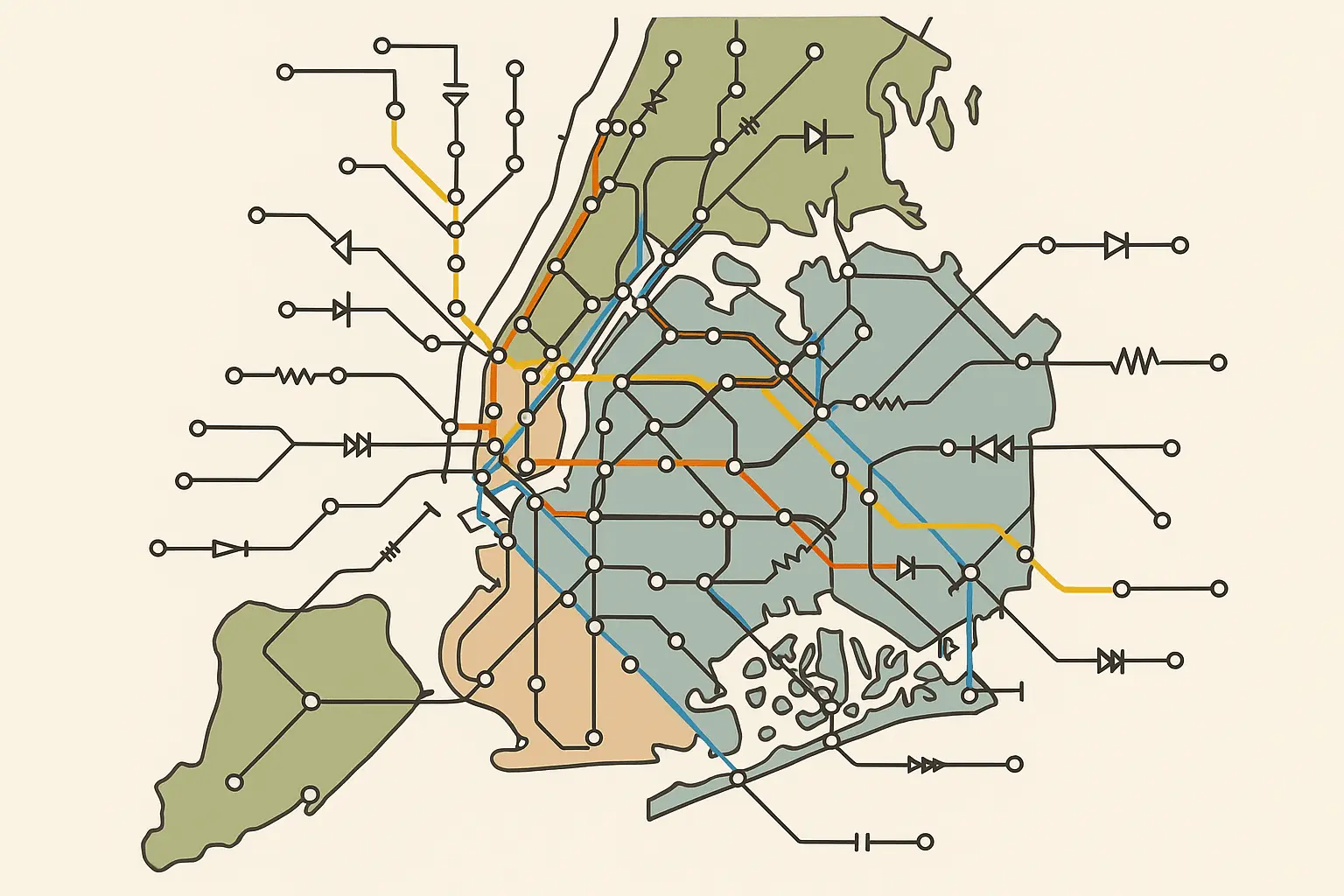
The outer boroughs aren't just "cheaper Manhattan." They've got their own engineering challenges and opportunities. Queens has LaGuardia Airport expansion projects, Brooklyn's got the waterfront development boom, and the Bronx has massive infrastructure investments happening.
Plus, if you're smart about where you live, you can flip the commute equation. Instead of living in an expensive Manhattan apartment and commuting to outer borough job sites, you can live near work and have a reverse commute that's actually pleasant.
Many engineers find that choosing to live in affordable neighborhoods in NYC can offset salary differences while providing better quality of life and financial flexibility.
The DataUSA finding about Queens Community District 14 paying the highest civil engineering salaries is interesting - it shows that specialized locations (like airport infrastructure) can command premium pay even outside Manhattan. Civil engineers are paid most in NYC-Queens Community District 14--The Rockaways PUMA, NY, though they are relatively concentrated in other areas.
Alright, time for some brutal honesty about what that engineering salary actually gets you in NYC. I'm not going to sugarcoat this because too many people move here unprepared and end up miserable.
That $75K starting salary sounds decent until you start apartment hunting. After taxes, you're looking at maybe $4,500-$5,000 take-home per month. Find a decent one-bedroom for under $3,000? Good luck. Even the "affordable" neighborhoods are pushing $2,500-$2,800 for anything you'd actually want to live in.
The math is simple and depressing: 60-70% of your income going to rent. Every financial advisor will tell you that's insane, but welcome to NYC, where normal rules don't apply.
This is why so many engineers end up with roommates well into their careers, or they move to neighborhoods with 45-minute commutes just to get housing costs under control. It's not ideal, but it's reality.
Don't forget the MetroCard ($132/month), plus all those times when the subway breaks down and you need an Uber ($15-$30 per ride). If you're working on job sites outside the city, parking can run $200-$400/month.
And the food costs? Prepare yourself. That $12 sandwich that would cost $6 anywhere else adds up fast. Groceries are expensive, eating out is expensive, even the bodega markup is real.
The key is building these costs into your salary expectations from day one. Don't negotiate based on what sounds like good money - negotiate based on what you need to actually live here without being miserable.
Cost of Living Checklist:
Let's talk about the PE license - it's not optional if you want to advance your career, and the salary bump makes the studying worth it. That immediate $5K-$15K annual increase isn't just nice to have; it's often the difference between struggling and being comfortable in NYC.
But here's what's really valuable about the PE license - it opens doors to positions you literally cannot get without it. Those senior engineering roles, project manager positions, and especially any job where you need to stamp drawings? PE license required, no exceptions.
I know engineers who put off getting their PE for years because studying sucks and the exam is stressful. Meanwhile, they watched colleagues with licenses get promoted past them. Don't be that person.
The LEED certification thing is real, especially with NYC's focus on green building requirements. I've seen engineers get pulled onto high-profile sustainable design projects specifically because they had that certification. It's worth the time and money investment.
PMP certification for project management is another one that pays dividends. When you're competing for project manager roles, having that certification shows you understand the business side, not just the engineering side.
PE License Preparation Checklist:
Here's where successful NYC engineers separate themselves from the pack - they think strategically about their careers instead of just taking whatever job pays the most right now.
The massive infrastructure projects happening in NYC aren't just cool engineering challenges - they're career accelerators. Getting experience on Gateway Tunnel, East Side Access, or the subway modernization projects puts you in an elite group of engineers who understand large-scale urban infrastructure.
Jennifer's story about positioning herself in subway modernization is perfect. She saw where the city was investing money and developed expertise in that area. Her salary jump from $95K to $135K in three years wasn't luck - it was strategic career planning.
The emerging areas like micromobility infrastructure and smart city tech are where the next wave of premium salaries will come from. Getting in early on these specializations positions you for higher compensation as demand grows.
Jennifer, a transportation engineer, strategically positioned herself in subway modernization projects. By developing expertise in signal system upgrades and accessibility compliance, she increased her salary from $95,000 to $135,000 within three years while becoming the go-to expert for MTA modernization contracts.
Writing articles and speaking at conferences isn't just ego-stroking - it establishes you as an expert in your field. When firms need someone with specific expertise, they call the people they know and recognize.
But don't just do it for vanity metrics. Focus on building expertise in areas where NYC has unique challenges and opportunities. That's where the premium compensation comes from.
Taking on volunteer leadership roles in professional organizations, serving on technical committees, or leading community infrastructure advocacy groups builds the leadership experience that commands management-level salaries.

Salary negotiation in NYC isn't just about asking for more money - it's about understanding the complete compensation picture and timing your requests strategically.
The health insurance variations between companies can represent thousands of dollars in annual value. That company offering $5K less in base salary but covering 100% of health insurance premiums? That might actually be the better deal.
Don't just compare base salaries. Factor in the health benefits, 401K matching, professional development allowances, flexibility for remote work, and bonus potential. I've seen engineers choose lower base salaries that ended up being worth $10K+ more in total compensation.
Performance incentive structures vary wildly between firms. Understanding how bonuses, profit-sharing, and advancement opportunities work allows for more strategic career decisions and negotiation positioning.
The construction cycles in NYC create natural leverage points. When everyone's busy and firms are competing for talent, that's when you negotiate. When projects are wrapping up and firms are cutting costs, maybe wait for better timing.
Keep detailed records of your contributions. "I saved the project $50K by identifying that design issue early" carries more weight than "I'm a hard worker."
Salary Negotiation Checklist:
The consulting route can be lucrative - $100-$200+ per hour sounds amazing until you realize you're now running a business, not just doing engineering. Client development, invoicing, irregular income, no benefits - it's a different lifestyle entirely.
Contract positions paying 20-40% more than permanent roles can be attractive, but remember you're trading job security and benefits for higher hourly rates. The math works if you're disciplined about saving for gaps between contracts and buying your own health insurance.
Here's what nobody tells you about consulting - you'll spend 30-40% of your time on business development and admin work. That $150/hour rate looks great until you factor in the time spent finding clients, writing proposals, and chasing down payments.
The irregular income is the real killer. One month you're making $15K, the next month you're making zero because the client delayed the project. You need serious financial discipline and a solid emergency fund to make consulting work in an expensive city like NYC.
Some firms offer partnership tracks, but read the fine print carefully. You might need to buy into the partnership, which could mean a six-figure investment when you're already struggling with NYC living costs. Make sure you understand the financial commitment and timeline before getting excited about equity participation.
The profit-sharing structures vary wildly. Some firms share profits generously, others use "partnership" as a fancy title without much financial upside. Do your homework and talk to current partners about the real financial picture.

Let's be real about housing in NYC - it's going to be your biggest expense, and traditional apartment hunting is designed to drain your bank account. When you're spending 60-70% of your income on rent, you're not building wealth, you're just surviving.
This is where smart engineers get creative. Instead of fighting the traditional rental market where landlords want 40x monthly rent in annual income (good luck with that on a $75K salary), they explore alternatives that actually make financial sense.
Engineers looking to maximize their salary value should explore co-living options in Brooklyn and shared apartments in Manhattan, which can provide significant cost savings while building professional networks.
When you factor in utilities, internet, cleaning services, and community amenities, co-living can save you $500-$1,000+ per month compared to traditional apartments. That's $6K-$12K annually that you can put toward student loans, emergency savings, or actually enjoying NYC instead of just surviving in it.
For professionals starting their careers, understanding how to budget for an apartment becomes crucial, especially when considering the real cost of living in NYC beyond rent payments.
The networking aspect is real too. Living with other professionals means you're constantly meeting people who might know about job opportunities, can refer you to their companies, or become future business contacts. It's like having a built-in professional network.
Outpost provides community-focused housing that mirrors the collaborative nature of engineering projects. The all-inclusive pricing model helps you budget more effectively – crucial when managing the high living costs that impact real salary value in NYC.
The comprehensive housing solution includes utilities, cleaning, and community amenities that provide exceptional value for professionals building their careers. Instead of spending weekends dealing with utility companies or cleaning, you can focus on the networking, professional development, and career advancement strategies that maximize your earning potential.

Ready to make your engineering salary work harder for you? Explore Outpost's co-living communities and see how smart housing choices can amplify your career success in NYC.
Look, civil engineering salaries in NYC are good - really good compared to most other careers. But success here isn't just about landing a high salary; it's about making smart decisions with every dollar you earn.
The earning potential is legitimate. You can go from $65K entry-level to $180K+ senior engineer, and those numbers represent real purchasing power if you're strategic about how you spend them. But I've seen too many engineers get excited about their NYC salary offer without thinking through the complete financial picture.
The engineers who actually build wealth in NYC are the ones who optimize everything - they get their PE license early, they specialize in high-demand areas, they negotiate total compensation packages instead of just base salary, and they make housing choices that maximize their financial flexibility instead of maximizing their square footage.
Your career trajectory matters more than your starting salary. A $70K job with great learning opportunities and advancement potential beats a $80K dead-end position every time. And in a city where housing costs can eat 70% of your income, making smart living choices isn't just about comfort - it's about your long-term financial success.
Whether you're a new grad trying to figure out if you can afford to move here, or a mid-career engineer looking to maximize your earning potential, the key is thinking strategically about every financial decision. The opportunities in NYC are incredible, but only if you're smart about how you navigate the financial realities that come with them.

Household supplies can be changed or decreaased at Outpost Club’s discretion, or based on supply availability. Outpost is not responsible for temporary losses of utility service. Outpost Club is not responsible for any damages due to absence of any supplies or utilities


If you have a sales related question please call
680-688-7678

 Hot Deals