Entry Level LPN Salary NYC: What You'll Actually Earn Starting Your Healthcare Career
Jan 11, 2026

Jan 11, 2026
Starting your LPN career in New York City comes with some real ups and downs. Here's what the data actually shows: the median salary for licensed practical nurses and licensed vocational nurses is $63,540 per year, which sounds pretty good until you factor in NYC's crazy cost of living. The reality is that salary ranges can swing wildly depending on where you're willing to work and what you can bring to the table beyond just your license.
Look, starting your LPN career in NYC is no joke - you're jumping into one of the craziest healthcare markets in the country. Those entry level lpn salary nyc numbers you see online? They're all over the place, and honestly, most of them don't tell you the whole story.
Here's the real deal: you're looking at somewhere between $50K-$75K to start, but don't get your hopes up about landing at the top right away. I've seen way too many new grads think they'll automatically get $70K because they graduated with honors or whatever. That's not how it works.
Your actual starting point comes down to two things: where you're willing to work and what you can bring to the table beyond just your license.

|
NYC Borough |
Average Entry-Level LPN Salary |
Cost of Living Index |
Commute Factor |
|
Manhattan |
$58,000 - $70,000 |
Very High (160-180) |
Excellent Transit |
|
Brooklyn |
$52,000 - $65,000 |
High (140-160) |
Good Transit |
|
Queens |
$50,000 - $63,000 |
Moderate (120-140) |
Moderate Transit |
|
Bronx |
$50,000 - $62,000 |
Moderate (115-135) |
Good Transit |
|
Staten Island |
$48,000 - $60,000 |
Lower (110-130) |
Limited Transit |
Hospitals pay the most - usually starting around $55K-$62K for fresh graduates. But here's the catch: they expect you to hit the ground running. We're talking about handling really sick patients, dealing with constant chaos, and basically learning to swim by getting thrown in the deep end.
Nursing homes and long-term care places? They'll start you lower, maybe $50K-$58K, but honestly, they're way better about actually training you. Plus, you won't feel like you're drowning every single shift.
Outpatient clinics are the sweet spot if you want a normal schedule - no weekends, no holidays, home for dinner every night. The downside? They usually start at the bottom of the pay scale, around $50K-$56K.
Here's something most people don't realize: the nursing shortage everyone talks about? It's real, and it's actually working in your favor right now. "The International Council of Nurses considers this shortage to be a global health crisis as our healthcare systems continue to recover and rebuild from the impact of the COVID-19 pandemic" according to Pace University. Facilities are desperate for bodies, which means they're more willing to negotiate than they used to be.
Night shifts can be your best friend financially. Most places throw an extra $3-$8 per hour at you just for working while everyone else sleeps. Do the math - if you're working three 12-hour nights a week, that's an extra $5K-$15K per year just for adjusting your sleep schedule.
"I thought working nights would kill me, but honestly? That extra $6 an hour meant I could actually afford my own place instead of having three roommates. Plus, the pace is usually slower, so it's actually easier for new grads." - Maria, LPN at Brooklyn Methodist
Weekend differentials are usually $2-$5 extra per hour, and holidays? You're looking at double time in most places. Some facilities even offer "Baylor" shifts where you only work weekends but get paid like you're full-time. It's not for everyone, but if you can swing it, the money's great.
Take Sarah, a new LPN graduate who accepted a position at a Brooklyn hospital starting at $54,000 annually. By working three 12-hour night shifts per week with a $5/hour differential, she effectively increased her annual income to approximately $63,400 – a $9,400 boost simply by being willing to flip her schedule.
Manhattan hospitals like NYU Langone and Mount Sinai will pay you the most, but they'll also work you the hardest. Think of it as getting paid extra for the stress and the prestige.
Brooklyn and Queens are where a lot of smart new LPNs end up. The pay's still competitive, but you won't feel like you're constantly drowning. Plus, the patient populations are usually more diverse, which is great experience.
The Bronx and Staten Island might start you a bit lower, but here's the thing - you'll probably get promoted faster because there's less competition. Sometimes taking a slightly lower salary upfront pays off big time down the road.
Okay, here's where a lot of new LPNs mess up - they only look at the base salary number and ignore everything else. That's a huge mistake because the benefits package can easily be worth another $15K-$20K per year.
Most major hospitals cover 80-90% of your health insurance, which saves you around $8K-$12K compared to buying your own plan. And let's be real - as a healthcare worker, you definitely want good insurance.
The mental health benefits have gotten way better since COVID. A lot of places now offer employee assistance programs and expanded therapy coverage, which is honestly a lifesaver in this job.
"My hospital covers my entire health insurance premium plus dental and vision. When I calculated it all out, that was worth about $11K per year. Suddenly that 'lower' salary offer looked pretty good." - James, LPN at Queens Hospital
This is huge: most hospitals will help pay for your RN degree. We're talking $3K-$8K per year toward tuition, and some places will cover the whole thing if you promise to stick around after graduation.
They'll also give you money for conferences and certifications - usually $500-$2K per year. That might not sound like much, but those certifications can bump your pay by thousands.
I know, I know - retirement feels like it's a million years away. But most hospitals will match 3-6% of whatever you put into your 401k. If you're making $55K and they match 4%, that's literally $2,200 of free money every year. Don't leave it on the table.
Some established hospital systems still offer pension plans, which is basically guaranteed retirement income. These benefits become incredibly valuable as you advance in your career.
Your LPN license gets you in the door, but it's everything else that determines whether you start at $50K or $65K. Here's what actually moves the needle:
IV therapy certification is gold in hospital settings. It can add $2K-$3K to your starting salary because not every new grad has it, and hospitals need someone who can start IVs without calling for help every five minutes.
Wound care certification opens doors to specialized positions that pay $3K-$5K more than regular floor nursing. Plus, wound care nurses are in high demand everywhere.
Basic Life Support (BLS) and CPR are table stakes, but Advanced Cardiac Life Support (ACLS) can seriously boost your marketability in acute care settings.
Gerontology certification is becoming huge as NYC's population ages. Long-term care facilities and home health agencies often pay premiums for LPNs with specialized elderly care training.
Medication administration certification beyond the basics can open doors to supervisory roles. Some facilities pay additional hourly premiums for LPNs who can handle complex medication regimens.
Phlebotomy certification makes you more versatile and valuable. Many facilities prefer LPNs who can handle multiple responsibilities, and this skill often translates to higher starting offers.
"I spent an extra $800 getting my IV and wound care certifications before I started job hunting. That investment got me a $59K offer instead of the standard $55K. Best money I ever spent." - Marcus, LPN at NYU Langone
Hospital acute care pays the most but demands the most. You'll deal with really sick patients, family drama, and doctors having meltdowns. It's intense, but the experience you get is invaluable.
Long-term care might pay less upfront, but you'll actually get proper training and mentoring. A lot of successful nurses credit their nursing home experience with teaching them the fundamentals properly.
Outpatient clinics are perfect if you want a life outside of work - regular hours, no weekends, no holidays. The trade-off is usually lower pay and fewer advancement opportunities.
NYC healthcare institutions are actively expanding their training partnerships to address workforce shortages. "LaGuardia Community College/CUNY is partnering with leading New York City hospitals, including Northwell Health, Memorial Sloan Kettering Cancer Center, New York University Langone, and Montefiore Medical Center, to train and place New Yorkers with a high school diploma or equivalency in entry-level jobs in healthcare" CUNY reports. While this focuses on other roles, it shows how committed the healthcare sector is to creating pathways for entry-level professionals.
Here's the honest truth: hospitals will throw you in the deep end from day one. Some people thrive on that, others burn out in six months. Know yourself.
Nursing homes give you time to build confidence and actually learn how to be a nurse instead of just surviving your shifts. Don't let anyone make you feel bad about choosing the "easier" path - smart career planning beats ego every time.
Your first job is just that - your first job. The real money comes from making smart moves over the next few years.
|
Career Advancement Path |
Timeline |
Salary Increase |
Additional Requirements |
|
Charge LPN |
2-3 years |
$8,000-$15,000 |
Leadership experience |
|
Specialized Unit LPN |
1-2 years |
$5,000-$10,000 |
Unit-specific training |
|
LPN to RN Bridge |
2-3 years |
$20,000-$30,000 |
ADN/ASN completion |
|
Quality Assurance |
3-5 years |
$12,000-$18,000 |
QA certification |
|
LPN Educator |
4-6 years |
$10,000-$20,000 |
Teaching credentials |
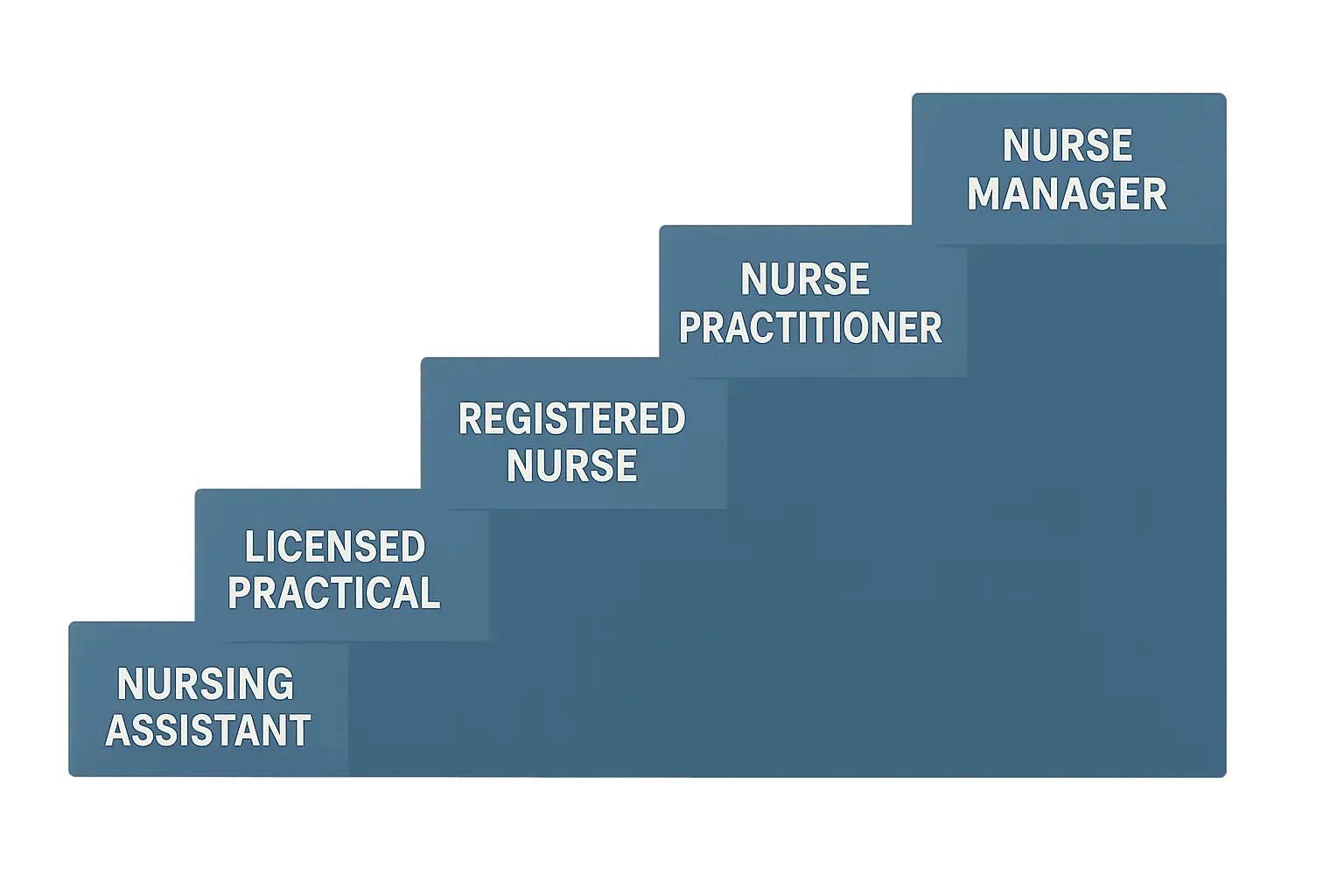
Most successful LPNs treat their LPN license as a stepping stone to becoming an RN. The salary jump is huge - we're talking $15K-$25K more per year
A lot of NYC hospitals will actually help you pay for RN school and guarantee you a job when you graduate. It's basically a no-brainer if you can handle working and going to school at the same time.
"I worked per diem as an LPN while going to RN school. It was exhausting, but I graduated debt-free and immediately got a $22K raise. Totally worth the two years of no social life." - Lisa, now RN at Mount Sinai
Geriatrics is huge in NYC because, let's face it, the population is aging fast. Licensed practical nurses who have additional certifications in particular areas of expertise will enjoy higher demand, such as geriatrics or gerontology, with 31.3% of LPNs reporting their primary practice specialty as one of these according to the Bureau of Labor Statistics.
Critical care experience is demanding but pays off big time. Hospitals love promoting experienced critical care LPNs, and it makes you a shoo-in for competitive RN programs.
Quality assurance roles are perfect for detail-oriented people who want to get off the floor but stay in healthcare. These positions often lead to administrative tracks with serious salary growth.
Charge nurse positions usually open up after 2-3 years and can bump your salary by $8K-$15K annually. You'll be supervising other nursing staff and coordinating patient care.
Some experienced LPNs move into education, training new graduates and running continuing education programs. These positions offer regular hours and competitive salaries while giving back to the profession.
Here's where most new LPNs blow it - they accept the first offer without even trying to negotiate. Don't be that person.
Understanding the real cost of living in NYC is crucial when evaluating salary offers, as detailed in our comprehensive guide to the real cost of living in NYC.
Your clinical rotation sites are networking goldmines. Stay in touch with your preceptors and clinical instructors - they hear about job openings before they hit the internet.
"My clinical instructor called me two weeks after graduation about an opening at her hospital. I never even had to apply online - went straight to the interview and got the job." - Jennifer, LPN in Queens
Healthcare job fairs happen all the time in NYC. Show up, dress professionally, and actually talk to people. You'd be surprised how many jobs get filled through these events.
Professional associations provide networking events and salary surveys that give you insider knowledge about compensation trends. Plus, membership shows employers you're serious about your career.
Research each facility's compensation philosophy before you interview. This helps you ask smart questions and negotiate effectively.
Prepare for competency-based questions that test your clinical knowledge. Many NYC facilities use standardized interviews that evaluate specific nursing skills.
Practice talking about your clinical experiences and how they've prepared you for the role. Concrete examples of your skills strengthen your negotiating position.
Document your clinical experiences, certifications, and any special projects from your LPN program. This portfolio shows you're more than just another new grad with a license.
Include letters of recommendation from clinical instructors and preceptors who can speak to your skills and work ethic. These endorsements carry serious weight with hiring managers.
Organize everything professionally and bring copies to interviews. This level of preparation shows attention to detail that employers value.
Do your homework before the interview. Know what other places are paying and be ready to explain why you're worth more than the minimum.
Don't just focus on base salary - sometimes a lower salary with great benefits and advancement opportunities is better than a higher salary with nothing else.
Frame it around value, not need. "I can start IVs and do wound care" sounds way better than "I really need the money for rent."
Pro tip: Always ask about the actual shift differential rate during interviews - some places are sneaky about this.
Salary Negotiation Checklist:

The nursing shortage isn't going anywhere, which is actually great news for you. Facilities are getting more creative with compensation and benefits to attract and keep staff.
The aging baby boomer population is driving crazy demand for healthcare services everywhere. This demographic shift means job security and upward pressure on wages for qualified LPNs.
Employment of licensed practical and licensed vocational nurses is projected to grow 3 percent from 2024 to 2034, about as fast as the average for all occupations according to the Bureau of Labor Statistics.
Healthcare facility expansion throughout the five boroughs is creating new positions faster than nursing schools can fill them. This supply-demand imbalance works in your favor for both getting hired and negotiating salary.
The pandemic exposed critical staffing shortages throughout NYC's healthcare system. Many facilities now offer signing bonuses and retention incentives that were unheard of for entry-level positions just a few years ago.
Infection control and safety protocols have become permanent, creating new responsibilities and opportunities for LPNs with relevant training.
Telehealth integration has created hybrid roles that combine traditional nursing care with technology support, often at premium compensation levels.
Electronic health record (EHR) skills aren't optional anymore - they're essential. LPNs who can navigate these systems efficiently often get higher starting offers and faster advancement.
Telehealth platforms are becoming standard in outpatient settings. Being comfortable with video conferencing and remote patient monitoring gives you access to specialized positions.
Mobile health apps and remote monitoring devices are changing how LPNs interact with patients. Early adopters position themselves for leadership roles in evolving care models.
Let's talk about what your paycheck actually looks like after taxes and living expenses in NYC.
For new healthcare professionals, exploring shared apartments in New York can significantly reduce housing costs while building professional networks.
That $55K salary? After taxes, you're looking at maybe $38K-$42K take-home. Now try finding an apartment in NYC with that budget. Spoiler alert: you're going to need roommates or a really long commute.
A lot of new LPNs end up in Queens or Brooklyn because Manhattan rent will eat your entire paycheck. Factor in MetroCard costs ($127/month) and occasional Uber rides when you're too tired to deal with the subway.
"I thought I could afford a studio in Manhattan on my LPN salary. Reality check: I ended up with two roommates in Astoria and a 45-minute commute. But honestly? It worked out great - saved money and made good friends." - David, LPN at NYU Langone
Many healthcare professionals find that coliving in Brooklyn provides community support and networking opportunities while keeping costs manageable.
NYC Living Cost Budget Template:
NYC taxes are brutal. Between city, state, and federal taxes, you're losing a huge chunk of your paycheck. A $55,000 salary might net you only $38,000-$42,000 after all deductions.
Pre-tax benefits become incredibly valuable in high-tax environments. Health insurance premiums, retirement contributions, and transit benefits all reduce your taxable income.
Consider talking to a tax professional your first year - there are deductions for healthcare workers that you might not know about.
Understanding your total financial picture is essential, which is why our NYC salary calculator helps you see the real impact of taxes and living expenses.
Staff positions aren't your only choice, and sometimes they're not even the best choice.

Per diem pays way more per hour - usually $28-$38 for entry-level LPNs - because you're filling last-minute gaps. The downside? No benefits and no guaranteed hours.
Agency work gives you variety and higher pay while letting you try out different facilities. A lot of agencies offer basic benefits packages too.
"I did agency work for my first year and made way more money than my friends in staff positions. Plus, I got to see how different hospitals operate before choosing where to apply for a permanent job." - Sarah, LPN
The trade-off is benefit management - you'll need to secure your own health insurance and handle retirement savings independently. Factor these costs into your decision-making.
Yes, you can do travel assignments within the five boroughs. The pay is great, and housing stipends help offset NYC's crazy rent costs.
Completion bonuses can add $2K-$5K to your total pay for finishing a 13-week contract. It's basically getting paid extra for being reliable.
The networking opportunities from travel assignments often lead to permanent positions at facilities where you've proven your value. Many travel nurses leverage these experiences into staff positions with higher starting salaries.
Building professional relationships goes way beyond hospital break rooms. The connections you make outside of work often end up being the most valuable for your career.
Many healthcare professionals find that communal living spaces in NYC provide natural networking opportunities with like-minded professionals across various industries.
Healthcare professionals in our community understand that career advancement depends on who you know as much as what you know. Living with other ambitious professionals creates natural networking opportunities that can accelerate your career growth.
For healthcare professionals balancing demanding work schedules with career development goals, Outpost's model of combining comfortable living with professional networking provides a sustainable approach to relationship building. Our members leverage these connections to access opportunities, gain industry insights, and advance their careers while maintaining work-life balance.
Healthcare professionals who join our community gain access to a network of successful professionals across various industries, creating opportunities for career diversification, business ventures, and professional growth that complement their healthcare expertise.
Ready to build relationships that could change your career trajectory? Join us and discover how the right living situation can become your biggest professional asset.

Starting as an LPN in NYC is tough, but it's also full of opportunities if you play your cards right. That $50K-$75K salary range is real, but where you end up in that range depends on your choices and preparation.
Don't just take the first job offer you get. Do your research, negotiate smartly, and always be thinking about your next move. The LPNs who succeed in NYC are the ones who treat their career like a business - they invest in themselves, build relationships, and make strategic decisions.
Remember that your entry-level salary is just the beginning. The relationships you build, additional certifications you earn, and experience you gain will determine your long-term earning potential. Many LPNs who start at $52,000 find themselves earning $80,000 or more within five years through smart career moves and continued education.
The NYC healthcare market rewards preparation, professionalism, and continuous learning. Whether you choose a high-intensity hospital environment or a more balanced long-term care setting, focus on building skills and relationships that will serve your entire career. Your first position is an investment in your future - choose wisely and make the most of every opportunity to grow.
Understanding the full landscape of entry level lpn salary nyc opportunities empowers you to make smart choices that align with both your immediate financial needs and long-term career goals. The investment you make in your first position will pay dividends throughout your healthcare career.

Household supplies can be changed or decreaased at Outpost Club’s discretion, or based on supply availability. Outpost is not responsible for temporary losses of utility service. Outpost Club is not responsible for any damages due to absence of any supplies or utilities


If you have a sales related question please call
680-688-7678

 Hot Deals