Moving from Toronto to New York: The Real Cost of Chasing the American Dream (And What Nobody Tells You)
Dec 2, 2025

Dec 2, 2025
I'll never forget the moment I realized my Toronto salary wouldn't even cover a decent one-bedroom in Manhattan. There I was, thinking I'd figured out the whole "moving to New York" thing, when reality hit me like a subway train at rush hour.
New York City continues drawing professionals from Toronto, despite housing costs that can reach double Toronto's rates. According to recent real estate comparisons, "NYC prices seem to be at least DOUBLE that of Toronto, on average" Toronto Realty Blog, with Manhattan condos averaging $1,000+ per square foot compared to Toronto's $550-600 range.
But here's the thing nobody tells you - this dramatic price difference is just the beginning. We've helped hundreds of Canadians navigate this transition, and the reality involves way more complexity than scrolling through Zillow at 2 AM while eating poutine and dreaming of making it big.
Look, I'm going to be straight with you - the visa process is where most people's New York dreams either come true or crash and burn. I spent three sleepless nights googling "can I just overstay my tourist visa" (spoiler alert: terrible idea) before I figured out my actual options.
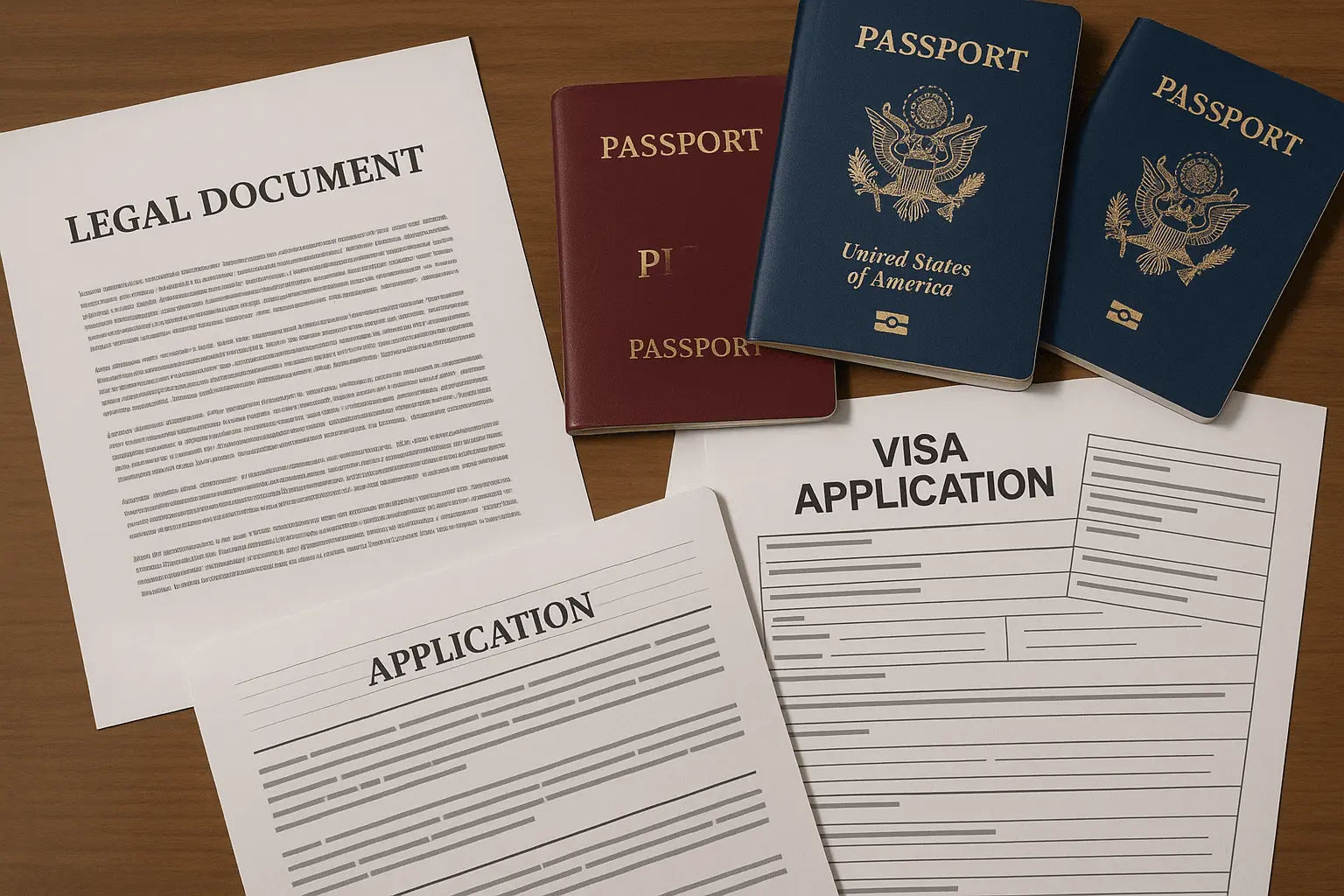
Here's the thing nobody tells you upfront - your visa determines literally everything else about your move. Can't get the right paperwork? You're not moving. Period. End of story. So let's break down your actual options without all the legal jargon that makes your eyes glaze over.
H-1B Specialty Occupation Visas are basically the lottery from hell. You need a bachelor's degree, sure, but you also need the universe to align perfectly. Only about 30% of applications get selected each year, and you have to enter by April for an October start date. My buddy Mark applied three years in a row before giving up and taking the L-1 route instead.
L-1 Intracompany Transfer is honestly the golden ticket if you can swing it. Already work for a company with US offices? This is your best friend. No lottery, no praying to the immigration gods - just paperwork and patience. Takes about 3 months, costs around $3,000 in legal fees, but it actually works.
TN Status under NAFTA/USMCA is like the express checkout of visas - when it works, it's beautiful. Walk up to the border with your paperwork, and boom, you're approved same day. But here's the catch - your job has to fit their very specific list. Software engineer? You're golden. Marketing coordinator? Good luck explaining how that fits their categories.
|
Visa Type |
Processing Time |
Annual Cap |
Success Rate |
Best For |
|
H-1B |
6-12 months |
85,000 |
~30% |
Specialized professionals |
|
L-1 |
2-4 months |
No cap |
~85% |
Multinational employees |
|
TN |
Same day |
No cap |
~95% |
NAFTA professionals |
|
EB-5 |
24-36 months |
10,000 |
~80% |
Investors ($800K+) |
Sarah, a software engineer at RBC in Toronto, secured an L-1 visa when RBC transferred her to their New York office. The process took three months and cost $3,000 in legal fees, but bypassed the H-1B lottery entirely. Her employer handled most paperwork, making it smoother than her last apartment lease renewal in Toronto.
Got money burning a hole in your pocket? There are ways to basically buy your way in, but we're talking serious cash here - not "I have some savings" money.
EB-5 Investor Visa requires dropping $800K minimum (or $1.05 million in fancy areas) and creating 10 jobs. Yeah, you read that right. This isn't "I sold my condo" money - this is "I sold my tech startup" money. Takes 2-3 years but gets you straight to permanent residency.
E-2 Treaty Investor is the "startup founder" visa. No minimum investment amount, but "substantial" usually means $100K+. You have to actually run the business though - can't just write a check and disappear to the Hamptons.
Okay, this is where things get real bureaucratic, real fast. Remember when you thought getting your passport was annoying? That was the warm-up.
I'm about to save you months of headaches with this advice: start gathering documents NOW. Not next month, not when you're "ready to get serious" - right now. The amount of paperwork that needs apostilles, certifications, and official translations will make your head spin.
Credential Recognition becomes crucial for licensed professionals. Your engineering degree from University of Toronto might need evaluation by organizations like WES (World Education Services). Takes 6-8 weeks and costs $200+. Medical professionals face particularly complex requirements - expect 6-12 months for licensing processes. One doctor I know spent more on credential verification than most people spend on their entire move.
Financial Documentation requirements go beyond what you'd expect. Banks want 2-3 years of tax returns, employment letters, and bank statements. Keep originals of everything in triplicate - photocopies won't cut it for most official processes, and immigration lawyers charge $500/hour to hold your hand while you scramble to find your birth certificate for the third time.
Document Checklist:
This is the part that made me seriously consider just staying in Toronto. Canada wants to tax you on your way out (exit tax), and the US wants to tax you on your way in. It's like paying two cover charges at the world's most expensive club.
Canadian Exit Tax is basically Canada's way of saying "one last cash grab before you go." They treat you as if you sold everything the day you left, even if you didn't actually sell anything. Your RRSP might trigger taxes, your Toronto condo could create a tax bill - it's a mess.
U.S. Tax Residency kicks in faster than you think through the substantial presence test - roughly 183 days in the U.S. during the current year. Spend that much time in the US? Congratulations, you're a tax resident. Hope you like filing taxes in two countries forever.
Pro tip: Get a cross-border tax accountant before you move, not after. I learned this the expensive way - $8,000 in professional fees to fix what should have been a $2,000 planning session.
Let me paint you a picture: You're standing in a 400-square-foot "one bedroom" (the bedroom is literally just a wall partition) in Midtown, and the broker - with a completely straight face - tells you it's $4,200 a month. Plus first month, last month, security deposit, and his fee. Oh, and you need to make $168,000 annually to qualify. Welcome to New York real estate, where your Toronto expectations go to die.
For Toronto professionals considering the move, understanding the best neighborhoods in NYC becomes crucial for making informed housing decisions that align with your career goals and don't leave you eating ramen every night.

Here's what nobody tells you about the Manhattan vs. outer boroughs debate - it's not really about money, it's about sanity. Sure, living in Manhattan means you can walk to work in 10 minutes. It also means paying $5,000 for a closet and listening to sirens until 3 AM every night.
Manhattan Premium is real, and it hurts. That same $3,500 you'd pay for a decent one-bedroom in Brooklyn Heights gets you a studio with a "Murphy bed" (aka a bed that folds into the wall) in Murray Hill. The convenience is amazing until you realize you're spending 60% of your income on rent.
Brooklyn and Queens are where actual humans live. I found a beautiful one-bedroom in Williamsburg for $3,200 - same price as a studio in Manhattan. Sure, my commute went from 10 minutes to 25, but I got a real kitchen and didn't have to hear my neighbor's entire life story through paper-thin walls.
Commute Considerations matter more than you think though. Factor in MetroCard costs ($127 monthly) and time when evaluating total housing expenses. That "cheap" apartment in Astoria looks great until you're spending 90 minutes a day on the subway. Suddenly that expensive Manhattan studio doesn't look so crazy.
Recent Toronto transplants are experiencing the housing reality firsthand. As reported by "Brick Underground", Garry Ho and his partner secured an 850-square-foot one bedroom for $4,500 in Battery Park City, with rent amounts "only guaranteed for 48 hours and fluctuated daily based on demand" - a practice Ho had never encountered in Toronto's more stable rental market. In Toronto, rent is rent. In New York, rent is a moving target.
Many professionals find that coliving in Brooklyn or coliving in Manhattan provides a more affordable and socially connected alternative to traditional rentals during their initial transition period, especially when you're competing against trust fund kids with guarantors making $500K.
|
Neighborhood |
1BR Average Rent |
Commute to Midtown |
Lifestyle |
Best For |
|
Manhattan (Midtown) |
$4,500-6,000 |
0-15 min |
Fast-paced, convenient |
Finance professionals |
|
Brooklyn Heights |
$3,200-4,200 |
25-35 min |
Historic, family-friendly |
Young professionals |
|
Long Island City |
$2,800-3,800 |
10-20 min |
Modern, parking available |
Tech workers |
|
Williamsburg |
$3,500-4,500 |
15-25 min |
Trendy, nightlife |
Creative professionals |
|
Battery Park City |
$4,000-5,500 |
20-30 min |
Waterfront, quiet |
Families, finance |
The New York rental market is designed to crush your soul. I'm not being dramatic - it's literally set up to make you desperate enough to sign anything just to have a place to live.
Documentation Requirements are insane. You need proof of income at 40x monthly rent annually (so $160K annually for a $4K apartment), references, bank statements, your firstborn child's social security number... okay, maybe not that last one, but it feels like it. Broker fees typically run 10-15% of annual rent - that's $4,000-6,000 on a $3,000/month apartment.
Guarantor Requirements almost broke me. Most landlords want a US-based guarantor making 80x monthly rent annually. So for that $4K apartment, your guarantor needs to make $320K. Who has friends making $320K? Services like Insurent or TheGuarantors will be your guarantor for 70-110% of one month's rent, but that's another $3-4K upfront.
Speed matters more than you think. I found the perfect place in Brooklyn Heights - $3,800 for a two-bedroom with exposed brick and original hardwood floors. Took me two days to get my documents together. By the time I applied, 15 other people had already applied, and it went for $200 over asking to someone who applied within hours with all paperwork ready.
Michael from Toronto learned this lesson the hard way too. He found a perfect two-bedroom in Brooklyn Heights for $3,800, but took two days to gather documents. The apartment rented for $200 above asking price to someone who was ready to go immediately. The lesson? Have everything ready before you start looking - bank statements, employment letter, references, first month's rent, security deposit, broker fee - all of it. New York real estate moves at Manhattan speed, not Toronto speed.
Nothing prepares you for the moment your Canadian credit card gets declined buying a $3 coffee at Starbucks. You've got $50K in your checking account, but the US financial system looks at you like you just landed from Mars. "Credit history? What credit history? You literally don't exist in our system."

The good news is you're not completely starting over. The bad news is it feels like you are for the first six months.
Nova Credit Services are a lifesaver if you can access them. American Express and TD Bank will actually look at your Canadian credit history through these services. I got approved for an Amex Gold card on day one, which felt like winning the lottery after being denied for a basic Chase card.
Secured Credit Cards are your backup plan. Put down $500-1,000 as collateral, use it for everything, pay it off religiously. Your credit score should appear within 3-6 months. It's humbling going from a $20K credit limit in Canada to a $500 secured card, but it works.
Banking Relationships with international banks operating in both countries can smooth the transition. TD, RBC, and BMO have U.S. divisions that may offer preferential treatment to existing Canadian customers. I had accounts with TD in Toronto, so TD Bank in New York actually treated me like a human being instead of a potential money launderer. Small victories matter when you're trying to establish financial credibility.
Converting $100,000 CAD when the exchange rate is 1.25 vs. 1.35 is an $8,000 difference. That's not rounding error money - that's "can I afford first month's rent" money. I obsessively watched exchange rates for three months like they were stock prices. Consider services like Wise or XE Money for better rates than traditional banks - every percentage point matters when you're moving your life savings.
Cross-Border Investment gets complicated fast. Your Canadian TFSA becomes taxable to the IRS - yeah, that tax-free savings account isn't so tax-free anymore. RRSPs receive some protection under tax treaties, but RESP contributions might trigger U.S. tax consequences. Your Canadian investments become a tax nightmare that'll make your head spin.
I had to restructure my entire investment portfolio before moving. Sold everything in my TFSA, took the tax hit in Canada, and started fresh in the US. It felt like financial surgery without anesthesia, but professional advice isn't optional here.
New York is expensive in ways that don't show up in cost-of-living calculators. Yeah, rent is higher. But so is literally everything else, and it adds up faster than you expect.
Understanding the real cost of living in NYC helps Toronto professionals prepare realistic budgets that account for expenses they might not have considered during their initial planning phase - like the fact that a decent haircut costs $80, not $25.
That $4,000 rent is just the beginning. Add $200/month for utilities (electricity runs 50% higher than Toronto rates), $80 for internet service, $50 for building amenities you didn't know existed but apparently need. Your "all-in" housing cost is suddenly $4,330, not $4,000.
Rent vs. Purchase decisions depend heavily on your visa status and market conditions. Buying requires permanent residency or significant down payments (25-30% for foreign nationals). So that $800K condo needs $200K upfront, plus closing costs that'll run another $30-50K. Current mortgage rates and New York's transfer taxes make renting more attractive for most newcomers. Suddenly renting doesn't look so bad.
Going from Canadian healthcare to US insurance is like switching from an all-inclusive resort to paying for every single thing separately.
Insurance Coverage involves deductibles, copays, and network restrictions unfamiliar to Canadian residents. A "good" employer plan might still leave you with $2,000-5,000 annual out-of-pocket maximums. That "good" employer health plan still leaves you with a $3,000 deductible and $5,000 out-of-pocket maximum.
Prescription Medications can shock your budget. That insulin costing $40 in Toronto might run $300+ monthly in New York without proper insurance coverage. My insulin prescription went from $40/month in Toronto to $300/month in New York before insurance. Even with "good" coverage, I'm paying $80/month. It's not just the money - it's the stress of wondering if you can afford to stay healthy.
Healthcare Cost Comparison Checklist:
Moving internationally is like planning a wedding, buying a house, and doing your taxes all at the same time. Except if you mess up, your stuff ends up stuck in customs for three months, and you're sleeping on an air mattress in your overpriced New York apartment.

The "personal effects exemption" sounds great until you read the fine print. That laptop you bought two weeks ago? Not personal effects - it's too new. Your furniture needs to show "reasonable wear," which apparently means visible scratches and dings. I literally had to rough up some newer items to avoid duty charges.
Personal Effects Exemption covers used household goods and personal effects entering duty-free - but "used" has specific definitions. That brand-new laptop you bought last week might not qualify. Items must show reasonable wear and be for personal use, not resale.
Vehicle Importation is where dreams go to die. My 2019 Honda Civic needed $4,500 in modifications to meet EPA and DOT requirements. The car was worth $18K. I sold it in Toronto for $16K and bought a similar one in New York for $19K. Sometimes the math is that simple. Your 2019 Honda Civic needs emissions modifications, safety compliance testing, and paperwork that can cost $3,000-5,000. Sometimes it's cheaper to sell in Toronto and buy in New York.
Professional Equipment may qualify for temporary importation under specific circumstances. Your photography equipment or specialized tools might enter duty-free if you're using them for work, but documentation requirements are strict.
You've got three basic options: expensive and easy, cheap and complicated, or somewhere in the middle.
Full-Service International Movers will handle everything for $12-15K. They pack your stuff, deal with customs, deliver to your door. Companies like Allied and United Van Lines offer door-to-door service with 4-6 week delivery times. It's beautiful and expensive and worth every penny if you can afford it.
Container Shipping is the DIY route. A 20-foot container runs $3,000-5,000 plus customs fees and local delivery. You'll handle packing and unpacking, but save significantly on labor costs. I went this route and saved $8K, but spent three weeks stressed about paperwork and delivery timing.
Air Freight works for essentials and valuable items. Expect $5-8 per pound with 1-2 week delivery times. Perfect for important documents, electronics, and items you need immediately. Two suitcases of work clothes and important documents cost me $800 and took one week. Everything I needed to start my job and not look like a homeless person.
Jennifer, a marketing executive from Toronto, chose a hybrid approach that actually made sense. She air-shipped two suitcases of essentials and work clothes ($800), used a 20-foot container for furniture and household items ($4,200), and drove her car to New York rather than importing it. Total moving cost: $5,000 vs. $12,000 for full-service moving. She spent more time coordinating, but saved enough for six months of rent difference.
The culture shock hits you in weird ways. You're ordering coffee and the barista is chatting like you're old friends. Your new coworkers invite you for drinks after work on a Tuesday. Someone on the subway actually makes eye contact and smiles. It's like Toronto, but everyone's had three espressos and decided to be more... intense about everything.

Bay Street networking happens over coffee and polite conversation. Wall Street networking happens over $18 cocktails and aggressive self-promotion. The first finance networking event I attended, I introduced myself as "just happy to be here" and immediately knew I'd said the wrong thing.
Financial Services culture on Wall Street operates at a different intensity level than Bay Street. Longer hours, higher stakes, and more aggressive compensation discussions are standard. The "work hard, play hard" mentality isn't just a cliché - it's operational reality. Your first bonus conversation will feel like negotiating a hostage situation.
Technology Sector dynamics differ from Toronto's established tech hub. New York's growing tech scene blends finance and technology in unique ways. Fintech dominates everything, but media tech and e-commerce also thrive. Your coding skills matter, but so does understanding how money moves. It's Silicon Valley meets Wall Street, and the energy is exhausting and exhilarating.
Creative Industries offer unparalleled opportunities in media, fashion, and arts, but competition intensifies accordingly. Your portfolio needs to stand out among thousands of talented professionals. Building relationships with established players becomes crucial for breaking into these tight-knit communities.
The political climate is also affecting Canadian professionals in New York. As reported by "The Cut", after recent immigration policy changes, one Canadian green-card holder noted: "I'm scrubbing my social-media footprint as we speak. It makes you paranoid that years of living and working here, paying your taxes and staying out of trouble, will be undone by an errant tweet." It's not just about fitting in professionally - it's about staying.
Making friends as an adult in New York is like dating, but somehow more awkward. Everyone's busy, everyone's networking, and everyone's trying to figure out if you're worth their limited social time.
Neighborhood Communities saved my sanity. I joined my local community board in Brooklyn Heights, went to resident association meetings, showed up to street fairs. Sounds boring, but these are the people who actually live here, not just the career climbers you meet at work events. Local community boards, resident associations, and neighborhood events create natural meeting points. Brooklyn neighborhoods especially maintain strong community identities that welcome newcomers.
Professional Associations and alumni networks from Canadian universities offer immediate connection points. The University of Toronto Alumni Association of New York became my lifeline. Finally, people who understood why I kept apologizing for everything and knew what a double-double was. Industry-specific groups like the Canadian American Business Council provide networking opportunities with shared cultural understanding.
Recreational Clubs work if you stick with them. I joined a Brooklyn Boulders climbing gym and a Central Park running group. Took three months of showing up consistently before people started remembering my name, but now I have actual friends who don't want anything from my career. Sports leagues, hobby groups, and fitness communities create regular interaction opportunities.
Workplace Culture moves faster than you expect. Meetings start exactly on time, decisions happen in real-time, and self-promotion isn't just accepted - it's required. My Canadian tendency to downplay achievements read as lack of confidence. Had to learn to say "I led that project and increased revenue by 20%" instead of "I helped with that thing that went okay." Your Canadian politeness might be perceived as indecisiveness.
Social Etiquette trips you up in small ways. Tipping 20% isn't generous - it's basic human decency. Dinner invitations mean meeting at restaurants, not cooking at home. Plans get made and changed spontaneously. That Toronto habit of planning weekend activities two weeks in advance marks you as an outsider immediately. Social plans get made and changed more spontaneously than Toronto's advance-planning culture.
Timing your move to New York is like trying to time the stock market - there's strategy involved, but also a fair amount of luck and accepting that perfect timing doesn't exist.
Spring/Early Summer is when everyone moves to New York. Apartments everywhere, but so is competition. I spent one weekend in May looking at apartments and felt like I was in a reality TV show. Twenty people at every showing, bidding wars over mediocre places, landlords acting like they're doing you a favor by taking your money. Peak rental season brings maximum inventory but highest competition and prices. Landlords know they can demand premium rents and strict terms.
Fall/Winter is when smart people move. Sure, apartment hunting in February slush while jet-lagged and homesick isn't fun, but landlords get desperate . I saved $400/month on rent by moving in January instead of June. That's $4,800 annually - enough to cover moving expenses. Rental prices drop 10-15% compared to peak season, and you'll face less competition from other renters. Weather challenges and limited inventory become the trade-offs.
Business Calendar timing matters more than you think. Corporate hiring peaks in January-March and September-October. Bonus season (December-February) drives up housing demand in financial districts. I timed my move for February and watched Wall Street guys throw money at apartments like they were buying rounds at a bar.
A structured timeline ensures you don't end up crying in a Starbucks at 2 AM because you forgot to transfer your prescriptions and your antidepressants are stuck in Canadian customs.
This is when you stop dreaming and start doing the boring paperwork that makes dreams possible.
Immigration Applications take forever and a day. H-1B lottery happens in April for October starts - miss that window and you're waiting another year. L-1 transfers need 2-4 months minimum. I started my TN visa paperwork in January for a June move and still barely made it work. Start this process first - everything else depends on legal status.
Professional Credential Review varies wildly by profession. Engineers might need 3-6 months for license transfers. My engineer friend needed 6 months for license transfers. A doctor I know spent 18 months just getting licensed to practice. Teachers require state certification that can take 6+ months. Start early or start over next year.
Financial Planning gets complicated fast when you're dealing with two tax systems. I spent $3,000 on cross-border tax planning and saved $8,000 in mistakes. Best money I ever spent. RRSP withdrawals, TFSA closures, and investment restructuring all have tax implications that need careful timing.
This is when things get real and your move starts feeling inevitable.
Housing Search becomes your part-time job. Virtual tours via FaceTime with brokers, neighborhood Facebook groups for insider info, Reddit threads about commute times. I built relationships with three brokers across different neighborhoods and treated apartment hunting like a military operation. Virtual tours become essential - use FaceTime with brokers for real-time apartment viewing.
Employment Negotiations need to account for New York reality. That $100K Toronto salary needs to be $130-150K in New York just to break even. Don't be Canadian-polite about this - negotiate hard or you'll be eating ramen for dinner every night. Address salary expectations, start date coordination, and relocation assistance. Negotiate relocation packages covering moving costs, temporary housing, and house-hunting trips.
Service Transfers are surprisingly complicated. Health insurance research through your new employer, phone plan changes (Canadian plans work terribly in the US), car insurance if you're bringing a vehicle. Start making lists now. Investigate phone plan changes - Canadian plans often don't work well in the U.S.
Everything happens at once and you question every life decision that brought you to this point.
Moving Company Selection requires multiple quotes and serious vetting. International movers need proper licensing and insurance. I got burned by a company with great Google reviews but terrible BBB ratings. Book 6-8 weeks ahead for peak season. Get quotes from at least three companies, and read reviews carefully.
Address Changes cascade through everything. Government agencies, financial institutions, personal contacts, subscriptions you forgot you had. I made a spreadsheet and still missed half of them. Government agencies (CRA, Service Canada) need Canadian address updates. Create a spreadsheet to track all necessary changes.
Travel Arrangements include temporary housing for your first month while you apartment hunt. Extended-stay hotels or Airbnb work. Don't try to do everything remotely - you need boots on the ground to make this work. Book temporary accommodation for your first 2-4 weeks while you finalize permanent housing. Plan for multiple trips if you're house-hunting in person.
Final Month Checklist:
The final month is pure chaos. Confirming moving dates, booking temporary accommodation, transferring prescriptions, notifying banks, canceling Canadian services, setting up mail forwarding. I barely slept for three weeks straight, but somehow it all came together.

Moving to New York means starting over socially and professionally. You're leaving behind established networks, familiar places, and comfortable routines. The isolation hits different when you're paying $4,000/month to feel lonely in the most crowded city in America.
I spent my first month sleeping on an air mattress in an empty apartment, eating takeout every night, and wondering if I'd made a massive mistake. Everything felt foreign - the grocery stores, the subway system, even the way people talked to each other. You realize pretty quickly that having a place to live and having a home are completely different things.
For professionals making the transition, exploring shared apartments in New York offers an immediate community of like-minded individuals who understand the challenges of relocating to America's most competitive city.
That's where Outpost makes sense. Instead of scrambling to furnish an apartment while you're dealing with visa paperwork and starting a new job, you walk into a fully furnished space with people who actually understand what you're going through. It's like having a soft landing instead of face-planting into concrete.
The flexibility becomes crucial during your transition period. Traditional New York leases require 12-month commitments, broker fees, and extensive documentation that can be challenging for newcomers. Outpost's flexible terms allow you to settle in gradually while you explore neighborhoods and understand your long-term preferences.
Many Canadian professionals find that furnished rooms for rent provide the perfect bridge between temporary accommodations and permanent housing, allowing them to establish themselves professionally before committing to long-term leases.
Our community managers handle the details that consume your time during a major transition. While you're dealing with immigration paperwork, apartment hunting, and job transitions, we're organizing social events and facilitating connections that help you build the relationships essential for thriving in New York.
For professionals making this move, Outpost's network eliminates the typical 6-12 month process of building social connections and understanding neighborhood dynamics. You'll have immediate access to communities that would typically require lengthy relationship-building and local knowledge. Most Toronto professionals I know took 6-12 months to build real social connections and understand neighborhood dynamics. With Outpost, you skip that lonely adjustment period and jump straight into communities that would normally take years to access.
Ready to make your New York transition smoother? Join us and gain instant access to furnished housing and a community of professionals who understand exactly what you're going through.

Moving from Toronto to New York is like switching from regular coffee to espresso - everything's more intense, more expensive, and hits you faster than you expect. You're not just changing cities; you're changing countries, tax systems, healthcare approaches, and cultural contexts that shape daily life in ways you won't fully appreciate until you're living them.
The immigration process alone can take over a year, and that's if everything goes smoothly. Building professional networks requires sustained effort over months. Your polite Canadian communication style will need serious adjustment for New York's direct, fast-paced business culture.
The financial reality hits hard. That $150K salary that seemed generous during negotiations feels tight when you're paying $4,500 monthly rent plus broker fees, higher taxes, and healthcare premiums that would make your Toronto self cry. Housing costs aren't just higher - they're 50-100% higher, while you're simultaneously building U.S. credit history from scratch and navigating a healthcare system that can generate unexpected expenses.
But here's the thing - thousands of Canadians make this work every year. The key lies in thorough preparation, building support networks early, and maintaining realistic timelines for both logistical and emotional adjustment. New York offers unparalleled professional opportunities, cultural experiences, and personal growth that can justify the challenges - but only if you enter with clear expectations and solid planning.
Will you have moments where you miss Toronto so much it physically hurts? Absolutely. Will you also have moments where you can't believe you actually made it in New York? Also absolutely. The trick is remembering that both feelings are completely normal.
The people who succeed are the ones who prepare thoroughly, build support networks early, and maintain realistic timelines for adjustment. It's not easy, but it's possible. And when you're walking through Central Park on a perfect fall day, heading to a job you love, in a city that never stops surprising you, you'll understand why people keep chasing this particular dream.
Just make sure you budget for it properly, because New York doesn't give participation trophies - it gives bills.

Household supplies can be changed or decreaased at Outpost Club’s discretion, or based on supply availability. Outpost is not responsible for temporary losses of utility service. Outpost Club is not responsible for any damages due to absence of any supplies or utilities


If you have a sales related question please call
680-688-7678

 Hot Deals