NYC Mayor Salary: What Every New Yorker Should Know About Their Leader's Pay Package
Dec 10, 2025

Dec 10, 2025
So you want to know what the mayor really makes? Well, it's way more complicated than you'd think. When it comes to understanding power and influence in City Hall, salary isn't everything, but money does talk, and the office of New York City Mayor Eric Adams is chock-full of deputy mayors, senior advisers and high-level staffers all earning more than $200,000 a year, according to City & State NY.
The nyc mayor salary is just the tip of the iceberg when we're talking about what these folks actually get paid.
Look, when people ask what the mayor makes, they're usually thinking of a simple number. But honestly? It's way more complicated than that. The actual salary is just the tip of the iceberg – there's a whole bunch of other stuff that makes this job way more valuable than it looks on paper.
You know how some jobs come with perks? Well, being mayor of NYC comes with some pretty serious perks. We're talking about a compensation package that would make most corporate executives jealous.
So here's the deal – Eric Adams pulls in $258,750 a year as of 2024. Not bad, right? But here's what's kind of wild: according to City & State NY, some of his own staff actually make more than he does. First Deputy Mayor Lorraine Grillo is bringing home the biggest paycheck in City Hall. Talk about awkward office dynamics.
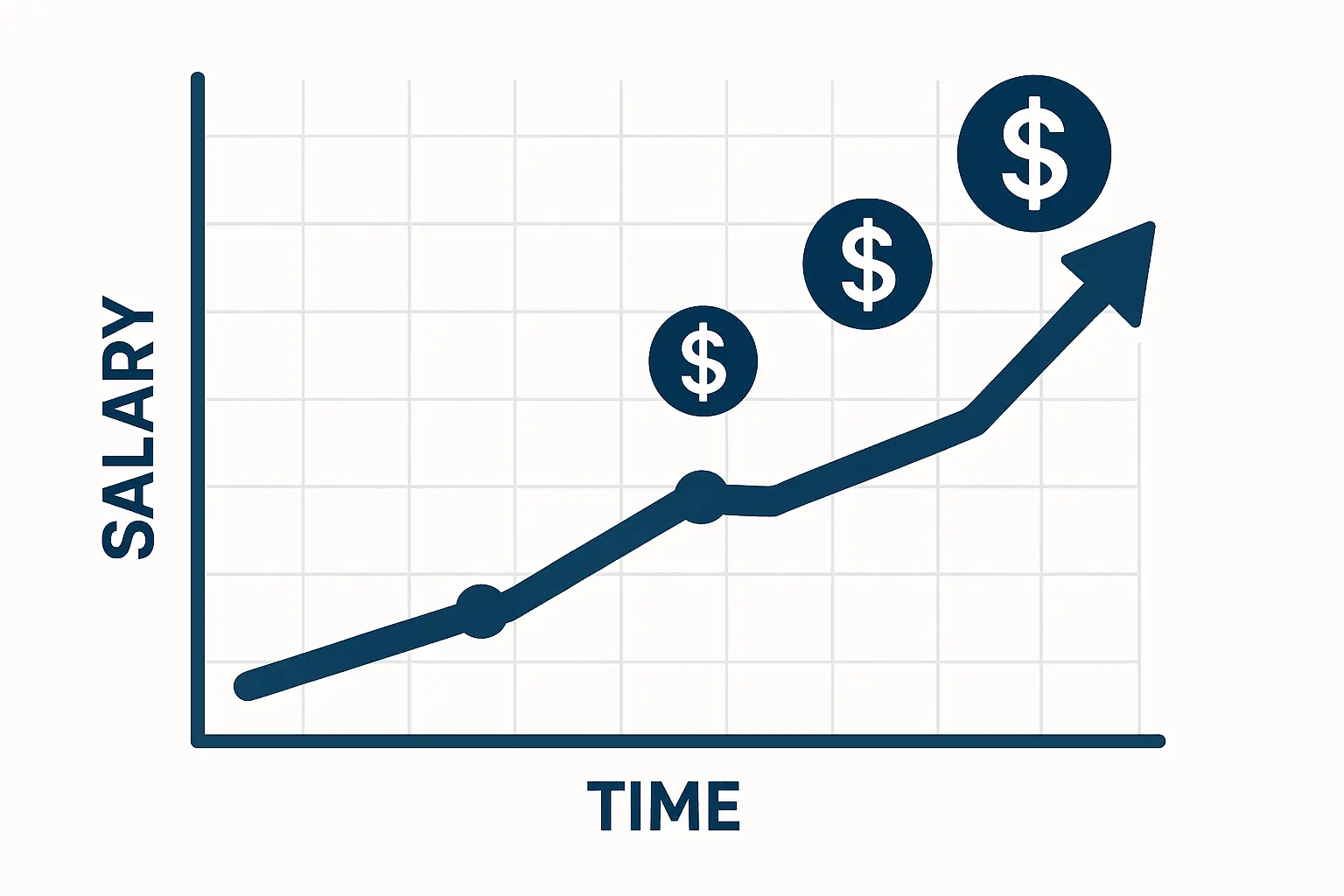
Let me put this in perspective for you. Back in 2014, the mayor was making $195,000. Fast-forward ten years, and we're looking at about a 33% bump. That's pretty solid growth, especially when you think about how touchy people get about politicians' salaries.
What's driving these increases? Well, inflation is obviously a big factor. But there's also this ongoing reality that running New York City is basically one of the worst jobs in America. You're dealing with 8.3 million people who all have opinions about everything you do. The city needs to pay enough to actually get qualified people to want this headache.
It's like trying to hire a CEO for a company with 8 million demanding customers and a bunch of shareholders (voters) who can fire you every four years. The pay has to reflect that level of stress and responsibility.
For professionals considering executive housing decisions in NYC, understanding municipal compensation structures provides valuable context about the real cost of living in NYC and how leadership positions factor into the city's broader economic landscape.
Okay, this is where it gets really interesting. That $258K salary? That's honestly just the beginning of what this job is actually worth.
First up: housing. The mayor gets to live in Gracie Mansion, and I'm not talking about just getting the keys and paying your own electric bill. We're talking about a full package – maintenance, utilities, staff, the works. The estimated value? About $400,000 a year. In Manhattan real estate terms, that's basically like getting a luxury penthouse for free.
Then there's security. Look, I get it – some people roll their eyes at this. But the mayor of NYC genuinely needs protection. We're talking about 24/7 security details that cost somewhere between $1-2 million annually. That's not a perk, that's a necessity when you're making decisions that affect millions of people and billions of dollars.
Transportation is another big chunk. Official cars, drivers, the whole nine yards. Estimated cost? Around $500,000 a year. Again, this isn't about luxury – it's about logistics. The mayor can't exactly be sitting in subway delays when there's a city emergency.
Health insurance and retirement benefits follow the city's standard employee structure, though they continue post-service under specific conditions. The mayor participates in the same pension system as other city employees, which provides some interesting perspective on the long-term value of the position.
Add it all up, and you're looking at a total compensation package worth over $2 million annually. That's a far cry from that $258K base salary everyone focuses on.
|
Compensation Component |
Annual Value |
Description |
|
Base Salary |
$258,750 |
Direct annual compensation |
|
Gracie Mansion |
$400,000 |
Housing, utilities, maintenance, staff |
|
Security Detail |
$1,000,000+ |
24/7 protection services |
|
Transportation |
$500,000+ |
Official vehicles and drivers |
|
Health Benefits |
$25,000+ |
Premium healthcare coverage |
|
Pension Contribution |
$15,000+ |
City retirement system |
|
Total Package |
$2,200,000+ |
Complete compensation value |
So how does NYC stack up against other big cities? The numbers might surprise you.
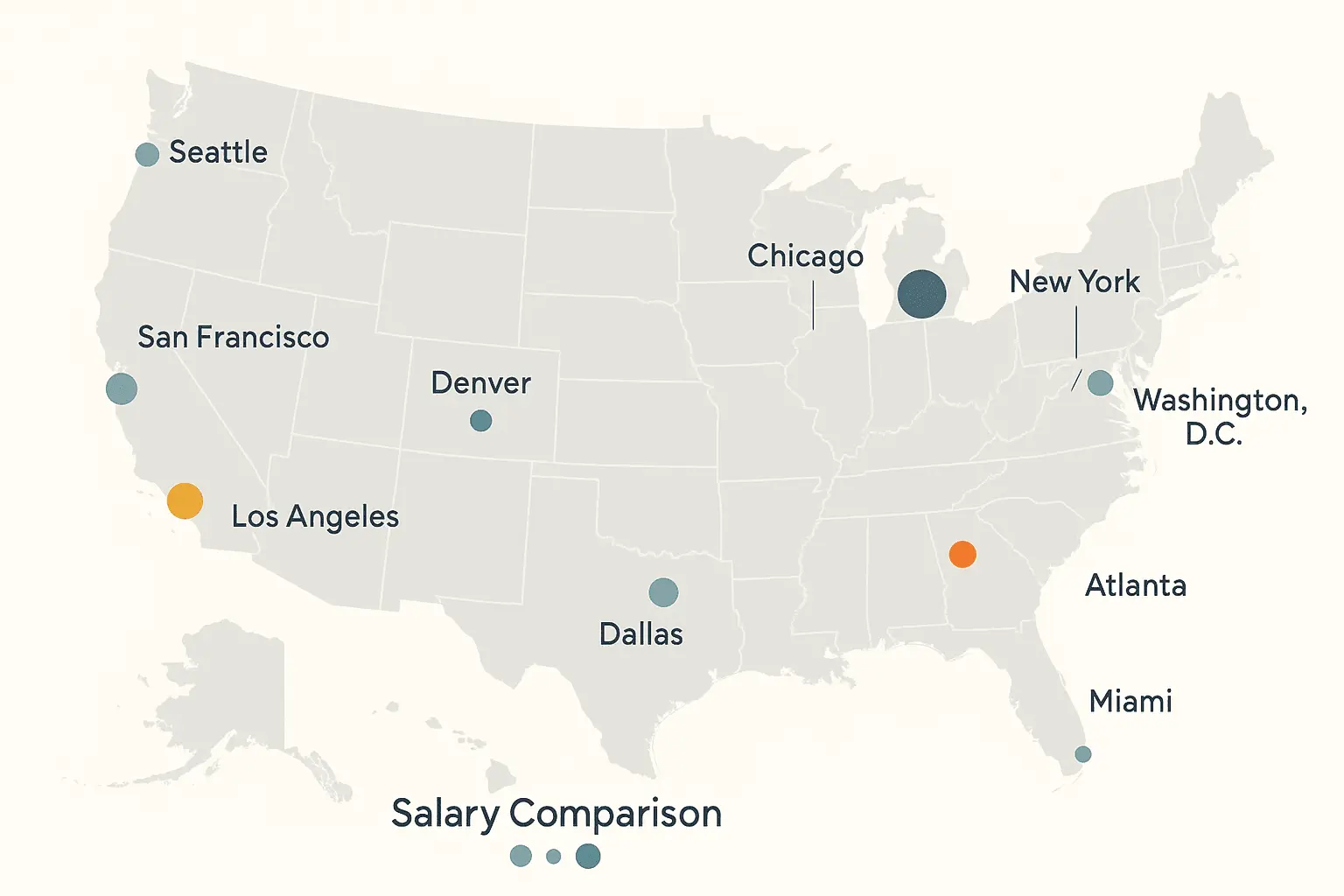
San Francisco actually pays their mayor more – $342,974 annually. LA comes in at $248,141, so NYC's $258,750 is right in the ballpark. Chicago pays less at $216,210, and Boston sits at $207,000.
But here's the thing – comparing just the base salaries is kind of like comparing the sticker price on cars without looking at what comes with them. NYC's total compensation package, when you factor in all those benefits I mentioned, probably puts it at the top of the list nationally.
Looking at regional comparisons, "Buffalo, the biggest city in Upstate New York, pays its mayor an annual salary of more than $178,000" according to Syracuse.com, showing how NYC's compensation significantly exceeds even the largest upstate municipalities.
And let's be real about what these mayors are actually managing. NYC's budget is over $100 billion. The mayor oversees more than 300,000 employees. That's bigger than the entire population of cities like Buffalo or Pittsburgh. You're basically running a small country at that point.
When you factor in the total compensation package including benefits and perquisites, NYC's mayoral position becomes even more competitive on the national stage.
For perspective, consider that NYC's mayor manages a workforce of over 300,000 employees—larger than the entire population of cities such as Buffalo or Pittsburgh. The scope of responsibility includes overseeing the nation's largest public school system, police force, and municipal hospital network, all while coordinating with federal and state agencies on issues ranging from immigration to counterterrorism.
Ever wonder who actually decides what the mayor gets paid? Because it's definitely not the mayor just writing themselves a bigger paycheck (thank god).
The whole process is laid out in the NYC Charter, and it's actually pretty structured. Any changes to the mayor's salary have to go through public hearings and formal approval processes. No backroom deals, no surprise announcements.
Article 3 of the NYC Charter lays out the legal foundation for mayoral compensation. The Mayor's Committee on Management and Budget plays a role, but they can't just decide this stuff unilaterally. The City Council has to sign off on it too, which adds another layer of oversight. Basically, there are enough checks and balances to prevent any shenanigans.
This whole legal framework exists for obvious reasons – public officials shouldn't be able to give themselves raises without proper oversight and community input. It's government 101.
Salary Review Process Checklist:
Understanding municipal governance processes connects to broader questions about how much you need to make to live in NYC, as executive compensation decisions ultimately influence the city's ability to attract and retain qualified leadership across all departments.
There's an independent commission that handles the heavy lifting when it comes to reviewing mayoral compensation. And they don't just throw darts at a board – there's actual methodology involved.
These reviews typically happen every four years, lining up with mayoral terms. The commission looks at economic indicators, compares salaries with peer cities, and considers performance metrics. It's a comprehensive analysis that goes way beyond simple cost-of-living adjustments.
The public gets to weigh in too, through hearings and written comment periods. So if you've got strong feelings about the mayor's salary, you can actually do something about it during these review periods.
Here's what's smart about the timing: approved salary changes usually take effect at the beginning of the next mayoral term. That way, sitting mayors aren't voting themselves raises. Nobody wants accusations of self-dealing in city government.

Here's where things get spicy. Mayoral salary discussions never stay focused on just the numbers. They become lightning rods for much bigger conversations about government spending and priorities.
Public opinion on mayoral pay swings wildly based on what's happening in the city at any given moment. When things are running smoothly and the economy's good, fewer people complain about executive compensation. But during budget crunches or when services are failing? That's when the criticism really heats up.
From a pure math perspective, the mayor's total compensation represents about 0.000003% of NYC's annual budget. It's literally a rounding error in fiscal terms.
But here's the thing – symbolic importance often trumps mathematical reality in public discourse. The mayor's salary becomes a stand-in for broader frustrations about government spending, income inequality, and political priorities.
And honestly? I get why people get worked up about it. When you're struggling to pay rent in this city and you see headlines about the mayor's compensation package, it stings a little.
The scope of mayoral responsibility becomes clearer when considering that multiple deputy mayors earn $251,982 annually, including positions for health and human services, operations, public safety, and strategic initiatives, highlighting the complex administrative structure required to manage the city.
Let's put this in perspective though. NYC's annual budget exceeds $100 billion. Education, public safety, and infrastructure eat up the vast majority of that spending. Mayoral compensation barely registers as a line item.
But here's where it gets interesting – the economic multiplier effects tell a different story. The mayor's decisions impact a city economy worth over $1.7 trillion. A single policy choice can affect millions of jobs and billions in economic activity.
Think about the mayoral decisions during COVID-19. When de Blasio implemented business closure orders, that decision affected thousands of establishments and hundreds of thousands of jobs. Similarly, reopening strategies influenced billions in economic activity.
Should compensation reflect that level of responsibility and potential impact? That's where the debate gets really interesting, and where reasonable people can totally disagree about appropriate pay levels for public executives.
Consider the economic impact of mayoral decisions during COVID-19. When Mayor de Blasio implemented business closure orders, the decision affected thousands of establishments and hundreds of thousands of jobs. Similarly, reopening strategies influenced billions in economic activity. These high-stakes decisions demonstrate why competitive compensation might be necessary to attract leaders capable of managing such complex trade-offs.

Income inequality makes mayoral salary discussions particularly sensitive in NYC. This city has some of the highest wealth disparities in the nation, so executive compensation becomes a charged political topic real quick.
The mayor's salary becomes symbolic of broader systemic issues. Critics point to the contrast between executive pay and struggling city services or underpaid municipal workers. Supporters argue that competitive compensation attracts better candidates who can actually address these challenges.
It's worth noting that the mayoral position offers a significant bump for
It's worth noting that the mayoral position offers a significant bump for public servants moving up. "The mayoral position offers an annual salary of about $258,750 (approximately Rp 4.3 billion), a significant increase from Mamdani's previous $142,000 (Rp 2.3 billion) as a New York State Assembly member" according to Tempo.co, highlighting how the role represents substantial financial advancement for public servants.
Policy implications extend beyond just the mayor's office. How the city approaches executive compensation influences discussions about pay scales throughout municipal government, from department heads to agency directors.
The story of mayoral compensation in NYC goes back over a century, and honestly, it's pretty fascinating how much has changed – and what's stayed exactly the same.
When the five boroughs consolidated in 1898, the first mayor of Greater New York earned $15,000 annually. Here's what's crazy – adjusted for inflation, that's roughly $500,000 in today's money. Actually higher than the current base salary.
Back then, public service operated under completely different assumptions. Many mayors maintained business interests or came from wealthy families. The salary was meant to cover expenses, not necessarily provide a complete living.
This era established some important precedents about the relationship between public service and personal wealth that still influence modern debates about mayoral compensation.
The historical evolution of NYC governance reflects broader changes in urban living costs, much like the modern challenge of how much it costs to live in Manhattan and how compensation structures must adapt to attract qualified public servants.

The post-war period brought more systematic thinking about municipal executive compensation. Cities started comparing notes, and professional public administration became a recognized field.
Michael Bloomberg created a unique precedent by accepting only $1 in annual salary. His personal wealth made this gesture possible, but it also highlighted some uncomfortable questions about whether public service should require personal financial sacrifice.
Bloomberg's precedent was symbolically powerful, but it also raised concerns about whether public service should be accessible only to the independently wealthy. Should you need to be a billionaire to afford to be mayor?
Bill de Blasio's tenure saw salary increases tied to inflation and cost-of-living adjustments. These changes established frameworks that future administrations continue to reference when discussing compensation adjustments.
|
Mayor |
Years Served |
Annual Salary |
Notable Compensation Changes |
|
Ed Koch |
1978-1989 |
$110,000 |
First major post-fiscal crisis increase |
|
David Dinkins |
1990-1993 |
$130,000 |
Modest adjustment for inflation |
|
Rudy Giuliani |
1994-2001 |
$165,000 |
Significant raise reflecting economic recovery |
|
Michael Bloomberg |
2002-2013 |
$1 |
Symbolic salary due to personal wealth |
|
Bill de Blasio |
2014-2021 |
$195,000-$258,750 |
Systematic increases tied to inflation |
|
Eric Adams |
2022-Present |
$258,750 |
Maintained de Blasio's final salary level |
The Bloomberg precedent illustrates how personal wealth can influence compensation decisions. While his $1 salary was symbolically powerful, it also raised questions about whether public service should be accessible only to the independently wealthy. This precedent influenced discussions about ensuring competitive compensation to attract qualified candidates regardless of their personal financial situation.
Reform proposals keep popping up, and some are pretty creative. Performance-based compensation models would tie mayoral salary to city performance metrics like crime reduction, economic growth, and infrastructure improvements.
Regional cost-of-living adjustments represent another potential direction. Future salary structures might incorporate automatic adjustments based on housing costs and economic indicators specific to NYC.
Term limits add another wrinkle to compensation discussions. Should salary progression reflect experience in office, or should it remain flat regardless of tenure?
Looking ahead, understanding compensation trends becomes crucial for professionals considering NYC careers, especially when evaluating affordable neighborhoods in NYC and how municipal leadership decisions impact housing costs across the city.

Want to stay on top of mayoral compensation decisions? You've actually got more options than you might think.
Freedom of Information Law (FOIL) requests give you access to detailed breakdowns of mayoral compensation, benefits, and associated costs. The process isn't complicated, but you do need to know what to ask for.
The annual city budget documents contain line items for mayoral compensation and related expenses. You can access these through the NYC Mayor's Office of Management and Budget website – no special requests needed.
City Comptroller reports often include analysis of executive compensation trends and comparisons with other municipalities. These provide valuable context for understanding compensation decisions.
Understanding the broader compensation structure helps contextualize the mayor's pay—for instance, Chief of Staff positions to deputy mayors earn $211,150, while senior advisers and directors earn around $220,000-$227,786, showing the hierarchical compensation structure within City Hall.
FOIL Request Template for Mayoral Compensation:
Public hearings offer direct opportunities to influence compensation decisions. The salary commission holds these during review periods, and they actually do consider public input in their deliberations.
Written comment periods allow more detailed feedback if you can't make it to hearings in person. The commission publishes guidelines for submitting comments and considers all feedback received during designated periods.
Advocacy organizations often coordinate public participation efforts around compensation reviews. Joining these groups can amplify your voice and provide better information about upcoming opportunities for engagement.
For young professionals and students interested in civic engagement, understanding municipal governance provides valuable context about student housing in Manhattan and how city policies affect housing costs and living conditions for the next generation of leaders.
Understanding NYC's mayoral compensation structure connects to broader questions about leadership, governance, and civic responsibility. For professionals who value institutional excellence and principled leadership, these discussions offer insights into balancing public accountability with effective governance.
The complexity of mayoral compensation reflects the challenges of modern municipal leadership. Managing a $100+ billion budget while serving 8.3 million residents requires strategic thinking and decision-making skills that translate across professional environments.
At Outpost, we understand the importance of transparent governance and principled leadership. Our executive advisory services help leaders navigate complex compensation and governance challenges, whether in corporate, nonprofit, or civic contexts. If you're dealing with executive compensation decisions or governance questions in your organization, we'd love to discuss how our experience can help you find the right balance between accountability and effectiveness.
For professionals seeking housing solutions while navigating NYC's complex economic landscape, understanding municipal governance helps inform decisions about coliving in Manhattan and how city leadership affects housing costs and community development.

Look, NYC's mayoral compensation is way more complex than most people realize. That $258,750 base salary everyone talks about? It's just the tip of the iceberg. When you factor in all the benefits, security, and operational support, you're looking at a total package worth over $2 million annually.
But here's what really strikes me about this whole discussion – it reveals fundamental tensions between public service ideals and practical governance needs. We want our leaders to be public servants, but we also need to attract people capable of managing a $100+ billion budget and serving 8.3 million residents.
The Bloomberg precedent really highlighted this tension. His $1 salary was a powerful symbolic gesture, but it also raised uncomfortable questions about whether you need to be independently wealthy to afford public service.
What I appreciate about NYC's approach is the transparency built into the compensation review process. Public hearings, written comment periods, published reports – citizens can actually participate meaningfully in these decisions. That level of openness isn't always present in private sector compensation discussions.
For anyone interested in municipal governance or executive compensation, NYC's approach provides valuable lessons about balancing competing interests while maintaining democratic oversight. The process isn't perfect, but it demonstrates how complex compensation decisions can be made transparently and accountably.
And honestly, when you consider that the mayor's decisions can impact a trillion-dollar city economy, maybe competitive compensation isn't such a crazy idea after all.
For professionals considering moves to NYC or those interested in municipal careers, understanding these governance structures provides essential context about the best neighborhoods in NYC and how city leadership decisions ultimately shape the communities where we live and work.

Household supplies can be changed or decreaased at Outpost Club’s discretion, or based on supply availability. Outpost is not responsible for temporary losses of utility service. Outpost Club is not responsible for any damages due to absence of any supplies or utilities


If you have a sales related question please call
680-688-7678

 Hot Deals