NYC Police Commissioner Salary: What the $243K Position Really Pays and Why It Matters
Dec 15, 2025

Dec 15, 2025
Look, managing the NYPD isn't your typical corner office gig. We're talking about running what's basically a small army - and honestly, the pressure that comes with it would make most CEOs break out in a cold sweat. The NYC police commissioner salary of around $243,000 reflects this reality, but here's the thing - it needs to attract someone who can actually handle this insane job while still being something taxpayers won't riot over.
The current base salary sits at approximately $243,000 annually, though this number can bounce around depending on who's in the mayor's office and how tight the city's budget is looking. What's wild is that under Commissioner Keechant Sewell, the position paid $243,171 - but get this - that's actually LESS than what the Deputy Mayor for Public Safety makes ($251,982). Yeah, you read that right.
According to City & State New York, the NYPD Commissioner's salary of $243,171 is actually less than NYC Mayor Eric Adams' Deputy Mayor for Public Safety Philip Banks' salary, which is $251,982 per year.
You're probably thinking, "Why does a government job pay this much?" Fair question. The answer is pretty simple when you think about it - modern urban policing is absolutely bonkers complicated. We're talking counterterrorism (in NYC, no less), cybercrime that would make your head spin, community relations that are... let's say "challenging," budget management that involves BILLIONS, and political pressures that never stop. Honestly, most Fortune 500 CEOs deal with less stress.
Here's where it gets interesting. That $243,000 base salary puts the new york city police commissioner among the city's highest-paid department heads, but the real story is in the total package. When you add in benefits, security (because yes, people want to hurt the police commissioner), and executive support, we're talking about significantly more value.
The way they figure out this salary is actually pretty fascinating. The mayor's office usually kicks things off, but then city council gets involved, budget constraints rear their ugly head, and suddenly everyone's got an opinion. Recent appointments have shown how crazy the job market is - if you want good people, you've got to pay for them.
What really blows my mind is how much this job has changed. Twenty years ago, police commissioners dealt with way simpler stuff. Now? They're managing social media crises, sophisticated cyber threats, and public relations nightmares that would make a PR firm charge millions.
For professionals considering similar executive roles in NYC's competitive landscape, understanding the real cost of living in NYC becomes crucial when evaluating compensation packages against living expenses.
Think about New Year's Eve in Times Square for a second. The commissioner has to coordinate thousands of officers, multiple agencies, counterterrorism units, traffic management, and deal with media breathing down their neck - all while making sure nobody gets hurt and politicians stay happy. That's just ONE night. Would you want that job?
Jessica Tisch's appointment is actually pretty cool when you think about it. She's not your typical "worked my way up through the ranks" commissioner. Instead, she brings this unique mix of tech expertise and city government know-how that could actually shake things up in a good way.
Here's what's different about Tisch - she's been on the inside of NYPD technology implementation, so she knows exactly where the department's systems are broken (spoiler alert: there are many). Plus, her stint as Sanitation Commissioner might sound unrelated, but managing garbage collection across NYC is basically a masterclass in logistics, union negotiations, and public accountability.
And get this - recent payroll data shows "Jessica Tisch, NYPD commissioner, with a salary of $286,627" according to Empire Center transparency reporting. That's higher than the standard base rate, which probably means they recognized her unique qualifications and had to compete for her.
The technology angle is huge. Tisch isn't just some executive who thinks "let's add more computers." She's actually implemented NYPD commissioner tech systems before, so she knows where the bottlenecks are, which systems are basically held together with digital duct tape, and how technology can actually make officers safer while making the department more transparent.

Tisch's approach isn't about flashy gadgets - it's about fixing things that actually matter. Body cameras, better data analytics, improved communication systems. These might not make headlines, but they're the kind of practical improvements that can keep officers safer and build community trust.
The community policing focus shows she gets it. Effective policing today isn't just about enforcement - you need genuine community engagement. And honestly, given everything that's happened in recent years, this isn't optional anymore.
Budget optimization is where her municipal management experience really pays off. NYC's always tight on cash, so the commissioner needs to figure out how to do more with less. Having managed other massive city departments gives her a leg up here.
|
Jessica Tisch Career Progression |
Years |
Key Responsibilities |
|
NYPD Intelligence Research Specialist |
2008-2014 |
Counterterrorism Bureau, Domain Awareness System |
|
Deputy Commissioner of IT |
2014-2019 |
Body cameras, mobile platforms, data analytics |
|
NYC IT & Telecommunications Commissioner |
2019-2022 |
Citywide IT infrastructure, COVID-19 response |
|
Department of Sanitation Commissioner |
2022-2024 |
Largest sanitation department globally |
|
NYPD Commissioner |
2024-Present |
48th Commissioner, technology modernization focus |
Okay, let's talk about what else comes with this job beyond that base salary. We're looking at full health insurance coverage - medical, dental, vision, the works - for the commissioner and family. That's worth serious money in NYC.
The pension participation is interesting, though most commissioners don't stick around long enough to really cash in. The political nature of the job means your tenure usually matches the mayor's, so you might not see full pension benefits.
Now, the executive perks might sound fancy, but they're actually necessary. Security detail isn't a luxury when you're running law enforcement in a city that's a major terrorist target. Official transportation isn't about looking important - it's about being able to respond to emergencies and stay safe while doing it.
Here's some context that'll blow your mind - according to SalaryExpert, the cost of living in New York-Manhattan is 154% more than the average cost of living in the United States. So that $243K salary? It doesn't go as far as you'd think.

Let's be real about the security situation. The new york city police commissioner faces legitimate risks that require professional protection. This isn't about ego - it's about staying alive while doing one of the most high-profile law enforcement jobs in the country.
The official transportation serves multiple purposes. Sure, it's secure movement, but it's also a mobile office and ensures the commissioner can respond to emergencies immediately. Those expense allowances? They cover official functions that are literally part of the job.
During major incidents - natural disasters, terrorist threats, whatever - the commissioner needs to be able to get to command centers, crime scenes, or City Hall instantly. The security detail and official vehicle aren't perks; they're tools that let the job actually get done.
For those considering high-level positions in NYC government, understanding how much money you need to make to live in NYC helps put executive compensation packages in proper perspective.
Here's where things get really interesting. When you look at other major cities, NYC's commissioner salary is actually all over the map compared to peers. LA's police chief makes around $350K, Chicago's around $260K, Philadelphia around $280K.
But here's the catch - those numbers don't tell the whole story. Some cities offer lower base salaries but throw in performance bonuses or better benefits. Others have lower costs of living that make the money go further.
The NYC premium makes sense when you think about it. The department's massive, the city's incredibly complex, living here costs a fortune, and cities are competing for the same small pool of people who can actually do this job.
|
City |
Police Chief/Commissioner Salary |
Department Size |
Population Served |
|
New York City |
$243,171 |
55,000+ employees |
8.3 million |
|
Los Angeles |
$350,000* |
12,000+ employees |
4 million |
|
Chicago |
$260,000* |
13,000+ employees |
2.7 million |
|
Philadelphia |
$280,000* |
6,500+ employees |
1.6 million |
|
Boston |
$315,000* |
2,100+ employees |
695,000 |
*Approximate figures based on recent public reporting
The talent pool for police commissioner jobs is tiny. We're talking about people who need law enforcement experience, executive management skills, political savvy, and crisis leadership abilities. Finding someone with all of that? Good luck.
Cities are stuck between offering competitive packages and not getting crucified by taxpayers. Public scrutiny adds another layer - the salary has to make sense to voters while still attracting candidates who could make more elsewhere.
Here's the reality: bad police leadership costs way more than good salaries. Poor community relations, low officer morale, public safety problems - these issues cost cities millions and can last for years.
The NYPD numbers are absolutely insane. Over 35,000 uniformed officers and about 15,000 civilian employees. That's bigger than many small countries' entire military forces. The annual budget? Over $5 billion. Yeah, billion with a B.
The operational diversity is mind-boggling. Routine patrols, counterterrorism, traffic enforcement, cybercrime, organized crime - the commissioner needs to understand strategy across all these completely different areas.
And we haven't even talked about the geographic scope. Five boroughs, each with different communities, crime patterns, and needs. The NYPD commissioner has to keep everyone working together while adapting to local requirements.
Want to know how crazy the budget management is? "The city Police Department had the largest overtime payout among city agencies at $1.09 billion, which was 18 percent of its total payroll of $6 billion" according to Empire Center analysis. The commissioner is managing financial complexity that would challenge any major corporation.

Budget negotiations are like a never-ending political circus. The mayor wants one thing, city council wants another, community groups have their demands, police unions have theirs - and the commissioner has to navigate all of this while keeping the city safe.
Personnel costs eat up most of the budget, but equipment, technology, and facility maintenance require huge chunks too. Recent years have seen massive technology investments - body cameras, data analytics, communication upgrades - that need both upfront capital and ongoing operational funding.
The reform movement has made budget decisions even more complicated. Communities want spending transparency while also pushing for resources to be redirecte
The reform movement has made budget decisions even more complicated. Communities want spending transparency while also pushing for resources to be redirected to social services. The commissioner has to balance these pressures while maintaining public safety standards.
Understanding the broader context of NYC's fiscal challenges helps explain why executive compensation decisions must be carefully balanced, especially for professionals considering affordable neighborhoods in NYC who understand the city's cost pressures.
When they rolled out the body camera program, the commissioner had to juggle equipment costs, ongoing data storage expenses, training requirements, and policy development - all while ensuring the program actually improved both officer accountability and community trust. That's the kind of complex resource allocation that justifies executive-level pay.
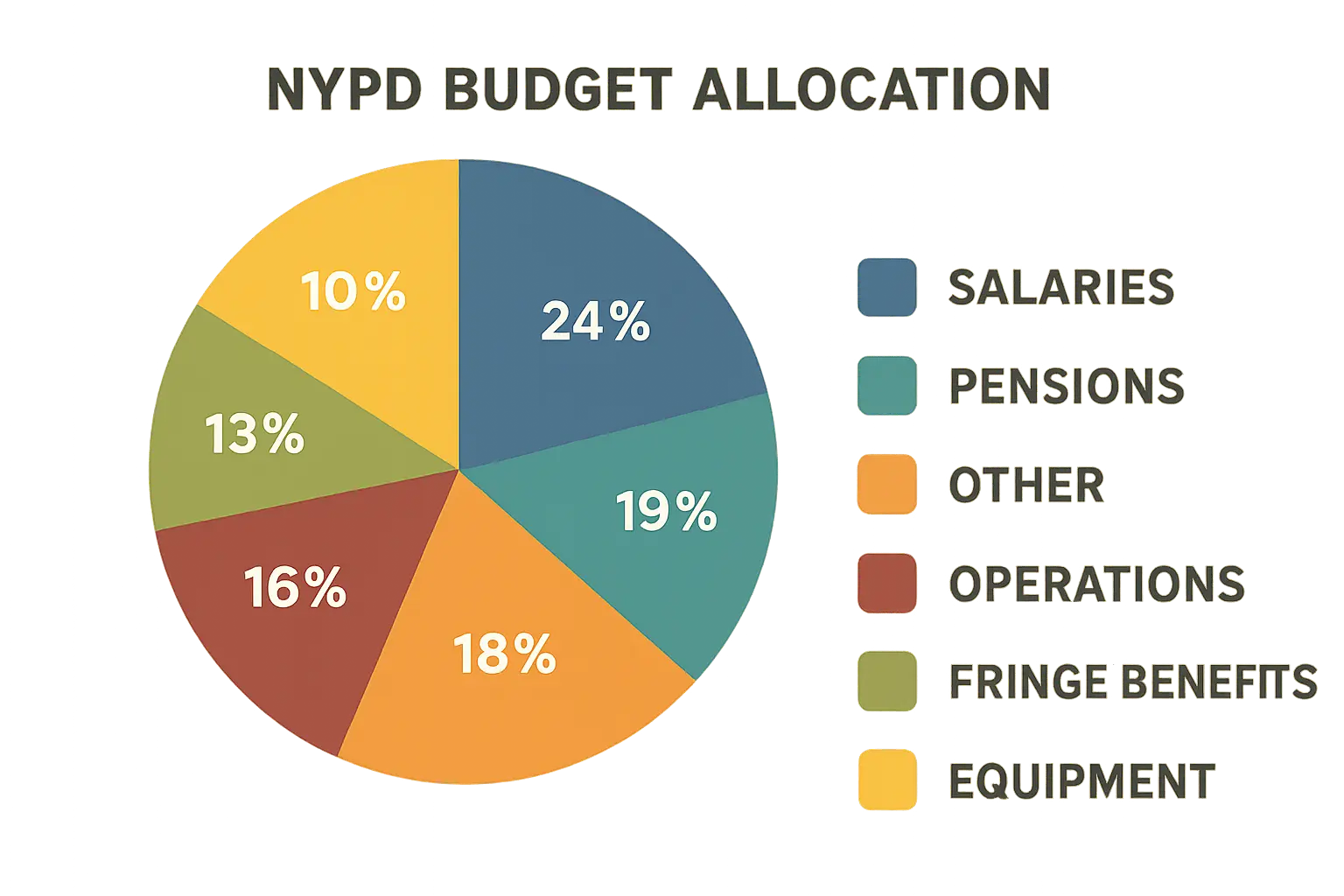
Here's some perspective - the commissioner's salary is basically a rounding error in the NYPD's budget and an even tinier fraction of NYC's total spending. But executive compensation carries symbolic weight that's way bigger than the actual numbers.
Public disclosure requirements mean every detail of the commissioner's pay and benefits is available for anyone to see. That creates accountability pressure you just don't get in private sector jobs.
Performance evaluation is incredibly complex. Unlike business executives who get judged mainly on profits, commissioners are assessed on crime reduction, community relations, officer morale, budget management, and reform implementation - and sometimes these goals directly conflict with each other.
Here's a wild stat - according to Empire Center data, a total of 2,074 employees received total pay larger than Mayor Eric Adams' salary of $258,012. So the commissioner's pay, while substantial, isn't even close to the highest in city government.

Every aspect of the commissioner's compensation is public information. Budget documents, compensation disclosures, media coverage - citizens can see exactly how their tax dollars support police leadership.
This creates unique pressures. Private sector executives might face shareholder questions, but public sector leaders deal with media coverage, community activism, and political oversight that can affect both current pay and future career prospects.
The accountability framework requires showing results. Commissioners must demonstrate progress on crime reduction, community engagement, departmental reform, and budget management to justify their compensation to multiple groups with often conflicting priorities.
If you want to research commissioner compensation, you need a systematic approach. NYC's public records are your starting point - budget documents and executive compensation disclosures are available through the city's official website.
News coverage adds the context that raw budget numbers can't provide. Local outlets covering city government often provide insights into compensation decisions, political considerations, and public reaction.
Historical analysis shows trends over time. Tracking salary changes across different administrations reveals how compensation responds to inflation, budget pressures, political priorixties, and market conditions.

Benchmarking against other cities requires careful comparison. Police chiefs in LA, Chicago, Boston provide relevant data points, but you have to account for department size, city budgets, and local conditions.
Total compensation analysis goes way beyond base salary. Health insurance, pension contributions, executive benefits - these can significantly impact real value comparisons between cities.
Legislative tracking gives early warning of changes. City council discussions about executive compensation, police budgets, and reform initiatives can signal future adjustments before they happen.
Several factors will shape future commissioner compensation. Municipal budget constraints will continue pressuring executive pay across all city departments. Public sentiment about police spending adds complexity - communities scrutinize police budgets while demanding effective leadership.
Competition for executive talent will intensify as policing challenges become more complex. Cybercrime, terrorism prevention, community relations, and technology integration require sophisticated leadership skills that command market premiums.
The national conversation about police reform will influence compensation structures. Cities may increasingly tie executive pay to performance metrics related to community engagement, reform implementation, and transparency initiatives.

How do you think these evolving challenges will reshape what we expect from police leadership? The role continues expanding beyond traditional law enforcement into areas requiring diverse expertise and sophisticated management capabilities.
For professionals navigating similar executive compensation questions or seeking to understand municipal leadership dynamics, understanding the best neighborhoods in NYC provides context for where city leaders often reside and the lifestyle considerations that influence compensation expectations.
The Outpost Club provides a unique environment where accomplished leaders can discuss these complex topics. Our members, many holding senior executive positions, understand the intricacies of managing large organizations under public scrutiny. Whether you're exploring career transitions, analyzing compensation structures, or simply seeking peer perspectives on leadership challenges, our community offers valuable networking and insight opportunities. Connect with us to join conversations where professional excellence meets strategic thinking.

The new york police commissioner salary represents more than just executive pay - it reflects society's investment in effective law enforcement leadership during incredibly complex times. At $243,000 annually, plus comprehensive benefits and necessary security provisions, the position requires significant resources while demanding exceptional results across multiple challenging areas.
Jessica Tisch's appointment brings fresh perspective, combining technology expertise with municipal management experience that could reshape how the NYPD commissioner operates. Her strategic focus on modernization, community engagement, and operational efficiency suggests she understands both current challenges and future opportunities.
The compensation structure, while substantial, must be viewed in context - managing over 50,000 employees and a $5+ billion budget requires executive capabilities that command market premiums. Public transparency ensures accountability while creating unique pressures that don't exist in private sector roles.
For those interested in NYC's broader safety landscape and how it affects residential decisions, exploring the top 5 safest neighborhoods to live in Brooklyn provides valuable context for understanding the commissioner's impact on daily life across the city's boroughs.
Future trends will likely see continued evolution in police leadership compensation. Budget pressures, public accountability demands, and competition for qualified talent will shape these decisions, requiring careful balance between fiscal responsibility and leadership effectiveness.
The investment in top-tier police leadership ultimately serves broader public safety and community well-being objectives that extend far beyond salary considerations.

Household supplies can be changed or decreaased at Outpost Club’s discretion, or based on supply availability. Outpost is not responsible for temporary losses of utility service. Outpost Club is not responsible for any damages due to absence of any supplies or utilities


If you have a sales related question please call
680-688-7678

 Hot Deals