PCA Salary NYC: What Personal Care Assistants Really Earn in the Big Apple
Jan 8, 2026

Jan 8, 2026
When I first started looking into PCA work in NYC, I had no idea what I was getting myself into. Everyone told me different things about the pay, and honestly, the numbers were all over the place. After talking to dozens of PCAs actually working in the city, here's what I learned about what you can really expect to earn.
Look, working as a PCA in NYC is like jumping into the deep end of the pool. You're in one of the most expensive cities in the country, but also one where people actually value (and pay for) good caregiving. According to SalaryExpert, the average personal care aide gross salary in New York-Manhattan is $47,011 annually or an equivalent hourly rate of $23, which is 24% higher than the national average. But honestly, that doesn't tell you much about what you'll actually take home.
What matters is understanding how this whole system works - because yes, you can make decent money here, but only if you know what you're doing. This city has more wealthy elderly people than anywhere else in the country, plus a massive population that's aging fast. Translation? There's work. Good work, if you position yourself right.
Your paycheck isn't just about showing up and being good at your job (though that obviously matters). It's about figuring out the puzzle - where you work, who you work for, what extra skills you've got, and how you handle the insane cost of living here. When people ask me about PCA salary NYC expectations, I tell them to forget the hourly rate for a minute and think about the bigger picture.
Alright, let's talk real numbers. The PCA market here is all over the place - you've got people making $16 an hour wondering how they'll pay rent, and others pulling in $30+ working for families who think nothing of spending that much on lunch. The range reflects everything from basic companionship to specialized medical assistance, and trust me, the market changes based on demand cycles and what's happening in healthcare.
|
Experience Level |
Hourly Rate Range |
Annual Salary |
What You Actually Need |
|
Brand New (0-1 years) |
$16-18 |
$33,280-37,440 |
Basic certification, clean background, lots of patience |
|
Getting There (2-4 years) |
$18-22 |
$37,440-45,760 |
Some horror stories under your belt, specialized skills |
|
Know Your Stuff (5+ years) |
$20-25 |
$41,600-52,000 |
Can handle anything, clients request you specifically |
|
The Pros (8+ years) |
$23-30+ |
$47,840-62,400+ |
Families fight over you, agencies beg you to stay |
When you're new, expect $16-18 an hour. I know, I know - that sounds brutal when you're looking at NYC rent prices. Most people start with agencies because honestly, trying to find private clients when you have zero experience is like trying to get a date on Tinder with no photos.
Sarah started in Brooklyn at $16.50 through an agency. She was eating PB&J sandwiches for lunch every day and sharing a bedroom in a three-bedroom apartment with two other people. But here's the thing - she stuck it out, got her CPR cert, and within six months was making $17.25. Not life-changing money, but it was progress.
The agencies handle all the paperwork nightmare while you figure out if you can actually do this job. Because let me tell you, it's not for everyone. Some people think it's just hanging out with elderly folks, but you're dealing with medications, family drama, medical emergencies, and clients who might not remember your name from day to day.
Once you've got a couple years under your belt, things get interesting. You're looking at $20-25 an hour, and if you've picked up some specialized skills, you might hit the higher end of that range. Data from PayScale shows that mid-career Personal Care Assistants with 5-9 years of experience earn an average total compensation of $16.82, though this can reach as high as $27.64 per hour in New York.
The difference between a newbie and someone with experience isn't just time - it's confidence. Families can tell when you know what you're doing. I met this guy Marcus who's been doing PCA work for seven years. He makes $24 an hour with a family on the Upper West Side, and they literally built their vacation schedule around his availability. Why? Because he knows how to handle their dad's Parkinson's medication schedule, can lift him safely when he falls, and somehow manages to keep the guy's spirits up even on bad days. That's worth paying for.

Here's where it gets really interesting - private families often pay 20-30% more than agencies. We're talking $25-30 an hour for experienced people who can handle the business side of caregiving.
But (and this is a big but), you're basically running your own business. You're finding your own clients, dealing with their families when they don't want to pay, covering your own sick days, and figuring out what to do when Mrs. Johnson decides she doesn't like you anymore. Some people thrive on this independence. Others miss having an agency to call when things go sideways at 2 AM.
The money is better, but the headaches are yours to handle. Choose wisely.
OK, time for some tough love about money in this city. Your PCA salary is going to get eaten alive by NYC's cost of living if you're not smart about it. Housing, transportation, and healthcare costs will take a huge chunk out of your paycheck, so you need to plan accordingly.
Housing is going to take 40-50% of your income, maybe more. I've seen one-bedroom apartments going for $3,500, and that's not even in Manhattan. When you're making $35,000-45,000 a year, the math is terrifying. According to SalaryExpert, the cost of living in New York-Manhattan is 154% more than the average cost of living in the United States.
Most PCAs I know have gotten creative with housing solutions. Some share apartments in Brooklyn or Queens. Others find rooms for rent in Brooklyn that offer the perfect balance of affordability and proximity to Manhattan's highest-paying PCA positions. A few lucky ones house-sit for wealthy families who travel a lot. One woman I know lives in a converted basement in Astoria and commutes an hour each way, but she's saving $800 a month compared to living closer to her Manhattan clients.
Your MetroCard is going to run you $132 a month, and if you're bouncing between clients in different neighborhoods, those costs add up fast. I know PCAs who spend $200+ monthly on transportation just getting to work.

Real Talk Housing Budget:
Don't even get me started on healthcare costs. If you're working for an agency, you might get basic health insurance, but "basic" here often means high deductibles and limited coverage. If you're working independently, you're looking at $200-500 a month out of your own pocket for decent coverage.
This is why you can't just look at hourly rates. That $18/hour agency job with decent health benefits might actually put more money in your pocket than a $22/hour private gig where you're paying for your own insurance. Do the math before you make the jump.
The good news? You don't have to stay at entry-level forever. There are real ways to increase your earning potential if you're willing to put in the work and think strategically about your career.
Want to add $2-5 to your hourly rate? Get certified in something specific. Dementia care is huge right now - there are so many families dealing with Alzheimer's and they're desperate for people who actually know what they're doing.
These aren't weekend workshops we're talking about. Expect to spend 20-40 hours in training, probably on your own time. But here's the math: an extra $3 an hour over a full-time schedule is about $6,000 more per year. That's rent money.
Maria did a 30-hour dementia certification program that cost her $450 and three weekends. Within two months, she landed a private client paying $24 an hour - $4 more than she was making before. The certification paid for itself in two weeks.

The key is picking certifications that match what families actually need. Medication management, physical therapy assistance, specialized equipment training - these skills make you valuable enough that people will pay extra for you. And with NYC's aging population, the demand for specialized skills isn't going anywhere.
After a few years of direct care, you can start looking at supervisory roles. Care coordinator positions ($45,000-55,000), training supervisors ($50,000-60,000), or even agency management ($55,000-65,000) are real possibilities.
But here's the thing - these jobs require different skills. You're not just taking care of people anymore; you're managing staff, dealing with paperwork, handling family complaints, and sometimes making business decisions. Some people love the challenge and the better pay. Others miss the direct patient contact and find the office politics exhausting.
The transition usually happens after 3-5 years of solid direct care experience, and you'll need to develop some basic business skills along the way. But if you can handle it, the pay jump is significant.
Look, if you want to maximize your earning potential as a PCA in NYC, you need to think strategically. Here's what actually works based on what I've seen from successful PCAs:
Get the right certifications - Not just any training, but the stuff families are actually looking for. Research what's in demand before you spend your time and money.
Network like crazy - Other PCAs are your best source of referrals. Be nice to them, help them out when you can, and they'll remember you when good opportunities come up.
Keep track of everything - Client testimonials, training certificates, special skills. You need to be able to prove your value when you're asking for more money.
Mix agency and private work - Use agency work for stability and benefits, but cultivate private clients for higher rates. Don't put all your eggs in one basket.
Never stop learning - The healthcare field changes constantly. Stay current or get left behind.
Know your worth - When you've got specialized skills and experience, don't be afraid to ask for what you're worth. Too many PCAs undervalue themselves.

Your Career Timeline:
Years 1-2: Survival Mode
Years 3-4: Specialization Time
Years 5+: Leadership or Independence
Not all PCA jobs are created equal. Where you work makes a huge difference in your paycheck, your benefits, and honestly, your sanity. Let me break down what you can expect from different types of employers.
|
Employer Type |
What You'll Make |
The Good Stuff |
The Not-So-Good |
|
Big Healthcare Companies |
$16-20/hour |
Benefits, training, steady work |
Lower pay, lots of rules |
|
Small Agencies |
$18-23/hour |
More flexibility, better rates |
Less security, fewer benefits |
|
Non-Profits |
$15-18/hour |
Good benefits, loan forgiveness |
Lower base pay |
|
Rich Families |
$25-35/hour |
Great money, personal connection |
High expectations, no job security |
|
Regular Families |
$20-25/hour |
Decent money, real relationships |
Limited benefits |
Big healthcare networks are like the McDonald's of PCA work - you know what you're getting, but it's not going to blow your mind. Organizations like Visiting Nurse Service and Americare offer comprehensive benefits - health insurance, paid time off, retirement contributions - but hourly rates typically stay in the $16-20 range.
This represents the classic stability versus income trade-off. You'll have predictable schedules, administrative support, and professional development opportunities, but you won't see the higher rates available through other arrangements. The nursing excellence focus at institutions like Hospital for Special Surgery, which has achieved Magnet designation five consecutive times, demonstrates the high standards expected in NYC's healthcare environment, creating opportunities for PCAs to work alongside highly qualified nursing teams.
The smaller agencies often pay better ($18-23/hour) and give you more say in your schedule, but you're trading some security for that flexibility. These boutique operations targeting high-end clientele or specialized care often serve affluent neighborhoods like the Upper East Side, Greenwich Village, and Brooklyn Heights.
Non-profit organizations serving seniors and disabled individuals might offer lower base wages ($15-18 per hour), but they often compensate through excellent benefits packages and professional development opportunities. Some non-profits also offer student loan forgiveness programs for qualified candidates - a significant benefit if you're carrying educational debt. The mission-driven work environment can also provide job satisfaction that purely profit-driven organizations might lack.
Working directly for families is where the real money is, especially if you land a wealthy family on the Upper East Side. I know PCAs making $30+ an hour, plus health insurance reimbursement, paid vacation, and sometimes even travel opportunities.
But here's the catch - you're completely dependent on one family's happiness with your work. If they decide they don't like you anymore, you're unemployed. No two weeks' notice, no severance, just "thanks, we don't need you anymore."
James worked for a wealthy Upper East Side family for three years at $32 an hour. Great money, nice people, even got to travel to their house in the Hamptons. The position included health insurance reimbursement, paid vacation, and occasional travel, bringing his effective hourly rate to nearly $40 when benefits were factored in. Then the elderly father passed away, and suddenly James was out of work with no warning. He found another position, but it took two months and a lot of stress.
Middle-class families often offer competitive rates ($20-25 per hour) while providing more personal, family-oriented working relationships. You might find yourself included in family meals, invited to special events, or even traveling with the family on vacations. These arrangements often feel less formal than agency work, with more flexibility around scheduling and care approaches, though professional boundaries become more important to maintain.

Where you work in NYC makes a huge difference in your paycheck. Manhattan pays the most, but it also costs the most to get there and work there. Let me break down what you can expect in different areas.
The Upper East and West Sides are where you want to be if you're chasing the highest rates. We're talking $22-30+ per hour regularly, with some specialized positions hitting $35+. These neighborhoods have money, and they're not afraid to spend it on quality care.
These areas house some of the city's wealthiest residents, who often prioritize quality care over cost considerations. The clientele expects professionalism, discretion, and often specialized skills that justify premium compensation. But working in Manhattan means dealing with tiny apartments, demanding clients, and families who expect perfection. Plus, getting there from an affordable neighborhood can eat up an hour of your day each way.
Professional neighborhoods like the Financial District and Midtown offer competitive rates ($20-26 per hour) but often require PCAs who can adapt to clients' business schedules. You might find yourself working unusual hours or providing care around demanding professional commitments. The upside? These clients often need overtime coverage during busy periods, and some positions include travel opportunities that can significantly boost your overall compensation.
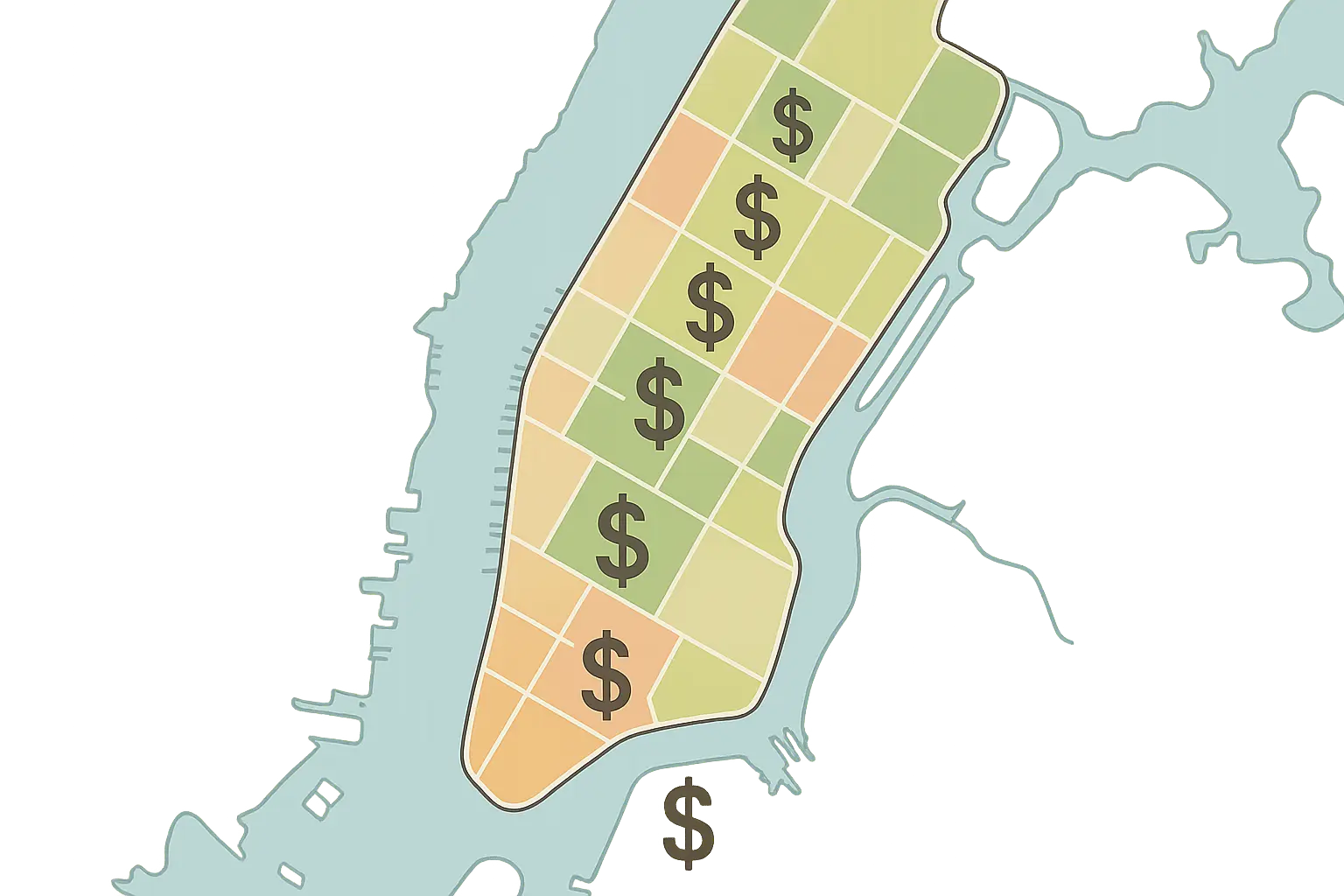
Brooklyn and Queens usually pay $17-22 an hour, which sounds like less until you factor in lower transportation costs and often more reasonable clients. If you speak Spanish, Mandarin, or Russian, you can command premium rates in these diverse communities.
PCAs working in these boroughs often benefit from coliving in Brooklyn, which provides affordable housing solutions while maintaining easy access to diverse client populations. These boroughs also offer more stable, long-term client relationships and often more reasonable commuting costs compared to Manhattan positions. The community-oriented culture can make the work feel more personally meaningful.
The Bronx and Staten Island pay the least ($16-20/hour), but the cost of living is lower, and you often get more stable, long-term relationships with clients. Some PCAs prefer the community feel over the higher-stress Manhattan environment. The lower cost of living in these areas can help offset reduced hourly rates, and the community connections you build often lead to referrals and additional opportunities over time.
Don't just look at the hourly wage - the benefits (or lack thereof) can make or break your budget. Beyond hourly wages, you need to evaluate the total package including health benefits, transportation allowances, overtime opportunities, and professional development support.
Agency health insurance ranges from "decent enough" to "barely covers a band-aid." But even crappy insurance is better than paying $400+ a month for your own coverage. Larger agencies often provide health insurance options, but don't assume all coverage is created equal. Monthly premiums, deductibles, and family inclusion policies vary dramatically between organizations.
You might find an agency offering $18 per hour with solid health benefits puts more money in your pocket than a $22 per hour position where you're covering your own insurance. The math matters more than the headline rate. Healthcare facilities like Erie County Medical Center demonstrate the comprehensive benefits packages available in healthcare settings, offering competitive wages with shift differentials, paid lunches and breaks, free fitness centers, and premium pay for holidays, along with medical insurance with low co-pays and no deductible.

If you're working independently, you're on your own for health insurance - potentially $300-600 monthly out of pocket. However, you may qualify for business expense deductions and have complete control over your coverage selection. This arrangement works best for PCAs who understand the tax implications and can effectively manage the additional administrative responsibilities that come with self-employment.
Independent Contractor Benefits Checklist:
Some employers provide monthly MetroCards (worth approximately $132) or transportation stipends, while others expect you to cover your own costs. For PCAs serving multiple clients across different neighborhoods, transportation costs can easily hit $200+ monthly. An employer-provided MetroCard suddenly makes a lower hourly rate much more attractive.
PCAs who drive clients to appointments or use personal vehicles for work may receive mileage reimbursement at IRS standard rates (currently $0.655 per mile). This can add substantial value - $200-500 monthly - for those with significant driving responsibilities. The key is tracking your mileage meticulously and understanding which employers offer this benefit versus those who expect you to absorb vehicle costs as part of your compensation.

Look, I'm not going to lie to you - being a PCA in NYC isn't going to make you rich. But it can give you a decent living if you're smart about it and willing to hustle a little.
The PCAs who do well here treat this like a business. They invest in training, build relationships, and think strategically about their career moves. They don't just take the first job offered - they evaluate the whole package and plan for the long term. For PCAs considering their housing options while building their careers, understanding average salary in NYC expectations can help inform both career and living decisions.
Yeah, the cost of living here is insane. Yes, you'll probably have roommates longer than you'd like. And sure, some weeks are rough - you'll have clients who drive you crazy, agencies that pay late, or families who expect you to be available 24/7. The emotional toll is real, and the physical demands can be exhausting.
But here's the thing - this city has more opportunities for PCAs than anywhere else in the country. There's work for people who want steady agency jobs, work for entrepreneurs who want to build their own client base, and work for people who want to move into management. The demand isn't going anywhere because people keep getting older and families keep needing help.
Many PCAs find that exploring affordable neighborhoods in NYC opens up opportunities to maximize their earnings while minimizing living expenses, creating a more sustainable career path in personal care.
Your earning potential in this field isn't capped at entry-level rates. With experience, specialized certifications, and smart career moves, you can build a sustainable income that works even in NYC's expensive environment. The key is understanding that every decision - from employer type to geographic focus to skill development - impacts your long-term financial success.
Most importantly, don't sell yourself short. You're providing a service that families desperately need, often during the most difficult times in their lives. That's worth something, and in NYC, people are willing to pay for quality care. The highest-paying positions aren't always the most lucrative when you factor in total compensation, transportation costs, and long-term career growth potential.
Just be smart about it, keep learning, and don't be afraid to advocate for yourself. Success as a PCA in NYC requires understanding the complex interplay between hourly rates, benefits, location, and career advancement opportunities. Smart PCAs evaluate opportunities holistically, considering both immediate financial needs and future earning potential while building the specialized skills that command premium rates in this competitive market.
You've got this.

Household supplies can be changed or decreaased at Outpost Club’s discretion, or based on supply availability. Outpost is not responsible for temporary losses of utility service. Outpost Club is not responsible for any damages due to absence of any supplies or utilities


If you have a sales related question please call
680-688-7678

 Hot Deals