Real Estate Agent Salary NYC: What Top Earners Actually Make (And How You Can Too)
Jan 5, 2026
Jan 5, 2026
Look, I'm not gonna sugarcoat it - NYC's real estate market is a whole different beast. You're not selling suburban split-levels here. We're talking million-dollar apartments that most people would call "cozy" (translation: tiny).
Here's the deal - you only get paid when you close. No salary, no hourly wage, nothing. When deals fall through at the last minute (and they will), you've basically been working for free. According to the Bureau of Labor Statistics, the mean wage for real estate agents in New York is $112,080 per year (as of May 2023), which works out to $53.89 per hour. But that's like saying the average temperature in Death Valley is comfortable - it doesn't tell you about the extremes.
What really gets you is the complexity. I've had deals that took eight months to close because of co-op board drama. You're not just competing with other agents - you're dealing with international buyers who wire money from Switzerland, co-op boards that reject people for having the wrong job, and buildings with waiting lists longer than a trendy brunch spot.
The high property values create opportunities for serious money, but man, the competition is fierce and the costs will surprise you. Your success hinges on understanding these unique dynamics from day one, because this market will eat you alive if you're not prepared.
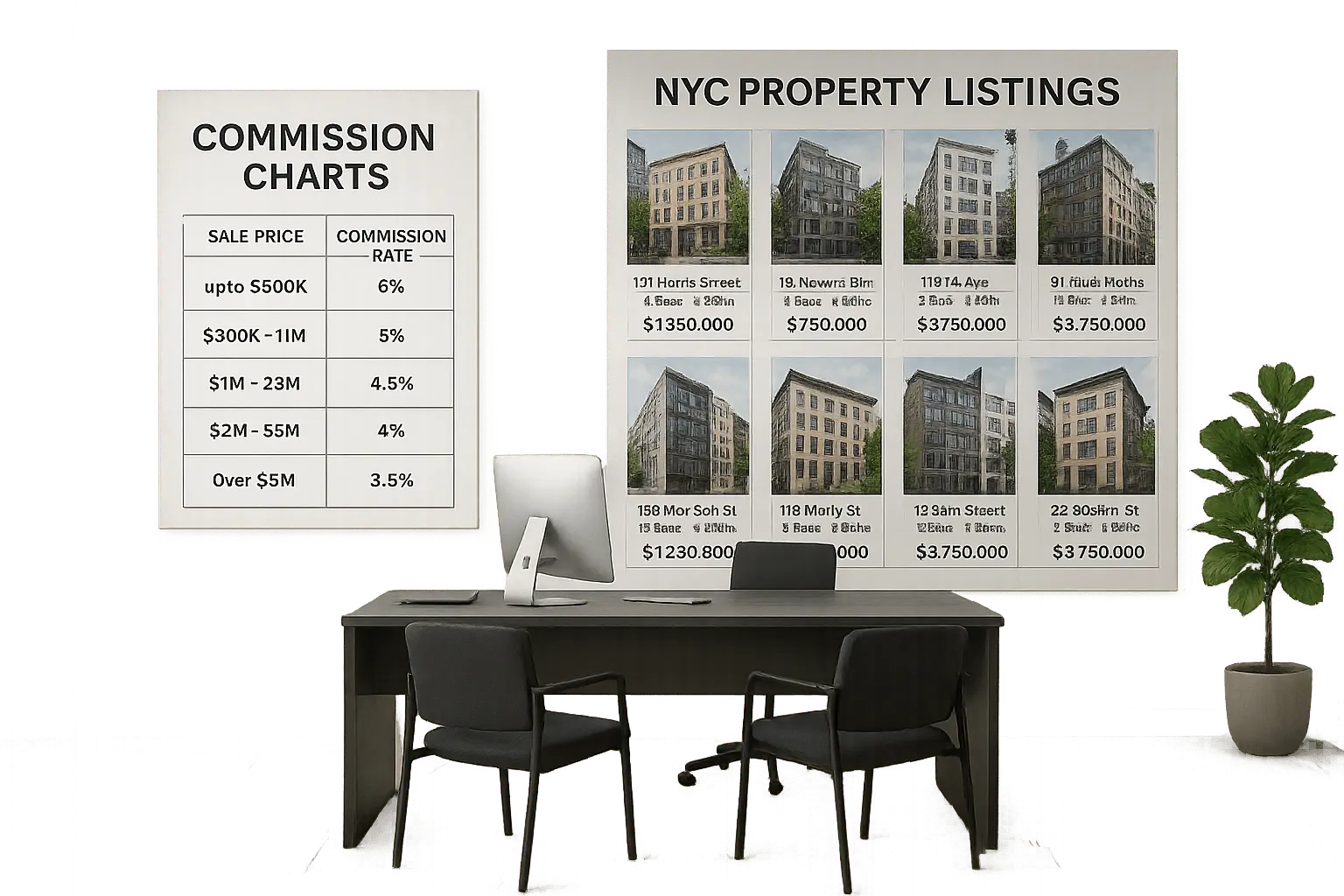
Your bread and butter comes from sales commissions. When you represent buyers, you're looking at 2.5% to 3% of the purchase price. On a $1 million apartment (which is basically the starting point in Manhattan), that's $25,000 to $30,000 in gross commission - before everyone else takes their cut.
Here's something most people don't realize: listing agents often make more because they control the relationship with the seller. I've seen experienced listing agents negotiate total commission rates up to 6% in hot markets, then split that with the buyer's agent. It's all about positioning and reputation.
The math works when property values are insane. A 2.5% commission on a $2 million Tribeca loft is $50,000 - more than most people make in a year from one deal. But here's the catch: those deals are rare, competitive, and often go to agents with serious connections.
Let me break down a real example: You sell a $750,000 place with a 2.85% commission. That's $21,375 gross. Your broker takes their 30% cut ($6,412.50), leaving you with $14,962.50. After setting aside 30% for taxes (trust me, do this), you net $10,473.75. Sell eight homes like this per year, and you're looking at about $84K net. Not bad, but not "quit your day job tomorrow" money either.
|
Property Value |
Commission Rate |
Gross Commission |
After 30% Broker Split |
After 30% Tax Reserve |
Net Income |
|
$500,000 |
2.5% |
$12,500 |
$8,750 |
$6,125 |
$6,125 |
|
$750,000 |
2.85% |
$21,375 |
$14,963 |
$10,474 |
$10,474 |
|
$1,000,000 |
3% |
$30,000 |
$21,000 |
$14,700 |
$14,700 |
|
$1,500,000 |
3% |
$45,000 |
$31,500 |
$22,050 |
$22,050 |
|
$2,000,000 |
2.5% |
$50,000 |
$35,000 |
$24,500 |
$24,500 |
Pro tip: Never count your commission until the deal actually closes. I've seen too many agents spend money they didn't have yet.
Rentals are what keep you alive while you're hunting for those big sales. Commission rates run 10% to 15% of annual rent, which actually adds up fast in Manhattan's crazy rental market.
With average Manhattan rents over $4,000 monthly, you're looking at $4,800 to $7,200 per rental. The volume potential is way higher than sales - I know agents who close 20+ rentals a month versus maybe 2-3 sales.
The market splits between fee rentals (tenant pays your commission) and no-fee rentals (landlord pays). My advice? Balance both. No-fee rentals mean lower individual payouts but higher volume, and honestly, sometimes that steady cash flow beats waiting months for a big sale to close.

Real estate got crazy popular recently - there was "a 60% increase in people obtaining their real estate licenses between 2020 and 2021" according to Harvard Business Review. Everyone thought it was easy money during the pandemic. Spoiler alert: it's not.
Your first year is going to test everything - your savings, your relationships, your sanity. Most new agents make $30,000 to $60,000, but that income comes in chunks. You might close three deals in February, then go until May without a commission check.
I remember my first year when I ate ramen for three months straight because I hadn't closed a deal. The upfront costs nobody warns you about - education, marketing, networking events, professional headshots that don't make you look like a used car salesman. Many new agents burn through their savings in the first six months.
Building credibility takes time in this sophisticated market. Clients want agents who understand co-op board processes, know which buildings are investor-friendly, and can time the market. You're competing against agents with decades of experience and Christmas card lists longer than phone books. Understanding what you actually need to make to live in NYC helps you set realistic income expectations and budget accordingly during this challenging period.
Here's a sobering stat: "62 percent of members who have two years or less experience made less than $10,000 in 2023" according to the National Association of Realtors. Yeah, you read that right. This business chews up and spits out people who aren't prepared for the reality.
Years three through seven are when things start clicking. You've built a referral network, figured out your target market, and developed systems that actually work. Most established agents in this sweet spot make $100,000 to $300,000 annually.
Consistency becomes your superpower. You're not scrambling for every lead or taking on nightmare clients just to pay rent. Your repeat business and referrals create a foundation that smooths out the feast-or-famine cycle.
This is when specialization pays off. I know an agent who only does pre-war co-ops on the Upper West Side. Sounds limiting, right? She made $280K last year because everyone knows she's THE person for that market.

Top producers operate in a different universe. These agents focus on luxury properties above $2 million and can earn $500,000 to $2 million annually. But getting there requires serious networking skills and the ability to make millionaires feel comfortable spending their money.
Team leadership is another path to elite earnings. I know team leaders who recruit and manage other agents while maintaining personal sales. They can exceed $1 million annually through combined personal commissions and team overrides. But managing people is a whole different skill set.
The luxury market demands different skills than regular residential sales. You're dealing with buyers who fly in from London for weekend apartment tours, complex financing that involves multiple countries, and clients who expect you to be available 24/7. The learning curve is steep, but the money justifies the stress.
According to the National Association of Realtors, "46 percent of members with more than 16 years of experience made more than $100,000" annually. Experience literally pays in this business.
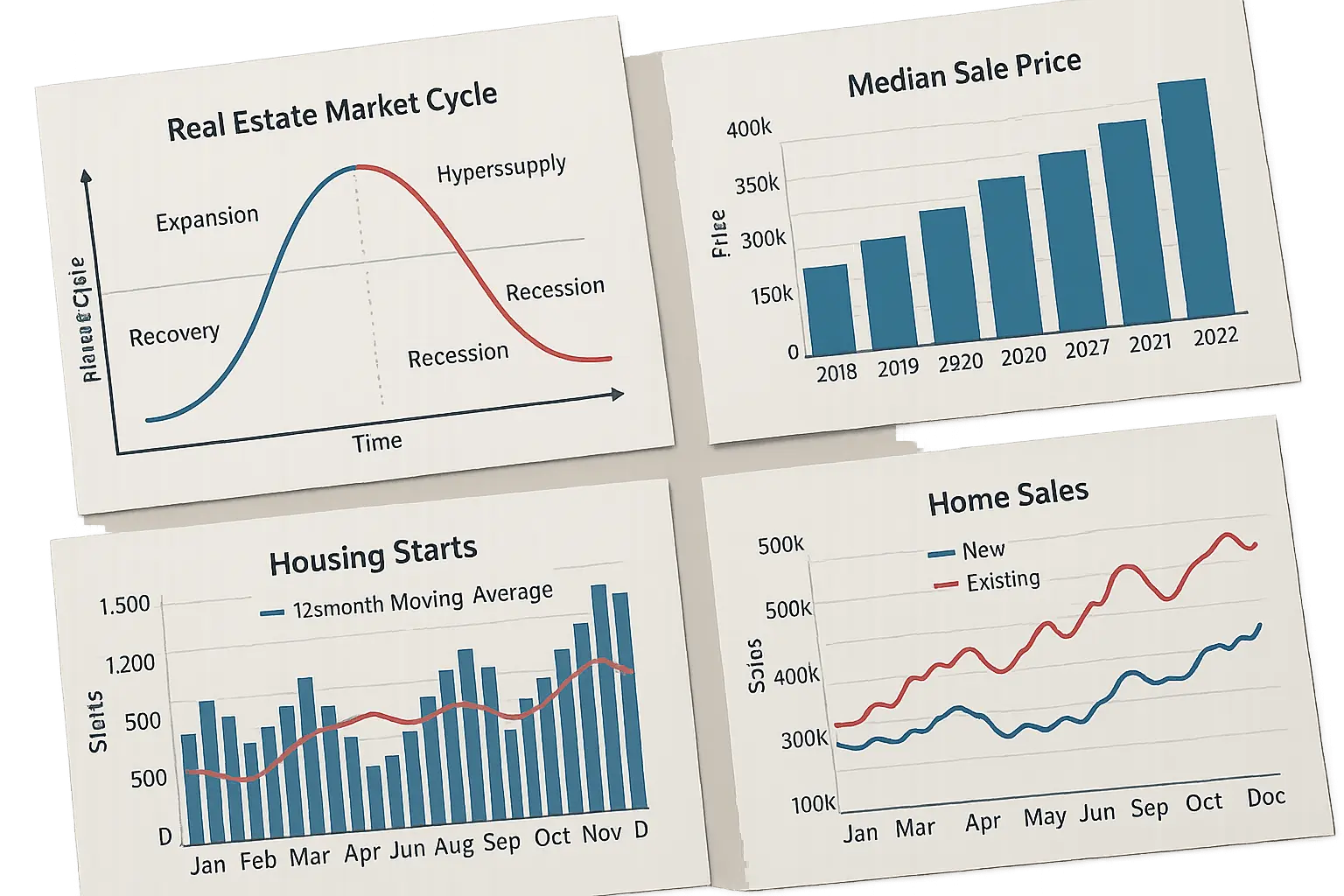
Real estate income swings with economic cycles, and NYC amplifies everything. During boom periods, I've seen top agents' earnings double as transaction volumes surge and prices go nuts.
Economic downturns hit like a truck. Agent earnings can drop 30% to 60% when transaction volumes dry up. The 2008 crisis and COVID showed how quickly everything can change. I know agents who were making $400K in 2019 and struggled to hit $150K in 2020.
Interest rate changes mess with different agents differently. Rising rates kill first-time buyer activity, which hurts agents working that market segment. Luxury agents weather rate increases better because their clients often buy with cash or don't sweat an extra point on their mortgage.
Geographic specialization is where you can really differentiate yourself. Agents who become neighborhood experts command higher commissions and generate more referrals than generalists trying to cover the entire city.
Manhattan premium markets like SoHo, Tribeca, and the Upper East Side let specialists charge premium rates. Your local knowledge and relationships with doormen, building managers, and luxury service providers become valuable assets clients pay for.
Brooklyn's growth areas present different opportunities. Agents focusing on DUMBO or Williamsburg benefit from both appreciation and high transaction volumes as these areas continue gentrifying. Recent collaborative efforts show how agents can expand their reach - "Real estate agent Suzanne Adler and community organization Neighbors Together have helped more than 100 New York City renters fight source-of-income discrimination and find housing" according to Shelterforce. The key is getting in before everyone else figures it out.
Manhattan agents earn 40% to 60% more than agents in other boroughs. The numbers don't lie - higher property values and transaction volumes create opportunities that simply don't exist elsewhere.
Midtown and Financial District specialists focusing on commercial and luxury residential can earn $200,000 to $800,000 annually. These markets benefit from corporate relocations and international buyers who treat NYC real estate like a safe deposit box.
Upper West Side and Upper East Side represent established residential markets where experienced agents average $150,000 to $400,000 annually. These neighborhoods provide consistent family-oriented transactions and strong repeat clientele that creates sustainable income streams.
NYC Borough/Area Average Property Value Typical Commission Estimated Annual Earnings Competition Level Manhattan (Luxury) $2,500,000+ 2.5-3% $300,000-$800,000 Very High Manhattan (Standard) $1,200,000 2.5-3% $150,000-$400,000 High Brooklyn (Premium) $900,000 2.5-3% $80,000-$250,000 Medium-High Queens (Emerging) $600,000 2.5-3% $60,000-$180,000 Medium Bronx/Staten Island $450,000 2.5-3% $45,000-$120,000 Low-Medium
Brooklyn, Queens, Bronx, and Staten Island offer different equations. Lower barriers to entry mean less competition, but average transaction values are also lower compared to Manhattan.
Brooklyn's premium neighborhoods like Park Slope and Brooklyn Heights let agents earn $80,000 to $250,000 annually. Competition is lower than Manhattan, but growth potential remains substantial as these areas continue appreciating.
Queens development markets present opportunities for agents to earn $60,000 to $180,000 annually while building expertise in emerging neighborhoods. The key is identifying areas before they fully gentrify and establishing yourself as the local expert before everyone else catches on.
Brokerage fees are your biggest ongoing expense, and they hurt. Traditional firms typically keep 30% to 50% of your commissions, especially when you're new. Your split improves with production and experience, potentially reaching 80% to 90% retention for top producers. Modern discount brokerages offer 85% to 95% commission retention but provide way less support. You'll be more on your own for marketing, lead generation, and transaction management.
Here's the math that matters: A new agent earning $100,000 gross with a 60/40 split keeps $60,000, while an experienced agent with the same production but an 80/20 split retains $80,000. That's a $20,000 difference that directly impacts your ability to reinvest in your business.
The learning never stops, and it's not cheap. Initial licensing requires 75 hours of pre-licensing education plus exam fees, typically costing $1,000 to $2,500.
Continuing education mandates require 22.5 hours every two years, plus additional costs for specialized certifications. Staying competitive means investing beyond minimum requirements.
Advanced certifications in luxury markets or commercial sales can cost $5,000 to $15,000, but they often pay for themselves through access to higher-value transactions. I know agents who spent $10K on luxury market certification and made it back on their first high-end deal.

Marketing expenses can eat 15% to 25% of your gross income. Professional websites, social media advertising, and listing photography that doesn't look like it was shot with a flip phone - this stuff adds up to $10,000 to $50,000 annually for competitive agents.
Lead generation platforms like Zillow Premier Agent and StreetEasy can cost $2,000 to $10,000 monthly for productive territories. The ROI varies wildly based on your conversion skills and market positioning.
Networking and client entertainment are necessary investments. Client events, industry networking, and entertainment expenses can hit $15,000 to $30,000 annually, but these investments often generate the referrals that sustain long-term success.
Real talk - New Agent Financial Planning:
Team building lets you scale beyond personal production limits. Real estate teams typically include buyer agents, listing specialists, and administrative support, with team leaders earning overrides on all team transactions.
Team models vary, but successful leaders often keep 20% to 40% of team member commissions while providing leads, training, and support. Your income becomes less dependent on personal transactions and more on team performance.
Fair warning: Building a team requires different skills than individual sales. You're now managing people, developing systems, and creating culture while maintaining your own production. The transition challenges many successful individual agents who are used to controlling everything themselves.

Brokerage ownership represents the ultimate scaling opportunity. You earn from every agent's production while building equity in a business you can eventually sell.
Franchise opportunities with major brands offer established systems and brand recognition. Initial investment ranges from $50,000 to $500,000 depending on territory size, but successful brokerages can generate seven-figure annual revenues.
Independent brokerage development gives you more control but requires building systems from scratch. You'll need expertise in compliance, technology, marketing, and HR beyond your real estate knowledge.
Specialization reduces competition while increasing your value. Investment property specialists, commercial agents, and property managers often earn higher commissions and develop recurring income streams.
Investment property specialization appeals to clients building portfolios. You're providing market analysis, rental projections, and ongoing management that creates long-term relationships beyond single transactions.
Commercial real estate offers higher transaction values but requires different expertise. Lease negotiations, zoning knowledge, and financial analysis become crucial skills that command premium compensation. A commercial specialist closing just two $5 million office sales annually at 1% commission earns $100,000 from those deals alone, compared to a residential agent needing 5-6 typical Manhattan apartments for the same income.
Career Advancement Strategy:

Real estate success in NYC demands intense focus and long hours, but sustainable careers require balance. The irregular schedules and high-stress environment make quality downtime essential for long-term success.
I've learned that professional networking outside traditional real estate circles often generates unexpected opportunities. Building relationships with other successful professionals in relaxed environments can lead to referrals that feel natural rather than forced.
The investment you make in your career - from licensing costs to marketing expenses - mirrors the dedication required in other pursuits that value excellence. Whether you're closing million-dollar transactions or pursuing personal interests, the same attention to detail and commitment to quality applies.
For real estate professionals who've achieved success in NYC's competitive market, exclusive experiences that combine relaxation with networking provide the perfect counterbalance to transaction-focused careers.

NYC real estate offers exceptional earning potential, but success requires way more than just getting your license and hoping for the best. The agents who thrive understand this is a business that demands continuous investment - in education, marketing, relationships, and personal development.
Your income potential here is virtually unlimited, but it comes with proportional challenges. Economic cycles will test your resilience, competition will push you to constantly improve, and operational costs will force you to think strategically about every business decision. For agents considering the move to NYC, understanding the average salary in NYC provides crucial context for evaluating whether real estate agent salary NYC potential aligns with your financial goals and lifestyle expectations.
The most successful agents treat their careers as businesses, not jobs. They invest in systems, build teams, develop specializations, and create multiple income streams that provide stability during market fluctuations. They also understand that sustainable success requires balance - the ability to step away from the intensity and recharge.
My advice? Don't believe anyone who says this job is easy money. If you need a steady paycheck to sleep at night, this might not be for you. But if you can handle the uncertainty, invest in yourself, and stick with it through the tough times, NYC real estate can provide the kind of financial freedom most people only dream about.

Household supplies can be changed or decreaased at Outpost Club’s discretion, or based on supply availability. Outpost is not responsible for temporary losses of utility service. Outpost Club is not responsible for any damages due to absence of any supplies or utilities


If you have a sales related question please call
680-688-7678

 Hot Deals