Senior Software Engineer Salary NYC: What You'll Actually Earn in 2024
Jan 8, 2026

Jan 8, 2026
Look, I'm not going to sugarcoat it – getting paid as a senior software engineer in NYC right now is absolutely wild. We're talking numbers that would've seemed impossible just five years ago. According to Built In's latest data, the average salary for a Senior Software Engineer in New York City is $164,655, with average additional cash compensation of $16,076, bringing total compensation to $180,731.
But here's the deal – that's just the starting point. Most people I know are making way more than that. We're seeing total packages hit $300,000-$700,000+ at top companies, and honestly? The numbers might surprise you.
I've been watching this market for years, and what's happening right now is kind of insane. You've got Wall Street firms throwing money around like it's going out of style, trying to compete with Google and Meta. Then you've got these hot startups that just raised $50M Series B rounds, and they're all fighting over the same pool of talented engineers.
NYC's tech scene is absolutely bonkers right now. I've been watching this market for years, and what's happening with senior engineer salaries is honestly kind of insane.
Here's what makes NYC different from Silicon Valley or Austin – you can literally walk from a Goldman Sachs interview to a Google interview to some buzzy fintech startup, all in the same afternoon. I know people who've done exactly that. The concentration of opportunities here is just ridiculous.
You've got Wall Street firms that used to think they could get away with paying engineers like, well, like bankers. But they woke up real quick when they started losing people to tech companies. Now they're competing directly with tech giants who've established massive engineering offices in Manhattan and Brooklyn.
The competition is so fierce that I've seen companies throw $100k signing bonuses at people just to prevent them from taking other meetings. Not kidding. A buddy of mine got three offers in one week, and each company kept upping their offer when they heard about the competition.
The talent shortage is real. Despite NYC's huge population, the number of truly senior engineers with 5+ years of experience at top-tier companies is surprisingly limited. This scarcity drives up compensation across all company types.
Companies know you have options, and they're willing to pay for it. We've seen signing bonuses reach $100,000+ just to secure candidates before competitors can make counter-offers. It's like a bidding war, and guess what? You're the prize.
Alright, let's talk real numbers. And I mean the actual numbers people are getting, not the lowball figures you see on some job postings.
Big Tech is leading the charge here. If you're looking at Google, Meta, or Amazon in NYC, you're talking $200k-$300k base salary. That's before we even get into the stock and bonuses.
Now, here's where it gets interesting – Wall Street figured out they had to play ball. Goldman Sachs used to think they could pay engineers less, but they're now offering $180k-$240k base, plus bonuses that can literally double your pay.
|
Company Type |
Base Salary Range |
Typical Equity |
Annual Bonus |
Total Comp Range |
|
Big Tech (Google, Meta, Amazon) |
$200,000-$300,000 |
$100,000-$300,000 |
$20,000-$50,000 |
$320,000-$650,000 |
|
Financial Services (Goldman, JPM) |
$170,000-$240,000 |
$50,000-$150,000 |
$85,000-$240,000 |
$305,000-$630,000 |
|
Late-Stage Startups |
$180,000-$260,000 |
$150,000-$400,000 |
$15,000-$40,000 |
$345,000-$700,000 |
|
Early-Stage Startups |
$140,000-$200,000 |
$200,000-$500,000* |
$10,000-$25,000 |
$350,000-$725,000* |
*Equity values are speculative based on potential exit scenarios
Major tech companies have made NYC a critical engineering hub, and they're paying accordingly. These firms typically offer the highest base salaries in the market.
Real example from last month: My friend just got hired at Google L6 (senior engineer level) in their NYC office. Base salary: $240k. Stock grant: $180k per year. Performance bonus: $36k. Plus a $50k signing bonus just for showing up. That's over $320k in the first year.
Google's NYC engineering office has become one of their largest outside Mountain View, with base salaries ranging $220,000-$280,000 for senior engineers. According to recent industry analysis, "those Googlers at the L7 level (i.e., senior staff software engineer) can earn an annual salary of up to $270,650 per year, coupled with $406,100 in stock options and a bonus of $81,900" (Dice). That's some serious money.
Meta's presence in NYC keeps expanding, offering $210,000-$270,000 base salaries. Their compensation packages often include substantial equity grants that vest over four years, making total compensation extremely competitive.
Amazon's multiple NYC offices (including their HQ2 expansion) offer $190,000-$250,000 base salaries. While their base might be slightly lower than Google or Meta, their equity packages and promotion velocity often make up the difference.
Apple's growing NYC engineering teams focus primarily on services and financial technology, with base salaries ranging $200,000-$280,000. Their stock performance over recent years has made equity compensation particularly valuable.
Wall Street firms and fintech companies have totally revamped their compensation strategies to compete directly with Big Tech. They're not messing around anymore.
Goldman Sachs has transformed their technology division into a legit engineering destination, offering $180,000-$240,000 base salaries plus significant annual bonuses that can reach 50-100% of base pay. That's real money.
JPMorgan Chase's massive technology investment has created thousands of senior engineering roles with $170,000-$230,000 base salaries. Their compensation packages include substantial retirement benefits and job security that many find attractive.
Hedge funds and quantitative trading firms often offer the highest total compensation in the city. Two Sigma, for example, provides $200,000-$280,000 base salaries with performance bonuses that can double total compensation.

NYC's startup world is all over the place, but in a good way. Early-stage companies might "only" offer you $140k-$200k base, but they're throwing equity at you like confetti.
Early-stage startups (Series A and earlier) typically offer base salaries 10-20% below market rate but compensate with equity grants ranging from 0.1-1%+ of the company. Sounds small, right? But if that company exits for $1 billion (and yes, that happens in NYC), your 0.1% is suddenly worth $1 million. I've seen it happen.
Late-stage startups (Series C+) are basically matching Big Tech base salaries now because they have to. Companies like Datadog, MongoDB, and Cockroach Labs have demonstrated this model successfully.
Okay, here's where people get confused. Your base salary is just the beginning. The real money – and I mean the life-changing money – comes from everything else.
Base salary tells only part of your compensation story. The most lucrative packages combine competitive base pay with substantial equity grants, performance bonuses, and benefits that can add tens of thousands in value.
According to Levels.fyi data, "The average Senior Software Engineer Salary range in New York, NY is from $170,000 to $345,000" (Levels.fyi), but that's just scratching the surface of what total comp can look like.
Stock compensation is where things get absolutely crazy. At public companies, you're getting RSUs (restricted stock units) that vest over four years. Google might give you $200k worth of stock annually. Meta's doing similar numbers. That stock value goes up and down with the market, but over time, it's been a goldmine for most people.
Startups are a different beast entirely. You might get 0.1% to 1% of the company in stock options. Sounds small, right? But if that company exits for $1 billion (and yes, that happens in NYC), your 0.1% is suddenly worth $1 million.
Pre-IPO startup equity is the highest risk, highest reward game. Early employees at successful companies have seen equity grants worth millions, while others have watched their grants become worthless. The key is understanding the company's trajectory and your risk tolerance.
Performance bonuses are where companies show you they really value your work. Tech companies usually do 10-25% of your base salary. So if you're making $200k base, that's another $20k-$50k just for doing good work.
Wall Street firms? They can bonus you 50-100% of your base salary if it's a good year. Real talk: I know a senior ML engineer at a hedge fund who made $180k base last year, but his bonus was $220k. Total comp: over $400k. For one year. As a senior engineer.
Financial services firms often provide the largest bonus opportunities, with some roles offering 50-100% of base salary in annual bonuses. These bonuses typically depend on both individual performance and the firm's profitability.
Not all coding skills are created equal in NYC. Some specializations will literally add $30k-$60k to your base salary, and companies will fight over you.
Certain technical specializations are pure gold in this market. The premium reflects both crazy high demand and limited supply of qualified candidates.
Machine Learning and AI is the big winner right now. Everyone and their mother wants to "leverage AI," which means they need people who actually know how to build these systems. If you're a senior engineer with real ML experience – not just "I took a Coursera course" but actual production ML systems – companies will throw money at you.
I just saw a job posting for a Senior ML Engineer at a fintech startup: $270k base salary. For senior level. That's a $50k+ premium over a general senior engineer role.
Distributed systems knowledge is huge too. When your app needs to handle millions of users and you know how to architect systems that don't fall over, that's worth serious money. Kubernetes, microservices, cloud-native stuff – all gold.
Blockchain and cryptocurrency expertise is... complicated. When crypto is hot, these skills can add $50k to your salary. When crypto crashes, not so much. But in NYC's DeFi scene, there's still good money if you know what you're doing.
Cybersecurity is printing money right now. With all the data breaches and regulatory requirements, companies are desperate for engineers who can build secure systems. Plus $25k-$50k easy.
Skills Premium Breakdown - Senior ML Engineer vs. General Senior Engineer
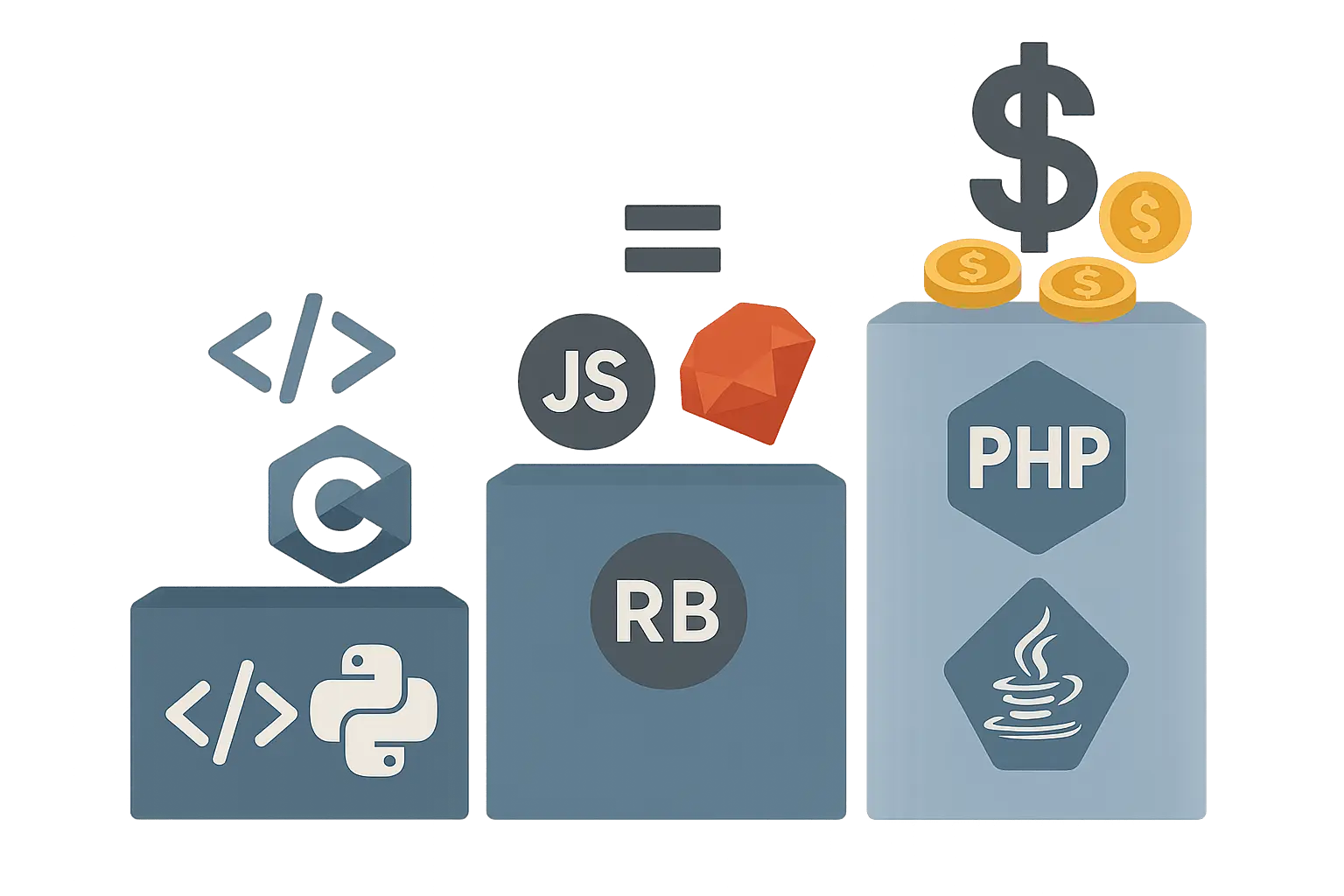
While senior engineers are expected to pick up any language, certain ones are associated with the highest-paying roles.
Python dominates the highest-paying roles because it's everywhere in ML and fintech. Expertise in Python plus ML frameworks like TensorFlow or PyTorch is particularly valuable.
Go and Rust are associated with high-performance systems roles that pay premium. These languages are common in companies building large-scale distributed systems.
JavaScript and TypeScript are table stakes for most full-stack roles, especially in companies building consumer-facing products. Modern frameworks like React and Node.js are standard requirements.
Java and C++ still rule Wall Street's trading systems. Experience with these languages in financial contexts commands premium compensation.
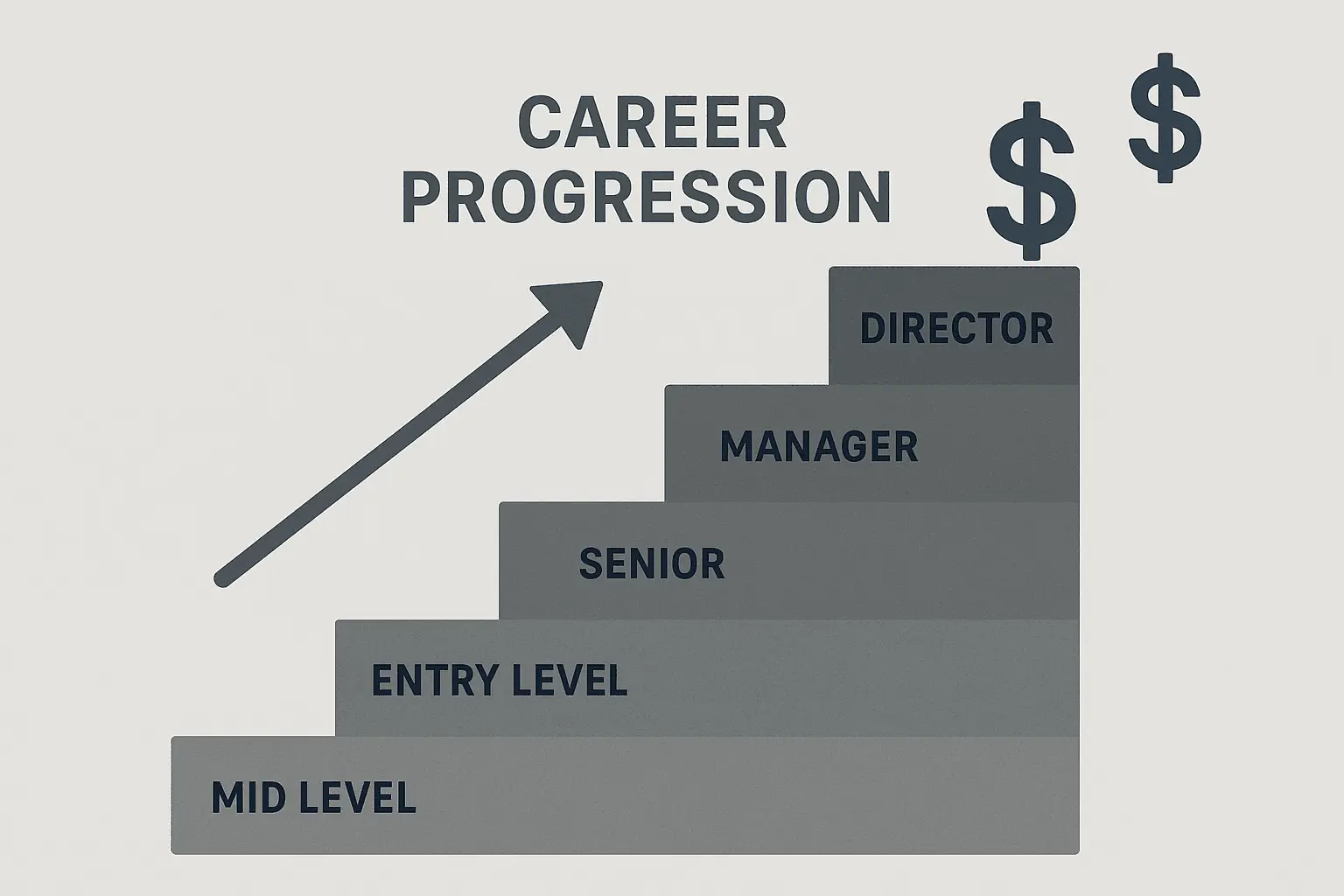
Career progression in NYC's tech market follows pretty predictable compensation bands, and the jumps between levels are substantial.
Your experience level and what you can actually deliver directly impacts what companies will pay you. Here's the real breakdown:
|
Experience Level |
Years |
Base Salary |
Total Comp Range |
What You're Actually Doing |
|
Senior Engineer |
5-8 |
$150,000-$250,000 |
$200,000-$350,000 |
Independent execution, mentoring juniors |
|
Staff Engineer |
8-12 |
$200,000-$300,000 |
$300,000-$500,000 |
Cross-team leadership, architecture decisions |
|
Principal Engineer |
10+ |
$250,000-$350,000 |
$400,000-$700,000+ |
Company-wide technical strategy |
This is where most people reading this probably are. You can handle complex projects independently, you're mentoring junior folks, and companies trust you with important stuff. Base salaries: $150k-$250k. Total comp: $200k-$350k.
This is where the real money starts. You're influencing technical decisions across teams, you're the go-to person for hard problems, and you're probably interviewing candidates. Base salaries: $200k-$300k. Total comp: $300k-$500k.
A friend of mine just got promoted to Staff at Meta. His new package: $280k base, $250k stock, $45k bonus. That's $575k total comp. For writing code and being really good at technical leadership.
Staff engineer roles mark the transition from individual contributor to technical leader. You're expected to influence technical decisions across multiple teams while still getting your hands dirty with code. Companies expect you to drive technical strategy, mentor other engineers, and contribute to hiring decisions.
You're basically a technical executive at this point. You influence company-wide technical decisions while still coding. These roles are rare and companies pay accordingly. Total comp frequently hits $400k-$700k+, sometimes over $1M at top companies.
Principal engineers are technical leaders who shape company-wide technical decisions while remaining individual contributors. You're expected to solve the most complex technical challenges while mentoring staff and senior engineers. The substantial compensation reflects the rarity of engineers who can operate effectively at this level.
The crazy part? You can often skip levels by switching companies. I know someone who went from Senior at a startup to Staff at Google just by interviewing well and having the right experience.
Okay, real talk time. Most engineers are terrible at negotiating. They either don't negotiate at all, or they do it wrong and leave money on the table.
Here's what actually works in NYC's competitive market:
Use Levels.fyi religiously. It's crowd-sourced data from real people with real offers. Glassdoor is okay but less accurate. Blind (the anonymous app) gives you real-time intel on what people are actually making.
Levels.fyi provides the most comprehensive and up-to-date compensation data for tech companies, with detailed breakdowns of base salary, equity, and bonuses by company and level. The platform's crowd-sourced data reflects genuine offers rather than posted ranges.
Glassdoor offers broader industry coverage including financial services and consulting firms, though the data can be less precise. Blind's anonymous professional network offers real-time discussions about compensation and company culture that you can't get anywhere else.
You have zero leverage with one offer. With two or three offers? Now we're talking. Companies will bend over backwards to win a bidding war.
Real example: A friend got an offer from a startup for $200k base, $100k equity. She had a competing offer from Google for $220k base, $150k equity. She went back to the startup and said, "I really want to work here, but Google's offer is significantly higher. Can you help me out?"
Final startup offer: $215k base, $150k equity, $25k signing bonus. She took it.
Time it right. Try to get all your offers around the same time. Tell companies you're interviewing elsewhere and need time to compare. Most good companies will respect this and might even expedite their process.
Base salary is often the hardest to move. Signing bonus? Much easier. Equity grants? Definitely negotiable. Start date? Use it as leverage.
Don't be afraid to walk away. If a company won't meet your reasonable requests based on market data, they're probably not a great place to work anyway.
Pre-Negotiation Preparation Checklist
Here's the part that'll make you cry a little. Yes, you'll make great money in NYC. But this city will find ways to separate you from that money faster than you can believe.
High salaries in NYC come with correspondingly brutal living costs that can seriously impact your financial situation. Let me break down where your money actually goes.
For tech professionals considering their housing options, understanding shared apartments in New York can provide significant cost savings while maintaining quality living standards in prime locations.
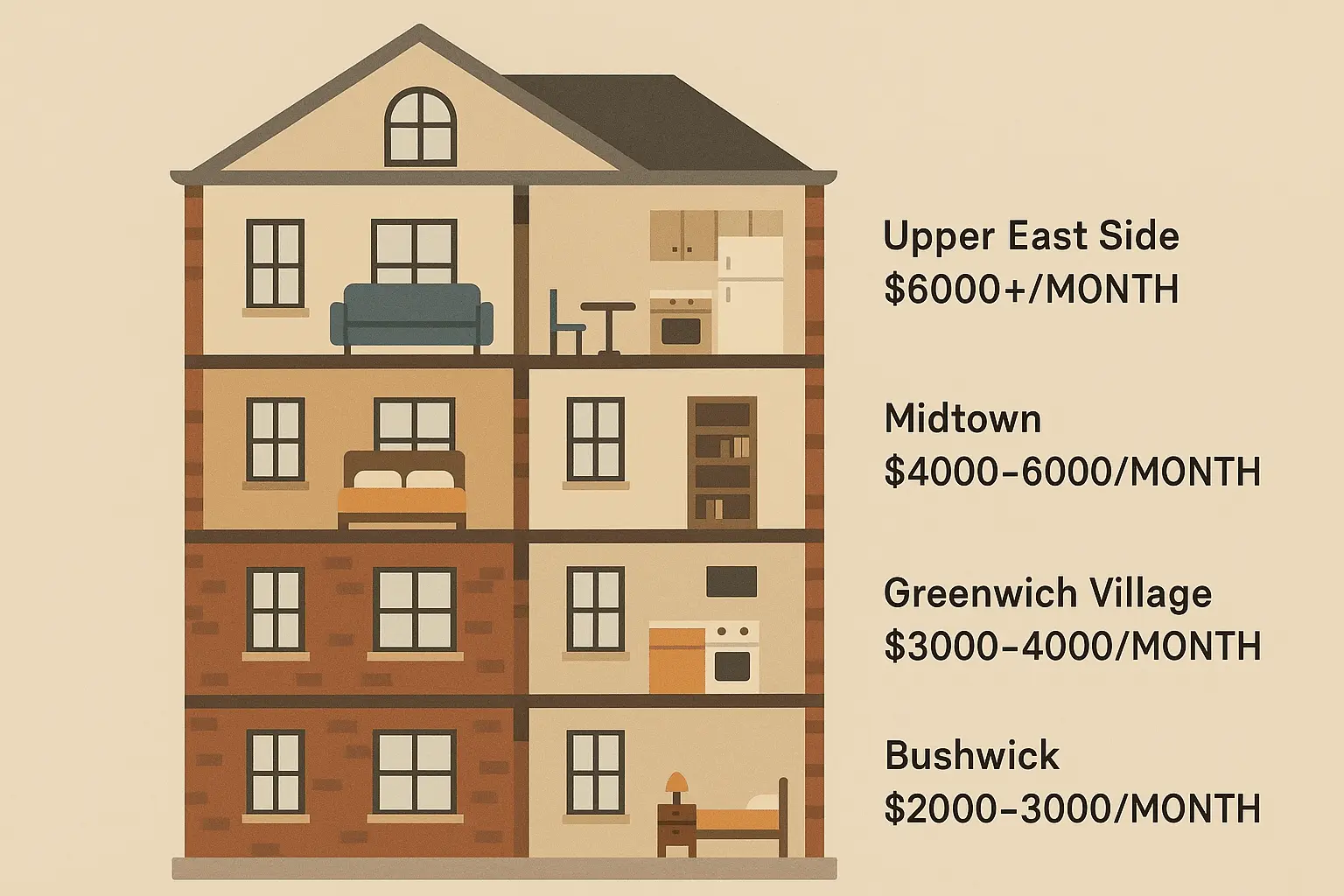
Even making $200k+, you're probably spending $3k-$6k per month on rent for a decent 1-bedroom in Manhattan. Brooklyn might save you $500-$1000, but you're still looking at serious money.
I know senior engineers making $250k who have roommates because they don't want to spend 50% of their income on rent. It's not uncommon.
Manhattan apartments for senior engineers typically range $3,000-$8,000+ monthly for 1-2 bedroom units, depending on neighborhood and building quality. Areas like Tribeca and SoHo command premium prices, while neighborhoods like Hell's Kitchen or the Upper East Side offer more reasonable options.
Brooklyn has become increasingly popular among tech professionals, offering $2,500-$5,000+ for equivalent space with shorter commutes to many tech offices. Neighborhoods like DUMBO, Williamsburg, and Park Slope provide good access to Manhattan while offering more space for your money.
Many senior engineers are discovering that rooms for rent in Brooklyn offer an attractive alternative to expensive Manhattan apartments, particularly in tech-friendly neighborhoods with excellent transportation links.
Queens presents the most affordable option at $2,000-$4,000+ monthly, though commute times to Manhattan can be substantial. New Jersey provides another alternative at $2,000-$4,500+ with PATH train access to Manhattan.
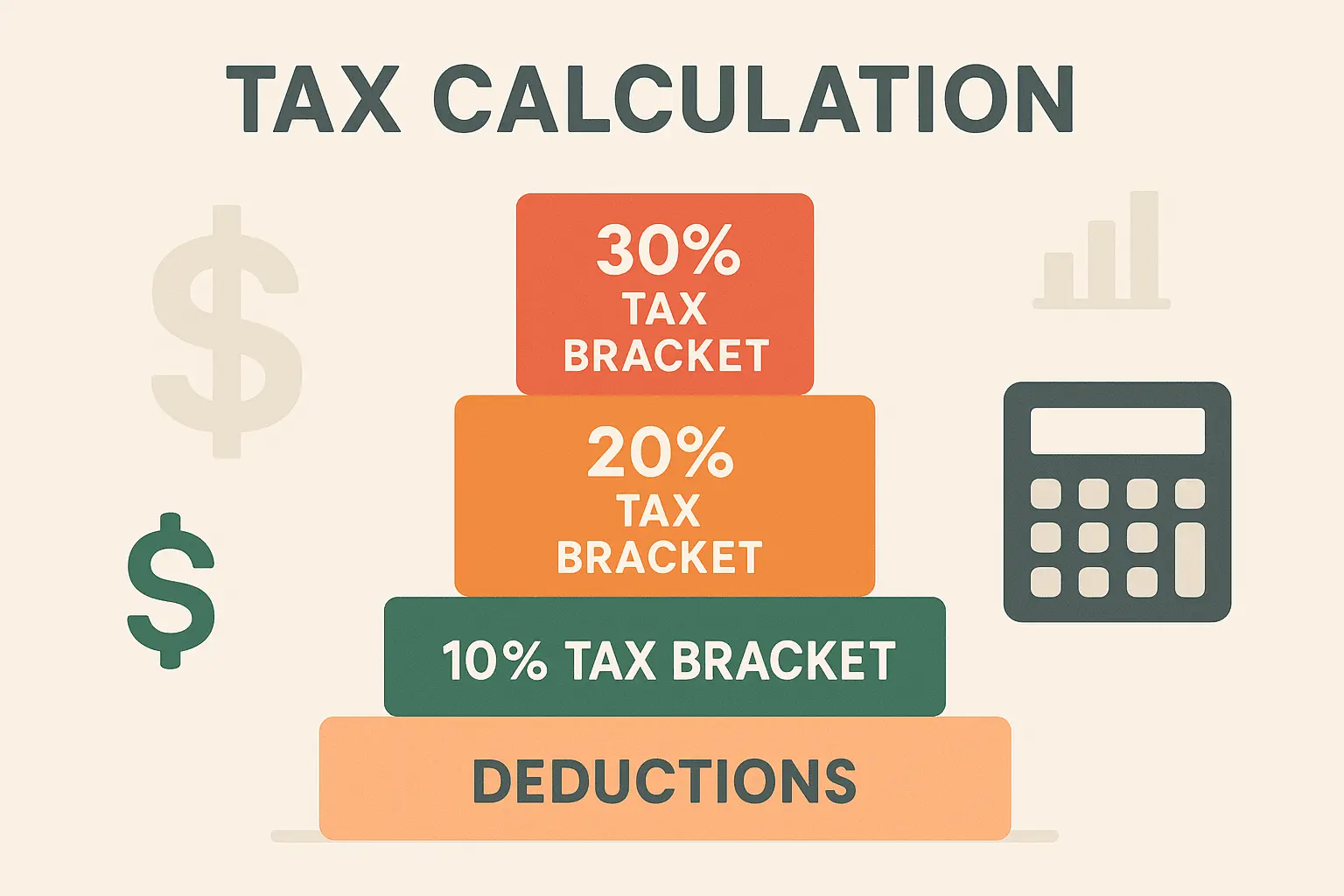
Federal, state, and city taxes combined can hit 45-50% of your income. That $200k salary? You're taking home maybe $110k-$120k after taxes. Still good money, but not as good as it looked on paper.
NYC's combined federal, state, and city taxes can approach 50% for high earners, significantly impacting take-home pay. Federal taxes consume the largest portion, with rates reaching 32-37% for high earners. New York state adds another 6-9%, while NYC imposes an additional 3-4% city tax that doesn't exist in most other locations.
The math: $250k salary sounds amazing, right? After taxes: ~$135k take-home. Rent: $60k per year. Other expenses: $40k. You're saving maybe $35k per year. Still good, but not "I'm rich" money.
Groceries, restaurants, transportation, entertainment – it all adds up. Budget at least 20-30% more for daily expenses compared to most other cities.
But here's the thing – the career acceleration and networking opportunities in NYC often make up for the high costs. The connections you make and experience you gain can pay dividends for decades.
Effective tax planning strategies can significantly reduce your tax burden. Maximizing 401(k) contributions, strategic equity timing, and utilizing commuter benefits provide concrete ways to optimize your tax situation.
Different sectors in NYC have totally different approaches to paying engineers, and understanding these patterns helps you target the right opportunities.
Each industry sector offers distinct compensation philosophies and career trajectories that you should understand before making your next move.
Startups are all over the place. Early-stage companies might offer you $160k base but give you 0.5% equity. If they exit for $500M in five years, that equity is worth $2.5M. But most startups fail, so it's a gamble.
Early-stage startups (seed through Series A) typically offer base salaries 10-20% below market rate but compensate with equity grants ranging 0.1-1%+ of the company. Your equity percentage matters less than the company's potential exit value. A 0.1% stake in a company that exits for $1B is worth more than 1% of a company that fails.
Late-stage startups (Series C+) are basically paying like public companies now. They have to, or they can't compete for talent. Companies like Stripe, Databricks, and others have demonstrated this model's effectiveness.
The bonus culture in finance is wild. A good year can mean bonuses of 50-100% of your base salary. A bad year... well, you might get nothing extra.
Wall Street firms and fintech companies have adapted their compensation strategies to compete directly with Big Tech. Goldman Sachs, JPMorgan, and hedge funds realized they were losing their best technologists and now they're paying market rates and sometimes more.
Hedge funds and quantitative trading firms often offer the highest total compensation in the city, with performance bonuses that can double total compensation.
Consulting firms like McKinsey Digital or Deloitte offer competitive base salaries plus billable hour bonuses. The career progression can be faster than traditional tech companies, but you'll work your ass off and travel constantly.
Base compensation for senior consultants typically ranges $160,000-$250,000, competitive with many tech companies. Billable hour bonuses can add $20,000-$50,000 annually for high performers, but achieving these bonuses often requires working 50-60+ hour weeks.
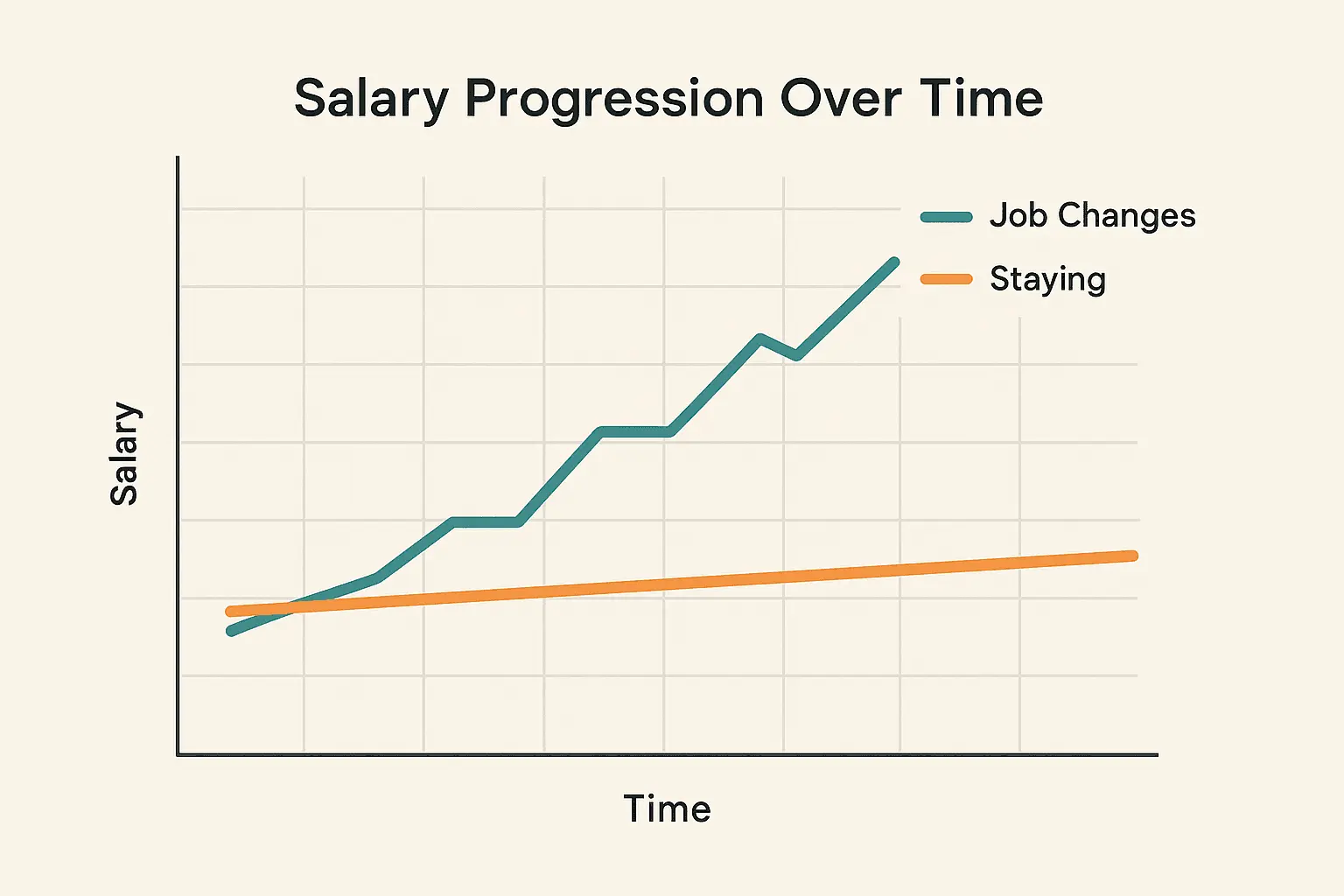
Here's the secret that most people don't tell you: the fastest way to increase your salary is to change jobs every 2-4 years. Annual raises at most companies are 3-8%. Job changes? 15-30% salary bumps, plus signing bonuses and better equity packages.
I know this sounds mercenary, but it's reality. Companies would rather pay market rate to hire someone new than give their existing employees big raises. It's stupid, but it's how the system works.
Strategic career planning in NYC's tech market requires understanding promotion timelines, skill development priorities, and optimal timing for job changes.
Understanding the real cost of living in NYC is crucial for career planning, as it helps you set realistic salary targets and make informed decisions about job changes and career progression.
Skill development ROI is real. Investing 6-12 months learning ML, distributed systems, or security can add $20k-$50k to your next salary. The math works out to hundreds of dollars per hour for learning new skills.
Technical leadership skills open doors to staff+ engineering roles that command $100,000+ compensation premiums. System design expertise, architecture experience, and the ability to guide technical strategy become increasingly valuable as you advance.
Mentoring and team leadership capabilities are essential for senior+ roles. Companies pay premiums for engineers who can develop other team members while maintaining their own technical contributions.
Career Growth Action Plan
Timing matters. Bull markets and high-growth periods give you maximum leverage. Economic uncertainty means companies are more conservative with cash but might offer better equity packages.
Market timing affects your negotiating power substantially. Bull markets and periods of high demand for engineering talent provide maximum leverage for compensation negotiations.
Network like crazy. Most of the best opportunities come through connections, not job postings. Go to meetups, contribute to open source, speak at conferences. The investment pays off.
Look, building a successful tech career in NYC is demanding enough without having to worry about finding quality housing and dealing with broker fees and furniture shopping. When you're pulling 50-hour weeks at a startup or prepping for your next interview while working at Google, the last thing you want to deal with is apartment hunting.
The demanding nature of senior engineering roles in NYC requires strategic solutions for housing that support career growth and networking. The intensity of these roles makes quality living arrangements essential for both performance and well-being.
For tech professionals new to the city, understanding furnished rooms for rent becomes crucial for quickly establishing yourself without the hassle of furniture shopping and long lease commitments that can limit career flexibility.
That's where Outpost comes in. We've built a community specifically for ambitious professionals who get it. You'll be living with other people who understand the grind – maybe a senior engineer at Stripe, a product manager at a hot fintech startup, or someone building their own company.
The networking aspect is real. Some of our members have found their next job, co-founder, or key business connection through relationships built in our shared spaces. When you're surrounded by other ambitious people, opportunities just happen naturally.
Our network of communal living spaces in NYC provides the ideal backdrop for the informal conversations that often lead to career opportunities, technical insights, and valuable professional relationships.
Plus, our move-in ready accommodations mean you can focus on what actually matters – whether that's crushing your current role, interviewing for your next opportunity, or just enjoying some downtime with people who get what you're going through.
Ready to optimize both your living situation and your professional network? Explore Outpost's housing solutions and join NYC's community of ambitious tech professionals.

Here's the bottom line: senior software engineering in NYC offers some of the best compensation packages in the world. We're talking $300k-$700k+ total comp for experienced engineers. But it's not just about the money.
The career acceleration you get in NYC is unmatched. The sheer density of opportunities means you can be incredibly strategic about your next move. The network you build here becomes valuable for your entire career.
NYC's tech market rewards excellence with compensation packages that rank among the world's highest for software engineers. However, maximizing your earning potential requires more than just technical skills – it demands strategic thinking about career progression, skill development, and market timing.
For those considering a move to NYC, understanding how much you need to make to live in NYC helps set realistic expectations and plan for long-term financial success in the city.
Yes, the cost of living is brutal. Yes, the taxes hurt. But for most people, the investment pays off big time. The skills, experience, and connections you build in NYC's competitive market become assets that compound over decades.
When evaluating job offers and planning your move, consider reading about moving to New York to understand the complete picture of what relocating entails beyond just salary considerations.
The most successful senior engineers in NYC combine deep technical expertise with business acumen and leadership capabilities. They understand that compensation extends far beyond base salary, encompassing equity grants, performance bonuses, and benefits that can double their total package value.
If you're considering making the move, do your homework. Understand the real costs. But don't let sticker shock scare you away from what could be the best career decision you ever make.
The tech market in NYC rewards excellence, and if you're reading this, you're probably already excellent at what you do. Come get paid what you're worth.

Household supplies can be changed or decreaased at Outpost Club’s discretion, or based on supply availability. Outpost is not responsible for temporary losses of utility service. Outpost Club is not responsible for any damages due to absence of any supplies or utilities


If you have a sales related question please call
680-688-7678

 Hot Deals