EKG Technician Salary NYC: What You'll Actually Make Reading Hearts in the Big Apple
Jan 7, 2026
Jan 7, 2026
Look, I'm going to be straight with you - New York City is where EKG techs come to make real money. I've been watching this field for years, and nothing comes close to what you can earn here. Sure, the rent will make you cry, but stick with me and I'll show you why most techs think it's worth it.
The thing about NYC is that hospitals here are basically in a constant bidding war for good people. You've got world-famous places like Mount Sinai competing with smaller community hospitals, and guess who wins? You do, if you play your cards right.
According to the U.S. Bureau of Labor Statistics, EKG techs make about $89,340 nationally, but honestly, that number feels low for what I'm seeing in NYC. The reality is way better if you know where to look.
Forget the corporate salary ranges you see online. Let me tell you what's really happening out there based on conversations with actual techs working these jobs right now.
When you're brand new, expect $45K-$52K. I know, I know - that sounds like nothing when you're staring at $3,000/month studio apartments. But here's the thing: you won't stay at that level long if you're smart about it.
Most places throw you into a 90-day training program where they basically hold your hand while you figure out which end of the EKG leads goes where. Complete that without screwing up too badly, and boom - you're usually looking at a bump to around $50K-$55K.
Take Sarah - she started at Mount Sinai Brooklyn making $48K. Felt broke as hell for about six months. But she hustled, got her CET certification, and by month seven she was pulling in $62K with evening shift differentials. That's a $14K jump in less than a year. Not too shabby.
This is where things get interesting. You're looking at $58K-$68K, but only if you've got your act together. By now you should have your CET cert (if you don't, what are you waiting for?), and you should be able to handle the weird cases without calling for help every five minutes.
I know a guy, Mike, who works at NYU Langone. Three years in, making $64K base, but he's smart about picking up extra shifts during flu season when half the staff calls out sick. Last year he cleared $75K total. The secret? He made friends with the scheduling coordinator who texts him whenever they're desperate.
Five-plus years and you're in the $70K-$85K range. But here's what separates the people making $70K from those pulling $85K: they don't just do EKGs anymore. They're running stress tests, setting up Holter monitors, and probably training the newbies who are making the same mistakes they made five years ago.
Lisa's been doing this for eight years at NewYork-Presbyterian. She makes $82K base, but with overtime and weekend differentials, she cleared $97K last year. The catch? She works every other weekend and picks up night shifts when her kids are at their dad's place.
|
How Long You've Been Doing This |
What You'll Actually Make |
What You Need to Know |
What You'll Actually Be Doing |
|
New (0-2 years) |
$45K-$52K |
Don't mess up the leads |
Basic EKGs, trying not to panic |
|
Getting Good (3-5 years) |
$58K-$68K |
Get certified, learn the equipment |
Handle the weird cases, train newbies |
|
Veteran (5+ years) |
$70K-$85K |
Specialize in something |
Stress tests, management stuff |
Mount Sinai, NYU Langone, NewYork-Presbyterian - these aren't just jobs, they're golden tickets. We're talking $5K-$10K more than anywhere else, plus benefits that make your friends jealous.
But getting in? That's the hard part. They want people who can handle 30+ EKGs a day without breaking a sweat, deal with cranky cardiologists, and not freak out when someone codes in the hallway. If you can do all that, the money's there.
Here's the deal: Manhattan pays about 10-15% more than the outer boroughs. A $65K Manhattan job might be $58K in Queens. But before you pack your bags for Manhattan, let me tell you about commuting costs and the fact that a decent lunch near Columbia Presbyterian will cost you $18.
Brooklyn and Queens hospitals figured this out and started throwing signing bonuses and flexible schedules at people. BronxCare offered my friend Jenny a $3K signing bonus and every other Friday off. Sometimes the "lower" paying job is actually better when you do the math.
For healthcare professionals considering relocation to NYC, understanding affordable neighborhoods in NYC becomes crucial when evaluating salary offers against living expenses.
Big hospitals ($50K-$75K) vs. outpatient clinics ($42K-$58K). Hospitals mean more money but also more chaos. Clinics mean less money but you go home at 5 PM and never work weekends.
I've worked both. Hospitals are where you learn fast because you have to. Clinics are where you go when you're tired of getting called in at 2 AM because someone's having chest pain and the night tech called out.
The CET certification adds $5K-$8K to your salary. Period. I don't care if you think tests are stupid or you're "too experienced" to need a piece of paper. Get the damn certification.
Most places will pay for it, and it takes like three months of studying. That's $5K for three months of work. Show me another investment that pays that well.
The growing demand for skilled EKG technicians is real. "The U.S. Bureau of Labor Statistics (BLS) forecasts 9.9% growth in the demand for EKG technicians between now and 2031, much faster than the average for all occupations" according to BMCC's continuing education program.
Getting Certified Without Losing Your Mind:
Stress testing certification can bump your pay by $10K-$15K. Holter monitoring skills are huge right now because everyone wants outpatient cardiac monitoring. Pick something you're interested in and become the go-to person for it.
Carlos specialized in pediatric EKGs at Children's Hospital. Sounds niche, right? He makes $78K because he's one of maybe five people in the city who can get a clean EKG from a screaming two-year-old.
As Nurse.org points out, "Heart disease is a growing global concern, with coronary artery disease affecting 20 million adults in the United States alone. This has increased the demand for skilled professionals who specialize in heart health."
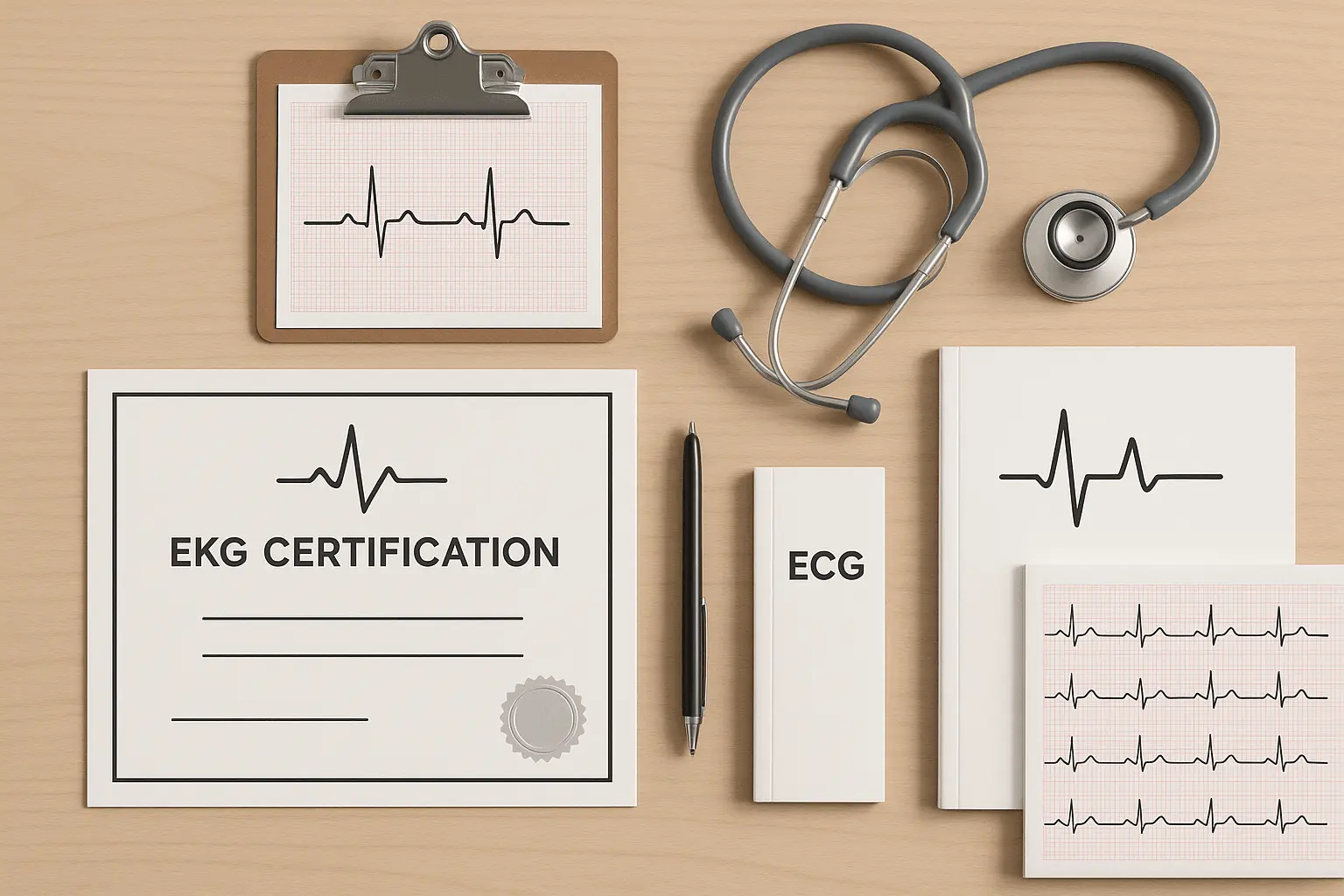
Training programs are becoming more accessible, with "EKG technician roles requiring only 3–6 months of training and certification" according to industry data, making it easier for professionals to enter this growing field.
Forget everything you learned in career counseling. NYC healthcare hiring is its own weird world, and playing by normal rules will get you nowhere.
NYU Langone is always hiring because they're always expanding. Mount Sinai posts jobs that get 200 applications in the first day. NewYork-Presbyterian has locations everywhere, so your chances are better just based on volume.
But don't sleep on the smaller places. Richmond University Medical Center on Staten Island pays surprisingly well and is desperate for people who don't mind the commute. BronxCare will hire you if you can fog a mirror and promise not to quit after six months.
The real secret? Outpatient cardiac centers are exploding right now. Everyone wants their heart checked but nobody wants to stay in the hospital. These places pay clinic money but with better benefits than most clinics.

Marcus transitioned from a busy Manhattan emergency department to a cardiac rehabilitation center in Queens. While his base salary decreased from $68,000 to $62,000, he gained consistent Monday-Friday hours, eliminated night shifts, and received additional training in stress testing that positioned him for future advancement opportunities.
Your resume needs to scream "I know what I'm doing" in the first five seconds. List every piece of EKG equipment you've touched. If you speak Spanish, put that at the top - half of NYC speaks Spanish and most EKG techs don't.
Don't just say you "performed EKGs." Say you "completed 25-30 EKGs daily with 98% accuracy while maintaining patient comfort in high-stress emergency department environment." See the difference?
Resume Hacks That Actually Work:
Research the hospital's cardiac program before you walk in. If it's Mount Sinai, know they do heart transplants. If it's NYU, know about their research programs. Show them you actually want to work there, not just anywhere.
They'll ask about difficult patients. Have a story ready about how you calmed down someone who was scared or confused. They want to know you won't lose it when Mrs. Johnson refuses to lie still for the third time.
Know your HIPAA stuff cold. They'll ask, and if you hesitate, you're done. Patient privacy isn't optional in NYC - one screw-up and you're out of healthcare forever.
Let's talk about the elephant in the room: rent. On $60K, you're looking at $1,500-$2,000 for housing. In Manhattan, that gets you a closet. In Queens, that's a decent one-bedroom.
Most techs I know live with roommates for the first few years. It sucks, but it's temporary. Once you're making $70K+, you can afford your own place in the outer boroughs or a studio in Manhattan if you're into that lifestyle.
Healthcare professionals new to the city should consider moving to NYC resources that provide comprehensive guidance on budgeting and housing decisions.
Your $60K salary becomes about $43K after taxes (welcome to New York). That's $3,583 a month. If you're spending $1,800 on rent, you've got $1,783 left for everything else. It's tight, but doable if you're smart.
MetroCard is $ $127/month. Don't even think about owning a car unless you enjoy spending $400/month on parking and another $300 on insurance.
|
Salary Level |
Take-Home Monthly |
Housing Budget |
What That Gets You |
Reality Check |
|
$45K-$52K |
$2,700-$3,100 |
$900-$1,300 |
Roommates or far outer boroughs |
Ramen for dinner |
|
$58K-$68K |
$3,500-$4,100 |
$1,200-$1,700 |
Studio in Queens or shared in Manhattan |
Occasional takeout |
|
$70K-$85K |
$4,200-$5,100 |
$1,400-$2,100 |
Your own place or nice shared space |
Actually enjoying the city |
For budget-conscious healthcare professionals, exploring affordable student housing NYC options can provide insights into cost-effective living arrangements that work for young professionals too.
Astoria, Queens: Great food, reasonable rent, 30 minutes to Manhattan. Every EKG tech I know either lives here or wishes they did.
Sunset Park, Brooklyn: Cheaper than Astoria, amazing tacos, slightly longer commute but worth it for the rent savings.
Staten Island: Cheapest option, but you'll spend 90 minutes each way commuting. Only worth it if you're saving serious money or hate people.
Washington Heights: Manhattan rent with outer borough vibes. Good subway connections to most hospitals.
Most NYC healthcare facilities are accessible via public transportation, making car ownership unnecessary for many technicians. The 4/5/6 trains serve many Manhattan hospitals, while the N/ Q/R/W lines provide access to facilities in multiple boroughs.
Consider proximity to multiple hospitals when choosing where you live. This gives you options for per diem work and makes job changes easier without requiring relocation.

Your salary is just the beginning. The benefits at major NYC hospitals are insane - we're talking $15K-$25K in additional value if you know how to work the system.
Most places cover 80-90% of your health insurance premiums. For family coverage, that's $8K-$12K they're giving you that you'd have to pay yourself anywhere else.
The plans are usually better than anything you can buy on your own. Low copays, good prescription coverage, and mental health benefits that actually work. Plus, many hospitals give you free or cheap care at their own facilities.
Don't overlook dental and vision coverage, which many employers include at no additional cost. These benefits might seem minor but can save hundreds annually on routine care and thousands if you need major dental work or vision correction.

403(b) matching up to 6% of your salary. If you're making $60K and not contributing enough to get the full match, you're literally throwing away $3,600 a year. Don't be that person.
Some of the big hospital systems still have pension plans. Actual pensions, in 2024. Work there long enough and you get guaranteed money in retirement on top of whatever you save yourself.
Some employers offer additional financial benefits including life insurance, disability coverage, or flexible spending accounts for healthcare and dependent care expenses. These benefits provide financial security and tax advantages that add real value to your compensation package.
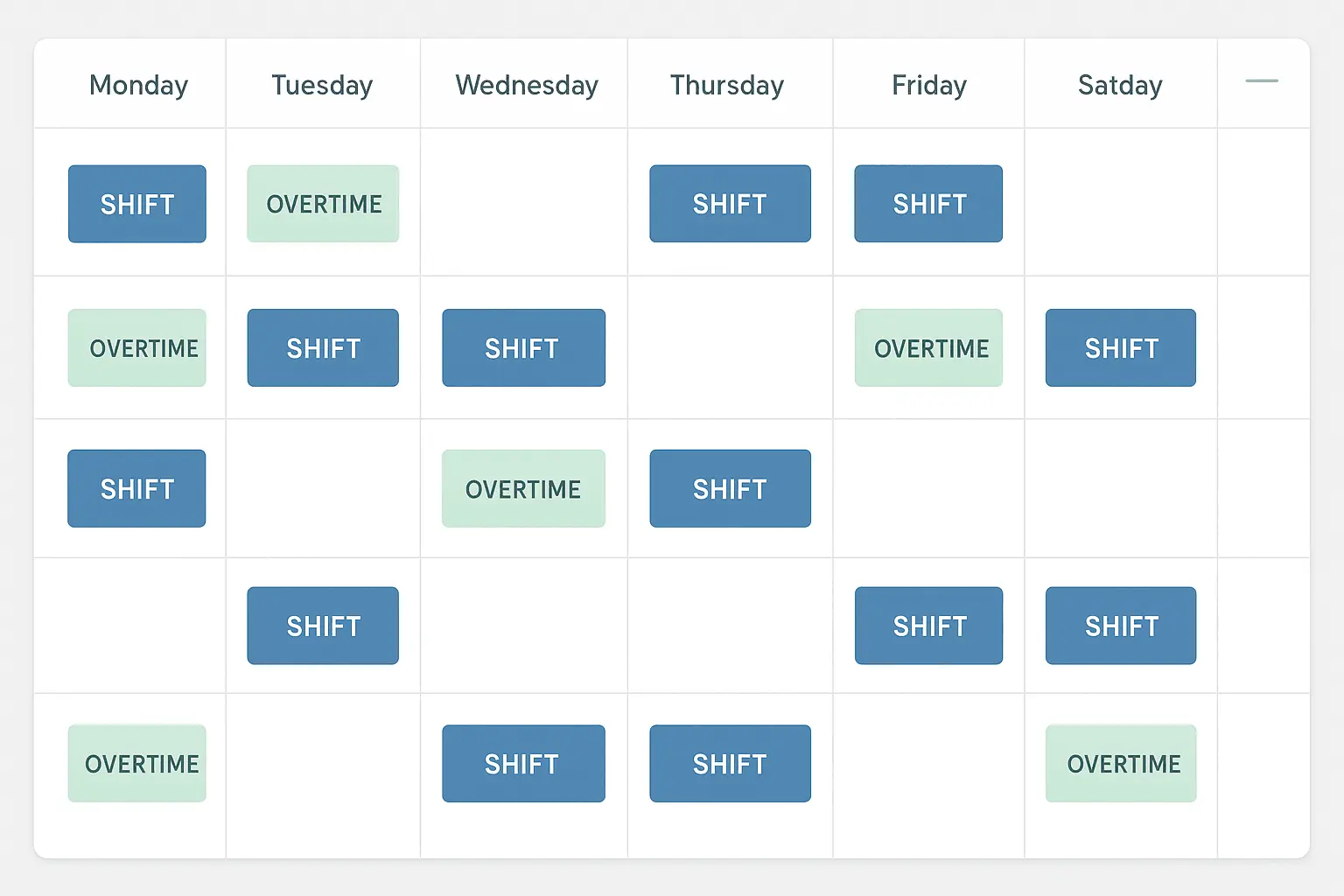
Night shift differential is usually 15-20%. Weekend differential is another 10-15%. Work Friday night to Sunday morning and you're looking at serious money.
Jennifer at NewYork-Presbyterian figured this out early. She works three weekend shifts a month plus her regular schedule. The differentials add $8,500 to her annual income, and she still has four days off every week.
Evening shifts typically offer 10-15% wage premiums, while overnight and weekend shifts can provide 20-25% increases. A technician earning $25 per hour can make $30-31.25 per hour for overnight work.
These differentials add up quickly. Working just two overnight shifts per week can increase your annual income by $5,000-$8,000. Many technicians use premium shifts strategically to boost earnings while pursuing education or other goals during regular business hours.
During flu season, snowstorms, or when half the staff calls out because their kid has COVID, overtime becomes abundant. Time-and-a-half on top of shift differentials can mean $50-60/hour for work you'd normally do for $30.
The trick is being reliable. Be the person they call when they're desperate, and you'll never want for extra income.
Experienced EKG technicians can earn an additional $10,000-$20,000 annually through strategic overtime scheduling and per diem work at multiple facilities. The key is building relationships with staffing coordinators who call when they need coverage.
Per diem rates often exceed regular hourly wages by 20-30% because facilities pay premiums for flexibility and immediate availability. Many technicians maintain per diem relationships with 2-3 facilities to maximize earning opportunities.
NYC EKG techs make 25-40% more than the national average. Even accounting for higher costs, you're usually coming out ahead, especially if you're strategic about where you live.
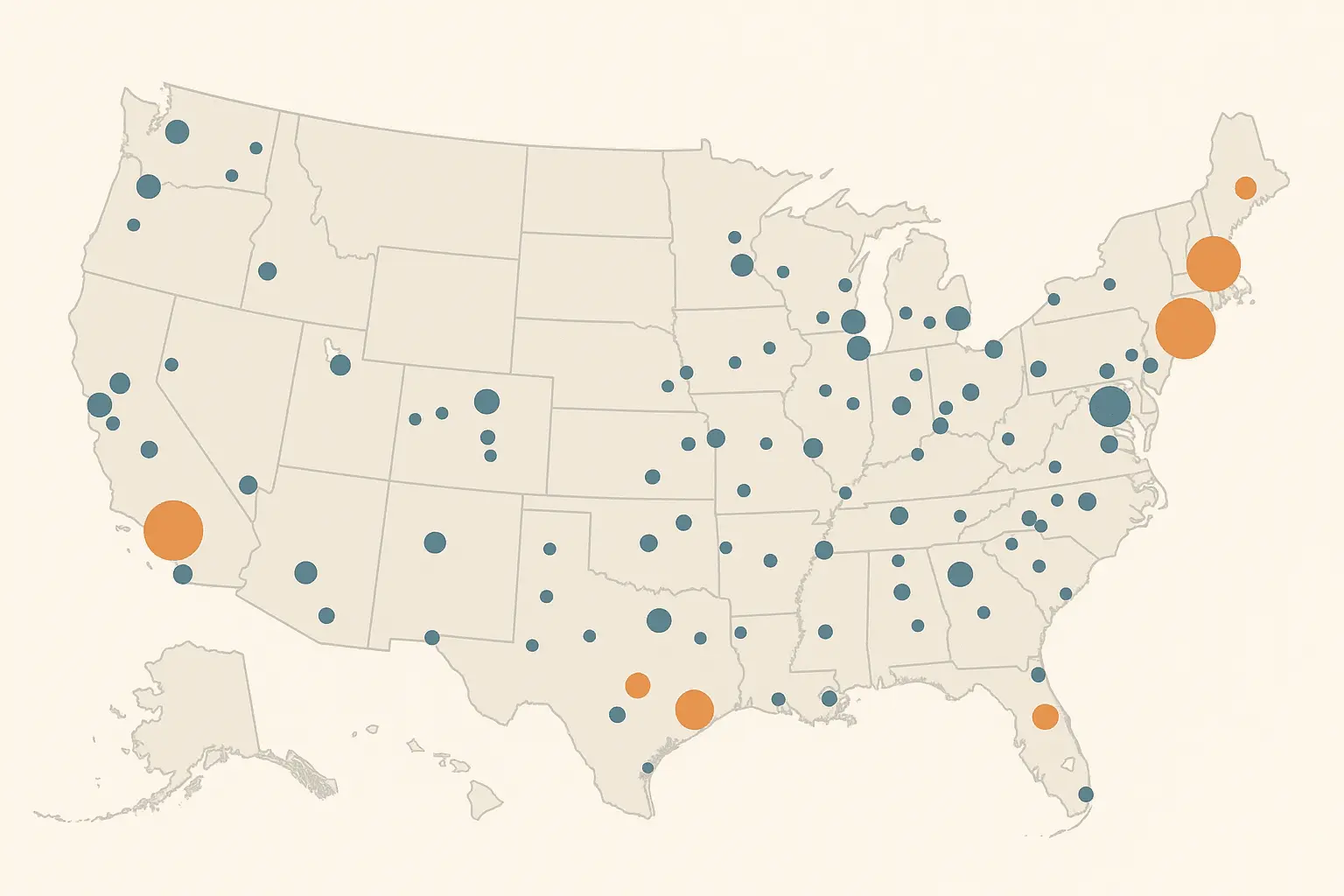
While EKG technicians nationally earn between $35,000-$45,000, NYC professionals command 25-40% premiums that reflect both market demand and cost of living adjustments. Los Angeles tops out around $62K. Chicago maybe hits $56K. Boston gets to $60K if you're really good.
But here's what those numbers don't tell you: the career advancement in NYC is unmatched. Work at Mount Sinai for three years and that experience opens doors everywhere. Try explaining your experience at Regional Medical Center in Nowheresville, and people shrug.
The salary progression shows clear advancement potential. According to Payscale data from August 2024, technicians with "20+ years of experience earn an average hourly salary of $21.91" nationally, while NYC experienced professionals often exceed $35-40 per hour.
Yes, rent is 2-3 times higher. But everything else? Not so much. A MetroCard costs the same whether you make $30K or $80K. Coffee is expensive everywhere now. And you don't need a car, which saves you $500+ monthly.
Plus, the opportunities to increase your income through overtime, per diem work, and rapid advancement mean your earning potential grows faster here than anywhere else.
When you factor in cost of living differences, NYC still comes out ahead for most EKG technicians. While housing costs are 2-3 times national averages, the salary premiums often result in comparable or better disposable income, especially if you're strategic about where you live.
If you're making $40K in Cleveland and thinking about NYC, the math probably works. A $60K NYC salary with roommates leaves you about the same disposable income, but with way better career prospects.
If you're making $55K in a place with reasonable rent and you like your life, maybe think twice. The money's better here, but the stress is real and the competition never stops.
But if you're ambitious and want to work with the best equipment, learn from top cardiologists, and have opportunities that don't exist anywhere else? Pack your bags. Just don't expect it to be easy.
Professionals considering relocation should review comprehensive guides on tips for moving to NYC to understand the full scope of what relocation entails.
Here's what sold me on NYC when I was deciding: the connections you make here follow you everywhere. Work at NYU for a few years, and when you move to Florida (and you probably will eventually), every hospital knows that name.
The continuing education opportunities alone are worth the move. Free workshops, conferences, networking events - stuff that would cost thousands in smaller cities is just part of working here.
Plus, if you ever want to move into management, cardiac cath labs, or specialized procedures, NYC is where you learn those skills. Try finding advanced cardiac training in Des Moines. Good luck.
NYC's concentration of medical schools, research hospitals, and specialty cardiac centers provides unparalleled opportunities for skill development unavailable in smaller markets. Working alongside leading cardiologists and accessing the latest technology accelerates your professional growth.
The networking opportunities alone justify relocation for many technicians. Connections made in NYC's healthcare community often lead to opportunities throughout your career, whether you stay in the city or eventually move elsewhere.
For healthcare professionals making the transition, understanding the real cost of living in NYC provides essential insights beyond just housing considerations.
At The Outpost Club, we understand the challenges healthcare professionals face when relocating to expensive metropolitan areas. Our co-living spaces in NYC provide fully furnished, move-in ready accommodations that eliminate the stress and upfront costs of traditional apartment hunting. For EKG technicians starting new positions or pursuing career advancement in the city, our flexible lease terms and inclusive pricing (covering utilities, WiFi, and cleaning) help you focus on your career while building meaningful connections with other professionals. Ready to make your NYC healthcare career transition smoother? Explore our available spaces and join a community that supports your professional journey.
Look, I'm not going to sugarcoat this. NYC is expensive, stressful, and competitive. Your first year will probably suck. You'll question every decision that brought you here while eating dollar pizza for the third time this week.
But if you can handle the hustle, the money is real. More importantly, the career opportunities are unmatched. You'll learn more in two years here than five years anywhere else. You'll work with equipment other places can't afford and handle cases that would get transferred out in smaller hospitals.
The EKG techs who thrive here aren't necessarily the smartest or most skilled - they're the ones who figure out how to work the system. Get certified, pick up extra shifts strategically, make friends with the right people, and position yourself for advancement.
Most people burn out or move away within five years. But the ones who stick around? They're making $80K+ with benefits that would make their friends in other cities weep with envy. They have job security, advancement opportunities, and skills that are valuable anywhere.
Is it for everyone? Hell no. Is it worth considering if you're serious about maximizing your earning potential as an EKG tech? Absolutely.
Just remember: this isn't a job, it's a stepping stone. Use NYC to build your skills, make connections, and set yourself up for whatever comes next. Whether that's staying here and moving into management or taking your NYC experience somewhere with cheaper rent, you'll be glad you made the investment.
The city will test you, but if you pass the test, it pays you well for the privilege of reading heart rhythms all day. And honestly, there are worse ways to make a living.

Household supplies can be changed or decreaased at Outpost Club’s discretion, or based on supply availability. Outpost is not responsible for temporary losses of utility service. Outpost Club is not responsible for any damages due to absence of any supplies or utilities


If you have a sales related question please call
680-688-7678

 Hot Deals