ER Doctor Salary NYC: What You'll Actually Earn in Emergency Medicine
Jan 10, 2026
Jan 10, 2026
Look, if you're thinking about working emergency medicine in NYC, let me tell you—it's nothing like anywhere else I've practiced. The pace is insane, the cases are wild, and yeah, the money reflects that.
I remember my first shift at Mount Sinai thinking I knew what I was doing. Three cardiac arrests and a multi-vehicle trauma later, I realized I was in way over my head. This isn't your typical suburban ED where you might see a broken arm and some chest pain. You're dealing with cases that would make seasoned physicians in other cities call for backup, and you're expected to handle them like it's Tuesday.
As of late summer 2024, there were 1,700 emergency physician jobs available and 33 percent of those jobs were open to primary care boarded physicians according to the American College of Emergency Physicians. But here's what those stats don't tell you: you're competing with some of the smartest, most driven physicians in the country for these positions.

Every hospital system here—NewYork-Presbyterian, Mount Sinai, NYU Langone—they're all fighting for good docs. That's great for us salary-wise, but it also means the expectations are brutal. You'll see everything from Wall Street executives having panic attacks to trauma cases that would challenge even the most experienced physicians.
The patient mix is unlike anywhere else. One minute you're treating a hedge fund manager having chest pain (who's probably making more in bonuses than your annual salary), the next you're dealing with a construction worker who fell three stories. The variety keeps things interesting, but it also means you need to be sharp all the time.
And here's something nobody warns you about—the seasonal patterns will mess with your head. Summer brings motorcycle accidents and rooftop party mishaps. Winter? Everyone with a cough thinks they're dying. Learning these rhythms helps when you're negotiating contracts or figuring out if you can afford that shared apartment in New York everyone keeps talking about.
The healthcare workforce landscape continues to evolve, with "the average rise in salaries for 2024 was one of the lowest in 14 years, and the majority of physicians still believe they're not being paid enough" according to recent compensation reports. That's why positioning yourself in a high-demand market like NYC emergency medicine matters more than ever.
Alright, let's talk money—the part everyone really wants to know about. I've been tracking salaries in this market for years, and here's the honest breakdown of what you can actually expect to make.
|
Experience Level |
Salary Range |
What Nobody Tells You |
|
0-2 Years |
$280,000-$320,000 |
You'll work every holiday and hate your life |
|
3-5 Years |
$320,000-$380,000 |
Finally feel like you know what you're doing |
|
5-10 Years |
$350,000-$450,000 |
People start asking your opinion on things |
|
10+ Years |
$450,000-$600,000+ |
You become the person others call for help |
So you're making $280K-$320K right out of residency. Sounds amazing until you start apartment hunting and realize that average salary in NYC calculations don't account for the soul-crushing reality of Manhattan rent.
I started at Presbyterian making $285K. Felt like I'd won the lottery until I got my first paycheck after taxes and saw my student loan payment. Then I toured a studio apartment for $3,800 that was smaller than my childhood bedroom. Reality check, party of one.
Academic centers will lowball you—that's just how it works. But here's the thing: the training is incredible. I learned more in my first year at an academic center than some of my friends learned in three years at community hospitals. The trade-off might be worth it if you're thinking long-term.
Private hospitals know they need to pay up to compete. A friend of mine started at a private hospital in Brooklyn for $315K—$30K more than what I was making in Manhattan. Sure, the commute sucked, but she was banking that extra money while I was eating ramen to make rent.
Don't sleep on urgent care networks either. Yeah, it's not as exciting as trauma, but the pay is often at the top of the range and you actually get to go home at reasonable hours. Sometimes boring pays better.
My advice? Negotiate hard on your first contract. I was so grateful to get hired that I took the first offer. Big mistake. Even new grads have leverage if you're willing to work nights and weekends—which, let's be honest, you're going to do anyway.
Five to ten years in, things start getting interesting. You're looking at $350K-$450K, and more importantly, you finally feel like you deserve it. This is when the job stops feeling like survival and starts feeling like a career.
The subspecialty training you did starts paying off big time. My buddy who did a critical care fellowship? He's pulling in $420K splitting time between the ED and ICU. The toxicology fellowship I skipped? That guy's making $380K plus another $100K doing expert witness work.
This is also when you can finally be picky about shifts. No more begging for extra hours—hospitals start competing for your time. I maintain privileges at three different hospitals now, which means I can cherry-pick the best-paying shifts and tell the rest to kick rocks.
The real game-changer at this level is leadership opportunities. When they asked me to be assistant medical director, it came with a $75K bump. Suddenly I'm making $425K total, and half my job involves making schedules and going to meetings instead of getting yelled at by drunk people at 3 AM.
Ten-plus years in emergency medicine in NYC, and you've officially made it. We're talking $450K-$600K+, and honestly, some of the senior docs I know are pushing well beyond that.
At this level, you're not just a doctor—you're a resource. Residents seek you out for advice. Nurses actually listen when you speak. Hospital administrators pretend to care about your opinions. It's a nice change from the early years when everyone treated you like an expensive intern.
The money comes from multiple streams now. Base salary, administrative duties, maybe some teaching if you're at an academic center. I know one department chair who's pulling in $750K between clinical work, research grants, and administrative responsibilities.
Private groups start recruiting you as a partner. That's where the real money is—equity stakes, profit sharing, the works. One of my mentors became a partner in a group that contracts with multiple hospitals. His base is $500K, but with profit sharing and bonuses, he cleared $800K last year.
The consulting opportunities alone can add six figures to your income. Expert witness work, speaking gigs, pharmaceutical consulting—suddenly everyone wants to pay for your expertise. It's a nice problem to have.
Here's what I wish someone had explained to me before I signed my first contract: it's not just about the base salary. The way you get paid can make or break your financial situation, and most new docs have no clue how these structures actually work.
Most places in NYC pay hourly, which freaked me out initially. I wanted that steady paycheck security. Turns out, hourly is actually better once you understand the game.
Hourly rates run $150-$300 depending on where you work and how desperate they are for coverage. Academic centers pay less but offer better training. Private hospitals pay more but expect you to see more patients faster.
The beauty of hourly pay? You control your income. Need extra cash for that vacation? Pick up more shifts. Want time off to study for boards? Scale back without getting fired. I learned to think of it like being a highly paid contractor rather than a traditional employee.
But here's the catch—you need to be smart about budgeting. Some months you'll work a ton and feel rich. Other months you'll get sick or want time off, and your paycheck reflects it. I learned to save during busy months to cover the slower ones.
This is where you can really game the system if you're strategic. Night shifts pay 10-20% more. Weekends add another 15-25%. Holidays? Double time, baby.
I figured this out in year three. Instead of fighting for day shifts like everyone else, I embraced the night life. $200/hour became $240/hour after 7 PM. Weekend shifts bumped me to $250/hour. Christmas Day? $400/hour to deal with holiday family drama and drunk driving accidents.
Do the math: if I work mostly nights and weekends, I can make the same money working fewer total hours. More time off, same pay. The only downside is explaining to your social life why you're always working when everyone else is free.
Some docs front-load their holiday work early in their careers. Bank that extra cash while you're young and broke. Others prefer work-life balance and accept lower total comp. Both strategies work—just know what you're choosing.
Volume bonuses, patient satisfaction scores, efficiency metrics—hospitals love tying extra money to performance. Can be lucrative if you know how to work the system, but it can also drive you crazy.
Patient satisfaction surveys are brutal. You can save someone's life, but if they waited too long or didn't like your bedside manner, your bonus takes a hit. I've seen excellent physicians lose thousands because they're not good at the customer service aspect.
Volume bonuses reward speed, which can be dangerous if you're not careful. Yes, seeing 30 patients per shift pays more than seeing 20, but only if you don't miss something important. The lawsuits aren't worth the extra money.
Team-based bonuses are my favorite because they encourage collaboration instead of competition. When the whole department wins, everyone wins. Less toxic, more money—what's not to like?
Let me tell you about the geography lesson nobody gives you in medical school. Where you work in NYC isn't just about prestige—it's about whether you can afford to eat after paying rent.
Manhattan pays the most, but it might not be your best financial move. I know, I know—everyone wants that Manhattan hospital on their resume. But hear me out.
I worked in Manhattan for three years making $340K. After rent ($4,200), taxes, and living expenses, I was barely saving anything. My friend worked in Brooklyn making $290K but paid $2,800 for a much nicer place. Guess who had more money in the bank?
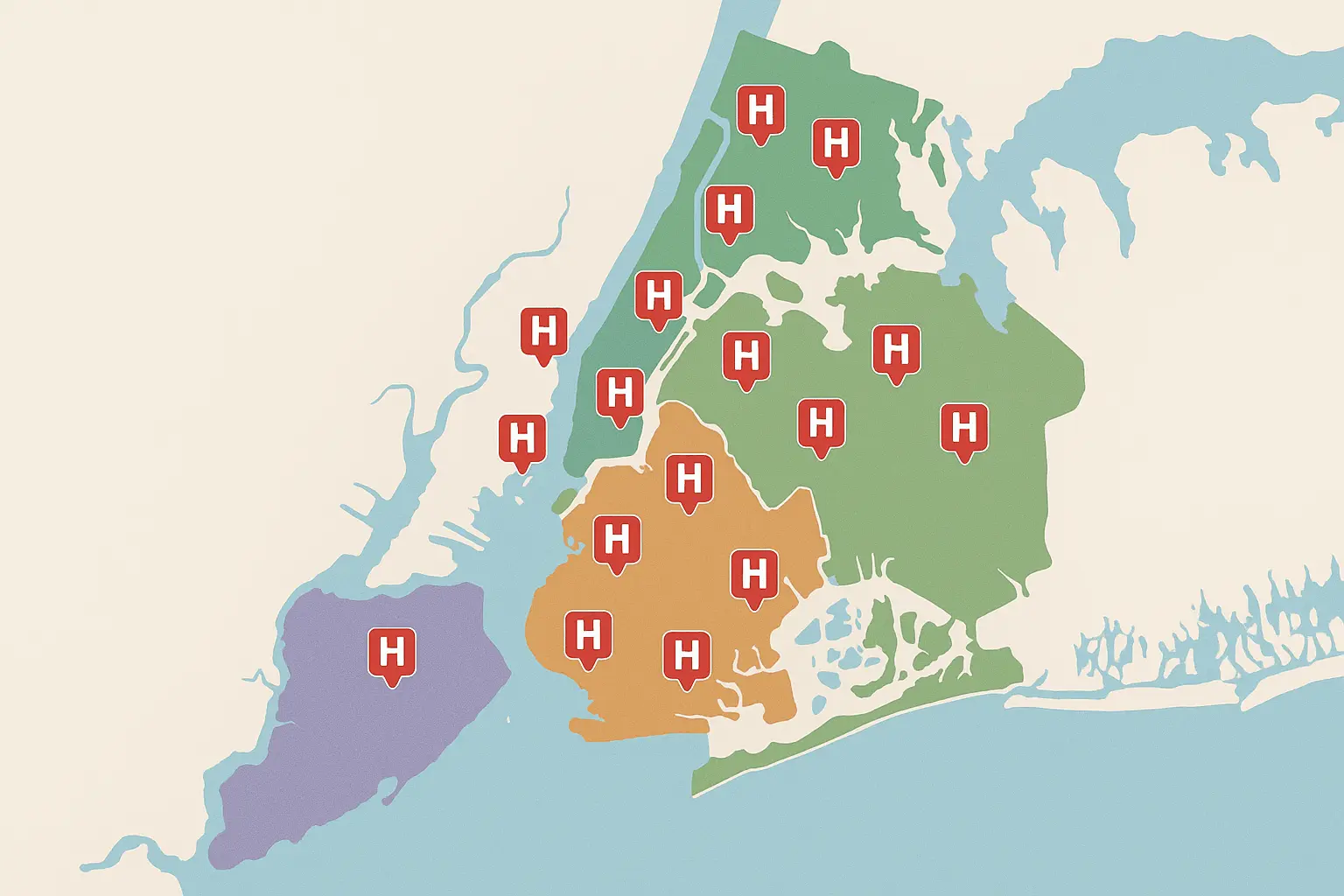
Brooklyn and Queens hospitals are stepping up their game. The pay gap is shrinking, but the cost savings are real. Plus, some of these hospitals are handling serious trauma cases now—the experience is just as good as Manhattan. Many physicians find that exploring coliving in Brooklyn options can significantly reduce their housing expenses while maintaining proximity to multiple hospital systems.
The Bronx gets a bad rap, but the opportunities are incredible. Loan forgiveness programs, signing bonuses, and you're serving communities that really need good doctors. One of my residency classmates took a Bronx position with $50K loan forgiveness over five years. That's like getting a $10K annual raise.
Staten Island is the wild card. Lower stress, better work-life balance, but you might feel professionally isolated. Great for docs who want to focus on clinical work without the academic politics.
That $400K salary looks amazing until you start living in NYC. I spend about 35% of my gross income on housing, and I'm actually on the lower end for Manhattan. Understanding the real cost of living in NYC becomes essential for any physician considering the move.
Transportation is another hidden cost killer. I kept my car for two years, spending $500/month on parking, $200/month on insurance, plus gas and maintenance. Finally gave up an
Transportation is another hidden cost killer. I kept my car for two years, spending $500/month on parking, $200/month on insurance, plus gas and maintenance. Finally gave up and went full public transit plus Uber for emergencies. Saves me about $400/month, but adds time to every commute.
Food costs will shock you if you're not careful. Hospital cafeteria food gets old fast, but $15 salads and $25 entrees add up when you're working 12-hour shifts. I learned to meal prep on my days off—saves money and actually tastes better than most takeout.
Don't forget the professional expenses. CME courses, medical society dues, licensing fees—everything costs more in NYC. Budget at least $12K annually for career-related expenses you can't avoid.
New York taxes are no joke for high earners. State and city combined can hit you for 12-13% on top of federal taxes. I use a NYC salary calculator religiously to understand my real take-home.
When I made $380K last year, I paid about $180K in total taxes. Let that sink in—nearly half my gross income gone before I see a penny. This is why tax-efficient strategies become crucial, not optional.
Maxing out retirement contributions isn't just smart—it's necessary for tax survival. Every dollar in my 401(k) saves me about 45 cents in taxes. The backdoor Roth IRA conversion has become my best friend.
Some colleagues establish residency in New Jersey or Connecticut while keeping NYC hospital privileges. Requires careful planning and a good accountant, but the tax savings can be substantial if you're willing to deal with the commute.
After eight years in this market, I've learned that the doctors making the most money aren't necessarily the smartest—they're the most strategic. Here's what actually moves the needle on your income.
Critical care fellowship was the best career move I ever made. I can work ED shifts at $250/hour or ICU shifts at $300/hour, and weekend ICU call pays $400 /hour. That flexibility alone added $80K to my annual income.
The ICU work is completely different from emergency medicine. You actually get to follow patients, build relationships with families, and see outcomes beyond "stable for discharge." It's satisfying in a way that ED work sometimes isn't.
Emergency ultrasound certification has been huge for my colleagues. Hospitals love docs who can do their own imaging—saves time and money. My friend who got certified negotiated a $25/hour bump because she could handle her own ultrasounds.
Toxicology fellows have it made. One guy I know makes $380K clinically plus another $150K doing poison control consulting and expert witness work. The expert witness gigs pay $500-800/hour, and lawyers love emergency docs who can explain complex medical concepts to juries.
Disaster medicine sounds niche, but it's incredibly valuable. Government contracts, emergency preparedness consulting, and specialized response work all pay premium rates. Plus you get to travel and work on interesting projects outside regular clinical medicine.
This strategy changed everything for me. I maintain privileges at three hospitals now, which gives me incredible leverage. Slow week at one place? I pick up shifts elsewhere. Better rate somewhere else? I can afford to be picky.
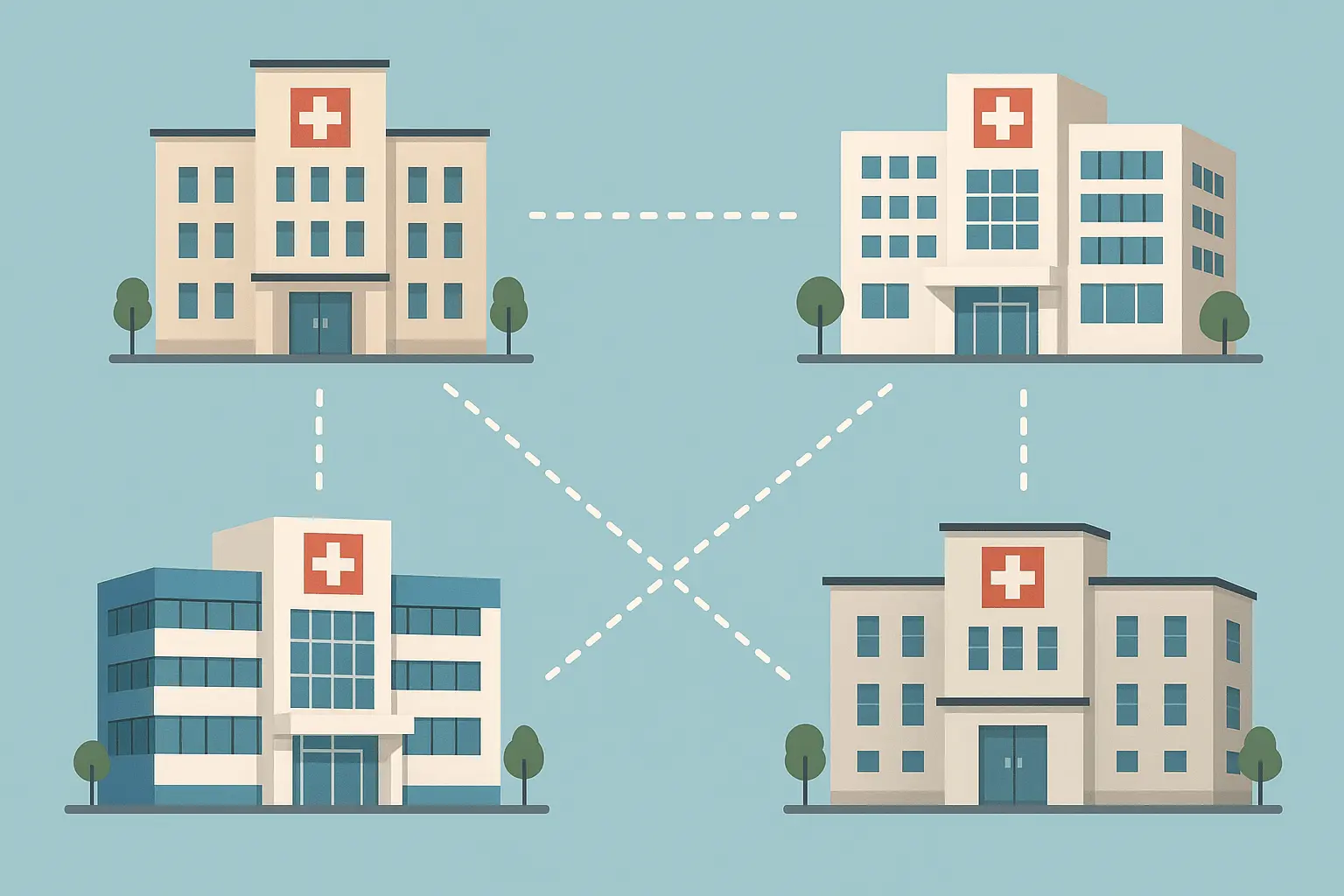
The credentialing process is a pain—expect 3-6 months per hospital with tons of paperwork. But once you're in, you have options. Options mean negotiating power, and negotiating power means more money.
Different hospitals excel at different things. I do my high-acuity trauma work at the Level 1 center, my bread-and-butter emergency medicine at the community hospital, and my easy money shifts at the urgent care center. Variety keeps things interesting.
Some hospitals become desperate for coverage during certain shifts or seasons. When you have multiple options, you can capitalize on these opportunities. I made an extra $30K last year just by being available when other places were short-staffed.
Medical director positions aren't just about the extra $75-150K annually—they're about building the resume for even bigger opportunities. I started as assistant medical director mainly for the money, but the experience opened doors I never expected.
Quality improvement work has become surprisingly lucrative. Hospitals are desperate for docs who can demonstrate measurable improvements in efficiency and patient outcomes. My QI project that reduced average length of stay by 30 minutes led to a $50K bonus and speaking opportunities at three conferences.
Teaching at academic centers pays directly through stipends, but the indirect benefits are huge. Residents remember good attendings, and those relationships become valuable throughout your career. Plus staying current with medical education keeps your clinical skills sharp.
Committee work seems like unpaid labor, but strategic participation can lead to consulting opportunities and speaking gigs. The relationships you build serving on hospital committees often become more valuable than the time investment.
The docs making the really big money—$500K+ annually—aren't just working more shifts. They've positioned themselves as leaders and specialists in ways that command premium compensation.
When they offered me the assistant medical director position, I almost turned it down. More meetings, more politics, more headaches—for what seemed like a modest bump in pay. Biggest mistake that would have been.

The $85K raise was nice, but the real value came from everything else. Suddenly I had input on scheduling, staffing decisions, and department policies. That meant I could actually fix some of the things that drove me crazy as a regular attending.
Being in leadership also gave me access to hospital executives and board members. Those relationships led to consulting opportunities I never would have known about otherwise. Last year alone, I made an extra $40K helping other hospitals improve their emergency department workflows.
The administrative work isn't as soul-crushing as everyone makes it seem. Yeah, there are boring budget meetings and compliance reviews. But there's also real satisfaction in improving patient care and making life better for your colleagues.
Department chair positions are where the serious money lives. I know chairs pulling in $650-800K when you factor in clinical work, research funding, and administrative compensation. But you're basically running a small business at that point—it's not for everyone.
Critical care fellowship was eighteen months of my life I'll never get back, but the ROI has been incredible. I can choose between ED work at $250/hour or ICU coverage at $300/hour depending on my mood and the hospital's needs.
The ICU work provides a completely different perspective on medicine. Instead of the "treat and street" mentality of emergency medicine, you're managing complex patients over days or weeks. It's intellectually challenging in a different way, and honestly, sometimes more rewarding.
Toxicology specialization has created opportunities I never imagined. Expert witness work pays $600-800/hour, and there's always demand for emergency physicians who can explain complex poisoning cases to juries. One case last year paid for my entire vacation to Europe.
The poison control consulting work is fascinating too. You're the person other physicians call when they have no idea what someone ingested. It's like being a medical detective, and it pays really well for what's essentially phone consultation work.
The growing concerns about physician workforce shortages, particularly highlighted by recent reports showing "the percentage of pediatric-residency positions that were filled through the Match fell from 97% in 2023 to 92% in 2024", underscore the value of strategic subspecialization in emergency medicine where demand remains strong and compensation reflects market needs.
I learned contract negotiation the hard way—by getting screwed on my first deal and vowing never to let it happen again. Here's what I wish someone had taught me before I signed anything.
That $340K base salary looks great until you realize the malpractice insurance alone would cost you $45K annually if you had to buy it yourself. Employer-provided coverage with tail insurance is worth way more than most docs realize.
|
Benefit Component |
What I Actually Value It At |
Why It Matters |
|
Malpractice + Tail |
$40,000-$55,000 |
You literally can't work without it |
|
CME Allowance |
$12,000-$18,000 |
Conferences cost way more than you think |
|
Retirement Match |
$18,000-$30,000 |
Free money if you contribute |
|
Health Insurance |
$10,000-$18,000 |
Individual plans are terrible and expensive |
|
Disability Insurance |
$5,000-$12,000 |
Your hands are your livelihood |
The CME allowance saved my career early on. Conferences are expensive—$2K registration plus travel and hotels adds up fast. Having $15K annually for education meant I could attend the best conferences instead of watching webinars in my pajamas.
Retirement matching is literally free money, but you have to contribute to get it. Some hospitals match up to 6% of your salary—that's $20K+ in free money annually if you're making $350K. Not taking advantage is like burning cash.
Health insurance through your employer is almost always better than individual plans, especially in New York. The group rates are significantly cheaper, and the coverage is usually more comprehensive.
Disability insurance is the coverage nobody thinks about until they need it. As an emergency physician, your hands and brain are everything. A friend of mine developed carpal tunnel syndrome and couldn't work for six months. Disability insurance paid 60% of his salary during recovery.
Research is everything. I spent weeks talking to other emergency physicians about their compensation before my last negotiation. Knowing the market rates gave me confidence to ask for what I was worth.

Multiple offers are your best negotiating tool. Even if you prefer one position, having alternatives completely changes the dynamic. Hospitals hate losing good candidates to competitors, especially in a tight market like NYC.
Timing matters more than most people realize. I negotiated my current contract in November when they were desperate to fill shifts for the holiday season. That urgency worked in my favor for both base salary and shift differentials.
Focus on total compensation, not just the base number. Sometimes a lower base salary with better benefits, more PTO, or flexible scheduling provides better overall value than a higher salary with minimal perks.
I learned to negotiate specific terms, not just money. Things like scheduling preferences, shift differentials, and call requirements can significantly impact your quality of life and earning potential.
Making good money is only half the battle in NYC—the other half is not letting the city eat it all through ridiculous living costs and poor financial decisions.
Your housing choice affects everything—your commute, your stress level, your ability to save money, and even your earning potential. I've made both smart and stupid housing decisions, so learn from my mistakes.
Living in Manhattan sounds glamorous until you're paying $4,500 for a one-bedroom that's smaller than most people's closets. I did it for two years because I wanted to "live the NYC dream." The dream turned into a financial nightmare pretty quickly.
Moving to Brooklyn was the best financial decision I made. My commute went from a 10-minute walk to a 35-minute subway ride, but I cut my housing costs by $1,800/month. That's over $20K annually in savings—enough for a nice vacation or serious retirement contributions.
Some of my colleagues bought places in New Jersey or outer Queens and commute in. The mortgage payments are often less than Manhattan rent, and they're building equity instead of making landlords rich. Plus the space and quality of life improvements are dramatic.
Co-living arrangements like those offered through coliving in Brooklyn can provide luxury amenities at reasonable costs while maintaining proximity to multiple hospital systems. It's worth considering, especially early in your career.
The key is thinking about total cost of ownership. That $3,200 Brooklyn apartment becomes $3,800 when you add utilities, internet, and renters insurance. Factor in your commute costs too—MetroCards and occasional Ubers add up.
Emergency physicians face unique investment challenges. Irregular schedules make it hard to actively manage portfolios, and variable income makes budgeting complicated. I've learned to automate everything possible.

Maxing out tax-advantaged accounts isn't optional in high-tax states—it's survival. Every dollar I put in my 401(k) saves me about 45 cents in taxes. The backdoor Roth IRA has become my secret weapon for building tax-free retirement wealth.
Real estate investment outside NYC has been incredibly profitable for me. I own two rental properties in North Carolina that generate positive cash flow and appreciate steadily. The returns are better than anything I could buy locally, and the management is surprisingly hands-off.
Index fund investing through automated contributions has been my bread and butter. I don't have time to research individual stocks or manage complex portfolios, but consistent contributions to low-cost index funds have built substantial wealth over eight years.
Professional financial planning became essential once my income hit $400K+. A fee-only advisor who specializes in physician finances helped optimize my tax strategy and investment allocation. The annual fee pays for itself through tax savings alone.
Emergency funds are crucial when your income varies month to month. I keep six months of expenses in a high-yield savings account. It's not the most exciting investment, but it lets me sleep at night knowing I can handle slow months or unexpected expenses.
After eight years practicing emergency medicine in NYC, I can honestly say it's been worth it—most days. The money is excellent, the cases are fascinating, and the professional opportunities are unmatched. But it's not the glamorous lifestyle people imagine.
You'll work nights, weekends, and holidays while your friends are out having normal lives. You'll see things that stick with you long after your shift ends. You'll question whether the paycheck is worth the stress more times than you'd like to admit.
But you'll also save lives on a regular basis. You'll become incredibly good at making life-or-death decisions under pressure. You'll develop skills and experience that few physicians ever achieve. And yes, you'll make enough money to live very comfortably in one of the world's most expensive cities.
The physicians who thrive here are the ones who think strategically about their careers. They don't just work shifts—they build expertise, develop leadership skills, and create multiple income streams. They understand that emergency medicine is both a calling and a business.
Your first few years will be about survival—clinically and financially. Don't make the mistake I made of trying to live like a rich doctor before you actually have rich doctor money. Focus on building your skills, managing your expenses, and positioning yourself for long-term success.
The investment in subspecialty training, leadership development, and strategic career moves pays dividends for decades. The physicians making $600K+ aren't just working more hours—they've positioned themselves as valuable resources that hospitals compete to retain.
NYC emergency medicine isn't for everyone, but for those who can handle the intensity and navigate the financial complexities, it offers one of the most rewarding careers in medicine. The money is excellent, but more importantly, the work matters. Even on the worst days, you're making a difference in people's lives.
Just remember to save some of that money—student loans don't pay themselves, and retirement comes faster than you think. The city is expensive, but with smart financial planning and strategic career moves, you can build substantial wealth while doing work you love.
The emergency medicine community here is tight-knit despite the competitive environment. We look out for each other, share opportunities, and celebrate successes together. It's a good place to build a career if you're willing to put in the work.

Household supplies can be changed or decreaased at Outpost Club’s discretion, or based on supply availability. Outpost is not responsible for temporary losses of utility service. Outpost Club is not responsible for any damages due to absence of any supplies or utilities


If you have a sales related question please call
680-688-7678

 Hot Deals