ICU Nurse Salary NYC: What You'll Actually Earn in the Big Apple's Most Demanding Healthcare Jobs
Jan 10, 2026
Jan 10, 2026
Look, let's cut through the corporate speak here. New York City's ICU units are some of the most intense, demanding, and yes - rewarding - nursing environments you'll find anywhere. According to 4 Corner Resources, ICU nurses in NYC are pulling in an average of $65.17 per hour, which works out to about $135,553 annually for full-time work. That's significantly higher than what you'd make almost anywhere else in the country, and there's a good reason for that - this job is tough, the city is expensive, and hospitals are desperate for good people.
Here's what's actually happening in NYC's ICU nursing world right now - hospitals are scrambling for experienced nurses, and that means you have way more bargaining power than you might think. The pandemic basically broke the healthcare staffing model, and guess what? That's actually working in your favor.
NYC's ICU market isn't just about the salary numbers (though those are pretty nice). It's about the sheer concentration of world-class hospitals all competing for the same pool of talented nurses. From the big-name academic centers in Manhattan to the community hospitals serving every corner of the five boroughs, everyone's trying to outbid each other for good ICU nurses.
And let's be real about something - the post-pandemic world has completely flipped how hospitals think about ICU nurse pay. Places that used to offer "competitive salary" (translation: as little as we can get away with) are now throwing around signing bonuses like confetti. Why? Because they finally figured out that keeping experienced ICU staff actually saves them money in the long run.
For healthcare professionals trying to wrap their heads around the broader financial picture of working in NYC, checking out average salary expectations across different industries can give you some helpful context for evaluating ICU nursing pay packages.
But here's where things get a bit heavy. There's some serious stuff happening behind the scenes that you should know about. As reported by "New York City nurses confront an austerity avalanche" from Dollars & Sense, over 20,000 nurses are currently battling it out in contract negotiations with 12 different hospitals. Plus, federal Medicaid cuts are putting the squeeze on safety-net hospitals. Translation? The hospitals that serve the most vulnerable patients might be tightening their belts just when nurses need better pay the most.
Okay, so everyone throws around that $85,000 to $130,000 range, but let's break down what that actually means for your bank account. Entry-level positions typically start between $85,000-$95,000. Mid-career nurses (that's you if you've got 3-8 years under your belt) are looking at $95,000-$115,000. And if you're a senior ICU nurse who can handle anything the unit throws at you? You're talking $115,000-$130,000, maybe more if you're really specialized.
But here's the thing - those base numbers don't tell the whole story. Night shift differential can bump your pay by 10-15%, which translates to an extra $8,500-$15,000 per year if you're working permanent nights. Weekend premiums, holiday pay, overtime opportunities - it all adds up fast. I know nurses who've pushed their total earnings way past that $130k mark just by being strategic about when they work.
According to national data from Nurse.org, the median annual ICU nurse salary is $85,500 as of 2024, while ZipRecruiter puts it at $85,205 nationally. But NYC? We're playing in a completely different league here.

If you're fresh out of school, that $85,000-$95,000 starting range might feel disappointing when you see Manhattan rent prices. But remember - this is just your launching pad. Most major hospital systems have these comprehensive orientation programs that last 12-16 weeks. They're basically paying you to learn while you get up to speed on critical care.
The cool thing about ICU nursing is that your salary can jump pretty quickly once you prove you can handle the chaos. I've seen new grads get raises within their first year just for mastering the unit's protocols and showing they can mentor the next batch of newbies.
You'll often find that entry-level packages include structured salary increases during your first year as you demonstrate competency in critical care skills. The variation in starting salaries often comes down to which hospital system you choose and how desperately they need people right now.
Once you hit that 3-8 year mark, things get interesting. You're not the newbie anymore, but you're not quite the grizzled veteran either. This is where you can really start leveraging your experience. Hospitals love nurses who can take complex assignments, help train others, and contribute to quality improvement projects without needing their hand held.
Your experience becomes your bargaining chip during this phase. The jump from entry-level to mid-career happens faster in ICU than most other nursing specialties. Why? Because the learning curve is brutal, and hospitals know it. They want to reward nurses who stick it out and become the reliable backbone of their units.
Senior ICU nurses aren't just providing patient care anymore. You're the one everyone turns to when things go sideways. You're mentoring, you're involved in unit decisions, you might be charge nursing or working as a clinical specialist. These roles can push you well beyond that $130,000 mark.
Charge nurse positions often add $5,000-$10,000 to your base salary, while clinical specialist and educator roles can push you to $140,000-$160,000. Some senior nurses I know have leveraged their experience into consulting gigs, per diem work at multiple facilities, or specialized travel assignments. When you're really good at what you do, the sky's the limit.
Here's where you can really boost your earnings: night shift differentials typically add 10-15% to your base hourly rate. For a nurse making $90,000 base salary working permanent nights, that could bump you up to $105,000 just from the shift differential alone.
Holiday pay often includes double-time rates, making those challenging holiday shifts financially rewarding. Many ICU nurses plan their schedules around these premium pay opportunities, especially during their early career years when maximizing income is a priority.
|
Experience Level |
Base Salary Range |
With Night Differential |
With Specialty Certification |
|
Entry-Level (0-2 years) |
$85,000 - $95,000 |
$93,500 - $104,500 |
$88,000 - $98,000 |
|
Mid-Career (3-7 years) |
$95,000 - $115,000 |
$104,500 - $126,500 |
$98,000 - $123,000 |
|
Senior Level (8+ years) |
$115,000 - $130,000 |
$126,500 - $143,000 |
$123,000 - $138,000 |
|
Leadership Roles |
$130,000 - $160,000 |
$143,000 - $176,000 |
$138,000 - $168,000 |
Let's talk geography, because where you work in NYC can make a huge difference in both your paycheck and your quality of life. This isn't just about the money - it's about your sanity, your commute, and whether you can actually afford to live anywhere near where you work.
Manhattan hospitals generally pay the most - we're talking $90,000-$135,000 - but there's a catch. Actually, several catches. The commute can be brutal unless you live nearby (good luck affording that). Parking costs more than some people's rent. Your lunch from the hospital cafeteria costs $15.
But here's why people still choose Manhattan: the hospitals are incredible. NYU Langone, Mount Sinai, NewYork-Presbyterian - these places have resources and technology that can make your job easier and your resume shine. Plus, the networking opportunities are unreal.
Working at a Manhattan hospital often means access to cutting-edge technology, the most complex cases, and career advancement opportunities that can accelerate your professional development. The trade-off? Higher stress levels, intense work environments, and the challenge of getting to one of the world's most expensive areas every day.
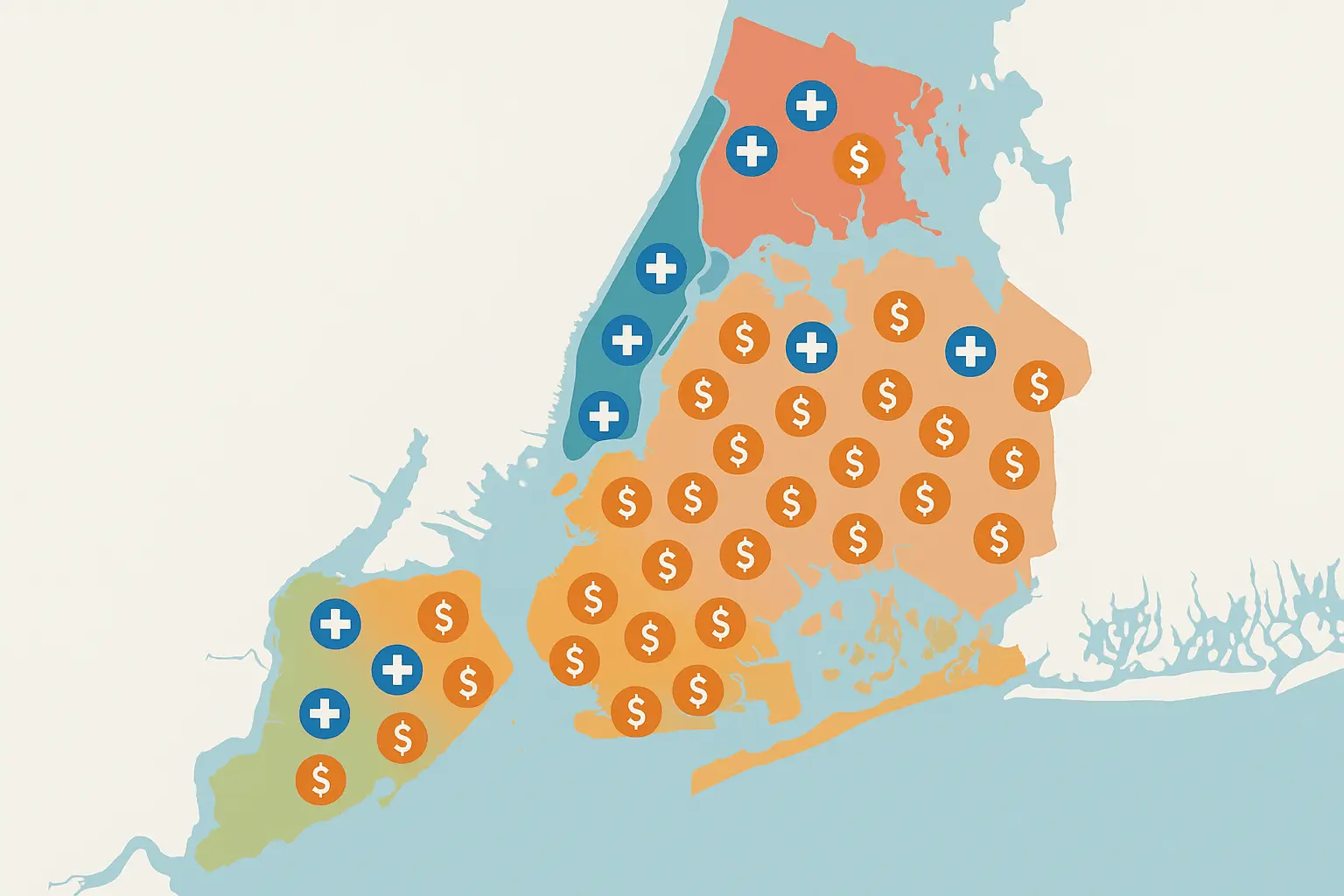
Brooklyn, Queens, the Bronx, Staten Island - these hospitals might pay $80,000-$120,000, which sounds like less until you do the math. If you're saving $500-$1,000 a month on commuting and living somewhere more affordable, that "lower" salary might actually put more money in your pocket.
For ICU nurses considering Brooklyn as a more affordable option, checking out the real cost of living in Brooklyn can help you understand how your salary will stretch compared to Manhattan alternatives.
Plus, and this is important - many outer borough hospitals have better nurse-to-patient ratios. Less stress, shorter commutes, and often a more collegial atmosphere. Staten Island University Hospital and some of the Brooklyn health systems have invested heavily in their ICUs. You get sophisticated care environments without the Manhattan headaches.
Here's something nobody talks about enough: your commute time is unpaid time. If you're spending 90 minutes a day getting to and from a Manhattan job, that's 7.5 hours a week you're not being compensated for. Over a year, that's nearly 400 hours of your life.
Manhattan positions might require $300+ monthly in transportation costs, plus all that unpaid commute time. Outer borough positions often provide parking or easier public transit access, reducing both the financial and time costs of getting to work.
I know nurses who took slightly lower-paying jobs closer to home and ended up making more money overall because they could pick up per diem shifts on their days off. When you're not exhausted from commuting, you have energy for extra work.
Real Talk: Sarah's Manhattan vs. Brooklyn Decision
Sarah was torn between Mount Sinai's prestige and the brutal Manhattan commute. After calculating that she'd spend $350/month just on parking plus 2.5 hours daily on the subway, that Brooklyn hospital suddenly looked a lot more appealing. The Brooklyn role offered a 25-minute commute, better work-life balance, and she could pick up lucrative weekend per diem shifts. Her total annual earnings? $135,000 compared to the $125,000 Manhattan base salary.
ICU nursing has pretty predictable salary jumps, and they usually happen at the 1-year, 3-year, and 5-year marks. The progression is faster than most nursing specialties because the learning curve is so steep and hospitals desperately want to keep good people.
The steep learning curve in ICU settings means hospitals often reward competency development faster than in other nursing specialties. According to Nurse.org, there's a clear progression in ICU nurse pay based on experience. Entry-level ICU nurses with 1 year earn approximately $29.91/hour, while those with 1-4 years earn $32.97/hour. Mid-career nurses with 5-9 years command $38.10/hour, and senior nurses with 10-19 years earn $42.23/hour. The most experienced nurses with 20+ years can earn $44.54/hour.
Most NYC hospitals have these structured residency programs for new ICU nurses. They last 12-16 weeks and include classroom time plus one-on-one mentorship. During your first year, you'll often see salary bumps tied to hitting certain competency milestones.
These programs vary wildly between hospitals. Some give you dedicated educators, simulation training, and a gradual increase in patient complexity. Others basically throw you in the deep end with minimal support. Do your research before you sign on.
Hospitals invest heavily in new graduate success because the cost of turnover in ICU positions is substantial - both financially and in terms of patient safety. The support you receive can make or break your early career experience.
The advancement opportunities in ICU nursing are actually pretty amazing. Charge nurse positions can add $5,000-$10,000 to your base salary. Clinical specialist and educator roles can push you to $140 ,000-$160,000. Some nurses go the advanced practice route and become nurse practitioners - that can get you over $160,000 with way more autonomy.
These positions require strong clinical skills combined with leadership capabilities that hospitals value highly. You're not just providing direct patient care anymore - you're influencing protocols, developing staff, and making decisions that impact entire departments.
Not all ICUs are created equal when it comes to pay. Cardiovascular ICU, neuro ICU, pediatric ICU - these specialized units often pay more because of the extra knowledge required. Trauma ICUs in Level 1 centers typically offer higher pay because the work is so intense and unpredictable.
Some nurses become the go-to person for specific procedures or equipment - ECMO, continuous dialysis, advanced monitoring systems. When you're the nurse everyone calls for the complicated stuff, you become valuable across multiple units and can command premium pay rates.
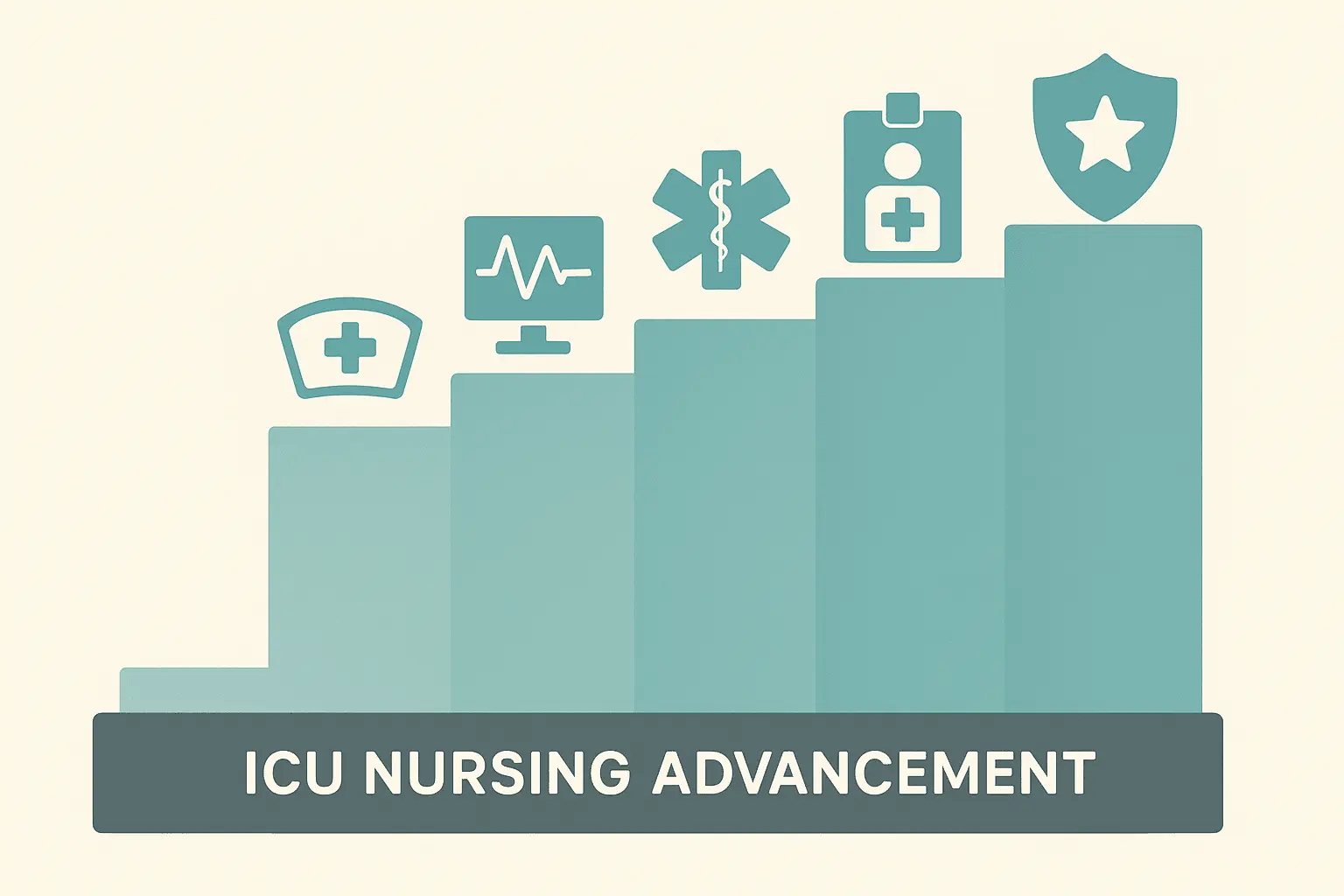
Let's be honest about credentials - they matter, and they pay. While you need your RN license to work anywhere, having a BSN instead of an ADN can bump your starting salary by $2,000-$5,000. That gap tends to widen over time as hospitals increasingly prefer bachelor's-prepared nurses for promotions.
Advanced degrees and specialized certifications can add $5,000-$15,000 to your annual pay. The CCRN certification alone can boost your salary by $3,000-$8,000 yearly, making continuing education a smart investment in your career.
BSN-prepared nurses often start $2,000-$5,000 higher than their ADN counterparts, and this gap tends to widen over time. Many hospitals offer tuition reimbursement programs worth $3,000-$8,000 annually, making it financially doable to pursue advanced degrees while working.
The Magnet hospital designation, which many NYC facilities pursue, requires a certain percentage of BSN-prepared nurses. This creates additional demand and can influence compensation decisions The pursuit of nursing excellence continues to be recognized at the highest levels. "HSS has become the first hospital in New York State to receive the nation's highest honor for nursing excellence five times" Hospital for Special Surgery reports. In fact, only one half of one percent of all hospitals in the U.S. have achieved a fifth Magnet designation, demonstrating the exceptional standards NYC hospitals maintain and the premium value they place on highly educated nursing staff.
CCRN certification is basically the gold standard for ICU nurses, and it typically adds $3,000-$8,000 to your annual salary. The certification shows you know your stuff when it comes to critical care, and it's often required for senior positions.
Getting your CCRN isn't just about the money (though the money is nice). It's about proving to yourself and everyone else that you can handle the most complex cases. Plus, many hospitals offer one-time bonuses of $1,000-$3,000 when you get certified.
Specialty certifications in areas like cardiac surgery (CSC-RN), progressive care (PCCN), or pediatric critical care (CCRN-K) can provide additional pay bumps, especially when they align with your unit's specialty focus.
Many ICU nurses strategically plan their continuing education to maximize both learning and earning potential. Pursuing certifications that align with your hospital's specialty services can lead to internal advancement opportunities that wouldn't otherwise be available.
Conference attendance, specialty courses, and advanced training programs fulfill continuing education requirements while providing networking opportunities that can lead to higher-paying positions. Some nurses pursue multiple certifications over time, building a portfolio that makes them valuable across different ICU settings.
Maria's Certification Success Story
Maria invested $2,500 in getting her CCRN certification, including study materials, exam fees, and time off for preparation. Her hospital immediately bumped her salary by $5,000 annually upon certification, plus she got a one-time bonus of $2,000. Within six months, she'd recouped her investment, and the certification will keep generating $5,000 in additional annual income throughout her career.
Where you work matters just as much as what you do. Different types of facilities have completely different approaches to compensation, and understanding these differences can help you make smarter career choices.
Large hospital networks like NYU Langone, Mount Sinai Health System, and NewYork-Presbyterian offer the most comprehensive packages - great base salaries, excellent benefits, and opportunities to move around within the system. These systems typically provide the most robust benefits, career development opportunities, and job security.
The downside? More bureaucracy, less flexibility in scheduling, and standardized pay scales that might limit your individual negotiation power. However, they frequently offer multiple ICU locations, allowing you to transfer between facilities while maintaining your benefits and seniority.
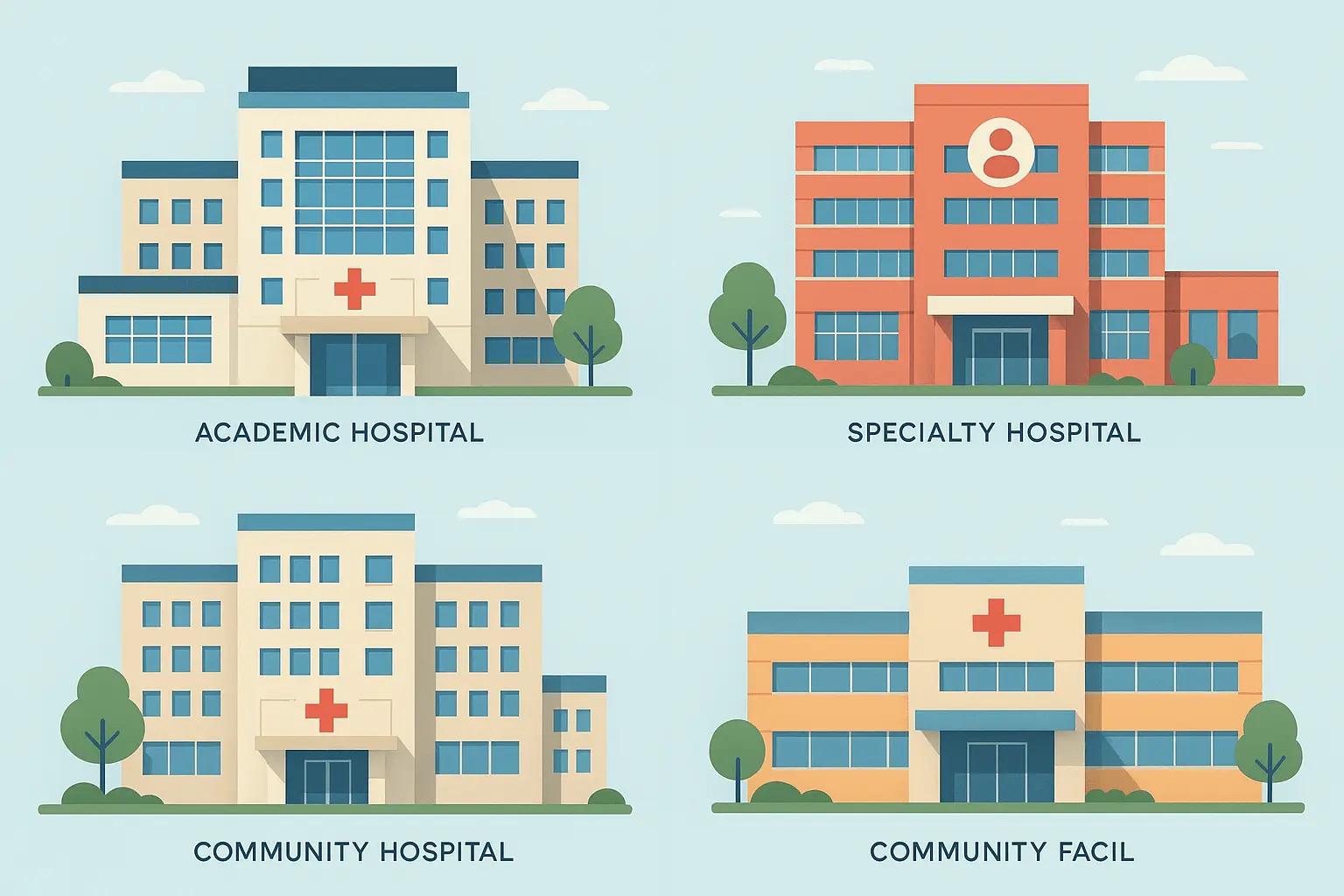
Specialized facilities focusing on cardiac care, neuro, or pediatrics often pay $5,000-$15,000 above general ICU rates for nurses with the right expertise. Private hospitals sometimes offer more competitive salaries and can make decisions faster than big public systems.
They may have fewer bureaucratic constraints and can often make compensation decisions more quickly than large public systems. Some specialty facilities offer unique perks like smaller nurse-to-patient ratios, access to cutting-edge technology, or opportunities to work with renowned physicians in specific specialties.
Here's where things get interesting. Contract positions often pay $50-$80 per hour, which can translate to $100,000-$160,000 annually. The catch? Usually no benefits, so you need to factor in health insurance and retirement planning.
Travel nursing in NYC can be incredibly lucrative - some contracts offer $3,000-$5,000 weekly packages including housing stipends. These 13-week assignments can provide intensive experience and serious money. Many ICU nurses use per diem work to supplement their full-time income or to explore different hospital environments.
|
Hospital Type |
Base Salary Range |
Benefits Package Value |
Unique Advantages |
|
Academic Medical Centers |
$90,000 - $135,000 |
$25,000 - $35,000 |
Research opportunities, prestige, cutting-edge technology |
|
Specialty Hospitals |
$95,000 - $140,000 |
$20,000 - $30,000 |
Focused expertise, smaller ratios, specialized equipment |
|
Community Hospitals |
$85,000 - $120,000 |
$22,000 - $32,000 |
Work-life balance, community connection, faster advancement |
|
Travel/Contract |
$104,000 - $166,400 |
$0 - $10,000 |
Flexibility, variety, higher hourly rates |
Your salary is just part of the picture. Benefits packages in NYC can add $20,000-$35,000 in real value, and some of these benefits can make or break your financial situation.
Most NYC hospitals cover 70-90% of your health insurance premiums. This benefit alone can be worth $8,000-$15,000 annually when you consider what you'd pay for individual coverage. Dental and vision are usually included, and mental health coverage has gotten much better post-pandemic.
Some facilities provide on-site health services, including employee health clinics and wellness programs. Mental health coverage has become increasingly comprehensive, recognizing the stress levels inherent in ICU nursing.

403(b) plans with employer matching typically range from 3-6%. Some hospital systems still offer pension plans, which can provide serious long-term financial security. Take advantage of any employer matching - it's literally free money.
Financial planning services, including access to financial advisors and retirement planning workshops, help ICU nurses navigate building wealth in an expensive city. Some systems offer supplemental retirement savings options, life insurance coverage, and disability insurance that protects your income if you can't work.
Tuition reimbursement worth $3,000-$8,000 annually makes continuing education financially feasible. Conference attendance, specialty training, and leadership development opportunities can accelerate your career in ways that pay off for years.
Some facilities offer sabbatical programs, research opportunities, or partnerships with nursing schools that can enhance your resume and open doors to academic or advanced practice roles.
Benefits Optimization Checklist:
ICU nurses are in an incredibly strong position right now. The nursing shortage has fundamentally shifted the balance of power in salary negotiations. Hospitals that used to have waiting lists for ICU positions are now actively recruiting with competitive packages.
Post-pandemic nursing shortages have created particularly favorable conditions for ICU nurses, with many facilities offering sign-on bonuses ($5,000-$15,000), retention bonuses ($3,000-$10,000), and competitive packages to attract and keep experienced talent.
The Bureau of Labor Statistics projects that employment of registered nurses will grow 5 percent from 2024 to 2034, faster than the average for all occupations. About 189,100 openings for registered nurses are projected each year, on average, over the decade.
Sign-on bonuses of $5,000-$15,000 have become standard for experienced ICU nurses, with some facilities offering even higher amounts for nurses with specialized certifications or experience in high-demand areas. Retention bonuses of $3,000-$10,000 are increasingly common as hospitals recognize that keeping experienced staff costs way less than constantly training new people.
These bonuses often come with commitment periods of 1-2 years, but in today's market, that's not necessarily a bad thing - job security is valuable too.

Healthcare demand continues to grow as the population ages and medical technology advances allow for more complex treatments in ICU settings. The expansion of ICU capabilities in response to pandemic preparedness means many hospitals have increased their critical care capacity, creating additional positions.
Technological advances in critical care, while making some aspects of nursing more efficient, also require nurses with advanced skills to operate complex equipment and interpret sophisticated monitoring systems.
Jennifer's Market Leverage Success Story
Jennifer, an ICU nurse with 4 years of experience and CCRN certification, used the current market demand to her advantage. When her contract was up for renewal, she researched pay at three competing hospitals and discovered she was earning $8,000 below market rate. Armed with this data and two competing job offers, she successfully negotiated a $12,000 salary increase, a $5,000 retention bonus, and additional paid time off.
Here's where we need to have a serious conversation. Yes, ICU nurse salaries in NYC are among the highest in the country. But NYC's cost of living is also among the highest in the country, and we need to talk honestly about what that means for your bank account.
Rent for a one-bedroom apartment ranges from $2,500-$4,500 monthly depending on the borough. That's $30,000-$54,000 per year just for housing. Many ICU nurses share apartments or live in outer boroughs to manage these costs.
Healthcare professionals often find that communal living spaces provide an excellent solution for managing NYC's high housing costs while building supportive networks with other professionals facing similar challenges.
Public transit costs around $120 monthly. Parking in Manhattan can cost $300-$500 monthly. Some hospitals offer parking subsidies or shuttle services, but many don't. Many nurses find that living within walking or biking distance of work, despite higher rent costs, can save money when you factor in transportation expenses and the value of your commute time.

NYC's tax structure includes federal, state, and city taxes. Higher-earning ICU nurses can face effective tax rates of 35-40%. This makes pre-tax benefits like health insurance and retirement contributions particularly valuable.
Understanding the full financial picture is crucial, and our comprehensive guide to hidden costs that impact your NYC paycheck can help ICU nurses plan more effectively for their financial future.
Many successful ICU nurses in NYC use specific strategies: sharing apartments with other healthcare professionals, living in areas with good public transit access to reduce transportation costs, and taking advantage of hospital-sponsored housing programs when available.
Building an emergency fund becomes particularly important in an expensive city where unexpected expenses can quickly impact your budget. Many financial advisors recommend 6-9 months of expenses for healthcare workers in high-cost areas.
NYC Financial Planning Reality Check:
Alright, let's get down to the practical stuff. Here's how to actually get paid what you're worth as an ICU nurse in NYC.
CCRN certification should be your first priority. It's recognized everywhere and provides the best return on investment. Plan your certification timeline to align with performance reviews or job changes for maximum impact.
Develop expertise in high-demand areas like ECMO, continuous dialysis, or advanced hemodynamic monitoring. These specialized skills can make you indispensable and justify premium compensation. Stay current with evidence-based practice changes and new technologies.
Before making any career moves, research multiple hospital systems. Compare not just base salaries but total compensation packages, benefits, shift differentials, and advancement opportunities. Time your job searches strategically - many hospitals have budget cycles that make certain times more favorable for negotiations. January and July are often when new budget allocations become available.
Prepare for negotiations by documenting your achievements, certifications, and any cost-saving or quality improvement initiatives you've contributed to. Quantify your value whenever possible.
Salary Negotiation Prep That Actually Works:
Identify advancement pathways within your chosen hospital system early in your career. Understanding promotion requirements allows you to strategically develop the skills and experience needed for higher-paying positions.
Build relationships with nursing leadership, participate in committees, and volunteer for special projects that increase your visibility within the organization. Consider pursuing advanced degrees or specialty training that align with your hospital's strategic priorities.
Join professional organizations like the American Association of Critical-Care Nurses (AACN) and attend local chapter meetings. Maintain relationships with former colleagues who move to other facilities - they can provide insider information about compensation packages and job openings.
Participate in professional conferences and continuing education events where you can meet nurse recruiters and learn about opportunities at different facilities.
For ICU nurses managing the demanding schedules and high-stress environment of critical care work, finding balance and community becomes essential for long-term career success. Shared living arrangements can help manage housing costs while providing a supportive community of like-minded professionals, allowing you to focus more energy on career advancement.
ICU nursing in NYC offers substantial earning potential with salaries ranging from $85,000-$130,000+ annually, enhanced by comprehensive benefits packages and numerous advancement opportunities. Success in maximizing your compensation requires strategic planning around certifications, hospital selection, and career progression, while carefully managing the city's high living costs through smart housing and transportation choices.
The financial landscape for ICU nurses in NYC reflects both the critical nature of your work and the city's competitive healthcare market. Your earning potential extends far beyond base salary when you factor in shift differentials, specialty pay, comprehensive benefits, and advancement opportunities.
Market conditions currently favor experienced ICU nurses, with hospitals competing for talent through sign-on bonuses, retention incentives, and enhanced benefits packages. This environment creates opportunities for strategic career moves and salary negotiations that weren't available just a few years ago.

Success in maximizing your ICU nurse salary requires balancing multiple factors: pursuing relevant certifications, choosing the right hospital system for your career goals, managing living costs effectively, and maintaining the clinical excellence that makes you valuable in this demanding field.
The future outlook for ICU nursing in NYC remains strong, with demographic trends and healthcare advances creating sustained demand for skilled critical care nurses. Your specialized expertise positions you well in a market that values the complex skills required to care for the city's most critically ill patients.
Look, ICU nursing is tough enough without worrying about making rent. You're literally keeping people alive - you deserve to be paid well for it. Yes, the cost of living in NYC is insane, but with smart planning and strategic career moves, you can build a financially successful career while doing work that actually matters.
The current market is in your favor. Hospitals need you more than you need any single hospital. Use that leverage wisely, get your certifications, and don't be afraid to negotiate. Your skills are in demand, and it's time to get paid accordingly.

Household supplies can be changed or decreaased at Outpost Club’s discretion, or based on supply availability. Outpost is not responsible for temporary losses of utility service. Outpost Club is not responsible for any damages due to absence of any supplies or utilities


If you have a sales related question please call
680-688-7678

 Hot Deals