Marketing Manager Salary NYC: What You'll Actually Earn in America's Most Expensive City
Jan 9, 2026

Jan 9, 2026
Look, I'll cut straight to what you actually want to know. Marketing managers in New York City are pulling in anywhere from $85,000 to $165,000 a year, with most people landing somewhere around $115,000. Yeah, it's definitely more than you'd make pretty much anywhere else, but there's always a catch in NYC, right?
Here's something that blew my mind when I first moved here—there are literally 45,000 people doing marketing manager jobs in New York state according to the U.S. Bureau of Labor Statistics. That makes us the second-biggest employer of marketing managers in the country, right behind California. Some days it feels like I've bumped into half of them on the 6 train during rush hour.
The thing is, all these companies are basically fighting over the same talent pool. Which is fantastic for us, but terrible for HR departments trying to stick to their budgets. I've watched friends get counter-offers that made their jaws drop just because their current company couldn't afford to lose them.
But here's where reality hits. According to Built In's salary data, the average marketing manager here makes about $97,331 base, plus another $10,236 in bonuses and other cash compensation. So you're looking at around $107,567 total. Sounds pretty good until you factor in that a decent one-bedroom apartment will run you $3,500+ a month... well, you do the math.
If you're just starting out, expect something between $75,000 and $95,000. I know what you're thinking—it doesn't exactly scream "making it rain" money, but companies here actually throw in some pretty sweet perks to make up for it.
My first job here offered a $7,500 signing bonus (which basically covered my security deposit and first month's rent), full health insurance that didn't make me want to cry, and they even helped with my MetroCard. When you're 24 and trying to figure out how to adult in the most expensive city in America, that stuff actually matters more than you think.
One of my friends just landed an Associate Marketing Manager gig at some fintech startup down in the Financial District. Her base salary was $78,000, but between the $5,000 signing bonus, full health benefits, and $1,200 annual transit allowance, she's basically pulling in over $84,000 her first year. Not too shabby for someone who was making $45,000 in Columbus six months ago.
Once you've got 3-7 years under your belt and you're not completely terrified every time someone asks you to "optimize the funnel," you're looking at $95,000 to $135,000 in base salary. This is where things start getting interesting because the bonuses actually become real money—like, 15-25% of your salary real.
At this level, companies expect you to show up with receipts. They want to see those campaign results, those lead generation improvements, that time you somehow made the CEO's crazy idea actually work. Document everything, because when review time comes around, "I think I did pretty well" doesn't cut it anymore.
|
Experience Level |
Base Salary Range |
Bonus Potential |
Total Compensation |
|
Entry-Level (0-2 years) |
$75,000-$95,000 |
5-10% |
$79,000-$105,000 |
|
Mid-Level (3-7 years) |
$95,000-$135,000 |
15-25% |
$109,000-$169,000 |
|
Senior-Level (8+ years) |
$130,000-$180,000 |
20-35% |
$156,000-$243,000 |
Senior marketing managers are making $130,000 to $180,000+, and if you play your cards right, your total package can easily hit $200,000 or more. This is where equity starts becoming a real thing, especially if you're at a company that's actually going somewhere.
But here's the deal—at this level, you're not just the person who makes the pretty graphics and writes the email campaigns anymore. You're shaping strategy, you're managing people, you're the one everyone looks at when the CEO asks why our conversion rate dropped 2% last month. The money reflects that pressure and responsibility.
According to Built In, if you've got 7+ years of experience, you're averaging around $125,941. Most people in this range are pulling between $100k-$110k, but the ceiling is way higher if you're really good at what you do and can prove it.
Okay, real talk time. That base salary number everyone obsesses over? It's just the beginning. I learned this the hard way when I was comparing job offers a few years back and almost took the wrong one because I only looked at the base salary.
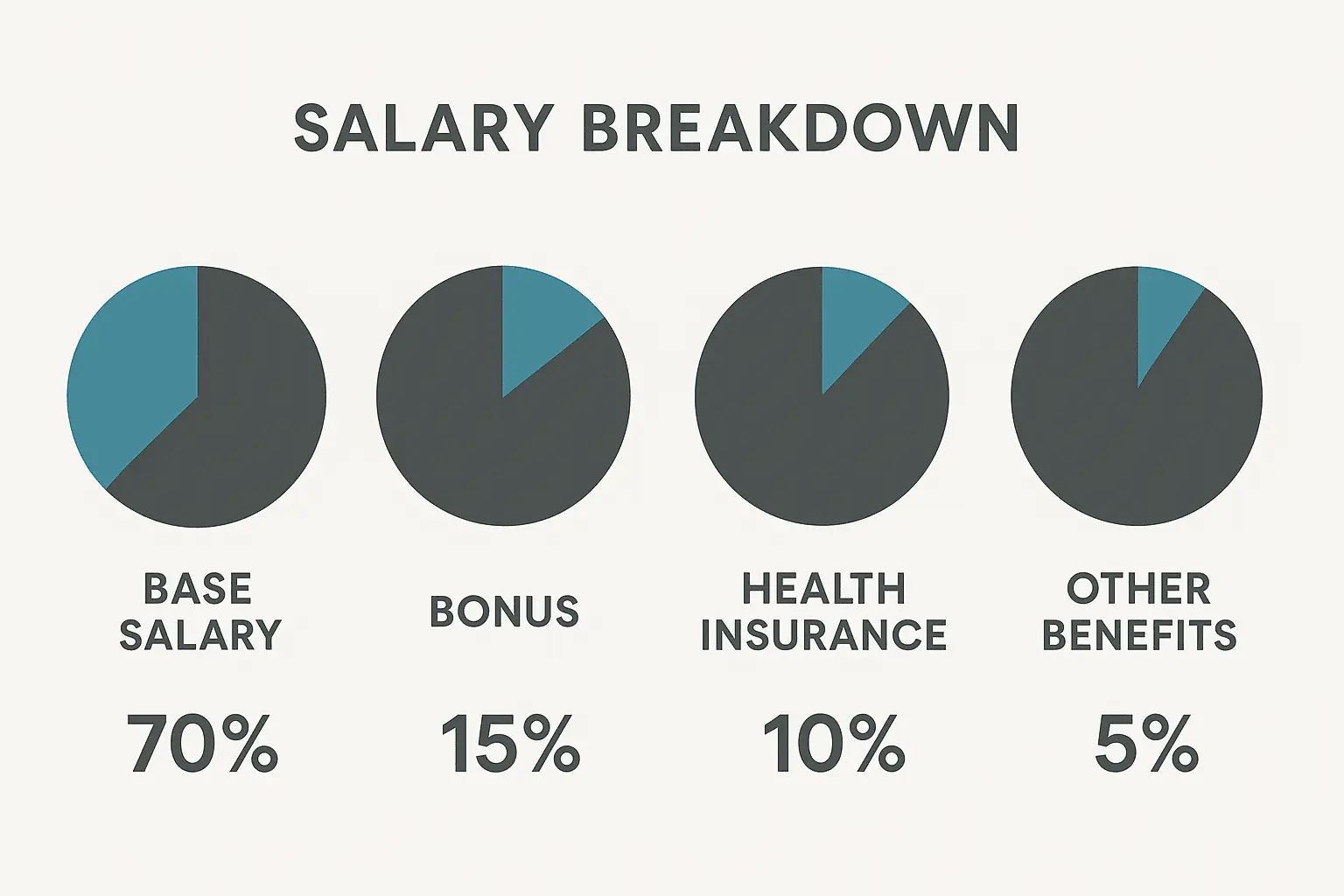
Most marketing jobs come with some kind of performance bonus, usually 10-25% of your base salary. The trick is understanding exactly how they calculate it, because "it depends on how well you do" isn't exactly helpful when you're trying to plan your budget or figure out if you can afford that apartment upgrade.
I've seen bonus structures tied to everything from lead quality metrics to overall company revenue. The smart move is to negotiate clear, achievable metrics upfront. Like, what exactly counts as a "qualified lead"? How do they measure your contribution to that big enterprise deal that took eight months to close?
One friend of mine negotiated a bonus structure that was 40% based on her individual performance (lead quality metrics), 30% on team results (overall pipeline generation), and 30% on company performance (revenue growth). Last year she pulled in a $28,000 bonus on top of her $140,000 base salary. Not exactly pocket change.
If you're at a startup or a publicly traded company, equity is probably part of your package. Early-stage companies might offer 0.1-0.5% equity stakes, while more established firms usually do RSUs worth $10,000-$50,000 annually.
Here's what nobody tells you about equity: it's complicated as hell. Vesting schedules, tax implications, what happens if you leave before you're fully vested—there's a lot to figure out. Most places do four-year vesting with a one-year cliff, but the details matter way more than you think they do.
Benefits packages in NYC often represent 25-35% of your base salary value. Health insurance alone saves you thousands, and if your company offers a decent 401k match, that's basically free money you'd be crazy not to take.
But don't sleep on the weird perks either. Professional development budgets, conference attendance, continuing education support—that stuff can fast-track your career in ways that are hard to put a dollar value on but make a huge difference long-term.
Here's what to look for when negotiating:
Alright, let's talk about the part that makes everyone's palms sweaty: negotiating your salary. I've been through this dance three times in NYC, and here's what I wish someone had told me before my first completely awkward attempt.

You absolutely cannot wing this. Hit up Glassdoor, PayScale, all the usual suspects, but don't stop there. The real gold is in talking to actual people who work at similar companies. LinkedIn coffee chats, industry meetups, that friend of a friend who works at your dream company—use your network like your career depends on it, because it does.
I keep a nerdy spreadsheet comparing total compensation across similar roles. Base salary, bonus potential, equity value, benefits, even stuff like how much PTO they give you and whether they pay for your gym membership. It sounds obsessive, but when you're sitting in that negotiation room, having real data makes all the difference between confidence and panic.
Job offers give you maximum leverage, obviously, but don't sleep on other opportunities. Just crushed a big campaign that drove serious results? Perfect time for a conversation. Annual review coming up? Start documenting your wins three months early, not the week before.
When you get an offer, always ask for time to review it. Even if you want to say yes immediately and do a happy dance. It shows you're thoughtful and professional, and it gives you space to come back with a counter-offer that's based on research, not emotions or desperation.
Put together a one-pager that shows exactly how you've moved the needle for your current or previous companies. Revenue attribution, cost savings, process improvements, campaign performance—whatever you can quantify with actual numbers.
And here's the key: connect your wins to what this specific company actually cares about. If they're trying to break into a new market, highlight your experience there. If they're struggling with conversion rates, show them exactly how you've optimized similar funnels before. Make it obvious that hiring you (or keeping you) is a complete no-brainer.
There are basically two ways to climb the salary ladder in NYC marketing: go broad and move up the traditional hierarchy, or go deep and become the go-to expert in something specific. Both paths can get you to serious money, but they look pretty different day-to-day.
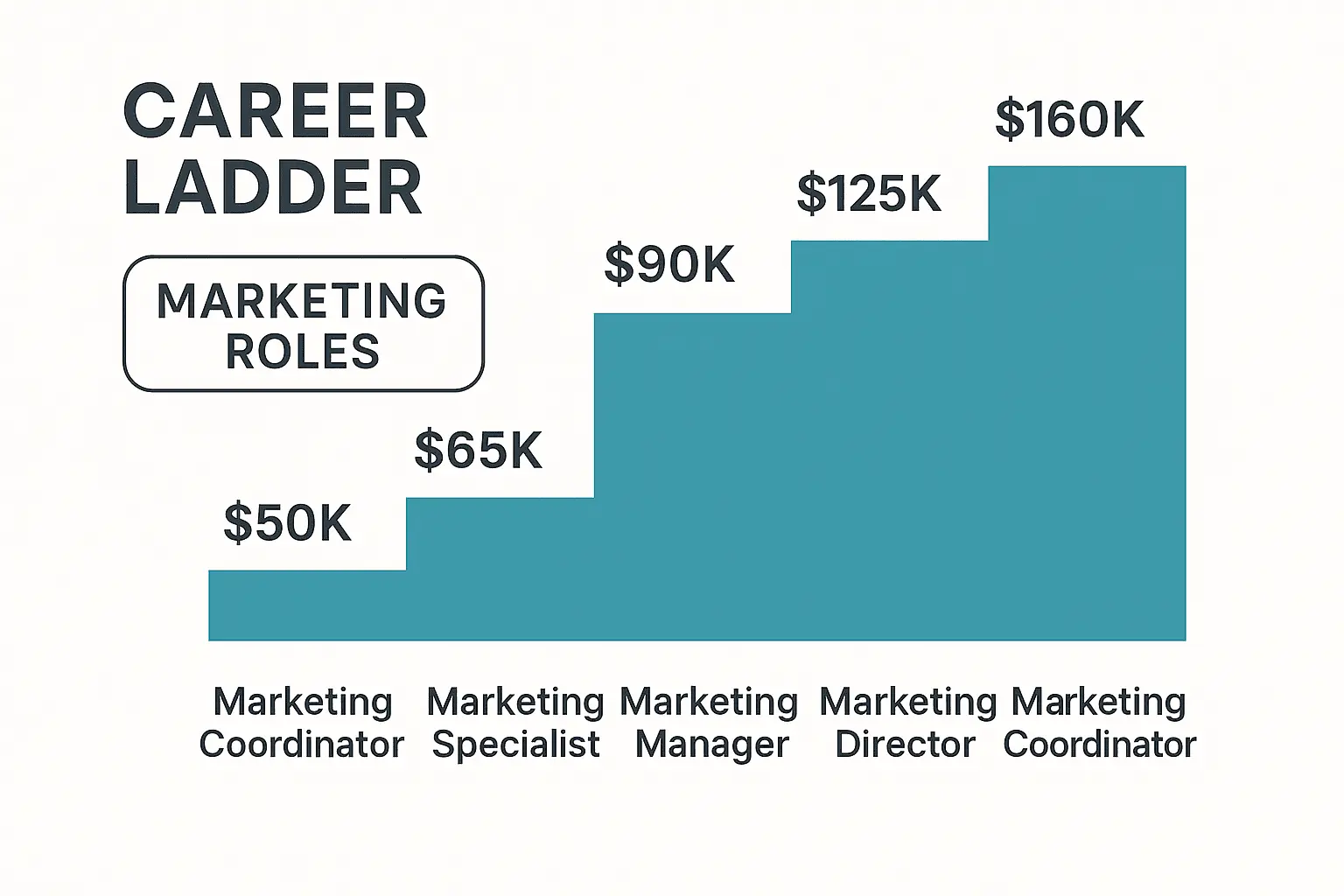
The classic path goes Marketing Manager → Senior Marketing Manager ($140,000-$180,000) → Marketing Director ($160,000-$250,000). Each step up means more responsibility, bigger budgets, and hopefully, a team that doesn't make you want to hide in the supply closet during particularly stressful weeks.
The jump to Director level is where things get really real. You're managing seven-figure marketing budgets, dealing with C-suite politics, and somehow supposed to make sense of why the CEO's nephew thinks we should pivot our entire strategy to TikTok. According to the U.S. Bureau of Labor Statistics, the median annual salary for marketing managers in New York is $172,590, with the range spanning from $94,780 for the lowest 10% to well over $224,950 for top performers.
Or you can become the person everyone calls when they need expertise in something specific. Digital marketing specialists are pulling $120,000-$190,000, brand managers are hitting $110,000-$170,000, and if you're good with data and analytics (and actually enjoy staring at spreadsheets), you're looking at $125,000-$185,000.
Each specialization has its own learning curve and staying power requirements. Digital roles need you to stay on top of every platform update and algorithm change (and there are a lot of them). Brand management is all about understanding consumer psychology and creative strategy. Analytics requires you to love diving deep into data and explaining why correlation doesn't equal causation for the hundredth time.
|
Specialization |
Salary Range |
Key Skills Required |
Growth Outlook |
|
Digital Marketing |
$120,000-$190,000 |
SEO, PPC, Marketing Automation |
High |
|
Brand Management |
$110,000-$170,000 |
Consumer Psychology, Creative Strategy |
Moderate |
|
Marketing Analytics |
$125,000-$185,000 |
Data Analysis, Statistical Modeling |
Very High |
|
Product Marketing |
$115,000-$175,000 |
Product Strategy, Go-to-Market |
High |
|
Growth Marketing |
$130,000-$200,000 |
Experimentation, Funnel Optimization |
Very High |
Here's something that might surprise you: AI and machine learning marketing applications can bump your salary 10-20% above traditional marketing roles. Same goes for privacy-compliant data strategies and omnichannel expertise. Companies are literally throwing money at people who understand this stuff.
But don't forget about the soft skills that separate the people making $120K from the ones making $180K. Leadership development, cross-functional collaboration, strategic planning—start working on these early in your career, not when you're already trying to get promoted.
I know someone who got Google Analytics 4 and HubSpot certifications, then led a successful attribution modeling project that actually improved their company's ROI tracking. Their salary went from $105,000 to $128,000 at their next performance review. That's a pretty solid return on some weekend studying and initiative.
Not all industries pay the same, and in NYC, that difference can be pretty dramatic. Choose wisely, because your industry choice can easily mean a $30K+ difference in total compensation.

Tech companies are basically in an arms race for marketing talent right now. We're talking $120,000-$200,000+ in base salary, plus equity packages that might actually be worth something if you pick the right company. The sector's growing like crazy, venture funding is still flowing, and they're all competing for the same pool of people who understand growth marketing.
The equity upside in tech can be absolutely insane. I know someone who joined a B2B SaaS startup as their third marketing hire. When they got acquired four years later, her equity package was worth more than her total salary over those four years combined. Of course, for every success story like that, there are ten companies that never make it past Series A funding.
Wall Street firms and fintech companies typically offer $110,000-$180,000 in base salary, often with year-end bonuses that can literally double your take-home pay in good years. The financial services industry makes serious money, and they're generally willing to share some of it with marketing people who can help them make even more.
Bonus structures in finance can be absolutely wild. Some firms tie marketing bonuses to overall company performance, so if they have a killer year, you have a killer year too. I've seen marketing managers get $50K+ bonuses when their firm crushes their annual targets. The financial services sector continues to actively seek specialized marketing talent, as evidenced by eFinancialCareers posting for a US Wealth Product Marketing Manager role requiring 10+ years of experience in intermediary and wealth channels, showing the premium they place on specialized financial marketing expertise.
Healthcare and pharmaceutical marketing roles typically provide $100,000-$160,000, with specialized therapeutic areas paying premium rates. The regulatory complexity and compliance requirements mean they need people who actually understand the space, and they're willing to pay accordingly.
Pharmaceutical marketing often comes with unique perks too. Conference travel to medical meetings, continuing medical education opportunities, and the chance to interact with actual doctors and researchers. If you're into the science side of things and like the idea that your marketing work might actually help people get better treatments, it's pretty rewarding beyond just the paycheck.

Manhattan still pays the most, mostly because that's where all the big corporate headquarters are planted. But Brooklyn and Queens are becoming real players in the marketing scene, especially in tech and creative industries that don't need to be in Midtown to impress clients.
The salary differences between boroughs aren't as dramatic as you might expect. A marketing manager job in DUMBO probably pays the same as one in Midtown Manhattan. The real difference is more about commute costs, lifestyle, and whether you want to spend 45 minutes on the subway every morning or live somewhere you can actually walk to work.

COVID changed everything about how we work, and most marketing roles now offer 2-3 days remote as standard. Companies are keeping NYC salary levels to retain talent in this insanely competitive market, because losing good people is way more expensive than letting them work from home a few days a week.
Some people moved to cheaper cities while keeping their NYC salaries, which sounds like winning the lottery. But heads up—a lot of companies are starting to implement location-based pay adjustments after 6-12 months. Make sure you understand your company's remote work and compensation policy before you pack up and move to Austin thinking you've cracked the code.
Here's the part that actually hurts when you sit down and do the math: NYC's cost of living is absolutely brutal. Your rent alone is going to eat up 25-40% of your gross income if you want to live somewhere that doesn't make you question your life choices. Then taxes (federal, state, and city combined) will take another 35-45% of what's left. Transportation, food, and just existing in this city adds another $2,000-$3,000 to your monthly budget.
I'm not trying to scare you off—I'm still here after all—but you need to know what you're actually signing up for. That $115,000 salary has roughly the same purchasing power as making $75,000 anywhere else, except with way better pizza and significantly more stress about finding a decent apartment that doesn't require you to have a guarantor who makes 80 times the monthly rent.
For professionals evaluating the true cost of NYC living while trying to maximize their marketing manager salary, understanding these hidden expenses becomes crucial for actually being able to save money and build wealth.
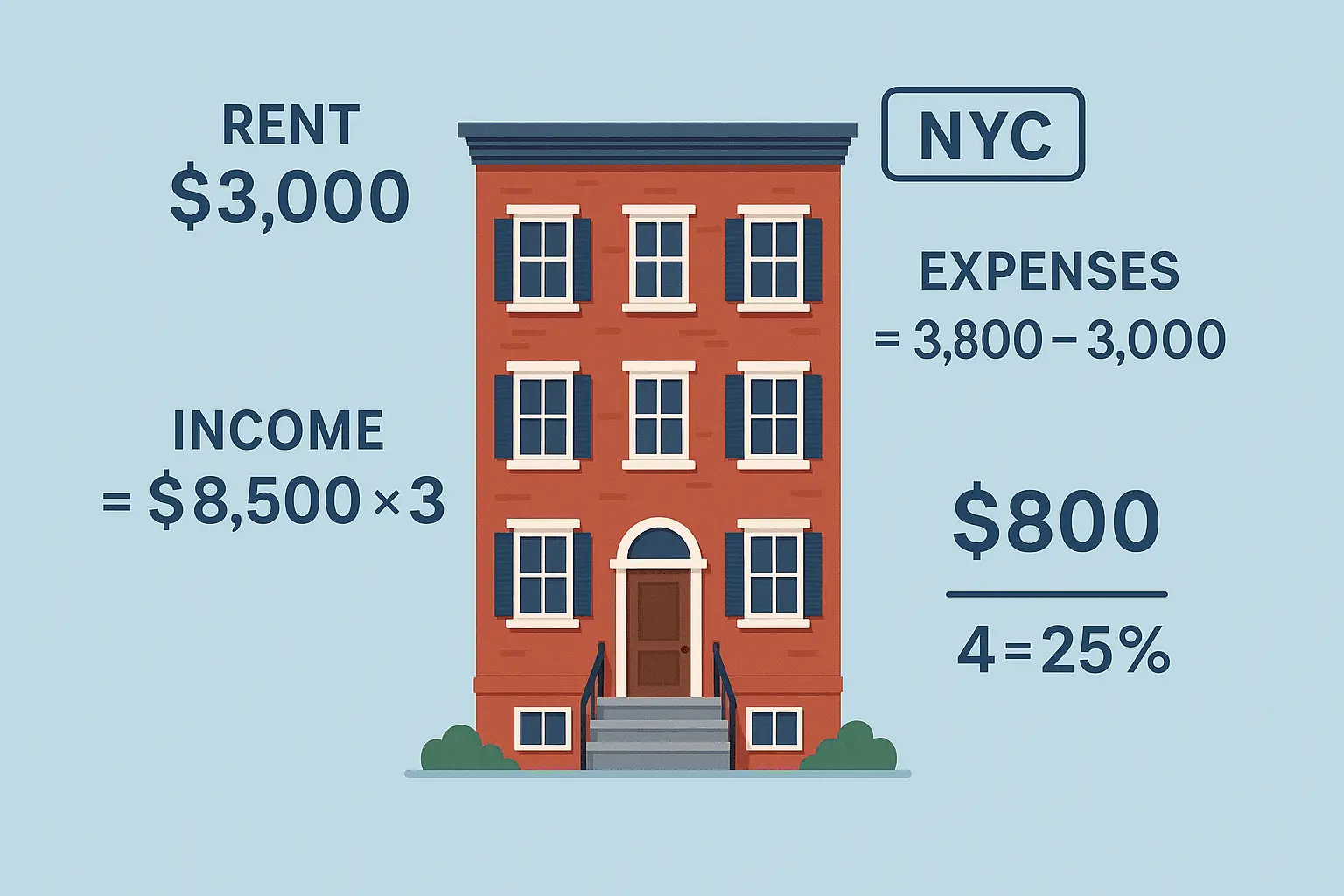
Here's a realistic monthly budget for a marketing manager making $115K:
Yeah, it's tight. But it's totally doable, and if you're smart about your career moves and skill development, that salary is going to grow faster here than it would anywhere else in the country.
AI is changing literally everything about how we do marketing, and if you're not keeping up with it, you're going to get left behind fast. Marketing automation, predictive analytics, personalization at scale—companies are paying serious premium rates for people who actually understand this stuff and can implement it effectively.
Privacy regulations are also creating huge demand for specialists who can navigate GDPR, CCPA, and whatever new privacy acronym regulators throw at us next. If you can build effective marketing strategies that don't rely on third-party cookies and actually respect user privacy, you're going to be very, very popular with hiring managers.
Economic factors play a bigger role than most people realize too. Interest rates, venture funding availability, corporate spending budgets—it all trickles down to affect marketing budgets and hiring. Keep an eye on the bigger economic picture, because it definitely affects your smaller career picture.

Look, networking in NYC can feel pretty overwhelming. There are literally a million events, meetups, and "opportunities to connect," but most of them involve standing around with a plastic cup of wine making awkward small talk with people who are clearly thinking about their next meeting while pretending to listen to you.
Outpost Club is completely different. It's an invitation-only golf society that connects accomplished professionals across industries through 70+ annual events and dinner matches. We're talking about real relationship-building opportunities with people who understand strategic thinking and execution excellence—the kind of people who can actually help your career, not just exchange business cards you'll never look at again.
For marketing professionals, this isn't just about playing golf (though the golf is legitimately great). It's about building meaningful relationships with people who get what it takes to succeed in competitive industries. These connections often lead to career advancement opportunities, business development possibilities, and the kind of professional relationships that actually matter when you're trying to level up your career.
With playing privileges at architecturally significant private clubs nationwide and internationally, Outpost membership gives you a sophisticated platform for client entertainment and executive relationship building. When you're trying to close that big enterprise deal or impress a potential employer, being able to invite them for a round at a prestigious club definitely doesn't hurt your cause.
Young professionals seeking the best NYC neighborhoods to establish their careers often benefit from strategic community connections that extend way beyond traditional workplace relationships.

Marketing manager salaries in NYC reflect what this city actually is: the center of everything, where opportunity and cost create a unique landscape that can be incredibly rewarding if you know how to play it right.
Your earning potential goes way beyond that base salary number everyone focuses on. Bonuses, equity, benefits—it all adds up to create a total compensation picture that can be pretty impressive, even after you factor in the brutal cost of living that makes your friends from college think you're either crazy or incredibly successful (sometimes both).
Success here requires being strategic about industry choice, continuous skill development, and career progression. Whether you go the traditional advancement route or become a specialist in something high-demand like growth marketing or marketing analytics, the key is never stopping learning and always building relationships with people who can help you get to the next level.
The investment in your NYC marketing career—from those salary negotiations that make your palms sweaty to the professional development that keeps you ahead of everyone else—positions you for long-term success in one of the world's most competitive and rewarding markets.
Is it expensive? Absolutely. Is it stressful sometimes? You bet. Is it worth it? For most of us who've made the leap and stuck it out, the answer is a resounding yes. Your compensation reflects not just what you're contributing right now, but your potential to drive serious business growth in America's most dynamic city.
And honestly, where else can you make six figures, eat incredible food at 2 AM, have access to literally everything the world has to offer, and build a career that actually excites you when your alarm goes off at 7 AM? That's got to be worth something too.
For those considering relocating to NYC to pursue marketing opportunities, understanding both the financial rewards and lifestyle investments required helps ensure you make the most of your Big Apple career journey. Additionally, professionals exploring NYC salary expectations across various industries can better position themselves for successful compensation negotiations and smart career planning.

Household supplies can be changed or decreaased at Outpost Club’s discretion, or based on supply availability. Outpost is not responsible for temporary losses of utility service. Outpost Club is not responsible for any damages due to absence of any supplies or utilities


If you have a sales related question please call
680-688-7678

 Hot Deals