Doctor Salary NYC: What Every Physician Really Earns in America's Most Expensive City
Jan 5, 2026

Jan 5, 2026
Look, let's be real about what you're getting into with NYC medicine. The money looks incredible on paper, but this city has a way of humbling even the highest earners. I've seen too many residents get starry-eyed about those six-figure salaries, only to realize they're living paycheck to paycheck just like everyone else.
The thing about practicing here is that everything costs more - not just rent, but literally everything. Your malpractice insurance, parking if you're crazy enough to drive, even grabbing lunch between patients. And don't get me started on what it costs to live anywhere decent.
What really gets me is how the prestige factor can cloud your judgment. Yeah, working at NewYork-Presbyterian or Mount Sinai looks amazing on your CV, but prestige doesn't pay your student loans. I know attendings making $400K who are still stressed about money because this city just eats cash.
According to the Bureau of Labor Statistics, physicians across all specialties deal with complex compensation structures, but NYC takes it to another level. You're not just dealing with salary negotiations - you're navigating one of the most expensive cities in the world while trying to figure out if that big number actually means you can afford to live here.
The patient mix here is wild too. You'll see billionaires one minute and uninsured immigrants the next. It keeps you humble, but it also means your income can be unpredictable depending on where you practice. Some Manhattan practices thrive on cash-pay cosmetic procedures, while Brooklyn community health centers rely heavily on Medicaid reimbursements.
The concentration of world-class medical institutions here creates this weird dynamic where everyone's competing for the same talent pool. That drives salaries up, but it also means expectations are through the roof. You're not just a doctor here - you're expected to be available, excellent, and somehow still have time for research or teaching.
Honestly, the salary gap between primary care and specialists here is pretty brutal. My friend who's a family doc makes around $250K after five years, which sounds decent until you meet the cardiologist down the hall pulling in $600K. It's hard not to feel a little bitter about it sometimes.
Primary care docs are the backbone of healthcare, but the math just doesn't work in their favor. You're seeing 25+ patients a day, dealing with insurance nightmares, and still making less than a radiologist who reads scans from home in their pajamas. Don't get me wrong - specialists earn their money, but the disparity stings.
The crazy part is how much location matters even within specialties. An ER doc in the Bronx might make $50K less than someone doing the exact same job in Manhattan. Same training, same stress, different zip code, different paycheck.
Recent data shows that US physicians' total compensation rose an average of 3.6% in 2024, with primary care seeing a measly 1.4% increase while specialists got slightly better treatment. But here's the thing - those national averages don't tell the NYC story.
|
Specialty |
What You'll Actually Make |
Reality Check |
|
Primary Care |
$200K-$280K |
Sounds good until you see the workload |
|
Cardiology |
$450K-$650K |
Great money, terrible hours |
|
Emergency Medicine |
$350K-$450K |
Shift work is nice, burnout is real |
|
Orthopedic Surgery |
$600K-$850K |
You'll earn every penny |
|
Radiology |
$400K-$550K |
Best work-life balance for the money |
Surgery pays well because it has to - the lifestyle is pretty rough. I know ortho surgeons making $700K who haven't had a real vacation in years. The money's there, but you're basically married to the hospital.
Interventional cardiology is where the real money is. These guys can pull in $800K+ because they're generating serious revenue for hospitals. But good luck having a social life when you're on call every third night.
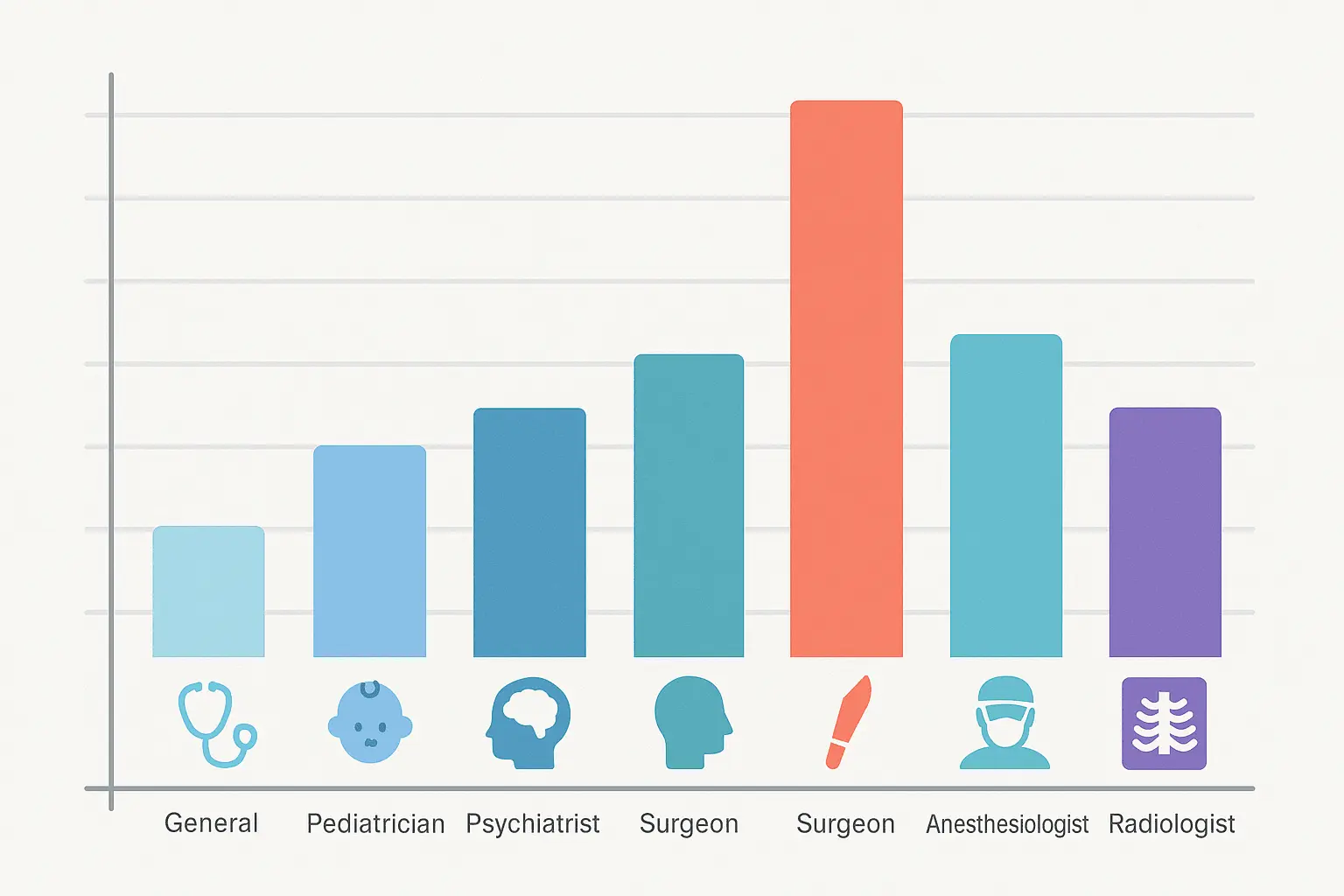
Emergency medicine is interesting because it's shift work. You work your 12-hour shifts and go home - no charts to finish at midnight, no weekend calls. My friend in ER makes $380K working four days a week, which isn't bad math when you break it down.
Psychiatry has really taken off here. Private practice psychiatrists who don't take insurance can charge $300-500 per session in Manhattan. Do the math on that - see 20 patients a week at $400 each, and you're looking at $400K+ working part-time hours.
This is where things get interesting. Hospital employment is like having a safety net - predictable paycheck, benefits, someone else deals with the business headaches. But private practice? That's where the real money is, if you can handle the stress.
I chose hospital employment after residency because I was terrified of the business side. My base salary was $40K less than private practice offers, but when you add up health insurance, malpractice coverage, retirement matching - it was actually pretty close. Plus, I sleep better at night not worrying about overhead costs.
My colleague went the private practice route and makes about 60% more than me now, but he spends half his time dealing with billing issues and staff drama. He's constantly stressed about patient volume and insurance reimbursements. Some months are great, others not so much.
The overhead in private practice here is insane. Manhattan office space runs $100+ per square foot, good medical assistants want $60K+, and don't even think about parking costs. You need serious patient volume just to break even.

Hospital employment gives you that W-2 simplicity. Your malpractice is covered, your retirement is handled, and if the EMR crashes, it's IT's problem, not yours. The trade-off is that your earning potential is capped, and you're dealing with hospital politics and bureaucracy.
Private practice means you're running a business. That dermatologist making $800K? She's also dealing with lease negotiations, employee benefits, and equipment financing. When the practice does well, she does really well. When it doesn't... well, that's why some docs go back to hospital employment.
Partnership opportunities can give you the best of both worlds, but they're getting harder to find. Most practices want you to work as an employee for 3-5 years before even considering partnership, and buy-in requirements can be brutal in this market.
Manhattan pays the most because everything costs the most. It's that simple. But honestly, some of the best opportunities are in the outer boroughs if you're willing to look past the prestige factor.
I know docs in Brooklyn making almost Manhattan money while actually enjoying their commute. Park Slope practices can compete with Upper East Side salaries, and you don't have to deal with Manhattan's insanity.
The Bronx gets a bad rap, but the loan forgiveness programs are legit. I know someone who got $150K in loans forgiven for working there five years. That's like getting a huge raise that doesn't get taxed.
|
Borough |
The Real Deal |
What to Expect |
|
Manhattan |
+20% salary premium |
Highest stress, highest everything |
|
Brooklyn |
-5% to +10% |
Sweet spot for many specialties |
|
Queens |
-10% to -5% |
Underrated, especially for multilingual docs |
|
Bronx |
-25% salary, +$200K loan forgiveness |
Great incentives if you can handle it |
|
Staten Island |
-15% |
Feels like suburbia, pays accordingly |
Queens is really underrated. If you speak Mandarin, Hindi, or Spanish, you can command premium rates in Flushing or Jackson Heights. The patient populations are loyal, and the overhead costs are way more reasonable than Manhattan.
Staten Island operates like its own little world. The commute sucks if you don't live there, but the practices are more like suburban medicine with NYC-adjacent salaries. Not terrible if you want that suburban lifestyle.
Brooklyn is where a lot of smart docs are heading. You can live in a decent neighborhood, have a reasonable commute, and still make competitive money. Plus, the food scene is incredible, which matters when you're working 60-hour weeks.
When you actually calculate your hourly wage, it can be pretty depressing. Sure, you're making good money, but when you factor in all the unpaid time - charting at home, insurance calls, continuing education - the numbers aren't as impressive.
ER docs have it figured out though. Work your shifts, go home, no charting at midnight. My friend makes $180/hour base rate, but with night and weekend differentials, she's often pulling $250+/hour. Not bad for someone who gets to sleep in on Tuesdays.
Primary care is rough when you break it down hourly. You're seeing patients all day, then spending another 2-3 hours on notes and phone calls. That $250K salary starts looking a lot less impressive when you're working 60+ hours a week.
Call pay can really boost your income if you can handle the lifestyle. Cardiology call pays $1,200-$1,500 per night just for being available. That's $50K+ extra per year, but good luck having a social life.

Surgical specialties are tricky to calculate because your OR time is just part of the job. That $300/hour you're making during surgery doesn't include pre-op visits, post-op rounds, or the 2 AM calls when something goes wrong.
Per diem work can be incredibly lucrative if you can swing it. Emergency medicine locums pays $200-300/hour, and you can often pick up shifts at multiple hospitals. Some docs make their entire living doing locums work, though you're giving up benefits and job security.
Weekend and holiday coverage is where you can really cash in. Most places pay 150-200% of regular rates for holiday shifts. Work Christmas Day in the ER, and you might make $400-500/hour. The trade-off is, well, you're working Christmas Day.
Your first job out of residency is going to pay less than you want - that's just reality. But if you're smart about it, you can see serious salary growth in your first five years. I've seen docs go from $200K to $320K in that timeframe.
The sweet spot seems to be around 10-15 years of experience. That's when you've proven yourself but haven't gotten too expensive for employers. You know what you're doing, you're not a liability, and you can handle complex cases without supervision.
Partnership track can be great for long-term earning, but don't count on it. I've seen too many docs get strung along for years with partnership promises that never materialize. Get everything in writing, and have a lawyer review it.
According to recent analysis from "White Coat Investor", the pay variation within specialties is actually bigger than between specialties. A top-earning family doc can make more than an average cardiologist, which tells you that experience and business sense matter more than your specialty choice sometimes.
Senior physicians face tough decisions around year 15-20. You can coast and maintain your current income, or you can take on leadership roles that come with administrative headaches but significant pay bumps. Department chairs at major NYC hospitals can make $750K-$1M+, but you're basically doing two jobs.
Academic medicine follows a different track entirely. You might start lower, but if you can build a research reputation, the consulting and speaking opportunities can be really lucrative. I know professors making $15K per day for pharma consulting, though that's not exactly steady income.
Additional board certifications can definitely boost your pay, but make sure the juice is worth the squeeze. Pain management certification is hot right now - anesthesiologists with pain boards are making bank. But you're also dealing with a lot more regulatory headaches and DEA scrutiny.
Interventional anything pays more. Interventional cardiology, interventional radiology - if you're sticking needles or catheters into people, you're probably making good money. The training is brutal though, and the call schedule can destroy your personal life.
Critical care certification has become really valuable post-COVID. ICU docs are in high demand, and hospitals are paying accordingly. But burnout in critical care is real - make sure you can handle the emotional toll of losing patients regularly.

Pediatric subspecialties are interesting in NYC because there's so much demand. Pediatric cardiology, pediatric surgery - these subspecialists can make 50-75% more than general pediatricians while working with a patient population that's generally more rewarding.
Sports medicine certification opens up some unique opportunities. Team physician gigs don't pay much, but they're fun and can lead to cash-pay sports medicine practices. Plus, you get to tell people you're the team doctor, which is pretty cool.
The timing of subspecialty training matters. If you do it right after residency, you're delaying your earning years but potentially setting yourself up for higher lifetime income. If you do it later, you're giving up established income for uncertain future gains.
Academic medicine is a tough sell financially in NYC. You're taking a 20-25% pay cut for the privilege of dealing with medical students and research deadlines. But if you're into teaching and research, it can be really fulfilling.
The consulting opportunities in academic medicine can be lucrative though. I know professors making $10K+ per day for pharma consulting. If you can build a reputation, the speaking circuit pays well too. But that income is unpredictable and requires you to essentially run a side business.
For physicians considering academic positions, understanding average salary expectations in NYC helps put the financial trade-offs in perspective.
Sabbaticals are nice in theory, but most academic docs I know are too busy to actually take them. The tenure track is also getting more competitive - lots of qualified people fighting for fewer positions. And honestly, tenure doesn't mean as much as it used to in terms of job security.
The research side can be really frustrating. Grant funding is competitive, and you're constantly writing proposals that might not get funded. Many academic docs end up spending more time on administrative work than actual research or patient care.
Teaching can be rewarding, but medical students today are... different. They question everything, which can be good, but they also seem to think they know more than they do. The residents are usually great to work with though - they're motivated and actually want to learn.
The path to academic leadership can pay off financially. Department chairs at Columbia or NYU can make $600K-$1M+, but you're essentially running a small business within a larger institution. Lots of politics, budget meetings, and administrative nonsense.
Research success can create real wealth if you're lucky. Patents, licensing deals, equity in biotech companies - I know a few academic docs who've done really well this way. But for every success story, there are dozens of researchers who never hit it big.
This is the part that really hurts. You think you're making great money until you start apartment hunting in Manhattan. Even making $500K, you're looking at spending 40%+ of your gross income on housing. That's just math you can't escape.
Understanding hidden costs that drain your paycheck becomes essential when you're trying to figure out if that big salary actually means you can live comfortably.
The tax situation is brutal too. Between federal, state, and city taxes, you're looking at losing almost half your income to taxes. A $400K salary becomes $220K take-home pretty quickly. Then you factor in student loans, and things get tight fast.
Childcare costs here are absolutely insane. Good daycare runs $30K+ per kid, and if you want a nanny, you're looking at $60K-$80K annually. That's a whole resident's salary just for childcare. I know attending physicians who are essentially working to pay for childcare and taxes.

Even simple things cost more. Dry cleaning runs $15-20 per shirt, groceries are 30-40% higher than national averages, and parking meters are $4+ per hour. Everything has a NYC premium attached. You adapt, but it adds up to thousands per year.
Transportation costs vary wildly depending on your choices. Most docs use the subway, which saves money but costs time and sanity. If you drive, parking alone can run $300-500 per month, not counting gas, insurance, and the inevitable parking tickets.
According to recent employment data, New York has 14,700 medical positions, making it competitive, but that high concentration of doctors coupled with extreme living costs creates financial pressures you don't see elsewhere.
The math is pretty sobering. A cardiologist making $550K in NYC might have similar disposable income to someone making $350K in Dallas or Atlanta. The prestige is nice, but prestige doesn't pay your rent.
The tax situation here will make you cry. Seriously, when you see how much gets taken out of your paycheck, it's depressing. You're basically working for the government until July, and that's not an exaggeration.
NYC's combined tax rates can hit 50%+ for high earners. Federal taxes max out at 37%, New York State adds another 8.82%, and NYC tacks on 3.876%. Add in Social Security and Medicare taxes, and you're looking at losing half your income before you even see it.
Maxing out retirement contributions helps, but there's only so much you can shelter. 401(k) limits are $23,000 for 2024, which sounds like a lot until you realize it's barely 5% of a specialist's salary. HSAs are great if you qualify, but most high earners don't because of income limits.
You really need a good accountant who understands physician finances. The complexity of NYC taxes plus physician-specific deductions requires professional help. Don't try to do this yourself - you'll miss opportunities and potentially get audited.
Real estate can provide some tax benefits through mortgage interest and property tax deductions, though SALT deduction limits hurt high earners. Still, many physicians find that owning property provides better long-term tax treatment than renting.
Self-employment taxes hit private practice docs even harder. You're paying both sides of Social Security and Medicare taxes, adding another 15.3% on top of income taxes. It's brutal, but there are some strategies to minimize the impact.
COVID really shook things up. ER docs and ICU docs became heroes overnight and got paid accordingly. Some critical care docs doubled their normal pay during the worst of it. Hazard pay, overtime bonuses, temporary housing allowances - hospitals threw money at anyone willing to work COVID units.
Elective procedure docs got hammered initially - dermatologists, plastic surgeons, anyone doing non-urgent stuff. I know a plastic surgeon who went from making $800K to basically zero income for three months. The recovery has been strong though. Pent-up demand meant crazy busy schedules in 2021-2022.
Recent survey data from "White Coat Investor" shows that 62% of physicians think most doctors are underpaid, while only 53% think they themselves are underpaid. Post-pandemic, that disconnect has only gotten bigger as healthcare costs rise but reimbursements stay flat.
Telemedicine has been a game-changer for some specialties. Psychiatrists especially have benefited - they can see patients anywhere in the state now via video. Some have increased their patient load by 30%+ without adding commute time. The hourly rates for telehealth aren't quite as good as in-person visits, but the convenience factor makes up for it.

The physician shortage has gotten worse post-pandemic. Lots of older docs retired early, and burnout drove others out of clinical practice entirely. This shortage is driving salaries up across most specialties, with annual raises of 5-8% becoming more common.
Remote work has affected some specialties more than others. Radiologists and pathologists can work from home several days a week now, making NYC positions more attractive to out-of-state candidates. But for most of us, medicine is still a hands-on profession.
Don't just ask for more money - that rarely works. You need to show value. If you speak Spanish in a hospital serving a Latino population, that's worth money. If you have subspecialty training they need, leverage it. If you're willing to work nights or weekends, that's valuable too.
Focus on total compensation, not just base salary. Hospitals have more flexibility with signing bonuses, extra vacation time, CME allowances, and parking than they do with base pay. Sometimes a $15K signing bonus is easier to get than a $15K salary increase.
Timing matters. Don't negotiate when you're desperate. The best time is when you have options and they need you. Having another offer gives you real leverage, even if you don't plan to take it.
What Actually Works in NYC Negotiations:
Don't negotiate in isolation. Healthcare recruiters know the market better than you do, and they're motivated to get you the best deal possible. Good recruiters have relationships with multiple hospitals and can give you real market intelligence.
Be prepared to walk away. If you're not willing to decline an offer, you don't have any negotiating power. I've seen docs get significant salary bumps just by being willing to say no to the first offer.
Partnership track negotiations are different. Focus on the timeline to partnership, buy-in requirements, and profit-sharing formulas rather than just starting salary. A lower initial salary with faster partnership progression might be worth more long-term.
Benefits are where hospitals can really compete. Health insurance alone can be worth $25K-$40K annually for a family. When you're comparing offers, don't just look at the salary number - that's only part of the story.
Malpractice coverage saves you serious money. Professional liability insurance can cost $20K-$75K annually depending on your specialty. Emergency medicine and surgery are on the high end, while psychiatry and pathology are cheaper. Having this covered is huge.
According to current compensation data, total compensation packages can add 25-35% to your base salary value, making benefits evaluation crucial for financial planning.
Retirement matching is free money - always max it out. Some places contribute 10-12% of your salary to retirement, which is huge over time. On a $400K salary, that's $40K-$48K annually in free money.
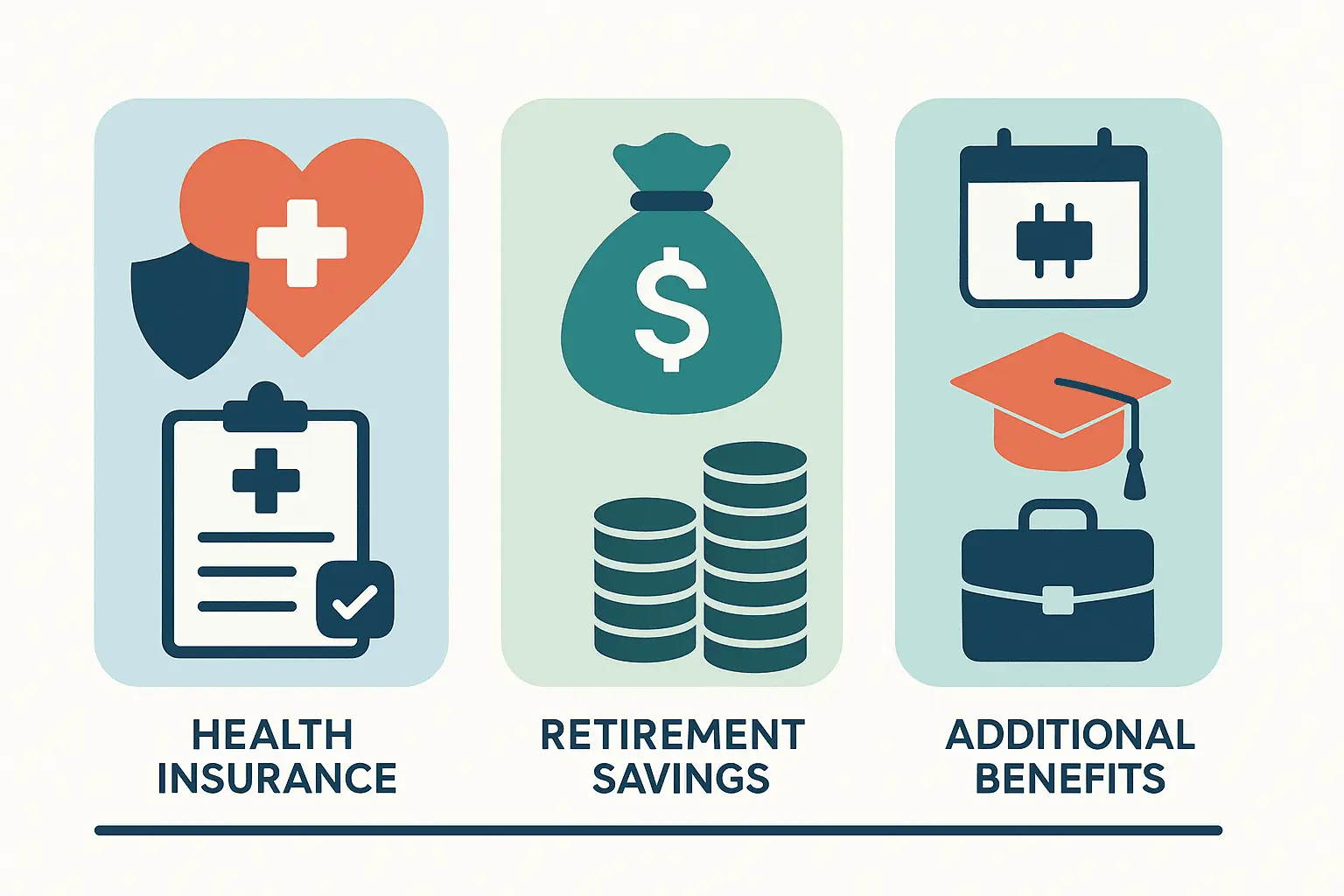
Don't overlook disability insurance. If you can't practice, you need income protection. Group policies through employers are usually better deals than individual coverage, and they're often cheaper too.
Continuing education allowances range from $5K-$15K annually. This might seem small, but when you factor in conference registration ($1,500+), flights, hotels, and meals for major medical meetings, these allowances provide real value.
Paid time off varies wildly between employers. Entry-level docs might get 3-4 weeks, while experienced physicians can negotiate 6-8 weeks. In NYC's high-stress environment, that extra vacation time is worth its weight in gold.
Some employers offer unique perks like sabbatical programs, tuition reimbursement, or professional development funds. These benefits can accelerate your career in ways that pure salary increases can't.
Partnership can be great for long-term wealth, but do your homework. I've seen docs buy into practices right before they imploded. The due diligence process should include reviewing 3-5 years of financial statements, understanding the payer mix, and analyzing overhead trends.
Buy-in requirements vary wildly - anywhere from $100K to $500K+ depending on the practice size and specialty. Make sure you understand exactly what you're buying. Are you purchasing equipment, real estate, patient goodwill, or just a share of future profits?
Partnership Red Flags to Watch For:
Profit-sharing can significantly boost your income, but it can also disappear if the practice struggles. Don't count on partnership income for your basic living expenses. I know partners who've seen their distributions cut in half during tough years.

The timeline to partnership is crucial. Some practices string you along for 7+ years with vague promises. Get specific timelines and performance metrics in writing. If they can't commit to a timeline, that's a red flag.
Alternative partnership structures are becoming more common. Income partnerships give you profit sharing without equity ownership, reducing buy-in costs while still increasing earning potential. These can be stepping stones to full equity partnership.
Geographic location affects partnership value significantly. Manhattan practices typically require higher buy-ins but offer greater profit potential. Outer borough practices might have lower entry costs but more limited growth prospects.
Medicine in NYC is intense, and you need quality downtime to stay sane. Whether that's golf, good restaurants, or just having a decent apartment where you can decompress - invest in your mental health. You didn't work this hard just to be miserable making good money.
Many successful NYC physicians find that making the transition to NYC requires building a life outside medicine to maintain perspective and avoid burnout.
The city offers amazing opportunities outside medicine too. World-class restaurants, Broadway shows, art museums, professional sports - take advantage when you can. But honestly, after working 60-hour weeks, sometimes you just want to order takeout and watch Netflix.
Quality recreational activities become essential for maintaining sanity. You've developed skills like precision, strategic thinking, and performing under pressure - these translate well to pursuits that require similar mental discipline.
For physicians who've achieved financial success in NYC's competitive market, exclusive experiences can provide the perfect counterbalance to hospital stress. The Outpost Club offers exactly this type of opportunity - connecting high-achieving professionals who understand the value of excellence.
With 70+ annual events and access to architecturally significant golf courses nationwide, The Outpost Club provides an antidote to NYC's intensity. After a challenging week in the OR or a demanding call schedule, you can enjoy peaceful rounds at partner clubs or weekend getaways to legendary courses like Sand Hills or Bandon Dunes.
The Club's membership appreciates the precision and dedication required for medical excellence, creating natural connections with professionals who share similar values and work ethics. It's an investment in experiences that money typically can't buy - access to exclusive courses and genuine camaraderie with successful professionals.
Look, practicing medicine in NYC is complicated financially. The money can be great, but this city has a way of eating through even high salaries faster than you'd expect. The key is going in with realistic expectations and a solid understanding of what you're actually getting into.
Your earning potential here can be substantial, but maximizing your financial success requires understanding the market, negotiating smart, and making informed decisions about where you work and how you structure your career. Don't just chase the biggest salary number - think about total compensation, work-life balance, and long-term career goals.
The post-pandemic healthcare landscape has created new opportunities and challenges. Salary increases, telemedicine integration, and changing practice patterns can work in your favor if you're strategic about positioning yourself in the market.
Most importantly, remember that financial success should support your overall life satisfaction, not consume it. The demanding nature of practicing medicine in NYC makes it essential to invest in experiences and relationships that provide balance beyond your professional achievements. You worked too hard to get here just to be miserable with a big bank account.

Household supplies can be changed or decreaased at Outpost Club’s discretion, or based on supply availability. Outpost is not responsible for temporary losses of utility service. Outpost Club is not responsible for any damages due to absence of any supplies or utilities


If you have a sales related question please call
680-688-7678

 Hot Deals