HVAC Salary NYC: What You'll Actually Earn in the Big Apple (And How to Maximize It)
Jan 3, 2026
Jan 3, 2026
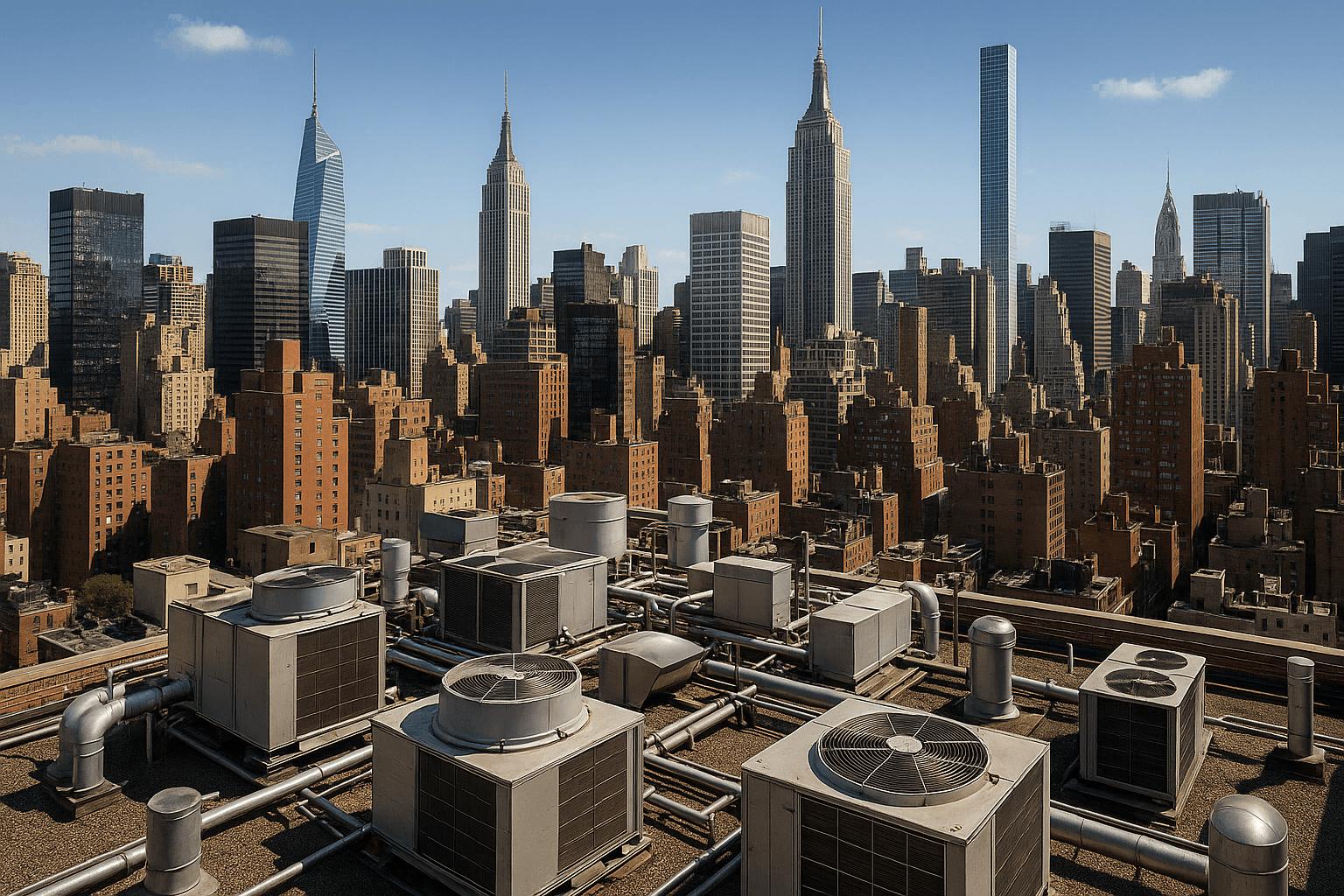
Look, I've been working HVAC in NYC for over a decade, and let me tell you – this isn't your typical market. The money's better, sure, but everything here moves faster and costs more. You're not just competing with national averages here – you're working in a place where a single emergency call on a brutal July afternoon can net you more than some techs make in a week anywhere else.
According to the Bureau of Labor Statistics, HVAC technicians make an average of $59,810 per year, or $28.75 per hour, though NYC professionals consistently earn above this national average. When people ask me how much HVAC techs actually make in the Big Apple, I tell them to forget those national numbers. We're playing a different game entirely.
The cost of living drives everything up, but so does the complexity of what we do. Manhattan's commercial buildings aren't your suburban split-systems. When you're maintaining HVAC in a 50-story office tower, the stakes (and the pay) reflect that responsibility. One screw-up and you've got hundreds of people sweating in suits while their productivity tanks.
The NYC HVAC market runs on urgency and expertise. Property managers here don't have time for trial and error – they need techs who can diagnose problems fast and fix them right the first time. This premium on competence translates directly into better paychecks.
Here's the thing though – understanding what you'll actually make means factoring in rent that'll make your eyes water. For those considering the financial reality of living in NYC while pursuing an HVAC career, our comprehensive guide on the real cost of living in NYC breaks down the hidden expenses that could eat into your earnings.
The jump from newbie to experienced pro in NYC shows clear financial rewards for sticking with it and getting good at what you do. We're talking about substantial increases at key milestones that make the early grind worth it.
|
Experience Level |
NYC Salary Range |
National Average |
What You're Actually Doing |
|
New Guy (0-2 years) |
$45,000-$55,000 |
$39,130 |
Basic stuff, mostly watching and learning |
|
Getting There (3-7 years) |
$65,000-$85,000 |
$59,810 |
Real repairs, emergency calls |
|
The Expert (8+ years) |
$90,000-$120,000+ |
$91,020 |
Complex problems, system design |
|
Running the Show |
$150,000-$300,000+ |
Varies |
Managing people, owning the business |
Fresh out of trade school or finishing up your apprenticeship, you're looking at $45-55k annually. That might sound decent until you factor in NYC rent – then it feels like you're barely scraping by. But here's what most people don't tell you: this is your foundation year. The real money comes when you prove yourself and can work independently.
Your first year is all about shadowing senior techs, learning the quirks of NYC buildings (and trust me, every building here has quirks), and figuring out how different systems interact in these crazy tight urban spaces. Don't get discouraged by the initial pay – think of it as getting paid to learn a trade that can easily hit six figures.
Real Talk from the Field: Marcus started as an apprentice with a Manhattan company at $48k. Within 18 months, by getting his EPA cert and volunteering for weekend emergency calls, he bumped his salary to $62k while building solid relationships with property managers across Midtown. The guy played it smart.
Once you've got 5-10 years under your belt, everything changes. You're looking at $65-85k base, but here's where it gets interesting – experienced techs who make themselves available for emergency calls can push their total compensation well into six-figure territory.
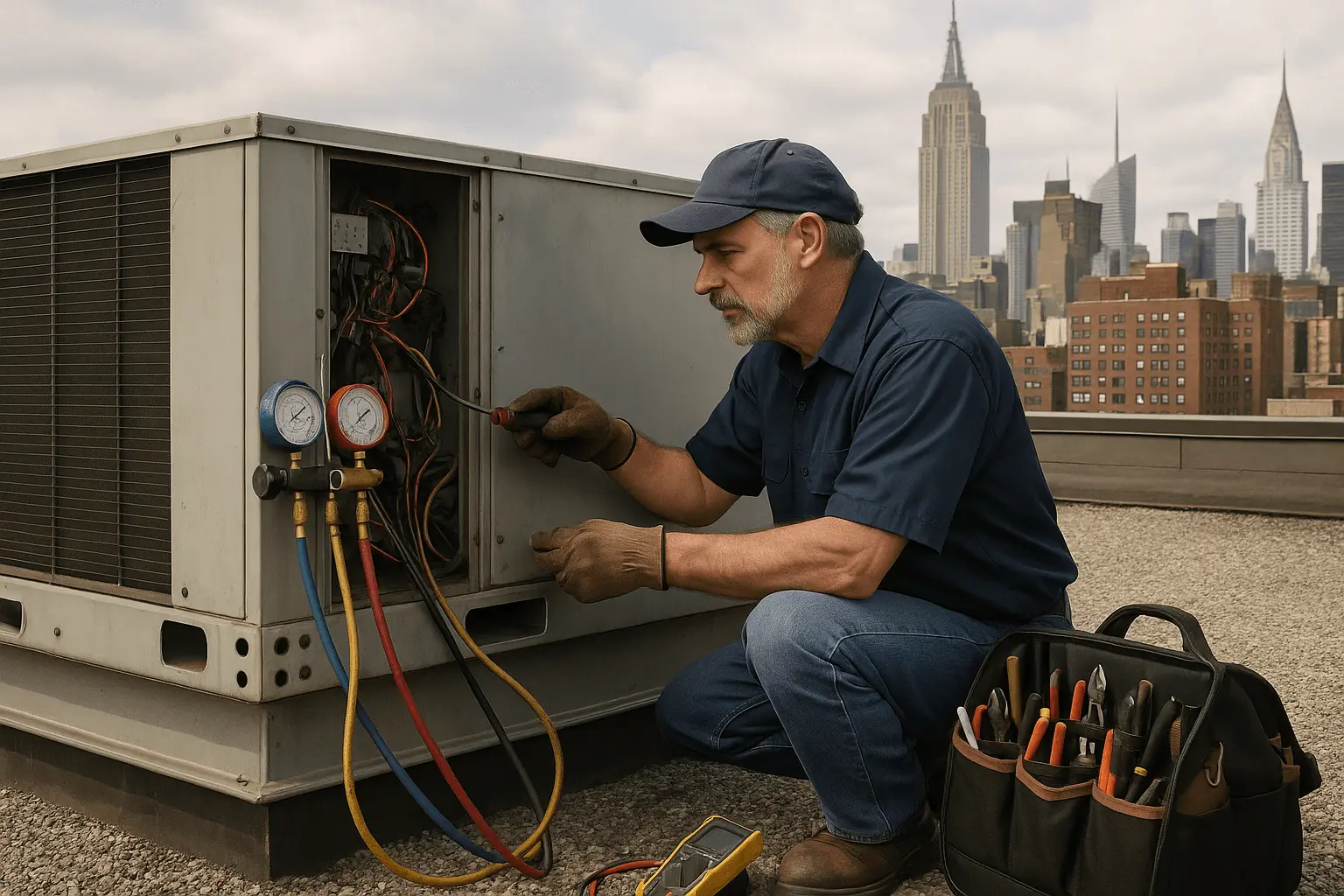
I've seen techs at this level who've built relationships with property managers across multiple buildings. They become the go-to person for specific types of problems, which means steady work and premium rates. Your phone starts ringing directly instead of going through dispatch, and that's when you know you've made it.
At this stage, you're not just fixing stuff – you're solving problems that stump younger techs. Property managers trust you with their expensive equipment because they know you won't make things worse. That trust translates into consistent, high-paying work.
Many mid-career HVAC professionals find that understanding average salary expectations in NYC helps them negotiate better compensation and plan their next career moves.
Senior techs specializing in commercial systems, refrigeration, or emerging green technologies can command $90-120k annually. These are the guys who can walk into a mechanical room and diagnose complex problems that leave everyone else scratching their heads.
Getting to this level requires picking a specialty and getting really good at it. Maybe you focus on building automation systems, become the local expert on specific manufacturer equipment, or develop expertise in energy-efficient retrofits. Each specialty opens doors to higher-paying opportunities.
The path isn't just about technical skills either. Senior techs understand the business side – they know how to communicate with building owners, explain complex problems in simple terms, and provide solutions that make financial sense. That business acumen is what separates the $90k guys from the $120k+ guys.
Geography within NYC significantly impacts what you'll make. Manhattan commands premium rates while outer boroughs offer different advantages in terms of work-life balance and what you actually net after considering commute costs and living expenses.
Manhattan isn't just another borough – it's where the serious money lives. HVAC techs working in Manhattan typically earn 15-25% more than their counterparts elsewhere. Why? Density and urgency.
When a cooling system fails in a 40-story office building in Midtown, every minute of downtime costs thousands. Property managers pay premium rates for techs who can respond quickly and fix problems right the first time. The work is more demanding, but the compensation reflects that reality.
Recent data shows that "assistant mechanical engineers in NYC civil service start at $66,330" according to NYC civil service listings, highlighting the premium the city places on technical expertise in building systems. Private sector HVAC work in Manhattan often beats these government benchmarks because the demand is so competitive.
I remember my first emergency call in Manhattan – $300 for two hours on a Sunday because some lawyer's AC died during a heat wave. That's when it clicked for me that location really matters in this business.
Brooklyn, Queens, and the Bronx might offer slightly lower base salaries, but don't overlook the math. Shorter commutes mean more time at home and less money spent on transportation. Many techs find they actually net more money working in outer boroughs once they factor in all costs.
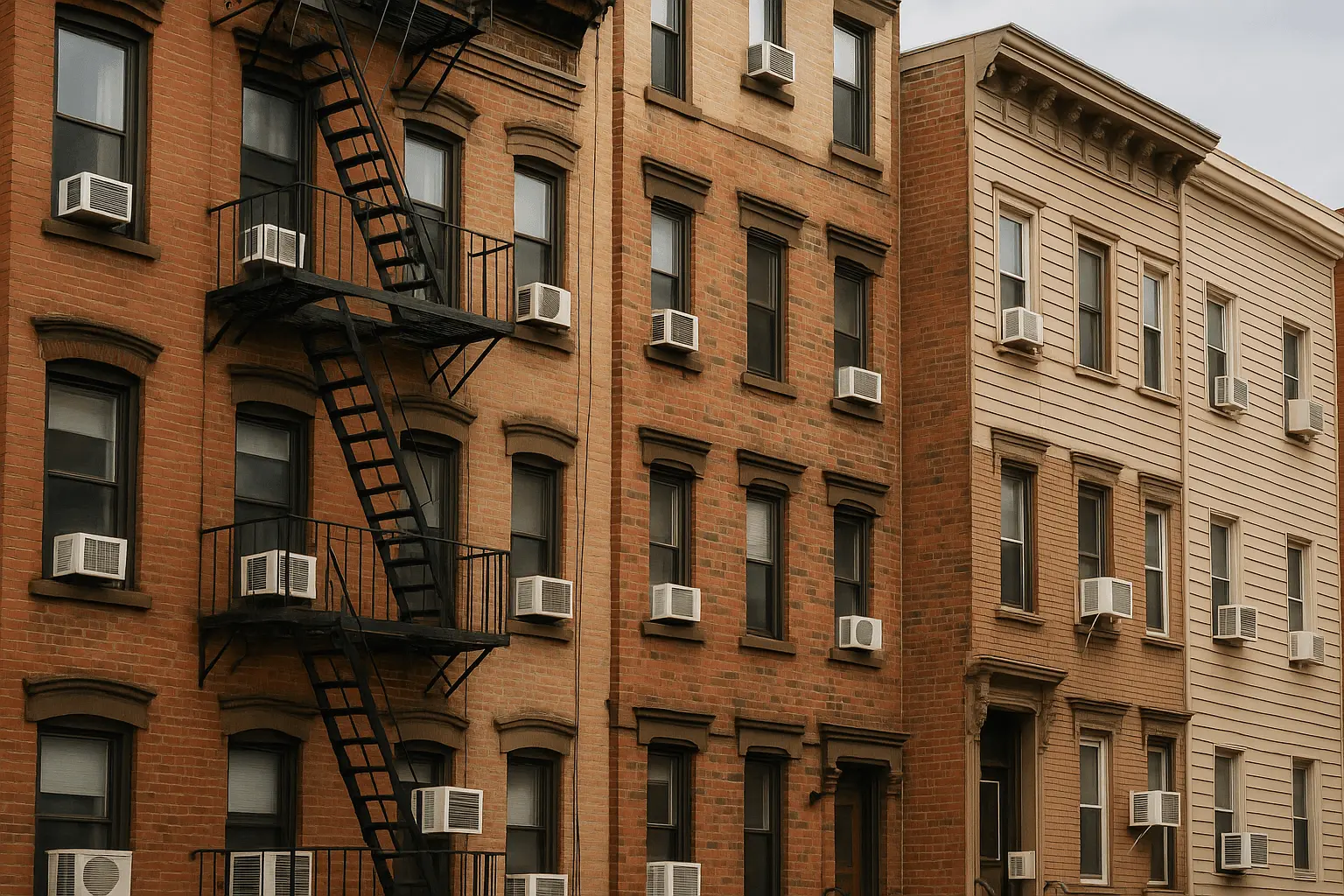
The work tends to be more varied too – you might service a small apartment building in the morning and a manufacturing facility in the afternoon. This variety keeps the job interesting and helps you develop a broader skill set.
Plus, building relationships is easier when you're not competing with a hundred other techs for the same property manager's attention. I know guys in Queens who've built such solid relationships that they're basically on retainer for multiple buildings.
For HVAC professionals considering where to live while working in NYC, our insights on Brooklyn's coolest neighborhoods provide valuable perspective on balancing work location with living costs and quality of life.
Union membership changes everything. Local 94 and Local 638 represent most HVAC workers in NYC, and union techs consistently earn higher wages with better benefits. We're talking about the difference between basic health insurance and comprehensive coverage that includes dental, vision, and retirement contributions.
Research from Stacker shows that "New York is a state where trade and construction industries are dominated by unions, and these unions are a major reason why salaries are so high", with HVAC technicians averaging $58,300 annually statewide.
My buddy Mike went union three years ago and hasn't looked back. Sure, there are more rules and you can't just freelance whenever you want, but the steady work and benefits package make it worth it for him.
Non-union positions offer more flexibility and sometimes faster advancement, but you'll need to negotiate everything yourself. Some independent contractors prefer this route because they can build direct relationships with clients and set their own rates.
Professional certifications directly impact what you'll earn in NYC's HVAC market. EPA certification is your entry ticket while specialized manufacturer and technology certifications can add thousands to your annual take-home.
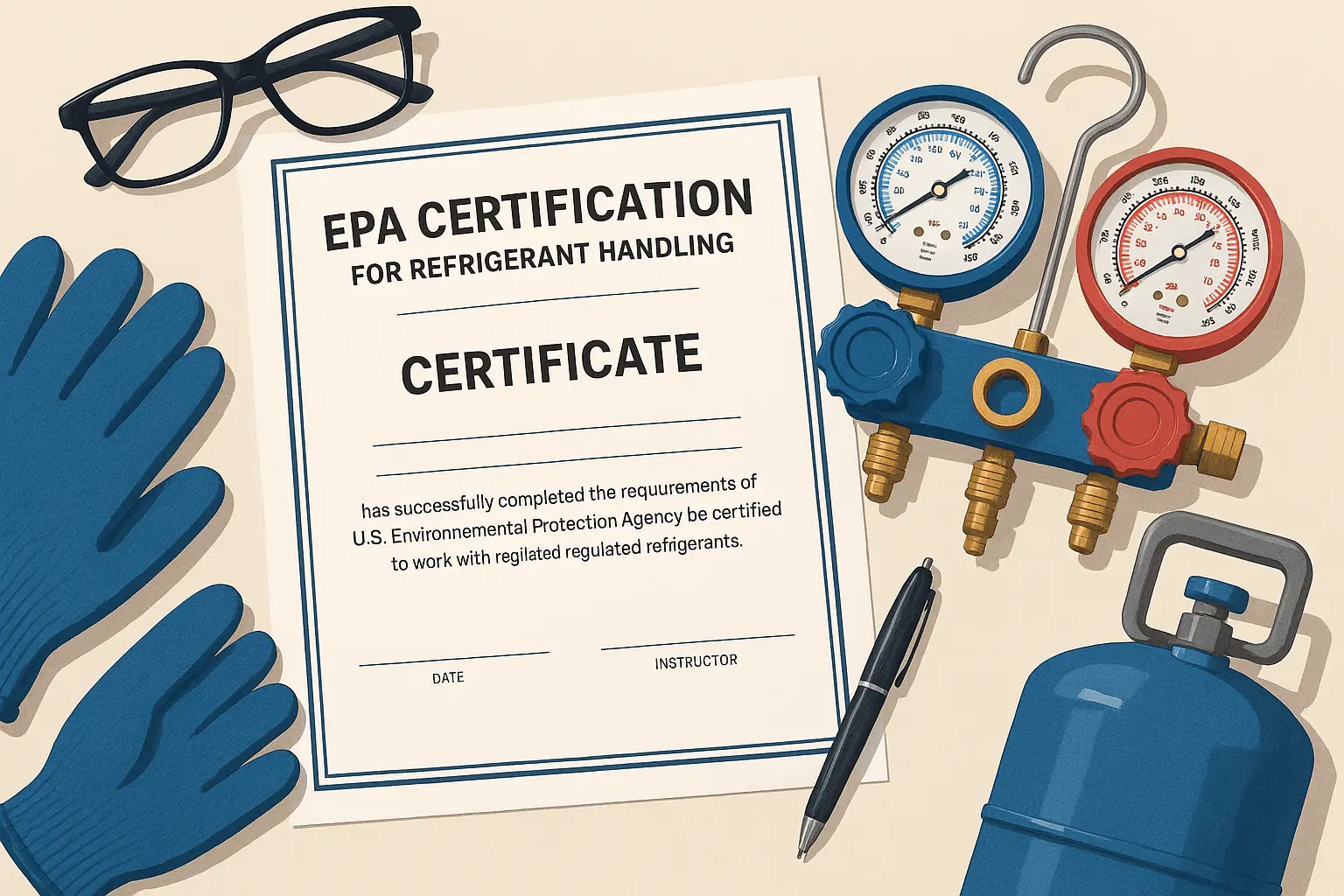
EPA Section 608 certification isn't optional – it's required for handling refrigerants. Beyond the legal requirement, this cert immediately bumps your starting salary by $3-5k annually. Employers know certified techs can handle a wider range of tasks without someone looking over their shoulder.
Getting your EPA cert is straightforward, but don't aim for the minimum. Universal certification (covering all types of equipment) makes you more valuable than someone with limited certifications. It's the difference between being useful and being indispensable.
What You Actually Need:
NATE certification separates serious professionals from casual workers. This isn't just another piece of paper – it's proof that you understand HVAC systems at a deeper level. Employers recognize this with salary bumps of 10-15%.
The testing is tough, covering both core HVAC knowledge and specialty areas. But here's the payoff: NATE-certified techs get called for the complex jobs that pay premium rates. When a property manager has a mysterious system problem, they want someone with proven expertise.
I took my NATE exam after five years in the field, thinking I knew everything. Humbling experience, but passing it opened doors to jobs I wouldn't have gotten otherwise. The investment in study time paid off within six months.
Manufacturer certifications in Carrier, Trane, Lennox, or other major brands can add $5-15k to your annual salary. These certifications make you the go-to person when buildings have specific equipment that needs expert attention.
VRF systems and building automation certifications are particularly valuable in NYC's commercial market. As buildings become more sophisticated, the demand for techs who understand these complex systems keeps growing.
Certification Type Salary Boost Time Investment NYC Demand EPA Section 608 $3,000-$5,000 1-2 weeks Required NATE Core $6,000-$9,000 2-3 months High Manufacturer Specific $5,000-$15,000 1-3 months Very High VRF Systems $8,000-$12,000 2-4 months Growing Fast Building Automation $10,000-$18,000 3-6 months Premium Pay
Alright, let's talk about the elephant in the room – should you work for someone else or go it alone? I've done both, and honestly, it depends on what kind of person you are.
Working for a company means you get your check every two weeks, no matter what. Health insurance, vacation days, someone else worries about finding customers. Sounds nice, right? It is, until you realize you're capped at whatever they think you're worth.
I worked for a big outfit in Queens for five years. Good benefits, decent pay around $72k, but man – watching them charge customers $150/hour while paying me $35 was painful. The trade-off? I went home at 5 PM and didn't think about work until the next morning.

Full-time employment offers more than a steady paycheck though. Health insurance, retirement contributions, paid time off, and tool allowances add $15-25k in real value to your base salary. When you're comparing job offers, factor in these benefits – they're actual money.
Been freelancing for three years now, and I'll be straight with you – it's not for everyone. Some months I clear $12k, other months I'm scrambling to pay rent. But when that emergency call comes in on Christmas Eve and you're charging $200/hour? That's when it feels worth it.
The math gets tricky though. Sure, I charge $55-65/hour now, but I'm paying for my own insurance (brutal in NYC), buying all my tools, and spending half my Sunday doing paperwork. Plus, good luck getting a mortgage when your income bounces around like a ping-pong ball.
Contractor Reality Check: Jennifer left her job at a large HVAC company earning $75k annually to start freelancing. By specializing in luxury residential buildings in the Upper East Side and charging $55/hour, she now earns $95k annually while working fewer hours, though she invested $8k in insurance and equipment her first year.
Here's where the real money is, whether you're employed or freelance. Summer in NYC is basically Christmas for HVAC guys. When it hits 95 degrees and some office building's AC craps out, nobody's haggling over price.
I remember one July weekend – three emergency calls, made $1,800 in two days. Course, I also remember February when my phone didn't ring for a week straight. It evens out, but those feast-or-famine cycles will mess with your head if you're not ready for them.
The key is building a reputation for reliability and quick problem-solving. Property managers remember techs who show up fast and fix problems correctly the first time. Those relationships lead to more emergency calls and higher rates.
You know what separates the $50k guys from the $100k guys? Specialization. Don't be the jack-of-all-trades forever. Pick something and get really damn good at it.
Commercial work pays better, but it's also more stressful. When a 40-story building's chiller goes down, you've got 500 angry office workers and a property manager breathing down your neck. But that stress comes with a premium – usually 20-30% more than residential.
Green tech is where the smart money's going. All these new energy efficiency laws mean building owners are throwing money at retrofits. Problem is, most older guys don't want to learn new systems. That's your opportunity right there.
According to industry data, "very experienced HVAC technicians can make over $100,000, and technicians that start their own HVAC companies can make WAY beyond that", highlighting the earning potential for those who develop specialized expertise.
Became a crew leader two years ago, and honestly? Some days I miss just fixing stuff. Now I'm dealing with scheduling, training the new guys who think they know everything, and explaining to customers why their 30-year-old boiler finally gave up.
But the money's better – jumped from $78k to $95k when I took the promotion. Plus, my back doesn't hurt as much since I'm not crawling through basements all day. Trade-offs, you know?
Supervisory roles offer a middle ground between hands-on technical work and full management. HVAC supervisors and foremen earn $80-110k annually while still staying connected to the technical side of the business.
Management Reality: David started as a union technician earning $68k. After becoming a crew leader, his salary jumped to $85k. When he was promoted to project manager overseeing commercial installations, his compensation package reached $115k including bonuses and benefits.
My cousin Tony started his own shop five years ago. Now he's pulling in $200k+ and drives a Tesla. What he doesn't tell you is that first year when he almost went bankrupt, or how he works 70-hour weeks during peak season.
If you're thinking about it, start small. Maybe do side jobs on weekends, build up some cash and customers. Don't just quit your day job and hope for the best – I've seen too many guys crash and burn that way.
Running your own HVAC business represents the highest earning potential – successful owners in NYC earn $150-300k+ annually. Business ownership requires skills beyond technical expertise: marketing, accounting, employee management, and customer service all become your responsibility.

Here's your roadmap to maximizing earnings as an HVAC tech in NYC:
Seriously. I don't care if you think you know everything coming out of trade school. Every building in NYC is different, every system has its quirks. Your job is to absorb everything and not screw up anything expensive.
Get your EPA cert immediately – it's not optional. And yeah, the union thing is worth looking into. Local 94 guys make good money, but the waiting list is long and they don't take just anyone.
Foundation Building:
This is when you figure out what you're good at and what pays well. Maybe you're great with older buildings, maybe you've got a knack for commercial refrigeration. Whatever it is, lean into it.
Start saying yes to emergency calls, even if it means missing your nephew's birthday party. Those relationships you build with property managers are worth their weight in gold. Trust me on this one.
Skill Development Phase:
By now you should know your worth and not be afraid to ask for it. Whether that means negotiating with your boss, jumping to a better company, or going out on your own – don't get comfortable just because the money's decent.
Keep learning new stuff. The industry changes fast, and the guys who adapt are the ones who keep making bank while others get left behind.
Maximization Phase:
Geographic flexibility pays off – be willing to work in different boroughs based on demand and compensation. The extra travel time often pays for itself through higher rates.

For HVAC professionals planning their financial future in NYC, understanding hidden costs that impact your paycheck is essential for making informed career and compensation decisions.
Good news – they're not stopping building in this city anytime soon. Every new tower needs HVAC, every renovation needs upgrades. The work's not going anywhere.
What is changing is the complexity. These new buildings have systems that would make your head spin. Building automation, smart controls, integration with everything else. The guys who figure this stuff out first are going to clean up.
Industry training programs are responding to demand. "New construction is fueling the industry, so there's no better time to enter the HVACR field" according to BMCC's training program, which prepares students for NATE certification in under 12 months.

The trend toward mixed-use developments creates opportunities for techs comfortable with both residential and commercial systems. Buildings that combine retail, office, and residential spaces need versatile professionals who understand different system requirements.
Local Law 97 and similar efficiency mandates are creating a gold rush for techs skilled in building retrofits and energy management systems. These specialized roles pay $85-120k annually because the work requires both technical expertise and understanding of complex regulations.
Buildings that don't meet efficiency standards face significant penalties, making qualified retrofit specialists extremely valuable. This trend will continue as climate regulations become stricter and building owners seek to avoid fines.
Heat pumps, energy recovery systems, smart controls – this isn't your grandfather's HVAC anymore. The learning curve is steep, but so is the pay grade.
Look, I'm not gonna blow smoke up your ass and tell you this job is easy money. It's hot in summer, cold in winter, and you'll spend more time in basements than you ever wanted to. But if you're willing to work hard, keep learning, and play the game smart, you can make a damn good living in this city.
The guys making six figures aren't necessarily the best technicians – they're the ones who understand that this is a business, not just a trade. Build relationships, specialize in something valuable, and don't be afraid to bet on yourself when the time comes.
The HVAC industry in NYC offers genuine opportunities for financial success, but it rewards strategic thinking over just showing up with tools. The techs earning six figures aren't necessarily the most technically gifted – they're the ones who understand the business side of the industry and position themselves for premium opportunities.
Your earning potential depends on how well you navigate the unique aspects of NYC's market: the union landscape, the geographic variations, the specialization opportunities, and the relationship-building that drives long-term success. The city's complexity creates challenges, but it also creates opportunities for professionals who approach their careers strategically.
NYC's expensive, sure, but it also pays better than anywhere else. Just make sure you're positioning yourself to get your share of that money instead of watching someone else get rich off your work.
Whether you're starting out or looking to maximize your current position, remember that every successful HVAC professional in NYC started with the same basic tools and training. What separates the top earners is their willingness to invest in certifications, build relationships, and position themselves where the premium work lives.
Many successful HVAC professionals who've maximized their NYC earnings find that understanding the real costs of making it work in New York was crucial to their career planning and financial success.

Household supplies can be changed or decreaased at Outpost Club’s discretion, or based on supply availability. Outpost is not responsible for temporary losses of utility service. Outpost Club is not responsible for any damages due to absence of any supplies or utilities


If you have a sales related question please call
680-688-7678

 Hot Deals