Nanny Salary NYC: What You'll Actually Earn in the Big Apple (And How to Get Top Dollar)
Jan 10, 2026

Jan 10, 2026
Look, I'm not going to sugarcoat this - you're about to dive into one of the craziest childcare markets in the country. These families aren't looking for someone to just watch their kids while they run errands. They want someone who can handle a crying toddler on the subway, navigate playground politics in Central Park, and somehow keep little Emma entertained during a Manhattan blackout.
The whole game changed after COVID, and honestly? It's been pretty good for us nannies. Families finally realized what we've been saying all along - quality childcare is worth paying for. According to the Bi-Annual Nanny Census Report, the average hourly rate reported by NYC nannies in 2024 was $34.32, which puts us at the top of the pay scale nationwide.
Here's what's wild: families are now paying extra for things that used to be "nice to haves." Know how to help with remote learning? That's worth more money. Comfortable with health protocols? Ka-ching. Can handle last-minute schedule changes because dad's flight got delayed? You're golden.
The families who can afford Manhattan rents aren't messing around when it comes to childcare. They'll pay top dollar, but they expect you to be worth every penny. That means showing up on time, being flexible, and treating their kids like they're the most important people in the world (because to them, they are).
I know a nanny who moved here from Ohio thinking she'd start at $15/hour like back home. Reality check: that won't even cover your MetroCard and lunch in this city. But here's the flip side - if you're good at this job and you know your worth, you can make serious money.
For professionals considering the move to NYC, understanding average salary expectations across industries provides valuable context for positioning yourself in the childcare market.

Let's talk real numbers. If you're just starting out with basic experience, expect around $20/hour - and don't let anyone tell you that's too much. I've seen entry-level positions go as low as $18, but honestly, those families are usually more trouble than they're worth.
Once you've got your feet under you and some solid references, you're looking at $35-50+ per hour. The nannies making $60+ an hour? They're usually specialists - newborn experts, special needs trained, or they speak three languages fluently.
The trend toward higher nanny compensation is gaining momentum nationwide. "Nanny rates have risen post-COVID, jumping 11% from 2021 to 2022" Care.com reports, with many nannies in major metropolitan areas commanding anywhere from $100,000 to $200,000 per year for specialized positions.
I know it sounds crazy, but when you break it down - 50 hours a week at $40/hour - that's over $100K right there. And the nannies who really know their stuff and have specialized skills? They're hitting $120,000+ easy.
The pandemic basically created a whole new tier of nanny jobs. Families started paying what I call the "COVID premium" - extra money for being flexible, health-conscious, and tech-savvy. Those premiums? They stuck around. Turns out, once families get used to paying for quality, they don't want to go back.
This is where things get interesting, and honestly, a little confusing if you're new to the city. Some families want to pay you hourly, others prefer annual salaries, and then there's the whole live-in versus live-out debate. Each setup has its pros and cons, and figuring out which one works for you can make or break your experience here.
Here's my take after working in this city for years: there's no "right" answer, just what works for your situation. But understanding the options helps you negotiate better and avoid getting stuck in arrangements that don't serve you.
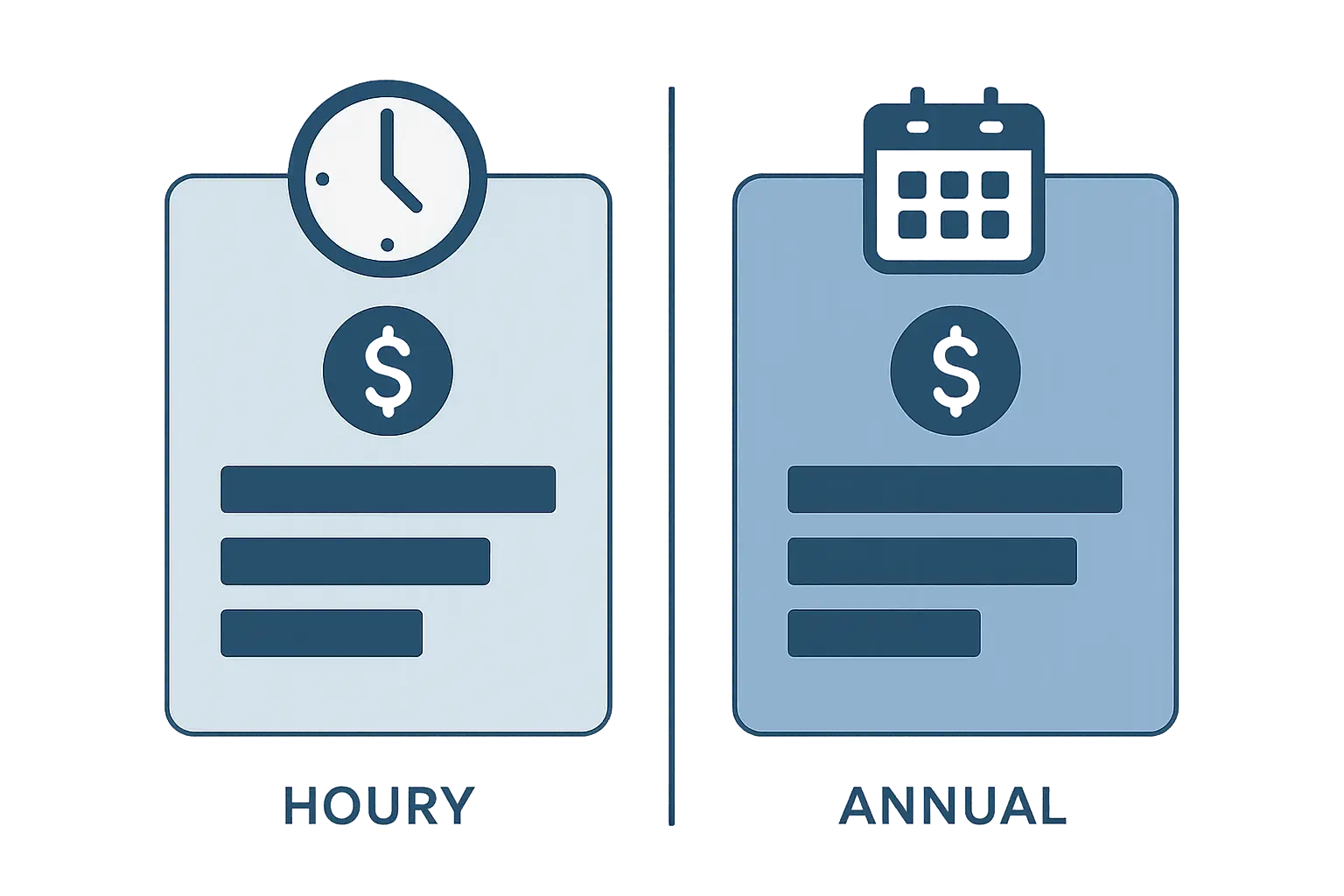
Hourly work gives you flexibility, but it can also give you anxiety. One week you're making bank with overtime, the next week the family goes to the Hamptons and you're scrambling to cover rent. According to A Nanny Match, full-time nannies typically start at $35.00 gross (pre-tax) per hour for experienced caregivers, while part-time nannies often begin at $40.00+ gross (pre-tax) per hour due to the flexibility and shorter hours these roles require.
The math on hourly can work out great if you're strategic. Let's say you're making $35/hour for 50 hours a week (pretty standard for full-time NYC families). That's $1,750 a week, or about $91,000 a year before taxes. Add in some overtime here and there, and you're doing pretty well.
Annual salaries are where it's at if you want to sleep better at night. You know exactly what's coming in each month, which makes budgeting in this expensive city way easier. Plus, annual positions usually come with benefits - health insurance, paid time off, and sometimes even transit allowances.
The downside? Some families think "annual salary" means "available 24/7." I learned this the hard way with my second family. Make sure you're crystal clear about hours and boundaries upfront, or you'll end up working way more than you're getting paid for.
|
Payment Model |
The Real Deal |
Watch Out For |
Perfect If You |
|
Hourly |
Great for overtime pay, flexibility to take extra gigs |
Income can be unpredictable, benefits usually limited |
Like variety, are building your client base, want flexibility |
|
Annual |
Steady paycheck, usually includes benefits, easier budgeting |
Some families think they own you, potential for scope creep |
Want stability, are planning to stay long-term, hate financial uncertainty |
Okay, this one's personal. Live-in positions typically pay $18-25/hour, but you're getting free room and board in one of the most expensive cities in the world. Do the math - if you're saving $3,000+ a month on rent, that $20/hour is really more like $30/hour.
I tried live-in once. The family was lovely, the kids were great, but I felt like I was always "on." Kid has a nightmare at 2 AM? Guess who they're calling. Family decides to have a dinner party? Suddenly you're expected to help out because "you're part of the family."
According to Smart Sitting, live-in nannies earn overtime (1.5x) for any hours worked over 44 hours/week, which differs from live-out nannies, who legally earn overtime for any hours worked over 40 hours/week. In 2023, the average hourly nanny rate is $30-35, depending on the requirements of the role and the candidate's background and experience.
Live-out positions pay more per hour ($25-35+) because families know you've got rent to pay. The freedom is incredible - you can come home, turn off your phone, and actually have a life. But finding affordable housing in NYC? That's a whole other challenge.
My friend Sarah did live-in for two years and saved $50,000. She used that money as a down payment on a co-op in Queens, and now she's building equity while working live-out positions. Smart move.
For nannies considering live-out arrangements, exploring affordable housing options can help maximize your take-home compensation while maintaining reasonable living costs.
Starting salaries can feel discouraging, especially when you're coming from somewhere with a lower cost of living. But here's the thing about NYC - if you're good at this job, you move up fast.
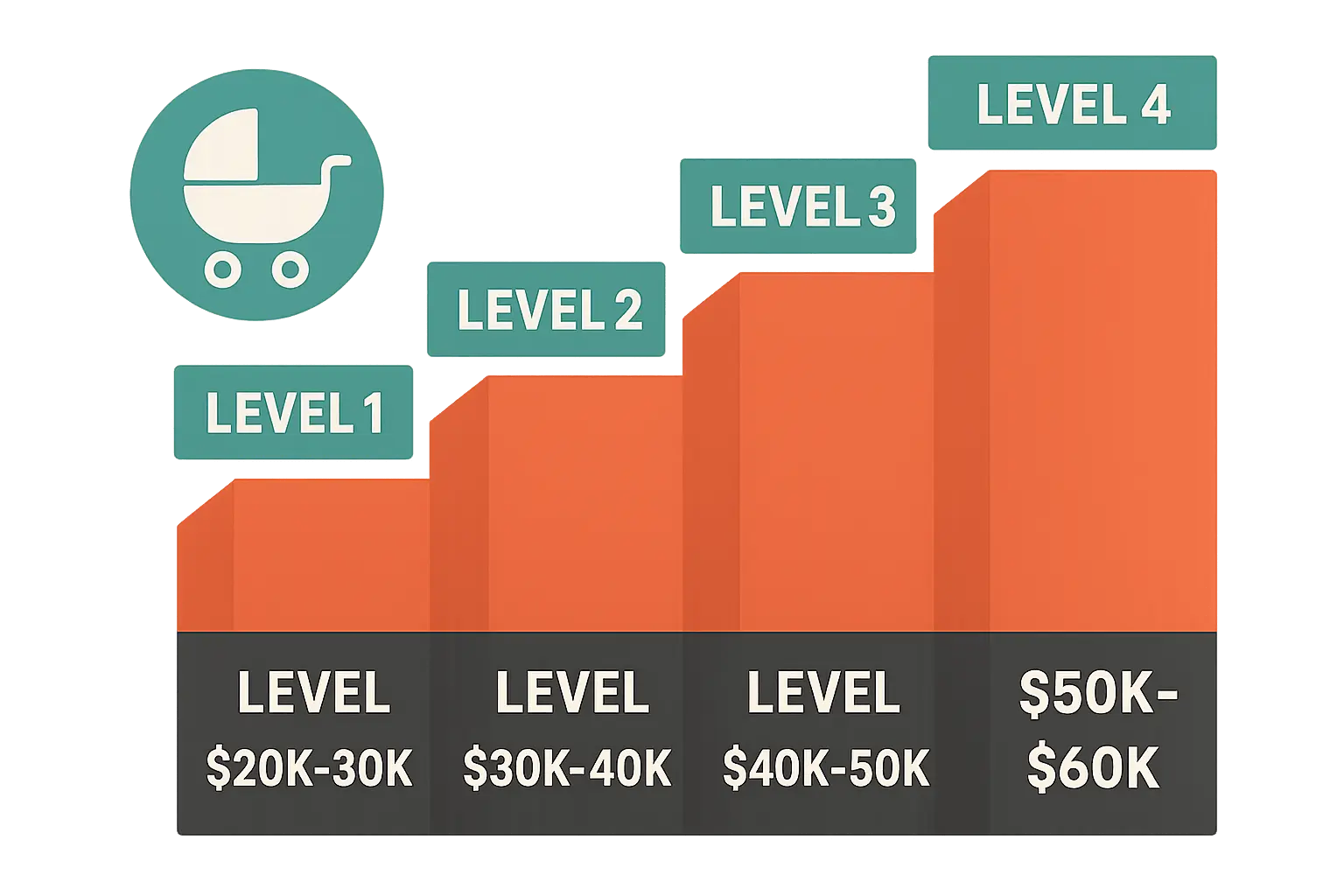
Entry-level nannies with basic childcare experience start around $18-22/hour. I know it seems low, but remember - this is your foot in the door in the most competitive market in the country. Stick with it, build relationships, get great references, and you'll be making more within a year.
Mid-level nannies (2-5 years experience) are where the money starts getting interesting. You're looking at $25-35/hour, and families start competing for you instead of the other way around. This is when you can be picky about which families you work with.
Senior nannies with 5+ years experience? You're basically nanny royalty. $35-50+ per hour is standard, and the really specialized ones can write their own ticket. I know a nanny who's been with the same Upper East Side family for eight years - she makes $55/hour plus full benefits, and they pay for her professional development courses.
This is where the real money is. Newborn specialists can charge $25-40/hour for daytime care, and overnight newborn care? $200-350 per night. One of my friends specializes in newborns and makes more in three nights than I make in a week sometimes.
Special needs care is another goldmine if you have the training and patience for it. We're talking $30-50+ per hour for working with kids on the autism spectrum, developmental delays, or medical needs. It's challenging work, but the families are usually incredibly grateful and loyal.
According to A Nanny Match, nannies with higher education earn an average of $5.19 more per hour, representing a 20.82% increase over standard rates.
And here's something interesting - being multilingual can add $5-10 per hour to your rate. I wish I'd paid more attention in Spanish class! Families love the idea of their kids learning a second language naturally.
Here's what nobody tells you when you're starting out: your hourly rate is just the beginning. The families who pay well don't just pay well - they take care of you in other ways too. And honestly? Sometimes those "extras" are worth more than a higher hourly rate.
I learned this lesson with my current family. They offered me $2 less per hour than another family, but they also offered full health insurance, four weeks paid vacation, and a monthly MetroCard. When I did the math, they were actually paying me about $8,000 more per year in total compensation.

Health insurance is huge. I mean, have you seen what individual health insurance costs in New York? We're talking $300-600+ per month for decent coverage. When a family offers to cover your health insurance, that's worth $3,600-7,200 per year right there.
Paid time off varies wildly between families. Some give you the bare minimum - maybe a week of vacation and a few sick days. Others treat you like the professional you are. My current family gives me three weeks vacation, two personal days, and eight sick days. Plus all major holidays paid. That's worth about $4,500 per year at my hourly rate.
Transportation allowances might seem small, but they add up. A monthly MetroCard is $132. Parking reimbursement in Manhattan can be $25+ per day. One family I know pays their nanny's gas and tolls when she has to drive the kids to activities. It's not glamorous, but it's money in your pocket.
Then there are the little perks that make your life easier. Meals during work hours, access to the family's gym membership, or even just being able to do your laundry at their place (have you seen what laundromats charge in this city?).
My friend Maria works for a family in Tribeca who covers her phone bill because she uses it for work-related communication. It's only $80/month, but over a year, that's almost $1,000 she doesn't have to spend.
Holiday bonuses are pretty standard in good positions, usually one to two weeks' salary in December. But here's the thing - it shouldn't be a surprise. Good families let you know upfront what to expect for bonuses so you can plan accordingly.
Performance bonuses are where things get interesting. I've gotten everything from $2,000 year-end bonuses to surprise $500 bonuses for handling emergencies well. One family gave me a $1,000 bonus when their youngest finally potty trained because they said I deserved combat pay.
Annual raises should be automatic, not something you have to beg for. Professional nannies typically get 3-8% increases each year. Cost of living goes up, your experience grows, your value increases - your pay should reflect that. If you're not getting regular raises, it might be time to find a family that values you properly.
Location, location, location - it's not just important for real estate. Where you work in NYC can make a huge difference in your paycheck, and I'm not just talking about Manhattan versus the outer boroughs. Even within Manhattan, there are neighborhoods that pay significantly more than others.
I've worked in four different neighborhoods over the years, and the differences are real. But here's what's interesting - sometimes the "lower paying" neighborhoods actually offer better total packages when you factor in commute time, family dynamics, and overall quality of life.
|
Borough/Neighborhood |
What You'll Really Make |
What to Expect |
The Reality Check |
|
Manhattan (UES/UWS) |
$35-50+/hour, $90K-$120K+ annually |
Premium pay, comprehensive benefits, high expectations |
Competitive but worth it if you can handle the pressure |
|
Manhattan (Tribeca/SoHo) |
$30-45/hour, $80K-$110K annually |
Tech-savvy families, flexible scheduling, modern benefits |
Younger families, often first-time parents |
|
Brooklyn (Park Slope/DUMBO) |
$25-35/hour, $70K-$95K annually |
Family-focused, reasonable expectations, good work-life balance |
Great for long-term positions |
|
Queens/Bronx |
$20-30/hour, $55K-$75K annually |
Entry-level friendly, growth opportunities, diverse communities |
Perfect for building experience and references |
The Upper East Side is like the Ivy League of nanny jobs. These families have serious money, and they're used to paying for the best. We're talking $40-50+ per hour for experienced nannies, full benefits, and bonuses that can add $10,000+ to your annual income.
But let me be real with you - these families have high expectations. They want you to be Mary Poppins, a child development expert, and a mind reader all rolled into one. The kids often have packed schedules, the parents travel frequently, and you need to be "on" all the time.
The Upper West Side is slightly more relaxed but still premium pay. Families here tend to be a bit more family-focused and less formal than the UES. I worked for a UWS family for three years, and while the pay was great ($42/hour), what I really loved was how they treated me like part of their extended family.
Tribeca and SoHo are where you'll find the tech entrepreneurs and creative professionals. These families often offer competitive salaries plus modern perks like flexible scheduling, technology stipends, and sometimes even equity in their companies (though I wouldn't count on that last one for retirement planning).
Financial District families can be interesting. The base salaries might not be the highest, but the bonuses can be incredible. I know a nanny whose Wall Street family gave her a $15,000 bonus one year when dad had a particularly good year. Of course, when the market's bad, those bonuses disappear.

Don't sleep on Brooklyn, especially Park Slope. It's become the family neighborhood for young professionals who want a more relaxed vibe than Manhattan but still have serious careers. Pay ranges from $25-35+ per hour, and the families tend to be more down-to-earth.
DUMBO and Williamsburg attract a lot of tech and creative types who prioritize work-life balance. These families often offer flexible arrangements that can work really well if you have other commitments or side hustles.
The commute factor is real though. If you're living in Manhattan and working in Brooklyn, factor in that travel time and cost. Sometimes a lower-paying Manhattan job ends up being better when you consider you can walk to work instead of spending an hour each way on the subway.
Queens and the Bronx are fantastic for newer nannies. The families are often more understanding about your learning curve, the expectations are more reasonable, and you can build solid experience and references. Plus, many of these families have connections to higher-paying positions in Manhattan.
I started in Queens making $22/hour with a lovely family who helped me get my first Manhattan referral. That referral led to my current position making $38/hour. Sometimes it's about playing the long game.
For nannies exploring Brooklyn opportunities, understanding the distinct character of neighborhoods such as Crown Heights can help you find families that align with your values and compensation expectations.
Okay, this is where a lot of nannies mess up. They either ask for too little because they're scared, or they price themselves out because they don't understand the market. Negotiating your salary isn't about being pushy - it's about being professional and knowing your worth.
The best negotiations I've had felt more like conversations than confrontations. The family wanted to know they were getting good value, and I wanted to make sure I was being compensated fairly. When both sides feel good about the arrangement, that's when you know you've done it right.

Do your homework before any interview. I keep a running list of what other nannies in different neighborhoods are making, what benefits they're getting, and what the going rate is for different types of positions. Knowledge is power in negotiations.
Here's my research checklist:
I also prepare specific examples of my value. Instead of saying "I'm great with kids," I say "I helped my last family's 4-year-old go from having daily meltdowns to using his words to express frustration in just three months." Concrete examples stick in people's minds way better than generic statements.
My Negotiation Prep Toolkit:
Timing is everything. I never bring up money in the first five minutes of an interview, but I also don't wait until they offer me the job. Usually, after we've talked about the kids and responsibilities for a bit, I'll say something like, "This sounds like a great fit. Can we talk about compensation so we're all on the same page?"
I learned this the hard way with my second family. We had such a great interview that when they offered me the job, I was so excited I just said yes without negotiating. Big mistake. I ended up underpaid for two years because it felt awkward to bring it up later.
Present yourself professionally. I bring a folder with my certifications, references, and a simple one-page summary of my experience. It shows I take this seriously, and families respond to that level of professionalism.
Stay flexible but know your limits. Maybe they can't meet your ideal salary, but they can offer better benefits or more paid time off. Sometimes creative solutions work better than just focusing on the hourly rate.
Breaking into NYC's nanny market can feel overwhelming, especially if you're coming from somewhere else. But here's the thing - families need good nannies more than you need any specific family. If you're prepared and professional, you'll find your place.
The key is not trying to land the perfect job right away. Focus on getting your foot in the door, building local references, and learning how the city works. Your first NYC job probably won't be your last, and that's okay.

Get your certifications before you start looking. CPR/First Aid is non-negotiable - I've never met a serious family that didn't require it. But here's what else makes you stand out:
Build your reference list strategically. You need at least three people who can speak to your childcare abilities, but make sure they're people who actually answer their phones. I've lost job opportunities because my references didn't respond quickly enough.
Create a simple resume that tells your story. Don't just list jobs - explain what you accomplished. "Cared for two children" becomes "Successfully managed bedtime routines and homework for 6 and 8-year-old siblings, improving their school performance and reducing evening stress for working parents."
My friend Jennifer spent three months getting ready before she started job hunting. She got certified, volunteered at a local daycare to build NYC references, and took a basic Spanish class. When she finally started interviewing, she landed a $28/hour position in her second week of looking.
Register with agencies, but don't rely on them completely. Good agencies can open doors to families you'd never find on your own, but they also take a cut of your first month's salary. It's worth it for the right position, but keep looking on your own too.
The nanny network in NYC is real and incredibly helpful. "NYC nannies built an underground care economy" Truthout reports, where experienced caregivers share job leads, provide mutual support, and create informal referral networks that help newcomers access premium positions.
We share job leads, warn each other about problem families, and provide support when things get tough. Join Facebook groups, attend meetups, and don't be shy about introducing yourself to other nannies at the playground.
Here's something most people don't know: some of the best nanny jobs never get posted anywhere. They get filled through referrals from other nannies, housekeepers, or family friends. Building relationships in the community is just as important as having a great resume.
Prepare for interviews like they're job interviews at Goldman Sachs. These families are hiring someone to care for the most important people in their lives. Dress professionally, bring questions, and treat it seriously.
For professionals new to NYC, understanding essential moving strategies can help you establish yourself more effectively in the competitive nanny market.
This stuff isn't glamorous, but it's crucial. I've seen too many nannies get taken advantage of because they didn't know their rights. New York has some of the strongest domestic worker protections in the country, but only if you know about them and insist on them.
Don't let families convince you that "this is just how it's done" if something feels wrong. Legitimate families want to do things correctly - the ones who push back on legal requirements are usually the ones you want to avoid anyway.

You should be getting a W-2, not a 1099. Period. Any family that wants to pay you as an independent contractor is either trying to save money on taxes (at your expense) or doesn't understand the law. Either way, it's not good for you.
Here's why this matters: as a W-2 employee, your employer pays half your Social Security and Medicare taxes. As a 1099 contractor, you pay both halves. That's an extra 7.65% coming out of your pocket, plus you lose unemployment benefits and other protections.
Overtime in New York is 1.5x your regular rate after 40 hours per week. This is the law, not a suggestion. If a family balks at paying overtime, that's a red flag about how they'll treat you in other areas.
I once worked for a family who tried to pay me straight time for all hours because I was "part of the family." Families don't pay family members - employers pay employees. Know the difference.
Get everything in writing. I don't care how nice the family seems or how much you trust them. People forget things, circumstances change, and verbal agreements are impossible to enforce.
Your contract should include:
I learned about scope creep the hard way. Started as a nanny, ended up doing laundry, grocery shopping, and organizing closets because we never defined boundaries. Now I'm very clear about what's included in "nanny duties" and what costs extra.
Essential Contract Elements Checklist:
The nanny world has changed a lot since I started, and it's going to keep changing. The families who pay the most are looking for nannies who can adapt and grow with their needs. Staying current isn't just about job security - it's about staying competitive for the best positions.
COVID changed everything about how families think about childcare, and most of those changes are permanent. Families expect more now, but they're also willing to pay for it if you can deliver.
Families want regular updates now, and not just a text at pickup. I use a family communication app that lets me send photos, update schedules, and track activities throughout the day. It takes five minutes but makes parents feel connected to their kids' day.
Educational technology is huge, especially for school-age kids. I've had to learn everything from Khan Academy to Zoom tutoring platforms. It's not hard, but families really value nannies who can help with virtual learning and educational apps.
Health and safety tech matters too. Air quality monitors, temperature tracking apps, even basic knowledge of smart home systems. You don't need to be a tech expert, but being comfortable with technology makes you more valuable.

Newborn specialists are making bank right now. Night nannies can earn $200-350 per night, and daytime newborn care pays $25-40+ per hour. It's exhausting work, but if you're good at it, you can basically write your own schedule.
Special needs care is another growing market. More families are getting diagnoses for their kids, and they need nannies who understand autism, ADHD, sensory issues, and other challenges. The pay is higher ($30-50+ per hour), but so is the responsibility.
Being multilingual keeps getting more valuable. I wish I'd stuck with my college French classes! Families pay $5-10 extra per hour for language immersion, and in a city as international as NYC, there's always demand.
Keep learning. I take at least one professional development course per year - child development, first aid recertification, or specialized training. It shows families I'm serious about my career, and it usually pays for itself in higher rates.
Build relationships, not just with families but with other professionals in their world. The housekeeper, the doorman, the pediatrician's office staff - these people often know about job openings before they're posted anywhere.
Think long-term about your career. Are you building skills that will be valuable in five years? Are you saving money and building financial security? The best nannies I know treat this like the professional career it is, not just a temporary job.
Position yourself as a childcare professional, not just someone who likes kids. That means continuing education, professional references, and treating each position as a stepping stone to something better.
Understanding the lifestyle and values of affluent families helps you position yourself effectively. These families appreciate quality service, attention to detail, and long-term relationships - qualities that translate into higher compensation and career stability.
For nannies seeking to connect with NYC's premium family networks, understanding how professionals in competitive markets such as education navigate salary expectations provides valuable insights for positioning yourself effectively.
For nannies seeking to connect with NYC's premium family networks, Outpost Club's community of successful professionals represents the type of clientele who value exceptional childcare services. Our members understand the importance of quality, reliability, and genuine relationships – the same values that drive premium nanny compensation in NYC. If you're looking to build connections within affluent professional communities, consider exploring how Outpost Club's network might provide valuable networking opportunities for your childcare career.
Breaking into NYC's nanny market isn't just about loving kids - it takes real preparation, market knowledge, and the confidence to position yourself as the professional you are. But here's the thing: the money is absolutely there for nannies who understand what they're worth and aren't afraid to ask for it.
Your paycheck isn't just about your hourly rate. Those benefit packages, performance bonuses, and specialized skill premiums can add serious money to your total compensation. The trick is knowing what families value and showing them you can deliver it consistently.
The market keeps evolving - technology integration, health consciousness, specialized care - but that just means more opportunities for nannies who stay ahead of the curve. The families paying top dollar want nannies who can roll with the changes while still being the reliable, caring professional their kids need.
Remember, your compensation reflects your professional value. Invest in your skills, know your worth, and don't be afraid to negotiate. The families who pay the best are looking for exceptional nannies who can provide peace of mind and real value - if that's you, NYC's premium childcare market has incredible opportunities waiting.
The bottom line? This city rewards quality. If you're willing to put in the work to be truly excellent at what you do, you can build a career here that's both financially rewarding and personally fulfilling. Just don't sell yourself short - you're worth more than you think.

Household supplies can be changed or decreaased at Outpost Club’s discretion, or based on supply availability. Outpost is not responsible for temporary losses of utility service. Outpost Club is not responsible for any damages due to absence of any supplies or utilities


If you have a sales related question please call
680-688-7678

 Hot Deals