Salary to Live Comfortably in NYC: Let's Talk Real Numbers (Spoiler: They're Scary)
Jan 2, 2026

Jan 2, 2026
Look, I'm not gonna sugarcoat this - living comfortably in New York City means throwing everything you know about "normal" salaries out the window. Those national salary averages? Completely useless here. This city has its own financial rules, and they're brutal.
According to Smart Asset, a single adult needs to make more than $138,000, or an hourly wage of $66.62, to live comfortably in New York City, while a family of four needs more than $318,000 annually. And we're not talking about just surviving here - we mean actually having breathing room in your budget, saving some money, and enjoying what this crazy expensive city has to offer without having a panic attack every time you check your bank account.
I know what you're thinking - those numbers are insane. Trust me, we've all been there. But here's the thing: understanding these numbers upfront gives you the power to actually plan for this instead of showing up with unrealistic expectations and getting steamrolled by reality.
This isn't meant to crush your dreams - it's meant to help you chase them with your eyes wide open. Getting a handle on what constitutes a reasonable average salary in NYC is crucial if you want to make it here without eating ramen for every meal.
Here's the thing about NYC rent - it's going to hurt. Bad. We're talking about paying more for a tiny studio than most people pay for their entire mortgage in other cities. And that infamous 40x rent rule? It's not a suggestion, it's the law of the land. Your annual income has to be 40 times your monthly rent, or landlords won't even look at your application.
So that $3,000 studio? You need to make $120,000 just to qualify. Before you even think about whether you can actually afford it comfortably.

Manhattan is where things get truly painful. Studio apartments start around $3,000 monthly - and that's for the not-so-great neighborhoods. Want something decent? You're looking at $3,500-4,500. One-bedroom apartments? Kiss $4,000-6,500 goodbye every month.
And don't even get me started on the "luxury" apartments. We're talking $8,000-12,000 for a one-bedroom with a doorman and a gym you'll never use because you're working 80 hours a week to afford the rent.
|
Manhattan Neighborhood |
Studio Avg. |
1BR Avg. |
Required Income (40x Rule) |
|
Financial District |
$3,200 |
$4,200 |
$128,000 - $168,000 |
|
Upper East Side |
$3,800 |
$5,500 |
$152,000 - $220,000 |
|
SoHo |
$4,500 |
$6,500 |
$180,000 - $260,000 |
|
Tribeca |
$4,200 |
$6,000 |
$168,000 - $240,000 |
|
Chelsea |
$4,000 |
$5,800 |
$160,000 - $232,000 |
Here's what's really wild - location within Manhattan can swing your rent by $500-1,000 monthly. Financial District might be cheaper, but good luck finding decent food or nightlife on weekends. Upper East Side is family-friendly but you'll pay through the nose for that privilege.
If you're trying to make Manhattan work without going broke, check out Manhattan rooms for rent in shared situations. It's not ideal, but it might be your ticket to living where the action is.
Brooklyn's become the go-to escape from Manhattan prices, but let's be honest - "affordable" here is still pretty rough. One-bedrooms in the decent neighborhoods still run $3,200-4,500 monthly. You'll find cheaper spots, but you might be looking at hour-long commutes and neighborhoods that are still "up and coming."
Recent studies show that "New York City ranked fifth" in the most expensive U.S. cities, with researchers estimating that singles must earn $184,420 per year to live comfortably in the city that never sleeps.
Queens is where you can actually save some real money. One-bedrooms range from $2,200-3,200, and you'll get way more space for your buck. The catch? Your commute to Manhattan might take 45-60 minutes during rush hour, and you'll spend that time questioning your life choices.
The Bronx offers the best deals with one-bedrooms starting around $1,800-2,500. But you've got to be smart about which neighborhoods you choose - some areas are great, others... well, do your research.
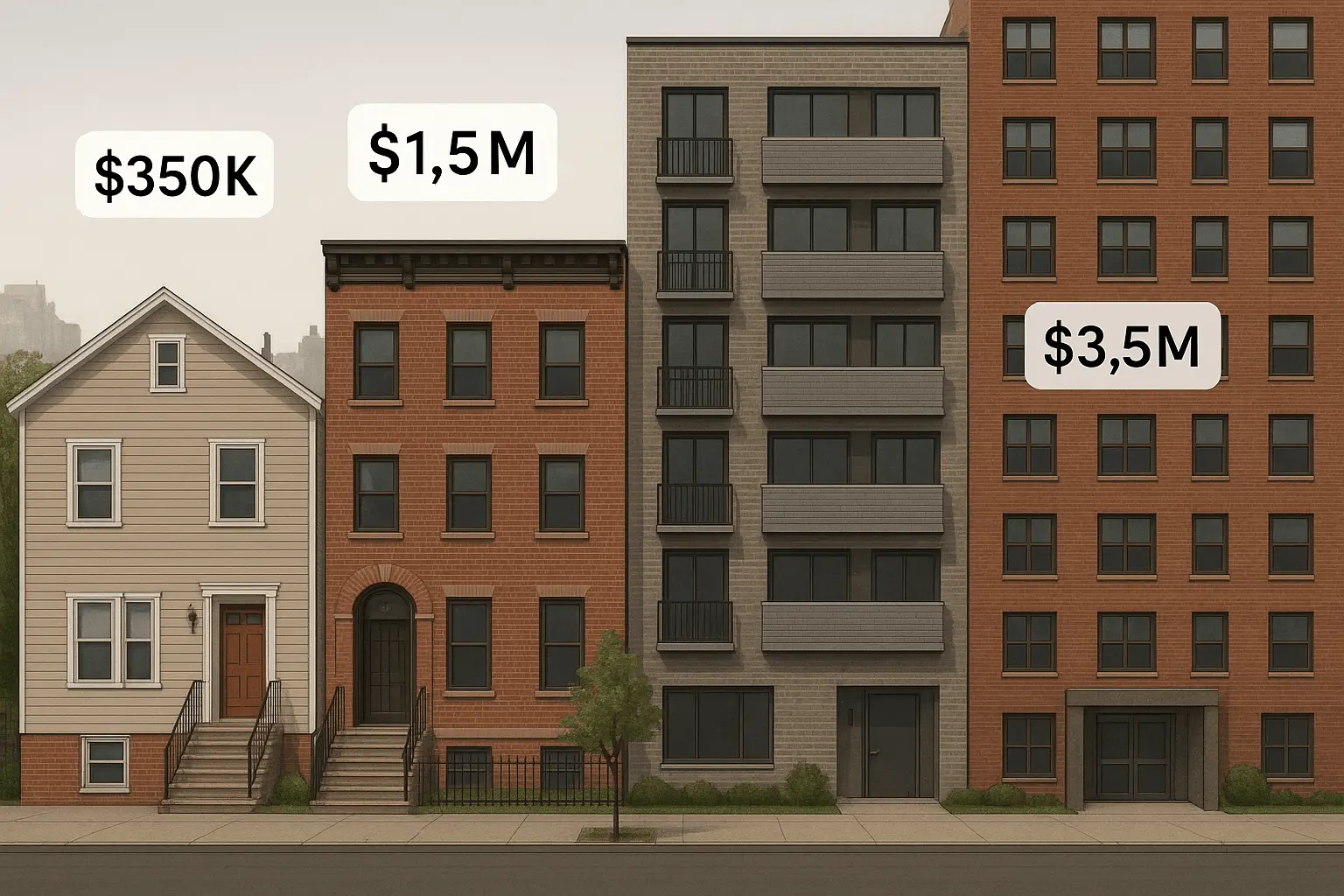
A lot of people find that rooms for rent in Brooklyn give you the best of both worlds - decent prices and neighborhoods with actual character.
Think renting is expensive? Try buying. You'll need serious cash upfront and the monthly costs that make rent look like pocket change.
Manhattan's median home price is around $1.2 million. That means you need $120,000-240,000 just for the down payment. And that's before closing costs, moving expenses, and all the other financial surprises that come with buying property here.
Co-ops (which dominate the market) usually want 20% down, while condos might accept 10-15% if you've got stellar credit. But here's the kicker - you also need to have 1-2 years of maintenance fees sitting in your bank account after closing. That's money you can't touch; it's just proof you can handle unexpected expenses.
Let me give you a real example: Sarah, a marketing director making $150,000, wanted to buy a $1.2 million co-op on the Upper West Side. She needed $240,000 for the down payment, $36,000 in closing costs, $50,000 in required cash reserves, and another $15,000 for moving and immediate repairs. We're talking $341,000 in liquid assets just to get the keys.
Oh, and those maintenance fees? Kiss another $1,000-2,500 goodbye every month. Forever. These aren't optional - they cover building operations, staff salaries, insurance, and improvements. Plus property taxes averaging 0.88% of your home's value annually.
And here's the fun part - special assessments. When the building needs a new roof or elevator, you might get hit with a $5,000-50,000 bill depending on your apartment's share of the building. Surprise!
The good news? You probably don't need a car. The bad news? Getting around still costs way more than you'd expect.
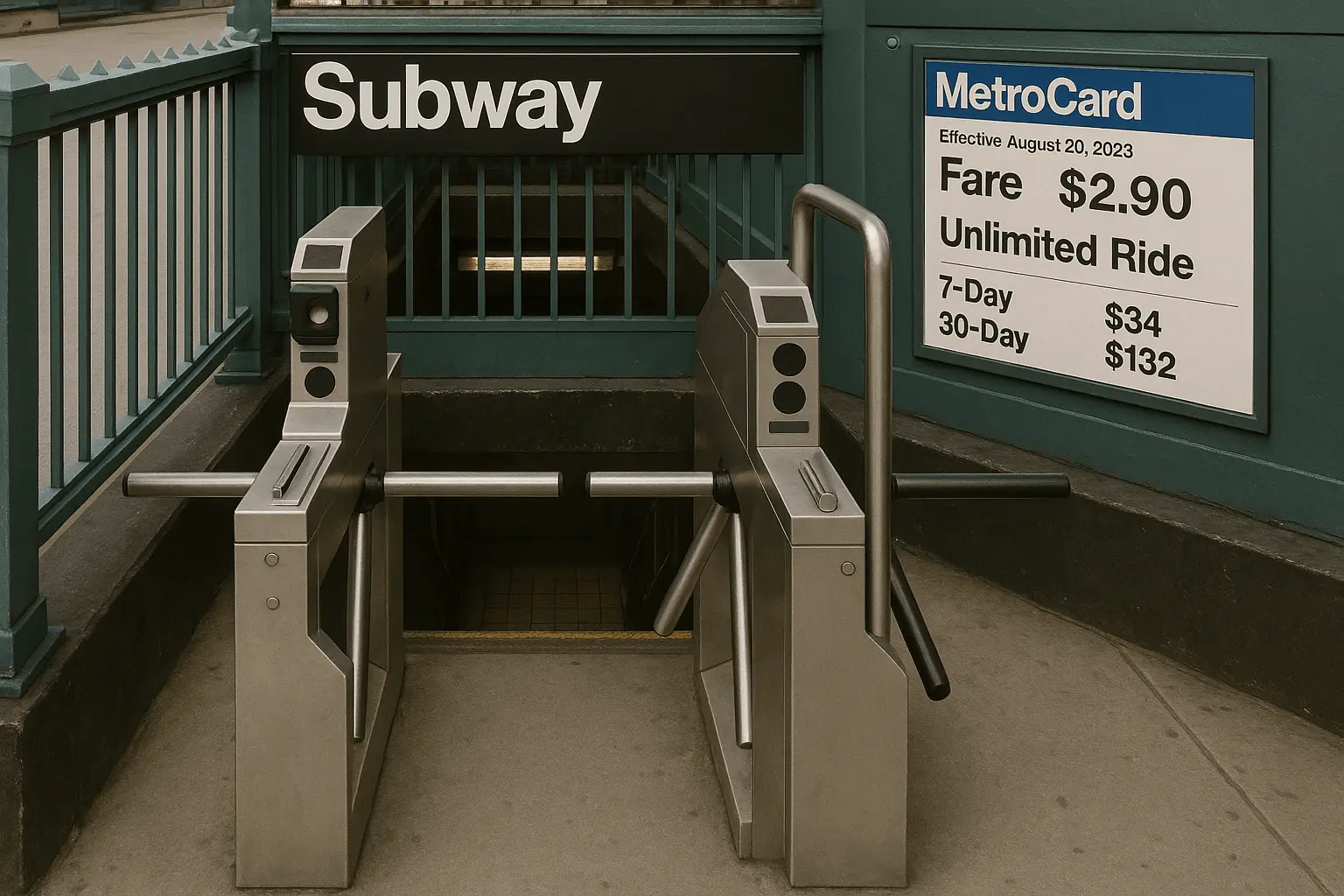
Monthly unlimited MetroCards cost $132, which adds up to $1,584 annually. That's just for basic subway and bus access - doesn't cover express buses or trains to the outer boroughs.
Then there's ride-sharing filling in the gaps when the subway doesn't go where you need it to. Uber and Lyft trips average $15-25 within Manhattan, $25-40 to outer boroughs. If you're using these services 2-3 times weekly (and trust me, you will), you're looking at another $150-300 monthly on top of your MetroCard.
Citi Bike memberships cost $179 annually and work great for short trips, but you'll still need subway access for longer distances and when the weather sucks. Most people end up combining multiple transportation options, pushing monthly costs to $200-300.
Want to own a car in NYC? Hope you hate money. Monthly parking ranges from $200-600 depending on the neighborhood. Street parking exists but comes with alternate side regulations, meters, and the constant stress of circling blocks looking for spots.
Insurance costs way more than suburban rates because of higher accident and theft risks. Expect $1,500-3,000 annually for decent coverage. Traffic tickets are frequent and expensive - parking violations start at $65, moving violations can hit $200-500. Add gas, maintenance, and registration, and you're easily looking at $8,000-15,000 yearly just to own a car you'll barely use.
Food costs hit you from two directions: expensive groceries and a dining scene so good it makes cooking at home feel like you're missing out on the city's best offerings.
Groceries cost 15-25% more than national averages, and that's shopping at regular supermarkets, not the fancy places. Weekly grocery shopping for one person typically runs $75-125, depending on your eating habits and where you shop.
The real challenge? Convenient grocery stores charge premium prices, while cheaper options might require longer trips or less convenient locations. A gallon of milk costs $4-5, decent bread runs $3-4, and fresh vegetables will shock you with their price tags.
Here's the thing - dining out isn't just entertainment in NYC, it's part of the social fabric. Mid-range restaurant dinners cost $50-100 per person before drinks, tax, and tip. Lunch spots near offices charge $12-18 for basic meals that would cost $8-10 elsewhere.
And coffee culture? Daily coffee shop visits cost $4-6, totaling $100-150 monthly for your caffeine habit. Weekend brunch (a NYC institution) runs $25-40 per person at popular spots, and good luck getting a table without waiting.
Most people budget $300-600 monthly for dining out, and honestly, it's not frivolous spending. This is often how business networking and relationship building happen here.
Your target salary depends on your lifestyle expectations and where you're willing to live. These aren't survival budgets - they're what you need to actually be comfortable and not stress about every purchase.
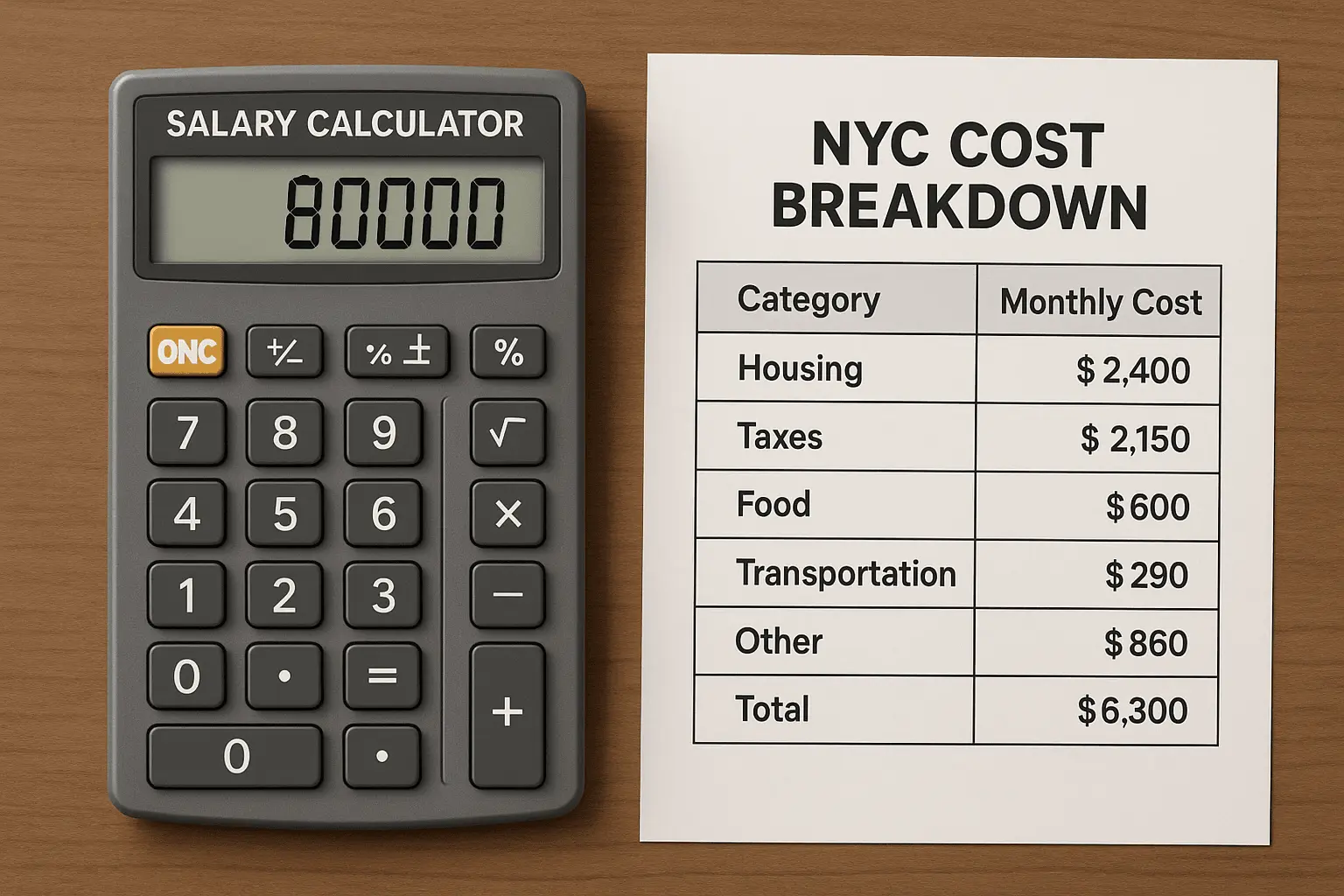
You'll need $80,000-100,000 annually to live comfortably in Brooklyn, Queens, or The Bronx. This budget covers a decent one-bedroom or studio in a safe neighborhood, full transportation costs, reasonable food expenses, and some entertainment money.
According to Housing Anywhere, for a single person, a minimum yearly gross income of $75,000 ($61,272 net) is considered a good salary in New York, which amounts to $6,250 monthly ($5,106 net) and is enough to cover the cost of living in New York of $4,299.
At this income level, you'll spend roughly $2,000-2,500 monthly on housing, $200-300 on transportation, $400-500 on food, and have $800-1,200 left for savings, entertainment, and unexpected expenses. It's not luxurious, but you won't be eating ramen every night.
The key is picking neighborhoods with good subway connections to Manhattan. Yeah, your commute might take 30-45 minutes, but you'll have access to the city's opportunities while keeping your costs reasonable.
Comfortable Manhattan living starts around $120,000-150,000 annually. This lets you afford a studio or small one-bedroom in a decent neighborhood, convenient transportation, regular dining out, and actually participating in the city's cultural scene.
You'll spend $3,500-4,500 monthly on housing at this income level, but you'll gain significant lifestyle benefits: shorter commutes, walkable neighborhoods, and proximity to work, entertainment, and social opportunities. The time savings alone can justify the extra cost.
This salary range also gives you breathing room for unexpected expenses - emergency taxi rides, last-minute dinner plans, or taking advantage of unique opportunities that come up.
Family living in NYC requires serious financial planning and way higher incomes than single-person households. The costs multiply fast when you factor in larger housing needs, childcare, and education expenses.
Couples without kids need $150,000-200,000 combined income for comfortable living. This allows for a proper one-bedroom in Manhattan or a spacious two-bedroom in outer boroughs, shared transportation costs, and the ability to enjoy the city together.
Shared expenses provide some relief - one apartment, shared utilities, and splitting costs for entertainment and dining. But you'll likely want more space than a single person, which pushes housing costs higher even with two incomes.
Here's where things get truly brutal. Families with children need $200,000-300,000 combined income when you factor in larger housing requirements, childcare costs, and education expenses.
According to SmartAsset, Massachusetts is the most expensive state for working families, requiring a total household income of $313,747 to cover projected short-term and long-term expenses for two adults and two children.
Childcare alone costs $15,000-25,000 annually per child for quality daycare or nanny services. Private school tuition ranges from $25,000-50,000 per year. Even public school families face significant costs for after-school programs, tutoring, and extracurricular activities.
Let me break down a real example: The Johnson family with two young children and a combined income of $250,000 spends $7,500 monthly on their two-bedroom apartment, $2,500 monthly on childcare, $800 on groceries, $300 on transportation, and $1,200 on dining and entertainment. That's $12,300 monthly or $147,600 annually, leaving them with roughly $102,400 for taxes, savings, and unexpected expenses.
Housing needs expand dramatically with kids . Families typically need two-bedroom apartments minimum, pushing Manhattan rents to $6,000-8,000 monthly or requiring moves to outer boroughs with longer commutes. Healthcare costs increase, summer camps run $2,000-8,000 per child, and family entertainment expenses multiply quickly.

Your industry dramatically impacts your ability to live comfortably here. Some sectors offer compensation that makes high costs manageable, while others require creative approaches to achieve financial stability.
Finance and tech professionals often start at $150,000+ with serious bonus potential. Senior roles can reach $300,000-500,000+ annually, with stock options and bonuses sometimes doubling total compensation. These industries cluster in Manhattan, reducing commute costs and time while providing access to networking opportunities.
The high salaries justify Manhattan living and allow for aggressive savings despite high expenses. But here's the catch - these roles often demand long hours and high stress levels. The financial benefits come with lifestyle trade-offs that might impact your work-life balance and relationships.
Creative professionals, restaurant workers, and service industry employees typically earn $40,000-70,000 annually. Living comfortably at these income levels requires strategic thinking and serious lifestyle adjustments.
Shared housing becomes essential - roommates, co-living spaces, or house-sitting arrangements can reduce individual housing costs to $800-1,500 monthly. Many creative professionals combine multiple income streams: freelance work, part-time jobs, or gig economy participation.
These industries often provide intangible benefits: flexible schedules, creative fulfillment, and networking opportunities that can lead to higher-paying opportunities down the road.
|
Industry |
Entry Level |
Mid-Level |
Senior Level |
Housing Strategy |
|
Finance |
$150,000 |
$250,000 |
$500,000+ |
Manhattan luxury |
|
Technology |
$120,000 |
$200,000 |
$400,000+ |
Manhattan/Brooklyn |
|
Creative |
$40,000 |
$65,000 |
$100,000 |
Shared housing |
|
Service |
$35,000 |
$55,000 |
$75,000 |
Outer boroughs |
|
Healthcare |
$80,000 |
$150,000 |
$300,000+ |
Varies by specialty |
Strategic housing decisions can make NYC living affordable on lower salaries while maintaining quality of life. The key is thinking creatively about space, location, and living arrangements.
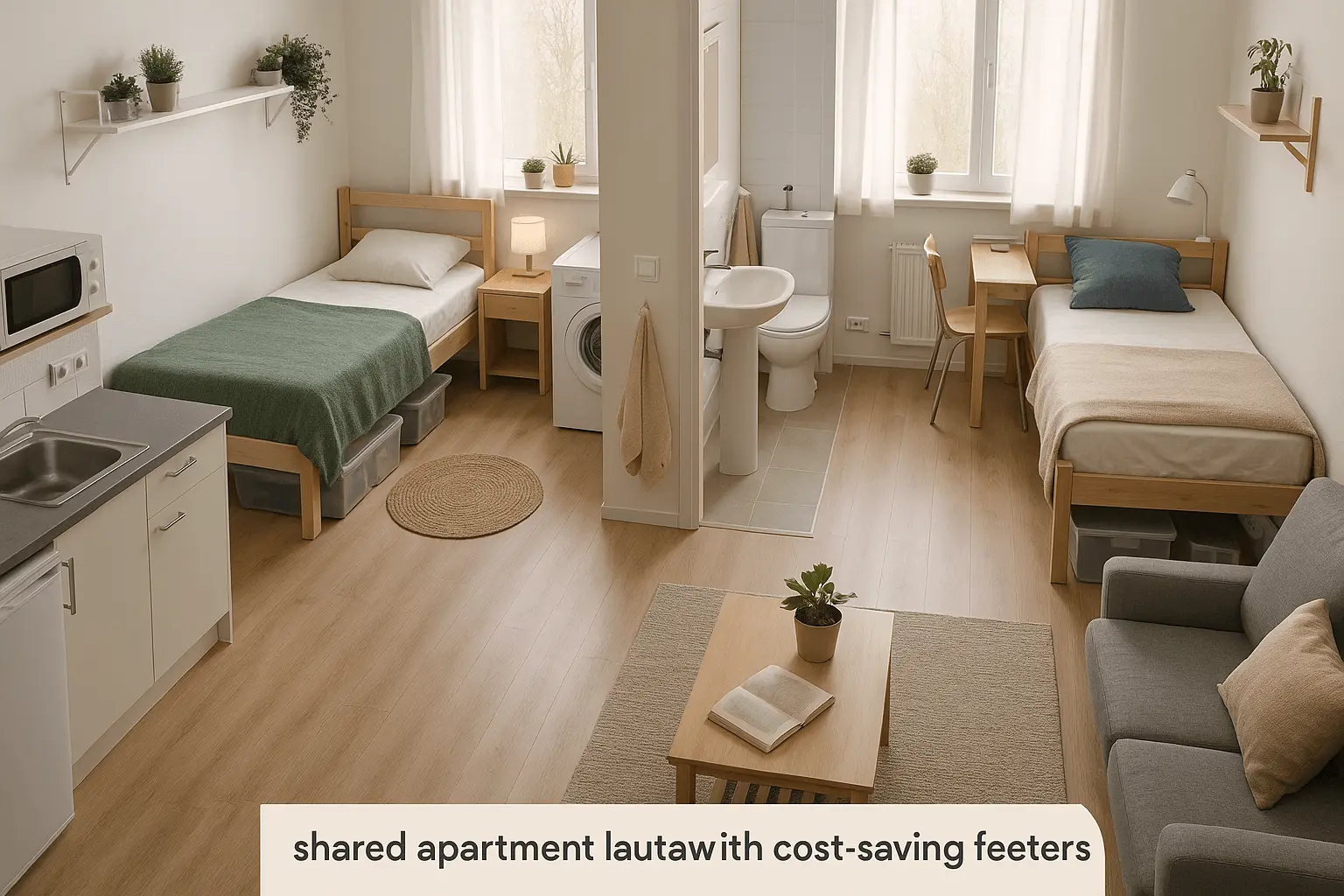
Sharing housing costs through roommate arrangements can reduce your individual rent burden by 30-50%. This allows comfortable living on $60,000-80,000 salaries while building savings and maintaining access to desirable neighborhoods.
Quality roommate situations can provide social benefits too: built-in social connections, shared household responsibilities, and someone to split utilities and streaming services with.
Your Roommate Game Plan:
Choosing emerging neighborhoods or areas with excellent transportation connections can provide 20-40% housing cost savings while maintaining reasonable commute times and lifestyle quality.
Recent analysis shows that "New York and New Jersey rank fourth and sixth with required salaries of $114,691 and $108,992 respectively" among the most expensive states for comfortable living.
Emerging neighborhoods often offer the best value. You'll pay less for rent while potentially benefiting from area improvements over time. Research planned developments, new restaurants, and infrastructure improvements when evaluating areas.
Here's a real example: Marcus, a graphic designer earning $75,000, chose Astoria over Manhattan. His $1,800 monthly rent for a one-bedroom saves him $1,500 compared to similar Manhattan spaces. His 35-minute commute costs an extra $50 monthly in transportation, but he saves $17,400 annually on housing while living in a vibrant, diverse neighborhood.
Your salary isn't set in stone - strategic career development can dramatically improve your financial situation over time. NYC offers unique opportunities for rapid career advancement if you approach it strategically.
Understanding how to calculate your true earning potential with tools such as an NYC salary calculator helps you make informed decisions about career moves and salary negotiations.
Certain skills command significant premiums in NYC's job market. Technology skills, financial analysis, healthcare specializations, and skilled trades all offer paths to higher compensation. Professional certifications, advanced degrees, or specialized training can increase your earning potential by 25-100% within 2-3 years.
Networking becomes crucial for accessing higher-paying opportunities. Industry events, professional associations, and alumni networks provide connections that can accelerate your career beyond what's possible in smaller markets.
Your Skill-Building Action Plan:
Side income can bridge the gap between your current salary and comfortable living. Freelancing, consulting, tutoring, or gig work can add $10,000-50,000 annually to your total earnings.
NYC's diverse economy provides numerous side income opportunities: weekend catering work, freelance writing, ride-sharing during peak hours, or leveraging your professional skills for consulting projects.
The key is finding side work that complements rather than competes with your primary career. Many professionals use side income to build emergency funds, pay down debt, or save for major purchases while maintaining their primary career focus.
Emergency funds aren't optional in NYC - they're essential for financial security. The city's high costs and competitive job market make substantial savings crucial for weathering unexpected challenges.
Aim for 6-12 months of expenses in emergency savings - that's $30,000-60,000 for most comfortable living situations. I know that sounds impossible initially, but building this fund should be your top financial priority.
Start with smaller goals: $1,000, then $5,000, then one month of expenses. Automate savings transfers and treat emergency fund contributions like mandatory bills. The peace of mind is worth the initial sacrifice.
Your Emergency Fund Strategy:
Community-focused living arrangements and membership models are changing how people approach NYC's high costs. By sharing resources and building genuine connections, residents can access premium experiences while reducing individual financial burden.
This goes way beyond simple roommate arrangements. We're talking shared workspaces, community events, and group purchasing power that can significantly reduce living costs. Members often find that collaborative approaches provide both financial benefits and enhanced social experiences.
Professional networking within these communities frequently leads to career opportunities and business connections that can dramatically improve your earning potential over time.

Modern communal living spaces in NYC offer structured environments that combine affordability with premium amenities, making comfortable city living accessible to professionals across various income levels.
For NYC professionals who value quality experiences and strategic relationship building, community-based models represent thoughtful investments in both lifestyle and career development. These approaches show how shared resources and genuine connections can make premium city living more accessible while building the professional networks essential for long-term success.
Many residents discover that shared apartments in New York provide not just cost savings but also built-in social networks that enhance the overall NYC experience while reducing individual financial burden.
Ready to explore how community living could transform your NYC experience? Discover membership opportunities that combine luxury amenities with strategic networking in an environment designed for ambitious professionals.
Successfully living comfortably in NYC requires realistic salary expectations, strategic planning, and creative approaches to managing high costs. But here's the thing - the city's unique opportunities for career advancement and cultural experiences can justify the financial investment for those who approach it thoughtfully.
Look, living comfortably in NYC isn't about having unlimited money - it's about having realistic expectations and strategic approaches to managing costs that would make your parents question your sanity. The salary requirements we've outlined aren't meant to crush your dreams, but to help you plan effectively for one of the world's most expensive and rewarding cities.
Your path to comfortable NYC living might involve starting in outer boroughs, sharing housing costs, developing high-value skills, or building multiple income streams. The key is understanding that financial comfort here requires intentional planning and often creative solutions that wouldn't be necessary anywhere else.
For those considering the leap, understanding the real cost of living in NYC provides crucial insights beyond basic salary requirements, helping newcomers prepare for the full financial reality of city life.
Remember that salaries tend to be higher in NYC to compensate for increased costs, and the career opportunities available here often justify the initial financial challenges. Many professionals find that their earning potential grows faster here than it would elsewhere, making the high costs a worthwhile investment in their long-term financial success.
Whether you're moving to New York for the first time or reassessing your current situation, having a comprehensive understanding of salary requirements helps ensure your Big Apple dreams become sustainable reality.
The city rewards those who approach it strategically, build strong networks, and remain flexible in their housing and lifestyle choices. With proper planning and realistic expectations, comfortable NYC living is achievable across a wide range of income levels - you just need to understand the rules of the game and play them wisely.
Is it worth it? That depends on you. But at least now you know what you're signing up for.

Household supplies can be changed or decreaased at Outpost Club’s discretion, or based on supply availability. Outpost is not responsible for temporary losses of utility service. Outpost Club is not responsible for any damages due to absence of any supplies or utilities


If you have a sales related question please call
680-688-7678

 Hot Deals