UX Designer NYC Salary: What You'll Actually Earn in America's Design Capital
Jan 4, 2026

Jan 4, 2026
Look, I've seen the numbers floating around - Built In says NYC UX designers average about $101k, with most folks landing between $100k-$110k. But here's what that actually means for your bank account and your sanity.
NYC is basically the hunger games for UX designers. The pay is incredible, but so is the competition. You're not just competing with other designers - you're up against people who've worked at Google, graduates from fancy design programs, and that person who somehow has connections everywhere.
But here's the thing that makes it all worth it: this city is where design actually matters to business. Wall Street banks are throwing money at UX talent because they finally figured out that confusing interfaces lose customers. Media companies are redesigning everything because digital is their lifeline. And don't get me started on the startup scene - there's always some well-funded company trying to "disrupt" something and they need designers who get it.
The demand here is insane because every industry is fighting for user attention. Whether it's a fintech startup trying to make crypto trading feel less terrifying or The New York Times redesigning their app for the millionth time, everyone needs designers who can translate complex problems into interfaces that don't make people want to throw their phone.
When you're thinking about the real cost of living in NYC, you start to understand why ux designer nyc salary packages need to be competitive. This city doesn't mess around with expenses.
Forget those generic salary websites for a minute. Here's what you'll actually see in your bank account based on where you're at in your career.
Starting out? You're looking at $65k-$85k. I know, I know - that sounds rough when you're staring at $3,000 rent for a shoebox apartment. But here's the thing: NYC is where you cut your teeth fast. That salary can double in 3-4 years if you play your cards right.
The research backs this up too - Built In shows that designers with 7+ years of experience average $125,692, while newbies with less than a year make $79,222. That's a pretty solid jump if you stick with it.
Mid-level designers (3-5 years of not completely screwing things up) can expect $90k-$130k. At this point, you're not just pushing pixels around - you're actually contributing to strategy, mentoring the new folks who are freaking out about everything, and taking ownership of projects that could make or break a product launch.
Senior designers and team leads? That's where things get spicy: $140k-$200k+ in base salary alone. But here's the kicker - total compensation often blows these numbers out of the water when you factor in bonuses, equity, and all those benefits that actually matter.
The dirty secret? These are just base salaries. Many companies structure packages where bonuses can add 10-30% to your yearly take-home, and equity (especially at companies that don't suck) can be life-changing money down the road.
|
Experience Level |
Base Salary Range |
Total Compensation Range |
|
Entry-Level (0-2 years) |
$65,000 - $85,000 |
$70,000 - $95,000 |
|
Mid-Level (3-5 years) |
$90,000 - $130,000 |
$100,000 - $150,000 |
|
Senior (5-8 years) |
$140,000 - $200,000 |
$160,000 - $250,000 |
|
Lead/Principal (8+ years) |
$180,000 - $250,000 |
$220,000 - $350,000 |
Tech companies don't just pay well - they pay stupid well. Google, Facebook, Amazon, and those unicorn startups that raise $100M like it's pocket change? They're throwing around total compensation packages of $250k+ for senior roles like it's nothing.
Why do they pay so much? Because they're competing with every other tech company on the planet for talent, and they know that a designer who can bump conversion rates by even 2% just made them millions in revenue.

Let's talk about equity for a second. Big companies give you stock that's basically like a slow-growing savings account. Startups? That's your lottery ticket. I've watched designers become millionaires overnight when their company got acquired. I've also seen plenty of equity packages become worthless paper. It's a gamble, but sometimes it pays off big time.
Manhattan and Brooklyn tech hubs are where most of these golden opportunities live. These companies don't just throw money at you - they'll feed you three meals a day, pay for your subway rides, let you work from wherever, and give you a budget to learn new skills. Add it all up and you're looking at thousands in extra value every year.
Here's something wild: Wall Street banks are finally figuring out that good design matters, and they're paying for it. Goldman Sachs, Morgan Stanley, JPMorgan - they're all fighting for design talent because they realized that clunky interfaces lose customers to fintech startups.
The money structure is different from tech companies but can be just as good. Base salaries might be a bit lower, but bonuses in finance can be insane - often 20-50% of your base salary if you don't mess up. These aren't "nice-to-have" bonuses; they're expected parts of your total pay.
Picture this: a senior UX designer at JPMorgan might make $130k base with a $40k bonus, bringing total cash to $170k. That's competitive with tech companies, but you get more predictable hours and benefits that don't disappear when the market crashes.
Fintech companies are the sweet spot between old-school finance and tech culture. Companies like Robinhood and Stripe offer tech-level base salaries plus financial sector perks, and usually without the 80-hour weeks that traditional Wall Street is famous for.
The stability factor is real too. While tech companies can do massive layoffs when things get rough, financial services tend to keep people around even during tough times. Plus the health benefits and retirement planning can seriously impact your long-term financial picture.
Different industries in NYC treat UX design compensation like they're playing completely different games. Understanding who pays what (and why) helps you target opportunities that actually align with your financial goals and sanity levels.
The variation isn't just about money - it's about culture, growth potential, and whether you'll be solving interesting problems or redesigning the same button for the hundredth time.
NYC's tech scene is still crushing it in 2024, with UX/UI Designer roles ranking among the top high-paying tech jobs in the city, with salaries beating the city average by 49%.
If you're trying to figure out how UX design stacks up against other careers, checking out the average salary in NYC gives you some helpful context for evaluating those compensation packages.
Startup compensation is basically legalized gambling with your career. Early-stage companies might offer $70k-$100k base, but they'll throw equity at you like confetti. You're essentially betting that this company won't crash and burn along with your salary expectations.
Mid-stage startups (Series B and beyond) often hit the sweet spot: competitive salaries in the $110k-$150k range plus equity that might actually be worth something. These companies have proven they're not completely insane, but there's still upside potential.
The big tech giants play a different game entirely. They offer premium base salaries ($130k-$200k+) with bonuses and stock options that vest on predictable schedules. The equity might not make you rich overnight, but it's steady money you can actually count on.
Here's the risk-reward breakdown: joining an early startup means accepting lower immediate pay for potentially life-changing equity returns. Established companies offer predictable, high compensation without the stress of wondering if your equity will be worth anything next year.
Traditional Wall Street has had a complete personality change when it comes to design talent. Investment banks that used to think "user experience" meant the guy who answered the phone now offer packages ranging from $120k to $180k, often with bonuses that can basically double your salary.
The bonus culture creates some interesting dynamics. Your annual take-home can swing wildly based on how well you perform and whether the company had a good year. Great years might see bonuses that make your base salary look like pocket change, while rough years might mean you're living on base salary alone.

Fintech represents the evolution of this whole thing. These companies combine tech industry salary structures with financial sector benefits, usually without the crazy hours that traditional Wall Street demands. You get competitive base pay without having to sell your soul.
The regulatory environment in finance also creates job security that pure tech companies can't match. While tech companies might do massive layoffs when venture funding dries up, financial services tend to keep people around even when things get tough.
Media companies in NYC offer something different: the chance to work on products that millions of people actually use every day, plus reasonable compensation and work-life balance that won't destroy your relationships.
Base salaries typically range from $85k to $130k, which might seem modest compared to tech giants, but the total package often includes benefits and perks that add real value to your life.
Companies like Vox Media, BuzzFeed, and The New York Times provide creative opportunities that many designers find way more fulfilling than optimizing ad click-through rates. You're not just designing interfaces - you're shaping how people consume and interact with information that actually matters.
Streaming services and digital media companies represent the higher end of media compensation. Netflix, Hulu, and similar platforms often offer packages that approach tech industry standards while keeping the creative culture that makes media work appealing.
The work-life balance factor is huge. Media companies typically respect boundaries around working hours and vacation time in ways that some tech companies and financial firms don't. This balance can seriously impact your quality of life and whether you'll burn out before you hit senior levels.
Healthcare and education technology are where you can make competitive money ($95k-$140k) while actually feeling good about what you're building. These industries offer something that's getting harder to find: the knowledge that your work creates meaningful social impact.
Healthcare UX design means solving problems that directly affect people's wellbeing. Whether you're designing interfaces for electronic health records, patient portals, or telemedicine platforms, the work carries weight beyond typical commercial applications.
EdTech companies are revolutionizing how people learn, from K-12 education platforms to professional development tools. The compensation might not reach Google levels, but the mission-driven nature attracts designers who want their careers to contribute to something bigger.
Both sectors typically offer excellent benefits packages, including comprehensive health insurance, professional development budgets, and often more flexible work arrangements. The combination of competitive pay, meaningful work, and strong benefits creates compelling opportunities for designers who want purpose alongside their paycheck.
Advancing your career and salary in NYC's competitive market requires more than just being good at Figma. You need to think strategically about which specializations are actually in demand, how to position yourself for leadership roles, and when going freelance might fast-track your earning potential.
The designers making the most money aren't necessarily the most talented - they're the ones who've figured out which skills are in short supply and high demand. They understand market dynamics and position themselves accordingly.
Your Salary Advancement Game Plan:
UX research is
UX research is one of the most reliable paths to above-average compensation. Companies are finally realizing that user research leads to better design decisions, and professionals with solid analytics and user psychology skills often earn 15-25% more than general UX designers.
The numbers back this up - Built In shows that people with UX Designer titles make the most at companies with 1,000+ employees, earning $166,667 on average. That's serious money.
The research premium exists because good user research requires a unique mix of analytical thinking, psychology knowledge, and communication skills. You're not just gathering data - you're translating user behavior into business insights that executives actually care about.
Product design roles, especially for complex B2B or financial products, also command premium pay. These positions require understanding complicated business processes and designing interfaces that handle complex workflows while still being intuitive enough that people won't rage-quit.
Emerging technologies create the biggest salary premiums. Designers with expertise in AI/ML interfaces, voice user interfaces, and AR/VR experiences often command 30-40% salary bumps because there just aren't that many people who know how to do this stuff well.

The intersection of UX design and emerging technologies is where some of the highest-paying opportunities live right now. Companies building AI/ML products, voice interfaces, and AR/VR experiences are competing intensely for designers who understand these new paradigms.
AI/ML interface design requires understanding how users interact with intelligent systems, designing for uncertainty, and creating interfaces that feel natural despite incredibly complex underlying technology. This specialization is particularly valuable in NYC's fintech and healthcare sectors.
Voice user interface design is another premium specialization. As smart speakers, voice assistants, and voice-enabled applications take over, companies need designers who understand conversational design principles and can create intuitive voice experiences.
AR/VR design is still emerging, but it offers substantial compensation premiums for designers willing to learn spatial design, 3D interfaces, and immersive experience creation. The learning curve is steep, but the financial rewards reflect how specialized this knowledge is.
Management is the clearest path to dramatically increased compensation. Design Directors and VP-level positions typically start at $180k+ in base salary, with total compensation packages often reaching $300k+ at major technology companies.
Leadership roles require skills way beyond design expertise. You need team management abilities, strategic planning skills, and business acumen to translate design impact into language that executives understand and value.
A Design Director at a major NYC tech company might oversee a team of 8-12 designers, manage a $2M annual design budget, and earn $220k base salary plus $80k in bonuses and equity, bringing total compensation to $300k+ annually.
The transition to management isn't just about higher pay - it's about broader influence. As a design leader, you shape product strategy, build design culture, and directly impact business outcomes in ways that individual contributor roles can't match.
But let's be real: management isn't for everyone. The role involves way less hands-on design work and way more meetings, strategic planning, and people management. You need to honestly consider whether the compensation increase justifies completely changing what you do day-to-day.
Freelancing in NYC can dramatically increase your earning potential if you're willing to develop business skills alongside design expertise. Established freelancers often charge $150-300+ per hour, with annual earnings potentially exceeding traditional employment when you maintain consistent project flow.
The freelance market shows strong potential, with UI/UX Jobs Board noting that freelance or contract UX designers in NYC often charge hourly rates that can significantly exceed traditional employment when calculated annually.
Those hourly rates reflect NYC's premium market and clients' willingness to pay for specialized expertise. But freelance success requires way more than design skills - you need business development capabilities, client management experience, and financial planning for irregular income.
Building a sustainable freelance practice takes time. Most successful freelancers start by taking on projects while employed, gradually building client relationships and reputation before making the full transition. The initial months can be financially terrifying as you figure out consistent project flow.
Client management becomes crucial for long-term success. You're not just delivering design work - you're managing expectations, communicating progress, and often educating clients about design processes. These soft skills often determine freelance success more than pure design ability.
|
Employment Type |
Hourly Rate |
Annual Potential |
Benefits |
Stability |
|
Entry-level Full-time |
$31-41/hour |
$65,000-$85,000 |
Full benefits |
High |
|
Mid-level Full-time |
$43-62/hour |
$90,000-$130,000 |
Full benefits |
High |
|
Senior Full-time |
$67-96/hour |
$140,000-$200,000 |
Full benefits |
High |
|
Freelance/Contract |
$150-300+/hour |
$200,000-$500,000+ |
Self-funded |
Variable |
Where you work within NYC's five boroughs seriously impacts your earning potential. Manhattan consistently offers the highest salaries, but other boroughs provide unique opportunities that might better align with your career goals and sanity levels.
Manhattan's Midtown and Lower Manhattan house most major corporations, investment banks, and established tech companies. These areas command premium salaries because companies compete intensely for talent and can afford to pay top dollar for convenient locations.
Brooklyn's tech scene has exploded in recent years, with companies offering competitive packages while often providing better work-life balance. The commute might be easier, office spaces are often more creative, and the overall culture tends to be more relaxed than Manhattan's corporate grind.
Queens and the Bronx offer fewer opportunities but potentially unique advantages. Lower competition for available positions, emerging companies looking to establish themselves, and often more diverse, mission-driven organizations that value cultural fit alongside technical skills.
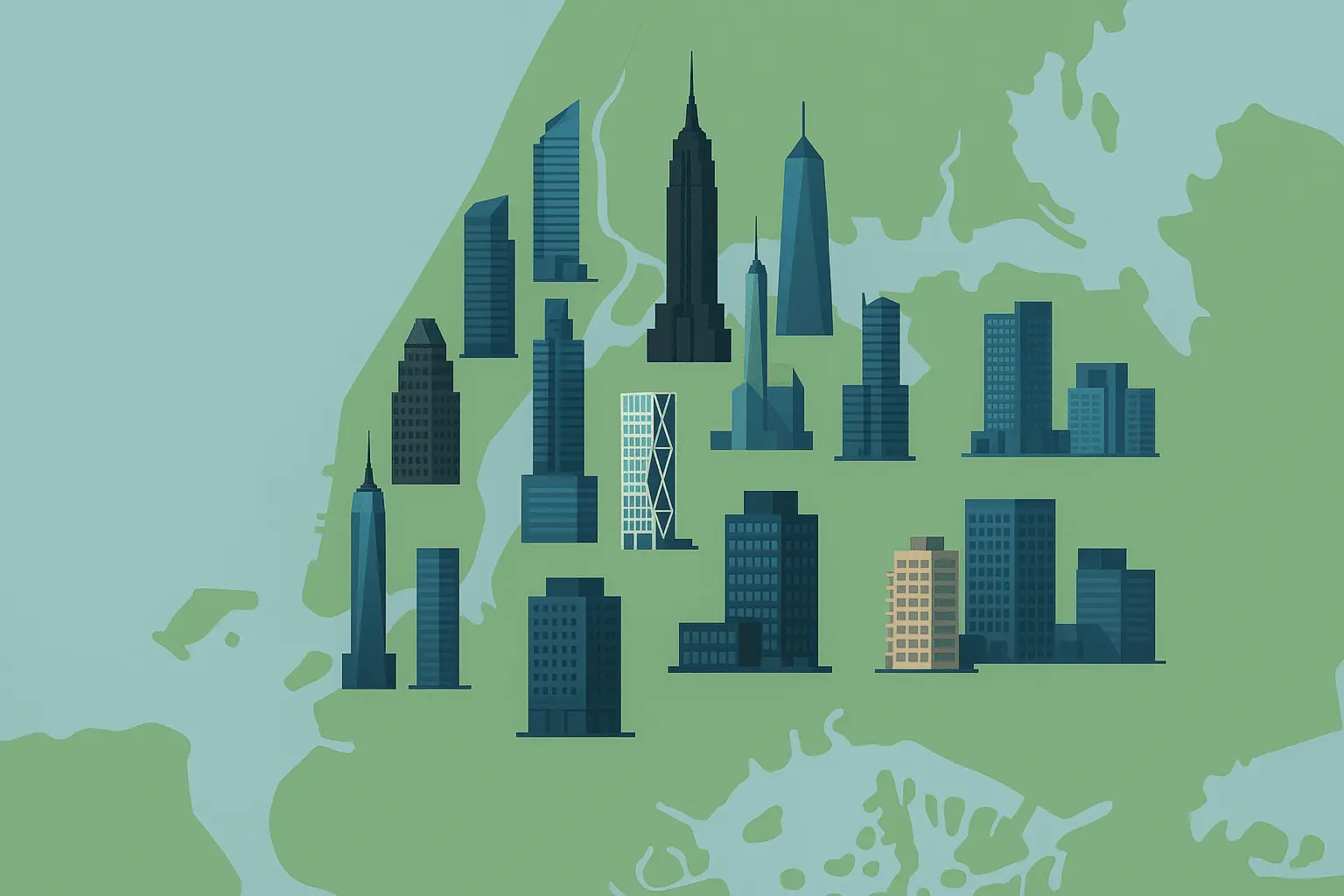
Understanding the best neighborhoods in NYC helps you balance salary potential with living costs and commute considerations when choosing where to work and live.
Let's be brutally honest about the money situation. That $120k salary? After taxes, rent, and the fact that a decent lunch costs $15, you're not exactly living like royalty. Housing typically eats 30-50% of your gross income, with additional costs for transportation ($150+ monthly for subway), higher food prices, and NYC's additional income taxes that shock newcomers.
A $120k salary might sound impressive until you realize that a decent one-bedroom apartment in Manhattan costs $3,000-4,000+ monthly. Add transportation costs, higher food prices, and NYC's brutal tax situation, and your effective purchasing power shrinks fast.
This reality makes total compensation evaluation crucial. Health insurance quality, commuter benefits, flexible work arrangements, and other perks can impact your effective income by thousands of dollars annually. A slightly lower salary with excellent benefits might provide better financial outcomes than a higher salary with minimal benefits.
Geographic arbitrage within the city becomes important. Living in Brooklyn or Queens while working in Manhattan can significantly reduce housing costs while maintaining access to high-paying positions. The commute trade-off often proves worthwhile financially.
Effective salary negotiation in NYC requires preparation, market knowledge, and strategic thinking. Companies expect sophisticated candidates who understand their worth and can articulate their value proposition clearly.
Here's something most designers mess up: they go into salary talks talking about their feelings instead of their impact. Save the screenshots of those user engagement metrics. Write down when your redesign boosted conversion rates. That's your ammunition.
Market research forms the foundation of successful negotiations. Platforms like Glassdoor, Levels.fyi, and industry salary surveys provide valuable benchmarking data, but networking within the NYC design community often provides more accurate, current information about compensation trends.
Understanding total compensation becomes crucial. Equity packages, health insurance quality, flexible work arrangements, professional development budgets, and commuter benefits all contribute to overall package value. Sometimes a lower base salary with excellent benefits provides better financial outcomes.

Base salary is just one piece of the puzzle. Equity packages, particularly at growth-stage companies, can represent substantial value over time. Health insurance quality varies dramatically between companies and can impact effective compensation by thousands annually.
Equity evaluation requires understanding vesting schedules, company valuation trends, and your risk tolerance. Early-stage startup equity might prove worthless or incredibly valuable - there's no middle ground. Established company stock options provide more predictable value but less explosive upside potential.
Benefits comparison often reveals significant value differences. Comprehensive health insurance, dental and vision coverage, retirement matching, and flexible spending accounts can add $10k-$15k+ in effective annual compensation compared to basic benefit packages.
Professional development budgets, conference attendance, and continuing education support might seem minor but can significantly impact your long-term earning potential. Companies investing in employee growth often provide better career advancement opportunities alongside immediate compensation.
Thorough market research provides the foundation for confident salary negotiations. Public platforms offer starting points, but insider knowledge from the design community provides the nuanced understanding that drives successful negotiations.
Glassdoor and Levels.fyi provide valuable baseline data, but treat these as starting points rather than gospel truth. Company-specific information often varies significantly from aggregate data, and recent market changes might not show up in historical salary reports.
Networking within NYC's design community provides insider perspectives that public data can't capture. Organizations like IXDA NYC, Ladies that UX, and various design meetups create opportunities to learn about company cultures, compensation philosophies, and recent hiring trends.
Industry-specific salary surveys often provide more accurate data than general platforms. Design organizations, recruiting firms, and professional associations frequently publish detailed compensation reports that reflect current market conditions more accurately than crowdsourced data.
Performance reviews in NYC's competitive market provide opportunities for substantial salary increases if you approach them strategically. High-performing designers can often secure 10-20%+ annual increases by demonstrating clear business impact.
Documenting your impact requires thinking beyond design deliverables. User engagement metrics, conversion rate improvements, customer satisfaction scores, and cost savings provide quantifiable evidence of your contribution to business success.
Building relationships across the organization strengthens your position during review cycles. When product managers, engineers, and executives can speak to your impact firsthand, it carries way more weight than self-reported achievements.
Understanding company priorities and aligning your work accordingly demonstrates strategic thinking that executives value. If the company focuses on user acquisition, highlight how your design work improved conversion rates. If retention is the priority, showcase engagement improvements.
Breaking into NYC's UX design market demands more than design skills - you need strategic positioning, network development, and portfolio work that demonstrates business understanding alongside creative ability.
The competition here is brutal. You're competing with graduates from top design programs, experienced professionals from other major markets, and local talent with established networks. Standing out requires demonstrating not just design competency but business acumen and strategic thinking.
Your portfolio can't just be pretty pictures anymore. NYC hiring managers want to see the mess behind the magic - your research, your failures, how you convinced stakeholders to green-light your wild ideas. Show them you understand that design is a business tool, not just art.
The interconnected nature of NYC's design community makes networking essential. Many of the highest-paying positions never reach public job boards - they're filled through referrals and internal recommendations before companies invest in external recruiting.

For designers relocating to the city, understanding tips for moving to NYC becomes crucial for successfully transitioning both personally and professionally into this competitive market.
Your portfolio needs to speak the language of business impact, not just design aesthetics. NYC employers want to see how your design decisions drove measurable outcomes - increased conversion rates, improved user engagement, reduced support costs, or enhanced user satisfaction scores.
Case studies should tell complete stories: the business problem, your research approach, design process, implementation challenges, and quantified results. Skip portfolios that only show final designs without explaining the strategic thinking behind them.
Including work that demonstrates understanding of complex business models gives you serious advantages. If you're targeting fintech companies, show projects involving financial products. For media companies, demonstrate understanding of content strategy and user engagement patterns.
Cross-functional collaboration examples prove you can work effectively in NYC's fast-paced, collaborative environment. Show how you worked with product managers, engineers, data analysts, and business stakeholders to achieve shared goals.
A compelling portfolio case study might show how you redesigned a mobile banking app's onboarding flow, conducted user testing with 50+ participants, collaborated with engineering and product teams, and achieved a 35% increase in account completion rates, directly contributing $2M in additional revenue.
NYC's design community is smaller and more interconnected than you might expect. Regular participation in community events creates visibility and relationship-building opportunities that often lead directly to job opportunities.
Fair warning about the networking scene: it's not just showing up to events and collecting business cards. People can smell desperation from a mile away. Go to learn, make genuine connections, and actually follow up with people. The best job opportunities never hit job boards - they happen over coffee with someone you met at a meetup six months ago.
CreativeMornings, AIGA NY, and industry-specific meetups provide structured networking opportunities, but the real value comes from consistent participation and genuine relationship building. People remember faces they see regularly and are more likely to think of you when opportunities arise.
Quality matters way more than quantity in networking. Building genuine relationships with 10-15 people in the community provides more value than collecting hundreds of business cards. Focus on people whose work you respect and who share similar professional interests.
Formal education requirements vary significantly across NYC employers, but certain credentials consistently correlate with higher starting salaries and faster career advancement.
Master's degrees in Human-Computer Interaction, Psychology, or related fields often justify higher starting salaries, particularly for research-heavy roles. These programs provide theoretical foundations and research methodologies that many employers value, especially in complex
Master's degrees in Human-Computer Interaction, Psychology, or related fields often justify higher starting salaries, particularly for research-heavy roles. These programs provide theoretical foundations and research methodologies that many employers value, especially in complex problem domains.
Industry certifications from Google, Adobe, or specialized UX programs can provide competitive advantages, particularly for career changers entering the field. While experienced professionals might not need certifications, they can help newcomers demonstrate commitment and foundational knowledge.
Continuous learning becomes crucial for career advancement. The design field evolves rapidly, and staying current with new tools, methodologies, and industry trends directly impacts your market value and earning potential.
NYC's freelance market provides experienced designers with opportunities to dramatically increase their earning potential. Day rates for experienced freelancers range from $600-$1,200+, with specialized expertise commanding even higher premiums.
The freelance premium reflects several factors: project-based urgency, specialized expertise requirements, and clients' willingness to pay premium rates for proven talent. However, success requires business development skills that many designers haven't developed during traditional employment.
Design agencies provide rapid skill development through diverse project exposure but typically offer lower base salaries ($80k-$120k) with potential for bonuses based on billable hours and client retention. The learning curve is steep, but the experience gained can accelerate career advancement.
In-house positions typically offer higher base salaries ($100k-$160k+) with better benefits and more predictable work-life balance. You develop deep expertise in specific industries or products, which can lead to specialized knowledge that commands premium compensation.

Economic forces beyond your control significantly impact UX designer compensation in NYC. Understanding these broader trends helps you time career moves, negotiate effectively, and position yourself for long-term success.
Venture capital activity directly correlates with designer demand and salary levels. During high-funding periods, startups compete aggressively for design talent, driving up compensation across the entire market. Economic downturns typically reduce startup hiring but often increase demand at established companies seeking competitive advantages.
Technology adoption cycles create waves of demand for specific design skills. The mobile revolution created massive demand for mobile UX designers. The current AI/ML wave is creating similar opportunities for designers who understand these new paradigms.
Understanding these cycles helps you position your career strategically. Developing expertise in emerging technologies before they become mainstream can position you for significant compensation premiums when demand peaks.
NYC's venture capital ecosystem has grown dramatically, creating direct impacts on UX designer compensation. When funding is abundant, startups compete aggressively for design talent, driving up salaries across the entire market - not just at funded companies.
The ripple effects extend beyond startups. When well-funded companies offer aggressive compensation packages, established corporations must increase their offers to remain competitive. This creates market-wide salary inflation during high-funding periods.
Economic downturns create different dynamics. Startup hiring typically decreases, but established companies often increase their focus on user experience as a competitive differentiator. The overall demand might decrease, but opportunities at stable companies often increase.
Understanding funding cycles helps you time career moves strategically. Joining startups during funding peaks often provides the best compensation packages, while economic downturns might offer opportunities at established companies that previously couldn't compete with startup offers.
Remote work has fundamentally changed compensation dynamics for NYC-based designers. While some companies now hire globally (potentially increasing competition), many maintain location-based salary premiums recognizing NYC's high cost of living and concentrated talent pool.
The global talent pool creates both opportunities and challenges. You can now access positions at companies worldwide, but you're also competing with designers from lower-cost markets who might accept lower salaries for the same work.
Despite industry changes, Fortune reports that despite more than 260,000 tech employees being laid off in 2023 alone, the tech unemployment rate remains steadily low at 2.3%, indicating continued demand for skilled UX professionals.
Many NYC companies have maintained location-based compensation recognizing that top talent often prefers living in major metropolitan areas and that cost of living differences justify salary premiums. The concentration of talent in NYC also creates network effects that companies value.
Hybrid work arrangements often provide the best outcomes: NYC-level salaries with reduced commuting costs and improved work-life balance. Many designers find this combination optimal for both financial and lifestyle goals.

Several trends are shaping the future of UX designer compensation in NYC. AI/ML interface design will likely see explosive demand as more companies integrate artificial intelligence into their products. Voice design and conversational interfaces represent another growth area as smart devices proliferate.
Complex B2B product design continues gaining importance as businesses digitize operations and seek competitive advantages through superior user experiences. These roles often require deep domain expertise but offer substantial compensation premiums for designers willing to develop specialized knowledge.
Traditional industries are increasingly embracing design thinking. Healthcare, government, and financial services are investing heavily in user experience, creating opportunities for designers who can navigate regulatory environments and complex stakeholder relationships.
Salary growth is expected to continue outpacing inflation, though potentially at slower rates than the explosive growth seen in recent years. The maturation of the field means more predictable compensation growth rather than the dramatic increases that characterized the early days of UX design.
Earning a competitive UX designer salary in NYC opens doors to lifestyle choices that complement your demanding career. Outpost's coliving spaces provide exactly the kind of thoughtfully designed living experience that resonates with design professionals who appreciate quality, community, and attention to detail.
The strategic thinking required for successful UX design mirrors the intentional approach Outpost takes to community living. After spending your week navigating complex user journeys and design systems, coming home to a space where logistics are handled and community connections are built-in provides the perfect counterbalance to demanding professional work.
Outpost's emphasis on "furnished rooms for rent" and community-oriented living aligns perfectly with the work-life balance that successful NYC designers seek. The company's network of carefully curated living spaces reflects the same curatorial mindset you apply to design decisions - selecting only the highest quality options that deliver exceptional value.
For designers whose work and project deadlines make time precious, Outpost's all-inclusive approach eliminates the friction often associated with NYC housing. Just as good UX design removes barriers from digital experiences, Outpost removes logistical complexity from living arrangements, letting you focus on what matters: advancing your career and building meaningful relationships.
Many NYC professionals find that coliving in Manhattan or coliving in Brooklyn provides the perfect balance of community and convenience that complements their demanding careers and active lifestyles.

NYC's UX design market rewards strategic thinking, continuous learning, and business acumen alongside creative skills. The earning potential is exceptional, but success requires understanding market dynamics, building valuable networks, and positioning yourself for opportunities that align with your career goals.
The compensation ranges we've discussed represent real opportunities, but they require preparation, skill development, and often patience to achieve. Entry-level designers shouldn't expect senior-level salaries immediately, but the career progression potential in NYC exceeds most other markets significantly.
Cost of living considerations are real and substantial. A $150k salary in NYC provides a different lifestyle than the same amount in other cities. However, the career acceleration, network building, and skill development opportunities often justify the financial trade-offs, particularly early in your career.
The key to long-term success lies in continuous skill development, strategic career moves, and building genuine relationships within the design community. The designers earning the highest salaries aren't just talented - they're strategic about their career development and understand how to position themselves for maximum market value.
Whether you choose traditional employment, freelancing, or entrepreneurial paths, NYC provides the market depth and opportunity diversity to support virtually any career trajectory. The question isn't whether you can build a successful, well-compensated UX design career here - it's whether you're willing to invest the effort required to make it happen.
For professionals considering the move to NYC, understanding when you should start looking for apartments in NYC becomes crucial for timing your career transition effectively with housing arrangements that support your professional goals.

Household supplies can be changed or decreaased at Outpost Club’s discretion, or based on supply availability. Outpost is not responsible for temporary losses of utility service. Outpost Club is not responsible for any damages due to absence of any supplies or utilities


If you have a sales related question please call
680-688-7678

 Hot Deals