Cardiologist Salary NYC: What Top Heart Doctors Really Earn in America's Most Expensive City
Jan 7, 2026

Jan 7, 2026
Look, if you're thinking about cardiology in NYC, here's some good news - salaries are climbing fast. The average starting salary for cardiologists has risen to $470,000 in 2025, a 19% increase from $396,000 in 2024 according to AMN Healthcare. And nowhere is this more obvious than in New York City, where cardiologists are pulling in some of the highest paychecks in the country.
But before you start dreaming about that Manhattan penthouse, let's get real about what it actually takes to earn those numbers.
Here's the thing about NYC cardiology - it's not just about the money, though the average salary in NYC varies dramatically by profession, and cardiologists definitely sit at the top of that food chain.
I've been watching the NYC cardiology scene for years, and here's what nobody tells you upfront: yes, the money is incredible, but it comes with strings attached. You're not just competing with other doctors - you're competing in one of the most expensive cities in America, where a decent apartment near the hospital might cost you $4,000 a month.
The thing is, NYC hospitals know they need to pay big to attract good cardiologists. When you're dealing with Wall Street executives having heart attacks at 2 AM, or managing complex cases that other cities would transfer out, the stakes are different. And the hospitals pay accordingly.
What makes this market unique isn't just the base numbers - it's the patient mix. You've got everything from uninsured patients in the Bronx to billionaires on the Upper East Side, sometimes in the same day. That diversity creates opportunities you won't find anywhere else, but it also means you need to be ready for anything.
So what does this actually mean for your paycheck? Well, you're looking at salaries that can exceed national benchmarks by 15-25%, but that premium exists for a reason. The cost of living is brutal, the competition is fierce, and the pressure is unlike anywhere else in the country.
Here's something the salary surveys don't capture: the networking effect is real. When you're working alongside some of the best cardiologists in the world, your skills improve faster, your reputation grows quicker, and your earning potential compounds over time. I've seen average cardiologists become superstars just by being in the right NYC environment.
But let's be realistic about the downsides too. The cost of living will eat into that salary more than you think. Malpractice insurance is brutal. The hours are long, the pressure is intense, and if you're not cut out for the pace, you'll burn out fast.
The competitive landscape has gotten even more intense recently. NYU Langone Hospitals in New York City now sits at the top of the annual list. Mount Sinai Hospital is No. 2 according to U.S. News & World Report's latest Best Hospitals rankings. This means the talent war is heating up, which is great for your negotiating power but terrible for your stress levels.

Alright, let's talk numbers - but real numbers, not the glossy brochure version.
When I see surveys saying new cardiologists start at $437,333, I laugh a little. According to SalaryDr, "In New York, the salary progression for cardiologist physicians shows significant growth potential. Entry-level positions start at $437,333, while those with more than 10 years of experience earn a typical salary of $748,750 - a 71% increase."
Sure, that might be technically accurate, but here's what actually happens: you'll probably start somewhere between $350K-$450K, and where you land depends on a lot more than your board scores.
|
Experience Level |
NYC Salary Range |
National Average |
Reality Check |
|
Entry-Level (0-2 years) |
$437,333 - $450,000 |
$350,000 - $380,000 |
Expect the lower end initially |
|
Mid-Career (5-10 years) |
$500,000 - $650,000 |
$425,000 - $550,000 |
Where networking pays off |
|
Senior Level (10+ years) |
$748,750 - $1,200,000 |
$600,000 - $900,000 |
If you've played your cards right |
|
Partnership Track |
$800,000 - $1,500,000 |
$650,000 - $1,200,000 |
The promised land (with risks) |
Fresh out of fellowship? You're looking at $350K-$450K to start, which sounds amazing until you realize what that actually means in NYC dollars.
Here's what I wish someone had told me when I was starting out: that first job isn't about maximizing salary - it's about positioning yourself for the second one. Take a slightly lower offer at a prestigious institution, learn from the best, build your network, and then make your move.
I know a cardiologist who started at $380K at Mount Sinai, felt underpaid compared to his fellowship classmate who took $450K at a smaller hospital in Queens. Five years later? The Mount Sinai guy is making $650K and has multiple job offers, while his friend is still stuck at $500K with limited options.
Your first year is going to be rough financially, even with a $400K salary. You're probably carrying $200K+ in student loans, you need to find an apartment (good luck with that), buy malpractice insurance if it's not covered, and somehow save for the partnership buy-in that's coming in a few years.
Don't get seduced by signing bonuses either. That $50K bonus might sound great, but read the fine print - you'll probably have to pay it back if you leave within two years, and trust me, you might want to leave.
Take Dr. Sarah Chen, who completed her cardiology fellowship at Mount Sinai in 2024. She got three job offers in NYC, and chose a Manhattan-based cardiology group offering $425,000 base, plus a $35,000 signing bonus and productivity bonuses up to $50,000 annually. Total first-year package: $510,000. Sounds incredible, right?
But here's what the offer letter didn't mention: her student loan payments were $2,200 monthly, her Manhattan studio apartment cost $3,800, and after taxes, insurance, and basic living expenses, she was saving maybe $3,000 a month. Still good money, but not "I'm rich" money.
Once you've got 5-15 years under your belt, things get interesting. You're looking at $500K-$750K, but here's the catch - the progression isn't always linear.
I've seen people plateau at $600K for years, then suddenly jump to $900K when the right opportunity comes along. It's all about timing, relationships, and being ready when doors open.
Your patient referral network becomes your goldmine during this phase. Established relationships with primary care physicians and other specialists create a steady stream of consultations that directly impact your compensation, especially if you're in a productivity-based payment model.
Mid-career cardiologists often have opportunities to take on additional responsibilities that boost earnings. Teaching medical students, serving on hospital committees, or participating in clinical trials can add $50,000-$150,000 to your annual income. But here's the thing - you need to be strategic about which opportunities you take on.

Senior cardiologists and practice partners in NYC can hit $800K-$1.2 million annually, but getting there requires playing the long game perfectly.
Partnership tracks in established practices offer equity participation that creates long-term wealth beyond your annual salary. But here's what they don't tell you - that partnership buy-in might cost you $200K-$500K upfront, which is terrifying when you're still paying off medical school.
Practice ownership changes the entire compensation equation. Instead of earning a salary, you're sharing in practice profits, real estate appreciation, and the value of patient relationships you've built over decades of practice. I know partners in successful Manhattan practices pulling in $1.5M+ annually, plus they own equity in valuable real estate.
But let's be honest - not everyone makes it to this level. Some get comfortable at $600K and coast. Others burn out from the pressure. And some make bad business decisions that cost them everything.
This is where things get interesting - and where you can really maximize your earning potential if you play your cards right.
Different subspecialties command different premiums, and the gap is bigger than you might think. National data shows Interventional cardiologists earn an average of $714,029 while Electrophysiologists earn an average of $707,654 according to Marit Health survey data. In NYC, add 20-30% to those numbers.
|
Subspecialty |
NYC Reality Check |
What You're Really Signing Up For |
|
Interventional |
$650,000 - $1,500,000 |
3 AM heart attacks, brutal hours, high stress |
|
Electrophysiology |
$600,000 - $1,300,000 |
Complex procedures, good lifestyle balance |
|
Heart Failure/Transplant |
$550,000 - $1,200,000 |
Emotional cases, academic opportunities |
|
General Cardiology |
$400,000 - $700,000 |
Predictable schedule, prevention focus |
|
Pediatric Cardiology |
$380,000 - $650,000 |
Specialized skills, limited positions |
If you can handle the pressure and the hours, interventional cardiology is where the real money is. I'm talking $650K-$1.5M, but here's the catch - you earn every penny of it.
You're the person they call at 3 AM for the STEMI. You're doing cases that can literally mean the difference between life and death, and hospitals know that. A good interventional cardiologist can generate millions in revenue for a hospital system, which is why they're willing to pay top dollar.
But let's be real about what this means for your life. You're on call constantly. Your phone never stops ringing. You'll miss birthdays, anniversaries, and family dinners. Some people thrive on that adrenaline rush - others burn out in five years.
I know an interventional cardiologist in Manhattan who makes $1.2M a year. Sounds amazing, right? He also hasn't taken a real vacation in three years and his marriage ended because he was never home. Money isn't everything.
The emergency nature of interventional procedures means you're often called in for high-acuity cases that generate substantial billing. A single complex intervention can result in hospital charges exceeding $100,000, which directly impacts your value to the institution.
Your earning potential increases significantly if you develop expertise in newer procedures. TAVR and complex coronary interventions command premium fees and position you as a leader in the field.
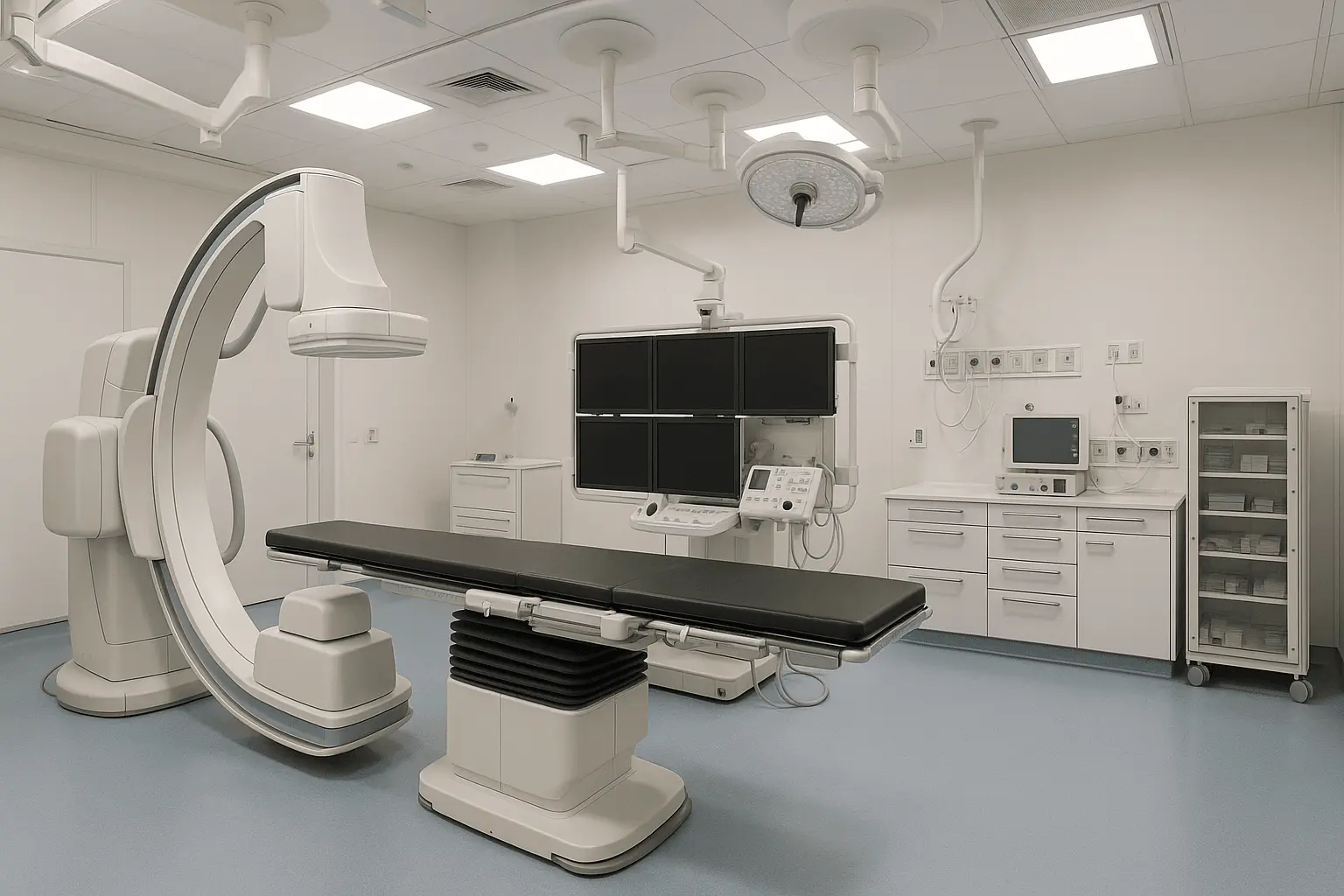
EP might be the best balance of high pay and reasonable lifestyle. You're still looking at $600K-$1.3M, but the cases are more predictable, and you're not dealing with as many emergencies.
The procedures are complex and well-reimbursed, and there aren't that many EP docs around, so you have leverage. Plus, the field is evolving rapidly with new technologies, which keeps it interesting and lucrative.
The limited number of qualified electrophysiologists creates a supply-demand imbalance that works in your favor. Major hospitals compete for EP specialists, often offering signing bonuses and guaranteed minimums that exceed other subspecialties.
Device management creates ongoing revenue streams through follow-up care and device monitoring. Your patients with pacemakers and defibrillators require regular monitoring, creating predictable income that supplements procedure-based earnings.
Everyone wants to do procedures, but general cardiology has its advantages
Everyone wants to do procedures, but general cardiology has its advantages. Sure, you're "only" making $400K-$700K, but you have a life. You can build a practice around prevention and chronic disease management, which is actually pretty satisfying.
And here's something people don't consider - the lifestyle medicine and concierge cardiology markets are exploding. Rich people will pay premium rates for a cardiologist who takes time with them and focuses on prevention. I know general cardiologists making $800K+ in concierge practices.
Building a large patient panel becomes crucial for maximizing your earning potential. Successful practitioners often manage 2,000-3,000 active patients, creating substantial revenue through office visits and diagnostic testing.
Value-based care contracts offer additional earning opportunities. Your ability to manage cardiac risk factors and prevent hospitalizations can result in quality bonuses that add $50,000-$100,000 to your annual compensation.
Take Dr. Michael Rodriguez, who built a successful general cardiology practice in Brooklyn over eight years. He grew his patient panel from 800 to 2,500 active patients, focusing on preventive care and cardiac rehabilitation programs. Combined with value-based care contracts, he's earning $650,000 annually while maintaining a 50-hour work week and minimal call responsibilities. Not bad for "just" general cardiology.
Location matters more than you think, and not just for the obvious reasons. Understanding the real cost of living in NYC is crucial when evaluating salary offers, because those hidden expenses will shock you.
The prestige factor has become even more pronounced recently, with Cardiologists ranking as the third highest-paying job in New York state with a "Mean Annual Salary: $348,860" according to a bestcolleges.com report, though this statewide average doesn't capture what you can actually make in NYC.

Yes, Manhattan pays the most. Yes, you'll be working with the best doctors and treating the most interesting cases. But you'll also be paying $5,000+ for a one-bedroom apartment and $30 for a basic lunch.
The Upper East Side is cardiology heaven - if you can afford to live there. Patient demographics are incredible, the hospitals are world-class, and the networking opportunities are unmatched. But the competition is fierce, and the cost of living will shock you even if you think you're prepared.
Cardiologists practicing near major hospitals like NewYork-Presbyterian/Weill Cornell and Mount Sinai can earn 10-20% above NYC averages, with salaries often exceeding $600,000 for experienced practitioners. But here's the reality check - I've seen doctors making $600K in Manhattan who have less disposable income than colleagues making $450K in Brooklyn because of the cost differential.
Your proximity to these institutions creates opportunities to work with some of the highest-paid cardiologists in the country. Patient demographics in this area include many high-net-worth individuals who seek premium cardiac care and are willing to pay for concierge services.
The concentration of medical specialists creates a robust referral network, but it also means you're competing with the best of the best for every patient. Real estate costs are substantial, but the revenue potential often justifies the investment - if you can survive the first few years.
Corporate-focused cardiology practices serving Wall Street and Midtown executives offer premium compensation packages including performance bonuses, with total compensation reaching $800,000-$1.2 million for senior physicians.
This is a unique patient population of high-stress executives and financial professionals. Your ability to provide immediate access and executive-level service commands premium compensation, but these patients expect perfection and convenience.
Corporate contracts with major financial firms create predictable revenue streams. Many Wall Street companies pay premium rates for on-site cardiac screening and immediate access to cardiologists for their executives. Executive health programs often include comprehensive cardiac risk assessments that can generate $5,000-$15,000 per evaluation.
But here's what they don't tell you - these patients can be demanding and entitled. You're not just a doctor, you're a service provider to people who are used to getting everything they want immediately.

Brooklyn and Queens get overlooked, but they shouldn't be. You might make $50K-$100K less than Manhattan, but your money goes a lot further. Plus, these areas are underserved, so you can build a practice quickly and make a real impact in the community.
Many cardiologists find that the cost of living in Brooklyn provides better value than Manhattan, allowing higher net income despite slightly lower gross salaries.
Cardiologists in Brooklyn and Queens typically earn $350,000-$650,000 annually, with opportunities for higher earnings in underserved communities through loan forgiveness programs and community health center incentives.
These boroughs have large, underserved populations with significant cardiac disease burden. Your expertise in managing complex cases creates opportunities for high patient volumes and strong community relationships. The diverse patient populations provide excellent training opportunities and the satisfaction of serving communities with genuine need for cardiac care.
Loan forgiveness programs in underserved areas can effectively increase your compensation by eliminating medical school debt. Some programs offer $50,000-$200,000 in loan forgiveness over 3-5 years of service, which is like getting a raise without the tax implications.
The Bronx and Staten Island represent excellent entry points for new cardiologists. Your $320,000-$550,000 starting salary often comes with rapid advancement opportunities that aren't available in more competitive Manhattan markets.
These areas have significant cardiac disease burden but fewer specialists, creating opportunities for quick practice growth. You can often build a substantial patient panel within 2-3 years of starting practice.
Partnership opportunities arise more quickly in these markets. Growing practices need experienced cardiologists to handle increasing patient volumes, often offering partnership tracks within 3-5 years instead of the 7-10 years you might wait in Manhattan.
Staten Island is like practicing in the suburbs while still being part of the NYC market. Lower overhead, easier parking (yes, that matters), and a more relaxed pace while still earning NYC-level salaries.
Here's where strategy really matters. The path you choose early on will determine your earning potential for decades.

Starting salary might be "only" $400K-$600K, but don't let that fool you. Academic positions offer something private practice doesn't - multiple revenue streams.
Research grants can add $100K-$300K to your income. Speaking fees from pharmaceutical companies can be substantial. Consulting work can pay $500-$2,000 per hour. And if you become a recognized expert in your field, the sky's the limit.
Academic cardiologists can supplement base salaries through research grants, speaking engagements, and consulting opportunities, potentially reaching total compensation of $700,000-$900,000 annually.
Principal investigators on major cardiac studies often receive $100,000-$300,000 annually in grant funding that supplements their clinical income. But here's the catch - writing grants is basically a second job, and there's no guarantee you'll get funded.
Speaking engagements become increasingly lucrative as you establish expertise. Recognized experts in cardiac imaging or heart failure management can earn $5,000-$25,000 per speaking engagement. I know academic cardiologists who make more from speaking than from their base salary.
Consulting opportunities with medical device companies and pharmaceutical firms provide additional revenue streams. Your clinical expertise and research background make you valuable for product development and clinical trial design.
Plus, academic positions often lead to leadership roles - department chair, medical director, etc. These positions can push total compensation well over $1M while giving you influence over the direction of medicine.
This is where the biggest money is, but it's also the biggest risk. Partnership buy-ins can be $200K-$500K, which is terrifying when you're already carrying student loans.
But if you pick the right practice and work hard, the returns can be incredible. I know partners in successful Manhattan practices pulling in $1.5M+ annually, plus they own equity in valuable real estate.
Private practice partners typically achieve buy-in after 3-5 years, with established partners earning $800,000-$1.5 million annually plus practice equity appreciation in valuable NYC real estate markets.
The buy-in process typically requires $200,000-$500,000 in capital, but the return on investment can be substantial. Established practices in prime NYC locations often generate 20-30% annual returns on partner investments.
Here's what they don't tell you - that 3-5 year track to partnership is basically an extended job interview. You're being evaluated on everything from your clinical skills to your ability to generate revenue to whether other partners like having lunch with you.
Practice equity appreciation in NYC real estate markets adds another wealth-building component. Many cardiology practices own their office buildings, and Manhattan commercial real estate has historically appreciated 5-8% annually.
Take Dr. Jennifer Liu, who joined a successful Manhattan cardiology practice as an employed physician earning $475,000 annually. After four years of proving herself, she was offered partnership with a $350,000 buy-in. As a partner, her total compensation jumped to $950,000 in year one, with additional equity appreciation of $75,000 annually. But she also went from being an employee to being responsible for business decisions, marketing, and the stress of practice ownership.
Hospital employment gets a bad rap, but it has advantages. Predictable salary, great benefits, someone else handles the business side, and you can focus on medicine.
Hospital positions often include $50,000-$100,000 in additional value through health insurance, retirement contributions, malpractice coverage, and continuing education allowances.
Malpractice insurance coverage alone can be worth $50,000-$80,000 annually in NYC's high-risk legal environment. Hospital-provided coverage eliminates this significant expense and the administrative burden of managing your own policy.
Retirement contributions through hospital 403(b) plans often include employer matching of 6-12% of your salary. On a $500,000 salary, this represents $30,000-$60,000 in additional compensation annually.
The benefits package often adds real value that doesn't appear in your base salary figure. But here's the downside - you have less control over your schedule, your patient mix, and your earning potential is often capped.

Nobody teaches you how to negotiate in medical school, but it's a crucial skill that can cost you hundreds of thousands over your career. Understanding how much does a cardiologist make is just the starting point - you need to know how to get what you're worth.
When you're also considering NYC salary calculations and various deductions, negotiating becomes even more critical.
Don't just look at salary surveys - they're often outdated or don't reflect local markets. Talk to people actually working in NYC. Join the New York Cardiological Society and network. Use recruiters, but remember they have their own agenda.
Medical professionals should utilize resources like Medscape Physician Compensation Report, MGMA surveys, and specialized cardiology recruitment firms to establish baseline salary expectations, with NYC premiums typically adding 20-35% to national averages.
Medscape's annual physician compensation report provides national benchmarks, but you'll need to add 20-35% for NYC market premiums. MGMA surveys offer more detailed compensation data broken down by practice size and geographic region, but the NYC-specific data can be hard to find.
Specialized cardiology recruitment firms maintain current salary data and can provide insights into specific opportunities. These firms often have access to confidential salary information that isn't publicly available, but remember - they get paid when you take a job, so their advice isn't always objective.
Your professional network provides the most accurate compensation intelligence. Current NYC cardiologists can share real-world salary information that surveys might miss or underreport.
Medical recruiters specializing in cardiology have detailed knowledge of current market rates, but take their advice with a grain of salt. They're motivated to help you get hired, not necessarily to maximize your salary.
Alumni networks from your medical school and residency programs often include cardiologists practicing in NYC. These connections can provide honest assessments of different practice opportunities and compensation packages - and they have no financial incentive to mislead you.
That $500K salary offer might actually be worth less than the $450K offer when you factor in benefits, call coverage, malpractice costs, and partnership timeline.
Never focus solely on base salary when evaluating offers. The total compensation package often includes $75,000-$150,000 in additional value that significantly impacts your financial position.
Malpractice insurance represents a major expense that varies significantly between employers. Some hospitals provide full coverage while others require you to contribute $20,000-$40,000 annually toward premiums.
Health insurance benefits can vary dramatically in cost and coverage. Premium plans might save you $15,000-$25,000 annually compared to purchasing individual coverage, especially for family plans.
Many NYC cardiology positions include RVU-based bonuses or quality metrics incentives that can add $50,000-$200,000 annually to base compensation, but you need to understand how they're structured.
RVU-based bonuses are common and can significantly boost your income, but they also create pressure to see more patients and do more procedures. Quality metrics bonuses reward patient satisfaction scores and clinical outcomes, but the criteria can be subjective and outside your control.
Call coverage payments provide additional income for emergency and weekend coverage. In high-volume NYC hospitals, call payments can add $30,000-$100,000 annually, but they also mean your phone never stops ringing.
Salary Negotiation Checklist:
Success in NYC cardiology isn't just about clinical skills - it's about strategy, networking, and positioning yourself for opportunities.
The journey to high-earning NYC cardiology positions starts with strategic decisions in medical school and residency.
Your medical school choice impacts your entire career trajectory. Schools with strong NYC hospital affiliations like Columbia, NYU, or Mount Sinai provide direct pathways to competitive residency programs.
These institutions offer research opportunities with faculty who are leaders in cardiology. Early research experience and mentorship relationships often lead to strong letters of recommendation and insider knowledge of the best fellowship programs.
But don't assume you need to train in NYC to work here. Some of the most successful cardiologists I know trained elsewhere and brought fresh perspectives to the market. The key is building relationships and demonstrating excellence wherever you are.
Completing internal medicine residency and cardiology fellowship at prestigious NYC institutions provides networking opportunities and direct pathways to attending positions, with fellows often receiving first consideration for staff positions.
Fellowship programs often have direct pipelines to attending positions. Many NYC hospitals preferentially hire their own fellows, offering starting salaries of $400,000-$500,000 to physicians they've trained and evaluated.
Subspecialty fellowship training significantly impacts your earning potential. Interventional cardiology or electrophysiology fellowships position you for the highest-paying positions, but make sure you actually want to do those procedures for the next 30 years.

Building strategic relationships throughout training and early career phases directly impacts access to high-compensation opportunities.
Active participation in organizations like the New York Cardiological Society and American College of Cardiology provides visibility among practice leaders and hospital administrators who control access to the best positions.
Committee participation demonstrates leadership skills and provides networking opportunities with established cardiologists. Many high-paying positions are filled through these professional connections before they're ever posted publicly.
Speaking opportunities at medical conferences enhance your professional visibility and establish you as an expert. This recognition often leads to job opportunities and consulting arrangements that can significantly boost your income.
Developing relationships with established NYC cardiologists who can provide career guidance and position referrals is essential. Many high-paying opportunities are filled through professional networks before public posting.
Senior cardiologists can provide insights into practice opportunities, compensation negotiations, and career development strategies. Their guidance helps you avoid common pitfalls and make strategic career decisions.
Sponsors who actively advocate for your career advancement are even more valuable than traditional mentors. These relationships often develop through research collaborations or clinical partnerships, and they can open doors that would otherwise remain closed.
Understanding NYC's cardiology job market cycles can significantly impact your initial salary negotiations and long-term earning trajectory.
Most NYC cardiology positions open during spring recruiting cycles (March-June) for July starts, requiring candidates to begin networking and application processes 12-18 months in advance.
Beginning your job search 12-18 months before your desired start date positions you for the best opportunities. The highest-paying positions often have extended recruitment timelines and multiple interview rounds.
Contract negotiations typically occur 6-12 months before start dates, giving you time to compare multiple offers and negotiate optimal terms. Don't wait until the last minute - you'll be choosing from leftovers.
Economic downturns often create opportunities for skilled cardiologists as hospitals consolidate and seek experienced physicians who can maintain revenue streams.
Healthcare consolidation during challenging economic periods can create opportunities for leadership positions and equity participation in growing health systems. Understanding these cycles helps you time career moves and negotiate from positions of strength.
Career Planning Timeline:
The demanding lifestyle of NYC cardiology, with its substantial financial rewards and high-stress environment, creates unique challenges for maintaining work-life balance. After building a successful practice and achieving significant financial success, many cardiologists seek exclusive experiences that match their professional accomplishments.
For busy medical professionals seeking quality housing options during their career transitions, tips for moving to NYC can provide valuable guidance on navigating the competitive housing market while establishing your cardiology practice.
We understand the pressures you face as a successful medical professional. The Outpost Club's invitation-only golf society provides exactly the type of refined experience that appeals to accomplished cardiologists who've dedicated years to mastering their craft. With over 70 annual events and access to architecturally significant private clubs nationwide, we offer the perfect outlet for relaxation and networking away from the hospital environment.
Our concierge services prove particularly valuable for busy physicians with limited time to arrange leisure activities. When you want to unwind with a round at Shinnecock Hills or Pine Valley, our 24-hour concierge handles all arrangements, allowing you to focus on your practice while ensuring your precious free time is spent in extraordinary settings with like-minded professionals who appreciate excellence.

For medical professionals relocating to pursue these opportunities, understanding moving to New York costs and logistics becomes essential for making informed decisions about career transitions and maximizing the financial benefits of NYC cardiology positions.
Look, here's the bottom line: achieving top-tier cardiologist compensation in NYC isn't just about being a good doctor. You need to be strategic, politically savvy, and willing to play the long game. The money is absolutely there - I've seen cardiologists go from $350K starting salaries to $1.5M+ as partners in less than a decade.
But it requires more than clinical excellence. You need to understand the business side of medicine, build the right relationships, and position yourself strategically within this complex and competitive market. The cardiologists who succeed aren't necessarily the smartest ones - they're the ones who understand how the game is played.
The financial rewards can be extraordinary, but they come with real costs. The pressure is intense, the hours are brutal, and the competition never stops. You'll miss family dinners, skip vacations, and deal with life-or-death decisions on a daily basis. Make sure you're doing this for the right reasons, because the money alone won't sustain you through the challenges ahead.
If you're willing to navigate the complexity, work the relationships, and commit to excellence both clinically and professionally, NYC cardiology offers some of the best compensation opportunities in medicine. Just remember - it's not just about the paycheck. It's about building a career that's both financially rewarding and professionally fulfilling in one of the most demanding medical markets in the world.
The opportunities are real, the money is substantial, and the professional growth potential is unmatched. But success requires strategy, persistence, and a clear understanding of what you're signing up for. Choose wisely, plan carefully, and be prepared to work harder than you ever thought possible. The rewards - both financial and professional - can be worth it for those who play the game right.

Household supplies can be changed or decreaased at Outpost Club’s discretion, or based on supply availability. Outpost is not responsible for temporary losses of utility service. Outpost Club is not responsible for any damages due to absence of any supplies or utilities


If you have a sales related question please call
680-688-7678

 Hot Deals