Creative Director Salary NYC: What You'll Actually Earn in America's Creative Capital
Jan 9, 2026

Jan 9, 2026
Look, I've been watching NYC's creative scene for years, and here's what nobody tells you upfront: the salary game here isn't just about your portfolio or experience. It's about understanding that you're not just competing for a job - you're fighting for your place in the most cutthroat creative ecosystem on the planet.
When people throw around that $212,782 average total compensation number, they're including everything - base salary, bonuses, the works. But here's the thing: averages don't pay your rent. What matters is where you actually land in that range, and trust me, there's a huge difference between scraping by at $120k and living comfortably at $200k+.
The wild part? These salaries aren't just about supply and demand. They reflect what happens when creative work can literally make or break a brand overnight. I've seen campaigns that turned unknown startups into household names, and others that cost CMOs their jobs. When you're playing at that level, companies pay accordingly.
Just like understanding what you actually need to survive in NYC financially helps with life planning, knowing where creative director pay fits in the bigger picture keeps you grounded.
Here's something I learned the hard way: that NYC salary premium isn't just about cost of living. You're getting paid extra because you're working where the biggest creative decisions happen. The campaign you're sweating over at 11 PM? It might run during the Super Bowl. That brand strategy you're presenting? It could influence how millions of people think about a product.
I remember talking to a creative director who moved here from Chicago. She told me, "The pressure is insane, but when you nail it here, you know you can handle anything." That confidence? It's worth every extra dollar you negotiate.
This reality drives compensation upward because companies understand they're not just hiring your creative skills - they're investing in your ability to navigate the most competitive creative market in the world.
Okay, let's get real about this salary range because it's not as random as it looks. From conversations I've had with CDs across the city - and yes, we do talk money when we're three drinks deep at industry events - here's how it actually breaks down.
If you're seeing $120k-$140k, you're probably looking at your first CD role or joining some scrappy agency in Brooklyn that's "building something special." Nothing wrong with that, but know what you're getting into. Most experienced CDs are actually landing between $200k-$210k, which tells you where the real market sits.
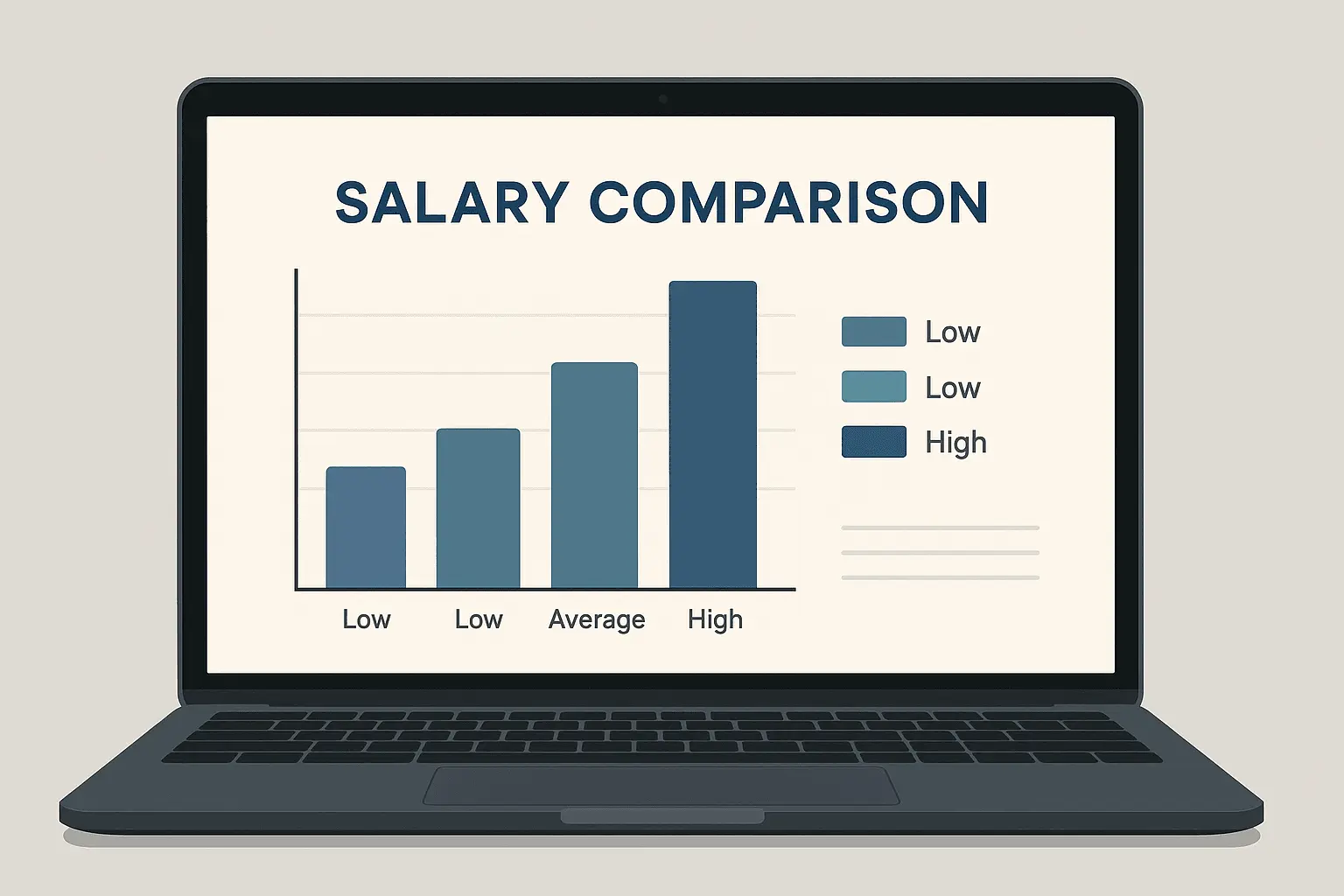
The middle tier - $150k-$190k - is where most people with 5-8 years of leadership experience end up. You've proven you won't completely screw up a campaign, but you haven't yet reached that level where clients specifically ask for you by name.
The $200k+ club? That's where things get interesting. At this level, you're not just making ads - you're the person they call when a client's business is on the line. I know a CD at a major agency who got a $40k bump just because she successfully turned around a relationship with a client who was about to fire them.
|
Experience Level |
Salary Range |
Reality Check |
What You're Actually Doing |
|
First-time CD |
$120,000-$140,000 |
Lots of late nights, proving yourself |
Learning to manage people who used to be your peers |
|
Mid-Level CD |
$150,000-$190,000 |
Comfortable but not rich |
Juggling creative work with way too many meetings |
|
Senior CD |
$200,000-$250,000+ |
Finally feeling like you made it |
Solving problems that keep CEOs awake at night |
Here's where it gets tricky. Traditional agencies still throw around the biggest base salaries, especially if you're at one of the big networks with Fortune 500 clients. The data shows that companies with 201-500 employees pay CDs around $194,000 on average, but honestly, size isn't everything.
Tech companies play a different game entirely. They might lowball you on base salary, but then wave equity packages around like candy. I have a friend who took a $30k pay cut to join a fintech startup. Two years later, when they went public, she bought a house in Park Slope. Cash.
In-house gigs at big brands are the sweet spot for work-life balance, but don't expect agency-level bonuses. You'll get decent base pay, solid benefits, and the luxury of not having to pitch new business every quarter.
Here's a reality check: A CD at Ogilvy might pull $185k base plus a 20% bonus, while someone at a hot startup could be looking at $160k base but equity that could be worth six figures if things go right. Choose your adventure.
Let me be brutally honest: your portfolio matters more than your charm, your connections, or how well you interview. I've seen mediocre personalities with killer portfolios get hired over likable people with weak work.

But here's what most people get wrong - it's not just about pretty pictures. You need to show business impact. Can you prove your campaign increased sales? Did your rebrand help a client raise their Series B? That's the stuff that gets you to the top of the salary range.
I know a CD who includes a slide in every portfolio presentation showing the ROI of her last three campaigns. She's never negotiated a salary below $220k. Coincidence? I think not.
The brands in your portfolio also signal your ability to handle pressure. When you've successfully launched campaigns for companies where creative missteps can cost millions, you've demonstrated a level of strategic thinking and execution that commands premium compensation.
What Your Portfolio Actually Needs:
Here's something they don't teach you in design school: being a creative director is maybe 30% about creative work and 70% about managing people, politics, and pressure. The CDs making the big money? They've figured out how to build teams that don't want to quit every six months.
I've watched talented creatives flame out in CD roles because they couldn't handle the people management part. Meanwhile, decent creatives who are great at building consensus and managing up? They're the ones getting promoted and pulling down $200k+.
The secret sauce is learning to work with account management and strategy without wanting to throw your laptop out the window. CDs who can translate between creative vision and business objectives become indispensable. And indispensable people get paid.
Cross-departmental collaboration skills are increasingly valuable. Creative directors who can work effectively with strategy, account management, and client teams become indispensable to agency operations. This collaborative ability often separates good creative directors from great ones in compensation discussions.
Look, you don't need to be a coding wizard, but if you're still talking about "digital" like it's some separate thing, you're already behind. The CDs making serious money understand how AI tools can speed up their process, how social media actually works beyond posting pretty pictures, and why data isn't the enemy of creativity.
The recent McDonald's AI advertising controversy perfectly shows why companies need creative directors who can navigate new technology thoughtfully. Get ahead of this curve, and you'll have serious negotiating power.

I know CDs who've gotten $25k bumps just because they could help their agencies figure out TikTok strategy or implement AI tools without losing the human touch. The future is already here - make sure you're part of it.
Your ability to guide teams through digital transformation directly impacts your value to employers. Companies are paying more for creative directors who can help them adapt to rapidly changing digital landscapes while maintaining creative excellence.
Breaking into your first creative director role is like learning to drive in Manhattan traffic - terrifying but necessary. You'll probably start at a smaller agency where you can make mistakes without ending up on AdAge's "Campaigns We'd Rather Forget" list.
The person featured in Refinery29's salary story who went from $115k to $137k shows how staying put and proving yourself can pay off. But honestly? That $22k bump over however long isn't exactly life-changing money in NYC.
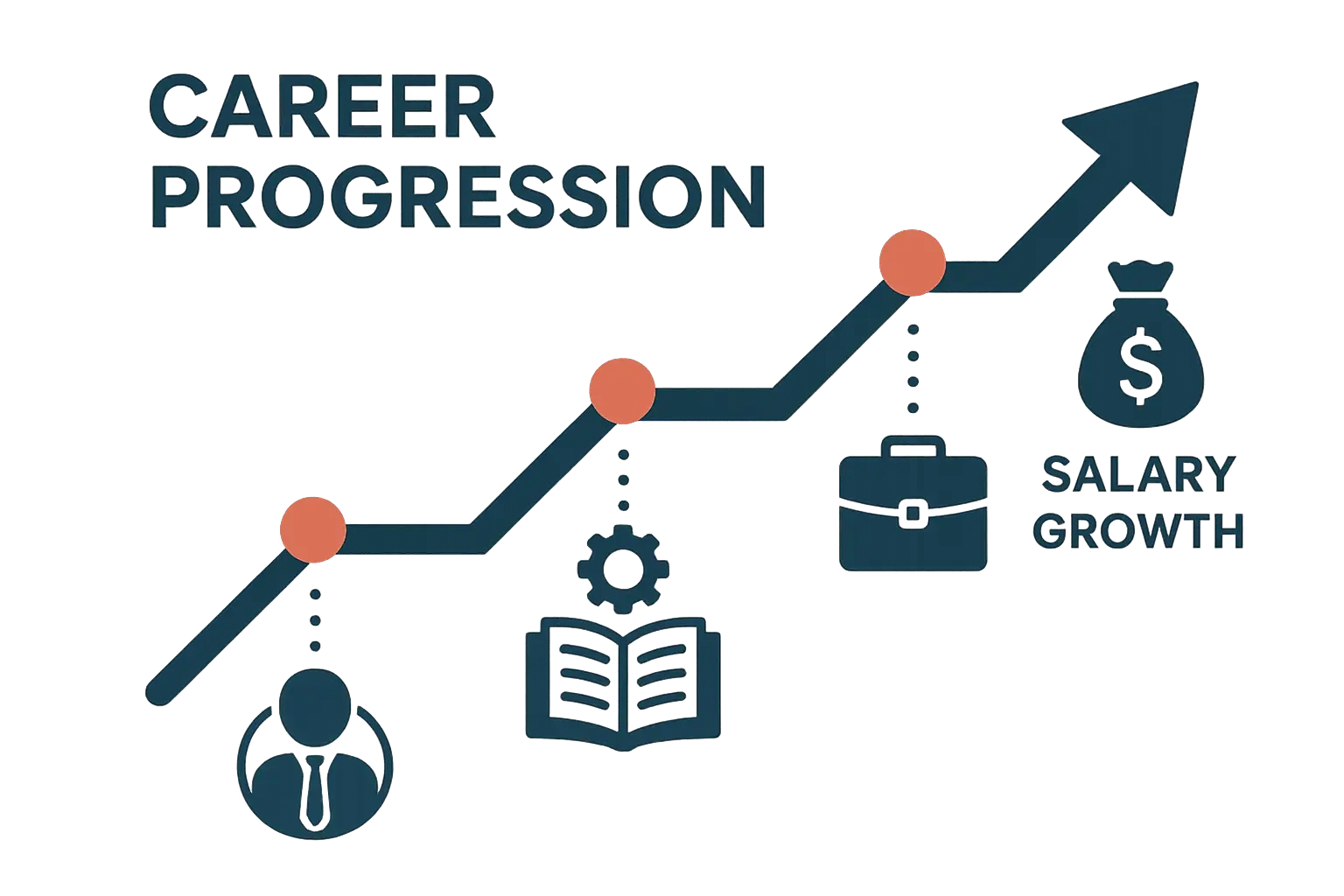
Your first CD gig is about building credibility, not maximizing salary. Focus on agencies where you won't be thrown to the wolves immediately, where you can work on diverse projects, and where someone will actually mentor you instead of just throwing you into client meetings and hoping for the best.
Don't underestimate the value of mentorship during this phase. Senior creative directors who can guide your development are worth more than immediate salary increases. The relationships you build early in your creative director career often influence opportunities throughout your trajectory.
And speaking of money - if you're trying to figure out how much you actually need to live decently while building your career, understanding the real cost of living in NYC will keep you from taking a job that sounds good on paper but leaves you eating ramen every night.
Once you've got a few years of CD experience under your belt, it's time to think strategically. This is where a lot of people mess up - they jump at the first offer that's $20k more without thinking about the bigger picture.
Smart CDs at this stage start building relationships before they need them. That person you grab drinks with after industry events? They might be the one who calls you about a $180k opportunity when you're ready to move. The creative community in NYC is smaller than you think.
Awards matter more at this level. Not because they're shiny, but because they signal to other agencies that your work is worth stealing... I mean, worth hiring you for. A Cannes Lion on your resume is basically a $30k salary bump waiting to happen.
Here's a real example: I know a CD who spent two years at a mid-size agency, won a One Show Gold, then leveraged that into a role at a network agency for 40% more money. The award didn't just validate her work - it gave her the confidence to ask for what she was worth.
Developing new business skills adds substantial value to your profile. Creative directors who can contribute to pitch processes, help retain clients, and identify growth opportunities within existing accounts are positioned for accelerated salary growth.
When you're negotiating senior CD packages, you're not just talking salary anymore. You're looking at equity, profit sharing, bonuses that can double your annual income, and perks that actually matter.
Equity negotiations are where things get interesting. If you're joining a growing agency or a public company, those stock options could be worth serious money. But here's the catch - you need to understand what you're getting into. I've seen people get excited about equity that ended up being worth less than the coffee budget.
Performance bonuses at this level aren't just nice-to-haves - they're where you can really cash in. But make sure you understand what you're being measured on. New business wins? Client retention? Creative awards? Know the game you're playing before you agree to the rules.
Professional development budgets become more significant at senior
Professional development budgets become more significant at senior levels. Negotiating substantial conference attendance, continuing education, and sabbatical opportunities can add significant value to your total compensation package.
Salary websites are fine for getting a general idea, but the real information comes from your network. Other CDs, recruiters who specialize in creative roles, even account people who've seen agency salary ranges - these are your best sources for current market rates.
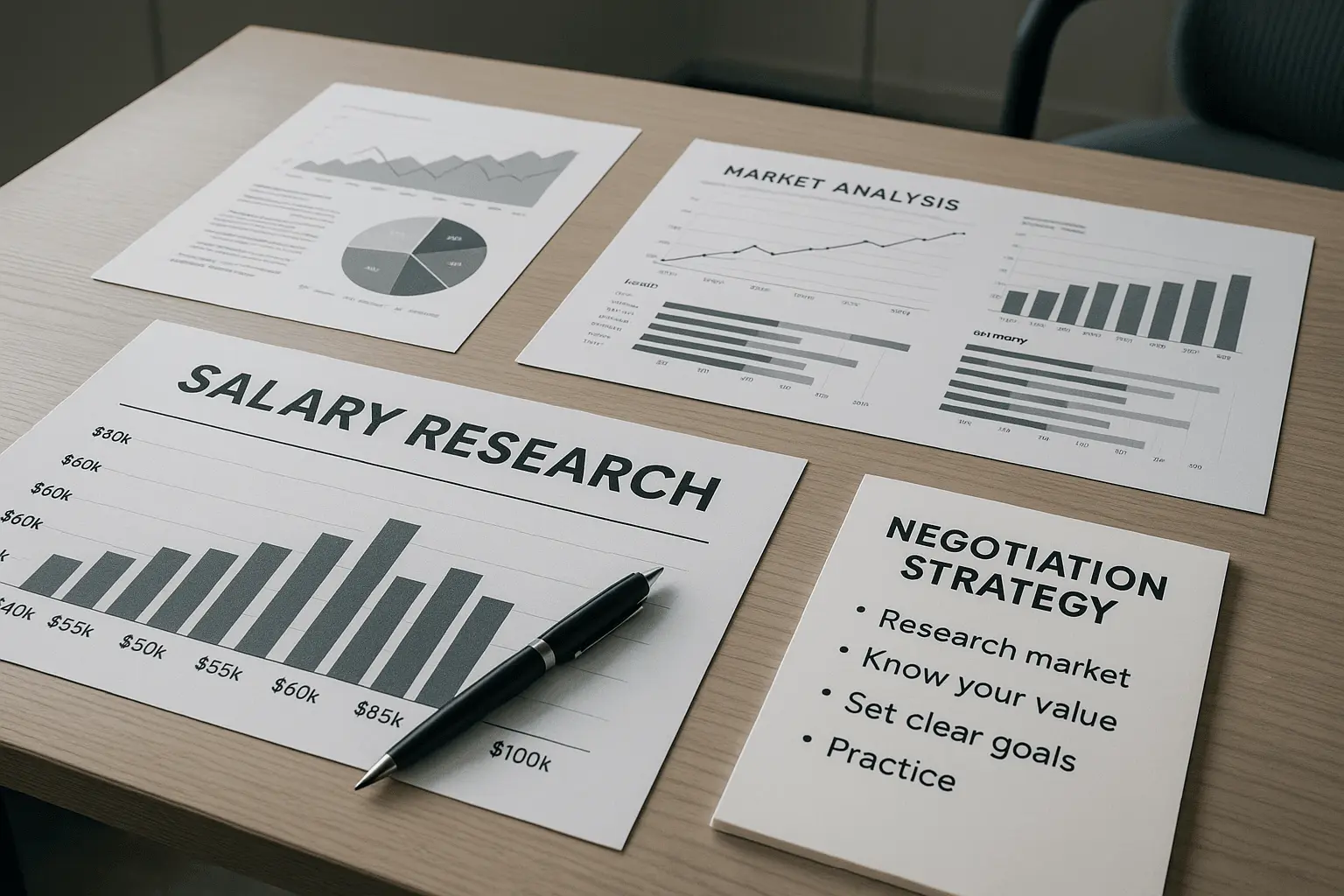
Before you walk into any salary conversation, know the company's financial health. Are they winning new business? Losing major clients? Growing their team or laying people off? This context tells you whether they're in a position to pay top dollar or if you're negotiating from a weaker position.
Understanding the financial health of potential employers gives you negotiation context. Agencies winning new business or companies experiencing growth are more likely to offer competitive packages than those facing budget constraints.
Real Talk Negotiation Prep:
Just like using salary calculators to understand your take-home pay, you need to know what that big salary number actually means after taxes and living expenses.
Your portfolio presentation for salary negotiations isn't the same dog-and-pony show you'd do for a creative review. You need to prove business impact alongside creative excellence. Show them how your work made money, saved money, or solved real business problems.
Case studies that demonstrate problem-solving are gold. Don't just show the pretty final campaign - show the mess you inherited, the constraints you worked within, and the results you delivered. That story is worth thousands in salary negotiations.
Client testimonials aren't just nice-to-haves - they're proof that you're not just another creative director. When clients specifically ask for you, request your involvement on pitches, or credit you with saving their business, you have concrete evidence of your value.
A creative director presenting a case study showing how their rebrand increased client's market share by 15% and generated $3M in additional revenue provides concrete justification for a salary at the top of the market range.
Health benefits in NYC can easily be worth $20k+ annually, so don't ignore them when comparing offers. A company with amazing health coverage might be offering better total compensation than one with a higher base salary but terrible benefits.
Flexible work arrangements have real monetary value. If you can work from home two days a week, you're saving commuting costs and time. That might be worth $5k annually in real terms, even if it doesn't show up on your pay stub.
Professional development budgets can accelerate your career in ways that immediate salary increases can't. Agencies that send you to Cannes, pay for workshops, or fund continuing education are investing in your future earning potential.
Vacation policies and sabbatical opportunities become more valuable as your career progresses. Senior creative directors often negotiate additional vacation time or sabbatical policies that provide work-life balance benefits worth thousands annually.
|
Benefit Type |
What It's Really Worth |
Why It Matters |
Negotiation Tip |
|
Health/Dental/Vision |
$15,000-$25,000 |
You'll actually use this |
Compare deductibles, not just premiums |
|
Flexible Work |
$3,000-$8,000 |
Time and money saved |
Calculate your actual commuting costs |
|
Professional Development |
$5,000-$15,000 |
Career acceleration |
Ask for specific conference attendance |
|
Extra PTO |
$2,000-$10,000 |
Sanity preservation |
Negotiate for more than the standard |
Remote work has completely scrambled the salary game for creative directors. Some agencies are holding firm on full NYC salaries regardless of where you work, while others are adjusting pay based on your zip code. It's the Wild West out there.
Hybrid arrangements might be the sweet spot - you keep access to NYC's creative energy and client base while gaining flexibility that's worth real money. The time and cash you save on commuting can effectively increase your take-home pay by thousands annually.

Fully remote CD positions are popping up more frequently, though they often come with different compensation structures. You might see lower base salaries offset by equity packages or performance bonuses tied to measurable creative outcomes rather than face time in the office.
If you're thinking about relocating while keeping that NYC salary, understanding the logistics and costs of major moves can help inform your career transition planning.
All these agency mergers and acquisitions are creating bigger companies with more standardized pay structures. On one hand, this can limit your negotiation flexibility. On the other hand, larger agencies often have better resources for competitive compensation packages and clearer advancement paths.
The downside? Consolidation means fewer senior-level positions available. As agencies merge, duplicate creative director roles get eliminated, making competition for the remaining spots more intense. It's like musical chairs, but with six-figure salaries.
However, consolidation can also reduce the number of senior-level positions available. As agencies merge, duplicate creative director roles are often eliminated, making competition for remaining positions more intense.
Startup compensation packages require a completely different evaluation framework than traditional agency offers. That lower base salary might be offset by equity that could buy you a house in five years - or be worth absolutely nothing. I've seen both outcomes, sometimes at the same company.
Startups often offer faster career advancement and more creative freedom. You might reach senior CD levels in three years instead of seven, but you're also betting on a company that might not exist next year. It's high risk, high reward, and your tolerance for uncertainty should drive your decision.
The risk-reward calculation depends on your life stage. If you're 28 with minimal financial obligations, startup equity upside might be worth the gamble. If you're 38 with a mortgage and kids, that stable agency salary probably looks a lot more attractive.
Performance bonuses for CDs typically range from 10-25% of base salary, but here's the thing nobody tells you - exceptional years can see bonuses hitting 50% or more. I know a CD who made $320k total comp on a $200k base salary because her team's work drove massive new business wins.
Individual performance metrics usually include creative awards, client satisfaction scores, team retention rates, and contribution to new business. Understanding how your agency measures CD performance helps you focus on activities that actually drive bonus compensation instead of just doing good work and hoping someone notices.
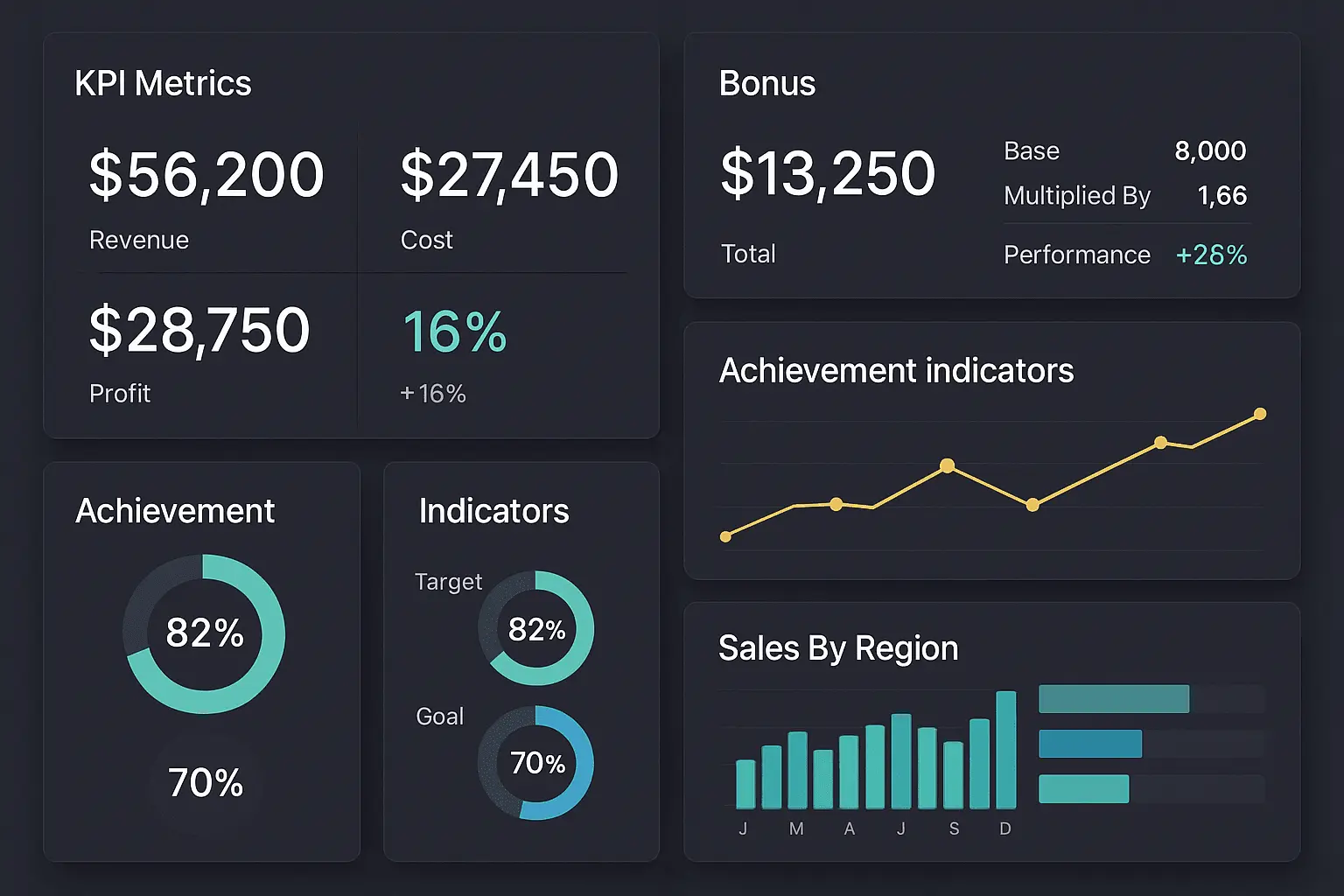
Agency financial performance components mean your compensation is tied to overall business success. This can be amazing when agencies are growing, but it also means your bonus disappears when the agency has a rough year. It's motivation to care about the business side of things, whether you want to or not.
Some agencies offer quarterly bonuses on top of annual ones. These shorter-term incentives provide additional income throughout the year and help retain top talent in a competitive market where your best people are always getting poached.
Equity compensation is becoming more common for senior CDs, especially at tech companies and well-funded startups. These packages can provide life-changing money that makes traditional salary and bonus structures look quaint.
Stock options at public companies offer more predictable value than startup equity, though the upside potential is usually more limited. You can evaluate these based on current stock performance and realistic growth prospects rather than pure speculation.
Startup equity requires understanding vesting schedules, company valuation, and exit potential. It's riskier than public company options, but successful startup equity can literally change your life. Fair warning though - I've also seen people pass up guaranteed money for equity that ended up worthless.
Your equity negotiation should consider your overall financial situation and risk tolerance. If you've got stable finances and can afford to gamble, equity-heavy packages might make sense. If you need that money to pay rent, prioritize higher base salaries.
Professional development budgets for CDs typically range from $5k-$15k annually at leading agencies. This covers conference attendance, workshops, and continuing education that keeps you current with trends and expands your capabilities beyond just making pretty things.
Sabbatical programs are becoming retention tools for senior creative talent. After 5-7 years of service, you might be eligible for 4-8 weeks of paid sabbatical time. It sounds fluffy, but when you're burned out from years of impossible deadlines, that time off can literally save your career.
These opportunities have real value beyond their immediate cost. The skills you develop, connections you make, and creative inspiration you gain can accelerate career progression and increase long-term earning potential in ways that immediate salary bumps can't match.
Some agencies also offer tuition reimbursement for relevant graduate programs or professional certifications. If you're interested in developing business skills or specialized expertise, these programs can provide substantial value for your career trajectory.
Manhattan remains where the biggest money is, with the highest-paying opportunities concentrated in Midtown and Lower Manhattan. But Brooklyn and Queens are developing their own creative scenes with interesting compensation dynamics that might surprise you.
Brooklyn-based agencies often offer salaries 5-10% lower than Manhattan counterparts, but this difference gets offset by lower commuting costs and often better work-life balance. You might find yourself with more actual free time, which has real value beyond what shows up on your paycheck.
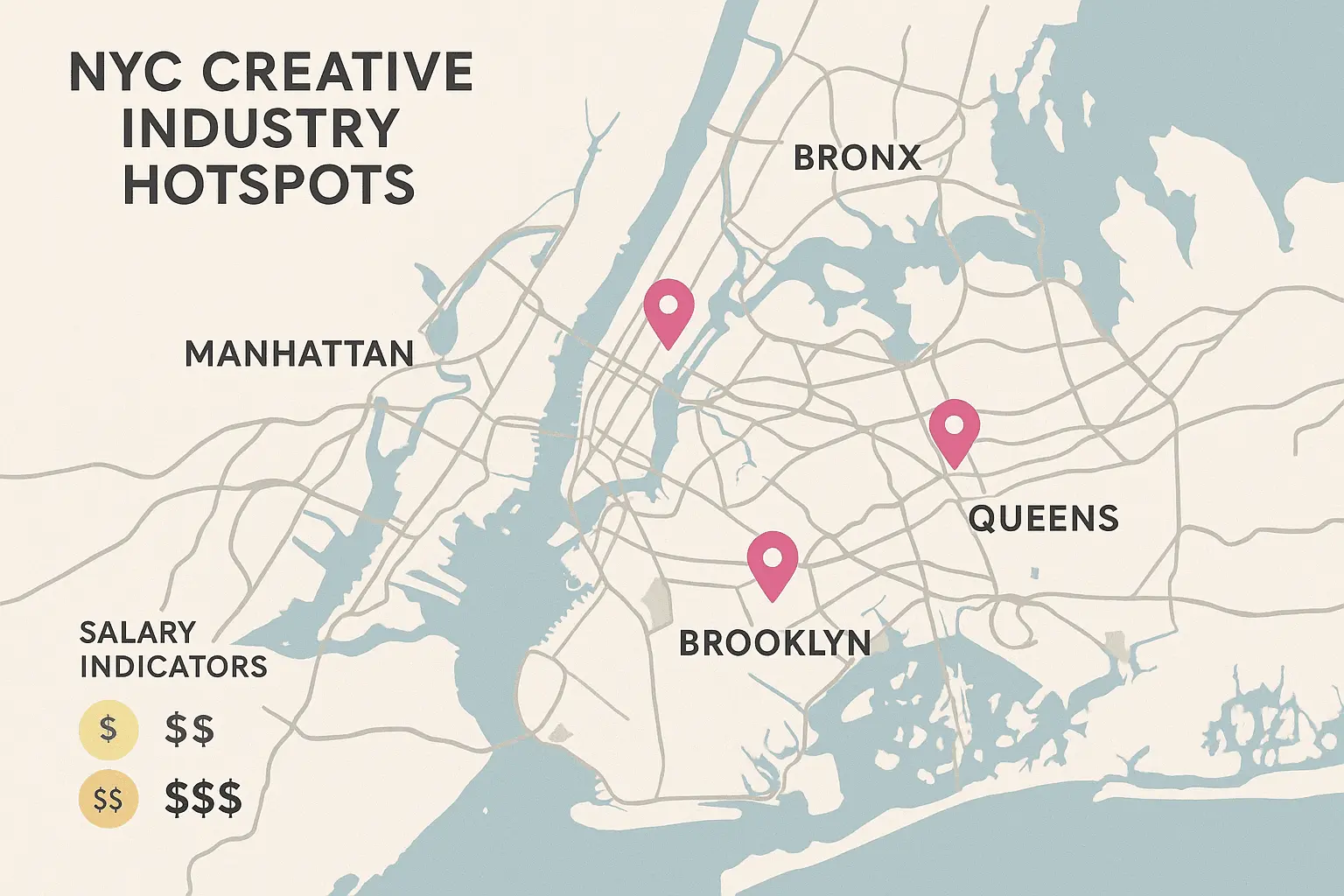
Queens and other outer boroughs are seeing growth in creative opportunities, particularly digital and tech-focused companies. These positions might offer equity upside that compensates for lower base salaries compared to traditional Manhattan agencies.
The commute factor significantly impacts your effective compensation. Working in Manhattan but living in outer boroughs costs $200-$400 monthly in transportation, while working locally eliminates these costs entirely. Do the math - it adds up.
Creative professionals exploring outer borough opportunities should understand Brooklyn's emerging creative neighborhoods and their unique advantages for career growth.
LA creative directors typically earn 15-20% less than NYC counterparts, though the cost of living difference is smaller than you'd expect. The entertainment industry focus provides unique opportunities that don't exist in NYC's more advertising-focused market.
Chicago offers CD salaries about 25-30% lower than NYC, but the cost of living difference often makes Chicago compensation more attractive from a purchasing power perspective. You might actually be able to buy a house, imagine that.
Austin, Portland, and other emerging creative markets offer salaries 30-40% lower than NYC but with significantly lower living costs. These markets can be attractive for CDs seeking entrepreneurial opportunities or lifestyle changes that don't involve paying $4,000/month for a one-bedroom apartment.
Remote work is blurring these geographic distinctions. Some NYC agencies now hire CDs in lower-cost markets at salary levels between local rates and full NYC compensation. It's creating interesting arbitrage opportunities for savvy professionals.
London CD salaries roughly match NYC when converted to dollars, but Brexit and economic uncertainty have created volatility in the UK market. Plus, visa requirements for US citizens add complexity to international moves that most people underestimate.
Tokyo and other Asian markets offer interesting opportunities, particularly for CDs with digital expertise. Salaries might be lower in dollar terms, but the experience of working in rapidly growing Asian markets can provide valuable career development that pays off long-term.
European markets like Amsterdam, Berlin, and Stockholm are developing strong creative industries with competitive compensation. These markets often offer better work-life balance and social benefits that add value beyond base salary, though you'll need to adjust your lifestyle expectations accordingly.
International experience can significantly boost your NYC earning potential when you return. CDs with global experience often command premium salaries due to their broader perspective and cultural understanding that's increasingly valuable in our connected world.
Strategic career planning for CDs requires thinking beyond immediate salary increases. Each move should build toward long-term compensation goals while developing skills and experience that command premium salaries down the road.
Moving between agency types - boutique to network, traditional advertising to digital-first - can accelerate salary growth by exposing you to different client types and creative challenges. Each transition should add something new to your toolkit.
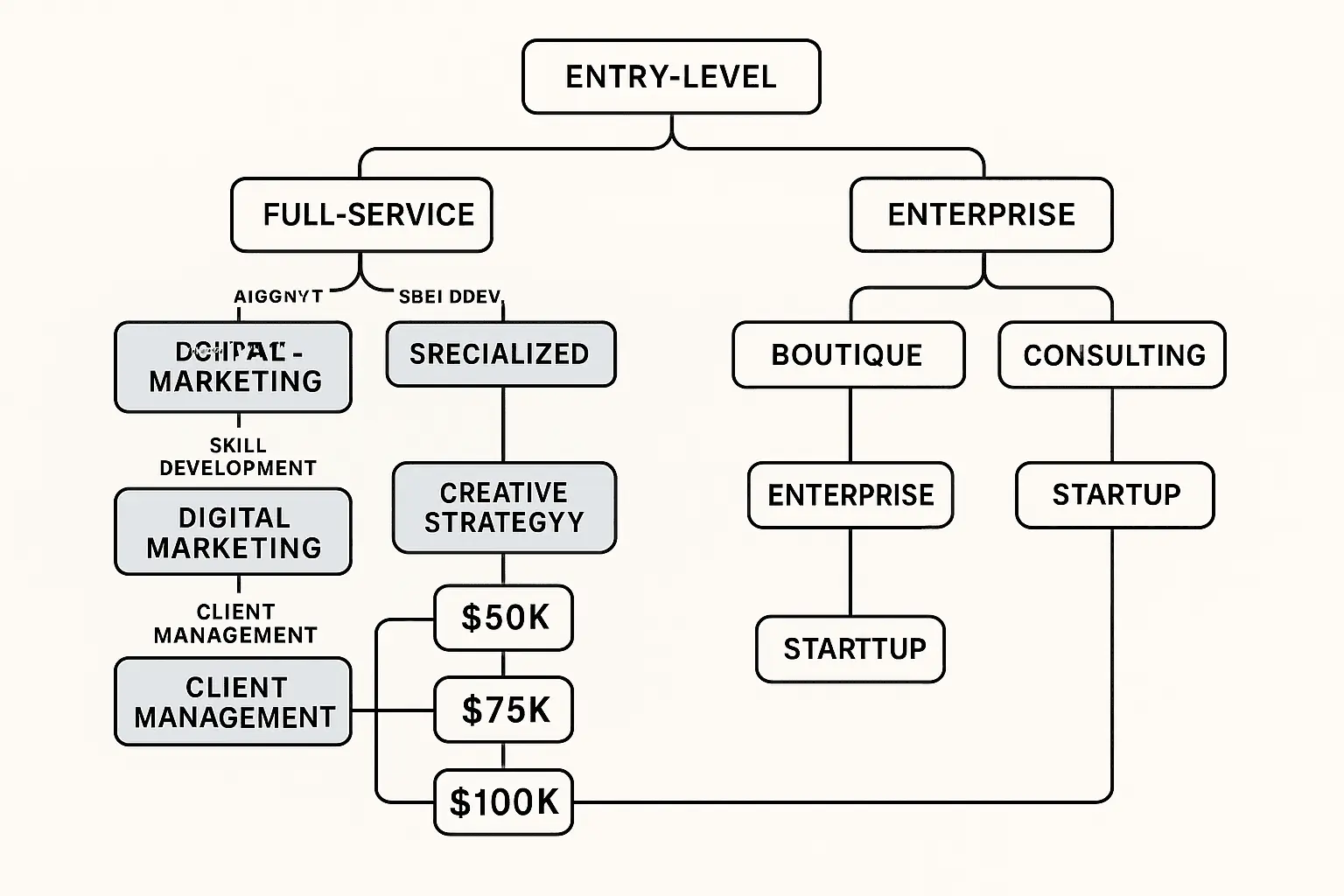
Timing your moves with industry cycles can significantly impact compensation. Moving during periods of agency growth or industry expansion often results in better packages than moves during economic uncertainty. Pay attention to the business cycle, not just creative opportunities.
Building relationships before you need them is crucial for strategic moves. The best opportunities come through your network rather than public job postings, and these network-driven opportunities typically offer better compensation packages because companies trust referrals more than cold applications.
Strategic Career Planning Reality Check:
For creative professionals considering major career transitions, understanding the practical aspects of relocating to NYC helps inform strategic career decisions.
Freelance creative consulting can substantially supplement your full-time CD salary, with rates typically ranging from $150-$500 per hour depending on your expertise, client type, and project complexity. The key is building this income stream without creating conflicts with your day job.
Building a consulting practice requires developing expertise in specific areas - brand strategy, digital transformation, or creative team development. Specialization allows you to command higher rates and attract premium clients who value deep expertise over general creative skills.
The trick is managing consulting work alongside full-time responsibilities without burning out or creating ethical conflicts. Many successful CDs focus on consulting that complements rather than competes with their primary employer's services.
Long-term consulting relationships provide steady supplemental income and often lead to full-time opportunities with better compensation packages. Clients who value your consulting work are often willing to pay premium salaries to secure your full-time commitment.
Executive Creative Director roles represent the pinnacle of creative leadership compensation, with packages often exceeding $300k annually plus substantial bonuses and equity opportunities. But reaching this level requires proving strategic business thinking beyond creative excellence.
ECDs must demonstrate ability to lead multiple creative teams, manage complex client relationships, and contribute to agency business strategy. The transition from CD to ECD often involves taking on P&L responsibility and new business development duties that many creatives find challenging.
Building the business acumen required for ECD roles might involve pursuing MBA education, participating in agency management training, or taking on special projects that develop strategic thinking capabilities beyond just creative problem-solving.
The ECD path isn't the only route to maximum compensation. Some CDs achieve similar earning levels by becoming creative consultants, starting their own agencies, or joining startups as Chief Creative Officers with significant equity stakes. Choose the path that aligns with your strengths and interests.
Look, the creative director salary landscape in NYC is complex, competitive, and constantly changing. But here's what I've learned after years of watching careers rise and fall in this city: your earning potential goes way beyond that $120k-$250k base salary range when you factor in total compensation, career progression, and the premium that comes with working at the highest levels of the creative industry.
Success in maximizing your CD compensation requires understanding that salary is just one piece of your total career value. The relationships you build, skills you develop, and strategic moves you make in NYC's creative market provide returns that extend throughout your entire career. Whether you're targeting traditional agency roles, exploring startup opportunities, or building consulting practices, the key is aligning your unique strengths with market opportunities that actually value creative leadership.
The city will challenge you, occasionally break your spirit, and definitely drain your bank account. But it will also give you opportunities to work on projects that matter, with people who push you to be better, for compensation that can set you up for life. Just make sure you're negotiating from confidence, not desperation.
And if you've made it to the point where you're earning serious CD money in NYC, finding the right community and living situation becomes crucial for both networking and quality of life. Understanding the best Manhattan neighborhoods for professionals can help you make the most of your hard-earned success.
The bottom line? NYC will pay you well if you're good at what you do, strategic about your career moves, and confident enough to ask for what you're worth. Everything else is just details.

Household supplies can be changed or decreaased at Outpost Club’s discretion, or based on supply availability. Outpost is not responsible for temporary losses of utility service. Outpost Club is not responsible for any damages due to absence of any supplies or utilities


If you have a sales related question please call
680-688-7678

 Hot Deals