Product Manager Salary NYC: What You'll Actually Earn in America's Most Competitive Market
Jan 3, 2026

Jan 3, 2026
Look, I'm not gonna sugarcoat it—NYC is absolutely wild when it comes to product manager salaries. I've been watching this market for years, and honestly? It's both incredible and completely overwhelming.
The thing about New York is that everyone's fighting for the same talent. You've got tech giants bidding against investment banks, which are competing with hot startups, which are fighting established companies for the best product minds. According to Levels.fyi, the average total compensation of a Product Manager in New York City Area is $205,000, which gives you a sense of just how competitive this market has become.
But here's what makes NYC different from anywhere else I've worked—it's not just about the raw numbers (though they're pretty impressive). It's that you're literally surrounded by opportunities. I have friends who've gotten job offers just from conversations at coffee shops in SoHo. The network effect here is insane.
The downside? Companies aren't just throwing money at anyone with "Product Manager" on their LinkedIn. They want people who can handle the complexity and pace that defines working in New York. Understanding the average salary for product manager roles becomes crucial, but so does understanding what it actually takes to earn those numbers.
For professionals considering the broader financial landscape, exploring average salary in NYC trends provides valuable context for how product management compensation compares to other high-paying careers in the city.
Here's what I wish someone had told me when I was trying to break into this market: the companies paying top dollar aren't looking for just any product manager. They want someone who gets that working in NYC means making decisions faster, dealing with more stakeholders, and honestly, just operating at a different level of intensity.
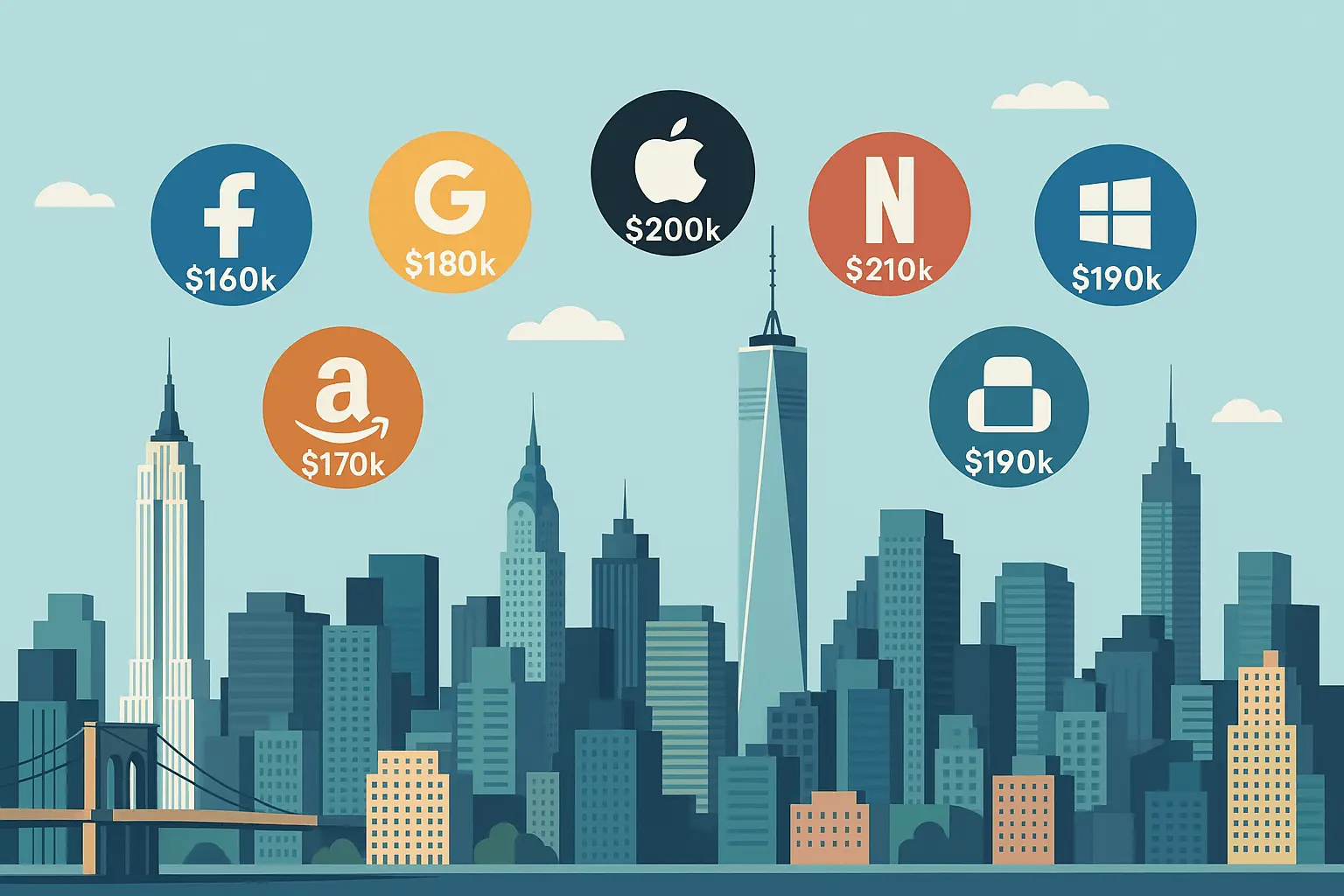
The product manager salary scene in NYC has gotten pretty crazy over the past few years. Between tech expansion, every bank trying to become a fintech company, and startups raising ridiculous amounts of money, there just aren't enough experienced PMs to go around.
Quick reality check: these numbers are all over the place depending on who you ask and when you're looking. I've seen the same role at the same company have a $30k range just based on negotiation skills and timing. So take everything here as a starting point, not gospel.
Entry-Level (0-2 years): $120,000-$150,000
Even if you're just starting out, most companies won't lowball you too hard if you've got the right foundation. They know you're choosing to work in one of the most expensive cities in the country, and they need to make it worth your while.
Mid-Level (3-5 years): $150,000-$200,000
This is where things get interesting. You've proven you can handle the complexity, and companies start getting competitive for your skills. The salary for product manager roles at this level really reflects that you're not just executing anymore—you're making real strategic decisions.
Senior Level (6+ years): $200,000-$300,000+
At this point, you're not just managing products—you're driving strategy, mentoring other PMs, and probably dealing with some seriously high-stakes decisions.
Data from Builtin shows that the average salary for a Product Manager with 7+ years of experience is $174,631, while those with less than 1 year of experience earn an average of $124,563. What's interesting is how quickly that progression happens when you're in the right environment.
Here's how I'd research your actual market value:
The key thing I've learned? Don't rely on just one source for salary data. I once almost undersold myself by $40k because I was only looking at outdated Glassdoor numbers. Understanding the average salary for product manager positions means getting the full picture before you walk into any negotiation.
|
Experience Level |
Base Salary Range |
Total Compensation |
Key Responsibilities |
|
Entry-Level (0-2 years) |
$120,000-$150,000 |
$140,000-$180,000 |
Feature development, user research, basic analytics |
|
Mid-Level (3-5 years) |
$150,000-$200,000 |
$180,000-$250,000 |
Product strategy, team collaboration, roadmap planning |
|
Senior Level (6+ years) |
$200,000-$300,000+ |
$250,000-$400,000+ |
Strategic vision, P&L responsibility, team leadership |
|
Principal/Staff Level |
$300,000-$450,000+ |
$400,000-$600,000+ |
Cross-functional leadership, business strategy, mentoring |
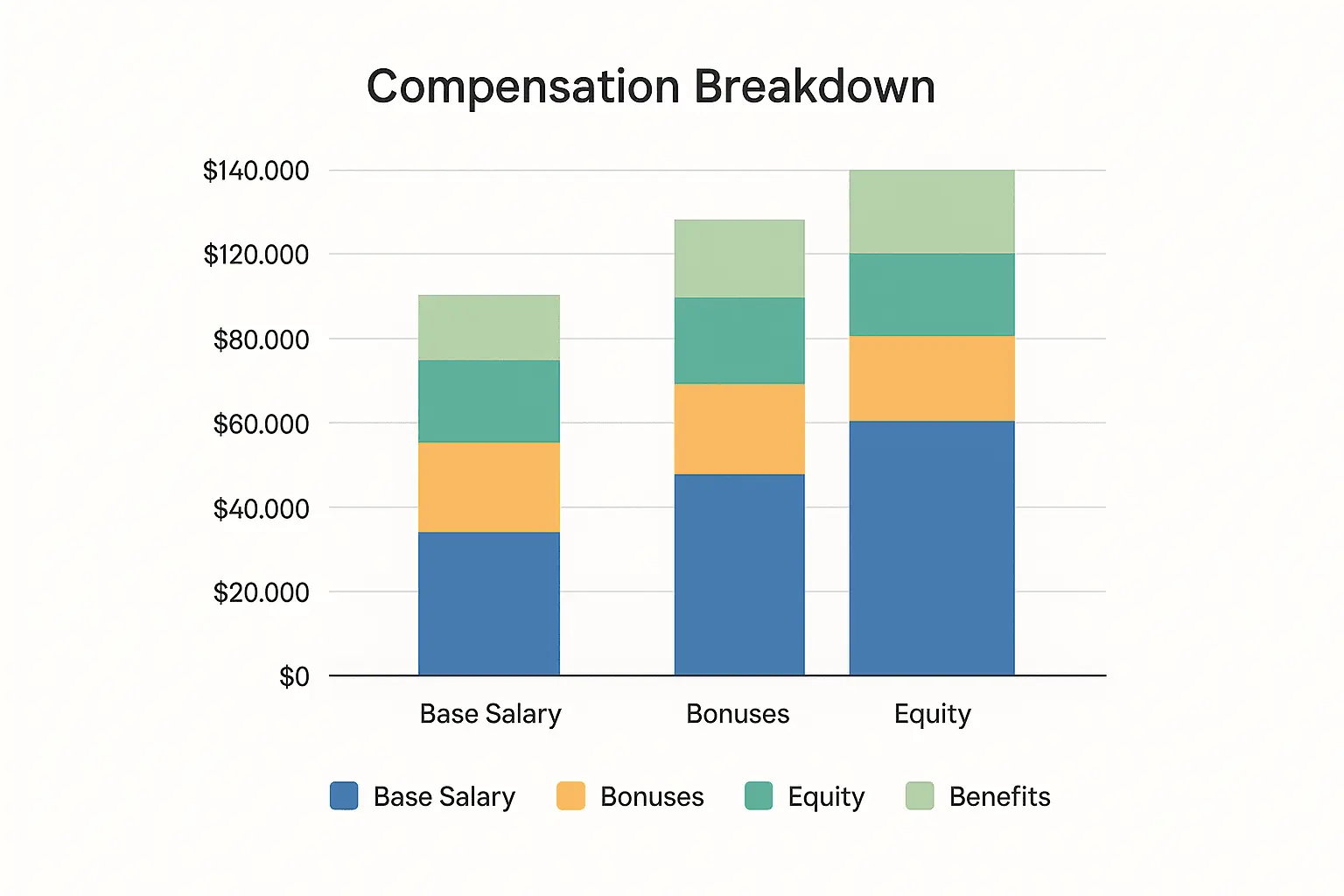
Here's what I wish someone had told me when I was negotiating my first NYC PM role: base salary is just the tip of the iceberg. I almost took a lower offer because I didn't understand how equity actually works or how much those benefits were really worth.
Total compensation in NYC often exceeds base salary by 40-80%, and honestly, this is where companies get creative when they really want you.
Annual Bonuses: Typically 10-25% of base salary
These aren't just nice-to-haves at most companies. I have friends whose bonuses are basically guaranteed parts of their comp, tied to both company performance and individual contributions. When someone tells you their "bonus target," that's usually what you should expect to get.
Equity Compensation: RSUs, stock options, and profit sharing
This is where long-term wealth gets built, but it's also the most confusing part. A $200,000 base salary with meaningful equity can become much more valuable over time. I know PMs whose equity from joining early-stage companies is now worth more than their salary ever was.
Benefits Package: Health, dental, vision, 401(k) matching, professional development
Don't sleep on these. Quality health insurance in NYC can easily be worth $15,000-$20,000 annually, and 401(k) matching is literally free money that too many people don't maximize.
What to actually evaluate:
The smartest PMs I know evaluate total compensation over 3-4 years. That equity might not vest immediately, but it could be the difference between a good career move and buying your first apartment in the city. When evaluating the complete salary for product manager packages, think long-term.
Take my friend Sarah—she was stressing about a fintech offer that seemed lower than a Google opportunity. The base was $160k versus $180k, but when we actually broke down her fintech package over drinks, she realized the bonuses and equity could put her total comp at $242k. She took the fintech role and just bought her first apartment in Brooklyn.
So you'll definitely earn more in NYC than almost anywhere else—we're talking 20-40% above other major markets. But here's the thing: you'll also spend way more. The question isn't whether you can afford to live here, it's whether the premium actually improves your quality of life.
The Premium: 20-40% above other major markets
Companies know they need to pay more to attract talent to NYC. A role that might pay $160,000 in Austin could easily command $200,000+ here, and that's before you factor in bonuses and equity.
The Reality: Higher taxes, rent that'll make you cry, and $20 salads
That extra $40,000 gets eaten up fast. State and city taxes alone will take a bigger bite than you expect, and don't get me started on what a decent one-bedroom costs in Manhattan.
But here's what the spreadsheets don't capture: the career acceleration you get from being in NYC often makes up for the immediate cost pain. The network you build, the companies you have access to, the pace of learning—it can set you up for compensation growth that more than justifies the higher expenses.
I moved here from Austin thinking a $40k salary bump would make me rich. Spoiler alert: my studio apartment costs more than my entire previous salary used to be. But three years later, I'm earning twice what I made in Austin, and the opportunities here are just different.
Understanding how your product manager salary compares to other professions is crucial—professionals can explore NYC salary calculator tools to better understand the true impact of taxes and living costs on their take-home pay.
Not all product manager jobs are created equal, especially in NYC. The industry you choose can literally make a $100k+ difference in your total comp, and honestly, some of these variations surprised me when I first started paying attention.
FAANG companies and unicorn startups don't mess around when it comes to compensation. They know exactly what it takes to get the best product managers, and they're willing to pay for it.
FAANG Companies: $180,000-$350,000+ base salaries
Google, Meta, Amazon, Apple, and Netflix have basically set the bar for PM compensation in NYC. According to Levels.fyi, the highest paying company for a Product Manager in New York City Area is Facebook with an average total compensation of $460,000. Yeah, you read that right.
Unicorn Startups: Competitive base + significant equity upside
Companies like Stripe, Databricks, or other well-funded startups often match FAANG base salaries while offering equity packages that could be worth way more if the company keeps growing. I have a friend who joined a Series C startup at a $20k base cut but whose equity is now worth more than most people's annual salaries.
Growth-Stage Startups: Lower base, higher equity risk/reward
You might take a $20,000-$30,000 base salary cut, but if you're joining the right company at the right time, the equity upside could be life-changing. This is basically betting on yourself and the company's future.

The key with tech companies is understanding their compensation philosophy. Some front-load cash compensation, others bet heavily on equity. Make sure you know which game you're playing when evaluating salary for product manager positions in the tech sector.
What I've learned from friends at these companies: the money is great, but the expectations are intense. You're making decisions that affect millions of users, and the pace is relentless. But if you can handle it, the career growth is unmatched.
Wall Street companies didn't get their reputation for throwing money around by accident. I have friends at Goldman who legitimately forget to check their bonus amounts because they're so focused on the work. These places know that product managers are basically their secret weapon for staying competitive with tech companies, and they're not shy about paying for it.
Investment Banks: High base + substantial bonuses
Goldman Sachs, JPMorgan, and other major banks often structure compensation with bonuses that can equal or exceed base salary in good years. The bonus culture means your total comp can swing wildly year to year, but the upside potential is massive.
Fintech Companies: Tech-level base + finance-level bonuses
Companies like Robinhood, Coinbase, or traditional finance companies building digital products often offer the best of both worlds. You get tech company base salaries with finance industry bonus structures.
The fintech industry continues to expand rapidly, with "The Boston Consulting Group estimates that the global fintech market will reach $1.5 trillion in revenue by 2030" according to Pace University. This growth is creating unprecedented demand for PMs who can bridge finance and technology.
If you're targeting financial services:
Just make sure you understand how bonuses are calculated and what actually drives them. I know someone who had a great year personally but worked at a bank that had a terrible year—his bonus reflected the bank's performance, not his.
Here's something that might surprise you—some of the happiest PMs I know work at companies like Johnson & Johnson or Target. Yeah, the base salary might be $50k less than what Google offers, but when you factor in the benefits and the fact that you're not getting Slack messages at 11 PM, it's actually a pretty sweet deal.
Healthcare and Pharma: $140,000-$220,000 with excellent benefits
Companies like Johnson & Johnson or Pfizer offer solid compensation plus benefits packages that are hard to match elsewhere. We're talking premium health insurance, generous PTO, and retirement matching that actually makes a difference.
Retail and E-commerce: $130,000-$200,000 with performance upside
Target, Walmart, and other major retailers are building sophisticated product organizations and paying competitively for the right talent. Plus, you get to work on products that millions of people actually use every day.
Consulting: $150,000-$250,000 with travel and learning opportunities
McKinsey, BCG, and other top-tier firms offer strong compensation plus the kind of experience that opens doors throughout your career. The travel can be intense, but the network you build is incredible.
The advantage of traditional industries isn't just stability—it's often the scope of impact you can have. Being one of the few PMs driving digital transformation at a major company can accelerate your career in ways that being one of hundreds at a tech giant might not.
|
Industry |
Base Salary Range |
Bonus Structure |
Equity/Benefits |
Work-Life Balance |
|
FAANG Tech |
$180k-$350k+ |
15-25% |
High equity value |
Demanding |
|
Fintech |
$150k-$280k |
20-100%+ |
Moderate equity |
High pressure |
|
Investment Banking |
$160k-$300k |
50-150% |
Limited equity |
Very demanding |
|
Healthcare/Pharma |
$140k-$220k |
10-20% |
Strong benefits |
Moderate |
|
Retail/E-commerce |
$130k-$200k |
15-30% |
Stock options |
Moderate |
|
Consulting |
$150k-$250k |
20-40% |
Profit sharing |
Travel heavy |
The days of being a purely strategic product manager are basically over. Companies want PMs who can get into the technical details when needed, and they're willing to pay serious premiums for that capability
I'll be honest—when people started talking about "AI-powered products" a few years ago, I had no clue what that actually meant. But then I watched PMs who could speak that language get promoted while I stayed stuck. Learning even basic SQL changed how engineering teams saw me. You don't need to become a data scientist, but understanding how the sausage gets made is worth serious money in this market.
Data Analytics and AI/ML Product Experience: $250,000-$400,000+ total compensation
If you can speak fluently about machine learning models, understand data pipelines, and have actually shipped AI-powered products, you're in a very small and very well-compensated group. Companies are throwing money at PMs who can bridge the gap between technical possibility and business value.
Platform and Infrastructure PM: Premium salaries for technical complexity
Managing APIs, developer tools, and infrastructure products requires a different skill set, and companies know it. The technical complexity translates directly to higher compensation because finding PMs who actually understand this stuff is incredibly hard.

How to actually develop these skills:
The investment in technical skills pays off fast in NYC. Even basic SQL knowledge can differentiate you in interviews and give you credibility with engineering teams that translates to better compensation offers. The salary of product manager roles with technical depth consistently outperforms generalist positions.
Marcus is actually a guy I used to work with. Watching him grind through Python tutorials during lunch breaks was honestly inspiring, but also kind of depressing because I knew I should be doing the same thing. When he got promoted to Senior PM with a $45,000 salary increase after leading an AI diagnostic tool launch, the rest of us finally started taking our technical skills seriously.
Technical skills get you in the door, but leadership capabilities determine how high you can climb—and how much you can earn. The average product manager salary pales in comparison to what's possible when you can prove you drive real business outcomes.
Team Leadership and Stakeholder Management: Essential for senior roles
Managing cross-functional teams of 20+ people while keeping executives happy isn't easy, but it's exactly what separates senior PMs from everyone else. I've seen PMs struggle with this transition because suddenly you're not just responsible for your own work—you're responsible for everyone else's success too.
Strategic Business Impact and P&L Responsibility: $300,000-$500,000+ packages
When you're directly responsible for revenue outcomes and can prove you've driven significant business growth, compensation conversations change completely. You're not just a product manager anymore—you're a business leader who happens to work in product.
How to actually develop leadership premium:
How to gain strategic experience:
The PMs earning $300,000+ aren't just managing products—they're driving business strategy. If you can demonstrate that level of impact, the compensation follows naturally. Understanding the full product manager salary range helps set appropriate career trajectory goals.
Okay, real talk—I used to be terrible at negotiating. Like, embarrassingly bad. I once accepted the first offer without even asking for more because I was just excited someone wanted to hire me. Don't be me from five years ago.
Walking into a salary negotiation without preparation is like launching a product without user research—you might get lucky, but you're probably going to fail.
Research Phase: Know the market inside and out
Don't just rely on Glassdoor. Use Levels.fyi for tech companies, talk to people in your network, and understand what similar roles at similar companies are actually paying. Research from Gusto indicates that the median salary for a Product Manager in New York is $150,000, with 80% of salaries falling between $87,500 and $200,000.
Documentation Phase: Prove your value with data
Compile specific examples of your impact: revenue generated, costs saved, user growth driven, successful launches completed. I keep a running document of wins throughout the year because I know I'll forget half of them when review time comes.

Actually useful preparation steps:
The most successful negotiations I've seen happen when the PM comes prepared with market data, personal achievements, and a clear understanding of what they're asking for and why. Understanding the current salary for product manager rates across NYC gives you the foundation for confident negotiations.
Many product managers underestimate the importance of understanding broader compensation trends—exploring NYC teacher salaries and other professional sectors helps provide context for how product management compensation compares across the city's job market.
Timing isn't everything in salary negotiation, but it's pretty damn close. Ask at the wrong time, and even a reasonable request gets shot down. Ask at the right time with the right leverage, and you might be surprised by what's possible.
Job Offers: Maximum leverage moment
This is when you have the most power. They want you, they've invested time in the process, and they're motivated to close the deal. Never accept the first offer—I've literally never seen a company rescind an offer because someone asked for more money professionally.
Performance Reviews: Planned opportunity
If you've had a strong year and can document your impact, performance review season is when companies expect compensation conversations. Just don't wait until the review is over—start the conversation early.
After Major Wins: Strike while you're hot
Just shipped a successful product? Drove significant revenue growth? That's when your value is most obvious and your request is most likely to be approved.
Competing Offers: Ultimate leverage
Nothing motivates a company to increase compensation like knowing you have other options. Just make sure you're actually prepared to walk away if they don't match.
Jennifer, a Senior PM I know, strategically timed her compensation discussion three weeks after her team's product launch generated $2M in new quarterly revenue. Armed with concrete performance data and a competing offer 15% above her current salary, she successfully negotiated a 25% increase plus additional equity.
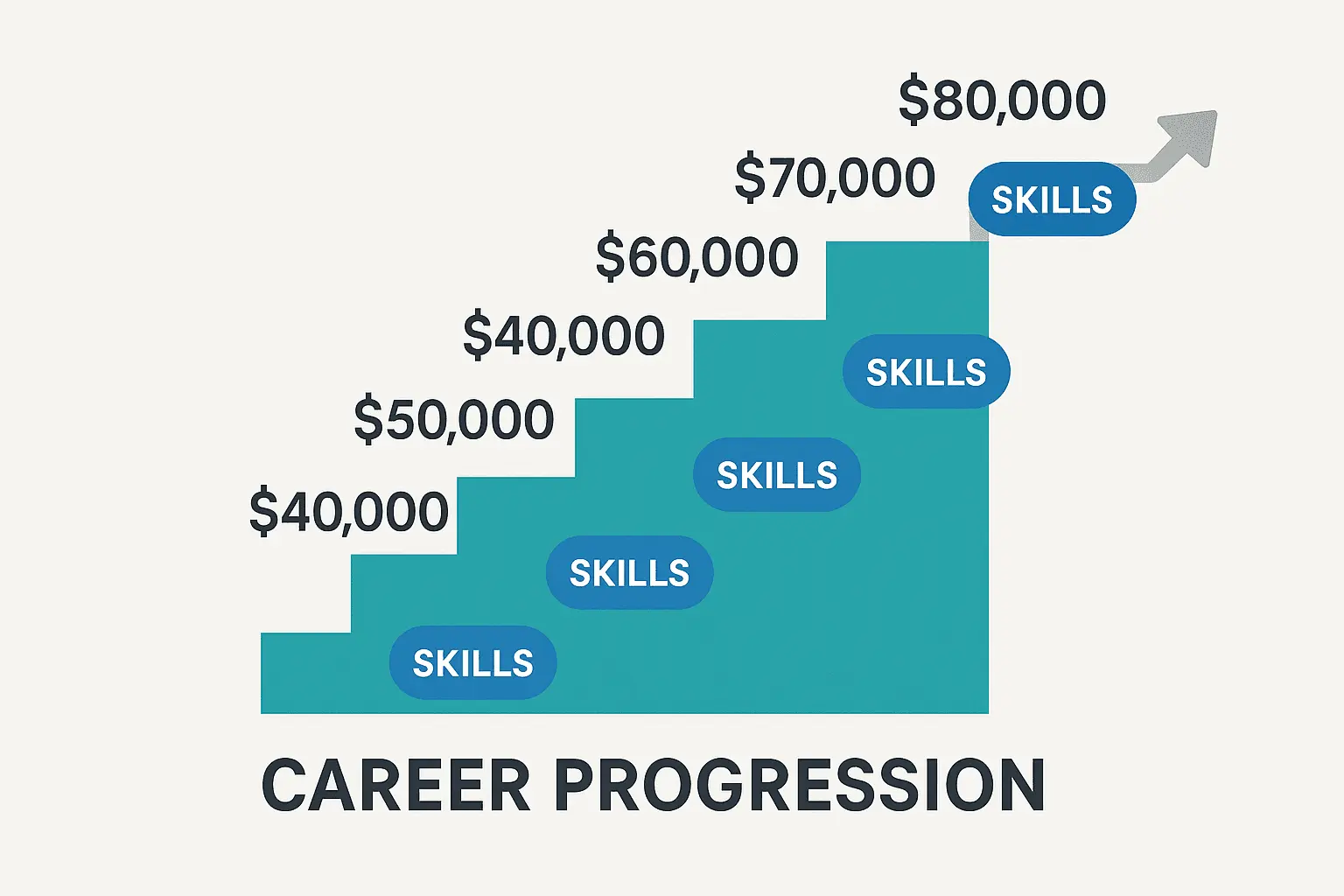
Here's something most people don't want to hear: the biggest salary increases don't come from annual raises—they come from strategic career moves. Understanding this completely changes how you think about compensation.
Strategic Job Changes: 20-40% increases vs. 3-5% annual raises
Staying at one company might feel safe, but it's rarely the path to maximum compensation growth. I've seen friends get 30-40% salary bumps by switching companies every 2-3 years, while people who stayed put got 3% raises.
Industry Transitions: Leverage transferable skills
Moving from traditional industries to tech, or from startups to enterprise, can unlock significant compensation increases if you position your experience correctly.
Actually actionable career advancement steps:
The PMs earning the highest salaries in NYC aren't necessarily the ones who've been at their companies the longest—they're the ones who've made strategic moves that compound their value over time. Each transition should meaningfully increase your salary for product manager positions.
For those considering career moves, understanding the broader professional landscape is crucial—exploring NYC mayor salary and other high-level positions provides perspective on the upper echelons of NYC compensation across different sectors.
Earning a great salary as a product manager in NYC is just the beginning. The real challenge is building a sustainable career that doesn't completely burn you out while you're climbing the compensation ladder.
The pressure in NYC product roles is no joke. You're making decisions that affect millions of users, managing teams across multiple time zones, and dealing with stakeholders who expect results yesterday. A recent "Money Diary from Refinery29" showcased a 26-year-old product manager in NYC earning $128,000 who emphasized maintaining financial discipline and work-life balance, noting how she prioritizes fitness classes and social activities alongside her demanding career.
That kind of environment can be incredibly rewarding financially, but it takes a real toll if you don't have ways to decompress and maintain some perspective. I've seen too many people burn out chasing the next salary bump without thinking about whether they actually enjoy the work.
This is where building genuine relationships outside your immediate work environment becomes crucial. The most successful PMs I know have found ways to connect with other professionals who understand the unique challenges of high-stakes decision-making while also providing an outlet from the constant pressure.

For product managers earning competitive salaries, finding the right living situation can significantly impact both career success and personal well-being. Many successful professionals choose coliving arrangements that provide networking opportunities while managing the high costs of NYC housing.
Many successful product managers find that choosing the right living situation supports their demanding careers—exploring the real cost of living in NYC helps professionals make informed decisions about housing that complement their high-earning careers.

The product manager salary landscape in NYC is more competitive and lucrative than ever, but it's also way more complex than just looking at base salary numbers on Glassdoor.
Here's what nobody tells you about making $200k+ as a PM in NYC: you'll probably work more hours than you want to, stress about decisions that affect thousands of people, and sometimes wonder if the money is worth it when you're responding to emails on a Saturday night.
But here's the thing—I've also had the chance to build products that millions of people use, work with incredibly smart people who challenge me every day, and yeah, buy my own apartment in one of the most expensive cities in the world.
The companies paying top dollar aren't just looking for someone who can manage a roadmap—they want strategic thinkers who can navigate technical complexity, drive business results, and lead teams through uncertainty. Your compensation potential in this market is significant, but it requires intentional career planning and honestly, a bit of luck with timing.
The difference between earning $150,000 and $300,000+ isn't just experience—it's the right combination of skills, timing, and strategic career moves. The PMs who maximize their earning potential understand that every role is a stepping stone to the next opportunity.
Most importantly, the money is great, but the real win is finding a role where you're not completely miserable earning it. I've seen too many people burn out chasing the next salary bump without thinking about whether they actually enjoy the work.
My advice? Figure out what kind of PM work actually energizes you, then go find the highest-paying version of that. The relationships you build, the skills you develop, and the balance you maintain will determine not just how much you earn, but how sustainable and fulfilling your career becomes. In a city as demanding as New York, that balance isn't optional—it's essential for long-term success.
For professionals planning their move to NYC or considering career transitions, exploring moving to New York resources provides comprehensive insights into making the transition successfully while maximizing career opportunities in the city's competitive market.
Look, this whole post is basically me sharing what I wish I'd known when I was trying to figure out how much I could actually make in this crazy city. The numbers change, companies come and go, but the fundamentals stay the same: know your worth, do your homework, and don't be afraid to ask for what you deserve.
And if you're still reading this thinking "holy crap, these salaries are insane"—yeah, they kind of are. But so is the rent, so is the pressure, and so is the pace of everything here. Welcome to New York.

Household supplies can be changed or decreaased at Outpost Club’s discretion, or based on supply availability. Outpost is not responsible for temporary losses of utility service. Outpost Club is not responsible for any damages due to absence of any supplies or utilities


If you have a sales related question please call
680-688-7678

 Hot Deals